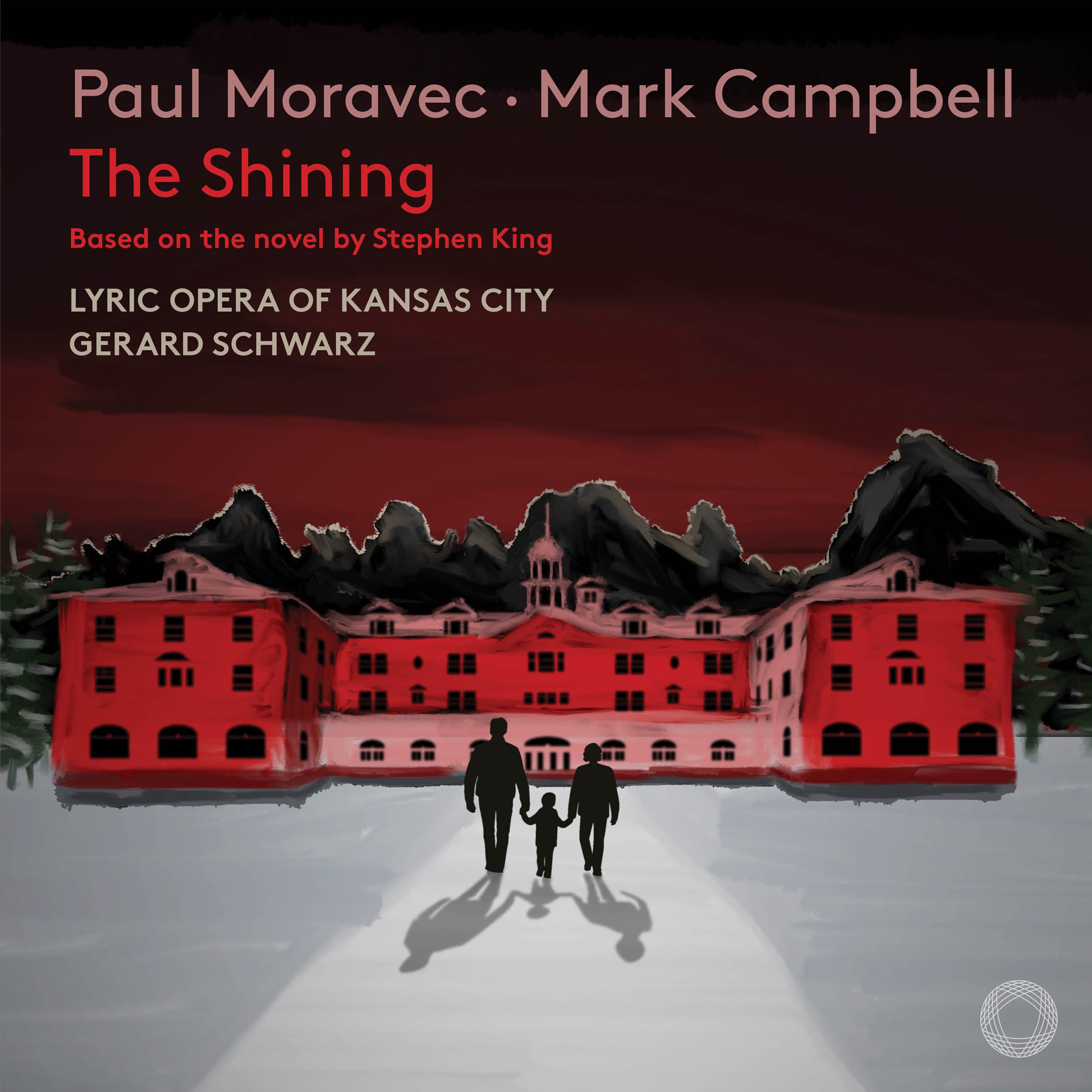
05 The ShiningPaul Moravec – The Shining
Lyric Opera of Kansas City; Gerard Schwarz
Pentatone PTC5187036 (operatheshining.com)

In an isolated mountain hotel with a blood-soaked past, ghostly voices and visions propel a troubled man’s descent into murderous madness. “Opera’s power as an art-form,” writes Buffalo-born, Pulitzer Prize-winner Paul Moravec, “springs from its essentially primordial, irrational nature. It’s ideally suited to the adaptation of Mr. King’s irresistibly compelling story.” Opera goers agree; since its 2016 Minnesota Opera premiere, The Shining has been enthusiastically received in San Francisco, Atlanta and Kansas City, where this two-CD set was recorded in 2023. 

Mark Campbell says his libretto (included in the booklet) hews closer to Stephen King’s novel than to Stanley Kubrick’s film (not having read the book nor seen the movie, I’ll take his word for it). Moravec’s score, however, is thoroughly “cinematic” – in the best sense – effectively creating an agitated, discordant atmosphere of irrationality and impending violence.

Heading the cast of 17 soloists is baritone Edward Parks, vocally powerful and dramatically convincing as the tormented Jack Torrance. Soprano Kelly Kaduce is sympathetic as his loving but fearful wife Wendy. The hotel’s cook, Dick Hallorann (baritone Aubrey Allicock) recognizes the psychic abilities – “the shining” – of the Torrances’ son Danny (treble Tristan Hallett), becoming his supportive friend.

Enhancing the opera’s theatrical impact, Torrance’s hallucinations were seen and heard by the audience; hopefully, they were immune to the phantasms’ murder-inducing influence. Immune, thankfully, the Lyric Opera of Kansas City Chorus, Kansas City Symphony and conductor Gerard Schwarz contributed greatly to this performance’s unrelenting intensity.

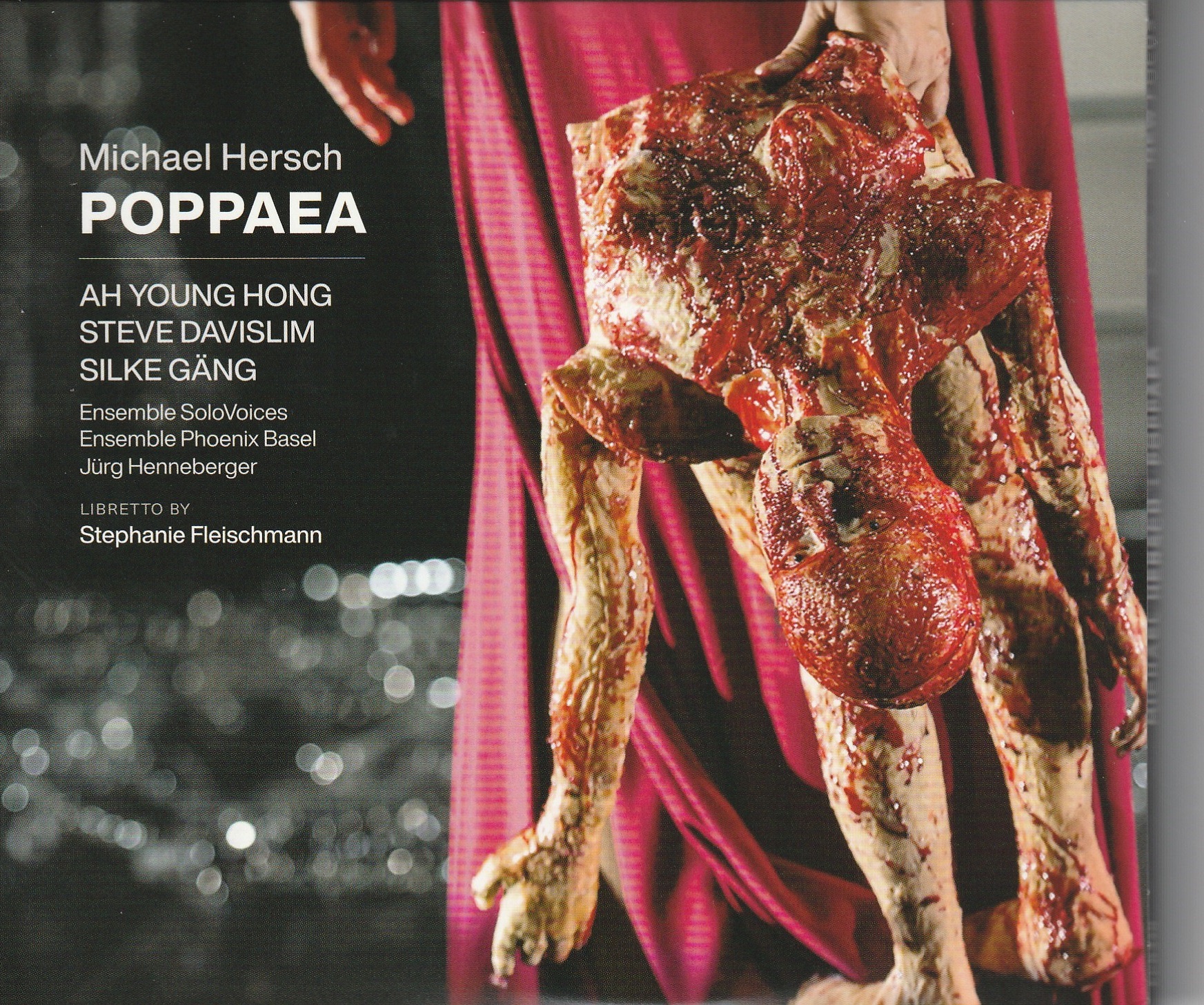
06 Michael Hersch PoppeaMichael Hersch – Poppaea
Ah Young Hong; Steve Davislim; Silke Gang; Ensemble Phoenix Basel; Jerg Henneberger
New Focus Recordings FCR390 (newfocusrecordings.com)

Even if you were not aware of the details of the violence of Roman rule during the early Anno Domini era you will feel its effects in the pit of your stomach as you listen to the operatic recreation of the story of the Empress Poppaea.

On one level, Michael Hersch’s recreation of Poppaea Sabina (30AD-65AD), the second wife of the legendary imperial despot Nero, may be a simple tale of palace intrigue. However, there seems to be a much deeper motive in this shrill, masterful retelling of the tragedy. And it is this: The conniving woman who won the heart and hand of the emperor and bore him a child, appears to have created a powerful, matriarchal rule in the imperial household.

Brilliantly detailed booklet notes by Dr. Lauren Donovan-Ginsberg, Associate Professor of Classical Studies at Duke University and a specialist in Neronian culture and history, make for riveting reading. Stephanie Fleischmann’s prescient libretto recreates the bloody and devious plot. 

Poppaea – played with shrill and terrifying ingenuity by the soprano Ah Young Hong – tears Nero (an appropriately despotic tenor Steve Davislim) away from his first wife Octavia, superbly sung by the dark and smoky-voiced mezzo Silke Gäng. 

You will also find yourself harbouring high praise for the superb casting and performances, and especially for the sensitive and vigorous direction of Jürg Henneberger who brings this Neronian tragedy of Poppaea to vivid life once again.

Listen to 'Michael Hersch: Poppaea' Now in the Listening Room

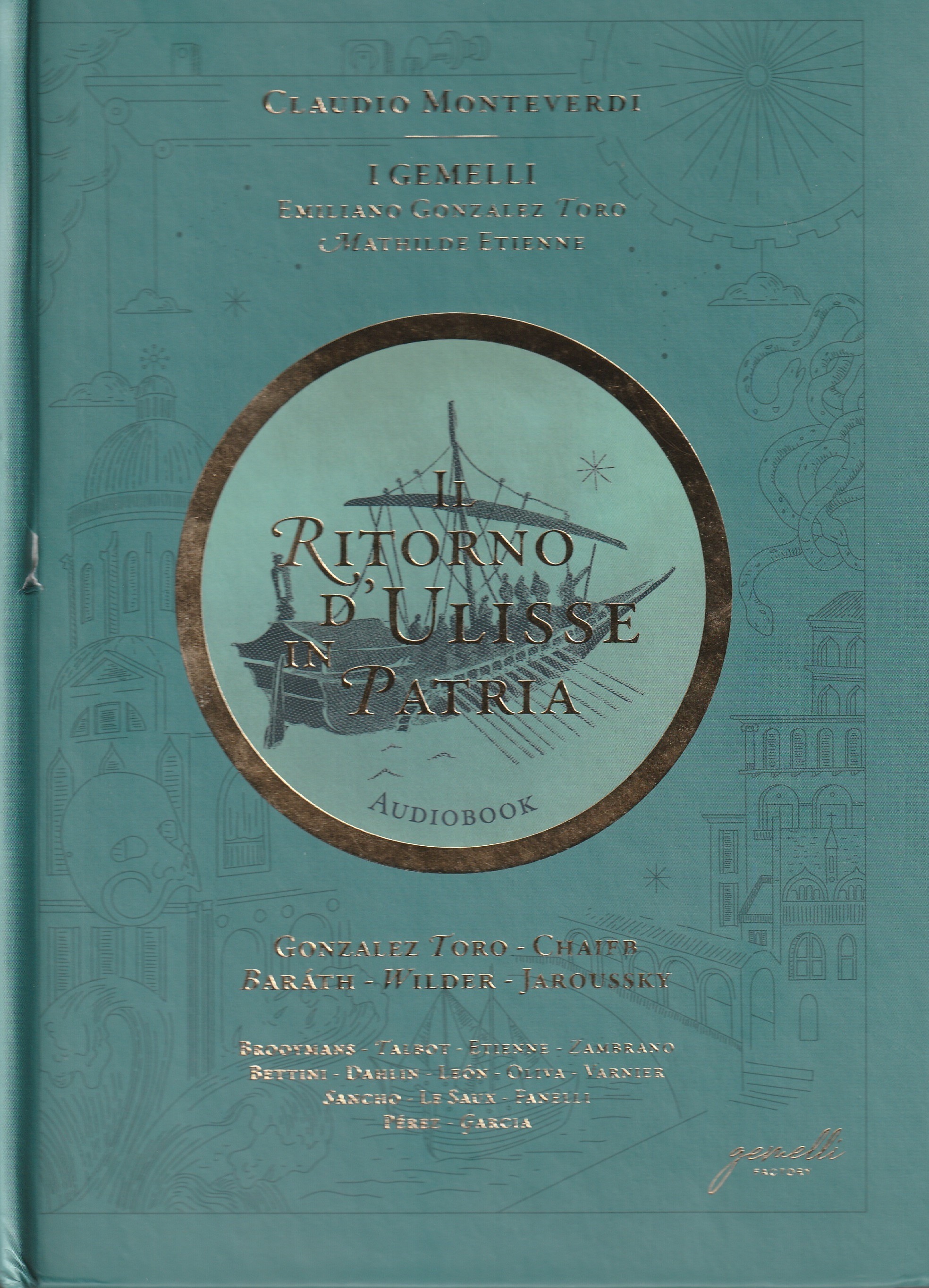
01 Monteverdi returno dulisseClaudio Monteverdi – Il ritorno d’Ulisse in patria
Soloists; I Gemelli; Emiliano Gonzalez Toro; Mathilde Etienne
Gemelli Factory audiobook (gemelli-factory.com/nos_releases/il-ritorno-dulisse-in-patria)

There are as many ways to perform Claudio Monteverdi’s Il Ritorno d’Ulisse in Patria as there are performances. The earliest known score contains just the vocal parts, the text and the bass line. Even the instrumental passages indicate nothing about what instruments are to play. So vital decisions about basic elements like orchestration and harmonization must be made.

Terrific recordings have appeared in recent years – those under Gardiner, Cavina and Fuget come happily to mind (not to overlook Harnoncourt’s landmark recording from 1972). But none for me has matched René Jacobs’ 1992 recording for momentum and spirit – that is, until this production from I Gemelli, led by musical director Emiliano Gonzalez Toro and artistic director Mathilde Etienne (with both performing as singers). 

A fine-tuned sense of early Baroque style and an adventurous sense of theatre have shaped this recording. The cast here is large – it includes nine tenors! That means remarkably few doublings, so characters are easily distinguishable. And every performer, whether singer or instrumentalist, projects the kind of commitment that gives their time in the spotlight, no matter how brief or extensive, dramatic impact. 

It’s unlikely Monteverdi’s instrumental ensemble for the first performance in 1640 would have been as large, or as varied. Historically authentic instruments like the gorgeous triple harp of Marie-Domitille Murez and the delightful trio of mellifluous cornetts add colour. But they never swamp the singers, since they are featured in smaller groups. Instead, they provide vivid counterparts to the resonant phrases of Giacomo Badoaro’s libretto, a skillful adaption of the final verses of Homer’s Odyssey.

Monteverdi gives the gods the most florid passages. Emőke Breath as Minerva ravishes with her lucid elegance. Philippe Jarroussky is an eloquent Fragilitá Umana (Human Fragility), Juan Sancho an impassioned Mercurio. Jérôme Varnier’s petulant, vindictive Nettuno captivates with his rich, agile basso profundo.  

Among the mortals, Gonzalez Toro’s Ulisse is deftly theatrical as he disguises himself as an old beggar, and affectingly tender as he pleads with Penelope to recognize him. Rihaieb Chaib brings highly charged urgency and a complex range of emotional states to the role of the faithful Penelope. The exciting Canadian mezzo-soprano has not been known for Baroque opera. But that is bound to change with her powerful performance here. Right from the opening phrases of her heart-rending lament, she commands our empathy. When she does recognize Ulisse – and they finally sing together – it’s all the more expressive for the contrast in their voices. The word “yes” has never sounded more sensual than in their magnificent duet, “Yes, my life, yes, my heart, yes!” 

       I love how Alix Le Saux as Ulisse’s old nurse Ericleia colours the word “languise” (languishes). Fulvio Bettini’s virtuosic Iro delights as he moves from comedy to tragedy. Zachary Wilder creates a poignant Telemaco, while Etienne brings playful charm to Melanto. Her extensive background essays are bound with the libretto – more than 200 pages in all – with three CDs in an attractive hardbound case. It’s certainly indicative of the loving care that has gone into this superb recording.

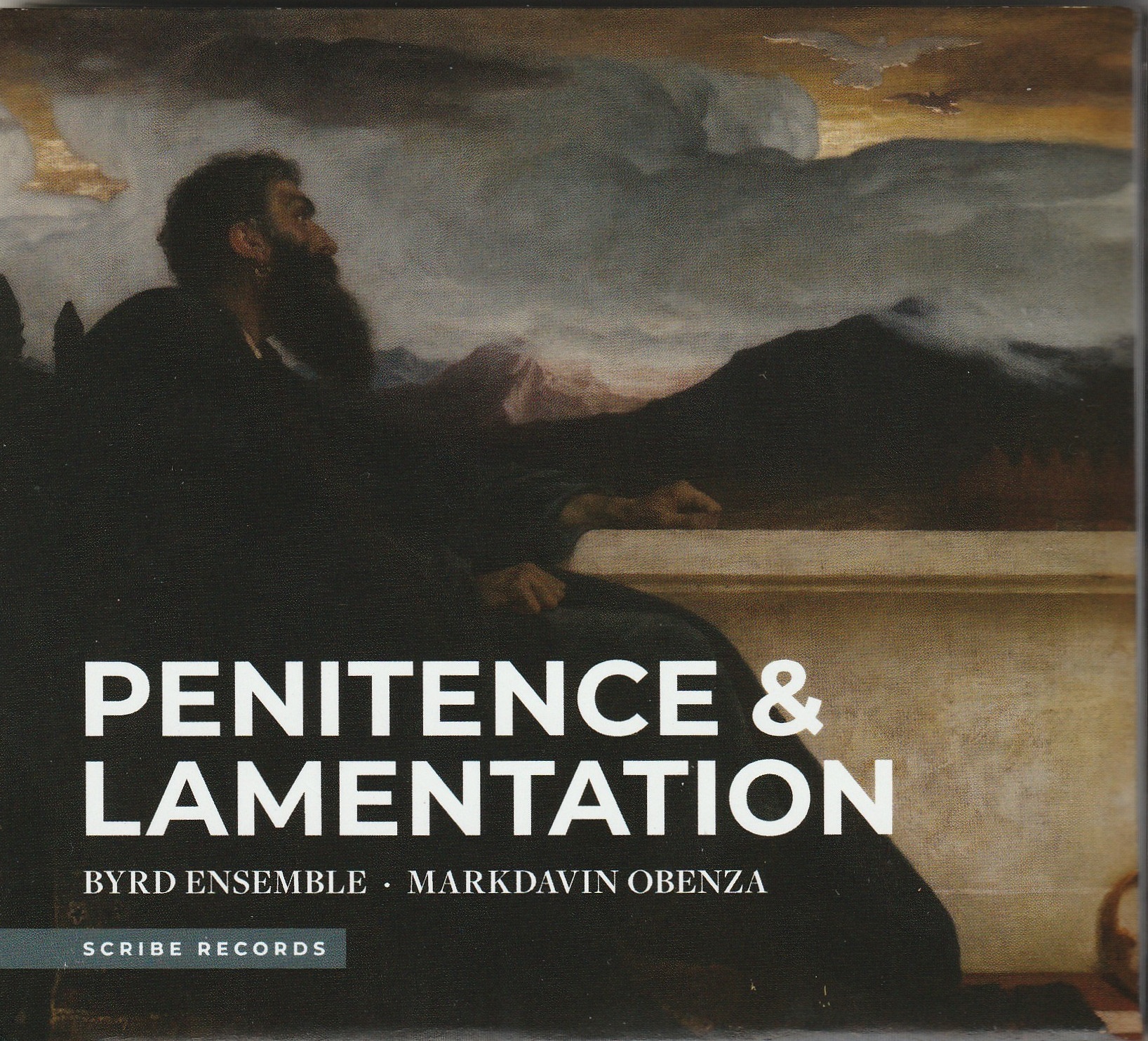
02 Penitence LamentationPenitence & Lamentation (Gombert; Byrd; Tallis; Crecquillon; Ramsey; Muhly; Carver)
Byrd Ensemble; Markdavin Obenza
Scribe Records SRCD12 (byrdensemble.com/recordings)

Ten Renaissance pieces set to religious texts expressing, say the booklet notes, “guilt and grief” are movingly performed by the Seattle-based Byrd Ensemble under artistic director Markdavin Obenza. Four selections are by the a cappella group’s inspiration, William Byrd. Particularly affecting are Emendemus in Melius and Byrd’s elegy for his late friend, Thomas Tallis, Ye sacred muses. Tallis himself is represented by two pieces – Absterge Domine and In jejunio et fletu, the latter darkly solemn, sung by only one alto, two tenors and two basses.

Nicolas Gombert’s intense Lugebat David Absalon dramatically sets David’s howling lament over his rebellious son, while Robert Ramsey’s How are the mighty fallen effectively expresses David’s anguish over his beloved Jonathan. Thomas Crecquillon’s earnest Pater peccavi presents the Prodigal Son’s rueful plea to his father. Although only five to ten singers perform the forementioned works, the reverberant acoustic creates the illusion of much larger forces.

American composer Nico Muhly’s Fallings, especially commissioned for this CD, involves 12 singers. Set to verses from Isaiah describing the destruction of Solomon’s temple, the music is often tumultuous and discordant, yet not out of place among the Renaissance works. Ending the CD, 19 singers – 14 of them tenors and basses – join in the longest selection, Robert Carver’s grandiloquent, 12-minute O bone Jesu. The male-heavy sonorities add depth and richness to this cry for mercy – “O good Jesus, let not my sin destroy me.” Texts and translations are included.

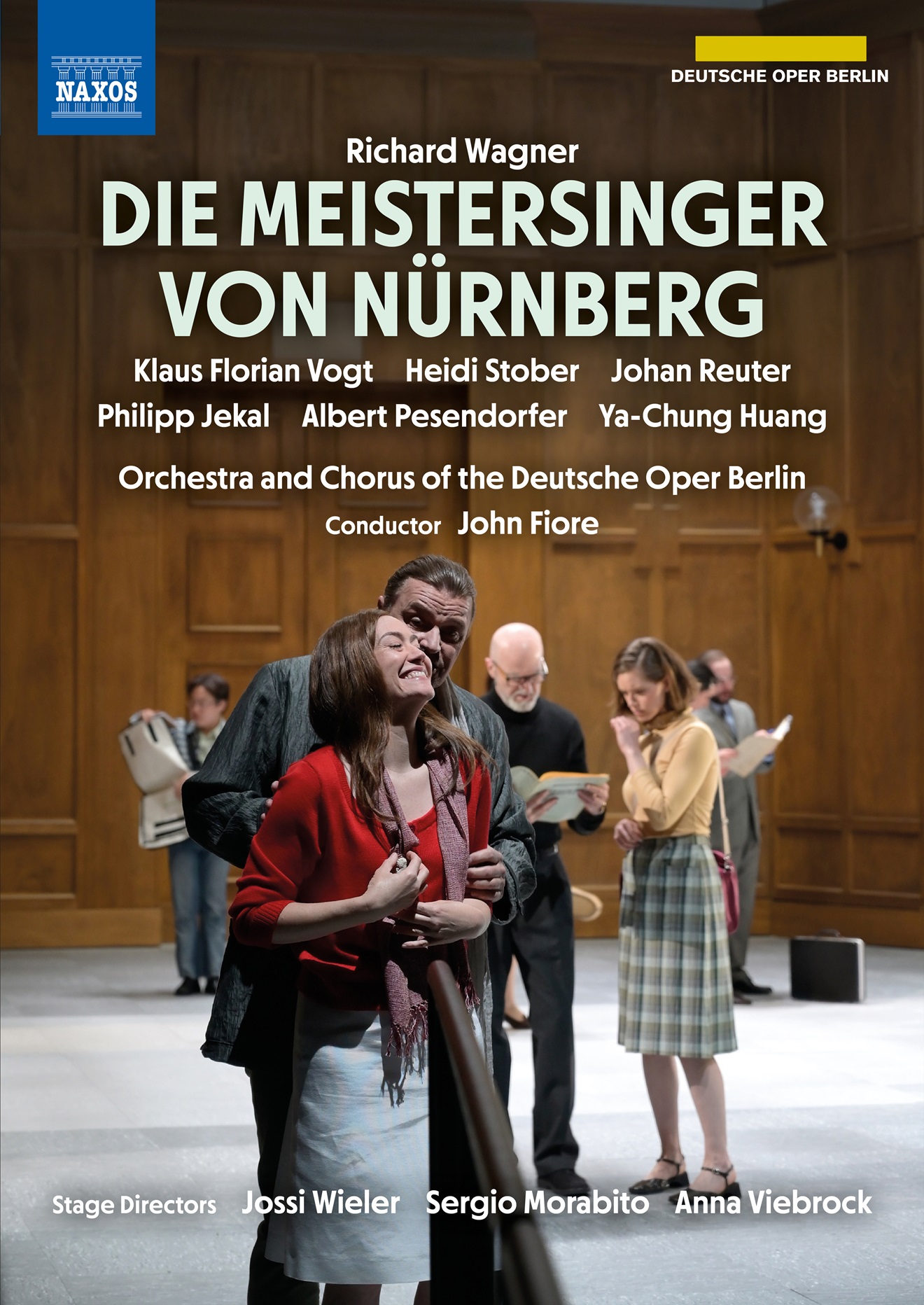
03 MeistersingerWagner – Dei Meistersinger von Nurnberg
Soloists; Orchestra and Chorus of the Deutsche Oper Berlin; John Flore
Naxos DVD 2.110766-67 (naxos.com/CatalogueDetail/?id=2.110766-67)

Deutsche Oper has always been famous for thought-provoking, even iconoclastic, productions so this latest incarnation of Wagner’s lengthy masterpiece comes to us certainly as very different from anything I’ve ever seen before. The scene is a Conservatory with the Masters as professors, the Apprentices as students, all in a modern setting. The school is owned by the wealthy Veit Pogner (Albert Posendorfer, bass) who intends to turn it over to the public by organizing a singing contest but stipulating that the winner must be a Master and should marry his only daughter Eva (Heidi Stober, soprano). The contest is held on Midsummer Day and there are numerous complications, but we all know the story. In this provocative staging the music and the text remain unchanged; there is constant action, and the show is entertaining throughout. But the question remains for someone who has never seen/heard this opera before should I recommend this production rather than an opulent, glorious traditional one such as I grew up with?

The directorial team has decided to “remove the deadweight of previous productions to get closer to the opera itself” which is all about music, the composition and delivery of music. This translates itself into composing a master song and it all comes together beautifully in the wonderful third act. The master song is composed by Walther von Stolzing, the tenor lead (beautifully sung by the latest German heldentenor sensation, Klaus Florian Vogt, who aspires to be a Master and is in love with Eva. The elderly Hans Sachs (Johan Reuter, baritone), a Master and the real hero of the opera, is also in love with Eva but having to give her up, realizes Walther’s song is, although different, truly beautiful. He magnanimously offers advice to improve the song according to the established rules. The master song is then baptized (on St. John’s day) by the glorious quintet Selig wie die Sonne, with all five principals, and later Walther wins the contest and Eva’s hand. A happy ending, indeed.

Deutsche Oper’s giant orchestra pit much resembles the one at the Bayreuth Festspielhaus and the large orchestra is led by John Fiore, an internationally famous American conductor from Seattle. He is much praised by the world’s opera houses as a respected leader with unusual musical sensitivity. The show was enthusiastically received. What more can we ask ?

04 Luminous VoicesFire-Flowers
Luminous Voices; Timothy Shantz
Leaf Music LM275b (leaf-music.ca)

The Calgary-based choir Luminous Voices, directed by Timothy Shantz, is a diverse and prolific ensemble, performing and recording a range of repertoire with consistently excellent results. In 2023 they released Ispiciwin, with music by Indigenous composers Andrew Balfour, Sherryl Sewepagaham and Walter MacDonald White Bear, which is followed now by Fire-Flowers, featuring Johannes Brahms’ stunning Requiem.

Originally written for chorus and orchestra, this performance uses Brahms’ own alternative version of the full seven-movement work, performed with piano duet accompaniment, which gives this rich and robust composition an introverted and subdued atmosphere. It also makes the choir’s task much more challenging, as the warm (and rather more forgiving) tones of strings and woodwinds are replaced by the percussive keys and hammers of the piano. Any indiscretion in pitch or rhythm would be immediately apparent, and the lack of asynchronicity is a testament to Luminous Voices’ collective talent.

In addition to these general hazards, there are a few notably challenging moments in Brahms’ Requiem that serve as a barometer of an ensemble’s skill, including the “Herr, du bist würdig” fugue at the end of movement VI. Rather than being in peril, the choir gives a masterclass in phrasing and fugal execution, turning potential danger into five minutes of sonic bliss.

While Brahms is the centrepiece of this recording, it is bookended by two works by Zachary Wadsworth, including his dramatic Battle-Flags with text by Walt Whitman, and Fire-Flowers, based on an excerpt from Emily Pauline Johnson’s Flint and Feather. Both pieces are extraordinarily compelling reflections on life, loss and hope, and this recording is highly recommended as what will undoubtedly be one of the best choral discs of this year.

Listen to 'Fire-Flowers' Now in the Listening Room

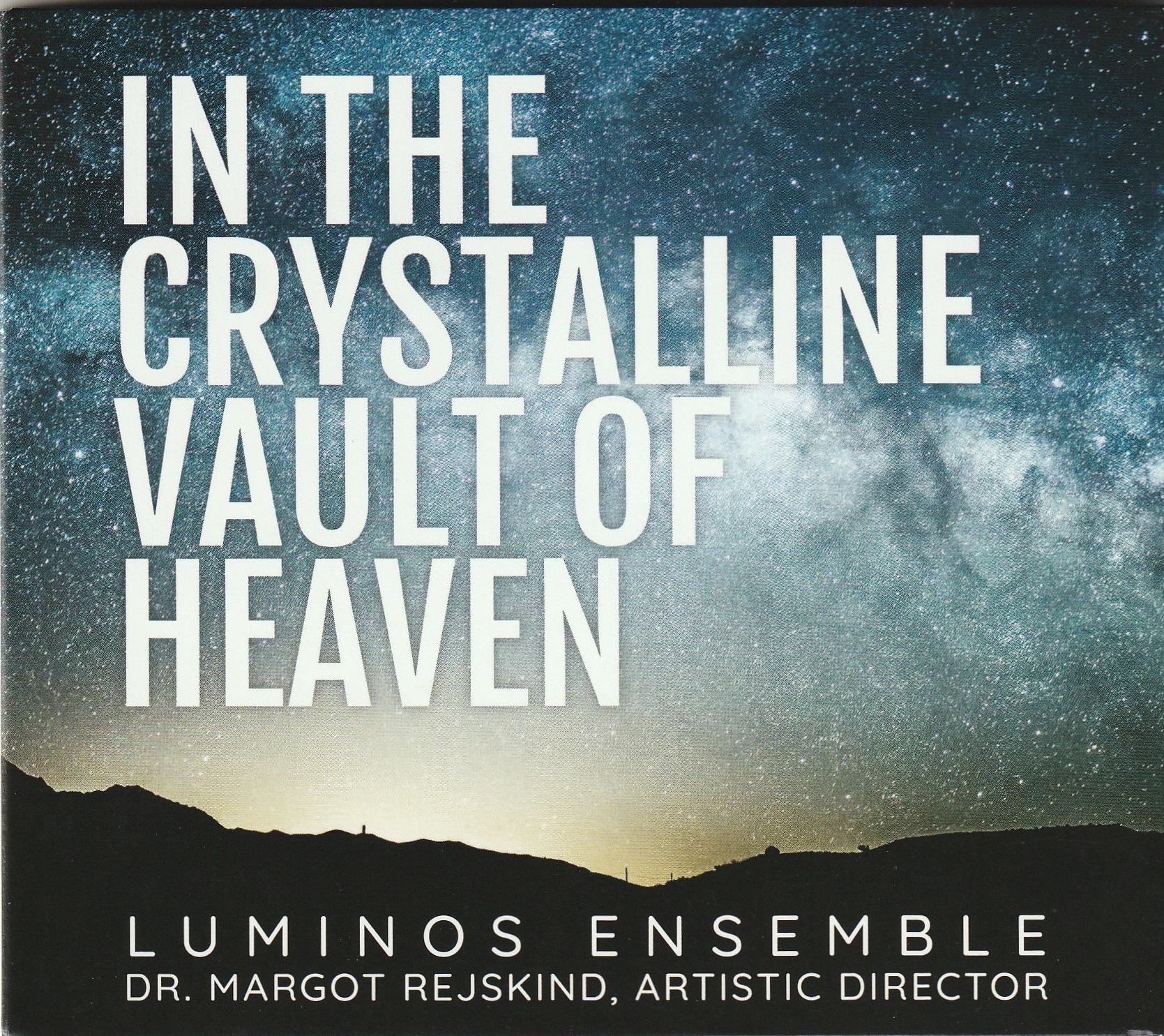
05 Luminos EnsembleIn the Crystalline Vault of Heaven
Luminos Ensemble; Dr. Margot Rejskind
Leaf Music LM290 (luminosensemble.com)

Writing about second-wave feminism in 1970, Carol Hanisch either created or popularized the phrase “the personal is political.” Since that time, the aphorism has expanded in both meaning and application to point out the shared synergies and interactions that exist between political and personal issues. In many ways, the arts, such as music, have become a lightning rod for these kinds of conversations. Music makers in 2024, whether they like it or not, are making choices often read as political simply by the repertoire they choose, venues at which they perform and the ensemble company they keep.

The Luminos Ensemble, a terrific Charlottetown-based choir of 16 East Coast voices that was formed in 2017 by artistic Director Dr. Margot Rejskind, seems acutely aware of this fact. In fact, articulated on their website is a mission statement and an expansion of values that suggests that a kind of Canadian East Coast social justice (albeit one that is married to beautiful choral voices) is their very raison d’être. Living the stated value that PEI voices “deserve to be promoted and supported,” the ensemble has released a fine new recording, In the Crystalline Vault of Heaven that features several tremendous Atlantic Canadian compositional talents deserving of wider recognition. While the title track by Nova Scotia composer Derek Charke is moving indeed, the work of Prince Edward Island composers David Buley and EKR Hammell, who contribute meaningfully to this recommended recording, was particularly captivating. 

Listen to 'In the Crystalline Vault of Heaven' Now in the Listening Room

06 Arvo PartArvo Pärt – Odes of Repentance
Cappella Romana; Alexander Lingas
Cappella Records CR428 (cappellarecords.com)

Esteemed senior Estonian composer Arvo Pärt’s current idiomatic musical style is rooted in Gregorian chant and later European polyphonic liturgical music, yet his early career compositional language embraced 20th century serialism and then minimalism. In addition, his use of Christian liturgical texts triggered censure from Soviet cultural authorities in the 1960s, leading to a personal reckoning. After years of personal renunciation, Pärt emerged in the 1970s with a new compositional style he dubbed “tintinnabula.” 

In an unexpected twist of history, his often austere, meditative, faith-based music has found a wide audience in the decades since. He’s frequently ranked among the world’s most performed composers, particularly of choral music. And that’s what we hear on the Odes of Repentance album: a prayerful suite of choral works over 12 tracks. The selections were compiled by Alexander Lingas the music director of Portland Oregon’s Cappella Romana, a professional mixed choir known for its rigorous historically-informed performances of Orthodox church music. For example, Cappella Romana hired an Old Church Slavonic coach to aid in pronouncing that language for these performances.

Cappella Romana is an ideal match for Pärt’s sacred music. For example, The Woman with the Alabaster Box is a Gospel reading; there are also Orthodox hymns, heartfelt prayers and psalmody, all capped by Prayer after the Kanon. The album feels like a timeless liturgical service, the elegant leanness of its musical language kept in aesthetic tension and given additional meaning by the ritual lyrics and frequent short pauses for silent reflection.

01 Monteverdi VespersMonteverdi – Vespers of 1610
The Thirteen; Children’s Chorus of Washingon; Dark Horse Consort; Matthew Robertson
Acis APL53837 (acisproductions.com)

As we are reminded in the informative liner notes of this new recording of Claudio Monteverdi’s sacred masterpiece, Vespers is an early evening prayer service, part of the Liturgy of the Hours, fulfilling Jesus’ command to “pray always.” Replete with psalm texts, a hymn and the Magnificat (the canticle of the Blessed Virgin Mary) Vespers is designed to be contemplative and Monteverdi’s setting is miraculous in its variety of textures, virtuosity and hypnotic harmonies. In addition, it marries Renaissance and Baroque musical styles with staggering beauty and uniformity, featuring a wide array of vocal and instrumental writing. 

The Thirteen was founded in 2012 in Washington, D.C. by Matthew Robertson and the group has a wide mandate, performing music from all eras, specializing in early and contemporary choral works and educational outreach. Their recording of Vespers – in collaboration with the Children’s Chorus of Washington and the early winds of the Dark Horse Consort – took place in the reverberant acoustic of Washington’s Franciscan Monastery. 

The solo and small ensemble singing is uniformly excellent, including a radiant Nigra Sum sung by soprano Michele Kennedy, a sumptuous Pulchra es sung by sopranos Molly Quinn and Katelyn Jackson and a tour de force Duo Seraphim from tenors Aaron Sheehan, Stephen Soph and Oliver Mercer. The chorus and instrumental ensemble bring a suitable glory and grandeur to the performance: 90 minutes of life-affirming, provocative “new” music, written over 400 years ago.

Listen to 'Monteverdi – Vespers of 1610' Now in the Listening Room

Back to top