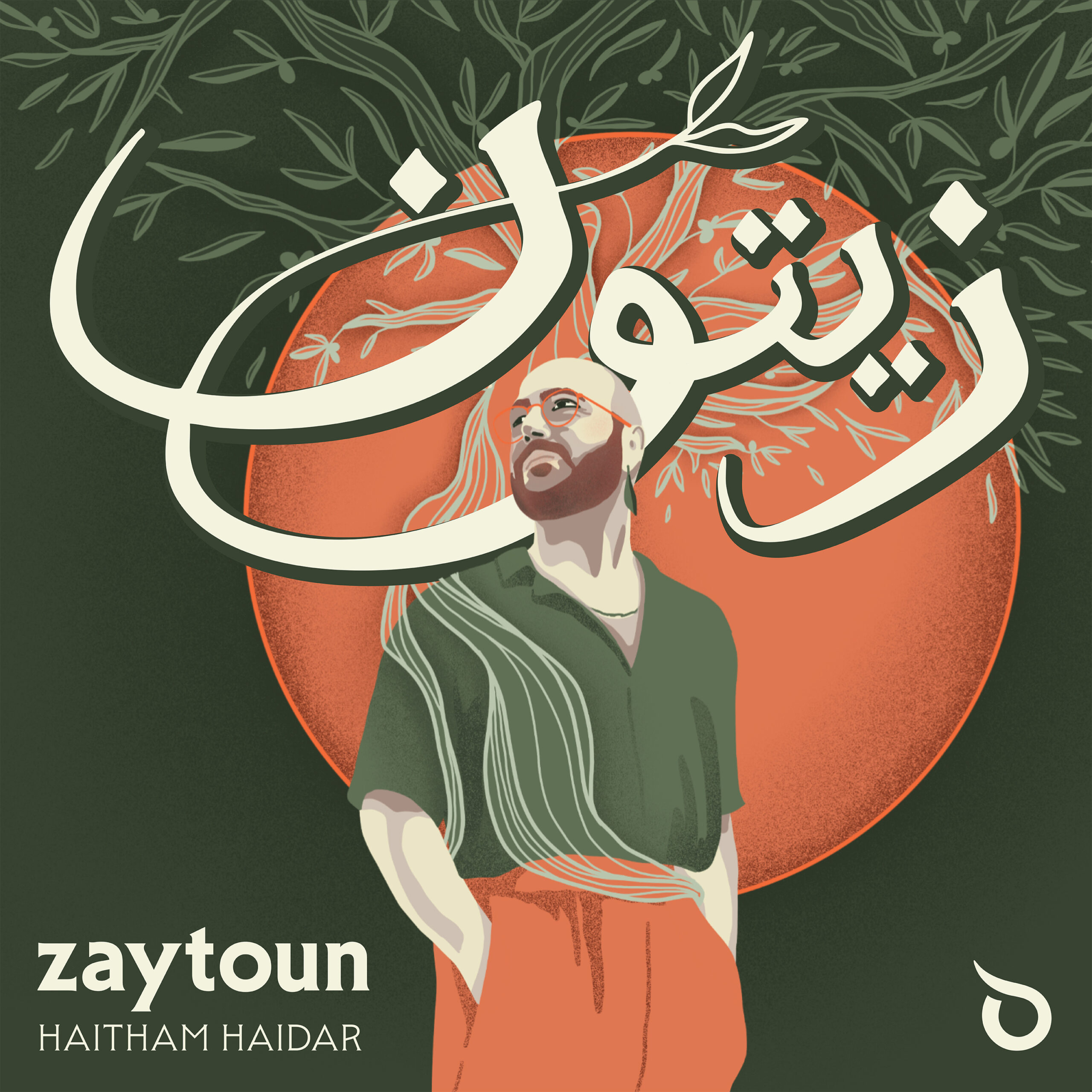
01 ZaytounZaytoun
Haitham Haidar
Athene ATH 23027 (prestomusic.com/classical/products/9779881--zaytoun)

Debut recordings are often interesting as much for the opportunity they offer listeners to discover a fresh, and hopefully exciting, new musical voice as they are revelatory in terms of which musical styles, artistic decisions, and aesthetic choices a performer will  showcase in their initial recorded effort. In the case of the Montreal-based tenor vocalist Haitham Haidar, the decision was made not to “pick a lane and stick to it,” so to speak, but to creatively fuse his many interests—poetry, spoken word, and resonant, beautiful singing—over an interesting program that brings together the Baroque work of Monteverdi, Purcell, and Bach with traditional Arabic songs.

This interesting fusion works surprisingly well and continues unabated throughout 2025’s Zaytoun in both instrumental form (the oud master Abdul-Wahab Kayyali is paired here with a top-shelf quartet of Baroque instrumentalists that includes lutenist Sylvain Bergeron, harpsichordist Abraham Ross, violinist Tanya LaPerrière, cellist Amanda Keemaat) and vocally (an aria from Bach’s St. Matthew Passion, for example, is gorgeously rendered in Arabic). The title, Zaytoun, is the Arabic word for “olive,” and like the hard-pitted fruit native to Lebanon but now enjoyed around the world, Haidar’s music on this recording is equally pan-global, finding the points of intersection and connection that unite us across cultures, languages, histories, and nations. The whole recording is terrific, but Henry Purcell’s beautiful Music for a While is a standout for its tender rendering and its fusing of possibilities.

Listen to 'Zaytoun' Now in the Listening Room

02 Al HambraAl-hambra
Ahmed Mukhtar; Ignacio Lusardi Monteverde
ARC EUCD2972 (arcmusic.co.uk/blog/al-hambra-–-ahmed-mukhtar-and-ignacio-lusardi-monteverde.html)

Al-hambra, the intriguing instrumental collaboration between Iraqi oud virtuoso Ahmed Mukhtar and accomplished flamenco guitarist Ignacio Lusardi Monteverde is rooted in history yet delivered with unpretentious ease. Drawing on deep links between Arabic music and flamenco, this collaboration delivers a crisply picked bouquet of Andalusian-based moods – with one notable peregrination.

Samaai Ajam is a good exemplar of the ten-track album. Based on the Ottoman-Arabic classical sama‘i thaqil 10/8 rhythmic cycle, Mukhtar renders the elegant melody, preserving the stately pulse characteristic of the genre. Maqam Ajam, a tonal mode similar to the Western major scale but infused with Arabic modal phrasing and ornamentation, evokes a bright and familiar atmosphere. 

Monteverde’s guitar accompaniment here sidesteps overt flamenco fire, instead complementing the oud’s phrasing through delicate harmonic shading and restrained countermelodies that balance the ensemble’s overall sound. Demi Garcia Sabat’s percussion anchors the 10/8 meter with clarity and subtle energy, a quality he delivers throughout the album, including on the title track’s stately 9/4 meter.

Mukhtar’s understated lyrical playing is especially compelling, however, on quieter non-metric pieces such as A Moment of Taqsim, where he explores maqam-rooted improvisation.

Stylistically, the track The Young Prince and the Young Princess doesn’t work as well as the others. Monteverde’s reworking of melodies from Nikolai Rimsky-Korsakov’s orchestral Scheherazade score, while thematically interesting, lacks the original’s orchestrational and harmonic richness and elan. 

As that last track faded however, Al-hambra struck me as a thoughtful album that treats cross cultural – world music – collaboration as a likeable, living musical conversation.

Listen to 'Al-hambra' Now in the Listening Room

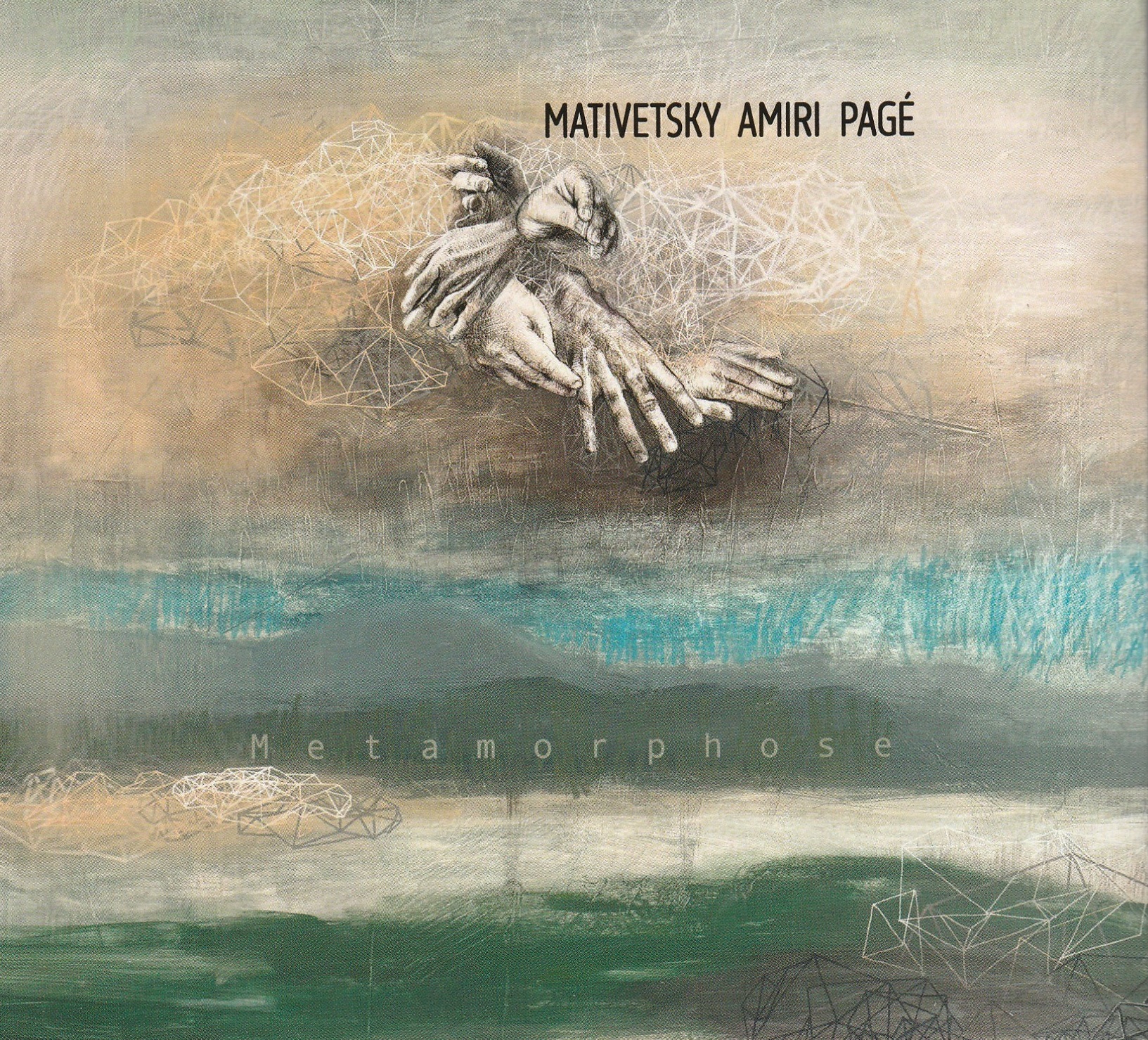
03 Mativetsky Amiri PageMetamorphose
Shawn Mativetsky; Amir Amiri; Sarah Pagé
Independent FHM104 (mativetskyamiripage.bandcamp.com/album/metamorphose)

This sublime, multi-disciplinary and ambient world music triumvirate was formed in 2019, and is comprised of three skilled, Montreal-based musician/composers: harpist and producer of this project, Sarah Pagé; classically trained Irani performer/composer and santur (Persian dulcimer) master, Amir Amiri; and Canadian “Ambassador” of the Benares style of tabla playing, Shawn Mativetsky. With the release of Metamorphose, this unique and “unbound” trio has synthesized elements of seminal Persian music and ancient Hindustani rhythmic modalities, which have been manifested through a veil of unconventional, but technically pristine, classicism.  

There are five stirring tracks here, opening with Yavaran (Companions). This is the only composition here with lilting vocals, drawn from a Sufi devotional song, and it includes a dynamic dance motif in section two (Lexgi from Azerbaijan), before returning to the primary melodic theme. Pagé’s luminous harp transports us on this track, brilliantly supported by Amiri and Matavetsky. The title track also crosses the Bosphorus with themes of transformation expressed through a venerable Kurdish melody, gorgeously propelled by Amiri. 

The three movements of Quarter Tone Suite reflect the very bedrock of Persian music, and the musical lens widens with Maktrismos, which embraces both an ambient electronic landscape and Greek melodic motifs, dis-interred from deep antiquity and catapulted into our present sensibilities with skill and taste. All of the inspired music presented by these three masters seems to posit that in the arts, “time” is not linear, but plastic and subjective, and that any artistic point in time may be accessed and celebrated – just as it has been so magnificently on this recording.

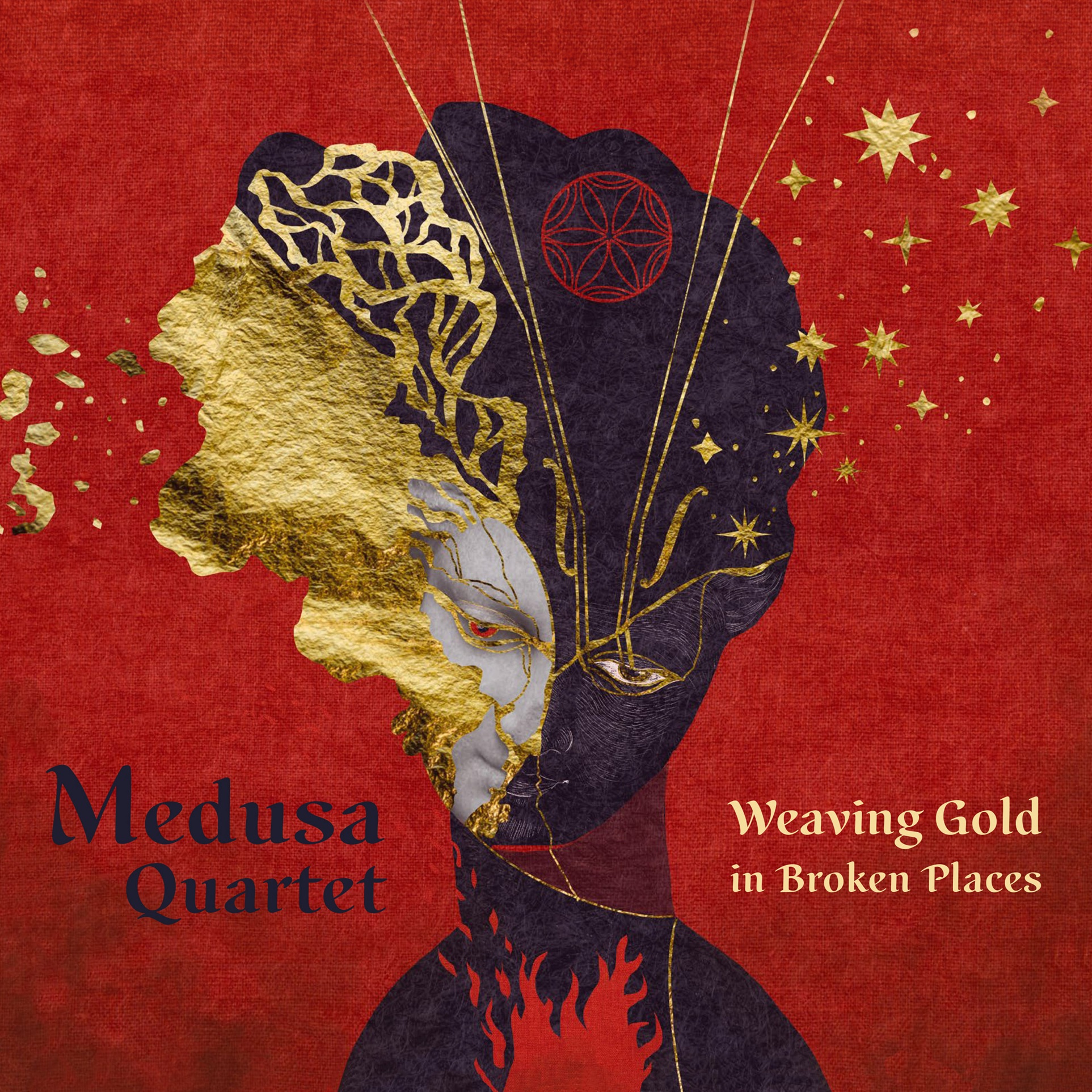
02 Medusa Quartet Weaving GoldWeaving Gold in Broken Places
Medusa Quartet
Independent (medusaquartet.bandcamp.com/album/weaving-gold-in-broken-places-2)

Toronto-based Medusa Quartet – Saskia Tomkins, Marta Solek, Lea Kirstein and Geo Hathaway – create unique global, chamber, and folk music on violin, viola and cello, and such rarely-heard bowed traditional string instruments like the Polish suka, Płock fidel, and Swedish nyckelharpa. Their inspiration to musically blend international, traditional folk and original music in their first full-length album is drawn from Japanese practice of Kintsugi, which mends broken pottery with gold. 

Each composition on this ten-track release is a combination of such styles as chamber, pop, classical and world music. The title track, for violin, nyckelharpa, viola and cello, is composed by Kirstein and arranged by Medusa. It starts slow, with a low pitched, somewhat “sad” melody. This develops into different melodic sections with tight group playing, syncopated rhythms, slightly higher pitched sections, then back to the low theme and a rewarding brief ritardando closing of this folk/classical string quartet.

Kujawiak/Oberek are contrasting Polish dances arranged by Medusa for nyckelharpa, violin, płock fiddle, suka, and cello, the first traditional and the second composed by Sołek. Kujawiak starts slowly, in the lower registers. Love the lower grounding backdrop notes under the expressive melody. Fast Oberek enters with repeated melody lines and toe-tapping rhythms to closing. 

Vulgar Bulgar, composed by Tomkins, features great syncopated melodies, and the pairing of loud rock-like and Bulgarian rhythms. Medusa musicians perform here on nyckelharpa, violin, lyra, and cello and are joined by guest hand percussionist Persian Naghmeh Farahmand.

A “must-listen-to” recording!

Listen to 'Weaving Gold in Broken Places' Now in the Listening Room

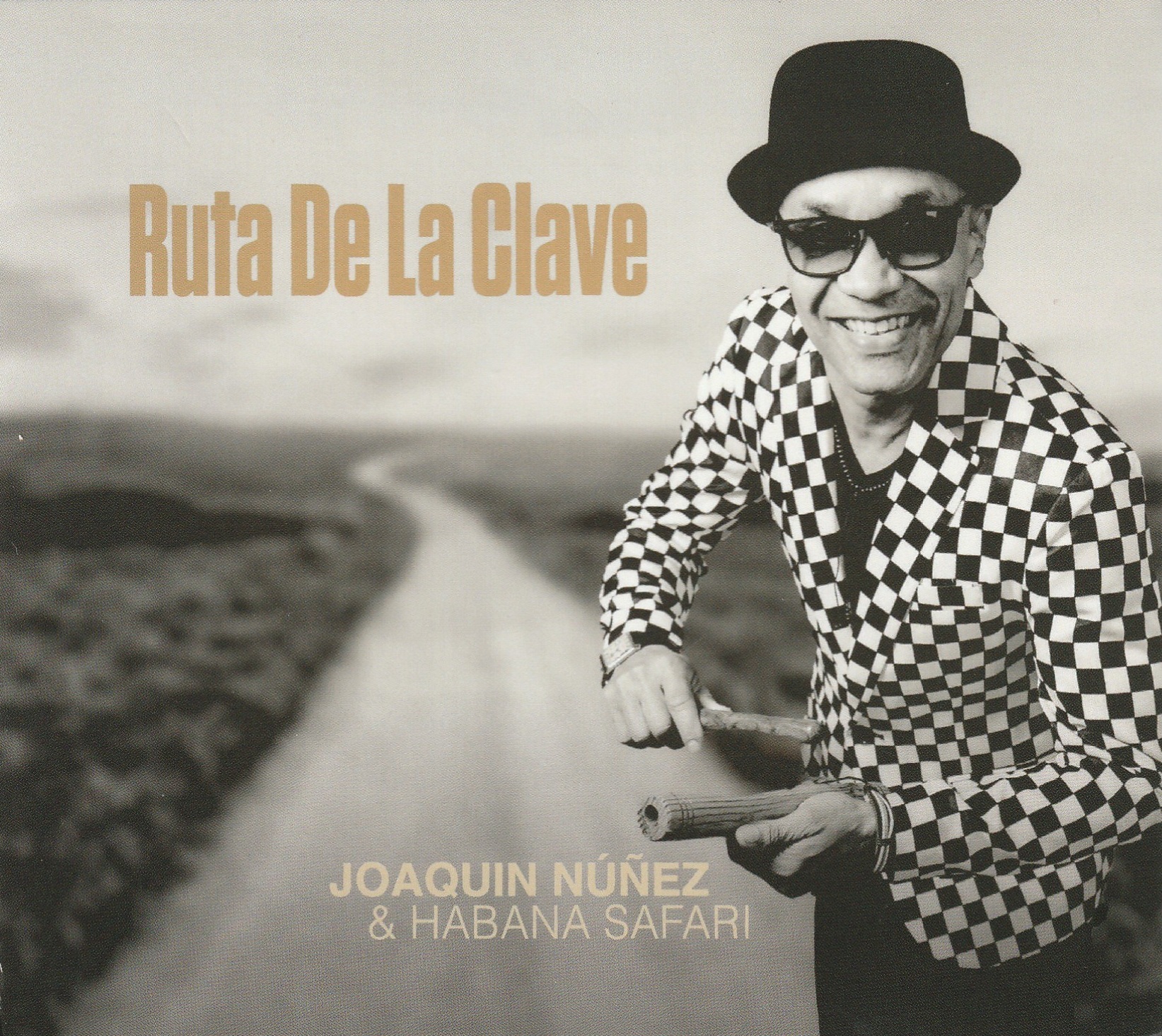
01 Joaquin NunexRuta De La Clave
Joaquin Núñez & Habana Safari
Lula World Records LWR051A (lulaworldrecords.ca/joaquin-nunez-habana-safari)

Five years in the making, noted JUNO-winning, Cuban-Canadian percussionist, composer and producer, Joaquin Núñez has produced an exquisite, contemporary Latin-Jazz recording. Núñez’s partner here is sizzling New York City-based Cuban pianist, Dayramir Gonzalez. All of the superb compositions were penned by the pair, and are a celebration of the essential heartbeat of Afro-Jazz, the “clave” rhythm, which can be found in nearly every Latin-Indigenous culture positioned along the Caribbean slave routes from West Africa.

Although incorporating motifs from a number of Latin musics – this CD is clearly a New York project, infused with Cuban cultural identity, but also baptized in that special energy, creativity and magic that can only be found in one place. Núñez’s gifted colleagues here, include Gonzalez on piano/keyboards, Roberto Riveron and Paco Luviano on bass, Alexander Brown on trumpet and flugelhorn, Jeff King on tenor sax, Luis Deniz on alto sax, Bill McBirnie on flute, Colleen Allen on clarinet, Esteban Vargas on violin and viola, and vocalists Marta Elena, Joanna Majoko and Dyalis Núñez-Machado.

Things kick off with the incendiary Afrocubanos, which features thrilling percussion from Núñez, potent bop-infused horn lines and a face-melting tenor solo by King, as well as a ridiculous trumpet solo by Brown. The listener takes a deep dive into Afro-Cuban mysticism on Mi Changui, supported by dynamic vocals and an exquisite solo from Deniz on alto as well as a volcanic percussion-infused coda.  Other stand out tunes include the stirring title track Ruta De La Clave, which boasts a skilled arrangement with plenty of Cuban flavour, and the magnificent Una Guajira En NY (Cuban country girl in New York), which is loaded with fine bop-centric soloing and continued reverence to the sacred “clave” itself!

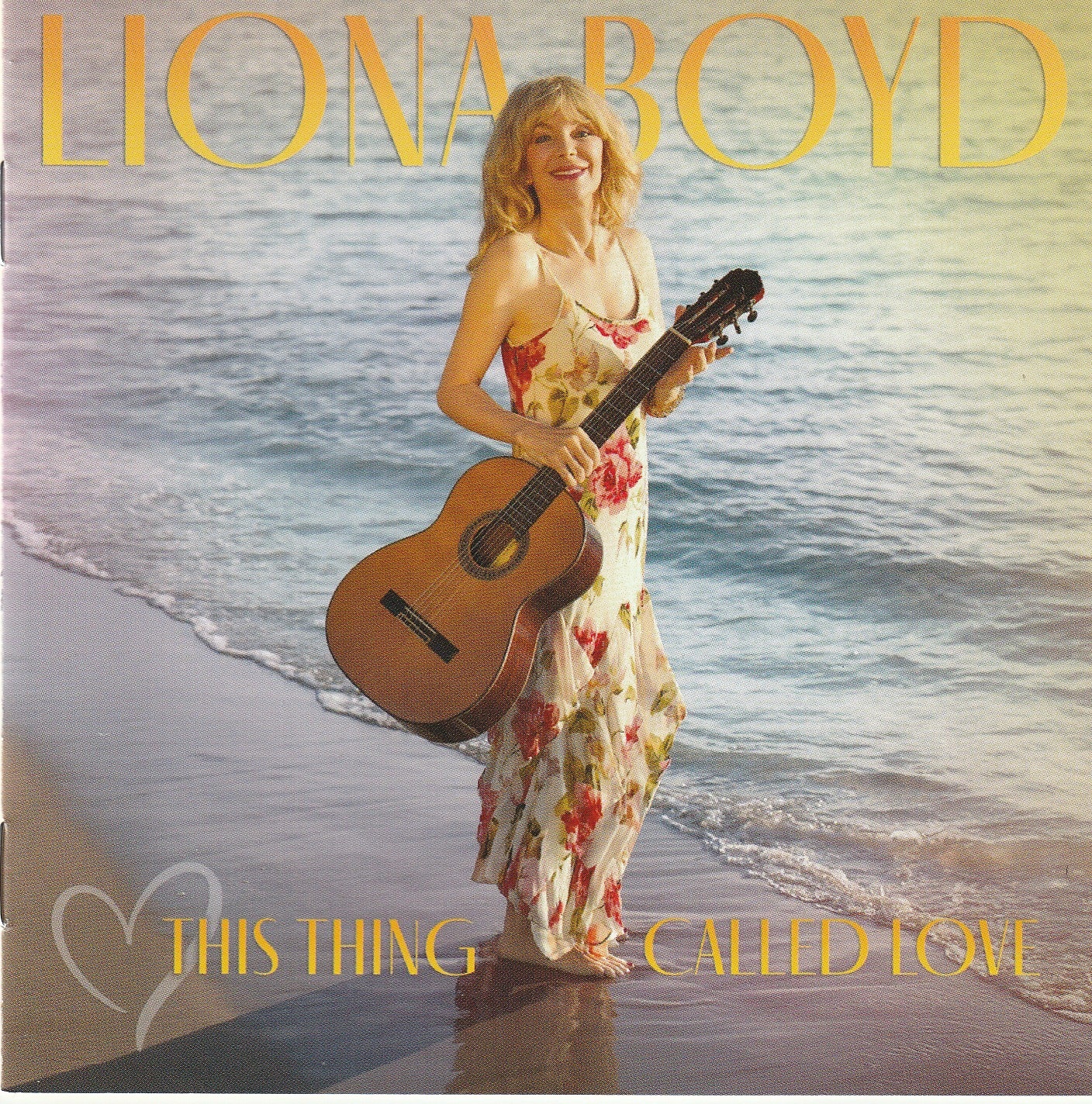
02 Liona BoydThis Thing Called Love
Liona Boyd
Moston Music 471603 (lionaboyd.com)

Internationally renowned, multi-award-winning Canadian musician Liona Boyd blends her classical guitar with folk, pop and Latin music, her singing, and song/lyrics writing skills here. This surprisingly memorable 14-track release, Boyd explains, “covers” her full range of lifetime emotional experiences. It marks her 50-year career, which has included more than 30 recordings.

The first two tracks are covers. The Everly Brother’s Bye Bye Love has Boyd singing with Mark Masri (of The Tenors) in an upbeat rendition with guitar strums and solos. Producer and longtime collaborator Peter Bond’s bass supports Boyd and Srdjan Givoje vocals in Jamaica Farewell. Two of Boyd’s earlier collaborative compositions/recordings are reimagined here. Gordon Lightfoot, a tribute to the late musician’s classics, includes Ronnie Hawkins vocals. Boyd also revisits her collaboration with the late Olivia Newton-John on lead and harmony vocals, with classical instrumental touches in Summer Dreams.

The other tracks are Boyd compositions. My Dog (Dedicated to all animal lovers) is a heartwarming song about pets, in duet with Andrew Dolson, who also plays steel string guitar here. Guitar melody phrasing is perfect. Nice woof-woof like guitar plucks at the ending. My Canada is a rambunctious patriotic work featuring a full orchestra arranged by Mark Lalarna, choirs and numerous Canadian vocalists. Boyd passionately expresses her personal feelings in the instrumental This Thing Called Love, a moving Boyd/Dolson classical guitar duet. Introspective My Life Alone, and high-pitched Living on Borrowed Time are heartbreaking storytelling songs about the ups and downs of Boyd’s life.

Thanks to this iconic artist for sharing her personal emotions and this marvellous music.

Listen to 'This Thing Called Love' Now in the Listening Room

Back to top