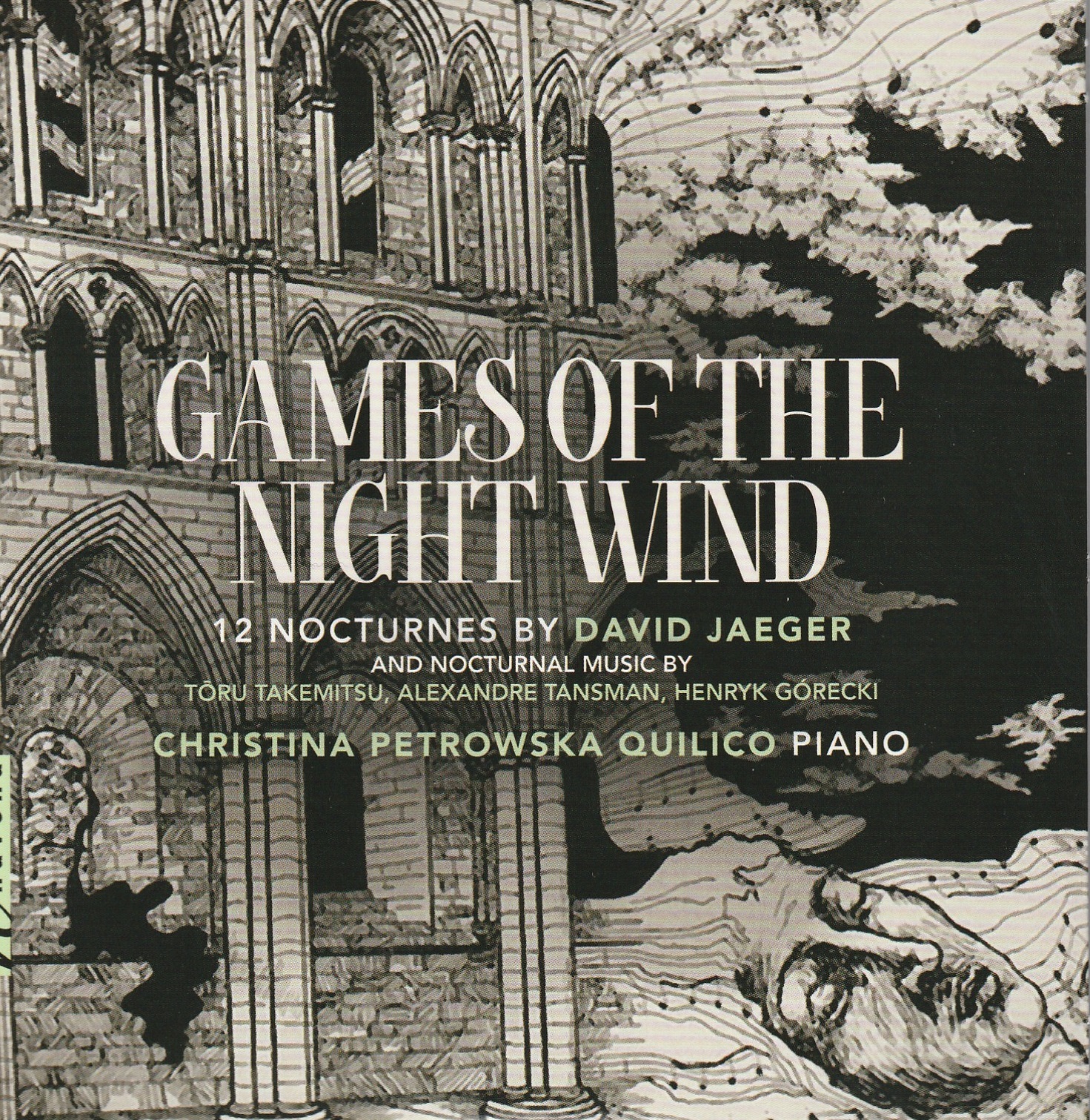
09 Melia WatrasMelia Watras – Play/Write
Melia Watras; Various Artists
Planet M Records PMR-005 (meliawatras.com/playwrite-album)

In the midst of contemporary classical music releases that tend to bank on a cerebral approach to music, here is an album that requires listening with one’s heart. Exploring the relationship between words and music, and close collaborations with composers, performers, writers and poets, Play / Write unfolds an exquisite world in which beauty and dreams flirt with sorrow. Compositions by Melia Watras (also a superb violist), Frances White and Leilehua Lanzilotti focus on strings and involve texts by Herbert Woodward Martin, James Pritchett, Luce Irigaray and Michael Jinsoo Lim (who also plays violin) forming a close bond between what is felt and what is just implied.

The album opens with Watras’ 5 Poems of Herbert Woodward Martin (for narrator, violin and viola). Watras has a particular knack for string writing, expertly using colours and timbres to create melodic and textural vignettes that underline the flow of Martin’s wonderful poetry, spoken theatrically and amusingly by Carrie Henneman Shaw. Performances by Watras and Lim are sensuous and beautiful, particularly in Frances White’s As night falls for violin, viola, narrator and electronic sounds. This poignant piece follows the memories of the female narrator (Sheila Daniels) as she lays on her deathbed. The boundaries between a dream world and reality are dissolved with a juxtaposition of the background and foreground sounds, that is so brilliant we feel intimately involved in its setting. The music adds a visceral dimension to the beautifully simple text by James Pritchett, with string segments going in and out, conversing or lamenting, and never letting go of the intensity of the experience. Lanzelotti’s to be two for violin and viola ends the album’s sonic journey in serene surrender.

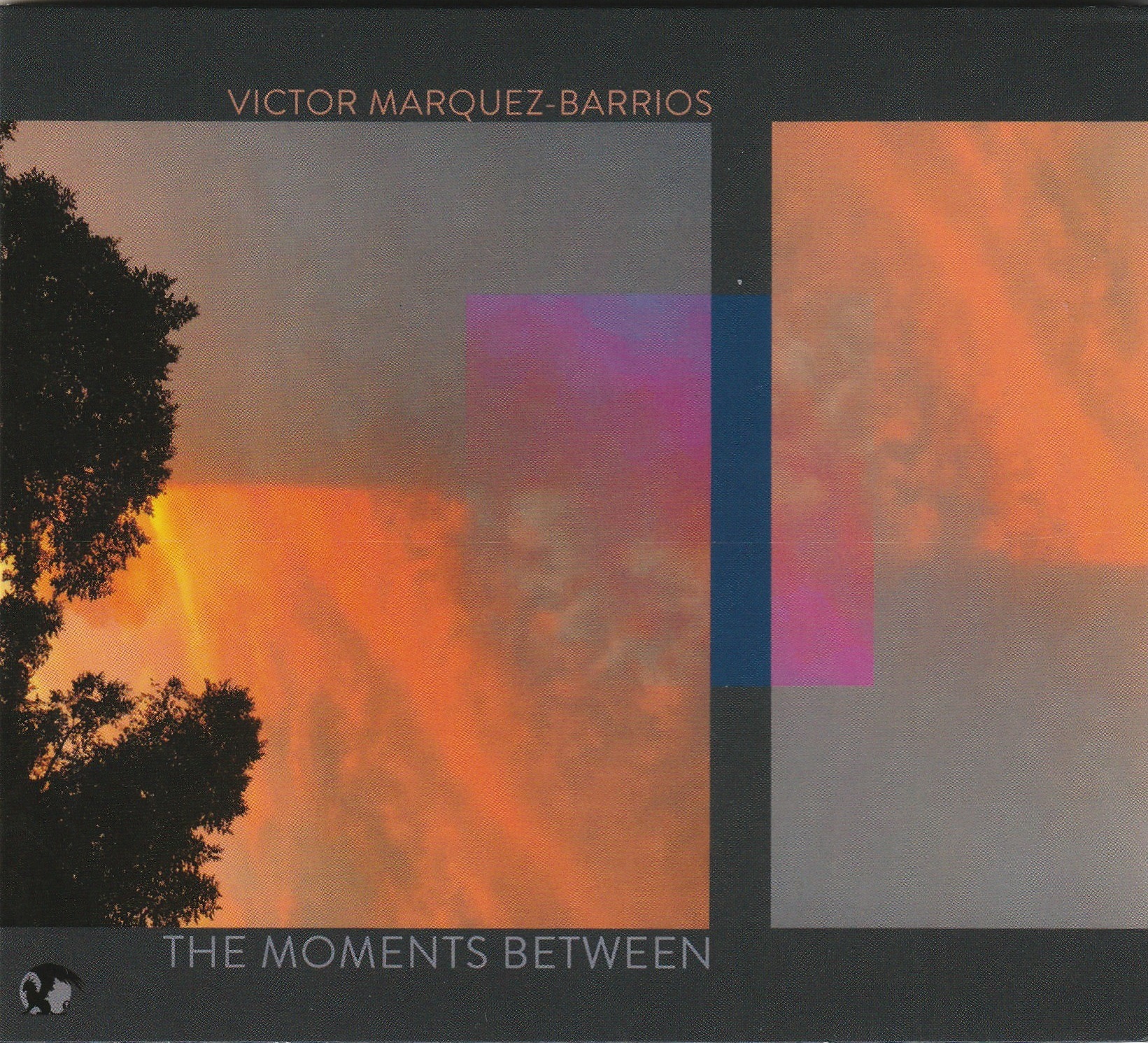
10 Iris Trio Project Earth The Blue ChapterProject Earth: The Blue Chapter
Iris Trio
Centrediscs CMCCD 33924 (cmccanada.org/shop/cmccd-33924)

Newfoundland is poetry and birds and surf, rocks and accents and music. This disc, from the Iris Trio, performing the music of jazz pianist Florian Hoefner, and including the poems of Don McKay, provides a window opening into the experience of being there, reminding the listener to seek what is wild or untainted, if anything of that nature remains to be found. 

Artistic activity that attempts what Blue Chapter does, whether effectual or not, always makes me sad. Fortunately in this instance, it doesn’t also provoke grumbles; rather, I can just listen and forget that the world these artists want to help us appreciate may already be gone. Consider the lament McKay has written for the now extinct Great Auk, whose calls were described in words by naturalists; they died out before the advent of sound recording. Spoken word followed by a musical soundscape, both words and musical cries make us lament what we missed. The sadness isn’t that we don’t know what the cry was like, but that we never will. In Song for the Song of the Great Auk the pathos is undeniable. Kudos to all three players (Christine Carter on clarinet, violist Zoë Martin-Doike and pianist Anna Petrova) for their confident and calm expression. 

In his note in the liner material, McKay ruefully comments on his approximate success in staying “on cue” (“with the beat” for the musicians among us). It’s fun to imagine him struggling on the learning curve with the band, and managing at a far better rate than his self-assigned 70%. 

And there are fun tracks too, there are joyful expressions, there’s a Newfie kitchen party among the nesting birds on the islands. Forgive me for feeling Blue, but that is the colour of this chapter, the first, says the publicity material, of three. We look forward to the next two.

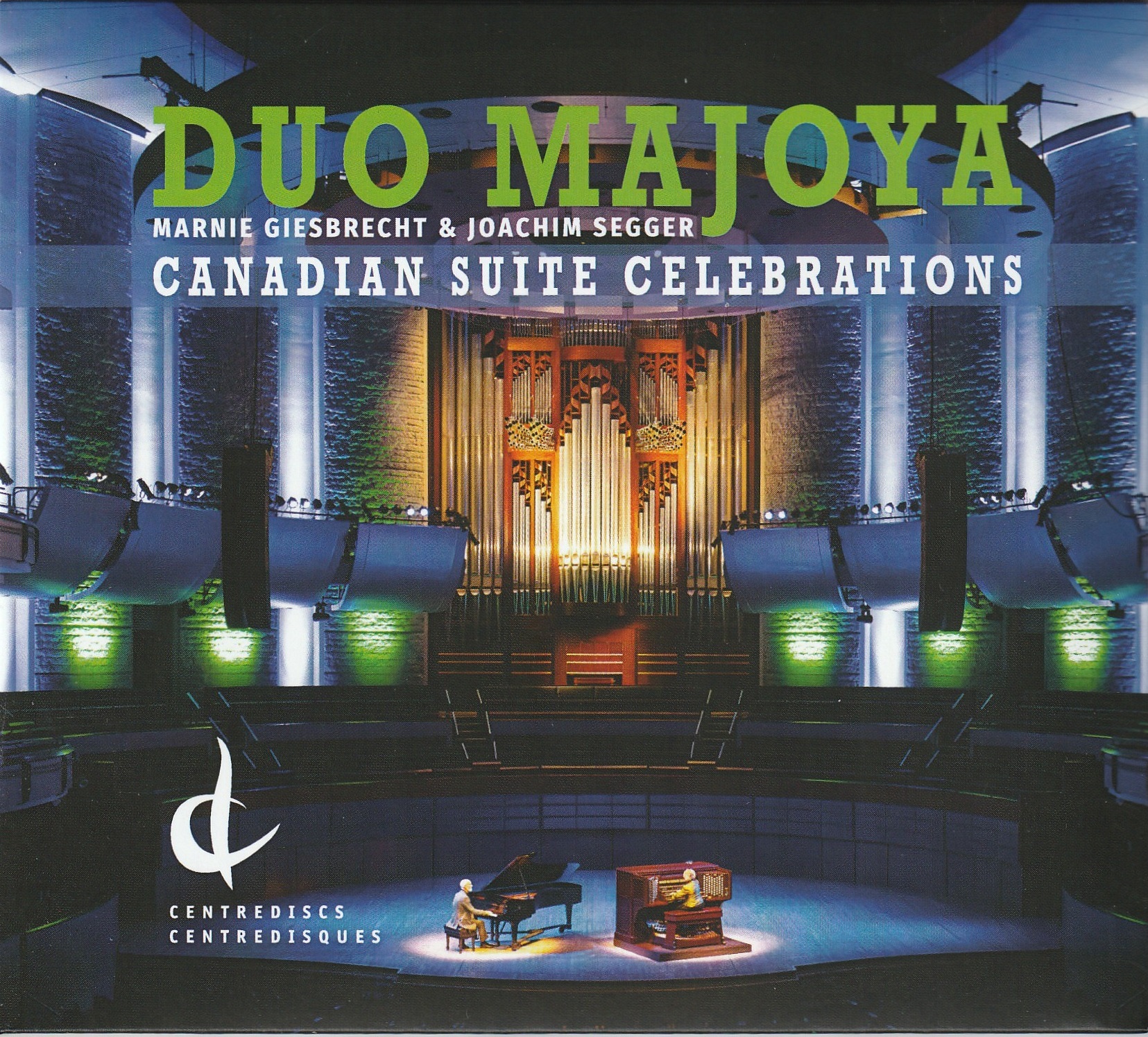
11 Walter KaufmannWalter Kaufmann – Piano Concerto No.3; Symphony No.3
Elisaveta Blumina; Rundfunk-Sinfonieorchester Berlin; David Robert Coleman
CPO 555 631-2 (cpo.de)

After fleeing Nazism in 1934, Czech-Jewish Walter Kaufmann (1907-1984) composed and conducted for radio in Bombay and films in London, then became the Winnipeg Symphony Orchestra’s first music director (1948-1957) before teaching ethnomusicology at Indiana University. When I reviewed the first-ever CD of his music (The WholeNote, September 2020), performed by Toronto’s ARC Ensemble, I wrote, “(I) hope that this superb CD will inspire more recordings of Kaufmann’s music.”

That’s exactly what happened! That CD so “fascinated” Berlin-based conductor David Robert Coleman that he decided to record four works selected from Kaufmann’s manuscripts in Indiana University’s library. Three of these works reflect Kaufmann’s studies of Indian ragas, melodies and rhythms, admiringly incorporated into his essentially European, late-Romantic compositions, just like the pieces recorded by the ARC Ensemble.

Symphony No.3 (1936) and An Indian Symphony (1943) date from Kaufmann’s years in India. Soulful woodwind solos, pulsating strings and dramatic brass and percussion recall the music of solemn Hindu rituals and jubilant dances that I heard during three trips to India. Six Indian Miniatures (1965), dominated by long-lined, wistful woodwind melodies over slowly throbbing strings and percussion, ending in boisterous revelry, testify to Kaufmann’s enduring love of India’s music. 

There’s nothing “Indian” about Kaufmann’s colourfully exuberant, Ravel-like Piano Concerto No.3 (1950), two extroverted, percussive movements framing a contemplative Andante, brilliantly performed by Elisaveta Blumina. Conductor Coleman, echoing my 2020 review, hopes this CD will help Kaufmann’s music “find the recognition it deserves.” So do I.

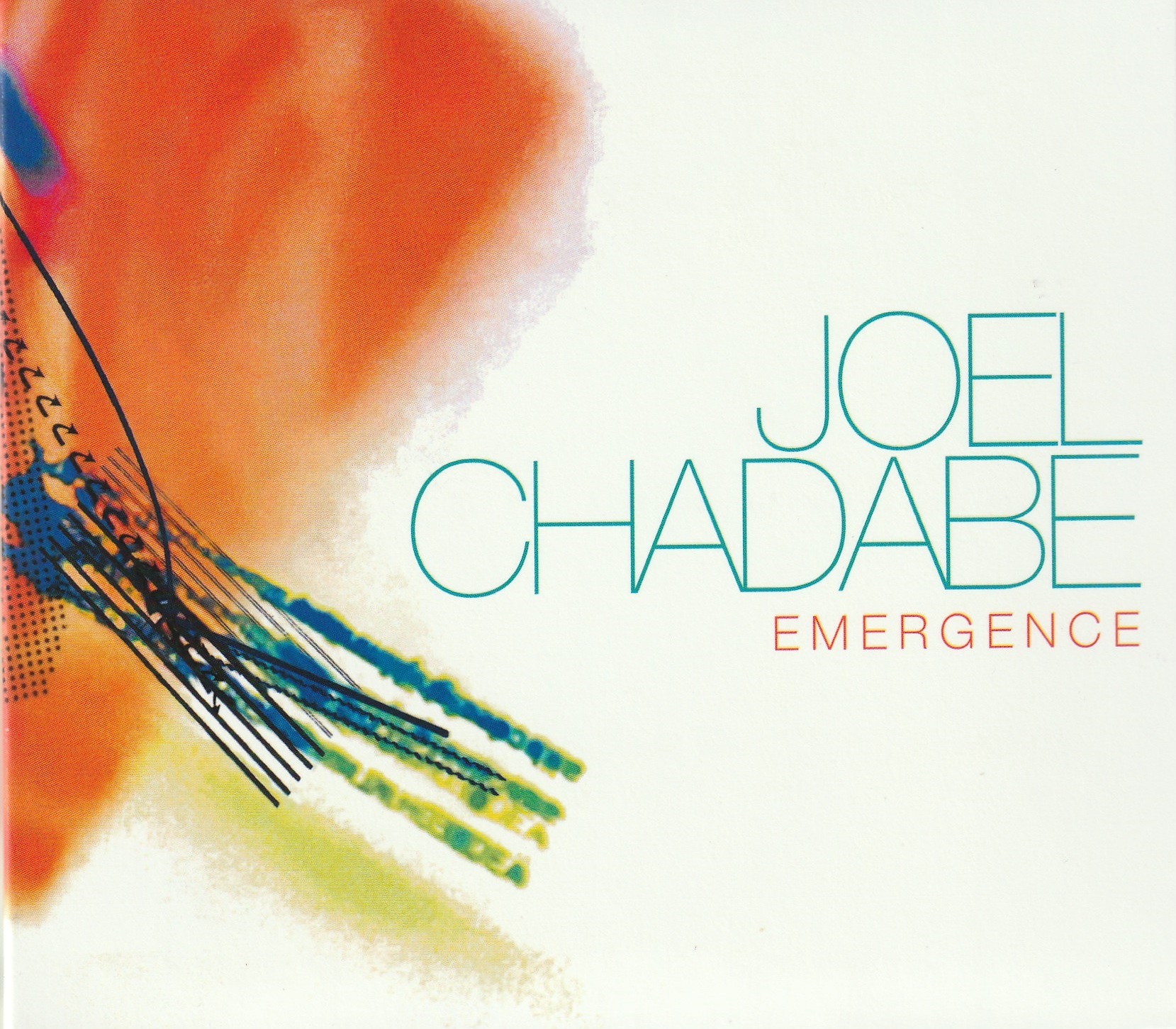
13 Ebony ChantsEbony Chants
Paolo Marchettini
New Focus Recordings FCR402 (newfocusrecordings.com)

Ebony Chants, featuring the music of clarinetist Paolo Marchettini, is a day in the life of the second-most listenable woodwind (after bassoon). It opens with the first of Due Canti: Il canto del giorno, and closes, after much business and play, with the suitably named counterpart, Il canto della notte.

  For several works Marchettini is joined by  Meng Zhang and Ka Hei Chan on clarinet and Tommy Shermulis on bass clarinet. The parts are rotated democratically (if the listing order on the jacket indicates what it seems to). They are all excellent, and the material is mostly in brief segments lasting in the range of one to three minutes. Most delightful are his Cinque Fanfare Napoletane, which reference popular traditional melodies with affection and humour. Nothing is ever trite, although on the overly-serious side I am less of a fan of Nec Clari, a somewhat foggy multi-track overdubbing of the composer’s own playing. At over six minutes I lose attention (a product of my times, I admit), and I find his tone on bass clarinet to be less than compelling. Shermulis, by contrast, sounds terrific both as ensemble member and soloist for Entrée, a tough-sounding solo work. I’d love to hear him take a swing at Soft, Franco Donatoni’s work for the same instrument. 

Sad to say, the online jacket material includes only Marchettini’s bio details, not those of his collaborators, a detail I mentally file alongside other examples of sub-optimal digital publishing.

Listen to 'Ebony Chants' Now in the Listening Room

15 Kamalah SankaranKamala Sankaram – Crescent
Kamala Sankaram; Andie Tanning; Ludovica Burtone; Joanna Mattrey; Mariel Roberts
Neuma 187 (neumarecords.org)

Listening to Crescent by Kamala Sankaram it is important not to be blinded by her use of post-production techniques and devices. Focus your attention instead on the theme of the programme: the all-too-prescient demise of humanity by its own hand raised as if in a defiant gesture aimed at mastering the fate of spaceship earth.

The programme is divided into two works – Crescent, a hypnotic and lyrical chronology of the destruction of the beautiful ecology of the planet that has forgotten its celestial creation, terrestrial beauty and artful history. Cue the poetry of W.B. Yeats here. This is en route to destruction by manufactured scientific pseudo-progress. This demise is tracked by Sankaram’s mesmerising narration of her Heat Map series, to show how over the past hundred years or so the planet is hurtling towards destruction by global warming. This part of Sankaram’s programme ends with the clairvoyant, vocal-and-percussion driven song Crescent delivered in a sotto voce wail.

The second part of the programme features Sankaram’s voice emerging through a tremendous arco introduction by a string quartet. This work is entitled 5 Rasas (rasa means essence or taste). The pregnant vibrancy of the bowed introduction redolent of bells, electronica and field recordings of the twittering songs of birds, has a mystical pastoral quality. Sankaram’s vocals emerge from this prerecorded passage like an electrifying polytonal scherzo, performed with an almost mesmeric processional rhythm.

Listen to 'Kamala Sankaram: Crescent' Now in the Listening Room

16 Takacs Assad LabroTakács Assad Labro
Takács Quartet; Julien Labro; Clarice Assad
Yarlung Records YAR59691 (yarlungrecords.com)

The Takács Quartet was formed almost 50 years ago in 1975 in Hungary. Now based in the United States, original member András Fejér (cello) is joined by Edward Dusinberre and Harumi Rhodes (violins) and Richard O’Neill (viola). World-renowned for their performances of traditional mainstream string quartet repertoire and some contemporary works, here they expand outside the classical realm with guests Julien Labro (bandoneon/composition) and Clarice Assad (piano/vocals/composition).

The seven compositions jump around stylistically yet still connect. Circles by Bryce Dessner begins with Labro’s calming bandoneon changing to fast florid virtuosic lines supported by contrasting strings with detached ascending/descending lines and rhythmic shots. Labro composed Meditation No.1 during the pandemic. The lyrical bandoneon plays held notes above string lines, tight conversations with strings, bellows shakes and tango stylings referencing Labro’s respect for Piazzolla and Saluzzi. 

Multi-talented Clarice Assad is represented by three works here. She composed and performs Luminous from Pendulum Suite for solo piano where the fast percussive piano start leads to modulating lines drawn from Brazilian jazz supporting her rhythmic scat-like vocalizations. Constellation is a three-movement work for piano and violin to be played in any order. The final track, Assad’s Clash, is inspired by society’s stressful social tensions. Intriguing strings at times sound like solos yet all fit together. A great mix of snippets of styles and tempi, I like the accents and string plucks making a “clash” effect, and the closing dark, grim cello and bandoneon interchanges. Intriguing works by Milton Nascimento and Kaija Saariaho are also included, making for a brilliant, wide-ranging and colourful disc.

Listen to 'Takács Assad Labro' Now in the Listening Room

Back to top