06 Kurtag Brigitte PoulinGyörgy Kurtág – Játékok
Brigitte Poulin
Leaf Music LM 302 (leaf.music/music/lm302)

Now 99 years old, György Kurtág has been writing tiny pieces for piano since 1973, gradually accumulating these miniatures into ten volumes of Játékok (“Games”). They are gaining increasing attention from major pianists, with excerpts recorded by Leif Ove Andsnes (2009) and Vikingur Ólafsson (2022). This year has now seen two releases dedicated exclusively to selections of these works: a two-disc set from Pierre-Laurent Aimard appeared in April, and October saw the release of a single-disc survey from Montreal-based Brigitte Poulin.

The 50 pieces on Poulin’s album range in length from 21 seconds to a little under three minutes, and include several world-premiere recordings. In these “Games,” Kurtág was inspired to explore sounds on the piano just as occurs with “children playing spontaneously, children for whom the piano still means a toy. They experiment with it, caress it, attack it and run their fingers over it.” Poulin is attuned to the intensity and variety Kurtág brings to these pieces, creating whole moods in just seconds of music. They range from playful to gentle, mournful to energetic, capable of communicating deep emotion in only a few moments and often in only a few notes.

Poulin’s range of sound is wide, from the most delicate pianissimi to resonant chordal clusters, fully attuned to Kurtág’s immense sound palette. She is attentive to Kurtág’s instructions when the music is notated precisely, but also creative when the composer provides only an approximate graphic notation. Listen to the sparkle of Thistles, the contrasts in Scherzo, and the quiet intensity of Quiet Talk with the Devil to get an idea of Poulin’s range and naturalness in this music. 

Whether sampled a few at a time, or taken together as a 70-minute suite, this recital is an impressive achievement that should be heard by all admirers of contemporary piano music.
Listen to 'György Kurtág: Játékok' Now in the Listening Room

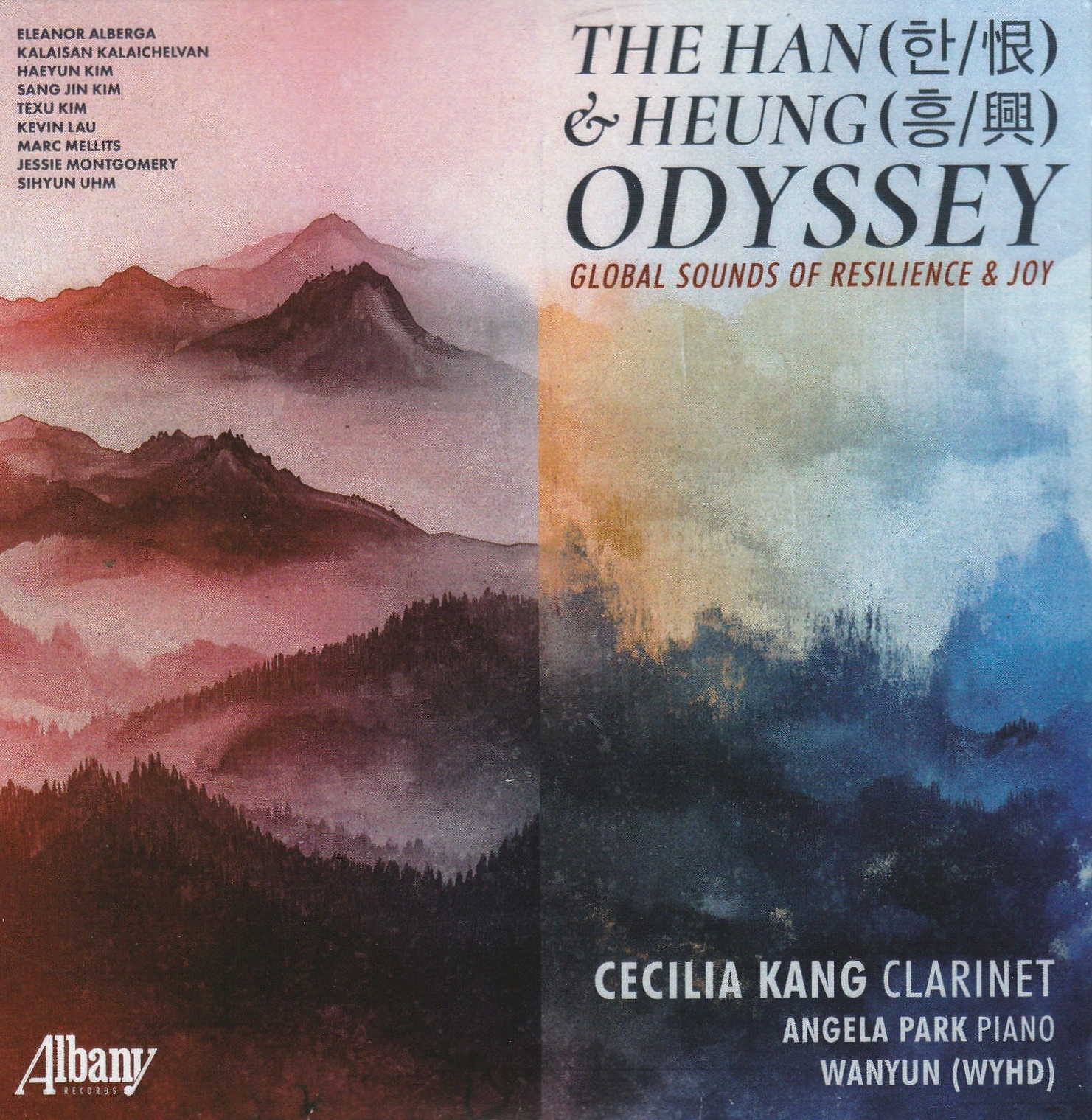
07 Han Heung OdysseyThe Han & Heung Odyssey – Global Sounds of Resilience & Joy
Cecilia Kang; Angela Park
Albany Records TROY 2005 (albanyrecords.com/catalog/troy2005)

Korean-Canadian clarinetist Celia Kang commissioned seven of these ten short pieces to express musically two essences of Korean culture – han (suffering) and heung (joy); Canadian pianist Angela Park contributes in seven selections.

The WenYun Ensemble – vocalist Yeowan Choi and live-electronics performer Haeyun Kim – joins Kang in two pieces by Kim. Arirang Madrigal and Poetree share yearning vocalises and dreamy sensuality. Marc Mellits’ Andromeda portrays his grandparents’ migration from Eastern Europe to the U.S. with jaunty clarinet tunes over repeated electronic figurations. Kang’s clarinet turns jazzy in SiHyun Uhm’s Echoes of Hahoe: A Masked Reverie for clarinet, piano and electronics, based on Korean ritual dances.

The slow, ruminating Peace reflects Jessie Montgomery “making peace with sadness as it comes and goes.” Texu Kim’s Sweet, Savory and Spicy!! depicts a Korean chili paste with lively syncopations and discordant wails. Fragmented clarinet melodies over pulsating piano ripples evoke “boat song traditions, and how they resonate with people facing exile” in Kalaisan Kalaichelvan’s Do the waters stutter?

Eleanor Alberga’s Duo features abrupt clarinet phrases and pounding piano chords “internalizing han (a deep unresolved sorrow).” Kevin Lau’s Cradle embraces both han and heung in a disturbed lullaby, “honouring my mother’s resilience” (after childhood internment in India) “and the pain that must have accompanied the joy of raising her own family.” Sang Jin Kim’s gentle, bluesy Ballade ends the disc with “the quiet ache of han and the uplift of heung, where sorrow and joy intertwine.”

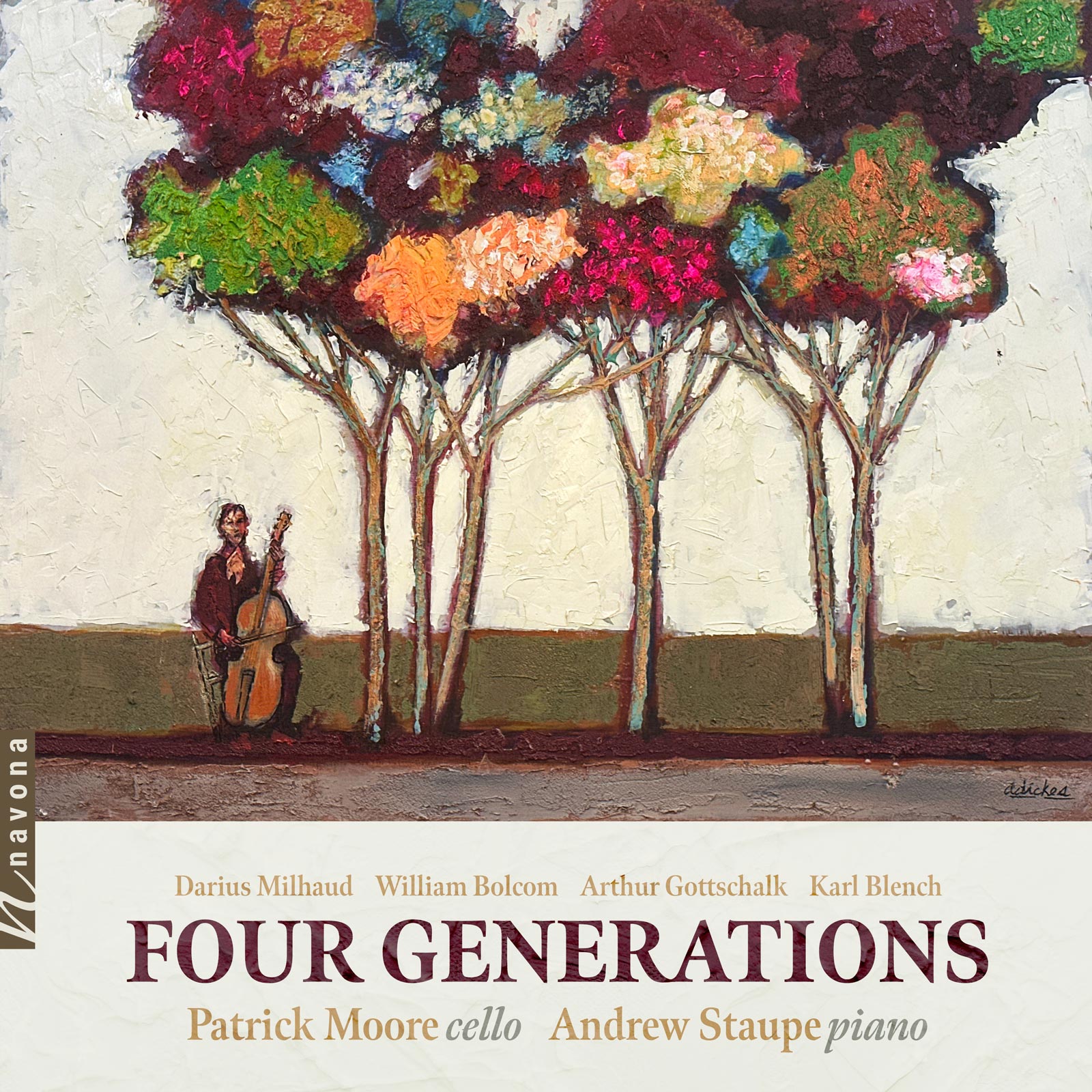
08 Four GenerationsFour Generations
Patrick Moore; Andrew Staupe
Navona Records nv6766 (navonarecords.com/catalog/nv6766)

Like the biblical series of “begat”s, these four works for cello and piano are linked by sequential relationships, in this case, those between teachers and students: Darius Milhaud taught William Bolcom, who taught Arthur Gottschalk, who taught Karl Blench.

Lasting only a little over four minutes, Milhaud’s Elégie (1945) is no lamentation; instead, it’s sweetly nostalgic, the cello’s long-lined lyricism shifting gently between major and minor modalities. Pulitzer-laureate Bolcom’s 18-minute Cello Sonata No.1 (1989) mixes, he writes, “traditional, popular and modernist musical languages…to form a serious piece of music with a serious sense of humor.” The always-eclectic Bolcom channeled Broadway blues (Allegro inquieto), Brahms (the lovely, sentimental Adagio semplice) and Bartók (the motorized Allegro assai) in this always-entertaining pastiche.

Gottschalk’s 23-minute Cello Sonata: In Memoriam (2006) presents, says Gottschalk, three “personality sketches” of “men who meant so much to me personally.” The first is alternatingly enigmatic and rambunctious, the second intensely melancholy, the third aggressively assertive. It’s a work with its own intriguing, multifaceted “personality.”

The seven movements of Blench’s gripping 26-minute Dreams and Hallucinations (2014, rev.2022) depict, writes Blench, the delusions of “The Man…a tragic character, trapped in his own mind.” Ominous, tolling chords, anguished wails, obsessive rhythms and nightmarish dissonances effectively create a disturbing sonic mirror of “The Man’s” disturbed mind.

Cellist Patrick Moore and pianist Andrew Staupe, both Texas-based, bring passion and depth to these very different, yet very engrossing compositions.

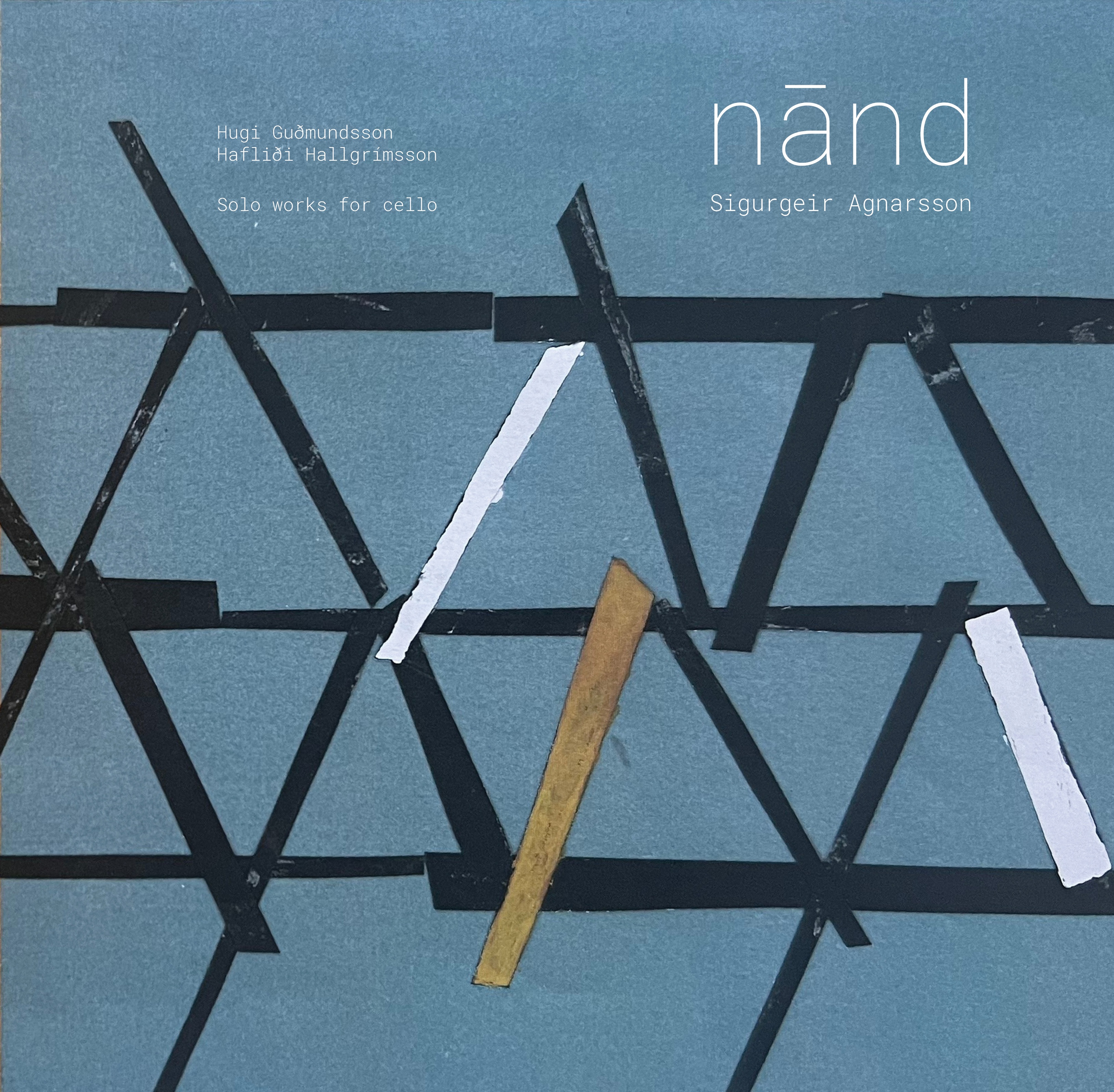
09 NÁND coverdesign frontNÁND – Works for Solo Cello
Sigurgeir Agnarsson
Crescendo CRESC001 (crescendo.is/nand)

I can’t think of a more descriptive title for this debut solo album by cellist Sigurgeir Agnarsson than Nánd – meaning “Intimacy” in Icelandic – and the beauty and serenity of the works are drawn out by the purity and nearly effortless playing of this principal cellist of the Iceland Symphony Orchestra. Of the five solo cello works included, all but one – Hallgrimsson’s 1969 Solitaire I – are world premiere recordings by two of Iceland’s premier composers; works by cellist/composer Hafliði Hallgrímsson and his nephew Hugi Guðmundsson.

Beginning with Guðmundsson’s Coniunctio (translating from Latin to “Presence/Intimacy”) the most recent work on the album was composed for and dedicated to Agnarsson. The work is divided into five short movements, each inspired by a specific memory the composer had of Agnarsson, delicately tracing visual poems and often employing double stops reminiscent of the iconic spare, open harmonies Icelandic music is known for. I was instantly captivated.

Guðmundsson’s next Alluvium is a beautiful mix of left-hand pizzicatos and double stops. Written in 2015 for Danish cellist Brian Friisholm for a concert series where he paired a new composition with J.S. Bach’s fifth suite and for which he matched the suite’s scordatura tuning, Alluvium beautifully depicts the natural Icelandic phenomenon where glacial rivers “flow over vast sands and fork into different directions before rejoining and flowing to the sea.” Veris (“Youth” in Latin), commissioned in 2019 for Danish cellist Toke Møldrup, inspired by the work Youth by Ditlev Blunck (part of a series of works about the human life cycle) employs a spare use of electronics to “freeze” short moments in time while the cello moves on. It’s unclear whether the electronics are written to be played by the cellist or by some other means, but the effect is truly stunning.   

Hallgrímsson’s Solitaire is a work of five short movements originally written in 1969 and premiered by the composer, an esteemed cellist who turned to composition full time in 1989. It was revised and dedicated to cellist Gunnar Kvaran who premiered this version in 1991. It shares the intense spareness of the previous compositions while enriched with textures. The fifth movement Jig is a favourite and could stand alone. Hallgrímsson’s Solitaire ll ends with an energetic Perpetuum Mobile to close the album. 

I’ve always been a fan of solo instrumental works and this album will be close by for a long time.

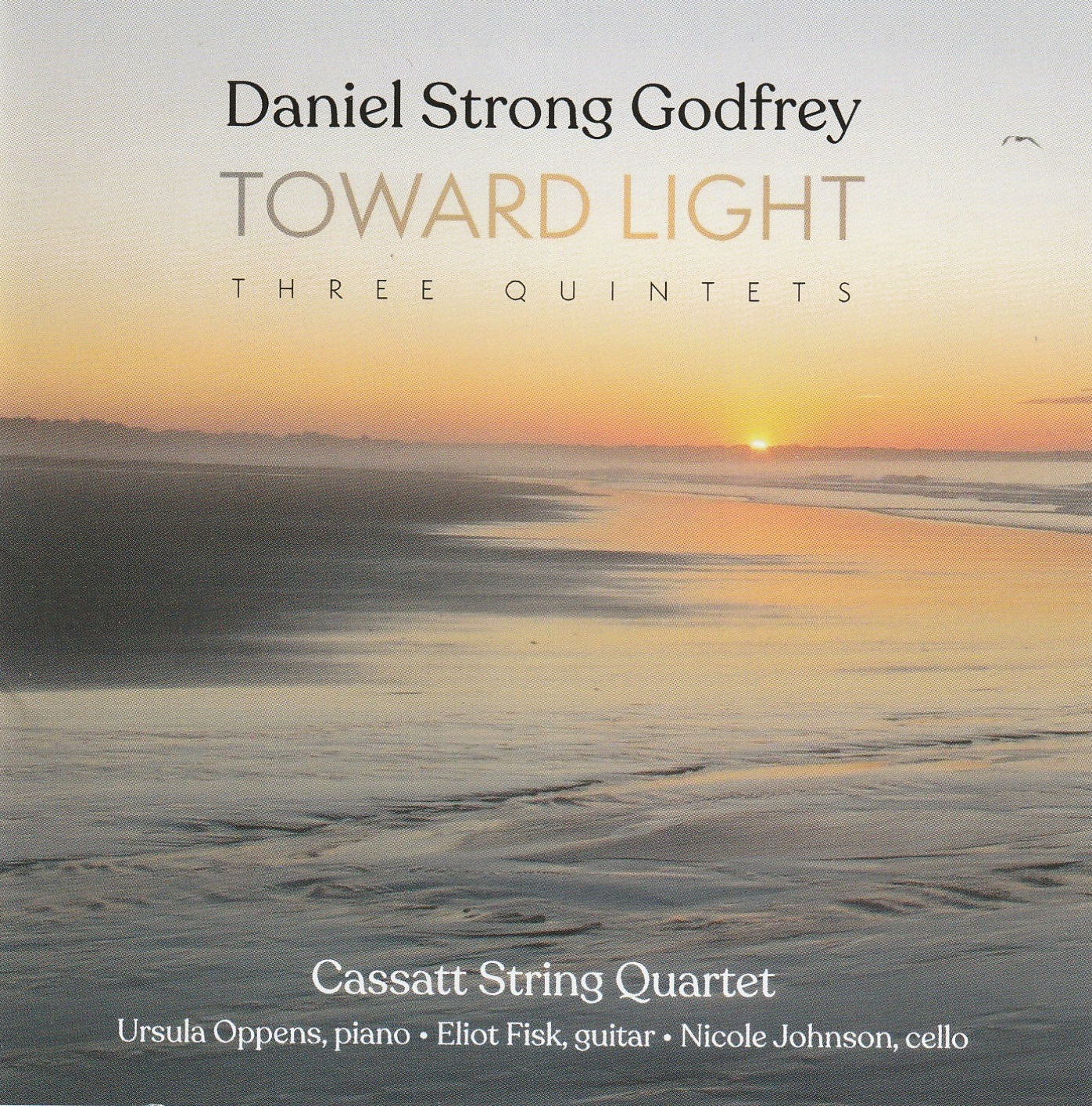
10 Daniel Strong GodfreyDaniel Strong Godfrey – Toward Light
Cassatt String Quartet; Ursula Oppens; Eliot Fisk; Nicole Johnson
New Focus Recordings FRC467 (newfocusrecordings.bandcamp.com/album/daniel-strong-godfrey-toward-light-three-quintets)

Pianist Ursula Oppens, cellist Nicole Johnson and guitarist Elliott Fisk join the New York-based Cassatt String Quartet in three quintets by American Daniel Strong Godfrey (b.1949).

Godfrey says his piano quintet from 2006, Ricordanza-Speranza (Recollection-Hope) “is shaped by a sense that both memory and hope remain elusive and at odds.” Adagio poco rubato begins tentatively, builds to an intense climax, then subsides, returning to the opening uncertainty. Con fuoco’s swirling strings and Oppens’ percussive outbursts are followed by lyrical calm. The brief Interlude, a cadenza for solo piano, leads to the finale, Adagio poco rubato; con anima, a celebratory dance gradually fading to silence.

The title of the string quintet. To Mourn, To Dance (2013), is taken from Ecclesiastes’ list of opposites, each thing having its own “season.” The grim Prelude is an adagio filled with dense, chromatic textures. Danza is transparent, graceful and wistful. Interlude, another adagio, spotlights the “extra” cello’s extended lament. The vigorous Fugue-Tarantella, with violins cheering over grinding cello strokes, ends the work in thrilling fashion. 

Godfrey’s dark-hued guitar quintet, Toward Light (2023), was composed, he writes, amid widespread “fear, exasperation and tenuous optimism.” Constantly shifting in tonality, meter and string sonorities, it describes, says Godfrey, “a journey from faltering light and prayerful expression” (Dusk: Prayer) “to a somewhat macabre minuet-like dream music” (Midnight: Dance), the Cadenza for solo guitar leading to the finale (Dawn: Escape) “that runs desperately toward the light – one hopes – of a better day.”

Listen to 'Daniel Strong Godfrey: Toward Light' Now in the Listening Room

11 Penumbra Gamelan Alligator JoyPenumbra
Gamelan Alligator Joy
Songlines (songlines.com/release/penumbra)

Founded in 1990, Gamelan Alligator Joy is a Vancouver area composer-musician collective here represented by 13 musicians. Fifteen years in the making, Penumbra is its third release. During that time five longtime composers of the group – Michael O’Neill, Mark Parlett, Sutrisno Hartana, Andreas Kahre, Sam Salmon – kept busy composing and workshopping new works.

Seven new compositions for Javanese gamelan gadhon are featured, exploring the expressive potential of gamelan to render “a multiplicity of emotions and thoughtscapes.” 

The opening track, Hartana’s Bahureksa, incorporates instruments and songs from the Indonesian island of Sulawesi skilfully blended with Javanese gamelan, plus solo and choral sections. As a Javanese-born gamelan player, teacher and composer in Canada, Hartana’s inspiration is culled from his own extensive cross-cultural musical journeys.

Parlett’s Dice Over Easy superimposes his minimalistic rhythmic, structural and harmonic language onto Javanese tonal modes and performance practices. His compositional strategy here features instruments timbrally outside the gadhon’s tuned and untuned percussion. An example: high keening suling slendro solos. Softly plucked strings of the ukelin (a rare hybrid zither) also meander across the soundscape, while occasional fretless bass lines add the frisson of surprise.

Peregrinations in Palindromnia is Parlett’s through-composed meditation for gadhon, driven by the eloquently dramatic poetic narration by DB Boyko. Spare music and text evoke aspects of place, transience, death and return in the natural world, finding solace in a sense of suspension.

Salmon’s terse 96 Tiers references the 1966 proto-punk song 96 Tears, yet musically it quickly develops into a richly sonorous process piece, divided into 96-beat sections. 96 Tiers also pays homage to early minimalist music – roots of which were coloured by gamelan.

Don’t adjust your playback volume: Kahre’s Let N = N requires musicians to play instruments with their fingers, dispensing with typical mallets. This focus on delicate tactility extends to the bowed string rebab melodies sensitively played by Hartana woven through the gauzy percussive textures.

O’Neill’s ambitious 15-minute Mode of Attunement features a prominent part for retuned piano dynamically rendered by Rory Cowal in dialogue with the gadhon. O’Neill cautions that it’s “not a concerto for retuned piano, [but rather it] artfully explores subtleties around integrating the two forces.” A totally unexpected yet effective outsider instrument here is the jaw harp, outlining piano rhythms in one movement. The work takes us on a “nocturnal journey in 11 episodes filtered through hypnogogic consciousness.”

O’Neill’s Grotto: Ventriloquial Investigations on the other hand is a Beckettian spoken-word mini-opera with O’Neill voicing both himself and Seamus, his wisecracking baritone puppet. Adapting original and borrowed texts, it’s set in an underground grotto evoking both Plato’s cave and Jung’s unconscious. We hear songs, jokes, instrumental gamelan interludes and philosophical sparring, all “circling around the ultimate unanswerable questions.”

Penumbra stands as Gamelan Alligator Joy’s latest statement of its long commitment to creating new music beyond the received borders of Javanese gamelan genre, style and approach. Both an eloquent summing up of Vancouver’s gamelan founding generation and a collection of accomplished postclassical music looking to the future, Penumbra represents a high-water mark on Canada’s gamelan-centred music shores.

Back to top