04 Lesley TingWhat Brings You In
Leslie Ting; Various Artists
People Places Records PPR | 045 (peopleplacesrecords.bandcamp.com)

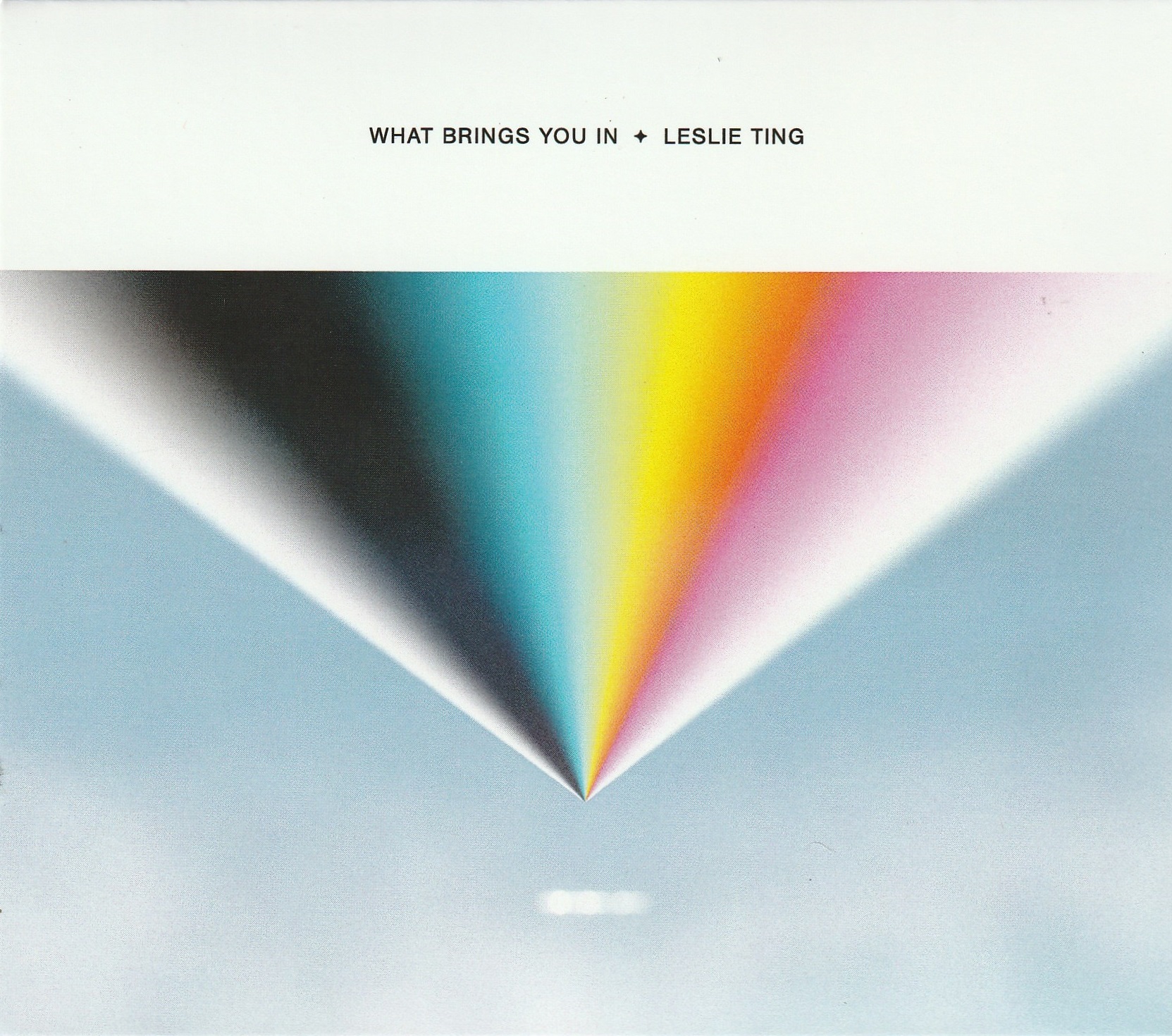
Toronto-based violinist and interdisciplinary artist Leslie Ting’s creative output has incorporated elements of installation and theatre as much as pure musical expression. Her unusual career trajectory is also of note. After working as a licensed optometrist, from 2013-2017 she served as Associate Principal Second violinist in the Kitchener-Waterloo Symphony Orchestra.

Ting’s theatre work Speculation layered the music of John Cage and Beethoven with a monologue and projections to tell the story of her mother “slowly losing her vision, while [Leslie] makes a career change to pursue her dream of becoming a professional musician.”

An unconventional, ambitious debut album What Brings You In is much more than a violin recital of contemporary repertoire. Calling it, “A violinist confronts the noise of her psyche in an electroacoustic soundscape,” Ting operates both as a director and performer in the project, employing talk therapy, hypnotherapy, dreamwork, sandplay, somatics and reiki in her creative process with her co-musicians. 

Having been produced as a live theatrical event and a web-based installation, for this five-track audio recording of What Brings You In Ting has collaborated with several Canadian musicians: Germaine Liu on percussion and amplified sandbox, while Matt Smith, Rose Bolton and Julia Mermelstein provided electronic sounds, the latter two also contributing compositions.

The album also features Ting as eloquent solo violinist, beginning with Linda Catlin Smith’s delicately austere violin and percussion composition Dirt Road. Bolton’s Beholding for solo violin and electronics follows the composer’s sometimes turbulent internal therapeutic transformation. Mermelstein’s Folds in Crossings couches Ting’s violin performance in orchestral sounding electronic textures, culminating in a final peaceful violin sigh.

05 Dystophilia MC MaguireMC Maguire – Dystophilia
MC Maguire Orchestra/CPU
Neuma 190 (neumarecords.org)

The other day when I heard my neighbour’s pounding bass (something pop, disco or otherwise annoying) I responded by turning Dystophilia, M.C. Maguire’s new release, up to 11; the battle ended soon after. He offers sound-pressure supremacy that out-cools whatever tired torch song or clichéd show tune my neighbour enjoys. As a pacifist I don’t relish these battles, and only engage when the next-door volume is too high for my peaceful soul, but Maguire’s Yummy World (track one, followed by Another Lucid Dream) provides sonic delight as well as firepower. That said, I caution against the all-out assault: this is rich and textured music, so while high-volume might be your thing, you’ll possibly miss some of the depths if you indulge in your kink too much. You do you, though, no judgement.

Gone are the days, I think, when record executives would target sound thieves in their war on audio crime (aka creativity). There’s just way too much borrowing or sampling today. They all make a mint on streaming platforms, anyway, enjoying profits from the Justin Biebers of the industry. How can they prevent Robin Hoodlums like Maguire from using a tune like Yummy to generate the mind-blowing soundscape presented here? Do I hear the Beebs? Arguable. What I definitely hear is pop-mageddon, a kind of hyper-layered riff on every aspect of the aesthetic. 

One reviewer references (or steals, I think) John Oswald’s term “plunderphonics;” Oswald got in trouble with another Michael, the late King of pop. I’d be disappointed to learn either that Maguire had received warning shots across his bow, or worse, had bowed to the power of Big Music’s money managers and received permission to extrapolate the stuff he uses/sends up/improves. Anyway, the result is exciting, even if not used in battle.

06 Jan JarvleppJan Järvlepp – Sonix and Other Tonix
Various Artists
Navona Records nv6603 (navonarecords.com)

Ottawa-based Jan Järvlepp is an experienced composer, freelance and orchestral cellist, teacher and recording technician. After completing a doctorate in composition and 20th century avant-garde music, he began composing in the neo-tonal style instead, incorporating accessible classical, contemporary, world, folk, jazz, pop and rock music styles for various instrumentations. 

Sonix, composed for the Mexican Ónix ensemble, combines elements from two of his earlier works. Performed here by Trio Casals with guests Chelsey Menig flute and Antonello DiMatteo clarinet, there’s exciting listening throughout with opening fast tonal minimalistic lines, a middle section with supportive piano background below calming lyrical flute, and repeated accented descending short lines to closing loud rock chord. Trio Casals perform Trio No. 3, Järvlepp’s three movement musical protest against the rise of surveillance. The first movement Surveillance Cameras Everywhere features repeated piano rhythms with accented instrument shots imitating surveillance cameras snapping pictures. 

Nishikawa Ensemble performs Shinkansen, a two-movement ride on a Japanese bullet train musically driven here by short percussive hits. Members of the Benda Quartet perform Trio No.5, for violin, viola and cello, Järvlepp’s protest over the COVID shutdown rules. Strength in the Face of Adversity has a classically-influenced violin melody, and the constant rhythmic backdrop keeps the tense music and listener moving during the shutdown. 

The solo piano Insect Drive was composed at home during lockdown with Järvlepp’s self-described “treble sounds and bouncy rhythms.” It is performed here by Anna Kislitsyna. Trio Casals returns for In Memoriam, a respectful, caring, sad lyrical compositional tribute for his late brother.

Listen to 'Jan Järvlepp: Sonix and Other Tonix' Now in the Listening Room

07 Allison BuritRealm
Allison Burik
Independent (allisonburik.bandcamp.com)

As a gender-fixed male, I bear some shadowy traits that may include misogyny, and certainly some measure of toxicity; these are my boulder on the slope, if you’ll allow it. And how might this disclosure bear on this review? I can’t deny that I was reluctant or even unwilling to engage with Realm, featuring the music and performance of Allison Burik. Such subtext as one can read in the liner notes and source materials of the disc’s inspirations would indicate a staunch, maybe even aggressive, feminism in the author, with a certain degree of warning of the potential cost of being a disrespectful male. Track 6, Heiemo og Nykken, references a folk tale wherein an attempted seduction of N by H (the dark spirit of the deeps) ends badly for H(im). 

But, you see, it’s all deeply beautiful, if mostly sombre. The multi-abled Burik plays and sings overlays of bass clarinet, alto sax and flute, as well as guitar. Their voice is true, although there is a risky low low alto vocal that pairs in fantastic fragmenting unison pitch with the bass clarinet. Beware such witchery! It’s potent. 

I am enamored of the kind of instrumentalism where beauty of tone results from musicianship, and only in its service. Such is the approach I hear here; I believe we are all in some ways vain, but mostly it’s just better to be good. Burik makes the instruments work, with surprising and fascinating techniques.  

I could go on, but you won’t benefit from reading more description, and there are confines I would exceed. Better you should grab the disc, the beauty outbids the fearsomeness. The final track is built around a poem by Sappho, and it’s stunning.

08 ThreeCellosThree Cellos
Kenneth Kirschner
Greyfade (greyfade.com)

Recently-founded creative record label Greyfade has taken contemporary music production and financial compensation ethics to a new level; they are refusing to stream. Not on any platform will you find their presentations; they offer downloads only. As described by Greyfade’s founder Joseph Branciforte when explaining some of the reasoning behind the download-only access, he refers to the resurgence of vinyl being the most intimate, commercial-free listening experience: “…in the digital realm, we believe that the direct download model most closely mirrors this private interaction and should be the preferred mode of exchange.” By avoiding the financial dissuasions of streaming, the label is committed to an artist-led production that hopes to fairly compensate creators for their work. 

Although the hard copy of the accompanying linen-bound book was not available for this review, the PDF featured 87 pages of casually written blog-like descriptions of the process, beginning with the uncertainty of converting Kirschner’s digital composition Three Cellos to Branciforte’s painstakingly detailed transcriptions, to then being precisely interpreted by cellist Christopher Gross. The book may not be a gripping read for the average listener, but it does shed some interesting light on the process, the details and the complexities of composing and then notating from various MIDI sources. In the composer’s own words: “The primary challenge with transcribing my work is, of course, the total lack of metric structure… It’s not that the meters are strange or difficult – it’s that they’re just not there at all.”

 This album will take some gentle peeling back to reveal the qualities it hopes to share, namely the dedication and craftsmanship that was poured into this translation from digital composition to acoustic interpretation. I might have enjoyed having access to the original MIDI compositions in order to fully appreciate the transformation. The nine tracks bear similarities but repeated deep listening slowly unfolds the nuances and range of energy played with supreme skill, precision and sensitivity by cellist Gross. A standout track is Part 3, the most dynamic and accessible in form.

09 Melia WatrasMelia Watras – Play/Write
Melia Watras; Various Artists
Planet M Records PMR-005 (meliawatras.com/playwrite-album)

In the midst of contemporary classical music releases that tend to bank on a cerebral approach to music, here is an album that requires listening with one’s heart. Exploring the relationship between words and music, and close collaborations with composers, performers, writers and poets, Play / Write unfolds an exquisite world in which beauty and dreams flirt with sorrow. Compositions by Melia Watras (also a superb violist), Frances White and Leilehua Lanzilotti focus on strings and involve texts by Herbert Woodward Martin, James Pritchett, Luce Irigaray and Michael Jinsoo Lim (who also plays violin) forming a close bond between what is felt and what is just implied.

The album opens with Watras’ 5 Poems of Herbert Woodward Martin (for narrator, violin and viola). Watras has a particular knack for string writing, expertly using colours and timbres to create melodic and textural vignettes that underline the flow of Martin’s wonderful poetry, spoken theatrically and amusingly by Carrie Henneman Shaw. Performances by Watras and Lim are sensuous and beautiful, particularly in Frances White’s As night falls for violin, viola, narrator and electronic sounds. This poignant piece follows the memories of the female narrator (Sheila Daniels) as she lays on her deathbed. The boundaries between a dream world and reality are dissolved with a juxtaposition of the background and foreground sounds, that is so brilliant we feel intimately involved in its setting. The music adds a visceral dimension to the beautifully simple text by James Pritchett, with string segments going in and out, conversing or lamenting, and never letting go of the intensity of the experience. Lanzelotti’s to be two for violin and viola ends the album’s sonic journey in serene surrender.

Back to top