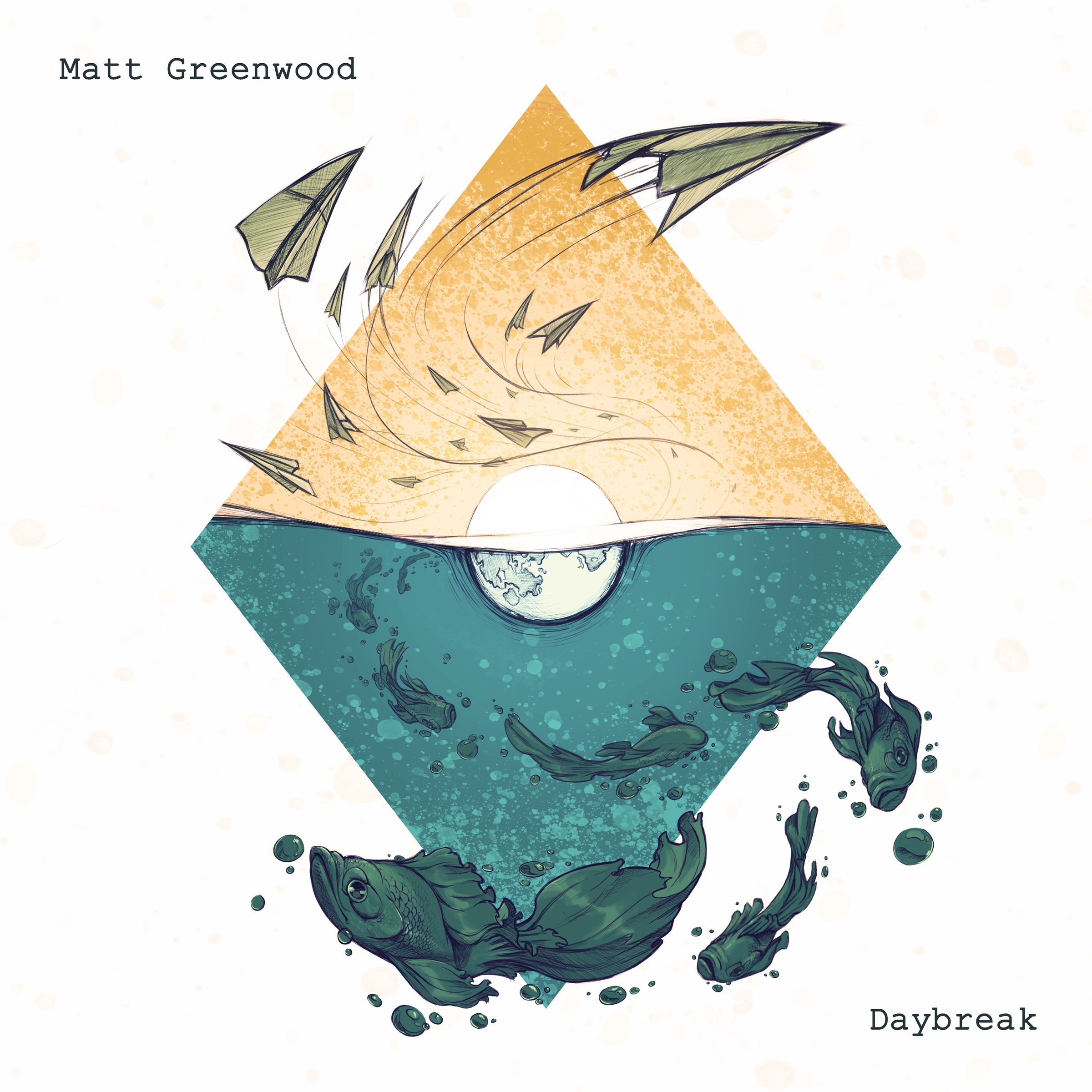
10 Geraldine EguiluzhORs TempS
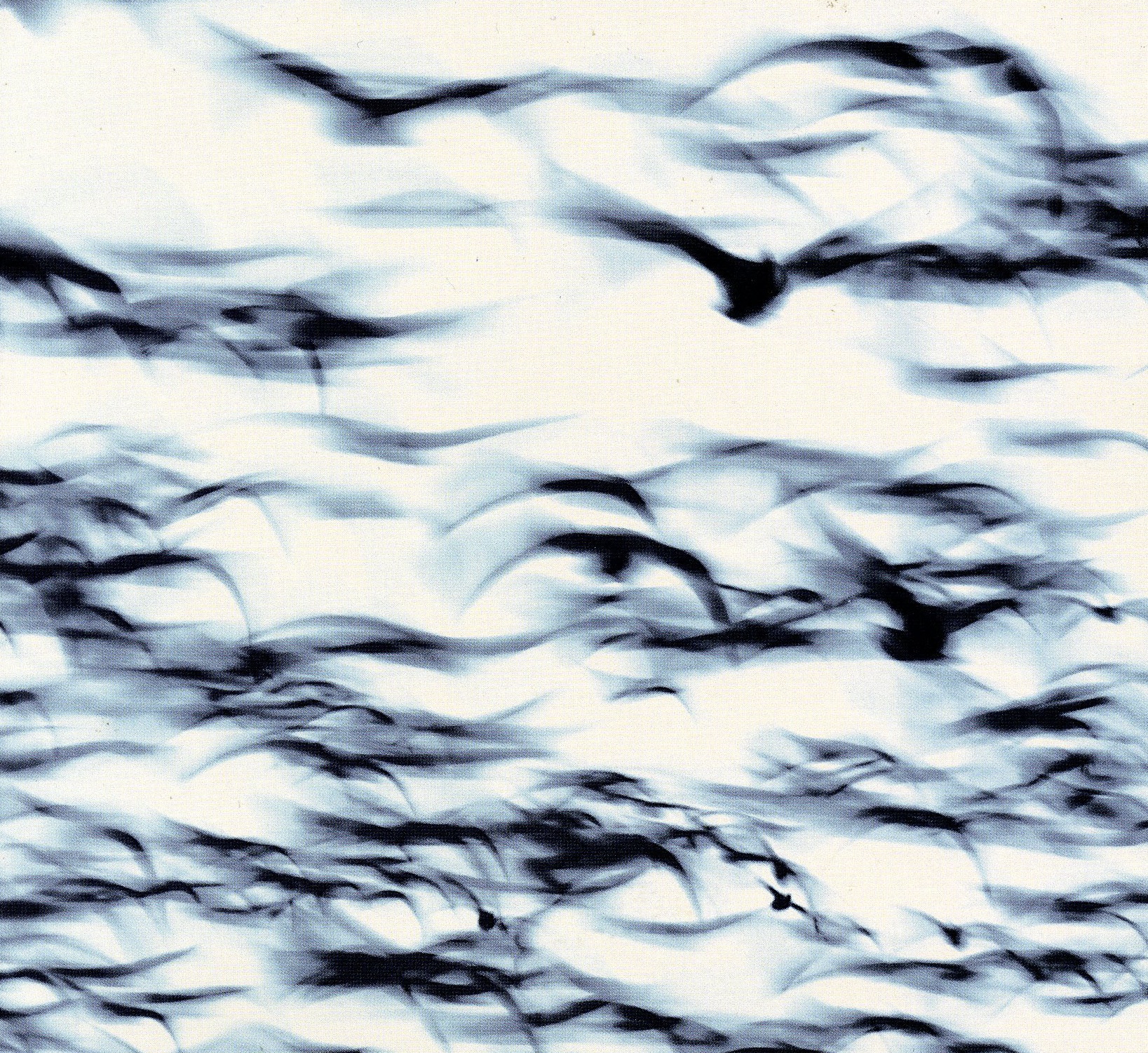
Geraldine Eguiluz; Michel F. Côté
ambiences magnetiques am284 (actuellecd.com/fr/album/6813-hors-temps)

Reversed tape loops, strummed micro gestures and percussive elements sourced from increasingly esoteric places encircle something less akin to a pulse than some greater subtextual unifying logic. The source of these seemingly endless subtle sonic events – be it primary or found – does not grab you as much as the question of their seamless coexistence. 

This is music that journeyed quite a ways to get here; somehow all that you are hearing is born from the early 1990s when Géraldine Eguiluz was in Paris, and recorded some sounds on cassettes. Returning to one’s work after a prolonged span of time can perhaps come with an inherent freshness  and Eguiluz warped, molded, deconstructed, recontextualized and eroded the sounds on these tapes through collage which is another category of introspective creation. Take Territoires perdus #3 for instance, where from a handful of vocal tracks stem harmonies that feel like they are only attained through this medium, as sustained breathy backgrounds envelop heavily edited streams of gibberish, creating a unique atmosphere of uncanniness and one of the many inscrutably hyper specific feelings achieved throughout this project. 

Adding Michel F. Côté ostensibly adds an entire additional process to the creative mix, as he is another universe in himself with all the audial information he is able to generate through countless means. Around track five, the “how” becomes less enthralling than the “what.”

Listen to 'hORs TempS' Now in the Listening Room

11 Joe BowdenMusic is Life
Joe Bowden
Independent (theurbanyoda.com)

Delightfully infectious fusion outing from Joe Bowden’s ludicrously stacked band, every track demands repeated listening, just by virtue of how catchy the grooves are, how expertly mixed the elements are, and how every solo is a standout. An incredible midpoint has been found between dazzlingly complex metrical wizardry and fundamentally bouncy accessible songcraft, a breath of fresh air to say the least. This is music that works in the foreground, works in the background (the blissful Spacing Out is aptly named), works at work and works when one is feeling overanalytical. 

It could be said the band operates in two different capacities throughout the album: one being the Rich Brown iteration and one being the Mike Downes iteration. This is a little reductive, as other variables are not beholden to which bass player is present, but there is a welcome shift in sonic identity every time one swaps in for the other. Bowden’s drums are always driving and propelling proceedings forth, but how the elements of the kit synergize with Brown’s electric and Downes’ acoustic playing is a subtle difference that makes a world of difference when it comes to the expressive depth of this project. Not so coincidentally, both bassists have absolutely showstopping solos at various points. Other key members include Warren Wolf (vibraphone) and Manuel Valera (piano). Overall, this is a band that allows the nuances in the music to speak the loudest. Plenty of rewinding, head-shaking and exclamations of “how did they…” will ensue.

12 Steve Holt ImpactImpact
Steve Holt Jazz Impact Quintet
Independent IMD108 (steveholtmusic.bandcamp.com/album/the-steve-holt-jazz-impact-quintet-impact)

Truly brimming with life, this release delivers on its album art and audacious title with a sound that is not grandiose or bombastic per se but makes an enduring impact on the listener. The intangibles that come with being a great bandleader may not necessarily be immediately apparent in many recordings, but this one feels like an exception. These songs have a real, ever-present sense of direction to them, and to say that everything about the quintet’s approach to these tunes feels airtight would be an understatement. 

Steve Holt’s keyboard playing is very prominent in the mix and this emphasis on harmonic information and rhythmic interplay serves as an anchor for everything that ensues within these intricate compositions. The B section of Second Voyage, when Holt briefly doubles what Kevin Turcotte and Perry White have in the melody, is a moment that conveys real heft, beyond just being extremely pretty. Meanwhile, the head of The Unveiling is a blink-and-you’ll-miss-it hail of countermelodies and shots, with Holt’s left-hand doubling of Duncan Hopkins’ bass pedal feeling as essential an aspect of the piece as anything else. 

Owing to the precision and grace of the playing, this music is always fleet-footed (even the ballads) yet there are moments of tenderness prevalent throughout. Again, this album delivers on its title in a very holistic, diverse and abundant sense.

13 No KingsNo Kings!
No Kings!
JACC Records 59 (jaccrecords.bandcamp.com/album/no-kings)

Recorded in 2022, before the U.S. anti-Trump No Kings protests, the 78 minutes of creative sounds by this quartet exemplify the freedom totalitarians abhor. Americans, tenor saxophonist John Dikeman, bassist William Parker and percussionist Hamid Drake, plus Portuguese trumpeter Luís Vicente are perfectly in sync as they propel sound variations ranging from brass portamento and staccato triplets, the reedist’s renal growls, elevated screams or multiphonic shredding and powerful ambulating bass and drum action, without one overwhelming the others’ assertions as President Donald Trump has done to other U.S. government branches.

Despite a mid-point tempo acceleration the quartet vigorously maintains a steady pulse of drum backbeats and walking bass lines. This takes place even with unexpected interjections from Parker’s gimbri strums or wooden flute peeps that are matched by Vicente’s bell shakes and bamboo flute whistles and Drake’s frame drum vibrations. Together these interjections neatly intensify the exposition of stretched staccato trumpet smears and hearty reed scoops and honks. 

The group groove attained remains even after a pause for prolonged audience applause followed by a brief recapitulation of brass tongue flutters and ascending reed tongue twists. Modulating among free-form exploration and carefully positioned narratives, this group of No Kings! defines effective and perceptive group interaction while metaphorically suggesting what pre-MAGA American democracy used to resemble.

14 Rahsaan Roland KirkVibrations in the Village Live at the Village Gate
Rahsaan Roland Kirk
Resonance Records HCD 2081 (rahsaanrolandkirklive.bandcamp.com/album/vibrations-in-the-village-live-at-the-village-gate)

When Rahsaan Roland Kirk died after his second major stroke at 42 in 1977, jazz lost a major sound innovator who was also an unabashed entertainer. But Kirk, who overcame the impairments of blindness and a 1975 stroke which forced him to play with one arm, always performed without compromising or condescending. Naturally ebullient, on this 77-minute gig, he not only plays a music store’s collection of instruments, including tenor saxophone, stritch, manzello, flute, nose flute, whistle and oboe, often two or three simultaneously, but also vocalizes a sly anti-racist blues.

Although backed by Sonny Brown’s tough backbeat drumming, Henry Grimes’ bass pulse and three different pianists, Jane Getz, Horace Parlan or Melvin Rhyme, who are alternately bluesy, minimalist or highly rhythmic, the set is rightly focused on Kirk’s work. He creates an unsentimental, throbbing flute version of the ballad Laura with the same ingenuity he brings to tricky chord and pitch changes on swift originals like Ecclusiastics and Three For the Festival. He dexterously appends quotes from other tunes, playing two reeds at once, whistles for emphasis and once duets with himself on transverse and nose flute. He even uses the oboe’s snarky vibrato to originate a double-time, nearly unaccompanied blues groove.

Recorded in 1963 at the height of Kirk’s communicative powers, it’s easy to ignore the occasional audience cross talk, even when there isn’t a bass solo, to appreciate comprehensive sounds that would never be heard again.

Once the preserve of virtuosi and usually limited to a few designated instruments such as the piano and the violin, solo concerts began featuring many more instruments in the concert field and jazz, especially during the later half of the 20th century. The growth of improvised music during that time bolstered the individualized concept even further and now it’s possible to find solo expositions for as many instruments as exist anywhere. Of course, the idea of solo playing involves timbral enhancement, not reduction and the sounds on these discs comprehensively reflect this approach.

01 Jonas KocherBanish any thoughts of Lawrence Welk schmaltz or endless choruses of Peg of My Heart from the squeeze box when contemplating Swiss accordionist Jonas Kocher’s Archipelago (Bruit Editions BR 17 bruit-asso.bandcamp.com/album/archipelago). Divided into seven parts, the unpredictable improvisation slides among tempos, pitches and emphasis as Kocher uses bellows glissandi plus button pressure and release to outline the narrative. At points allowing largo drones or repeated shakes to confirm the ongoing exposition, his sudden staccato jabs or pinpointed accents break up the sequences enough so that inserts including treble key tension, sudden stops and pulsing almost-electronic shrills are constantly associated. As likely to winnow chords as to ascend to pipe-organ-like chordal augmentations, Archipelago contains its own wood slapping percussion and responsive jiggles while maintaining logical horizontal ambulation. Additionally, among the presto mechanized pivots, key stops and resonating squeaks and shrills, melodic fragments exist that harmonize enough to tone down unwarranted stridency,

Listen to 'Archipelago' Now in the Listening Room

02 Ned RothenbergAnother solo flight which has become almost standard in the jazz-improvised music world, especially after the pioneering efforts of Steve Lacy, Anthony Braxton and others in the 1960s, is the unaccompanied saxophone session. Looms & Legends (Pyroclastic Records PR 41 nedrothenberg.bandcamp.com/album/looms-legends) is American Ned Rothenberg’s solitary statement with alto saxophone, Bb and A clarinets or shakuhachi. Although Rothenberg ends the disc with a strained breathy version of the jazz standard ‘Round Midnight that’s the only conventional tune here. Instead, he moves through timbral scrutiny, study and story telling with his reeds. Irregularly projected with tongue slaps, bagpipe-like tremolo drones and consistent tone extensions, there are recurrent interludes where his andante lower-pitched flutters and shrill staccato cries advance two tandem lines with different pitches at the same time. Meantime, for example, Fra Gile moves from squirmy and slithery flutter tonguing to altissimo circular breathing, and then downshifts to more dissonant but consistent linear puffs. More forcefully, a track like, Plun Jah alternates spetrofluctuation and pinched clarinet trills until reaching straight-ahead line extensions. Others, including Resistance Anthem work their way horizontally with languid balladic suggestions in advance of single alto saxophone bites slowly ascending with taut variations. With many other instances of circular breathing and intense clarion reed whooshes and whorls, the key definition of Rothenberg’s ideas among the 14 tracks is the give-away titled Urgency. Making full use of continuous reed slurs and slides and the timbral extensions of nearly every tone, a steady ostinato continues at the same time that tongue, mouth and air approaches encompass reflexive reflux. This hardens into snorts and snarls until a combination of those textures and emphasized mouthpiece squeaks confirms the harmonized narrative until it fades away. 

03 BlaserIf singular extemporization is a challenge for musicians when they have bellows, buttons and a keyboard at their disposal or multiple woodwind keys, imagine how it is improvising with nothing but three valves, a manipulating slide and a body tube. But that’s what Swiss trombonist Samuel Blaser does on 18 monologues élastiques (Blaser Music BMO 18 CD samuelblaser.bandcamp.com/album/18-monologues-lastiques). Not the first to do so, and actually his second solo disc, these monologues are even more unique. That’s because he recorded the album while walking through multiple acoustically-designed areas in Berlin’s famous Funkhaus studio complex. With tracks lasting from 32 seconds to six minutes, the building’s spatial qualities are also adapted to the creation. At points you hear footfalls as he enters a space along with brass textures moving from distant to close up. Sometimes trombone output reflects the location as on Torture Room when detached mouthpiece whistles become murmuring howls and rumbling snarls as brass metal is rubbed against the floorboards. Grand 8 features wide gutbucket slurs that reflect back from the walls, with here and on other tracks antiphonic responses taking two identities, one slurry and horizontal the other fragmented. The speedy 78 instead of 45 is double- tongued, staccato and almost martial, as notes refract onto themselves and slither up to prestissimo. Meanwhile La promesse de l’aube is built around speedy glissandi that when moderated become rounded and almost mellow, but when emphasized turn to triplets. Oddly enough the concluding Waedamah is so linear that the mid-range and moderated tones nearly replicate lyrical jazz standards. However brass pressure is adumbrated on the extended Le grand numéro as the detached slide is banged against the trombone’s body to create metallic clanks as prestissimo yelps echo off the studio walls, then gradually thicken and widen as they bend into subterranean tones.

Listen to '18 monologues élastiques' Now in the Listening Room

04 Rich BrownThere are prominent stops and pops as well on NYAEBA (Whirlwind Recordings WR4838 richbrown-whirlwind.bandcamp.com), but ones only produced with thumbs and fingers. That’s how Toronto’s Rich Brown uses a 6-string electric bass, a 4-string semi-acoustic fretless bass and e-bowed electric bass to define his eight variants on solo playing. Someone who has participated in projects with the likes of Rudresh Mahanthappa and James “Blood” Ulmer, here he cannily matches the instrument(s)’ rhythmic and resonant roles with textures that also resemble those from a guitar, a kalimba, idiophones and synthesized strings. In a way NYAEBA is an updated version of Spiritual Jazz of the 1970s, with less percussion and uneven expositions, but pinpointed versatility. Confirming his jazz influences, Brown plays Heart of a Lonely Woman, which incorporates Ornette Coleman’s classic tune and bookends his elevated interpretation on Turiyasangitananda - The Transcendental Lord’s Highest Song of Bliss with audio clips from an interview with Alice Coltrane, known for her transcendental music. The first has a slippery and slinky exposition with buzzes and bumps advancing underneath the familiar theme played on the instrument’s top strings. Reflecting instrumentally Coltrane’s statements with a consistent meditative drone on the latter track, Brown’s elevated finger picking projects a groove on top of what is a vaguely eastern-leaning canon. Other tracks project folkloric airs with chiming guitar-like elaborations in stop-start melodies anchored by double bass-like stops. Then there are those like Nyaeba (The Griot) and Kalagala Ebwembe where blurred fingering creates Africanized ngoni-like frails at the same time as thick thumps resemble a jazz bass solo. Since Brown’s soloing is eclectic, not exhibitionist, variations throughout maintain a groove as well as melodic extensions.

05 RumbleMore expected but unique solo explorations of acoustic double bass textures are on Rumble | Rubble | Ripple (Endectomorph Music EMM-029 andrewschiller.bandcamp.com/album/rumble-rubble-ripple) by Boston-based academic and improviser Andrew Schiller. Drawing on the standard repertoire as well as diversions into folkloric, improv and aleatoric music, Schuller’s is the only album here that includes interpretations of familiar tunes such as Skylark and You Must Believe in Spring. The recognizable melody of the second is framed with adagio bowing, then with measured nonchalance doubled and finally defined with single sul tasto strokes. Meanwhile Skylark is introduced in triple time as the theme is deconstructed in single notes then reprised at an even quicker pace. More generic to his ideas, Schiller’s magnified low tones are the antithesis of Brown’s electrified pitch leaps. Hard string stops with prestissimo or staccato thumps bring out the instrument’s woody resonance as processional patterns move consistently forward. Despite pivots in tempos, speeds and intensity, light and more lyrical motifs also exist within the improvisations. Instances of this two-pronged approach are on Blueberry Phase and Satellite. The former is built around scouring narrow bow work that reaches strident constriction then downshifts to a more moderated exposition though with harsh string pulls as a climax. Satellite on the other hand tweaks expectations by interpolating snatches of Norwegian Wood and other lyrical stanzas in between stop-start evolution of singular woody thumps, and introduces a melodic reprise at the end.

These musicians have adopted various strategies to emphasize their concepts of how to present solo sessions to their best advantage. Rather than thinking of the results as missing timbres from other instruments, the use of extended techniques adds textures to solo playing which makes these sessions more productive than reductive.

01 The Soundmakers Project BR F535 COVERThe Soundmakers Project
Ineke Vandoorn; Marc van Vugt; Christine Duncan; The Soundmakers
Baixim Records (baiximrecords.bandcamp.com/album/the-soundmakers-project-2)

Canadian vocalist Christine Duncan has covered the waterfront when it comes to inventing ways to use a human voice and is no stranger to virtually all styles of music. Born into a travelling fundamentalist Pentecostal musical family, she wove her way through R+B, blues, jazz and contemporary opera before she hit the ground running when she arrived in Toronto from Vancouver in the early 2000s, eventually landing in the improvising scene. 

In 2007, Duncan and her partner, drummer Jean Martin, applied for a grant for her to develop a vocabulary of hand signals for improvising choir and to assemble a group on a more permanent basis. Their successful application allowed the duo to develop the concept of the Element Choir, both by taking cues from other vocal improvising directors before her such as Butch Morris, the London Improvisers Orchestra, Anthony Braxton, John Zorn and others, as well as creating Duncan’s own unique conducting style, and her hand signals have become a fluid and organic response to her musicality. 

Her joy of sharing her love of sound and community is profoundly evident as well as her expert leadership and experience (Duncan is also an active educator, teaching in the jazz programs at Humber College and the University of Toronto since 2003). For anyone not familiar with the choir, she leads the group of non-professional vocalists into challenging soundscapes of noises, chatters, whispers and wails all with practiced hand gestures and signals, and has continued to refine her skills to become the world leader in structured improvisational vocal ensemble. 

In walks The Soundmakers, a Dutch Grammy-winning duo Ineke Vandoorn, vocalist, and Marc van Vugt, guitarist, who lead an ensemble of 50 improvising (again, non-professional) vocalists, and who witnessed Duncan’s work with the Element Choir. By 2024 they invited Duncan to combine their music with vocal soundscapes under her direction with their own Soundmakers, leading to the creation of the Soundmakers Project. Featuring compositions by Vandoorn and van Vugt, Duncan so expertly guides the group that on occasion – such as the first track Hatfield 22 – it’s hard to believe the sounds coming from the group. 

The third track Soundmakers Choir Improvisation demonstrates the range of colour Duncan draws from the group. The Collar is a dense, humorous collection of expressive meows and melodies that perfectly backs the jazzy libretto and guitar breakdown. A truly beautiful track La Caresse is expansive and ethereal along with the final Soundmakers Improv 1. The album is a beautiful showcase of music and community, and kudos to the Dutch group for bringing Duncan together with their compositions. 

To see Christine Duncan live is to marvel at the skill, musicianship and sheer joy she imparts. Check out the teaser video for this album online, or find her with the Element Choir collaborations with Inuit singer Tanya Tagaq and the Toronto Symphony.

Listen to 'The Soundmakers Project' Now in the Listening Room

Back to top