Something in the Air | Besides Tulips, Free Music also Blooms in the Netherlands - July 2026
Futurists and trend-conscious younger people may predict the disappearance of the CD for the even more ancient LP in one case and corporation-controlled streaming in the other, but the fidelity and length of the compact disc still makes it an ideal medium for musical preservation. Proving this is the continuous release of not only new, but historical sessions on compact disc as well as other media. This is doubly valuable since in fact newly discovered or never commercially released sessions like the ones following now have the space and fidelity to partially redefine the often confusing and sometimes mythical history of the growth and dissemination of creative music.
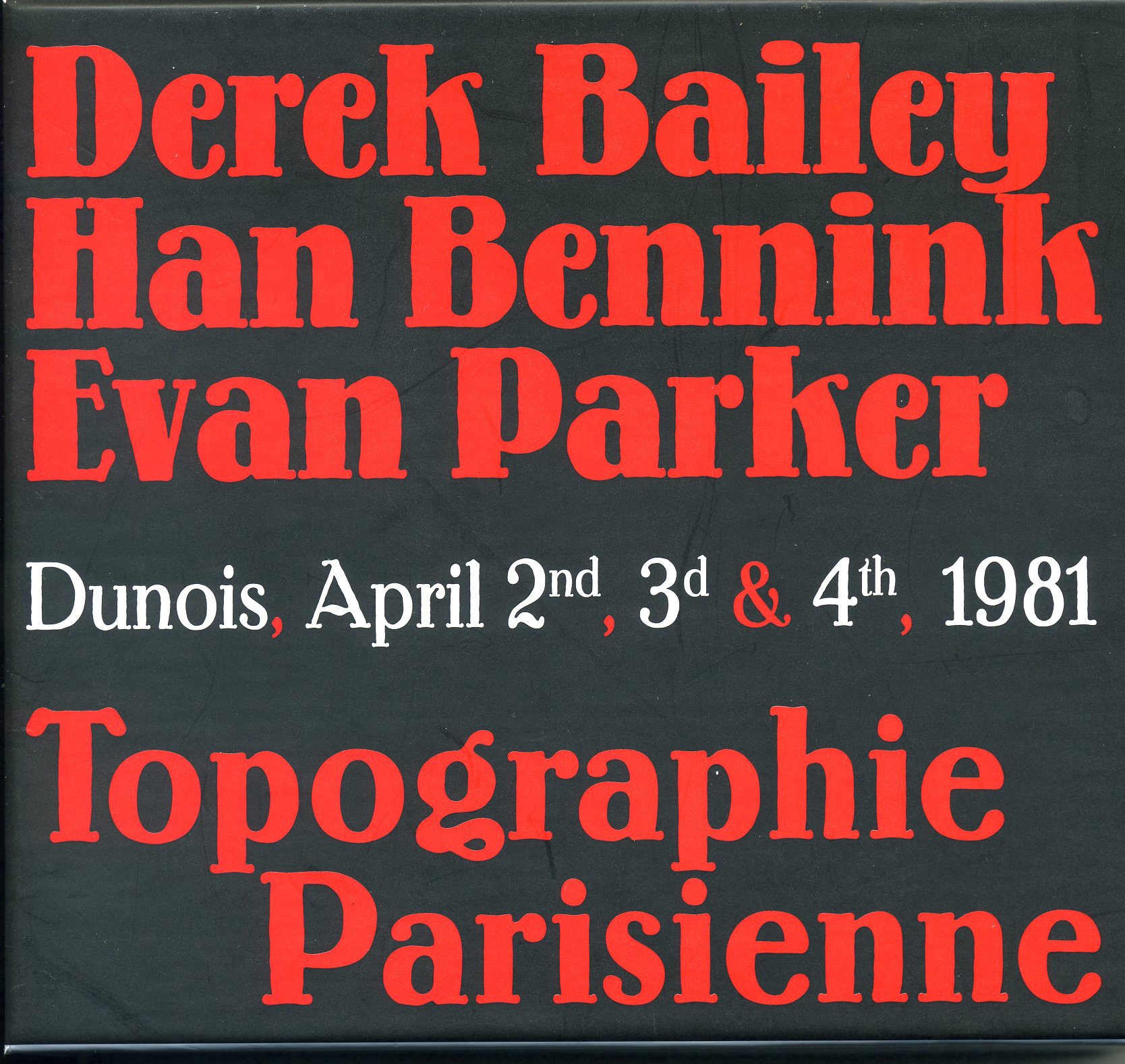 Probably the most important of these is Topographie Parisienne (FOU CD 34-35-36-37 fourecords.com/FR-CD34>37.htm) by guitarist Derek Bailey (1930-2005) and tenor/soprano saxophonist Evan Parker from the UK and Netherlands percussionist Han Bennink. Recorded at a 1981 live concert, this newly discovered four CD set is the only time the three were recorded as a trio except for the highly influential Topography of The Lungs from 1970. The free music equivalent of Meet The Beatles or Never Mind The Bollocks, Here’s the Sex Pistols, Topography almost literally defined what the sound of advanced international improvisation would be during the next couple of decades. Like those other discs, it also inspired numerous musicians to form countless bands of their own, creating original variations on the freedom Bailey, Bennink and Parker expressed. So how did the trio members sound playing together 11 years later? The question may not be definitely answered. That’s because as fascinating as the nearly three and a half hours of music may be, there are only two trio tracks, two Bailey-Parker duets, two Bennink-Parker duets, one Bailey-Bennink duet and solo sets by Parker on tenor and soprano saxophones.
Still the clanging guitar frails, interludes of saxophone circular breathing and attacks on drums, other percussion and various horns capture each player’s realized identity during the trio and duo tracks. Parker’s improvising is more technically adept than earlier; Bennink’s playing more showy, diffuse and aggressive; and Bailey’s touch more metallic and incisive. Those qualities are particularly upfront on the sole (nearly 40-minute) Bailey-Bennink duet. Quick to emphasize prestissimo bass drum pumps, cymbal chiming and powerful ruffs, the drummer aims to control the entire space with percussion when he isn’t using penny whistle or harmonica to project horn tones never found in earlier music. Seemingly unperturbed, the guitarist often forces Bennink into calming interludes when he isn’t provoking him with almost unstoppable chordal clanging and crunches with slick slides up the guitar neck and widening string twangs. Elsewhere Parker’s reed proficiency enlarges Bennink’s feisty oral instrument provocation. For instance, on their first duet besides peppering the improvisation with a relentless collection of rolling pops, paradiddle pumps and tolling bass drum beats, the drummer blasts out plunger trombone slurs and squeezing clarinet honks alongside the saxophonist’s flutters and tongue stops. Oddly enough while moving past the horn face-off with positioned smears and inside horn reverberations, there’s a rare instance where Parker appears to be propelling a near lyrical melody. In contrast during the Bailey-Parker duets, the saxophonist has enough non-confrontational space to pinpoint a moving collection of slippery doits and note-bending drones and tongue slaps to make Bailey respond in kind. His tolling, broken chord strums, singular slaps and squeezed clunks are frequently expressed in tandem with the reed playing and usually connect on some level. Meanwhile the three’s realized tropes are on display and intensified during the two more than 40-minute trio sets. Bennink constantly rappels among his idiophones, pummeling and hammering ruffs while keeping up a steady beat as the bottom of the sonic triangle. But he also highlights his cadenced adaptability, for example slowing down the second group piece with a tango beat at one point and later uses his sticks and the stage surface to smack out unusual tempos. However, Bailey and Parker don’t lack for places in which to proclaim their fully developed identities. The saxophonist elaborates his improvisations by propelling aviary trills, pushing out pressurized drones that could come from bagpipe reflux, yelping and even creating Woody Woodpecker-like raps with his horn. Bailey downstrokes percussively, sometimes producing an ostinato of string clunks underneath the others’ output and uses jagged flanges and metallic slaps to insert cutting comments on Bennink’s bellicose battering or Parker’s seemingly endless multiphonic elaborations. More so on the first set, less so on the second, the two Englishmen work out a comedian and straight man routine, with one reaching the nth degree of frenetic tones and vibrations as the other plays horizontally and vice versa.
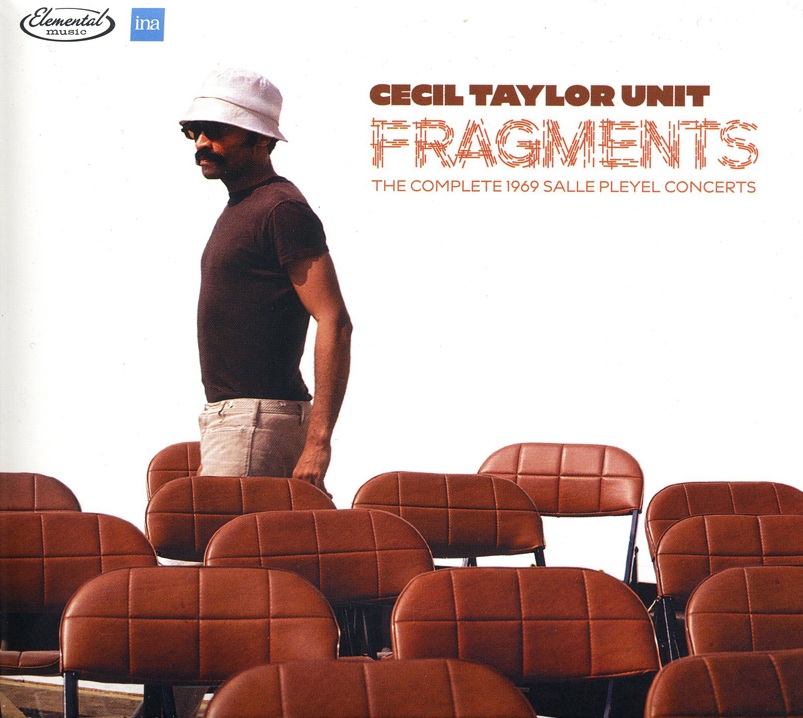 Another musician whose playing displayed qualities encompassing comic, collective and challenging was American pianist Cecil Taylor (1929-2018). Fragments: The Complete 1969 Salle Pleyel Concerts (Elemental Music INA 5990455 elemental-music.com/jazz-treasures/4958-cecil-taylor-unit-fragments-live-at-salle-pleyel-paris-1969-cd-8435395505021.html) is a previously unissued two-CD set which preserves the sounds of one of his legendary Units that was under documented. That band included not only regulars, drummer Andrew Cyrille and alto saxophonist Jimmy Lyons (1931-1986), but one of the few sessions when tenor saxophonist Sam Rivers (1923-2011) was in the band. Any Taylor Unit performance was an exercise in continuous sound and motion, but Fragments marks a particular high point. Besides the nearly 50-minute afternoon set – a bagatelle for the usually indefatigable Taylor – the projected corkscrew bites and jarring honks, percussion pumps and extended keyboard whorls and whirls that float through the piece are amplified on the more than 90-minute Fragments of a Dedication to Duke Ellington. A longtime admirer of the older musician, the scope of Taylor’s composition adds concise lyrical nudges within the expected unrolling of this complex magnum opus. While it often seems as if Taylor provides enough percussive power on his own, Cyrille’s steady and carefully timed thumps and pumps created the needed base for solo expressions. Lyons’ strident aviary cries and triple tonguing quickly establish themselves yet are boosted to a higher plane when intertwined or contrasted with Rivers frequent diversions among honking tenor saxophone scoops, twittering near-melodic flute trills. Later in the piece his transverse bites and pinched soprano saxophone vibrations serve as distinct leavening agents during those sequences when Taylor’s flood of rushing notes appears both unstoppable and occupying every timbral cranny of the piano. Encompassing dynamic note bending, energetic cascades and throbbing pressure, the group’s constant tonal undulations are still resolved as distinct sequences. While some sections may resemble impenetrable screeches ascending to a primal scream, especially at times when Taylor adds chiming elaborations and certain familiar – for him – ostinatos, elsewhere pivots to 19th century Russian romanticism seem imminent. Elevated reed breaths may stop, start, slur, slide and smear or blare like auto horns, but the floating terpsichorean grace Taylor brings to his improvisations are always present. With a few more keyboard slides and stops plus back and forth reed rambling, the piece finally ends leaving the audience and listener exhausted and exhilarated.
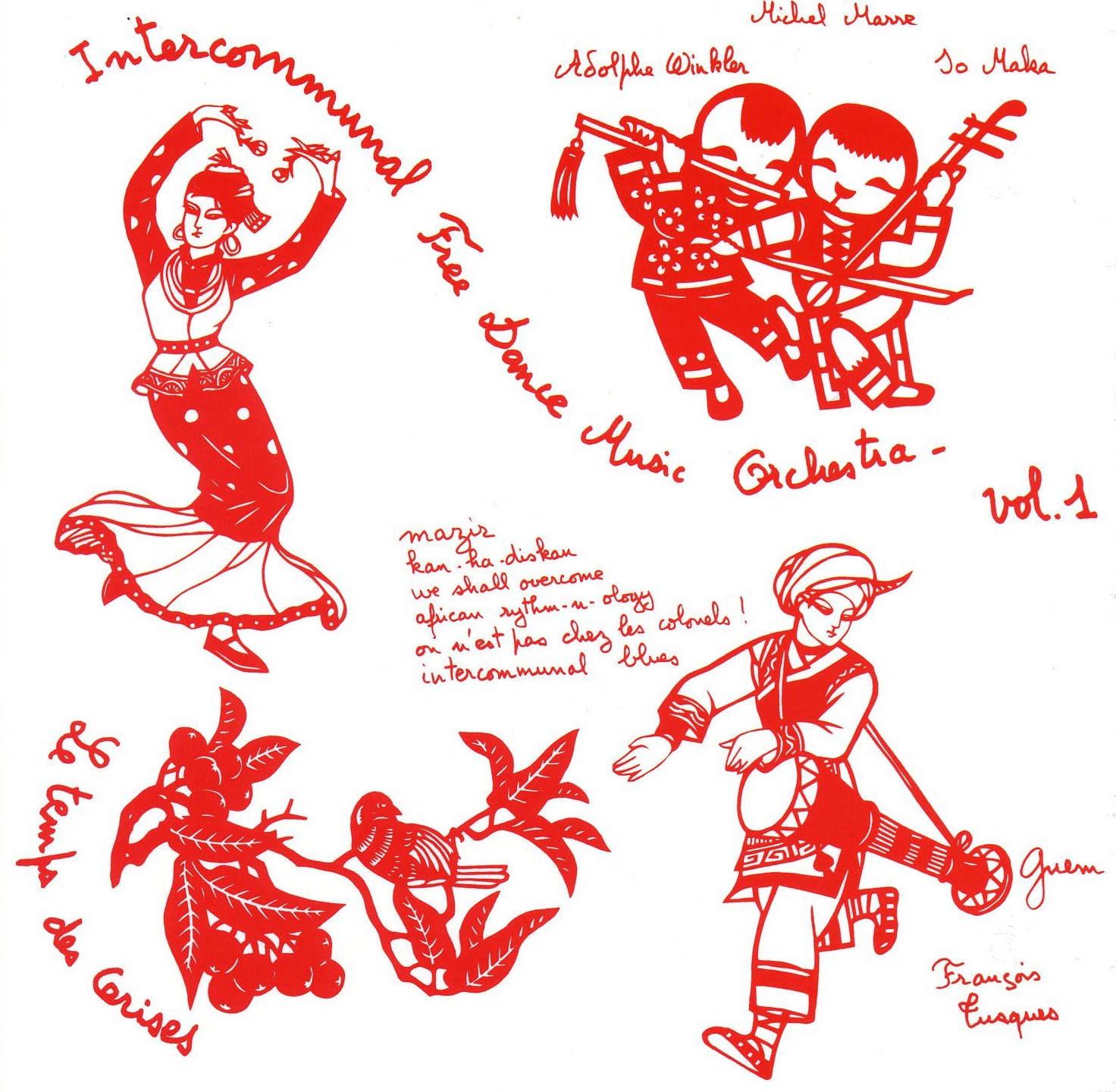 A different sort of dance inference was expressed in 1974 by France’s Intercommunal Free Dance Music Orchestra (Souffle Continu Records FFL 090 soufflecontinurecords.bandcamp.com/album/concert-a-prades-le-lez-vol-1-2) during Concerts à Prades Le Lez Vol. 1 + Vol. 2. Led by keyboardist François Tusques an early continental Free Jazz advocate, the five-piece “orchestra” was a leftish innovation designed to meld progressive politics, so-called world and creative music with more popular forms to appeal to a larger populace. So, despite seemingly revolutionary and agitprop titles, the sounds are actually syncopated not subversive and not surprisingly more danceable than doctrinaire. Additionally, unlike other more self-consciously proletarian-focused bands that mistook amateurishness for authenticity, the same high musical standards apply here as in Tusques’ more (musically) progressive projects. What that means is that a tune like On N’est Pas Chez Les Colonels, referencing military leaders who overthrow elected government, starts at march tempo becomes a Latin-influenced foot tapper based around honky-tonk piano and French euphonium player Michel Marre’s huffs and soon adds a shouting chorus and hand clapping. Meanwhile Chanson Pour Pierre Overney, celebrating a French Maoist activist killed during a Renault factory protest, is as bittersweet as beat oriented, with a formalist and processional grand piano emphasis, and then weaves through a sequence that contrasts note-bending melancholy breathes from Guinean soprano saxophonist Jo Maka and triumphant gutbucket blasts from Togo-born trombonist Adolphe Winkler and culminates in a group ending. Even the chant-like anti-colonialist Un Peuple Qui En Opprime Un Autre Ne Peut Pas Etre Un Peuple Libre get its power from keyboard slaps, tambourine shakes and hearty percussion pumps from single-named Algerian percussionist Guem as warm trombone grace notes and ripples focus a mellow lightness that floats over the tune. Elsewhere there are segues into bobbing Breton dance music and heavily percussive African rhythmic extensions – perhaps something for every taste in the early 1970s.
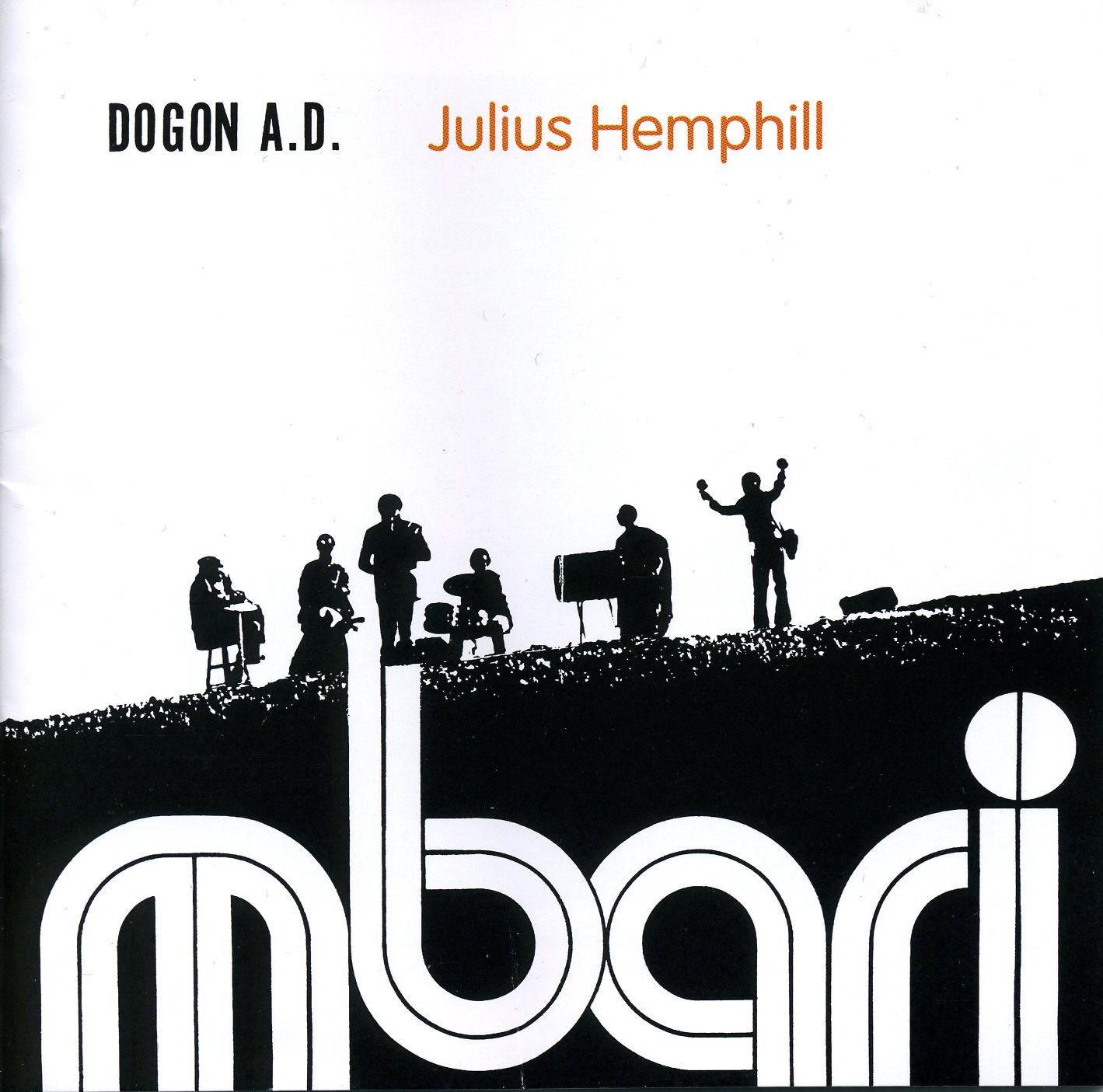 While the previous discs were all recorded in Paris, the late 1960s-early 1970s included creative classics from jazz’s initial fountainhead, the US. One recently reissued chef-d’oeuvre is 1972’s Dogon A.D. (New World Records 89850-2 newworldrecords.bandcamp.com/album/julius-hemphill-dogon-a-d) led by alto saxophonist/flutist Juluis Hemphill and originally released on the Mbari Records label of St. Louis’ Black Artists Group of which he was a member. The four extended selections newly digitalized, mixed and mastered for a brighter sheen, feature the contributions of future creative music masters Hemphill, trumpeter Baikida Carroll, cellist Abdul Wadud, percussionist Phillip Wilson, who are joined on the 20-minute tour de force The Hard Blues, by baritone saxophonist Hamiet Bluiett. Named for a communal African tribe, Dogon A.D. demonstrated that blues roots were perfectly compatible with advanced improvisation, which could also pivot into reflection of more formalized sounds. This is obvious on The Painter where Hemphill first expresses a didgeridoo-like shrill from his flute then aviary-like flutters which intersect with muted trumpet lines and guitar-like twangs from Wadud. While the cellist’s double bass-like pacing and Wilson’s shuffles also actuate dynamics on the title track, The Hard Blues brings all these currents together. With Wadud’s pizzicato frails resembling those from a bottleneck guitar and a chunky drum backbeat joining baritone sax scoops the roots-R&B base is established. Soon Carroll’s triplet emphasis and portamento melisma joins the alto saxophonist’s near vocalized doits and trilling corkscrew slurs to slip extended techniques into the stop-time theme that robustly evolves. Reaching a finale the arching horn stretches and repeated rhythmic emphasis establish the triple goals of strength, swing and technical speculation.
Most listeners realize that the late 20th century was a fertile time for musical amplification, experimentation and extrapolation. These discs bring to the surface even more sonic investigation than what was available at that time.