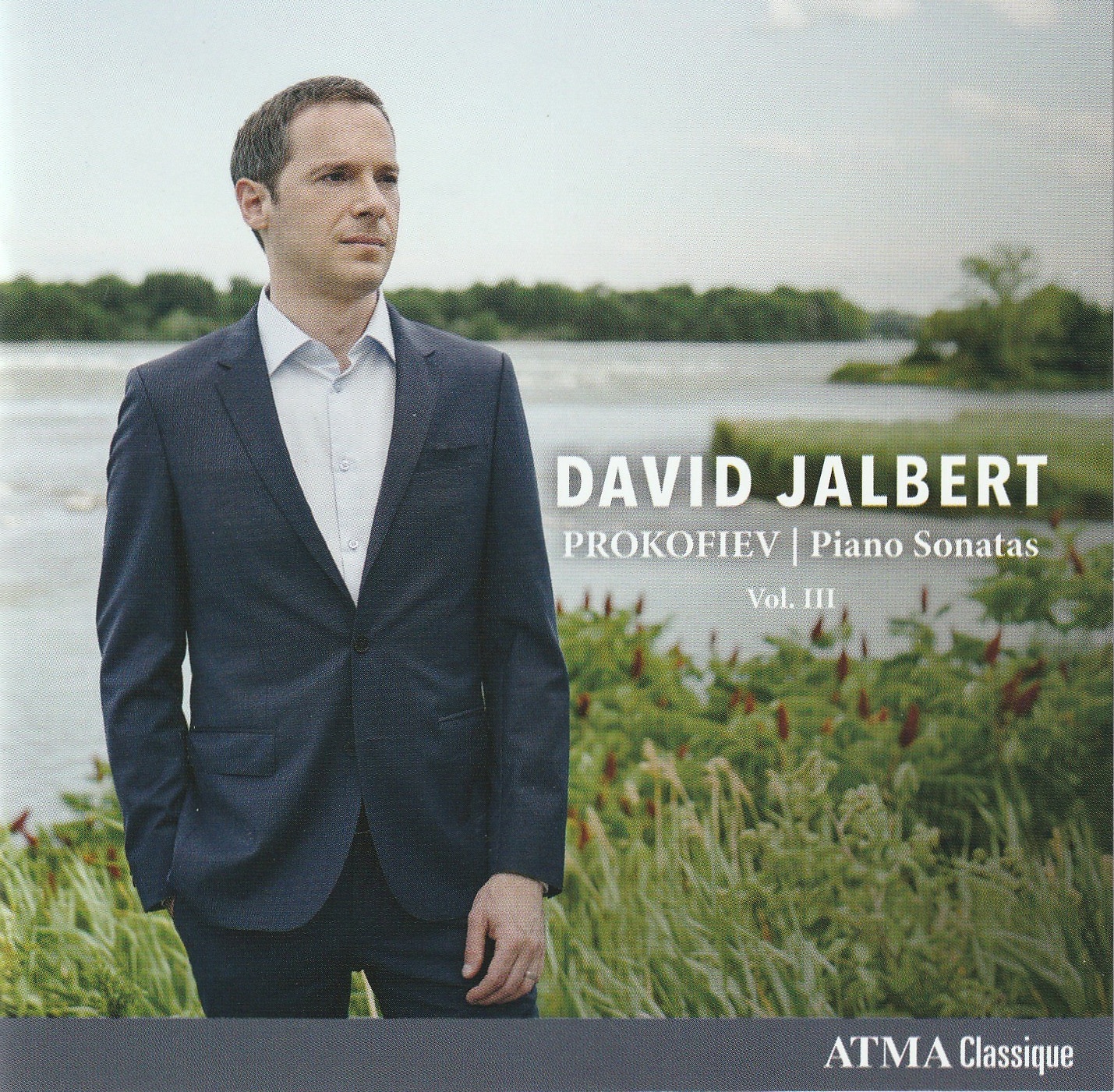
03 Jalbert ProkofievProkofiev – Piano Sonatas Vol.III
David Jalbert
ATMA ACD2 2463 (atmaclassique.com/en/product/prokofiev-piano-sonatas-vol-iii)

David Jalbert has for years now been numbered amongst Canada’s very best pianists. He has been recording sensitive renditions of Russian repertoire, and here he is in the third and final instalment of the Complete Piano Sonatas of Sergei Prokofiev which stand as a pinnacle amongst mid-20th century piano composition. They are not often assayed because of their stringent technical demands, especially these last few, written in close collaboration with Sviatoslav Richter. Richter premiered most of Prokofiev’s later sonatas, and this is rarefied territory which Jalbert masters with aplomb.

These pieces are not only intense, they have to be displayed in a relaxed way no matter the storm of notes creating the aesthetic tension. The thrilling climaxes in the Eighth Sonata never threaten to become clotted, with absolutely clear articulation through the tangled but never muddy Iines. The dynamics can become suddenly thunderous, or fall into transparent mid-distance textures, the volume wells up in a complex of contrapuntal lines, but there is never any banging on chords. Amazing stuff, and Jalbert really brings out the Prokofievian earmarks. 

There is a bit of chord banging in the makeweight Sarcasms from 1911 however, when  Prokofiev was still working on being a musical “Bad boy.” 

This is all borne by the absolutely exemplary capture of the piano sound, which is the best imaginable, placed in a resonant but not too roomy acoustic in the Isabel Bader Center in Kingston. The piano is not named. 

This is urgently recommended, and I will now seek out the first two volumes of this series, which augur to be the best integral set of some of Prokofiev’s greatest music.

04 NACO PoemaPoema 2. Terra Nova
Canada’s National Arts Centre Orchestra; Alexander Shelley
Analekta AN 2 8892 (nac-cna.ca/en/orchestra/recordings/poema-2)

This is the second issue from Analekta of an ambitious series of recordings that feature works of Richard Strauss, juxtaposed with newly commissioned concert items by young composers. It may be the first Canadian attempt to present a series of Strauss Tone Poems with a single orchestra, in this case the National Arts Center Orchestra conducted by their resident maestro Alexander Shelley. The commissioned Canadian composers are invited to reflect, critique, embrace, reject or deconstruct Strauss’ language at will.

This series has been titled Poema, and this is Poema2, further mysteriously subtitled Terra Nova. In much smaller print we discover the listing of Ian Cusson’s 1Q84 Sinfonia Metamoderna, paired with the ubiquitous Also Sprach Zarathustra. The Cusson piece does not seek to de-construct or criticize Strauss, but manages to extend his orchestral practices into an impressive style, using an extended instrumentation, but differing from Strauss’ orchestra. 

The orchestral lists show that the National Art Center Orchestra has been much extended with guest artists to provide the required massive forces. The venue, Southam Hall, is roomy, but not reverberant, and there is a good sense of space. An organ [digital] has been brought in, but it is merely adequate in that big open space. Shelley’s performance is a well paced 34 minutes long, and it has a great sense of coherence and flow. The strings  have enough impact but are recorded a bit diffusely.

On repeated listening the Cusson piece is for me by far the more interesting piece on this disc. Cusson, of French speaking Métis extraction, has produced a brilliant orchestral movement of some depth and complexity. At only ten minutes, it could have been much longer, but this is a commissioned piece, which usually comes with a time limitation (R. Murray Schafer’s No Longer Than Ten Minutes, a TSO commission based on Strauss’ Ein Heldenleben comes to mind). With a capacity of another 30 minutes of music on this disc, it is a pity that the commission should not have been for a longer piece from this evidently able composer. As it is, the new piece could seem like an afterthought, except that it is sure to grow on anyone who listens to it a few times.

05 Nebulae Valerie MilotNebulæ
Valerie Milot
2xHD 2XHDVM1286 (valeriemilot.com/audio)

Quebecoise harpist Valérie Milot has performed on over 100 recordings. She appears both as a soloist and in ensemble settings with such orchestras as Les Violons du Roy and Orchestre symphonique de Montréal. In 2008 she became the first harpist in nearly a century to win Prix d’Europe. 

Milot’s latest release, Nebulæ, features an intriguing cross section of solo harp music. Her album liner notes state that it is the audio portion of a dual project, in conjunction with a live performance tour which includes projections and  “exposes scientific and philosophical themes through the science of astral phenomena.” She encourages her listeners to reflect and meditate on their place in the universe.

 New works by Denis Gougeon and Amelie Fortin are featured, along with works by Debussy, Gluck, Liszt, etc. Harpist Carlos Salzedo’s composition Jeux d’eau, Op.29 has sudden descending glissandos, vibratos, lower and higher pitched sounds, repeated notes and a melody section adding colourful “watery” interest. The closing soft section with single detached notes is so enticing. 

Milot’s colleague Amélie Fortin composed Lux, a solemn piece with atonal sounds at times. An unexpected sudden silent space leads to more classic harp sounds like diverse pitches, high notes and melodies leading to a sudden ending. Milot’s arrangement of William Bolcom’s Graceful Ghost Rag has a more rock/jazz feel with accented melody, low notes and grooves. A full band sound is created by her virtuosic playing.

Regardless of whether you do or don’t meditate, Milot’s colourful harp playing here in 14 solo tracks is amazing musical listening.

01 Stories retracedI’m not always sold on how artists describe the genesis of their CDs – violinist Nancy Zhou, for example, describes her new release STORIES (re)TRACED as a personal response to the question “What does it mean to be human?” – but when it results in a recital as stunning as this, who really cares? (Orchid Classics ORC100379 orchidclassics.com/releases/orc100379-stories-retraced).

Zhou has a strong, clear tone and virtuosity to spare, but always with a striking musicality and interpretative power. Works by two composers who were close friends open and close the disc: Ysaÿe’s Sonata No.4 in E Minor, Op.27 No.4, which was dedicated to Fritz Kreisler, and the latter’s Recitativo & Scherzo-Caprice, Op.6, both superbly played. The Bartók Sonata for Solo Violin, Sz.117 and Bach’s Partita No.1 in B Minor, BWV1002 form the middle section, the Bartók in particular a towering and memorable performance.

It’s a really outstanding CD, with the remarkable Zhou at times sounding anything but human. 

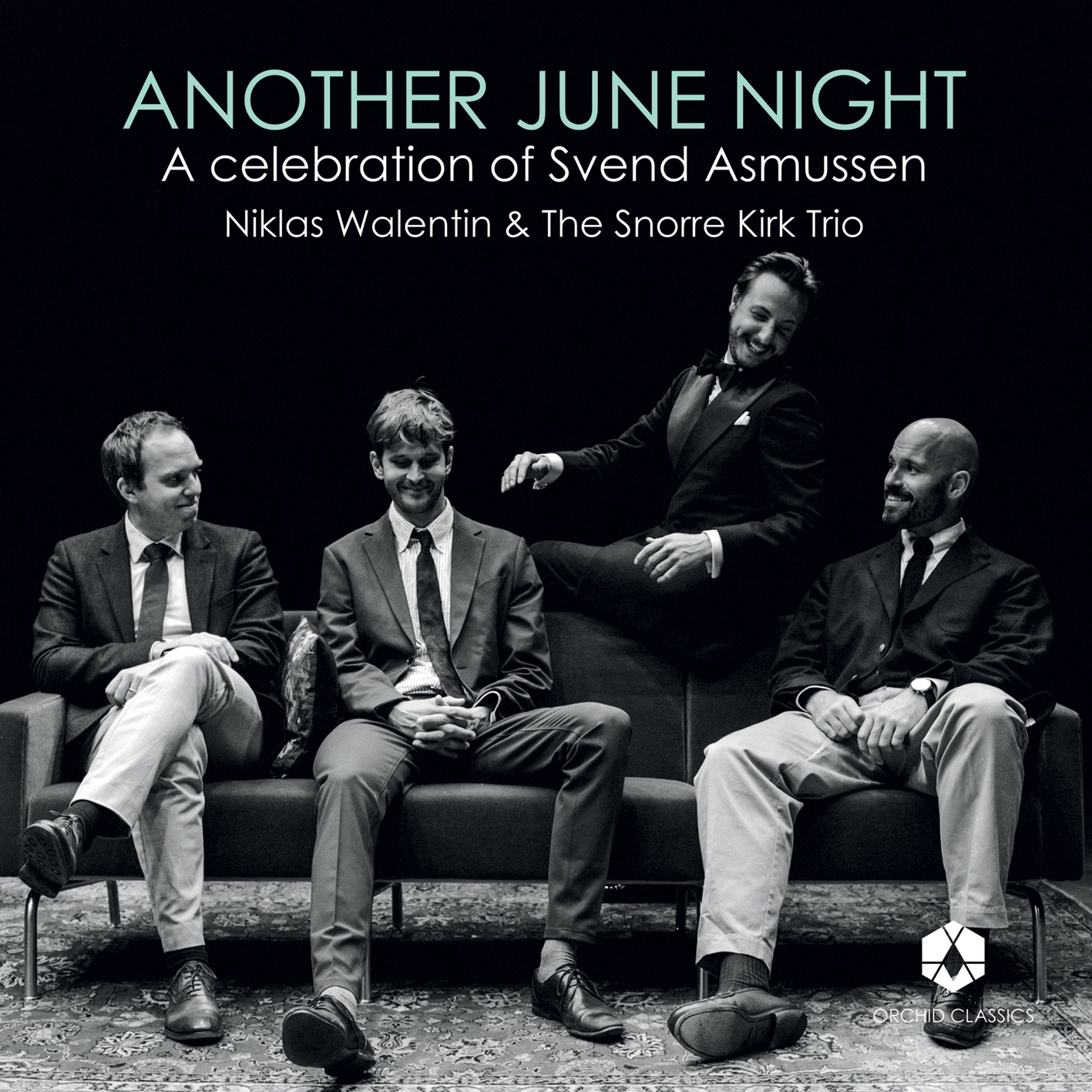
02 Niklas WalentinOn Another Night – A Celebration of Svend Asmussen the Danish violinist Niklas Walentin and the Snorre Kirk Trio of drummer Kirk, pianist Calle Brickman and bassist Anders Fjelsted present “a heartfelt tribute” to Svend Asmussen, one of Denmark’s greatest jazz violinists who died in 2017 aged 100 (Orchid Classics ORC100320 orchidclassics.com/releases/orc100320-another-june-night).

There’s a deep personal connection here: the 10-year-old Walentin met the 90-year-old Asmussen back-stage after a concert, with the two violinists later sharing a unique friendship. Asmussen gifted Walentin a collection of 11 of his jazz arrangements, and they are presented here with the violin solos remaining as true to the written form as possible.

And just look at some of the 11 track titles: Don’t Get Around Much Anymore, Someone to Watch Over Me, Basin Street Blues, All the Things You Are (a Bach-flavoured violin solo), Embraceable You, Fascinating Rhythm, Sophisticated Lady, The Nearness of You – it’s all absolute magic, with gorgeous arrangements superbly played.

It’s apparently only available as a download or a vinyl LP and not on CD.

03 The almond tree duosThe almond tree duos is the world premiere recording of a work from 2019-2021 by violist and composer Melia Watras comprising 18 brief pieces for violin and viola. The violin duties are shared by baroque violinist Tekla Cunningham and violinists Rachel Lee Priday and Michael Jinsoo Lim (Planet M Records PMR-007 planetmrecords.bandcamp.com/album/melia-watras-the-almond-tree-duos).

The work can be performed in several ways, from stand-alone pieces through various combinations to a complete set; if the latter, the order should be as recorded here.

Watras encourages experimenting with combinations of modern violin and viola with baroque violin and viola. The end result here is a fascinating soundscape, the three violinists providing a variety of techniques, tonal colours and nuances to supplement Watras’ playing.

Listen to 'The almond tree duos' Now in the Listening Room

04 Lena Neudauer BeethovenThere’s another set of the Ludwig van Beethoven Complete Violin Sonatas, this time a 3CD box with the German duo of violinist Lena Neudauer and pianist Paul Rivinius (cpo 555 550-2 naxosdirect.co.uk/items/ludwig-van-beethoven-complete-violin-sonatas-1281535).

While originally titled Sonatas for Piano and Violin the 10 works, written in Vienna between 1797 and 1812, permanently established an equal and balanced partnership between the two instruments. In that respect Rivinius is every bit Neudauer’s equal in a beautifully-judged progression from the three early Op.12 sonatas through a delightful “Spring” Sonata Op.24 to an imposing and powerful “Kreutzer” Sonata Op.47.

There’s not a false note or moment throughout an outstanding set that will stand comparison with any in the catalogue.

05 Brahms Schumann violaPianist Paul Rivinius appears again, this time with violist Christian Euler, on Brahms | Schumann Works for Viola and Piano, a CD featuring works from relatively late in each composer’s career (Musikproduktion Dabringhaus und Grimm MDG 903 2353-6 euler-viola.com/en/tontraeger/new-release-2025-brahms-schumann).

The central work on the disc is Schumann’s Märchenbilder Op.113 or Fairy Tale Pictures from 1851, a work that has no individual titles that might suggest the content of the four movements.

In 1890 Brahms decided to retire from composing, but the following year he met the clarinetist Richard Mühlfeld and was inspired to write four works for him: the Clarinet Trio Op.114, the Clarinet Quintet Op.115 and the two Clarinet Sonatas in F Minor Op.120 No.1 and E-flat Major Op.120 No.2. The latter are here in the composer’s own arrangements, which he apparently felt were “clumsy and unpleasant.” Changes to accommodate the viola were mostly octave transpositions, but here Euler has “decided to play the original clarinet version consistently and to fully exploit its large range.” It’s an interesting choice.

Listen to 'Schumann Works for Viola and Piano' Now in the Listening Room

06 Brahms Three Sonatas celloOn Brahms Three Sonatas the Armenian duo of cellist Suren Bagratuni and pianist Hrant Bagrazyan perform the two cello sonatas as well as the composer’s own transcription of his first violin sonata (Blue Griffin records GBR677 bluegriffin.com/cd-catalog/p/brahms-three-sonatas-for-cello-and-piano-suren-bagratuni-and-hrant-bagrazyan?rq=bagratuni).

The Sonatas for Cello and Piano in E Minor, Op.38 and in F Major, Op.99 are given expansive readings, with both players displaying a rich, warm tone. It’s simply lovely Brahms.

The central work on the CD is Brahms’ transcription, transposed from G major to D major, of the Violin Sonata No.1, Op.78. I sometimes have issues with cello transcriptions of violin sonatas, partly because of the alterations to the melodic line – there are several octave drops in the first movement in particular here – but also because they usually bring the instrumental part down into the piano mid-range, altering the nature of the tonal colour. Here, though, that extra warmth is a positive addition, and there’s no denying the sheer beauty of the playing.

07 Dialogue Debussy SchumannFrench cellist Juliette Herlin and Canadian pianist Kevin Ahfat are the duo on Herlin’s debut CD Dialogue: Debussy & Schumann, a recital of music by two composers whose artistic kinship is often overlooked, and whose music has long been a part of the cellist’s life (Orchid Classics ORC100382 orchidclassics.com/releases/orc100382-dialogue).

The more substantial tracks are Schumann’s Fantasiestücke Op.73, Adagio & Allegro in A-flat Major Op.70 and Drei Romanzen Op.94, and Debussy’s 1915 Cello Sonata in D Minor. Herlin arranged the two Schumann Liederkreis and Debussy’s L’âme évaporée and Beau soir, with the latter’s Nuit d’étoiles, Intermezzo and Rêverie completing the disc.

Herlin has a warm, sweet tone well-suited to the music, and is given fine support from Ahfat on a charming CD that rarely really catches fire.

08 from eastern europeOn the 2CD set From Eastern Europe the husband and wife team of cellist Marie-Elisabeth Hecker and pianist Martin Helmchen present six works by 20th-century Russian composers (Alpha Classics ALPHA827 outhere-music.com/en/albums/eastern-europe).

CD1 has the Shostakovich Cello Sonata in D Minor, Op.40, Schnittke’s remarkable Cello Sonata No.1 and Stravinsky’s Suite Italienne, K034B, drawn from his neoclassical ballet Pulcinella.

CD2 features Weinberg’s Cello Sonata No.2, Op.63 and Prokofiev’s Cello Sonata in C Major, Op.119, the recital closing with a fine reading of the Rachmaninov Cello Sonata in G Minor, Op.19, surely one of the most glorious works ever written for cello and piano.

Hecker won the First Prize and two Special Prizes at the 2005 Rostropovich Competition and is clearly in her element here, beautifully supported by Helmchen.

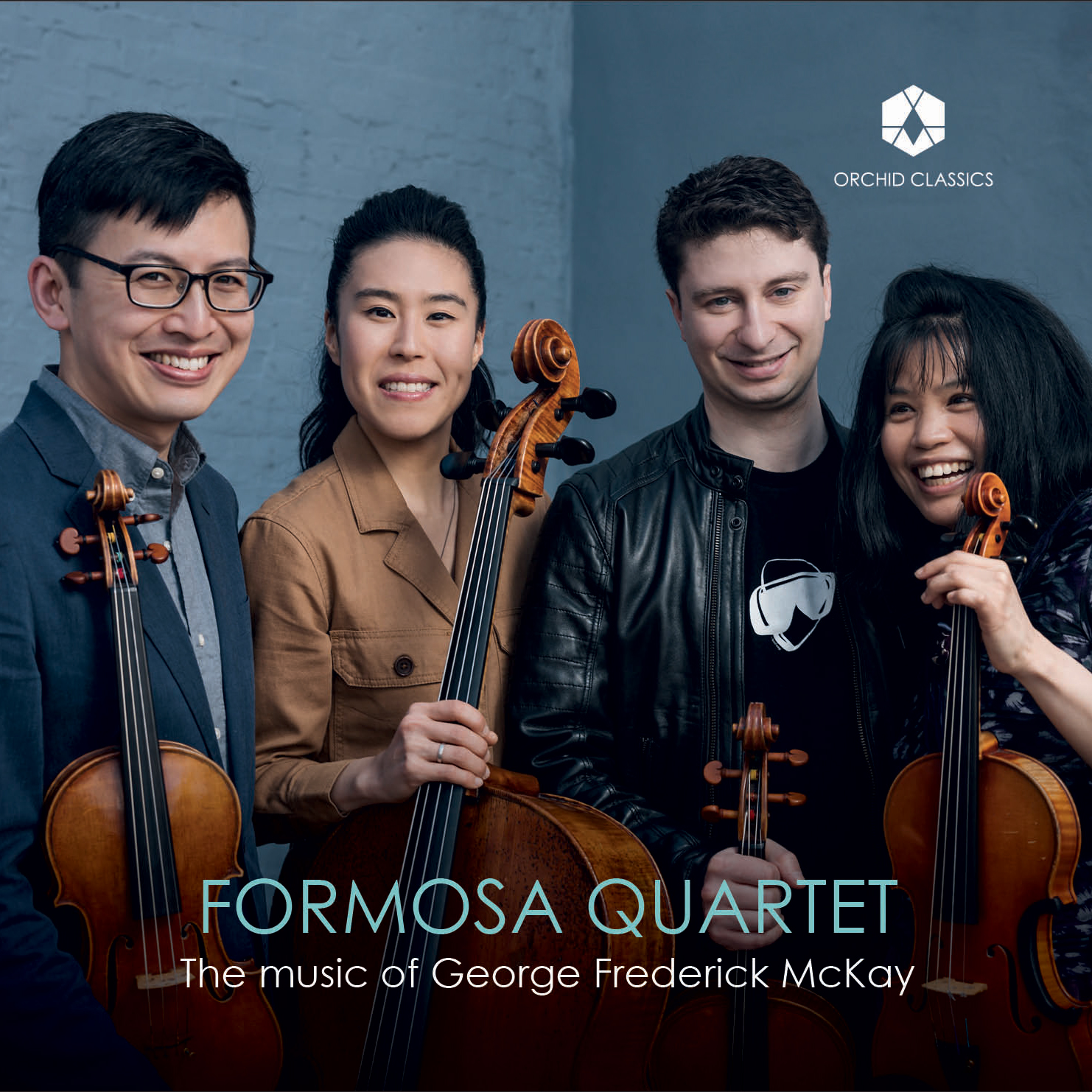
09 Formosa QuartetThe Music of George Frederick McKay sees the Formosa Quartet present the first commercial release of the string quartets of the mid-century American composer George Frederick McKay (1899-1970) (Orchid Classics ORC100381 orchidclassics.com/releases/orc100381-formosa-quartet).

McKay founded the Music Department at the University of Washington, where he was the Professor of Music for 41 years until 1968. The string quartets occupy a prominent place in his large output, and are described here as reflecting his distinctive musical language, shaped by influences ranging from Civil War era folk songs and Native American melodies to avant-garde satire from the West Coast urban scene.

The String Quartets No.1 “American Sketches” and No.2 “appassionato” are from 1935 and 1937 respectively, while the String Quartets No.3 “Poem of Life and Death” and No.4 “Mister Del Balboa” are both from 1950. They’re strongly tonal, immediately accessible and finely crafted works, given strong performances on this welcome release.

10 Welsh Music for StringsWelsh Music for Strings is a CD of world premiere recordings with the Royal Philharmonic Orchestra under Owain Arwel Hughes (Rubicon Classics RCD1198 rubiconclassics.com/release/welsh-music-for-strings).

The simply beautiful Elegy by Grace Williams (1906-77) was written in 1935 for the newly-formed BBC Welsh Orchestra. Described as “a prayer without words” the stunning O Sacred Heart, by leading contemporary composer Paul Mealor (b.1975), was written especially for this album. 

The short but upbeat Romance by Morfydd Owen (1891-1918) is an early work from a woman composer who died tragically young. The heartfelt Aberfan, by Christopher Wood (b.1945) was written for the 50th anniversary of the 1966 Welsh disaster.

There are two works by Arwel Hughes (1909-88), the father of the conductor: Gweddi (A Prayer) for soprano, chorus and strings, featuring Jessica Robinson and the Côr Llundain, and the lush Divertimento, recently discovered by his son.

The three-movement 1961 Music for Strings by William Mathias (1934-92) completes a really lovely disc.

11 Kremer Viktor KalabisString music by the Czech composer Viktor Kalabis (1923-2006) is presented on the new CD from violinist Gidon Kremer, who is joined by cellist Magdalene Ceple and the Kremerata Baltica under Fuad Ibrahimov in a recital of works by a lesser-known composer whose career was impacted by both the Nazi occupation of his country and the Communist regime that followed it (Hyperion CDA68474 hyperion-records.co.uk/dc.asp?dc=D_CDA68474).

The earliest work here is the three-movement Chamber Music for Strings, Op.21 from 1963. The two-movement Diptych for Strings, Op.66 and the four-movement Duettina for Violin and Cello, Op.67 are both from 1987. Kalabis described the Diptych as “chaste of expression – a study of new sonic possibilities of string ensemble,” but there are some hauntingly beautiful moments here – especially in the Op.21 – in music that seems to reveal more the more you listen to it.

Performances, as you would expect from Kremer and his friends, are exemplary.

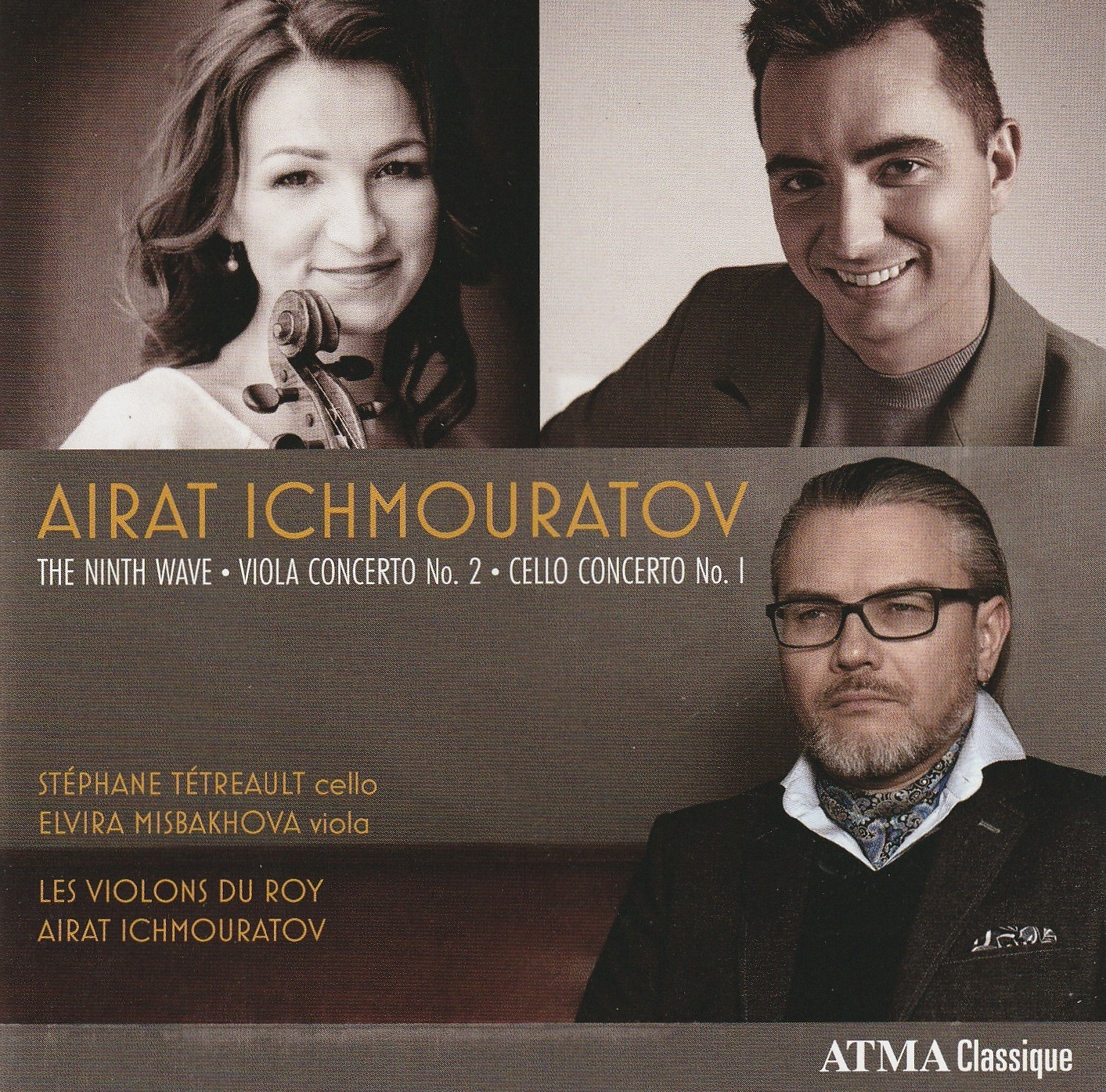
12 Airat IchmouratovCompositions inspired by artworks are featured on Airat Ichmouratov, a CD of music by the Russian-born Canadian composer, with cellist Stéphane Tétreault, violist Elvira Misbakhova and Les Violons du Roy under the direction of the composer (ATMA Classique ACD2 2896 atmaclassique.com/en/product/ichmouratov-the-ninth-wave-viola-concerto-no-2-cello-concerto-no-1).

The 2018 Tone Poem for Strings: The Ninth Wave Op.61 is a response to the painting of that name by the Russian marine artist Ivan Aivazovsky, Ichmouratov saying that he used impressionist techniques to capture the restless spirit of a turbulent ocean.

For his 2015 Concerto for Viola No.2, Op.41 Ichmouratov imagined a scene from the childhood of J. S. Bach, the three movements being written in a neo-Baroque style while also embracing Ichmouratov’s own neo-Romantic voice.

Three paintings – Intrigues, Repentance and Moto perpetuo – by the Montreal-based artist Natasha Turovsky inspired the 2008 Concerto No.1 for Cello and Strings with Percussion, Op.18 and provided the titles for the individual movements. Commissioned and premiered by Les Violons du Roy, it has a striking middle movement mourning the victims of the mid-century Soviet era.

13 Emma RushThe outstanding Hamilton guitarist Emma Rush is back with the Life & Times of Catharina Pratten, a delightful and fascinating CD featuring the music of the 19th-century guitarist and composer Madame Sidney Pratten and her associates (Independent emma-rush.com/the-life-and-times-of-catharina-pratten).

A child prodigy, Pratten was born in Germany in 1824, her family moving to England in 1829. She performed, composed and taught virtually up to her death in 1895, her three guitar methods and her book Learning the Guitar Simplified offering valuable insight into 19th-century guitar performance. There are seven of her pieces here, along with short works by her father Ferdinand Pelzer, her husband Robert Sidney Pratten, the Swiss child prodigy Giulio Regondi, the German guitarist and composer Leonard Schultz, Francisco Tarregá (who visited Pratten in London), the English virtuoso (and Pratten student) Ernest Shand, and Pratten`s student and biographer Frank Mott Harrison.

Rush plays two guitars from the 1850s, both associated with Pratten, in an immensely satisfying and beautifully played recital.

14 CancionetaThere`s more outstanding guitar playing on Cançioneta – Works for Guitar, with the English guitarist Frederick Lawton providing a snapshot of lesser-known mid-20th-century Spanish guitar music (Navona NV6723 navonarecords.com/catalog/nv6723). 

The main composer here is the pianist Federico Mompou (1893-1987), who is represented by his six-movement Suite Compostelana, composed for Andrés Segovia in 1962, and two selections – Nos.6 & 10 – from his 15-piece Cançions y Danzas piano series, the former arranged by Paolo Pegoraro and the latter transcribed by the composer.

Manuel de Falla`s Homenaje a Debussy is here, as are the three-movement Suite Valenciana by Vicente Asencio (1908-1979) and the delightful four-movement Sonata by Antonio José (1902-1936).

Lawton`s playing seems effortlessly clean, and his phrasing and musicality are first class. The recording was made using vintage microphones in order to give a warm and saturated tonal colour to the performances, and it certainly produced the desired effect on a terrific CD.

15 Empty Houses Canadian Guitar QuartetThe Canadian Guitar Quartet of Steve Cowan, Jérôme Ducharme, Christ Habib and founding member Louis Trepanier is in superb form on Empty Houses, a fascinating programme of compositions and arrangements (ATMA Classique ACD2 2883 atmaclassique.com/en/product/empty-houses).

The delightful Prologue, fougue et allegro trépidant was written by Habib’s teacher Patrick Roux for the CGQ’s 20th anniversary, the three movements referencing Chopin, Piazzolla and Bach. The other original compositions are Pulsar, by Belorussian-American composer and guitarist Olga Amelkina-Vera – its exciting rhythms gradually slowing to nothingness – and Renaud Côté-Giguère’s four-movement title track, described by the composer as an overview of his musical influences.

The hugely-effective Allegro con spirit from Mozart’s Sonata for Two Pianos, K488 (one hand=one guitar!) was arranged by Trepanier, who also arranged Areias Brancas, Orfeu Negro, a compilation of musical themes by Antônio Carlos Jobim and Luiz Bonfa from the 1959 French-Brazilian film Orfeu Negro that introduced the Bossa Nova to the outside world.

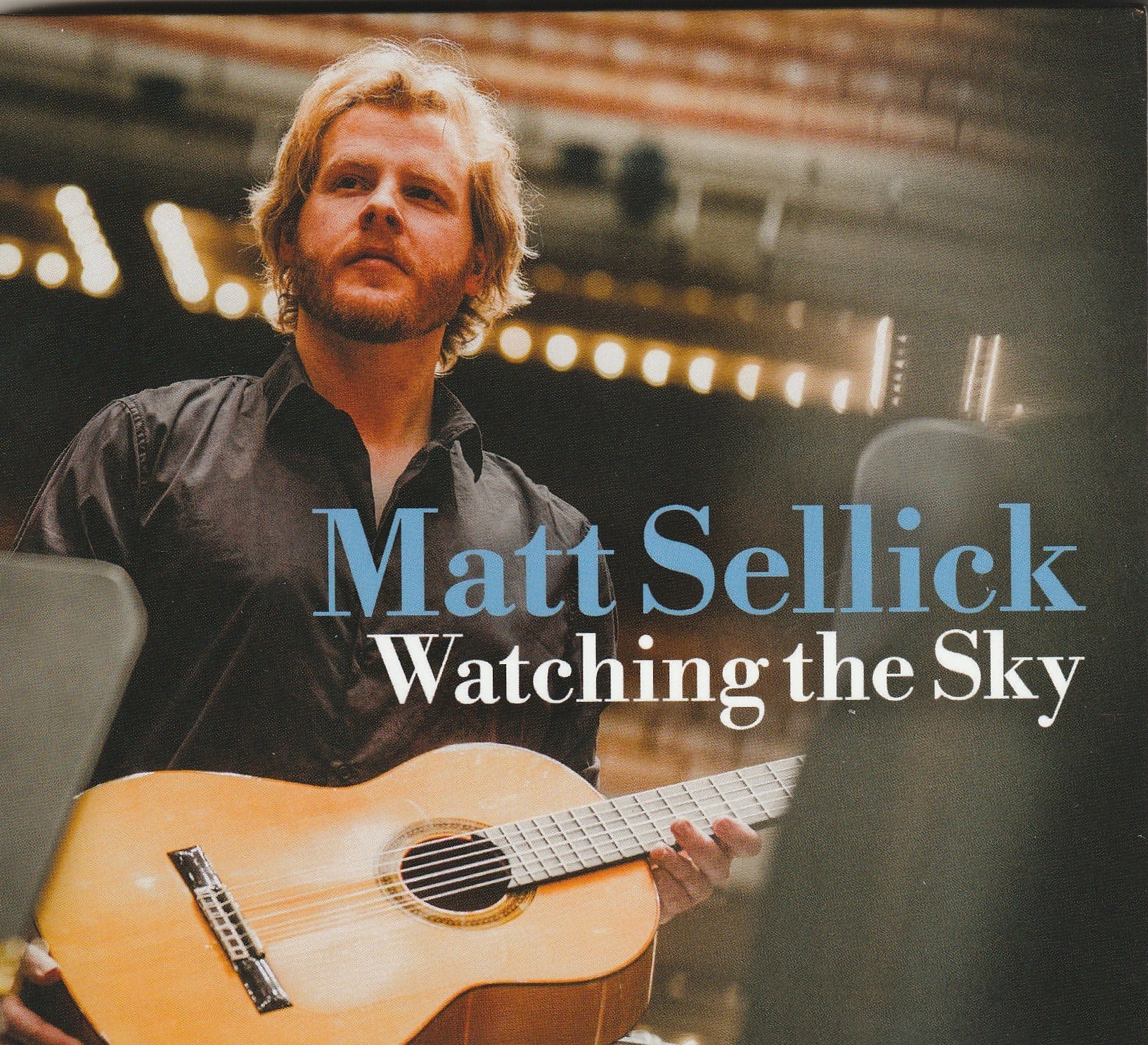
16 Matt SellickThe Thunder Bay flamenco guitarist and composer Matt Sellick, now Toronto-based, has spent much of the past decade orchestrating many of his flamenco guitar pieces and performing them with the Thunder Bay Symphony Orchestra, conducted here by Evan Mitchell on the resulting album Watching the Sky (Independent mattsellick.com).

Five of these pieces in their original form were included on Sellick’s 2014 CD After Rain, reviewed here in February 2015, and despite this being an intriguing and well-crafted project it’s difficult to feel that the orchestrations have enriched and enhanced the compositions; rather, they seem to detract from the original intimacy and impact and too often reduce the guitar to a rhythm accompaniment role. The guitar’s crispness – and After Rain had real punch – also tends to get softened in the recording balance.

The result is more of a Latin album than a flamenco album revisited, with occasional shades of José Feliciano – not a bad thing by any means. As such it has its attraction and its merits, but if you really want to know just how good a composer and guitarist Matt Sellick is then revisit After Rain.

Listen to 'Watching the Sky' Now in the Listening Room

01 Jeff BirdORDO VIRTUTUM – Jeff Bird plays Hildegard von Bingen: volume two
Jeff Bird
Independent 2025UTUM (jeffbird.bandcamp.com/album/ordo-virtutum-jeff-bird-plays-hildegard-von-bingen-volume-two)

A few years ago, Guelph area musician Jeff Bird produced a unique recording featuring what he called adaptations of the music of Hildegard of Bingen. He has now followed up with a further collection of pieces inspired by and adapted from this 12th century German abbess, who must stand out as one of the most remarkable individuals of that mediaeval period. Hildegard produced melodies for her nuns to sing communally [as monks did with Gregorian Plainchant], and inscribed these musical lines in illustrated manuscripts, designed with colours and ornaments, which are beautiful in themselves. 

As with Bird’s first collection, the chant has been compressed to produce a faster moving melody line, which follows the intervals of the chant more quickly and renders them instrumentally in arrangements that are based on a main voice usually played on a harmonica. There is no singing.

There are eight separate numbers, and each features a very precise scoring of the solo harmonica line, recorded and performed meticulously with a limited vibrato, plus another instrumental line which varies from number to number, and forms organum and pedal effects and echoes surrounding the main melody, with strings in the first, trumpet in the third, and we hear sections with electric guitar, sruti-box, [tiny] pipe organ and even a harp, but all in contemplative flowing, very simple and clear lines. 

The intense meditational focus eventually creates an obsessive, mesmerizing quality, but each of the numbers ends abruptly, usually fading back before the next piece without any cadential process. This disc could be an effective background of calming music played on repeat. The single sleeved album has a minimum of notes, but is very elaborately decorated, as is the CD itself.

Listen to 'ORDO VIRTUTUM' Now in the Listening Room

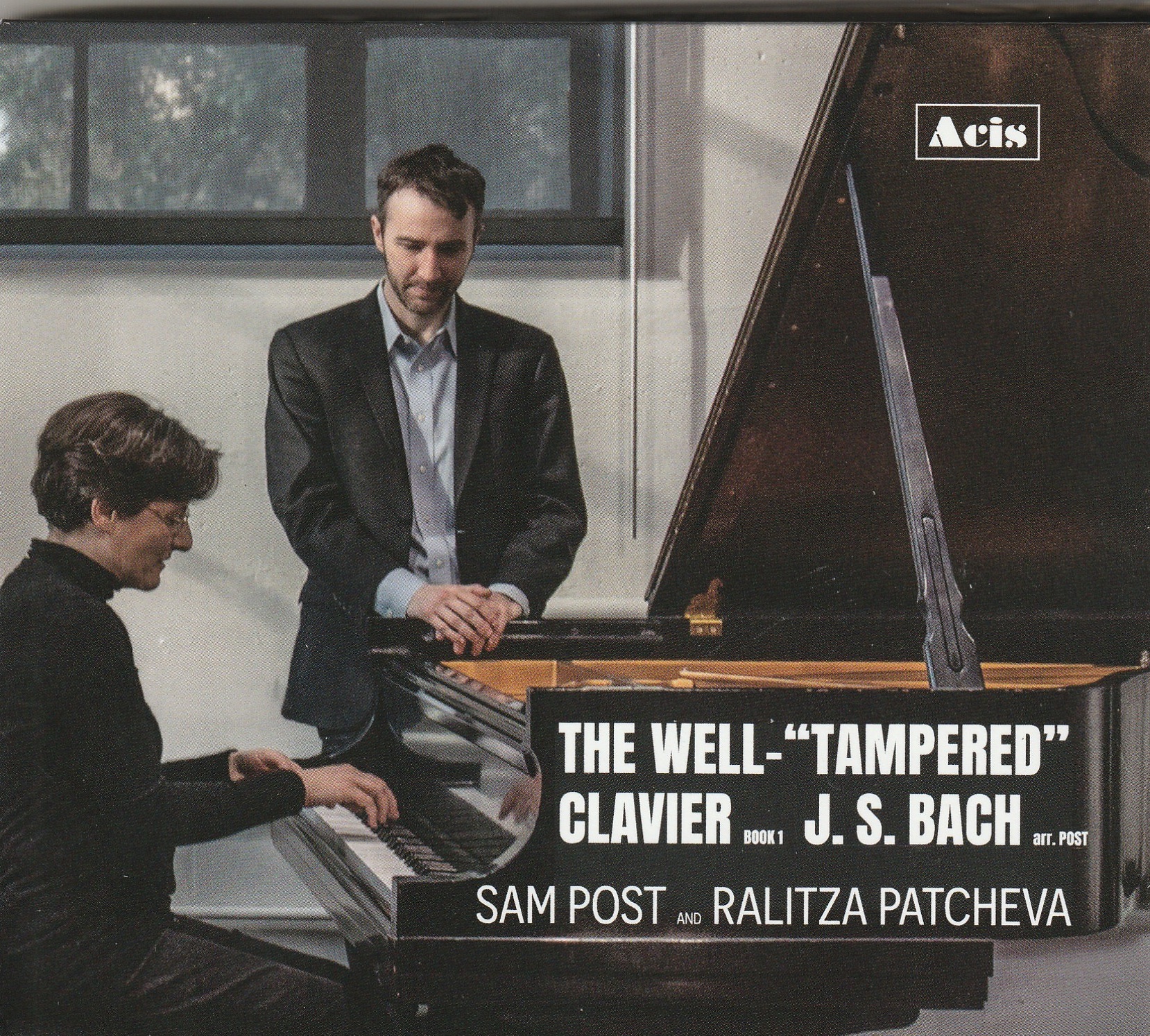
02 Well Tampered ClavierJ.S. Bach – The Well “Tampered” Clavier Book One (arranged Sam Post)
Sam Post; Ralitza Patcheva
Acis APL53516 (acisrecordstore.com)

Sam Post, and his piano-playing partner Ralitza Pacheva, play a sensational Book 1 of J.S. Bach’s Well-“Tampered” Clavier here. More about that title later. Both books (24 preludes and fugues) work through the 12 major and 12 minor keys on the instrument as it was constructed at that time. 

Unequalled in the profligacy of their inventiveness, the books were intended partly as a manual of keyboard playing and composition, partly as a systematic exploration of harmony, and partly as a celebration of tuning technique – the “Well-tempering” that enables playing in any key without having to retune the piano. The twist in the title may sound whimsical, but it is not as it restores the Pythagorean (and other mathematical elements) of the composition. As the elements of melodic line, harmonic construction and rhythmic invention are unfurled and unfettered, the “Tampered” vs “Tempered” title makes its charm even clearer.

Post’s and Ralitza’s quirky and clever interpretation joins the annals of great recordings – Glenn Gould’s and Friedrich Gulda’s to cite a couple – of this masterful compositional invention. The fugues, in as many as five voices, are brilliantly constructed and full of dance-like passages and strong, concise melodies, and the preludes can be seen as palimpsests of the poetic distillations of Chopin’s Préludes and Études. Post and Ralitza exploit the full range of the piano’s sonorities; crisp, hard touch is used for the more rhythmically motorised preludes.

Listen to 'J.S. Bach: The Well “Tampered” Clavier Book One' Now in the Listening Room

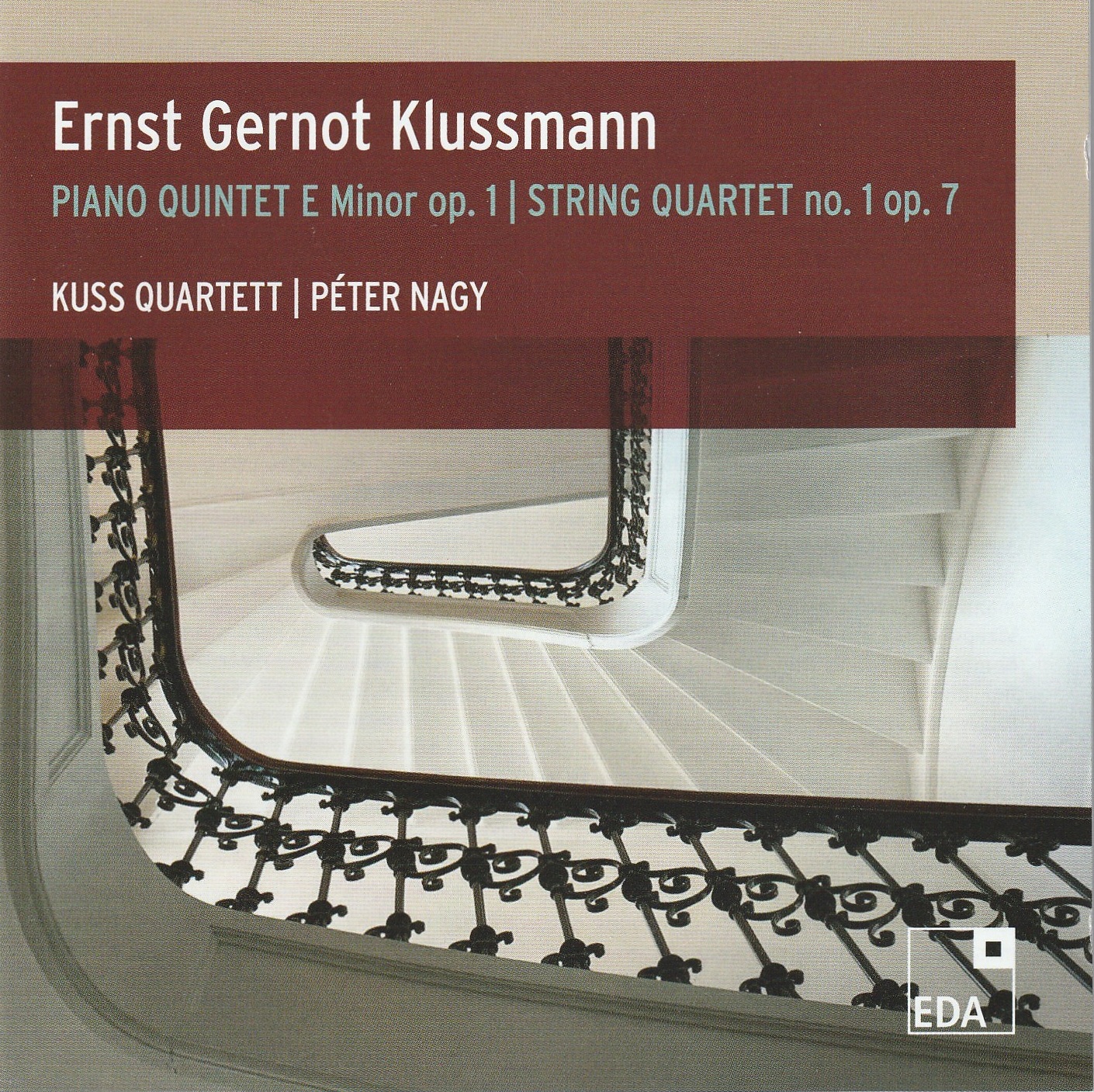
03 Ernst Gernot KlussmannErnst Gernot Klussmann – Piano Quintet; String Quartet No.1
Kuss Quartet; Péter Nagy
EDA Records EDA 055 (eda-records.com/177-0-CD-im-Detail.html?cd_id=100)

In the booklet accompanying this first-ever CD devoted to Ernst Gernot Klussmann (1901-1975), Carsten Bock suggests that the neglect of Klussmann’s extensive output in all genres is “due to the stigma attached to artists who worked in Germany during the Nazi era.” Klussmann had joined the Nazi party in 1933 but, insists Bock, he “was anything but a Nazi… a timid person who was careful to observe the rules and laws.”

After listening to these two early works, I submit instead that Klussmann’s “timidity” and “careful observation of the rules” led him to creating music that despite its intrinsic merit is dismissed for too closely imitating the composers he admired – Brahms, Mahler and Schoenberg.

Klaussmann’s Piano Quintet in E Minor, Op.1 (1925) opens with a yearning violin melody that could have been written by Brahms. Brahms reappears in the movement’s tumultuous development and the rhapsodic Adagio molto e cantabile as well as the noble, vigorous anthem and fugal section of the dramatic Finale. This thoroughly enjoyable work might easily have entered the repertoire had it been premiered a generation earlier.

Just a few years later, in his String Quartet No.1, Op.7 (1928-1930), Klussmann abandoned Brahms for the long-lined, chromatic dissonances of Mahler and the Schoenberg of Verklärte Nacht.

Pianist Péter Nagy and the Berlin-based Kuss Quartet make a persuasive case for these substantial works, both over half an hour, both well worth hearing even if you’ve “heard it all before.”

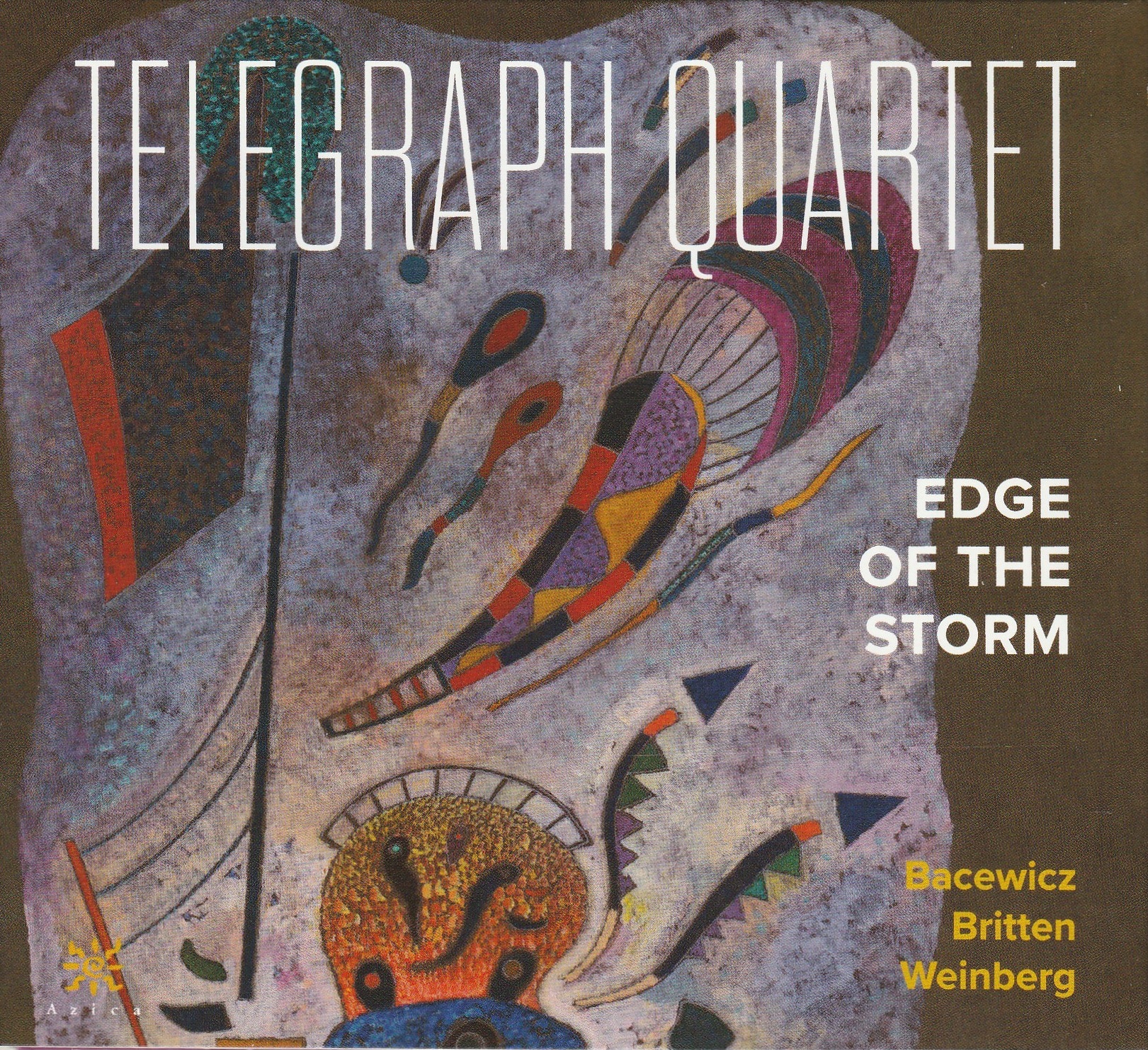
04 Telegraph QuartetEdge of the Storm
Telegraph Quartet
Azica ACD-71381 (azica.com/albums/edge-of-the-storm)

This CD’s three quartets date from a decade when their composers lived on the “edge of the storm” – World War Two.

Benjamin Britten composed his remarkable String Quartet No.1 in D Major, Op.25 (1941) in California, having chosen, as a pacifist, self-exile from the U.K. Filled with fresh melodies, surprising irregular rhythms and strikingly original sonorities, it features eerie, high-pitched shimmers over cello pizzicati, an energized syncopated dance, a driving scherzo abruptly punctuated by rude outbursts, an extended elegy and a skittish, exuberant and eventually triumphant finale.

In 1939, Mieczysław Weinberg fled from Poland to the U.S.S.R. There, he composed his String Quartet No.6 in E Minor, Op.35 (1946), a memorial to the millions of innocents killed, including his parents and sister who were murdered by the Nazis. Bittersweet folk-like tunes contrast with violent turmoil, a wailing klezmer melody, a grief-stricken prayer for the dead, a ghostly Yiddish dance (played using mutes), ending with a grandiloquent, Shostakovichian proclamation of survival after tragedy. Banned from performance by Soviet authorities, this monumental work wasn’t premiered until 2006!

During the Nazi occupation, Grażyna Bacewicz participated in Poland’s Underground Union of Musicians, which later commissioned her String Quartet No.4 (1951). Wistful melodies and optimistic passion emerge from initial gloom, pulsating shadows drift mysteriously and a spirited rondo based on a Polish oborek dance accelerates to a joyous conclusion.

Thanks to the virtuosic Telegraph Quartet, quartet-in-residence at the University of Michigan, for this superb CD.

05 Paul Cohen NightfalssNightfall and Midnight Revels – New Chamber Music from Two Centuries
Paul Cohen; Various artists
Ravello Records rr8117 (ravellorecords.com/catalog/rr8117)

Sadly, in the world of chamber music, the saxophone is usually not in the picture at all; even in 2025 the standard strings and wind instruments usually take precedence. Famous exceptions would be William Walton’s brilliant Façade or various transpositions of Bach, Hindemith and other works. 

Paul Cohen’s Nightfalls and Midnight Revels does an excellent job of rectifying this by highlighting many obscure works and presenting “a distinguished array of music old and new, including chamber works for trio, quartet and quintet.” Cohen plays soprano and alto saxophones in addition to the “conn-o-sax,” a straight design in “F” (saxes are normally tuned in B-flat or E-flat) which was produced for only one year (1928). Other instrumentation includes piano, violin, viola, cello and other saxophones, and includes pieces from 1932 to 2021.

There are several beautiful gems in this collection – for example Wolfgang Jacobi’s recently discovered Kleine Stucke (1932) and John Sichel’s Piano Saxophone Quintet (2021) – and I heartily urge everyone to give it a listen: you will be surprised and intrigued.

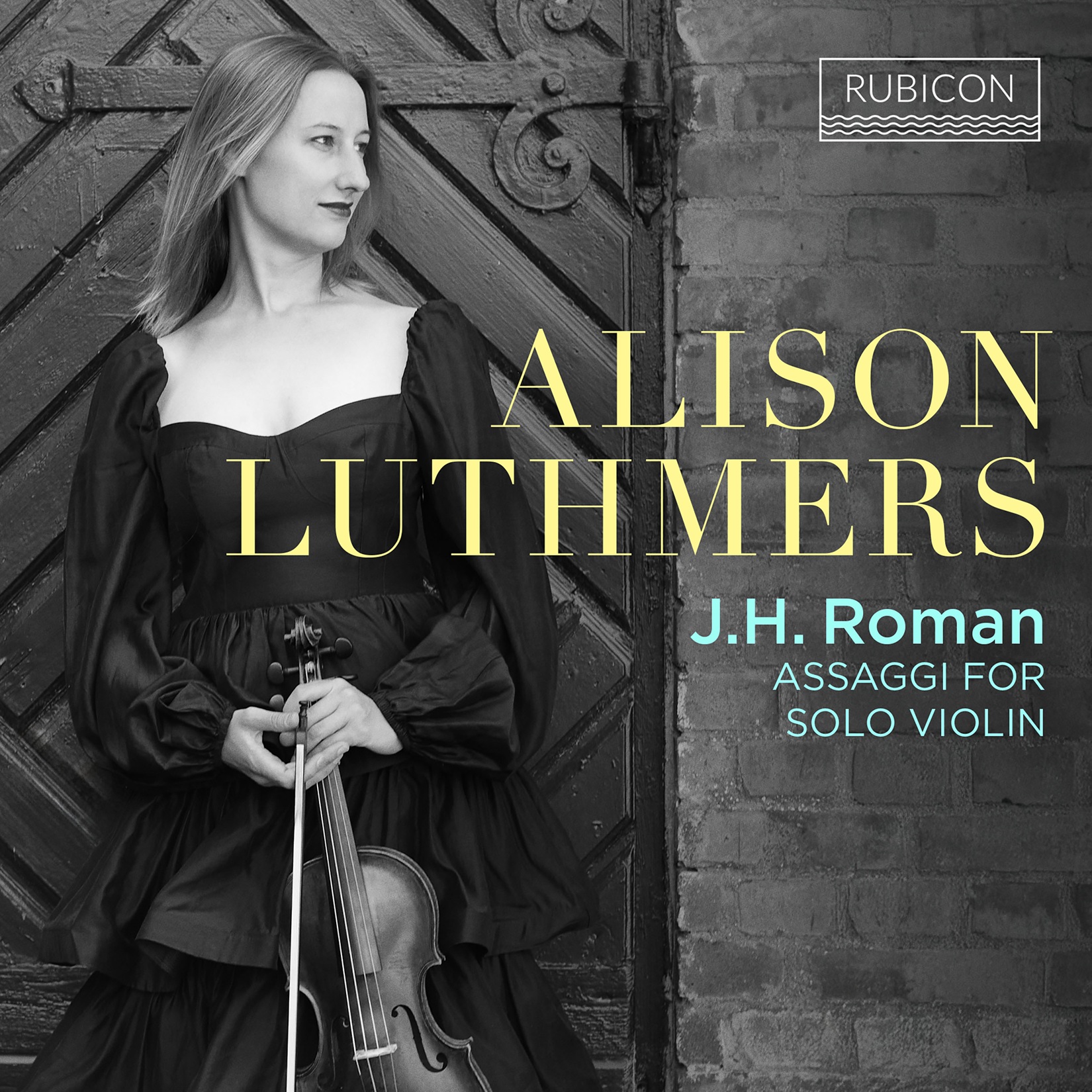
01 Assaggi for Solo ViolinAfter completing modern violin studies in Los Angeles the Canadian-American Baroque violinist Alison Luthmers moved to Sweden in 2012 and began pursuing her “true love,” the Baroque violin. It’s no surprise, then, to find her recording the J.H. Roman: Assagi for Solo Violin, featuring four of the distinctive works by one of Sweden’s most important composers, Johan Helmich Roman (1694-1758) (Rubicon RCD1140 shop.darksiderecords.com/en-ca/collections/release-date-4-25-25/products/alison-luthmers-j-h-roman-assaggi-for-solo-violin?srsltid=AfmBOoot3C0eW4G6btJhhwKGMZpJ8z40sXzHSt0gn_nw_px1ie-Lby83).

There are about 20 Assagi extant in various degrees of completion and with a complicated and contradictory source history that includes a few movements from an aborted print edition, Roman’s manuscripts and contemporary copies. Luthmers has chosen the Assagi in E Minor BeRi 312 and in A Major BeRi 301, and the two Assagi in G Minor BeRi 314 and 320.

Her playing is exemplary – light and nuanced, unfailingly accurate and with a lovely sense of pulse.

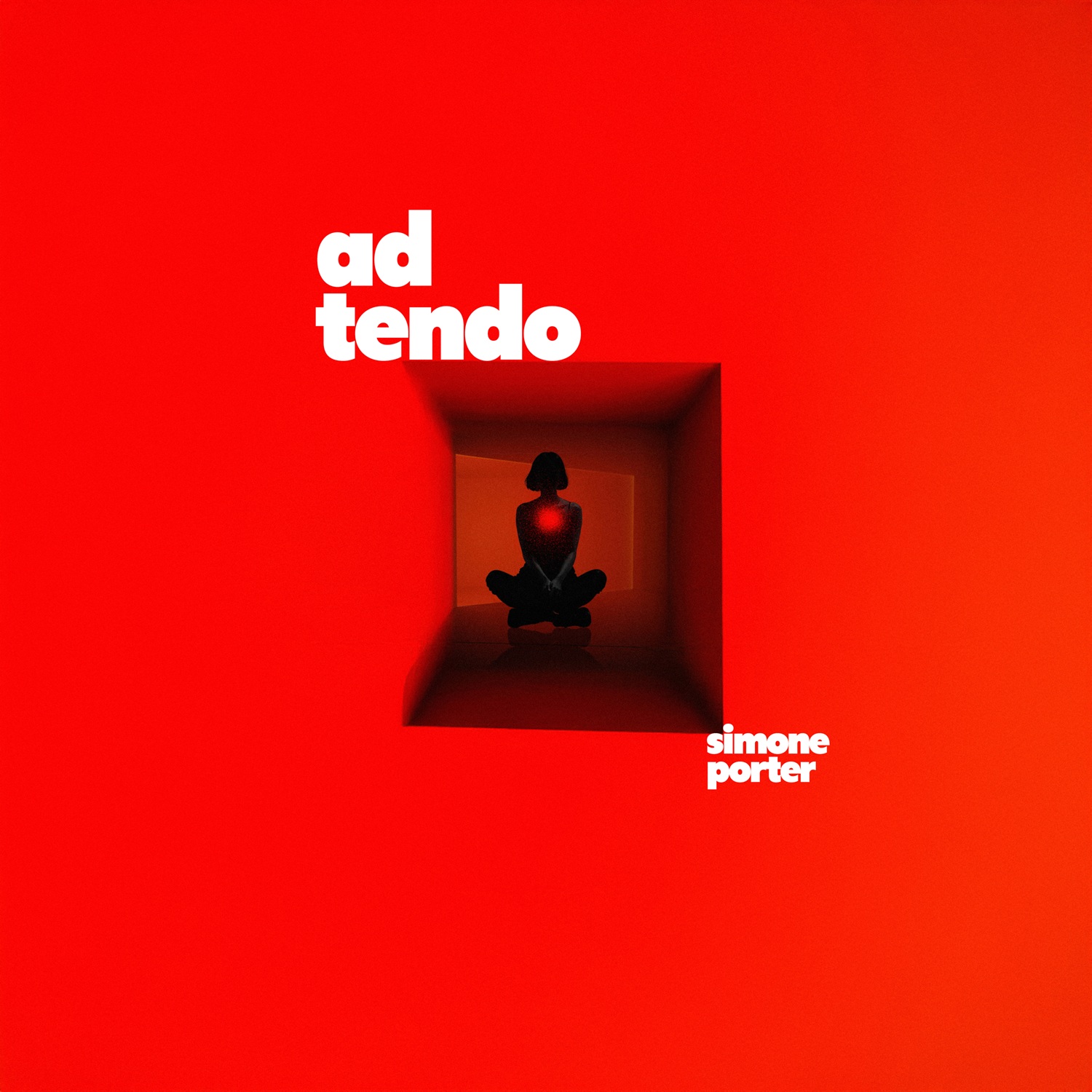
02 ad tendoThe American violinist Simone Porter makes her recording debut with ad tendo, a collection of mostly 21st-century solo violin works inspired by philosopher Simone Weil’s quote “Absolutely unmixed attention is prayer,” Porter feeling that the experience of total absorption offers a kind of deliverance. ad tendo, the Latin root of the word “attention” means “I stretch toward.” (Bright Shiny Things BTC-0217 brightshiny.ninja/useless-information/ad-tendo-amazon-music-classical-focus).

The world premiere recording of Reena Esmail’s Drishti (“focused gaze”) anchors the disc, which also includes Esa-Pekka Salonen’s Lachen verlernt, Olivia Marckx’s Improvisation on O Virtus Sapientiae by Hildegard von Bingen and Andrew Norman’s Sabina, his arrangement of a movement from his string trio written after watching a sunrise during morning mass in Rome’s Santa Sabina Basilica.

Biber’s Passacaglia in G Minor, “Guardian Angel” provides a suitably meditative conclusion to an excellent CD on which Porter fully exploits the tonal qualities of the on-loan 1740 Carlo Bergonzi violin.
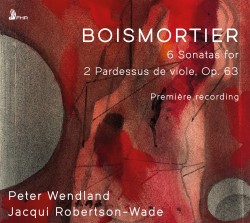
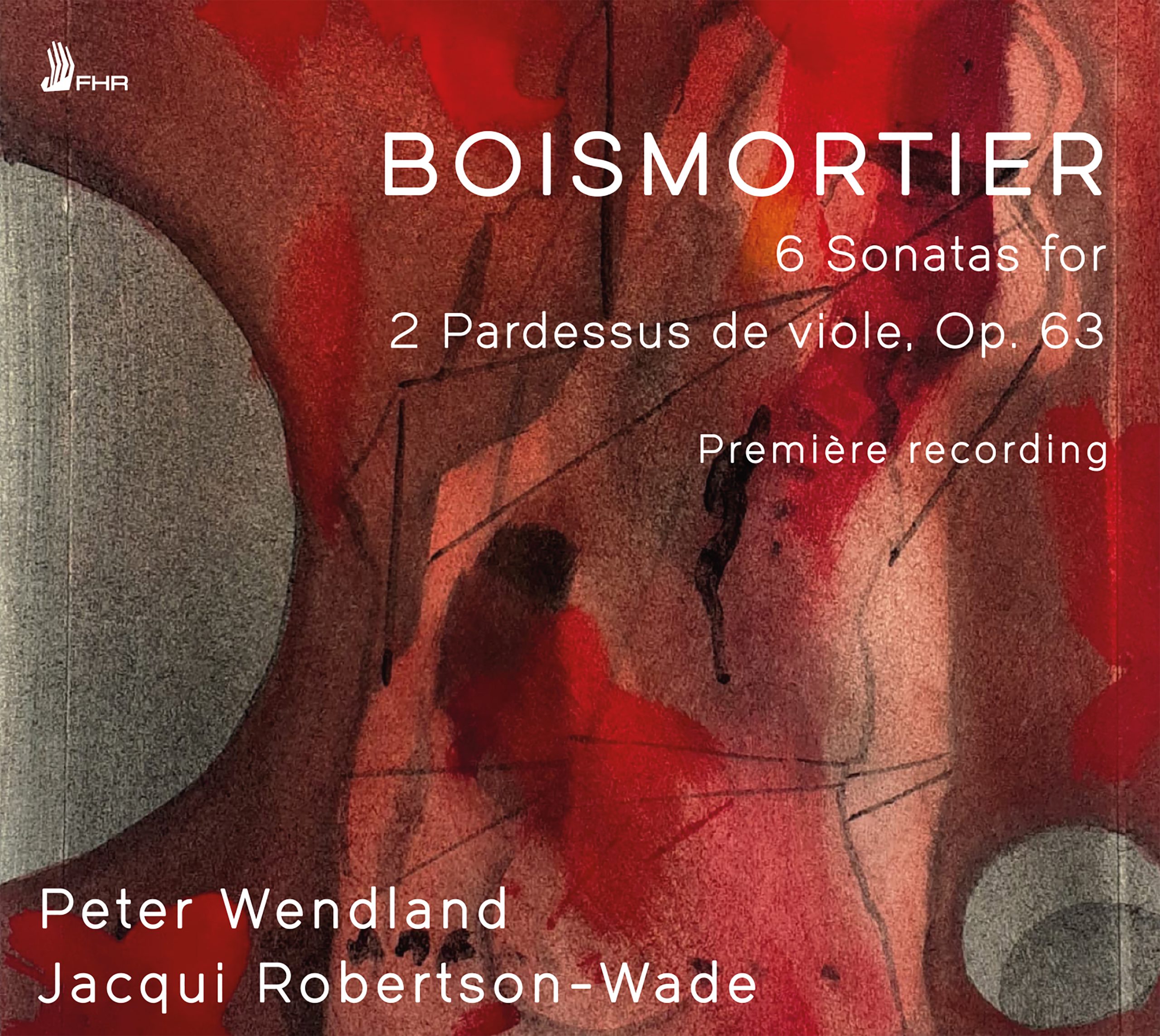
03 BoismortierOn Boismortier 6 Sonatas for 2 Pardessus de viole, Op.63 the Dialogue Viols duo of Peter Wendland and Jacqui Robertson-Wade performs delightful works by Joseph Bodin de Boismortier (1689-1755) that have probably not been heard in well over 200 years, a copy of the engraved score originally published in 1737 having only recently been discovered and published in facsimile by Atelier Philidor in 2021 (First Hand Records FHR159 firsthandrecords.com/products-page/album/boismortier-6-sonatas-for-2-pardessus-de-viole-op-63).

The pardessus de viole was in vogue in France in the mid-18th century; it had six strings tuned in fourths across an almost identical range to the violin. The six sonatas here are quintessentially French in style, and the performances, at the French Baroque pitch of A=392Hz are simply flawless and quite captivating.

Two short pieces transposed up an octave from the original sources end a fascinating CD: the Fantaisie en Écho from Marin Marais’ Pièces de viole Book 1, arranged for two pardessus de viole by Villeneuve (1706-1771) and Le Dodo, ou l’amour au berceau from Couperin’s Pièces de clavecin Book 3, arranged by the performers.

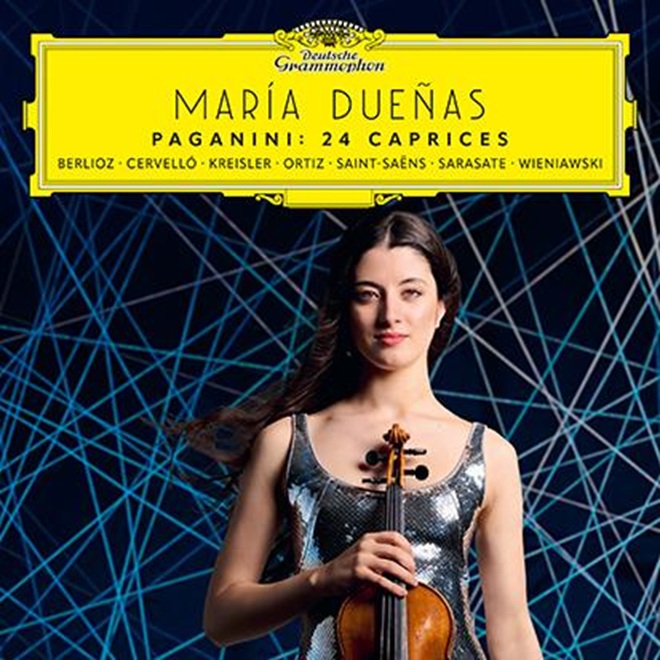
04 Paganini CapricesPaganini Caprices, the second Deutsche Grammophon release by the young Spanish violinist Maria Dueñas is a 2CD set that features much more than Paganini’s 24 Caprices Op.1, Dueñas also offering a selection of caprices for solo violin, violin and guitar, violin duo, violin and piano and violin and orchestra (DG 4865 708 deutschegrammophon.com/en/catalogue/products/paganini-24-caprices-mara-dueas-13622).

The solo works are Kreisler’s Recitativo & Scherzo-Caprice Op.6 and Jordi Cervelló’s Milstein Caprice, written for Dueñas. Boris Kuschnir is the second violinist in Wieniawski’s Étude-Caprice Op.18/2, Raphaël Feuillâtre the guitarist in Kreisler’s Caprice viennoise Op.2, Itamar Golan and Alexander Malofeev the pianists in Sarasate's Caprice basque Op.24 and Gabriela Ortíz’ De cuerda y mad era respectively, and the Deutsches Symphonie-Orchester Berlin under Mihhail Gerts supports Dueñas in Berlioz’s Rêverie & Caprice Op.8 and Saint-Saëns’ Caprice andalous Op.122 and Introduction & Rondo capriccioso Op.28.

It’s the Paganini that drives this release, however, and it’s a stunning performance, technically assured and brilliantly coloured, with Dueñas quite rightly stressing the bel canto vocal nature of much of the writing.

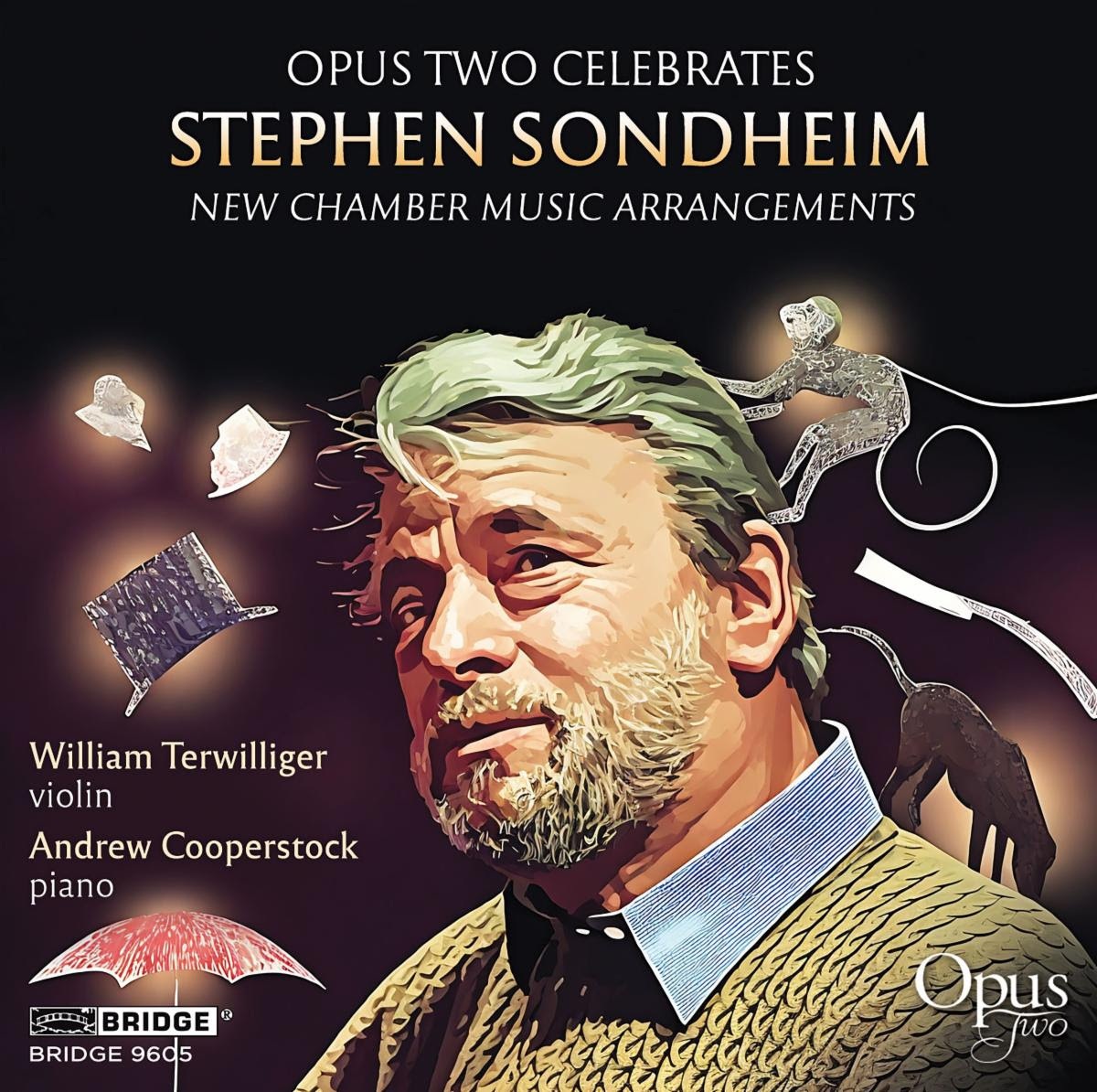
05 Stephen SondheimA few years ago, somewhat uncharacteristically, I included a digital-only single release in the column because it was so good – a suite from Sondheim's Broadway musical A Little Night Music, arranged by Broadway veteran Eric Stern and performed by the Opus Two duo of violinist William Terwilliger and pianist Andrew Cooperstock. The good news is that it’s back on regular CD; the even better news is that it opens a full-length CD of world-premiere recordings of Sondheim arrangements by the same team – Opus Two Celebrates Stephen Sondheim (Bridge Records 9605 bridgerecords.com/products/9605).

Stern worked closely with Sondheim as musical director for numerous shows, and his arrangements are an absolute delight. Broadway Baby and Not While I’m Around are probably the best-known items here, but Follies, Evening Primrose, Company, Sunday in the Park with George and Merrily We Roll Along are also represented.

Fittingly, the more substantial Fleet Street Suite – music from Sweeney Todd – bookends a delightful CD.
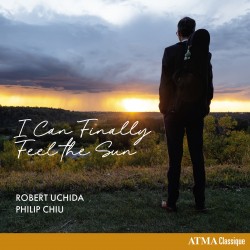
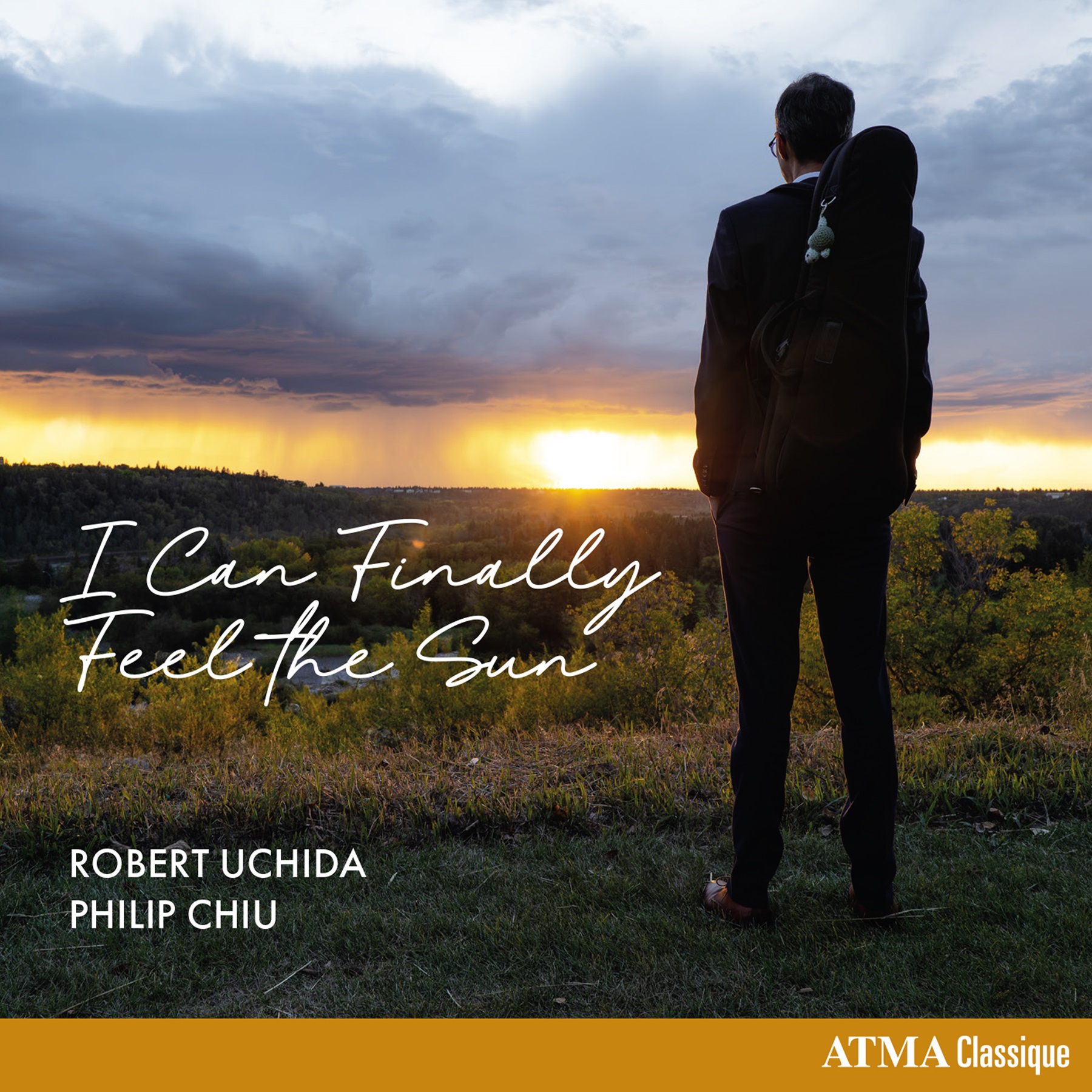
06 Robert UchidaOn I Can Finally Feel the Sun violinist Robert Uchida explores musical relationships on a CD inspired by his playing the “Dawes, de Long Tearse” Guadagnini violin previously played by Andrew Dawes, the first violin of the Orford String Quartet and a mentor of Uchida. Philip Chiu is the pianist (ATMA Classique ACD2 2916 atmaclassique.com/en/product/i-can-finally-feel-the-sun).

Stravinsky’s Suite Italienne is paired with Jean Papineau-Couture's Suite for Violin Alone, three brief movements by a self-described “Stravinskyist.” Telemann’s Fantasie No.1 in G Minor is coupled with Murray Adaskin’s Sonatine Baroque, written for Dawes and first recorded on this same violin. It quotes Bach’s E Major Partita, the Prelude from which is the following track, paired with the Prelude - “Obsession” from Ysaÿe’s Sonata for Solo Violin Op.27 No.2, which again directly quotes the Bach.

Debussy’s Violin Sonata L.148 and the CD’s violin solo title track by Canadian composer Carmen Braden close an entertaining and engrossing disc.
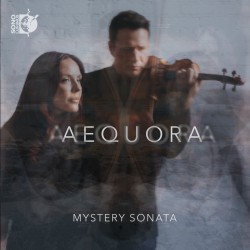
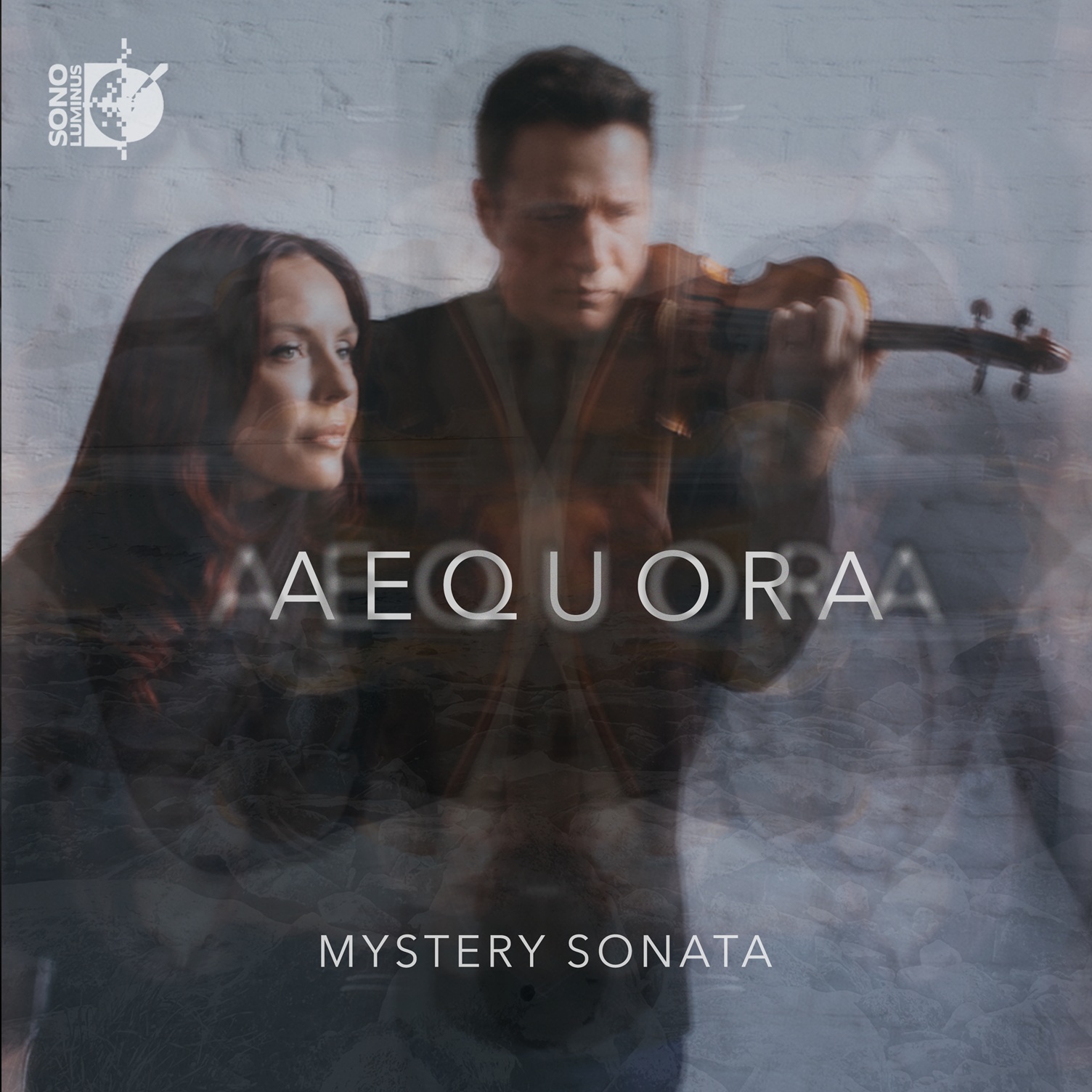
07 AequoraOn Aequora, the Mystery Sonata married duo of violinist Zachary Carrettin and pianist Mina Gajic present works by several prominent Icelandic composers (Sono Luminus DSL-92282 sonoluminus.com/sonoluminus/aequora).

The title track, by Maria Huld Markan Sigfúsdóttir was originally for grand piano and electronics, with a violin and new material being added when the composer met Carrettin. Daniel Bjarnason’s First Escape for solo violin, commissioned by violinist Jennifer Koh explores natural harmonics in a virtuosic fashion.

Páll Ragnar Pálsson’s Notre Dame from 2021 was originally for harp and violin. Anna Thorvaldsdóttir’s 2017 Reminiscence for solo piano comprises seven short sections “exploring mental images and memories of witnessing and experiencing natural phenomena.”

Re/fractions, also by Sigfúsdóttir was commissioned by Mystery Sonata and the Boulder Bach Festival in Colorado. Inspired by space, time and textures, its second half gravitates around the note D – “Re” in tonic solfa, hence the split in the title.
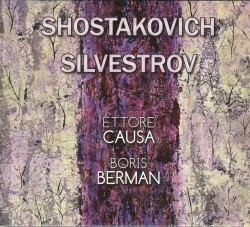
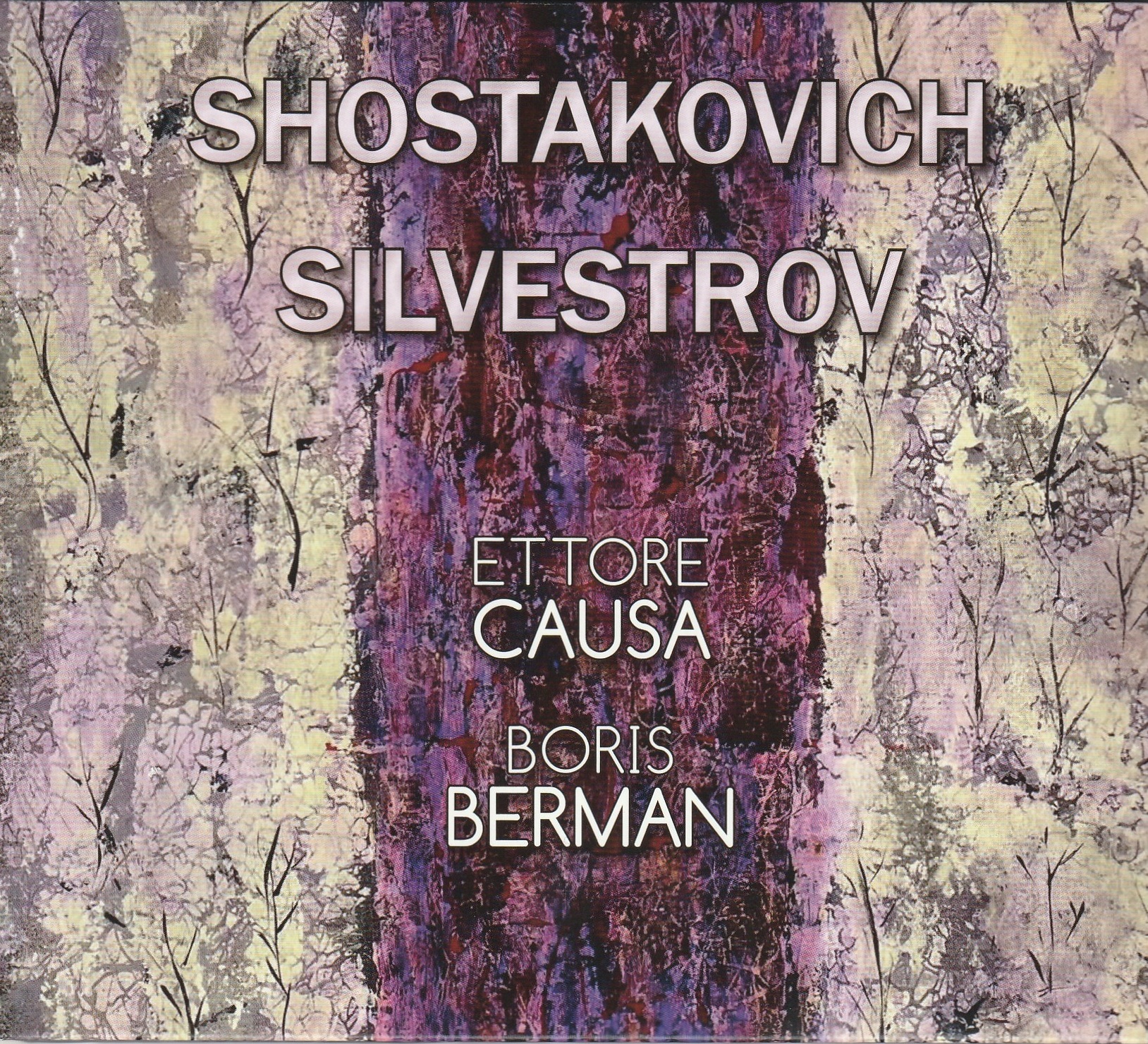
08 Ettore CausaShostakovich – Silvestrov  contains music for viola and piano by the two Russian composers in performances by violist Ettore Causa and pianist Boris Berman (Le Palais de Dégustateurs PDD041 lepalaisdesdegustateurs-shop.com/boutique/SHOSTAKOVICH-SILVESTROV-Ettore-Causa-et-Boris-Berman-p712329711).

The Viola Sonata Op.147, with its huge third movement Adagio, was the last work Shostakovich composed before his death in 1975. There has been much speculation about the autobiographical nature of the music, given the numerous quotations from other of his works, especially in the Adagio.

Valentin Silvestrov (b.1937) wrote a Postlude DSCH for piano trio, but the two composers never met. Silvestrov’s 2010 Elegy for Viola solo, his 2022 Three Intermezzi for Piano (dedicated to Berman) and the 2023 Triptych for Viola and Piano (commissioned by the record label for this CD) are world premiere recordings. His Epitaphium (L.B.) from 1999, originally for piano and string orchestra, was written in memory of his wife, whom he lost in 1996.

Shostakovich’s brief Impromptu for Viola and Piano Op.33, written in 1931 but only discovered in 2017, ends a high-quality CD.
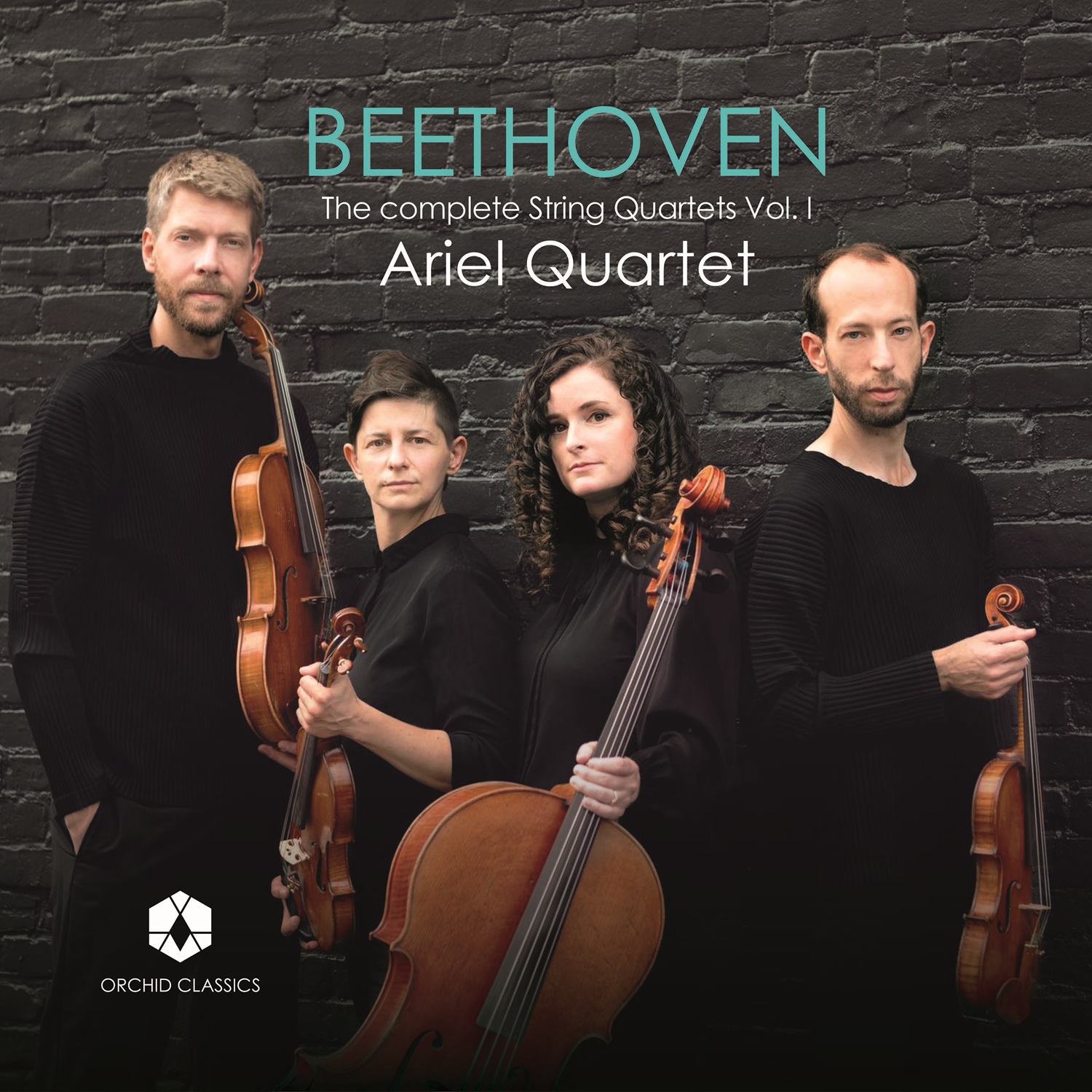
09 Beethoven ArielWith Beethoven Complete String Quartets Vol.1 the Ariel Quartet launches a project which they describe as a testament to their belief in the enduring relevance of the music. Volume 2 is scheduled for release in November, followed by Volume 3 in June of next year and a special box set in March 2027 to mark the 200th anniversary of Beethoven’s death (Orchid Classics ORC100378 orchidclassics.com/releases/orc100378-ariel-quartet-vol-1).

This first volume contains the six String Quartets Op.18. The quartet first played together at the ages of 13 in 1998 – three founder members are still present – and Beethoven’s Op.18 No.4 quartet was the first they played. There’s an immediacy and commitment in their playing and a full, rich recorded sound on what promises to be a significant and attractive option in a fiercely competitive field.
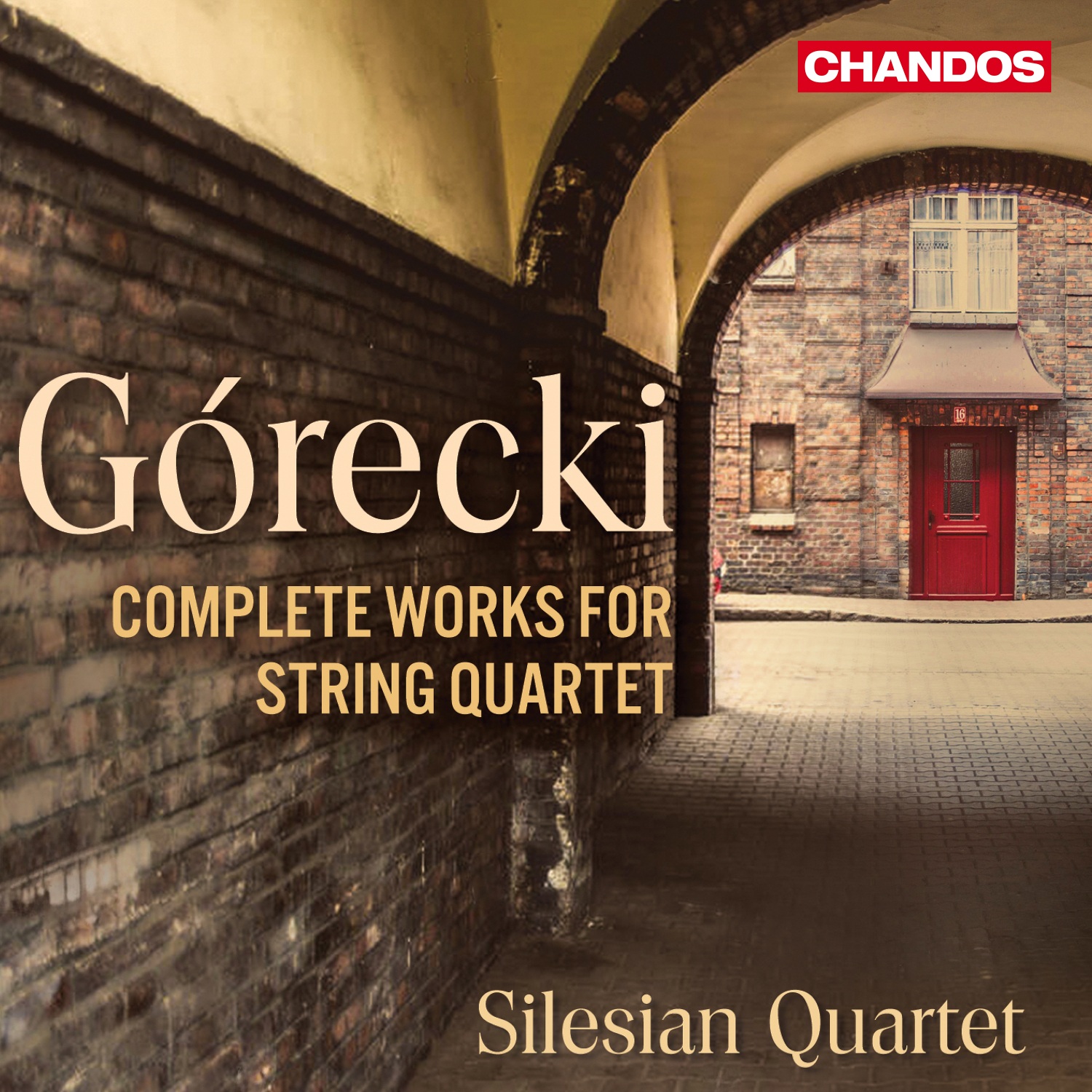
10 Gorecki QuartetsPoland's Silesian Quartet is the ideal interpreter for Górecki Complete Works for String Quartet, a survey of the three quartets all commissioned by the Kronos Quartet together with five choral works played as string quartets (Chandos 202283 2 chandos.net/products/catalogue/CHAN%2020383).

Górecki (1933-2010) turned to string quartets relatively late in his career, No.1 Op.62 “Already it is dusk” dating from 1988, No.2 Op.64 “quasi una fantasia” from 1991 and the monumental No.3 Op.67 “...songs are sung” from 1994-95. The Five Kurpian Songs Op.75 are from 1999.

These are not new recordings: the quartets are from 2008, originally released on Polish EMI, and the choral songs are from 2014. No matter, for I’ve not heard these challenging and sometimes abrasive works sound warmer or more personal and accessible than in these penetrative and illuminating performances.
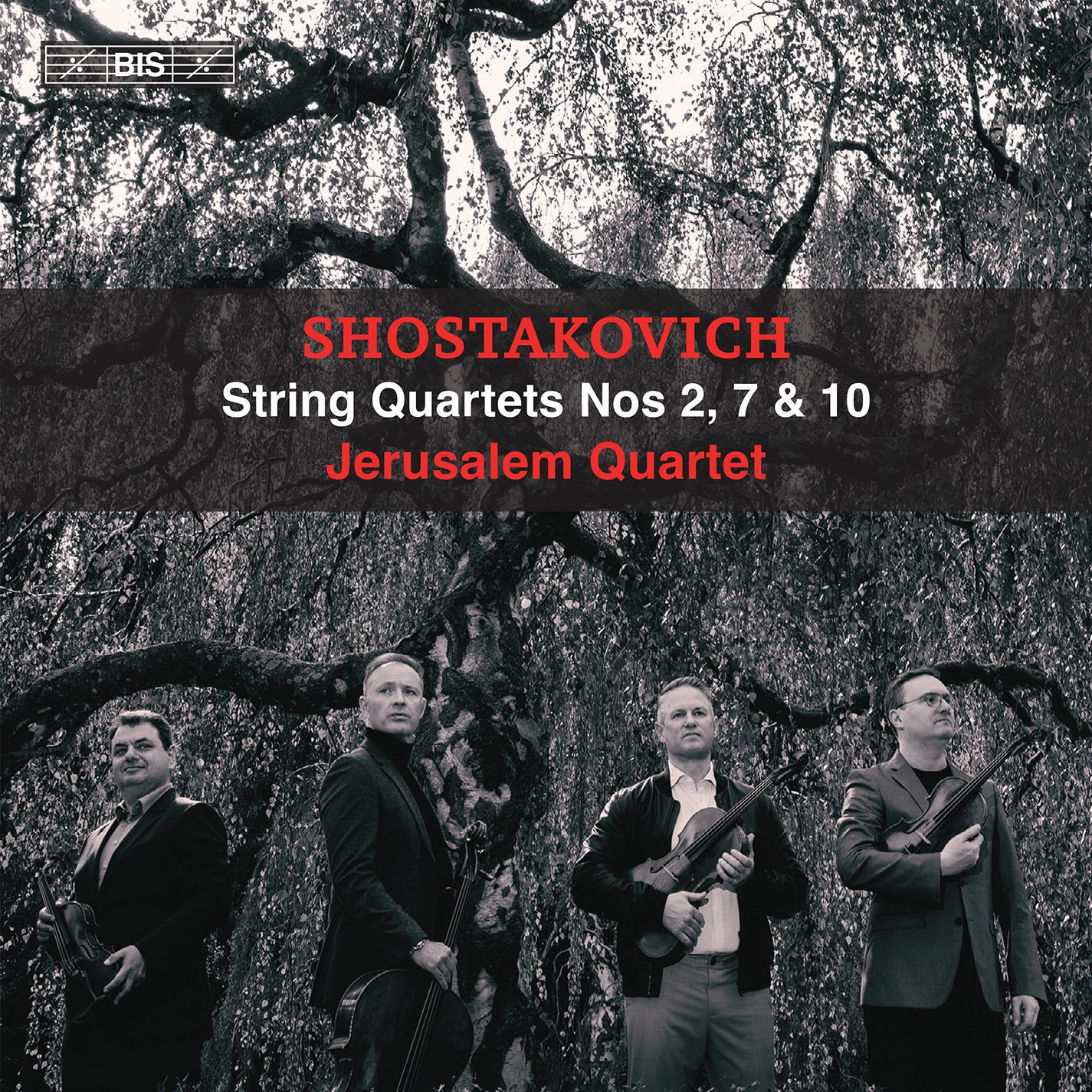
11 Shostakovich JerusalemShostakovich String Quartets Nos 2, 7 & 10 is the first release on the BIS label by the Jerusalem Quartet (BIS-2654 SACD bisrecords.lnk.to/2654).

The String Quartet No.2 in A Major is from 1944, but has no direct war reference, its remarkable slow movement possibly reflecting lingering grief over the sudden loss of a close friend. The String Quartet No.7 in F-sharp Minor Op.108 from 1959-60 is a brief but deeply personal three-movement work dedicated to the memory of his wife, and the String Quartet No.10 in A-flat Major Op.118 is one of his most accessible.

The Jerusalem Quartet is in top form on an excellent disc.
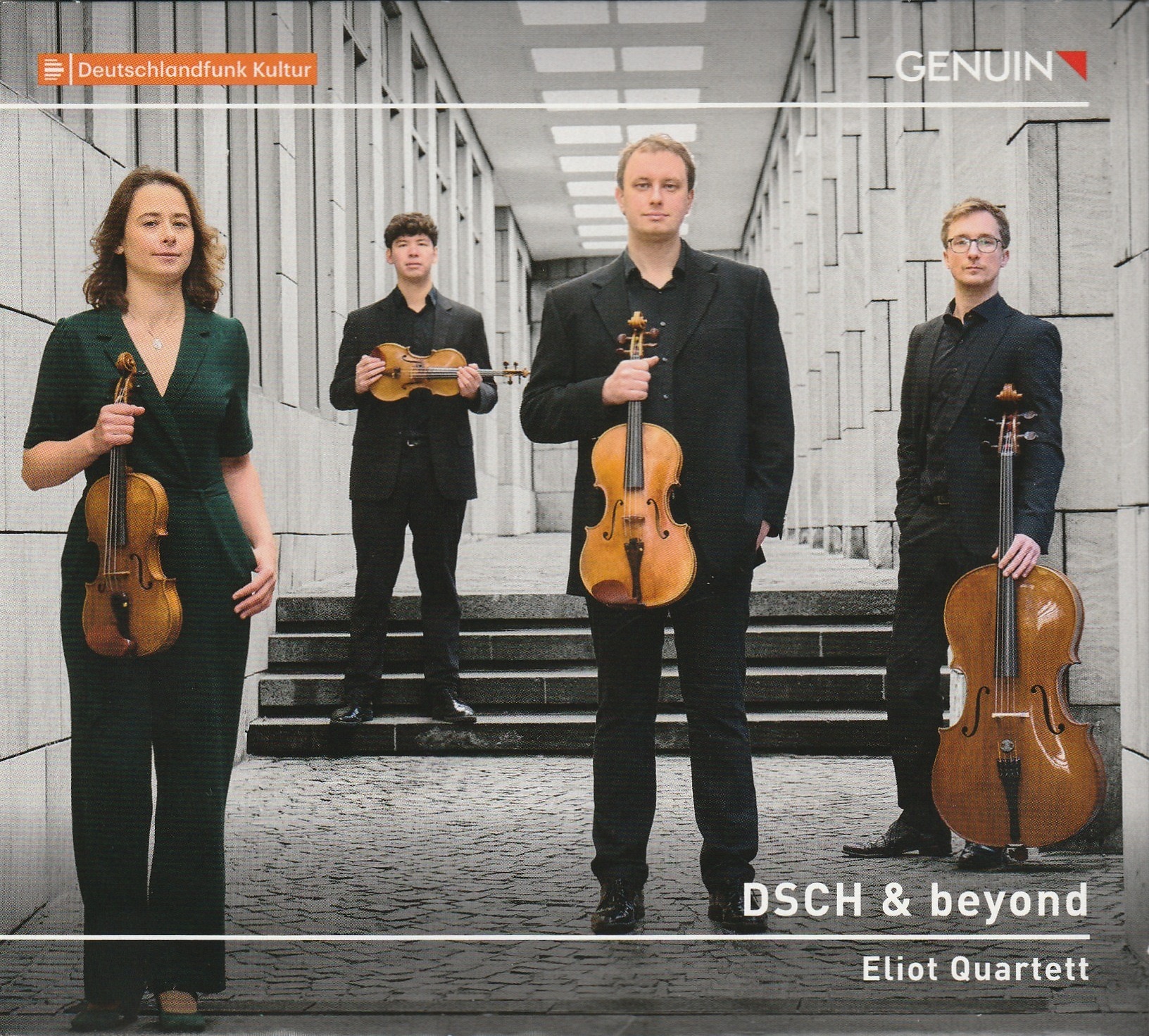
12 DSCH BeyondOn DSCH & beyond the Eliot Quartett delivers impassioned performances of Shostakovich’s String Quartet No.3 in F Major, Op.73 and the hauntingly autobiographical String Quartet No.8 in C Minor, Op.110 (GENUIN GEN 25919 genuinclassics.com/_new/cd_1.php?cd=GEN25919).

The central work on the disc is the remarkable Au-delá d’une absence, Op.89 by Krzysztof Meyer, a hypothetical Shostakovich String Quartet No.16 written in 1997 entirely in the style of Shostakovich as “a tribute to a man who had been very close to me.” In 1974 Meyer had discussed a possible 16th quartet with the composer, who had intimated that it would be in three movements, with a singable second movement and a double fugue finale, playing Meyer one of the tunes for the latter. On that minimal framework Meyer has built an astonishingly idiomatic and convincing quartet.
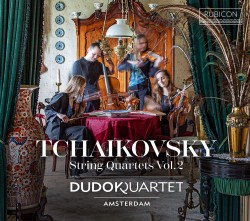
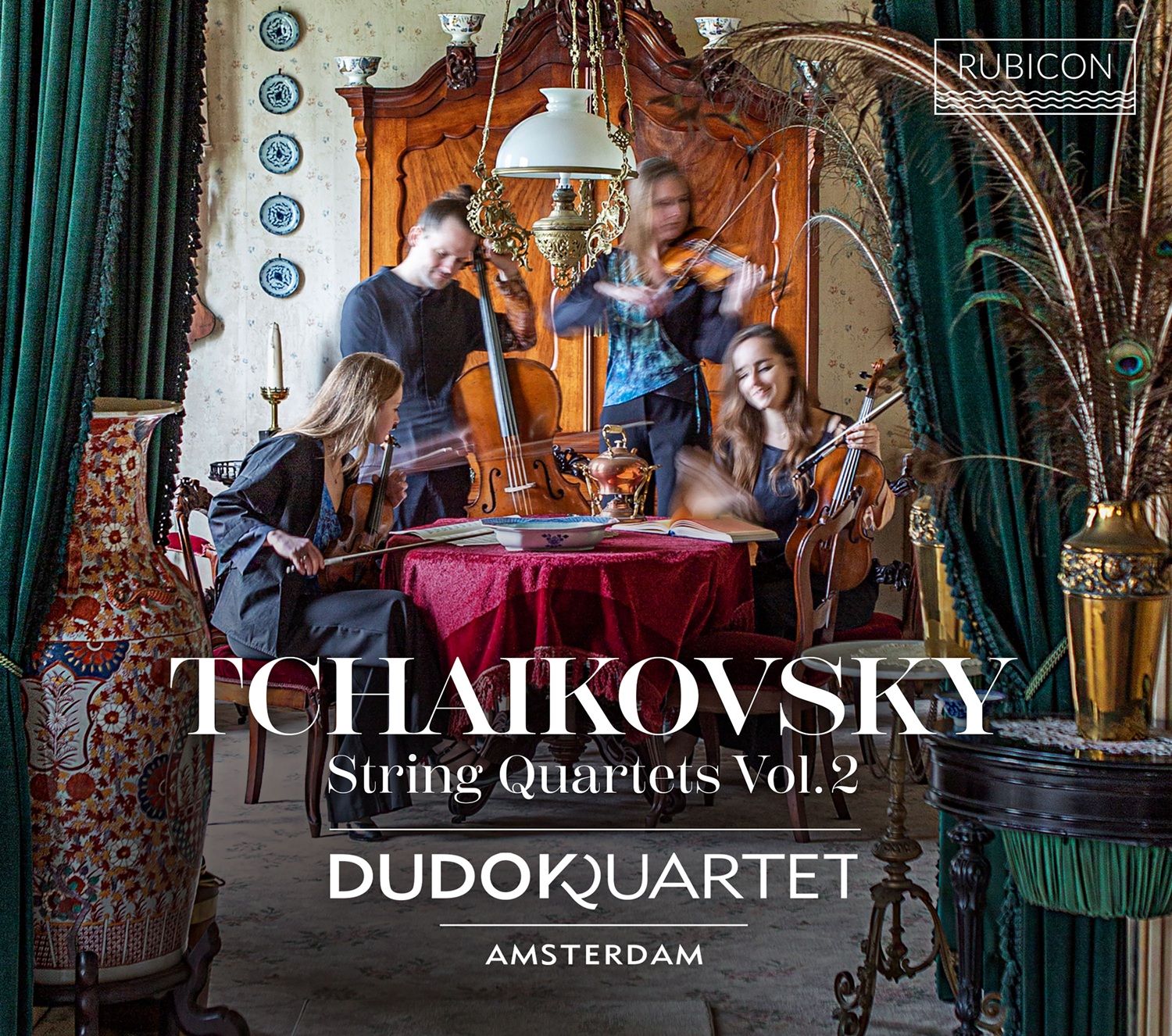
13 Tchaikovsky DudokThe Dudok Quartet Amsterdam completes its recording of the composer’s three quartets with Tchaikovsky String Quartets Vol.2, the String Quartet No.3 in E-flat Minor Op.30 from 1876 being the central work on the CD (Rubicon RCD1124 dudokquartet.com/albums/tchaikovsky-string-quartet-vol-2).

The single Quartet Movement in B-flat Major from 1865 opens the disc, with four short pieces from the solo piano work The Seasons Op.37a, arranged by members of the quartet closing it.

The quartet members use unwound gut strings for music written before 1900, noting the necessary adjustments in the left hand and the bow control – not that you would ever know, given the remarkable and ravishing depth of sound and colour they draw from their instruments.
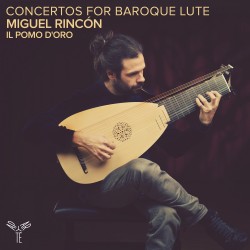
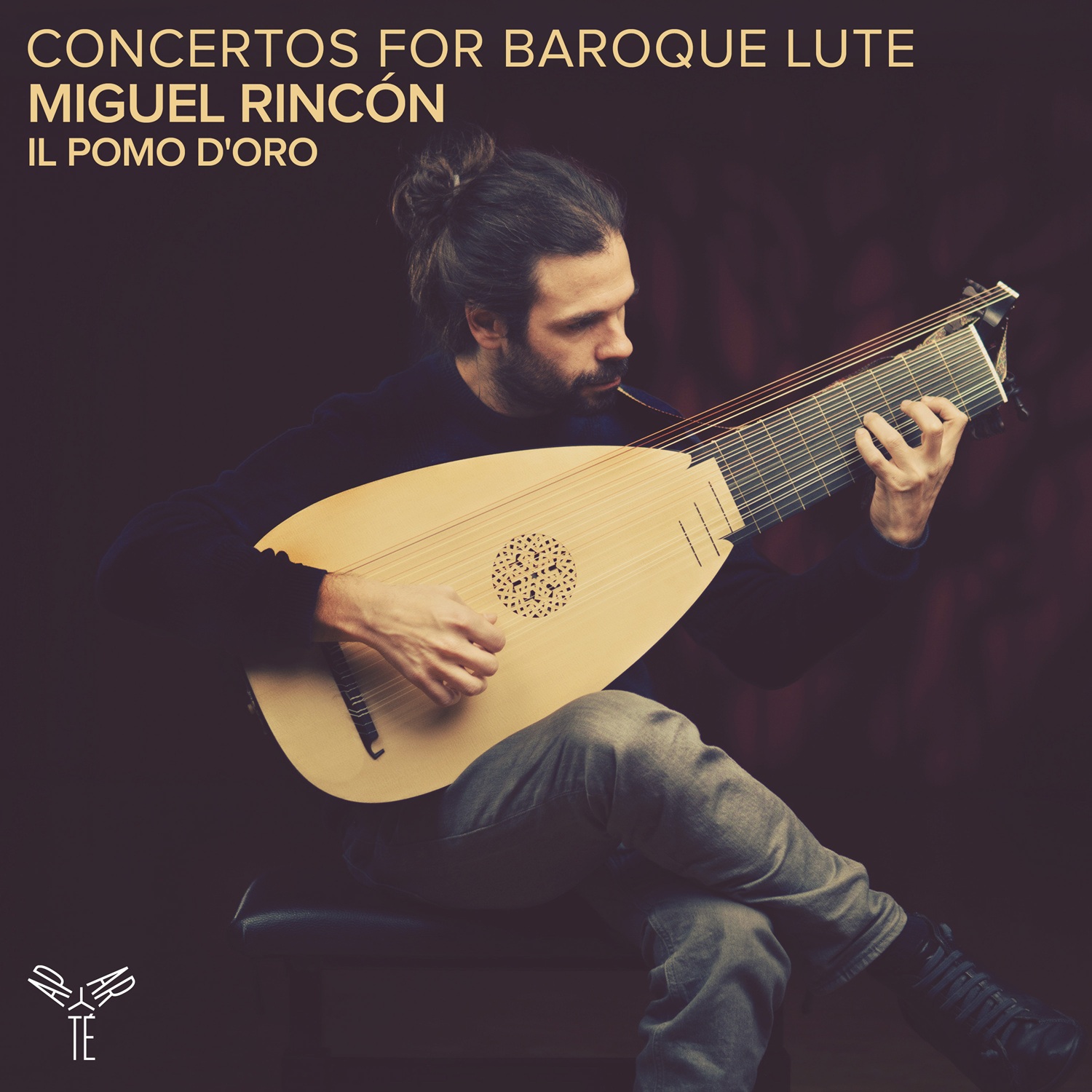
14 Miguel RincónLutenist Miguel Rincón describes his new CD Concertos for Baroque Lute, with Il Pomo d’Oro as the result of a deep desire to breathe new life into forgotten repertory from the crossroads of the Baroque and galant style eras before the lute became eclipsed by the classical guitar (Aparté AP376 apartemusic.com/en/album-details/concertos-for-baroque-lute-fasch-hagen-kohaut-kleinknecht).

The small ensemble – two violins, viola, cello, bass and harpsichord – allows the virtuosity and subtlety of the lute to predominate in performances of the Concerto in F Major by Austrian composer Karl Kohaut (1726-84), the Trio in E-flat Major by Bernhard Joachim Hagen (1720-87), the Concerto in C Major by Jakob Friedrich Kleinknecht (1722-94) and the Concerto in D Minor by Johann Friedrich Fasch (1688-1758), his only lute work, and one which is described as a work of great expressiveness and virtuosity that still surprises today.

It’s all absolute perfection, with brilliant playing by Rincón and sensitive and spirited support from the ensemble.

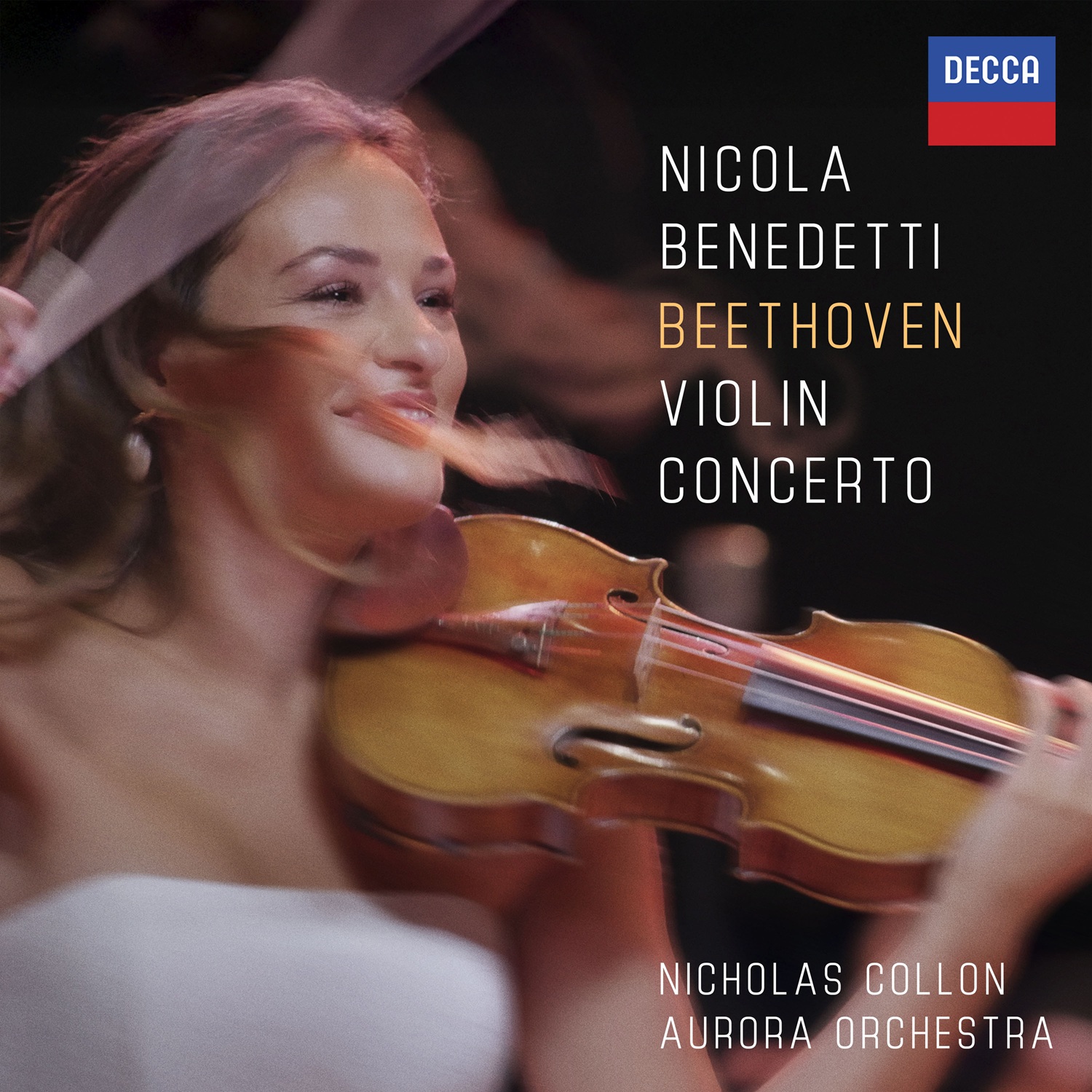
15 Benedetti BeethovenWe’re all accustomed to seeing soloists perform concertos from memory, but on Beethoven Violin Concerto, the remarkable new CD from Nicola Benedetti everyone, including the entire Aurora Orchestra under Nicholas Collon, is playing from memory (Decca Classics store.deccaclassics.com/products/beethoven-violin-concerto?srsltid=AfmBOorfd_sRrmBkGU4lTPTu1g8Pan7Z22yPK9WgTNblk_VDHF3eERnt).

The Aurora Orchestra has been pioneering the performance of orchestral works from memory since 2014, but this is the first time they have done so for an instrumental concerto. It doesn't translate into a noticeably different sound, but from the opening hard-stick timpani strokes this is clearly a performance with spirit and lightness. There’s no sense of bravura virtuosity from Benedetti, who dances through the finale after a slow movement that feels almost like a private meditation – you almost hold your breath listening to it.

The very different first movement cadenza is “rearranged and adapted” by Petr Limonov from the cadenza with timpani that Beethoven wrote for his own arrangement of the concerto for piano and orchestra.
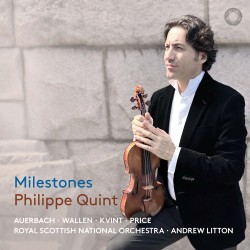
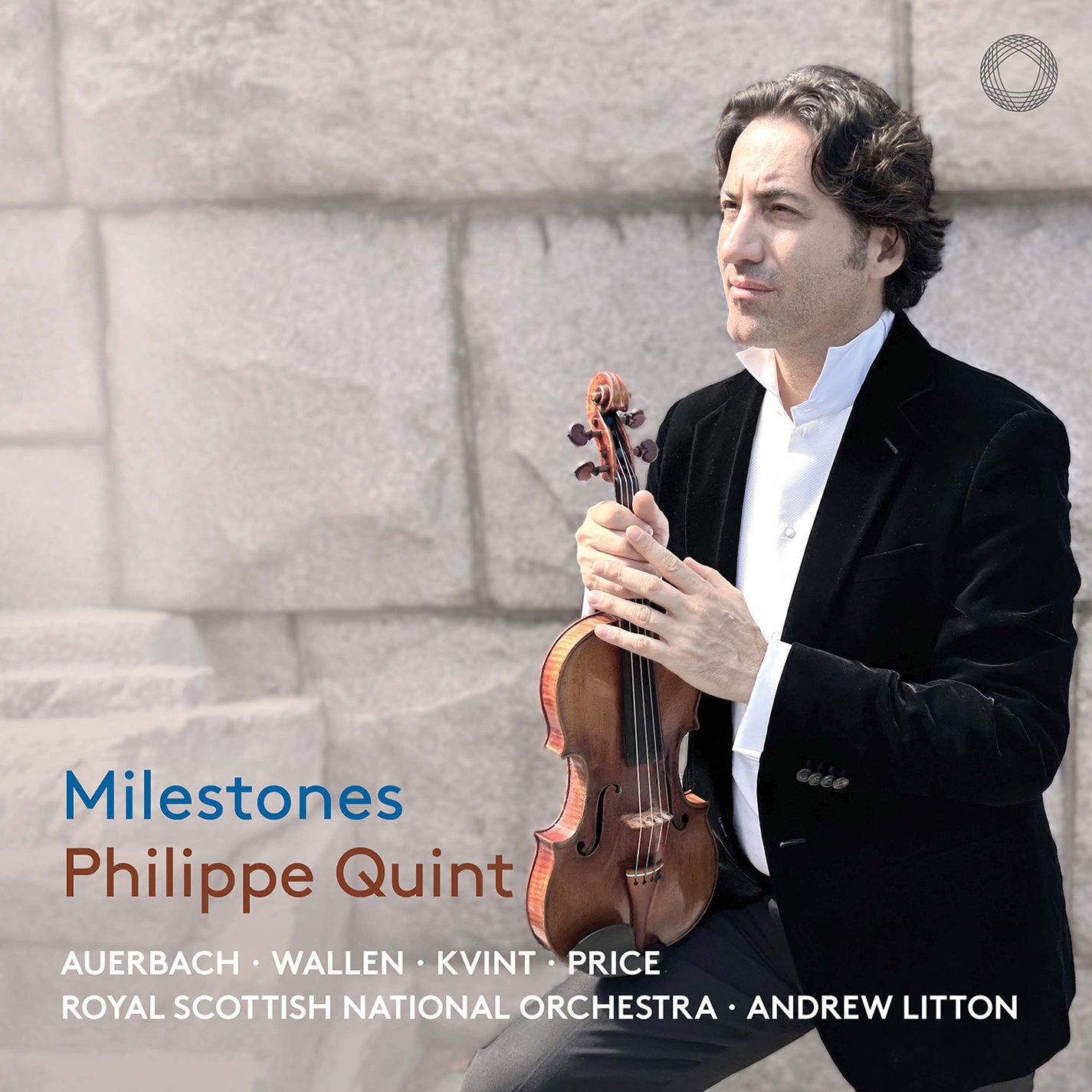
16 Milestones Philippe QuintOn Milestones violinist Philippe Quint presents world-premiere recordings of three works written for him during pivotal moments of his artistic journey. Andrew Litton conducts the Royal Scottish National Orchestra as well as joining Quint as pianist for the two final works (Pentatone PTC5187408 pentatonemusic.com/product/milestones).

The two concertos here are remarkably effective and simply stunning works. Lera Auerbach’s four-movement Violin Concerto No.1 from 2003 contrasts outright aggression (she describes the opening as “apocalyptic Deathclusters”) with lyrical richness and beauty. Errollyn Wallen’s 2024 Violin Concerto references Quint’s childhood memories, especially in the lovely Lamenting middle movement. Both works are essential listening for anyone interested in contemporary violin concertos and will richly reward deeper acquaintance.

The Odyssey Rhapsody for violin and piano by Quint’s mother, the Russian composer Lora Kvint was inspired by her fascination with Greek mythology.

Florence Price’s brief but lovely Adoration completes an outstanding release.
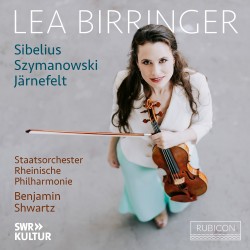
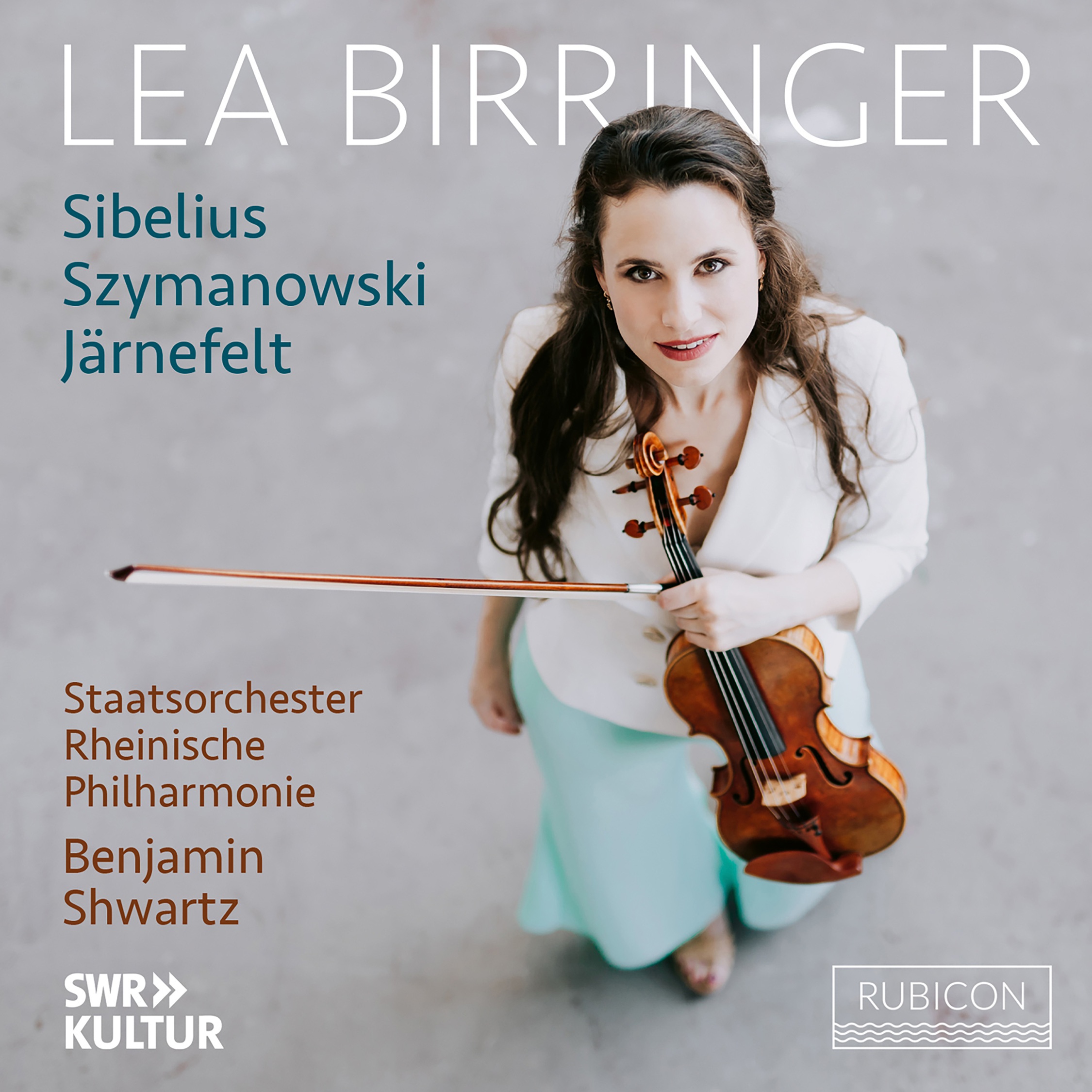
17 Sibelius SzymanowsiJust when you think you probably won’t hear a better recording of the Sibelius concerto along comes the German violinist Lea Birringer performing works by Sibelius Szymanowski and Järnefelt on her new CD, with Benjamin Shwartz conducting the Staatsorchester Rheinische Philharmonie (Rubicon RCD1193 rubiconclassics.com/release/sibelius-jarnefelt-szymanowski).

Hers is a full-blooded, full-bodied approach to the Sibelius Violin Concerto in D Minor, Op.47 – no icy landscape in the warm opening here – and her thrilling virtuosity and huge tone combined with the outstanding orchestral support result in a heart-pounding performance to rank with the best available on disc.

Much the same can be said of the Szymanowski Violin Concerto No.2, Op.61, a lush, Romantic work overflowing with brilliant orchestral colours reminiscent of Scriabin. Birringer’s shimmering tone and technical mastery again combine with superb orchestral support in a captivating performance.

The brief Berceuse in G Minor by Armas Järnefelt completes an exceptional CD.

18 Ehnes Lalo Saint SaensThere have been two recent releases featuring violinist James Ehnes. The Spanish violinist and composer Pablo de Sarasate is the focal point on a CD of the music of Lalo, Saint-Saëns and Sarasate, with Ehnes supported by the BBC Philharmonic under Juanjo Mena (Chandos CHAN 20333 chandos.net/products/catalogue/CHAN%2020333).

Sarasate lived in Paris from his early teen years, and two of the French works here – Lalo's Symphonie espagnole, Op.21, a work bristling with Spanish themes, rhythms and influences, and Saint-Saëns’ Violin Concerto No.3 in B Minor, Op.61 – were written for him. Sarasate’s own Concert Fantasy on Bizet’s “Carmen,” Op.25 completes the disc.

Ehnes’ playing is all that we have come to expect – technically flawless, warm and instinctively musical.
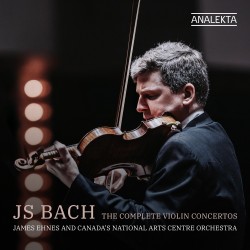
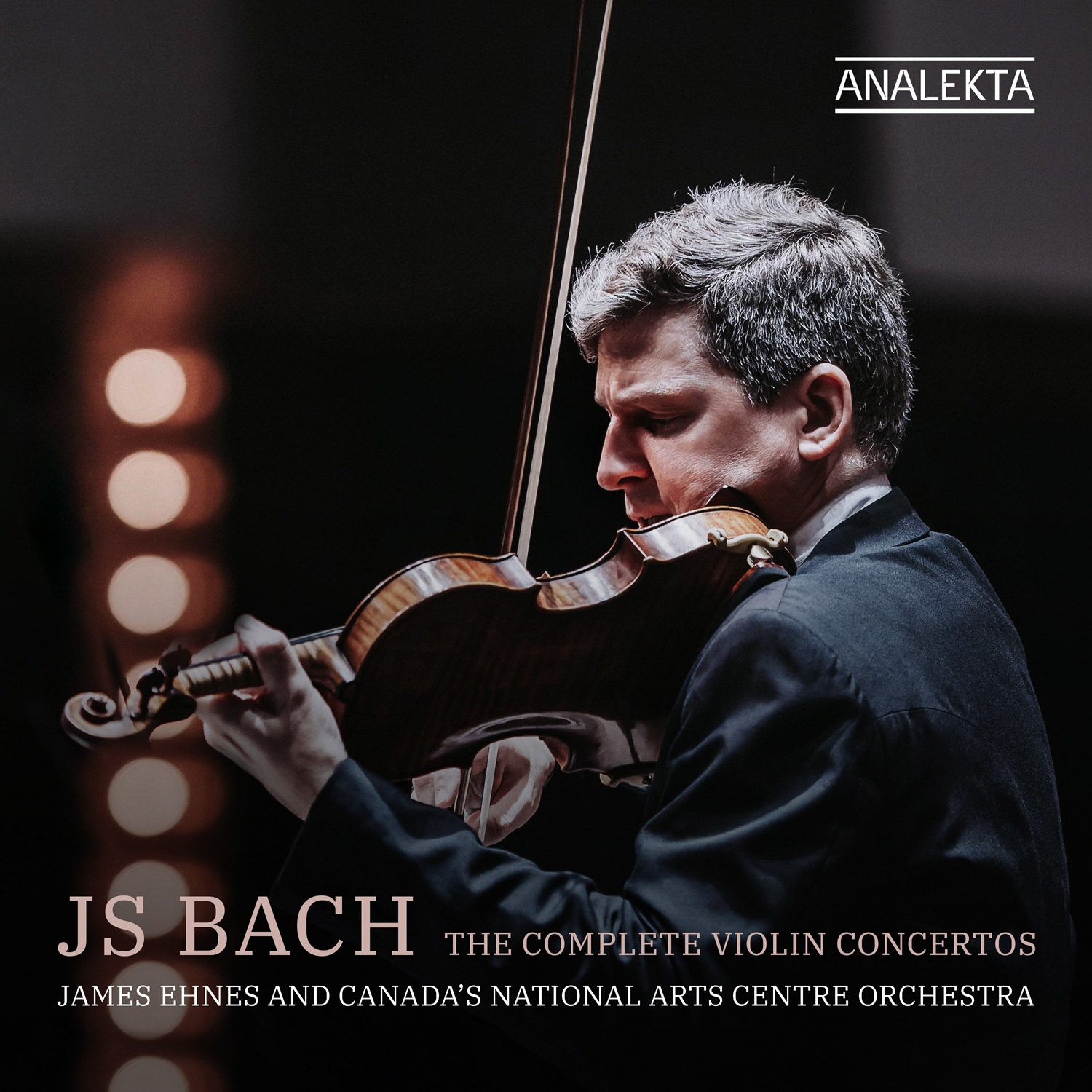
19 Ehnes BachOn the 2CD set J. S. Bach: The Complete Violin Concertos, James Ehnes and Canada’s National Arts Centre Orchestra fulfill Ehnes’ longtime desire to present Bach’s violin concerti in their entirety (Analekta AN28893-4 nac-cna.ca/en/orchestra/recordings/ehnes-bach).

In addition to the three standard works – the Violin Concertos in A Minor BWV1041 and in E Major BWV1042 and the Double Concerto in D Minor BWV1043 – Ehnes also presents the three concertos – in D Minor BWV1052R, in G Minor BWV1056R and in D Major for Three Violins BWV1064R – that were “reverse-engineered” from Bach’s own harpsichord transcriptions of now-lost originals. The Concertos in A Minor for Flute, Violin and Harpsichord BWV1044 and in C Minor for Oboe and Violin BWV1060R are also here. 

The other soloists are Yosuke Kawasaki and Jessica Linnebach (violins), Charles Hamann (Oboe), Joanna G’froerer (Flute) and Luc Beauséjour (harpsichord), all contributing to performances of warm, beautiful playing on a set that has the feeling of close friends making music that they love.
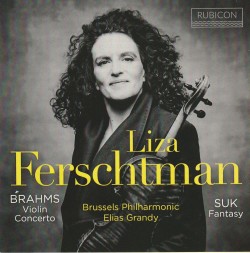
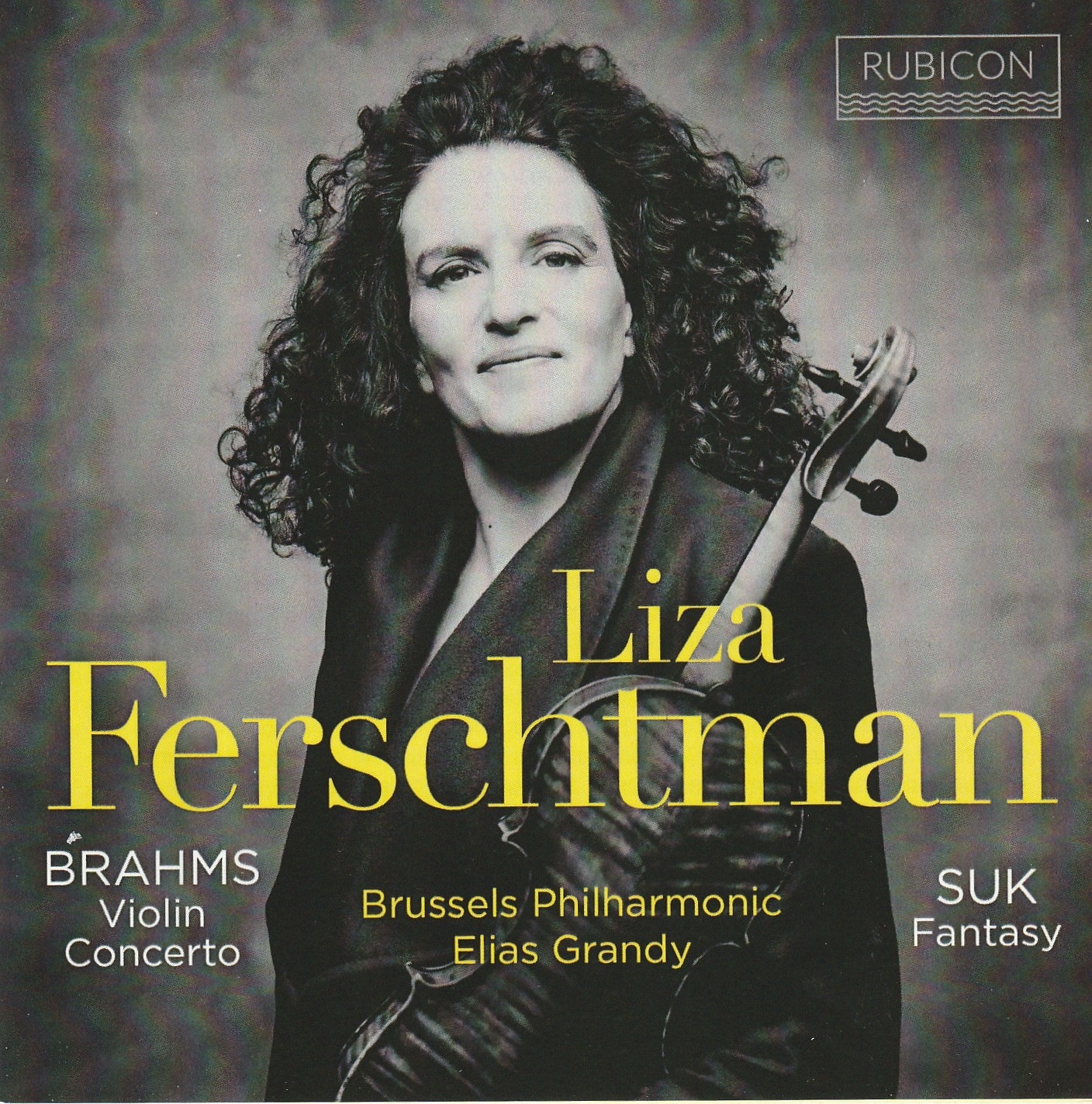
20 Liza FerschtmanThe Dutch violinist Liza Ferschtman studied with – among others – Philippe Hirschhorn, Ivry Gitlis, Igor Oistrakh, Aaron Rosand and Herman Krebbers, so with such a legacy it’s not surprising to find her giving a technically flawless and engrossing and towering performance of one of the great Romantic concertos on her new CD Brahms – Suk, with the Brussels Philharmonic under Elias Grandy (Rubicon RCD1120 rubiconclassics.com/release/9189).

The Brahms Violin Concerto in D Major Op.77 is a pure delight from start to finish, with a warm, rich tone, beautiful phrasing, rhythmic bite in the outer movements and lovely orchestral support.

The Fantasy in G Major Op.24 by the Czech composer Josef Suk dates from 1902-03 and is described as being infused with heavy doses of melancholy. Showing clearly the influence of Dvořák (Suk’s father-in-law) and Brahms, it makes a perfect pairing for the main work, drawing more beautiful playing from all concerned. 

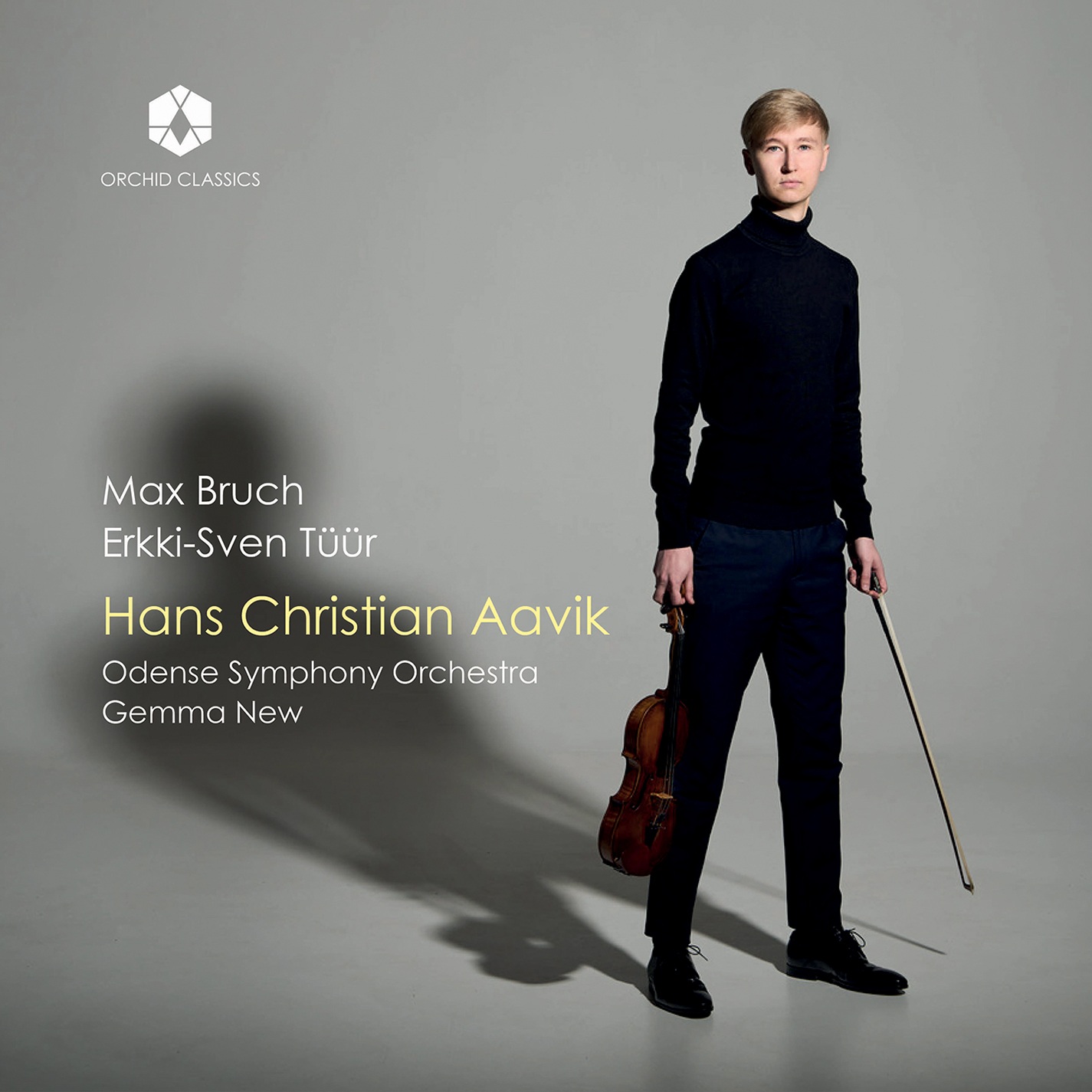
21 Bruch TuurThe Estonian violinist Hans Christian Aavik, who won first prize in the 2022 Carl Nielsen International Violin Competition, pairs two concertos written 150 years apart on Max Bruch – Erkki-Sven Tüür, with Gemma New conducting the Odense Symphony Orchestra (Orchid Classics ORC100380 orchidclassics.com/releases/orc100380-hans-christian-aavik).

Bruch’s Violin Concerto No.1 in G Minor, Op.26 is a perennial favourite, and Aavik shows us just why with a beautiful performance full of simply gorgeous playing on the Giovanni Paolo Maggini violin from c.1610 that he has on loan. 

Tüür’s Violin Concerto No.2, “Angel’s Share” was written in 2017. The title refers to the small amount of whisky that evaporates during the aging process in wooden barrels, Tüür believing that for humans, maturity can also lead to a deepened sense of goodness. It’s a really interesting soundscape full of dynamic contrasts and scored for strings and percussion, including vibraphone, bass drum, tam-ta, crotales and temple blocks.
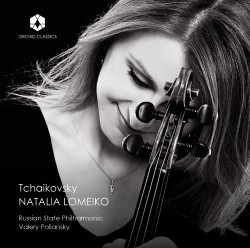
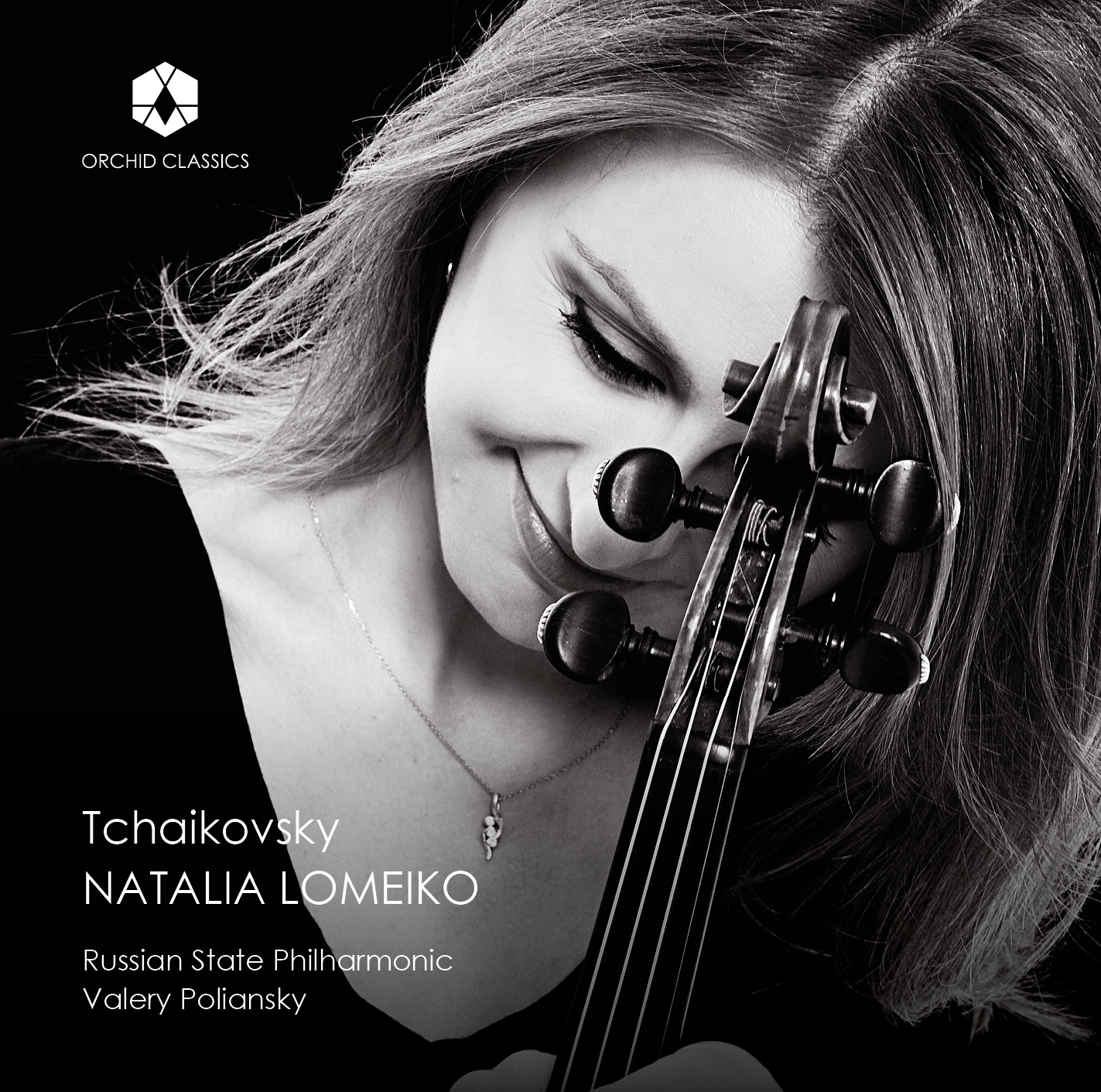
22 Natalia LomeikoOn Tchaikovsky the London-based Russian violinist Natalia Lomeiko performs Tchaikovsky’s complete music for violin and orchestra, the latter being the Russian State Philharmonic under Valery Poliansky (Orchid Classics ORC100195 orchidclassics.com/releases/orc100195-natalia-lomeiko).

The Violin Concerto in D Major, Op.35 is a lovely performance, technically assured and with a crystal clear, glistening tone. Tchaikovsky replaced the concerto’s original Méditation slow movement, re-working it for violin and piano and making it the first of the three pieces that comprise his Souvenir d’un lieu cher, Op.42, heard here in the customary orchestration by Alexander Glazunov. There’s more beautiful playing here and in the Sérénade mélancolique, Op.26, written in 1875 for Leopold Auer.

The Valse-Scherzo, Op.34 from 1877, written for Iosef Kotek, Tchaikovsky’s former student who was closely involved in the writing of the concerto, ends an immensely satisfying disc.
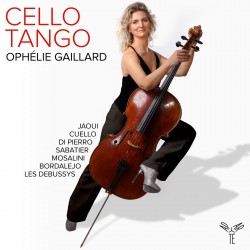
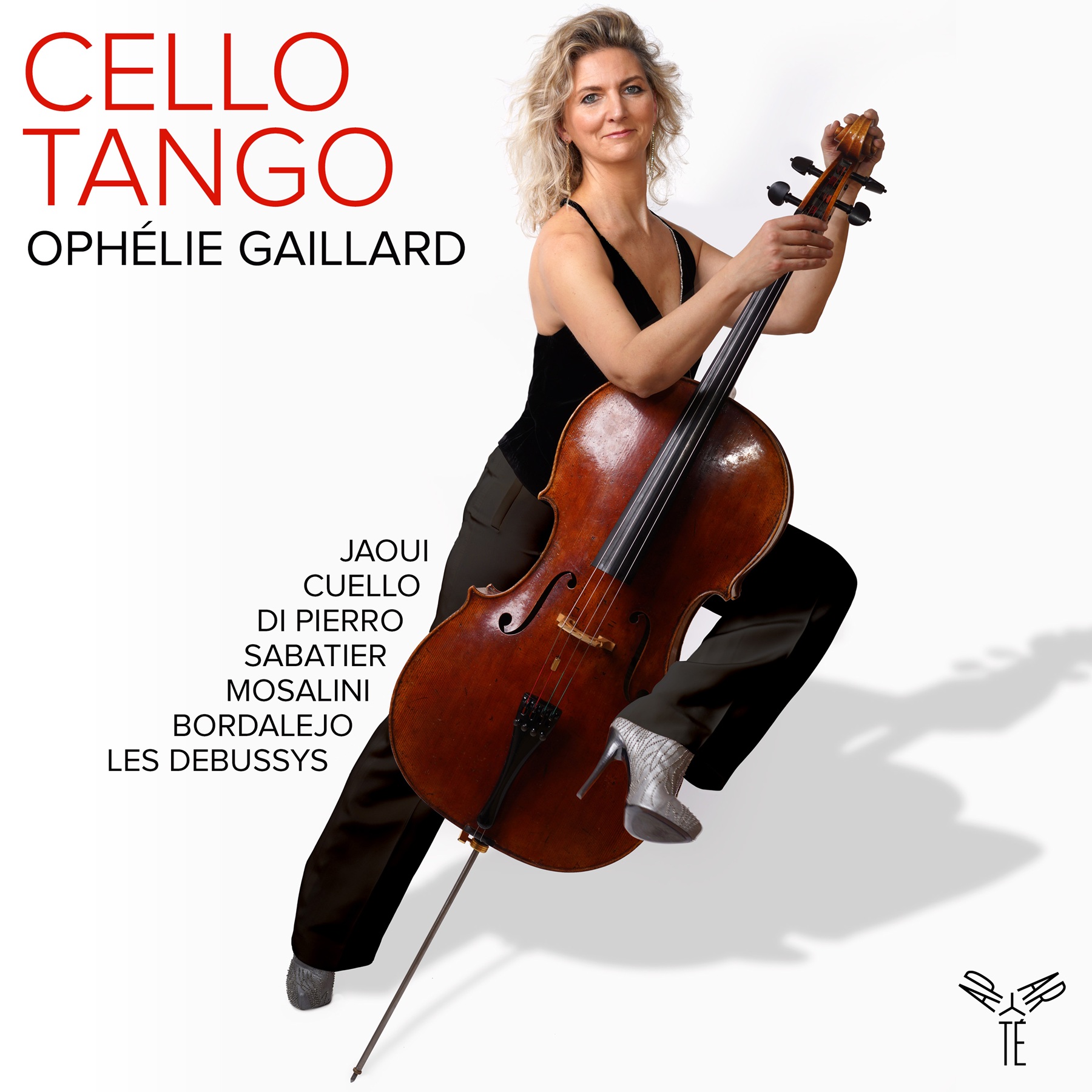
23 Cello TangoCello Tango, the new 2CD set from cellist Ophélie Gaillard is a crossover album on which she presents new arrangements of her favourite Argentinian pieces – timeless hits and lesser-known gems. The ensemble comprises Juango Mosalini and William Sabatier (bandoneons), Tomás Bordalejo (guitar), Romain Lecuyer (double bass), the Debussy Quartet, singers Nahuel dí Pierro, Inés Cuello and Agnès Jaoui and pianist Émilie Aridon-Kociolek (Aparté AP368 ophliegaillard.bandcamp.com/album/cello-tango).

Instrumental combinations vary from solo cello to full ensemble, with the bandoneon tracks obviously adding the most evocative sound. Of the 26 tracks 12 are by Astor Piazzolla, including his Oblivion and Milonga, and eight by Alberto Ginastera, including his Puneña No.2, Op.45 for solo cello. Other composers are Osvaldo Pugliése, Carlos Gardel, Alfredo Le Pera, Rosita Melo, Julián Plaza, Mercedes Sosa and Gerardo Matos Rodrígues, whose La cumparsita closes a highly entertaining and delightful set.
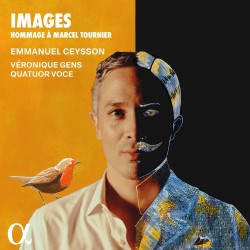
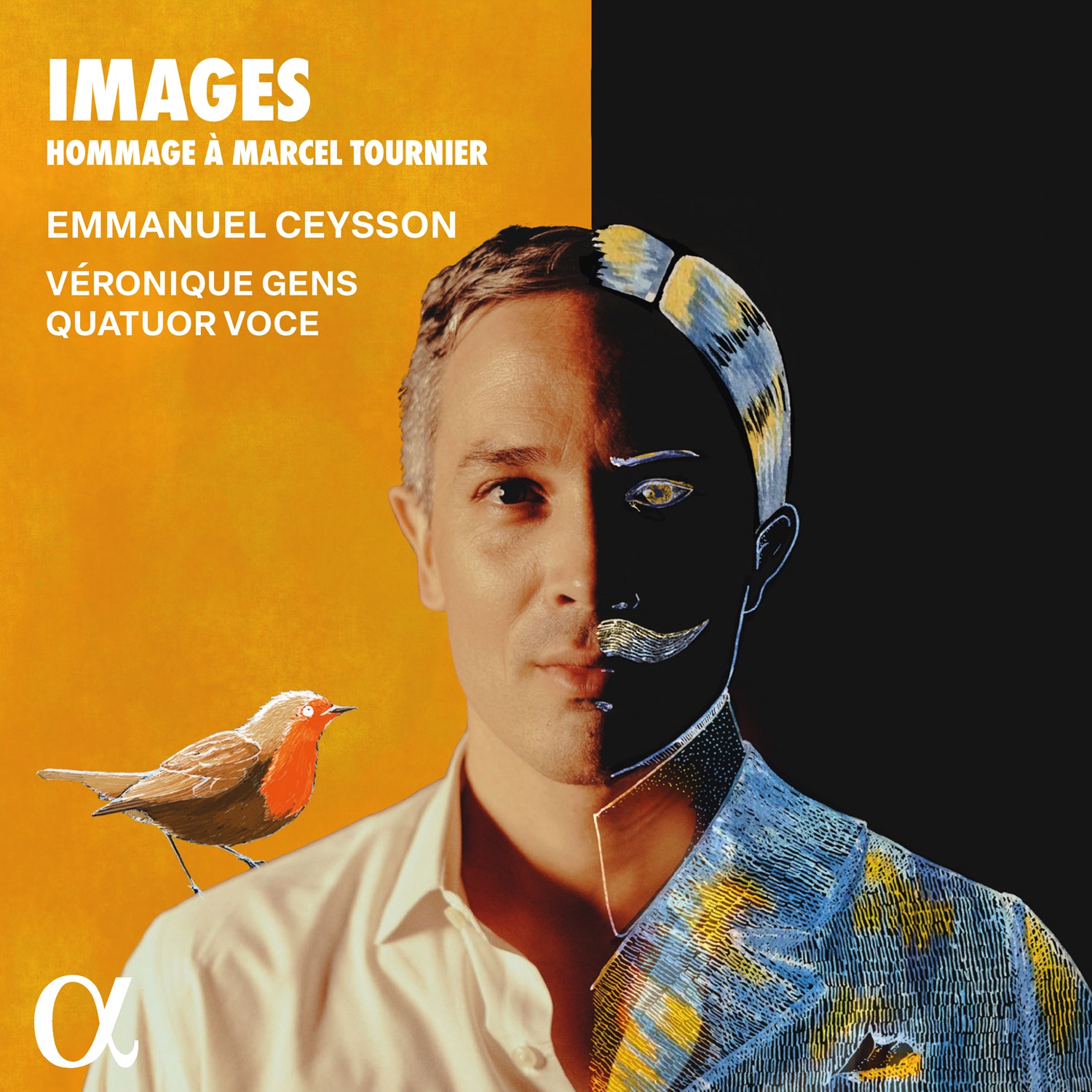
24 Images Emmanuel CeyssonOn Images: Hommage à Marcel Tournier the French harpist Emmanuel Ceysson pays tribute to one of the greatest harpist/composers, who lived from1879 to 1951. Quatuor Voce provides the various string additions, and Véronique Gens is the soprano in the four lovely songs included (ALPHA1133 outhere-music.com/en/albums/images-hommage-marcel-tournier).

Most of Tournier’s compositions – and all of the ones here – were originally for solo harp or harp and voice, with Tournier often adding additional instruments at a later date. The works represented are from his mature years and include several previously unpublished pieces from recently discovered manuscripts.

The centrepiece of the disc is the Sonatine Op.30, a 1924 harp solo to which violin and cello were added in 1939. The CD’s title comes from the four Images Suites, No.1 Op.29, No.2 Op.31, No.3 Op.35 and No.4 Op.39 that are spread throughout the disc.

Ceysson was principal harp for the Opéra national de Paris for 15 years and the Metropolitan Opera New York for five years; he has been principal harp of the Los Angeles Philharmonic Orchestra since 2020. His superb playing anchors a really beautiful CD.
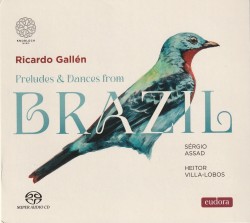
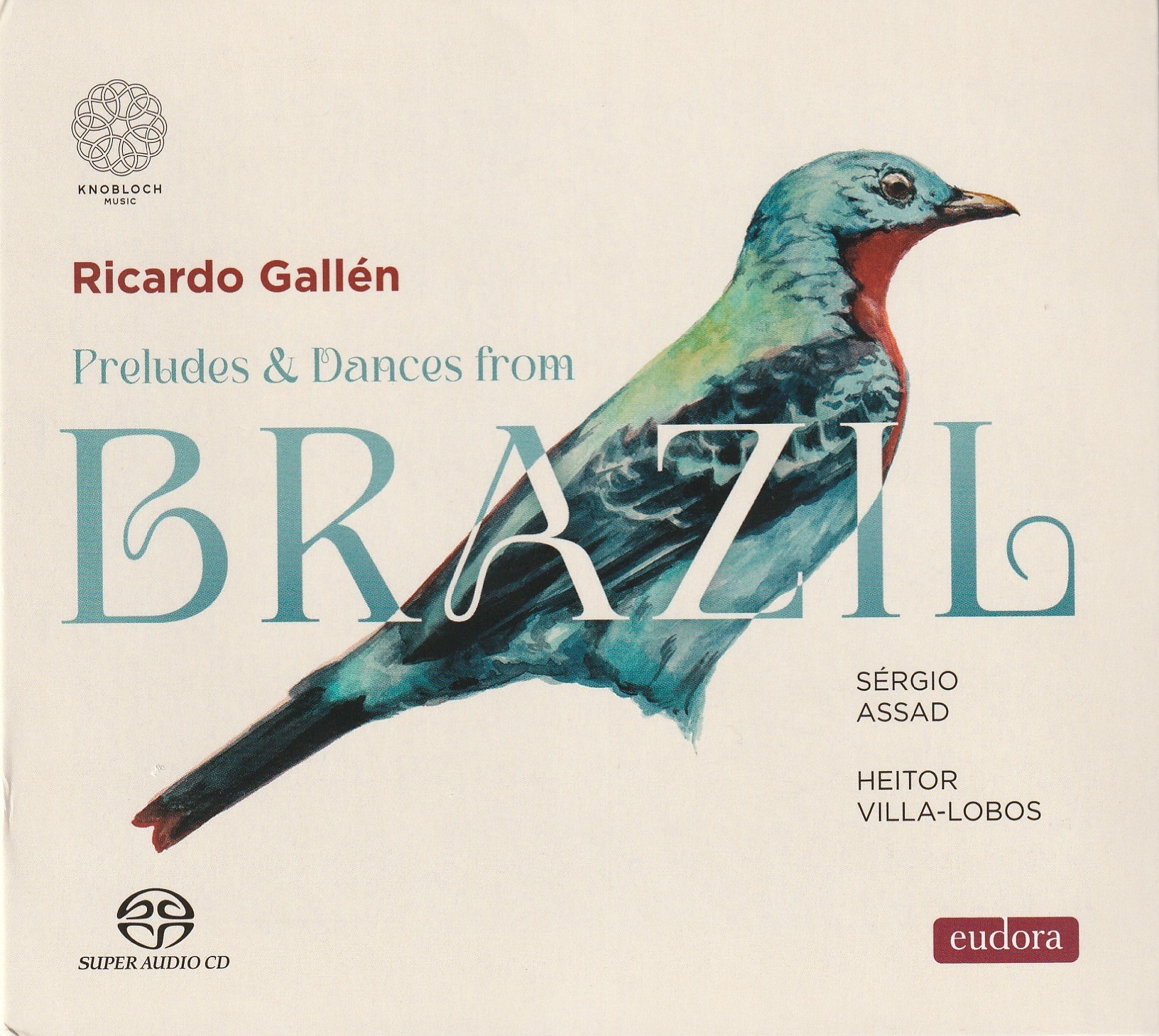
25 Ricardo Gallen BrazilThe Spanish guitarist Ricardo Gallén dedicates his latest CD, Preludes & Dances from Brazil to the works of the legendary Brazilian composer Heitor Villa-Lobos, honouring his contribution to the classical guitar repertoire (eudora EUD-SACD-2501 eudorarecords.com/shop/catalogue/preludes-and-dances-from-brazil).

Villa-Lobos' five Préludes W419 and the five-movement Suite populaire brésilienne W020 are paired with the first recording of Sérgio Assad’s 12 Colloquial Preludes, commissioned by Gallén and dedicated to him.

The Villa-Lobos works naturally celebrate the folk and traditional music of Brazil, the Suite also incorporating European dance elements, while the Assad work is described by the composer in his booklet notes as exploring a broader spectrum of Brazilian popular music.

Gallén’s playing is of the highest quality throughout a delightful CD.

01 Bach ItineraireBach - Un itinéraire
Luc Beauséjour
ATMA ACD2 2912 (atmaclassique.com/produit/bach-un-itineraire/?srsltid=AfmBOoqm5eVKGAQYb1maa7jvfUTKn3Njiks61jsMscFEYtUk2DVg_m3B)

Luc Beauséjour continues to be one of the most internationally respected harpsichord virtuosos and this meticulously assembled Bach programme shows that his playing remains superb. He plays on a sizable Yves Beaupré instrument of 2012 [after Dulcken] using a colourful Kirnberger temperament at the low pitch, A = 415Hz. This gives a somehow relaxed sound, and the tempos are all broad, but there is above all a sense of terrifically wide flow. For once there are not too many actual fugues, but the contrapuntal flow of the pieces is felt broadly with constant subtle expressive eddies and surges in the stream of very connected notes. This is unique playing and the lines are always clearly differentiated. Remarkable how Beauséjour frequently achieves stresses and marcato chords and phrases, on an instrument that is not supposed to be able to produce them, with registration and agogics.

The recording, his first with ATMA after many years with the Analekta label, starts with the Third French Suite, slower than we hear it on the pianoforte lately. The bonus of the disc comes from the early Capriccio on the Departure of his Beloved Brother, one of Bach’s rare affective pieces, showing expressive but subtle grief. The final section picks up with the coachman’s tuneful horn calls. This piece is beautifully felt and notes by Beauséjour make it all the more personal. 

The big Bach redoubt, the Chromatic Fantasia and Fugue, provides the climax of the programme and Beauséjour’s control and clarity really bring it off supremely.

02 Orion Weill ARC IIIArc III - Brahms | Schubert
Orion Weiss
First Hand Records FHR129 (firsthandrecords.com/products-page/album/arc-iii-brahms-debussy-schubert)

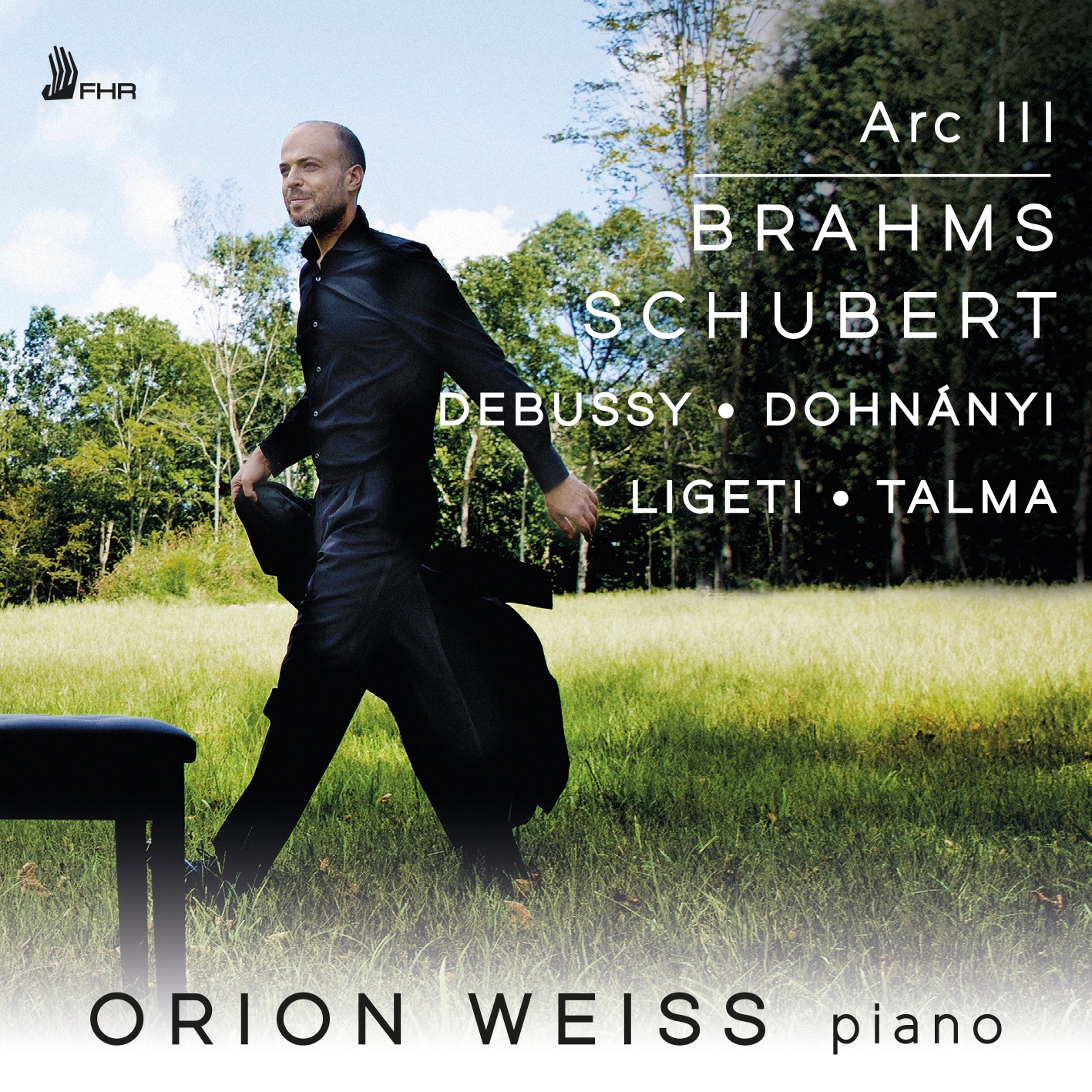
Joyful music for these troubled times: this release completes a three-album series that traces a journey from the disaster and despair depicted in Arc I and Arc II, moving in Arc III to what American pianist Orion Weiss calls music of “peace, hope, love, ambition, optimism and the divine.” The result is a highly enjoyable recital featuring an attractive mix of rarities alongside established masterpieces for solo piano as Weiss displays his comfort in music written over a span of 160 years. 
The album opens with Louise Talma’s Alleluia in Form of Toccata (1945), sparkling with repeated notes, jagged leaps and offbeat accents. Schubert’s Wanderer Fantasy is given a muscular yet poised reading, never rushed or pushed to extremes. The slow movement’s theme, quoting Schubert’s famous song, is a sombre contrast to the extroversion of the surrounding movements, and in Weiss’ hands the fugal finale is exhilarating in its clarity and rhythmic energy. 

Debussy’s L’isle joyeuse contrasts sultry mystery (listen to the central section at 2:45) with blazing virtuosity, a performance that lives up to Weiss’ description of it as “one of the most evocative and thrilling of Debussy’s piano works.” Dohnányi’s Pastorale on a Hungarian Christmas Song (1920) is another valuable re-discovery, and while Brahms’ darkly dramatic early third sonata may not immediately seem to fit the album’s theme, the ecstasy of the second movement love scene and the F major exuberance with which the finale concludes gain resonance from the music that has come before. 

Ligeti’s etude Arc-en-ciel provides an unexpectedly suitable coda, its interweaving lines beautifully shaped. Weiss’ Yamaha CFX is warmly recorded, and this intelligently programmed album is warmly recommended.

03 Prokofiev FluteProkofiev - Sonates pour flute et piano
Ariane Brisson; Philip Chiu
ATMA ACD2 2884 (atmaclassique.com/en/product/prokofiev-sonatas-for-flute-and-piano)

Prokofiev may have once defined a modern classical composer as “a madman making works that his generation won’t understand” but he himself achieved significant recognition during his lifetime, and today, remains one of the most renowned composers of the 20th century.

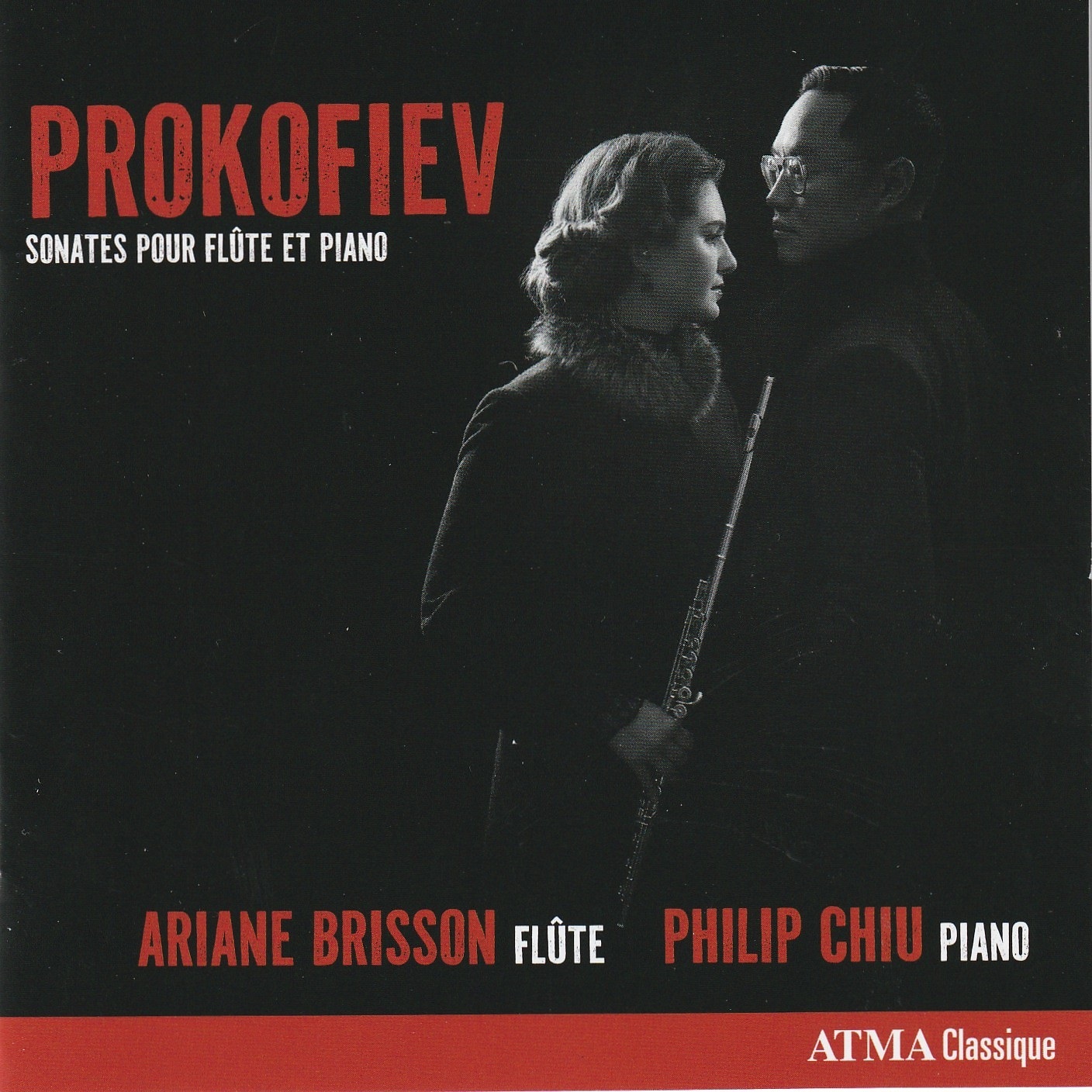
Among his extensive output are a number of chamber works, including two violin sonatas and one for flute, all of them composed during the Second World War. The first Violin Sonata Op.80 in F Minor was actually the second to be written for that instrument, and is presented here in an arrangement for flute by Ariane Brisson. Brisson performs it with pianist Philip Chiu along with the Flute Sonata Op.94 on this ATMA Classique recording. Brisson was first prize-winner in the Prix d’ Europe in 2014 and Chiu is a JUNO award winner and recipient of the Order of Ontario.  

The Sonata Op.80 was completed in 1946 and was awarded the Stalin Prize the following year. This a dark and intense four-movement work opening with a mysterious Andante Assai which the composer likened to “wind passing through a graveyard.” Together, the two artists comprise a formidable pairing with Brisson’s warm tone aptly conveying the dramatic mood with Chiu providing a sensitive partnership. The strident second movement is followed by a lyrical Andante and a finale with an unexpectedly calm conclusion. 

In comparison, the Flute Sonata Op.94 is decidedly more optimistic in spirit. Completed in 1943, the work is a demanding one, but the two performers easily meet the innumerable challenges with respect to technique and nuance. The score is affable and pleasant from the languorous opening to the sprightly finale demonstrating formidable interaction between the performers, as is the case throughout this exemplary disc.

04 Echoes Richard HamelinÉchos
Charles Richard-Hamelin
Analekta AN 2 9149 (charlesrichardhamelin.com/en/discography)

Charles Richard-Hamelin has accomplished much during the past decade or so. Not only did the Quebec-born pianist win third prize at the Seoul International Music Competition in South Korea in 2014, but was also silver medallist at the International Chopin Piano Competition in Warsaw the following year. Since then, he has appeared in concert with such orchestras as the Warsaw Philharmonic and the Tokyo Metropolitan Symphony and was described by a Montreal critic as “a national treasure.”

Richard-Hamelin’s newest recording, Échos, is the 11th on the Analekta label and features an appealing programme of music by Granados, Chopin, and Albéniz. The set of eight Valses Poéticos Op.43 by Enrique Granados is aptly named – the music is indeed poetic and evocative, and Richard-Hamelin does it full justice. The playing is elegantly conceived, at all times displaying a keen sense of phrasing.

Chopin’s Allegro de Concert in A Major Op.46 is a bit of a curiosity. Originally intended as a piano concerto, the orchestral part was never written and despite some brilliant pianistic writing and numerous revisions, the work has languished in relative obscurity

Albéniz’ La Vega from 1897 and the Allegro de concierto in C-sharp Major Op.46 by Granados are further proof of Richard-Hamelin’s affinity for Spanish repertoire. He deftly captures the highly impressionist mood of La Vega, while the Concierto radiates freshness and vitality. Rounding out the programme is a selection of eight waltzes by Chopin, a fitting conclusion to a most satisfying recording.

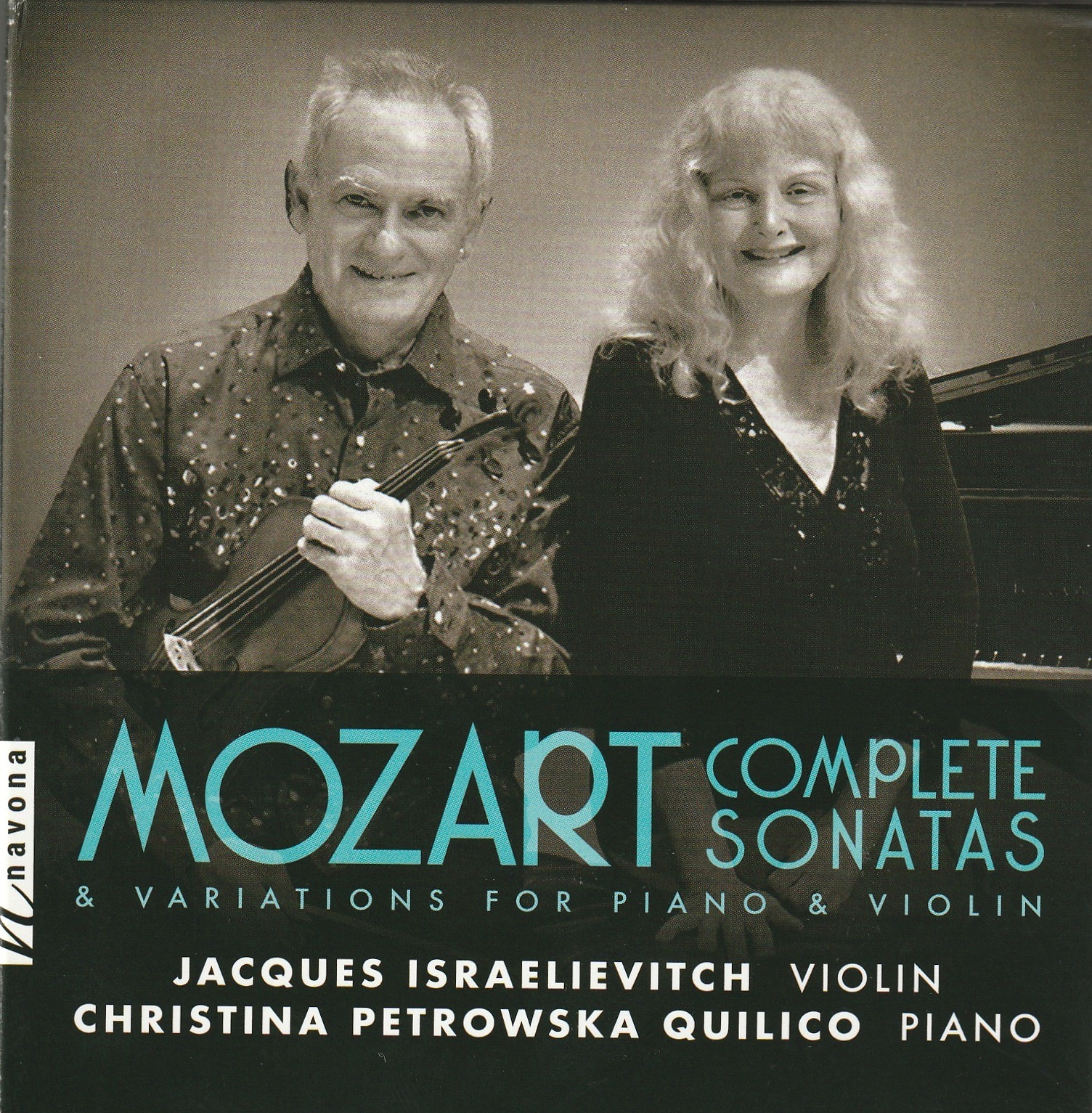
01 Israelievitch MozartIt’s hard to believe that it’s been almost ten years since we lost violinist Jacques Israelievitch. To mark the anniversary the Navona label has reissued as a set the six volumes of Mozart: Complete Sonatas & Variations for Piano & Violin (Navona NV6697 navonarecords.com/catalog/nv6697) recorded in partnership with Christina Petrowska Quilico at York University between November 2014 and May 2015 and originally released on the Fleur de Son Classics label.

Retiring after 20 years as concertmaster of the Toronto Symphony Orchestra, Israelievitch joined the faculty at York in 2008 where he formed a duo with Petrowska Quilico that resulted in their wanting to record all the Mozart sonatas. Part way through the project he was diagnosed with advanced lung cancer, and after a break for hospital treatment was able to find the strength to complete the project just four months before his death. The last six sonatas were recorded in less than four hours, but there’s no hint of physical weakness in his playing, although the final sessions were apparently marked by extreme pain and fatigue.

The early juvenile sonatas are essentially piano sonatas with violin embellishments, Israelievitch weaving delightful lines around Petrowska Quilico’s finely measured playing, but the mature sonatas see a genuine partnership, two players clearly of one mind.

There’s no booklet with the set, but information can be accessed at the Navona Records website, including Petrowska Quilico’s touching memories of that final summer.

It’s truly a worthy and lasting memorial tribute to a fine and greatly missed violinist and what was clearly a very special musical and personal partnership and friendship.

02 KineticKinetic is the remarkable solo album by violinist Michael Jinsoo Lim, who as concertmaster and soloist with the Pacific Northwest Ballet felt himself to be “at the intersection of music and dance” for over 15 years; each piece here has a dance connection (Planet M Records PMR-006 planetmrecords.bandcamp.com/album/michael-jinsoo-lim-kinetic).

There are personal connections with all but one of the composers: Lim and his wife, the violist/composer Melia Watras, were founding members of the Corigliano Quartet, named for American composer John Corigliano; Watras has collaborated with fellow violist/composer Leilehua Lanzilotti; Lim has known Paola Prestini since their Juilliard days. 

All three works by Watras - Doppelgänger Dances, A dance of honey and inexorable delight and Homage to Swan Lake – were written for this project and are world-premiere recordings, as are Lanzilotti’s where we used to be and Prestini’s A Jarful of Bees. Corigliano is represented by The Red Violin Caprices and the glorious fiddle-inspired Stomp, which requires the player to do exactly that.

Piazzolla’s Tango-Études Nos.1, 3 and 4 are interspersed throughout a fascinating recital of quite brilliant playing by Lim.

Listen to 'Kinetic' Now in the Listening Room

03 Anja LechnerOn BACH | ABEL | HUME, her first solo album for the ECM label, cellist Anja Lechner brings together three different composers from two centuries for an intriguing musical recital inspired by the tonal language of the viola da gamba (ECM New Series 2806 ecmrecords.com/product/bach-abel-hume-anja-lechner).

Little is known about the Scottish composer Tobias Hume (c.1579-1645) whose skill on the viola da gamba contributed significantly to its establishment as a solo instrument. His short pieces, seven of which are heard here, were mostly notated in tablature and appeared in The First Book of Ayres printed in 1605.

The German Carl Friedrich Abel (1723-87), represented by an Arpeggio and an Adagio, both in D minor, helped the instrument achieve renewed prominence before it finally faded from regular usage.

At the heart of the CD are Bach’s Suites for Violoncello Solo No.1 in G Major, BWV1007 and No.2 in D Minor, BWV1008, written when the solo cello was establishing independence but incorporating much of the sound and language of the declining viola da gamba – in fact, they may possibly have been written for Abel’s father, a cellist and gambist in Bach’s Köthen court orchestra.

Lechner’s effortless and sensitive playing, resonantly recorded, makes for a delightful disc.

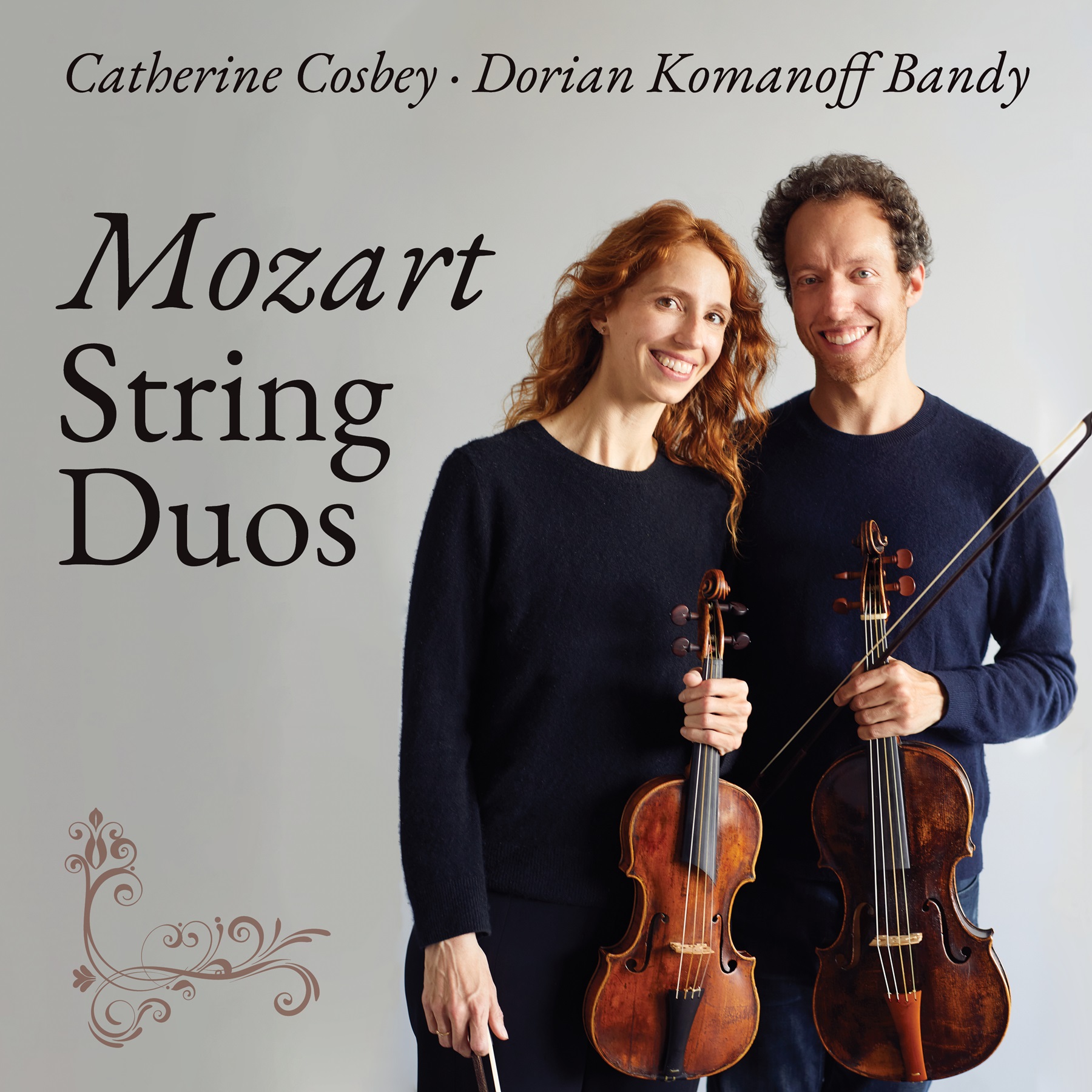
04 Mozart DuosThere’s some fascinating content on Mozart String Duos, violinist Catherine Cosbey and violinist/violist Dorian Komanoff Bandy presenting period-instrument performances of the two Duos for Violin and Viola in G Major, K423 and in B-flat Major, K424, alongside newly discovered historical arrangements of a Mozart violin sonata and several arias from a late opera (Leaf Music LM297 leaf-music.ca/music/lm297).

Cosbey and Bandy apparently insert “extensive embellishments and cadenzas” into their performances, although they are not particularly noticeable. The two Duos receive idiomatic readings, but while there are numerous alternative recordings available you won’t have heard any of the fascinating violin duets here before. 

The Violin Sonata in A Major K305 was transcribed for two violins by an anonymous Parisian arranger in 1799 and it’s really effective, drawing some of the best playing on the CD from the duo. Mozart’s opera La Clemenza di Tito was premiered in September 1791, just three months before the composer’s death; five arias were arranged for two violins by Johann Christian Stumpf, a German composer active in Parisian publishing in the 1780s who died in 1801. 

The duets were discovered in rare book libraries in Texas and Germany, and have in all probability not been heard since the early 1800s. Who knows what other gems we’ve been missing?

Listen to 'Mozart String Duos' Now in the Listening Room

05 Schumann IbragimovaYou’d have to go a long way to find a more exciting duo than violinist Alina Ibragimova and her long-time partner of 16 years, pianist Cédric Tiberghien. Sparks fly when they play together, and their latest CD of the Schumann Violin Sonatas adds another dazzling recital to their discography (Hyperion CDA68354 hyperion-records.co.uk/dc.asp?dc=D_CDA68354).

The Violin Sonata No.1 in A Minor Op.105 and the Violin Sonata No.2 in D Minor Op.121 were both written in 1851. The Violin Sonata No.3 in A Minor, Wo027 has had a varied history. In late 1853 Schumann suggested the composition of a collaborative sonata for violinist Joseph Joachim to be written by himself, Brahms and Albert Dietrich and based on the initial letters of Joachim’s personal motto: F-A-E for “Frei aber einsam” (Free but lonely). Schumann contributed the slow movement and finale, shortly afterwards adding two new movements to replace those of Brahms and Dietrich, hence completing a third sonata, his last surviving major work. 

Although originally delighted with the sonata, Clara Schumann and Joachim grew to view it negatively; it was not included in the Collected Edition prepared by Clara, Joachim and Brahms, and remained unpublished until 1956. 

06 WITRAZDescribed as a poignant tribute to resilience and artistic reassembly, the new CD Witraż - the Polish word for Stained-Glass Window – references the shattered windows of Winchester Cathedral during the English Civil War and the rearranging of the shards into mosaics by the local people, comparing it to the way beliefs and values were shattered in Eastern Europe between the two World Wars. Shannon Lee is the excellent violinist and pianist Arseniy Gusev her equal partner (Azica ACD-71373 shannonleeviolin.com/projects/witraz).

Szymanowski’s shimmeringly beautiful Mythes – La fontaine d’Arethuse (actually from 1915) opens a recital of the highest quality, book-ended by the two major works, Bartók’s Violin Sonata No.1 from 1922 (with a really terrific Allegro finale) and Stravinsky’s 1932 Duo Concertante. In between are several short works: Gusev’s arrangement of Come di lontananza, No.5 of the 1925 piano solo Reflections Op.16 by Ukrainian composer Boris Lyatoshynsky (1895-1968); Bohuslav Martinů’s 1927 Impromptu H.116 and two items by Grażyna Bacewicz, her Kolysanka (Cradle Song) and the CD’s 1932 title track.

I’m not sure if the works always fit with the purported inspiration for the CD, but there’s no doubting the standard of the playing.

Listen to 'Witraż' Now in the Listening Room

07 Francisco MignoneFrancisco Mignone (1897-1986) was a leading figure in 20th-century Brazilian music and part of the first generation of modernist Brazilian composers. The excellent new CD of his Complete Violin Sonatas in the Naxos Music of Brazil series features violinist Emmanuele Baldini and pianist Lucas Thomazinho (8.574595 naxos.com/CatalogueDetail/?id=8.574595).

The three numbered sonatas – No.1 from 1964 and Nos.2 & 3, both from 1966, a period when Mignone was writing atonal music – are all world premiere recordings, and not exactly what you might expect from mid-century Brazilian chamber music, the first two being quite strident, experimental and fragmented in character and technically challenging. No.3 was reworked from 1962’s Sonata for Flute and Piano, and shows less fragmentation and a greater clarity of form.

Two early unnumbered sonatas complete the disc, the substantial three-movement Sonata in A Major from 1919 and the quite lovely single remaining movement from the 1916 Sonata in G Major both belonging to a different world, one infused with the French influence of Fauré and Debussy.

08 Nash Ensemble DebussyWith Debussy – The Nash Ensemble the British chamber group celebrates its 60th anniversary season with a recital of Debussy’s three late sonatas and his early string quartet (Hyperion CDA 68463 hyperion-records.co.uk/dc.asp?dc=D_CDA68463).

The Prélude à l’après-midi d’un faune in a really effective arrangement for wind quintet, string quartet, harp and crotales by the French composer David Walter opens the disc, followed by the three sonatas from 1915-17 that Debussy completed from a planned set of six. 

Stephanie Gonley is the violinist and Alasdair Beatson the pianist in a simply beautiful performance of the Violin Sonata in G Minor, and the standard never drops through the Sonata for Flute, Viola and Harp – Philippa Davies, Lawrence Power and Lucy Wakeford the respective soloists – and the Cello Sonata, with cellist Adrian Brendel and pianist Simon Crawford-Phillips the excellent performers. 

A passionate and immensely satisfying performance of the 1893 String Quartet, Debussy’s first mature chamber music work, completes a CD of the highest quality.

09 Beethoven CalidoreThe Calidore String Quartet completes its Beethoven project with Beethoven: The Early Quartets, a 3-CD set that ends their release of the complete cycle of Beethoven’s string quartets (Signum Classics SIGCD883 signumrecords.com/product/beethoven-the-early-quartets/SIGCCD883).

Although the six Op.18 quartets are often the first ones that players tackle, the Calidore members note that “they are by no means the easiest. Their transparency, elegance and robust shifts of character demand the most exacting levels of execution, poise and feeling,” and that’s exactly what you get in these outstanding performances. When The Middle Quartets was reviewed in this column a few months ago I commented that the unity of the ensemble playing was of the highest quality, and that there was a wonderfully varied dynamic range, and exactly the same can be said of this issue as well.
Hopefully the three volumes will be issued as a box set at some point, when they would offer an exceptionally strong option for a complete set.

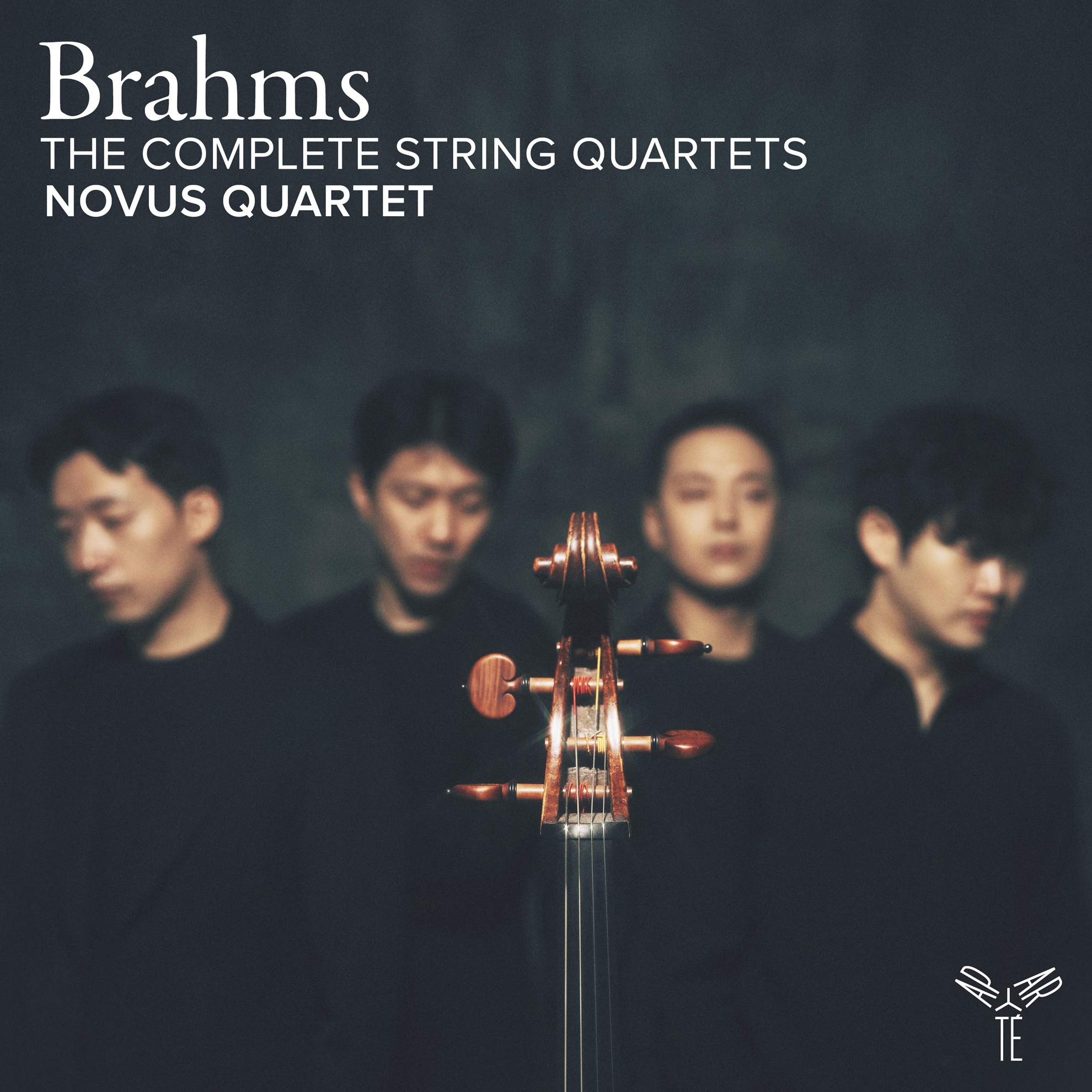
10 Brahms Novus QuartetIt wasn’t only with the creation of symphonies that Johannes Brahms felt the heavy tread of Beethoven holding him back: he admitted that he had destroyed over 20 string quartets before publicly presenting his two Op.51 quartets in 1873, when he was 40 years old. On the 2CD release Brahms The Complete String Quartets the Korean Novus Quartet gives absolutely ravishing performances of the composer’s three completed quartets (Aparte AP366 apartemusic.com/en/album-details/brahms-string-quartets).

CD1 has String Quartets No.1 in C Minor, Op.51 No.1 and No.2 in A Minor, Op.51 No.2, while the second CD is devoted to the String Quartet No.3 in B-flat Major, Op.67 from 1876. This is Brahms playing of the highest quality – warm, vibrant, rich and passionate, and beautifully recorded. I’ve never heard them sound better – it’s a simply outstanding release.

11 Kalevi AhoThe Finnish composer Kalevi Aho (b.1949) started writing string quartets at the very beginning of his composing career, although he did not return to the form until 2021. His early works in the genre are presented on Kalevi Aho String Quartets 1-3 in powerful performances by the Stenhammar Quartet (BIS-2609 SACD bisrecords.lnk.to/2609).

Initially self-taught and taking inspiration from essentially tonal music heard on the radio, Aho wrote his String Quartet No.1 in 1967 at the age of 18, an earlier work from 1966 not being included in his official quartet canon. Even so, a self-imposed performance ban on the newer work resulted in its not being premiered until June 2019.

The String Quartet No.2 from 1970 was written in his second year of studies with Einojuhani Rautavaara at the Sibelius Academy in Helsinki, its lovely opening Adagio and short, slow Adagio finale book-ending a brilliant, fugal and virtuosic middle Presto that brings Shostakovich to mind.

The String Quartet No.3 from 1971 marked the end of his studies with Rautavaara and the emergence of a personal language, its eight short, continuous movements forming a symmetrical journey from innocence to increasing complexity.

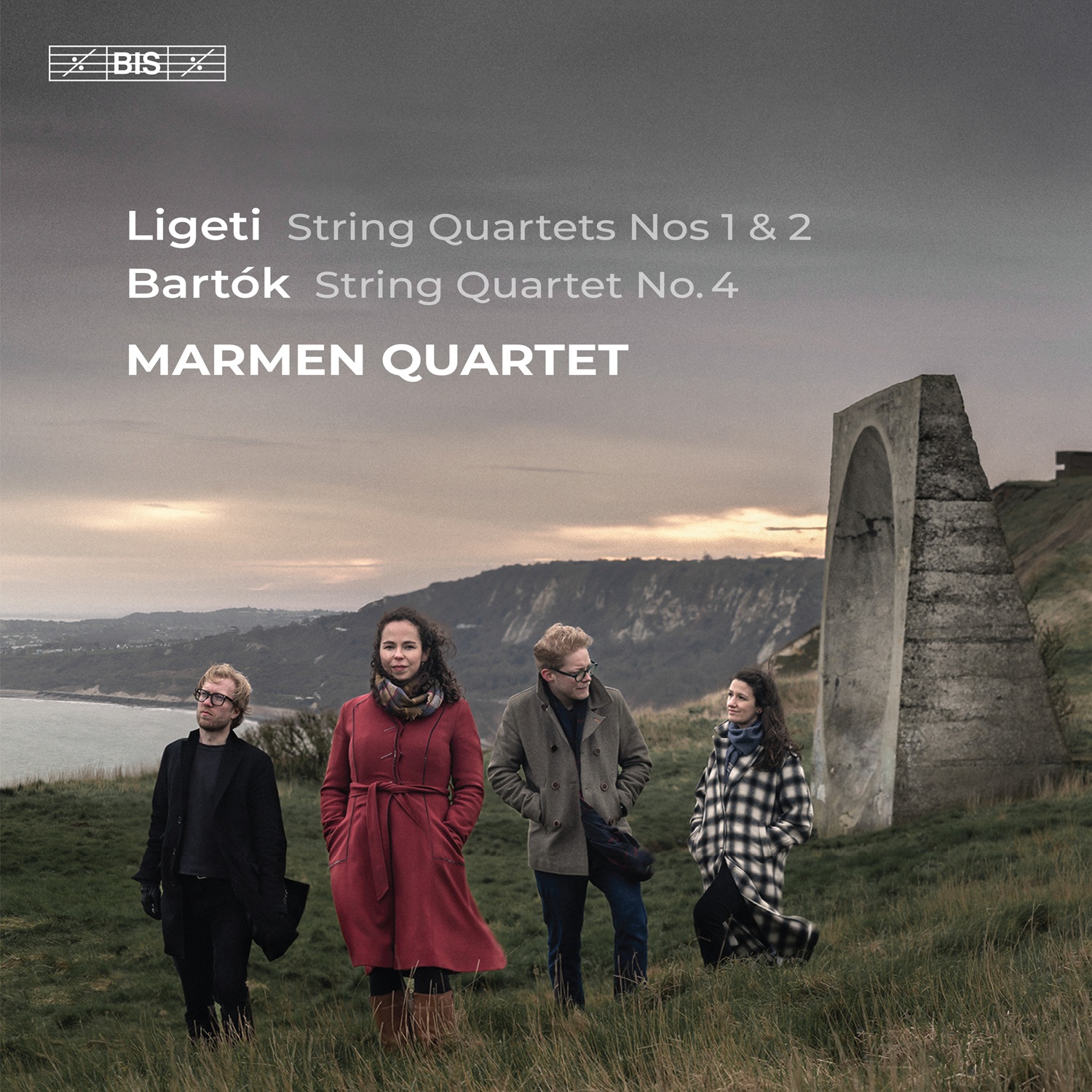
12 Ligeti MarmenThe Marmen Quartet was formed in 2013 at London’s Royal College of Music, and is committed to contemporary music. Their new CD Ligeti – Bartók, featuring strong and committed performances of three major 20th-century string quartets is their first recording for the BIS label (BIS-2693 SACD bisrecords.lnk.to/2693).

Ligeti’s String Quartet No.1, Métamorphoses nocturnes is a work of eight short movements from 1953-54, representing the peak of his “Hungarian” period before leaving the country for the West in 1956. Bartók’s middle quartets were a big influence on Ligeti, and one of them – the String Quartet No.4 from 1928 – is the middle work of the CD. Performances of the work were strictly forbidden in communist Hungary, and Ligeti knew it only from the score.

Ligeti’s String Quartet No.2 from 1968 is from his second period, and is a challenging work accurately described here as being calculated anarchy, with dynamic extremes and sublime climaxes.

13 ExileYou can always expect something different, inventive, insightful and immensely satisfying from violinist Patricia Kopatchinskaja, and so it proves yet again with her latest CD Exile, described as bringing together composers who for the most part were compelled to flee their homeland, and featuring cellist Thomas Kaufmann and the Camerata Bern (ALPHA1110 outhere-music.com/en/albums/exile).

Alfred Schnittke left Soviet Russia in 1990. His 1978 Cello Sonata No.1 is heard here in the 2020 version for cello, strings and harpsichord by Martin Merker, the haunting tonal picture of the opening Largo followed by a dazzling Presto with remarkable playing by Kaufmann.

Soviet oppression and the banning of his works forced Andrzej Panufnik to flee Poland in 1954. His Concerto for Violin and Strings is a charming work commissioned by Yehudi Menuhin. Ivan Wyschnegradsky (1893-1979), known for his use of quarter tones and micro intervals was another composer to flee Russia, in his case to Paris in 1920. His three-movement String Quartet No.2, Op.18 from 1931 is a delight.

Eugene Ysaÿe left Belgium at the start of the Great War, ending up in the U.S.A. via England; his Exil! Poème symphonique for high strings, Op.25 from 1917 is a passionately elegiac work for four violins and four violas. Two folk tunes and a short Schubert quartet movement arranged for strings by Kopatchinskaja complete the disc.

Performance and recording levels are superb throughout. 

01 Basson sous lempireUn Basson Sous L’Empire: Etienne Ozi -  Six grandes sonates pour le basson
Matthieu Lussier; Amanda Keesmaat; Christophe Gauthier
ATMA ACD2 2876 (atmaclassique.com/en/product/a-bassoonist-during-the-first-french-empire-the-music-of-etienne-ozi)

Étienne Ozi was the greatest French bassoonist of his day. Living from 1754 to 1813, he was active as a performer in Paris all through the Revolution and was instrumental (sorry!) in helping to found the Paris Conservatory. His method book for the bassoon was published in 1803 and remained an essential part of every French bassoonist’s training for at least the next 50 years. As well as advice on reeds, scales, and ornamentation, the method included 12 progressively more difficult sonatas composed by Ozi himself. The six most advanced of these make up the bulk of this recording with soloist Mathieu Lussier accompanied by Amanda Keesmaat on cello and Christophe Gauthier playing some on harpsichord and some on fortepiano. 

This is not profound music by any means, but it is well-crafted and pleasant and sits solidly in the mainstream of French pre-Romantic style. The performers are excellent, adding tasteful embellishments and articulations throughout; Lussier’s tone is always rich and clean and the fortepiano is a delight, even sounding like a guitar at times. Lussier deserves a hearty pat on the back for making this carefree music available to bassoonists and their fans. The last three tracks on the disc, however, are where things get really interesting. Inspired by the similarity in the two names, François Vallières composed settings of three of Ozzy Osbourne’s greatest hits: for bassoon, cello and fortepiano. I happen to love hearing familiar music re-interpreted using older styles, so I was delighted by these works: tasteful, stylistic and fun, but also full of genuine affection. Who knew Osbourne was so melodic?

Back to top