Editor's Corner - September 2026
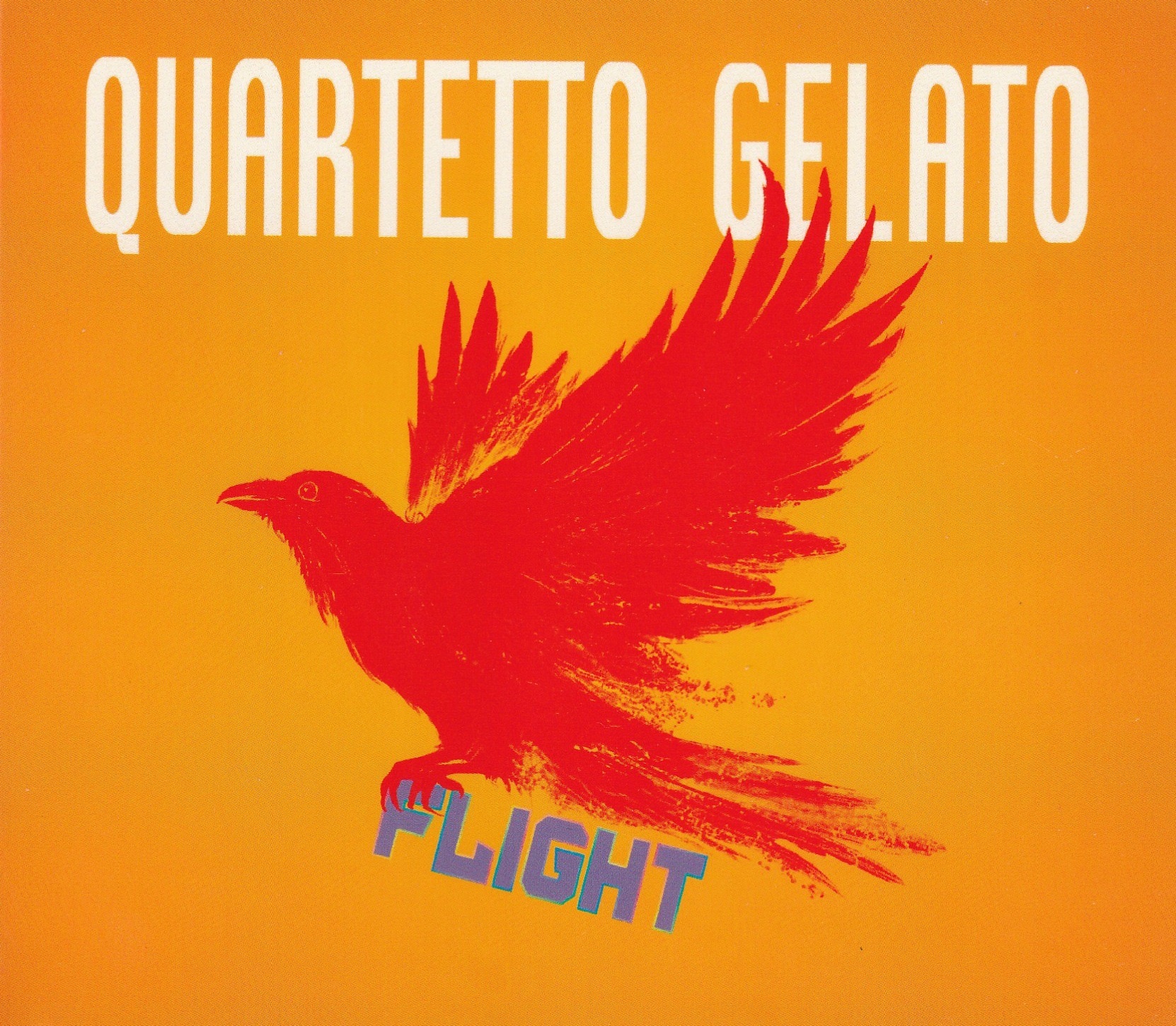 Quartetto Gelato, is a highly successful GTA-based classical crossover ensemble formed back in 1989 by tenor and violinist Peter de Sotto, oboist Cynthia Steljes, George Meanwell (cello and guitar), and Claudio Vena (accordion and viola). In the nearly four decades since its founding the group has undergone myriad personnel changes, with de Sotto, the last original member, retiring in 2019, but has always maintained the high-spirited, virtuosic and eclectic performance style that has made it a crowd favourite for nearly four decades.
The current lineup includes Colin Maier (oboe, English horn, musical saw), Tino Popovic (continuing de Sotto’s tradition of violin and vocals), Matti Pulkki (accordion) and Dobrochna Zubek (cello). Flight (QGPI 011 quartettogelato.ca/store) is the group’s tenth release (11th counting the 2005 compilation Favourite Flavours) and it confirms their standing as topflight entertainers. There are several truly extraordinary tracks including Brahms’ Polka, a breakneck paced take on the somewhat staid composer’s famous Lullaby; Rodeo and Juliet, a mashup of Copland, Tchaikovsky, Prokofiev and Rota themes cleverly woven together by former member Charles Cozzens; a blazing Summer from Vivaldi’s Four Seasons; and the concluding Gypsy Rhapsody. It’s startling how full a sound Gelato achieves with just four instrumentalists. There are some stunning individual moments too, like Maier’s musical saw solo in Casals’ Song of the Birds and Popovic and Zubek’s dramatic realization of the Handel/Halvorsen Passacaglia. Never a dull moment!
Listen to 'Flight' Now in the Listening Room
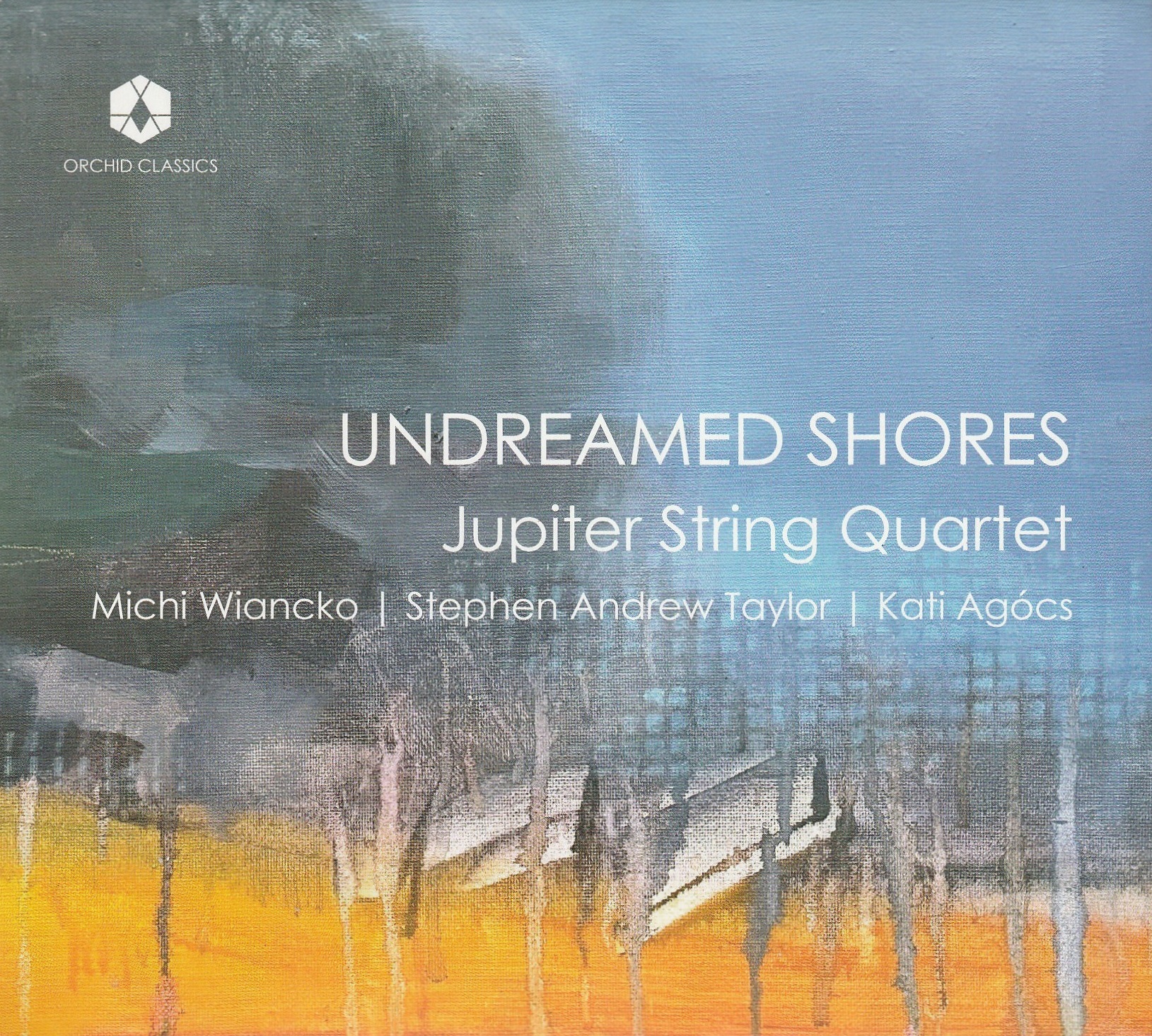 Canadian Kati Agócs tells us that Imprimatur (String Quartet No.2) is “A meditation on spiritual lightness… [that] explores how a single idea imprints itself upon the memory through rapturous re-imagination.” It unfolds over 15 minutes in which the five movements (preceded by a Recitative and followed by a Coda) flow into one another without pause, creating a haunting dialectic of darkness and light and ultimately resolving in a triumphal, rising motif. Imprimatur was commissioned in honour of the 15th anniversary of the Jupiter String Quartet and it is the closing work on the ensemble’s Undreamed Shores (Orchid Classics ORC100444 www.orchidclassics.com/releases/orc100444-undreamed-shores/).
The disc opens with a work by Michi Wiancko, To Unpathed Waters, Undreamed Shores which “celebrates the power of the natural world while carving out space to explore the notions of regeneration, hope and wildness in relationship to ecological grief.” Across the seven movements an arc is formed beginning with life in the water, through butterflies and the microbiome beneath New York’s Central Park, before lamenting Invisible Eviction which depicts the world on fire. Next up is a song of kinship and mourning that leads to an eventual call to action in the final movement’s insistent entreaty to Rise Up, before quietly receding like gentle, lapping waves.
Stephen Andrew Taylor’s single-movement Chaconne/Labyrinth – which the composer likens to the COVID lockdown, being “stuck in a loop, but at the same time lost in a maze, desperately seeking a way out” – is the centrepiece of this intriguing disc.
Undreamed Shores is the Jupiter Quartet’s final recording with its original lineup. Going forward, violinist Nelson Lee will be replaced by Mélanie Clapiès. The other founding members are Meg Freivogel (violin), Liz Freivogel (viola) and Daniel McDonough (cello). Now celebrating 25 years, the group is in fine form here, convincingly capturing the varied moods of these works.
 The Holy Liftoff (Sono Luminus DSL-92290 sonoluminus.com/sonoluminus/holy-liftoff) features American flutist Clare Chase with the JACK Quartet in a work based on a book of sketches Terry Riley began in 2022. This is the 11th installation in Chase’s monumental 24-year Density 2036 project commemorating the centenary of Edgard Varèse’s seminal work for solo flute, Density 21.5.
The Holy Liftoff grew out of an improvised four-part chorale which Riley developed in consultation with Chase and later notated amidst a parade of cartoon characters and other illustrations that became an integral part of the score. The huge volume of material can be reorganized or expanded to accommodate all kinds of performance scenarios so that no two performances will be the same.
In the programme booklet Riley says of the variable score, “people are intelligent enough and sensitive enough, to look at my work and know how to make a beautiful representation of it.” The hour-long version recorded here was realized by Samuel Clay Birmaher in close collaboration with Chase and Riley. It is scored for a flute choir of up to 18 voices (multi-tracked by Chase) and string quartet, and includes layered sounds of stones, birdsong, wind, and Riley’s spoken voice.
While the overall feel of the music is meditative and uplifting, with sections of Riley’s signature minimalist repetitions and occasional ecstatic moments, there is one particularly moving lamentation, The Tragedy of What We Lost, in memory of the victims of the Uvalde school shooting in Texas in 2022. The mood once again lifts with Angels in the Snooker Parlor and Horizon Streakers Rag, leading some 20 minutes later to final pulsing movement Escape.
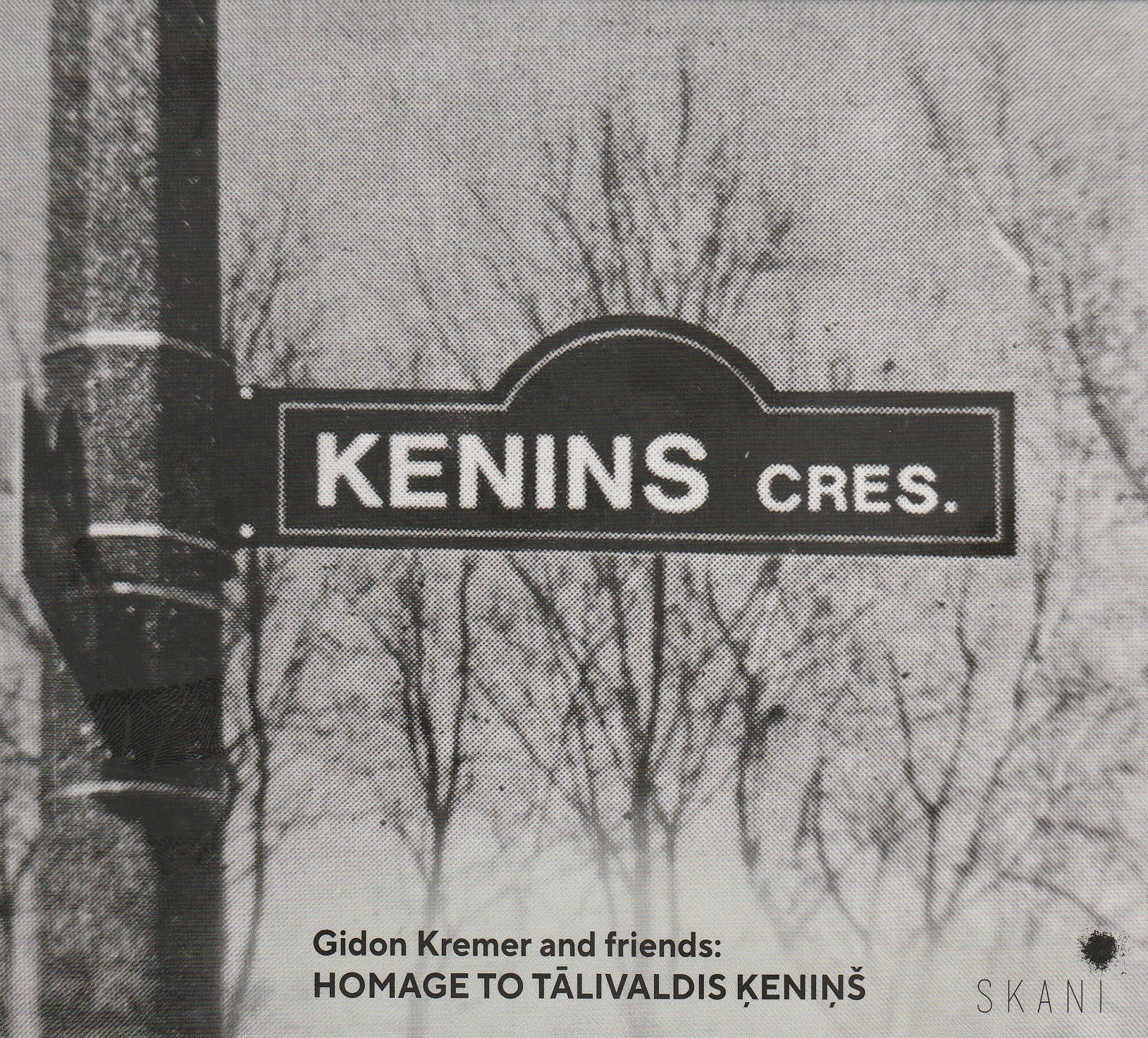 Kenins Cres. – Homage to Tālivaldis Ķeniņš is a new disc from the Latvian Music Information Centre featuring Gidon Kremer and Friends (SKANI 178 lmic.lv/en/skani/catalogue?id=260). The cover depicts a street sign in the Ottawa suburb of Kanata, named to honour the distinguished Latvian-born Canadian composer.
The selection of chamber works spans four and a half decades of Ķeniņš’ creative output. The earliest is a movement from the Cello Sonata for which he won first prize in composition at the Conservatoire National Supérieur de Musique de Paris (where he was studying with Messiaen and Tony Aubin among others) in 1950 and garnered him a UNESCO fellowship. The latest is the Quintet for Piano and Strings composed for a concert celebrating his 75th birthday hosted by the Toronto Latvian Concert Association in 1994. That concert was broadcast on CJRT-FM where I had the privilege of producing a weekly month-long radio series on Ķeniņš for the station’s annual Canadian Composer Portraits series, with host Alex Baran. It was an honour, and a real pleasure, to meet and work with “Tali,” a highlight of my time at the station.
There have been a number of recordings of Ķeniņš’ music produced by the CBC and the Canadian Music Centre over the years, but since his death almost all have come from Latvia, which is somewhat ironic in that he fled his native land after the second Soviet occupation in 1944 and never returned to live there. After his studies in France, Ķeniņš immigrated to Canada in 1951 where he spent his entire professional career as organist, educator and composer. It was only in his later years that he returned to Latvia for occasional visits, but that country has embraced him as a native son and acknowledged him as one of its most important composers in a way that Canada has not. This despite his being one of the most prolific orchestral composers Canada has ever produced, with eight symphonies and 12 concertos in his varied oeuvre.
In addition to the works listed above, the disc includes Aria per corde for string quintet, Concertino barocco “Ommaggio à JS Bach” for two violins, Piano Quartet No.1, a movement from Concerto for Violin, Cello and Strings, and Colloquens patriae – reflections on a theme by Imants Zemzaris. As the artist credits suggest, the outstanding performances feature Kremer and some of the best musicians from the Baltic states, along with his ensembles Kremerata Lettonica and Kremerata Baltica Nonet in the larger works. A truly memorable tribute to a truly wonderful composer.
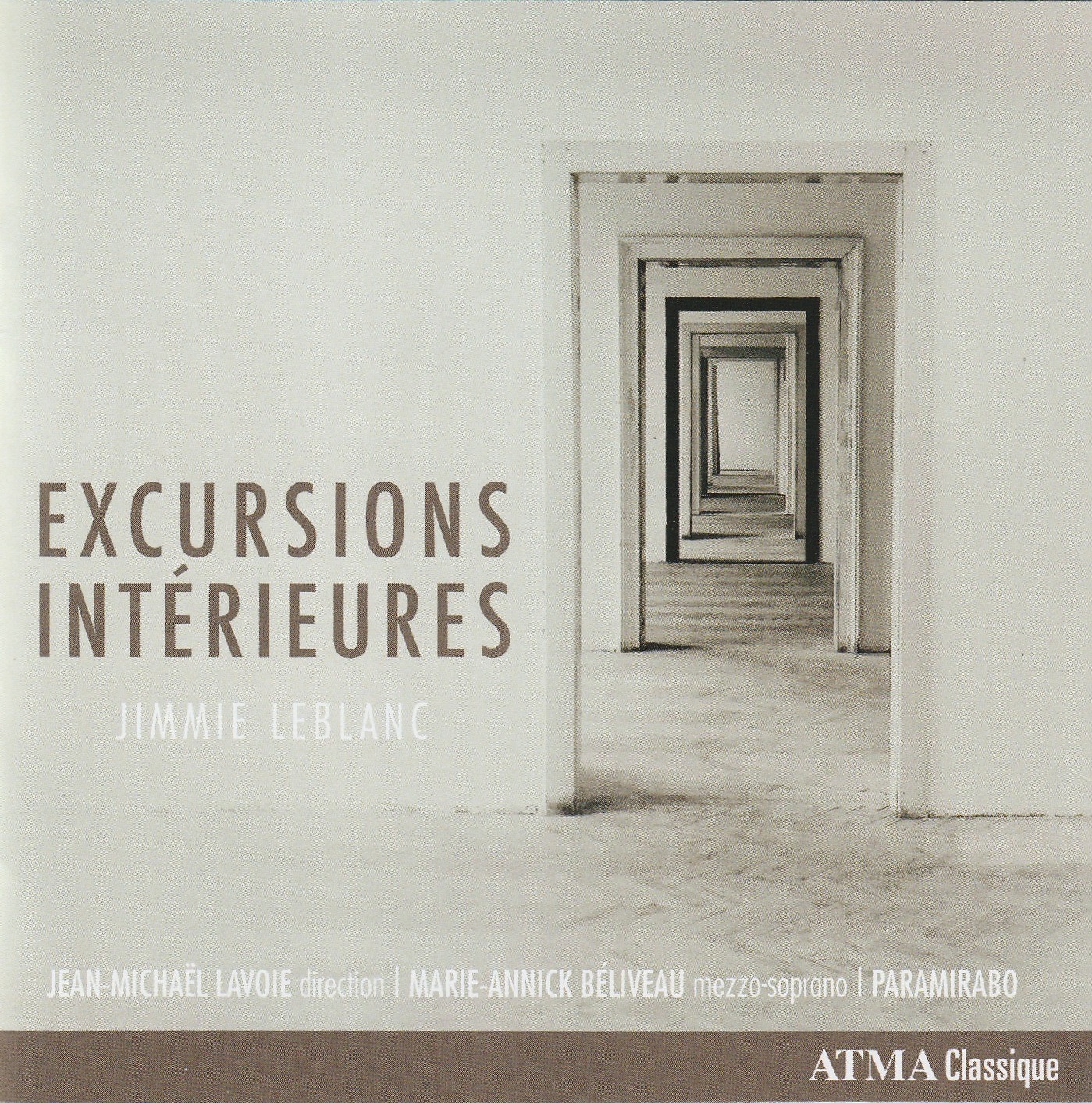 The Prelude from Bach’s Cello Suite No.1 in G Major is quoted in the final movement of Ķeniņš’ Quintet for Piano and Strings, and it also makes a cameo, along with a kaleidoscope of other familiar works and the occasional ringtone, in Commedia della musica. This is first of three challenging instrumental works that appear on Excursions intérieures, a portrait disc devoted to Quebec composer Jimmy Leblanc featuring ensemble Paramirabo under the direction of Jean-Michael Lavoie (ATMA ACD2 2906 atmaclassique.com/en/product/excursions-interieures).
Commedia dell’arte is a theatrical genre that appeared in the 16th century as a satire of the social mores of the time. Leblanc tells us that “In Commedia della musica, I wondered what musical archetypes could allow me to paint a portrait of our world today […] to summon musical personalities who through allusions, quotes or technical borrowing, seemed to me to be able to translate an aspect of our reality: who could come to talk to us about infobesity, cyber-attack, multiplicity, sacredness, globalized mobility, climatic upheaval, terrorism, and of course ... of love ...” He goes on to warn us that “any resemblance to known (musical) characters is not fortuitous!” It’s a riotous carnival ride.
Although Leblanc’s music is visceral – abrasive at times and constantly forceful, with repeated pedal points and driving rhythms – it is often based in intellectual exercises. In … and the flesh was made word, a title which turns a phrase from the Gospel of Saint John on its head, he says “I wanted to explore textures designed as if they were more tactile, and less discursive. In phase with this poetics, I used the formantic structures of the vowels of the French language, and I approached the textural aspect by exploring various categories of Denis Smalley’s Spectromorphology, such as granulation, iteration, sound streams, and periodicity.”
“Designed as the second part of a diptych whose initial gesture is constituted by … and the flesh was made word., with Clamors of Being I sought to deepen my approach to textural writing. To do so, I relied on a similar structure, but adopted a more distanced attitude in terms of energy and expression, making use of subtler transitions and materials more closely related to one another.”
These three works, originally composed between 2015 and 2017 were revised in 2024 for this recording, as was the half-hour long tour de force Excursions intérieures I : Désir de verre, after a poem by Michaël Trahan, in which soprano Marie-Annick Beliveau is captivating. The work explores the question of the “unity of the Ego, of its coherence, its continuity or its multiplicity.” With Trahan, Leblanc found “a textual source that allowed me to explore this reality musically. […] in the way our inner world is made up of both fundamentally intimate things […] and populated by external realities that come to us from the outside...” We hear distorted echoes of works by Schumann, Brahms, Purcell, Mozart, Puccini, Donizetti, adding “external perspective to the ideas born of my own sensitivity, multiple perspectives on a psyche drawing its universality from its asubjective character.” This powerful music is not for the timid, but well worth the journey for adventurous souls.
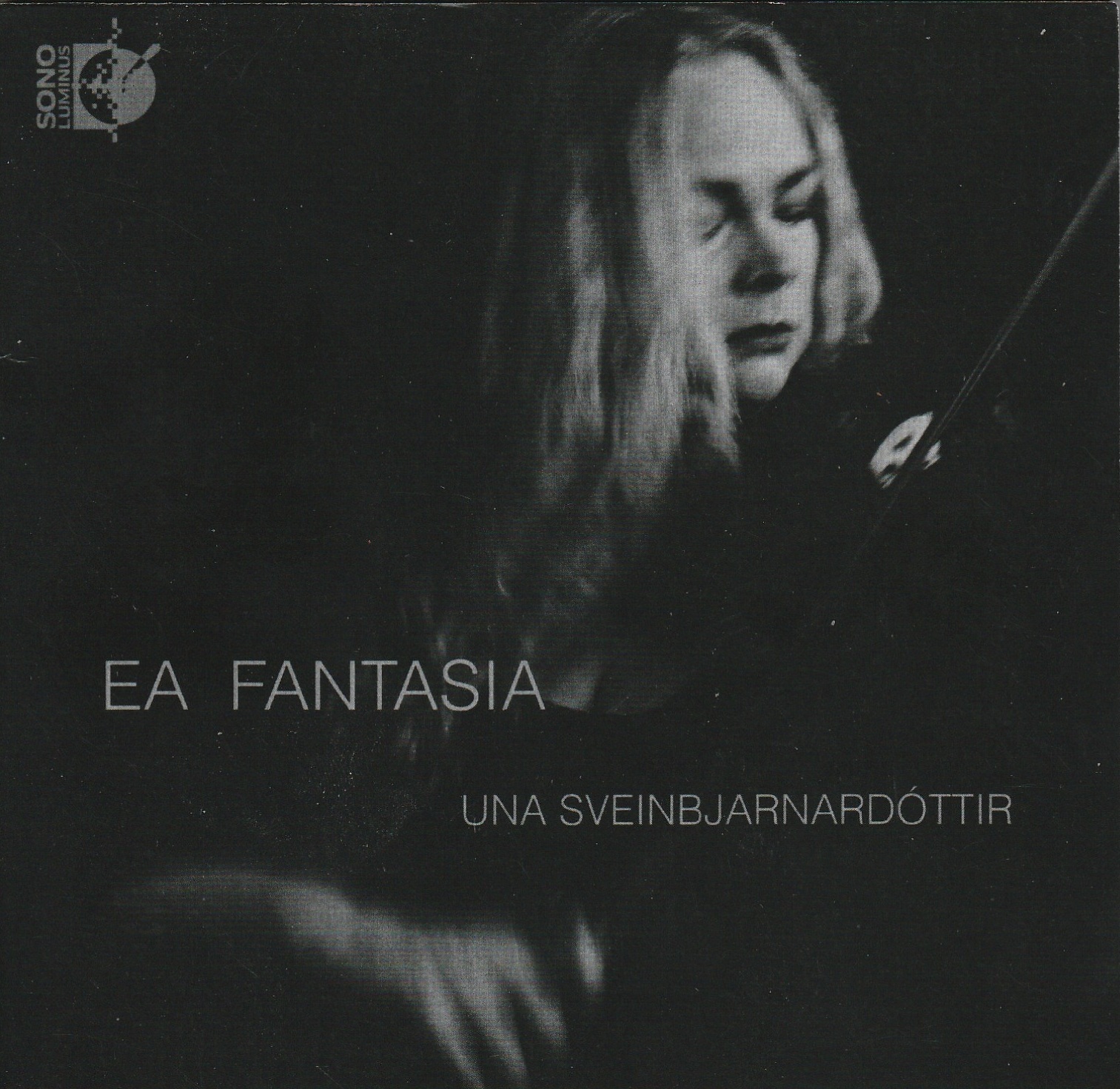 The next disc is another adventurous outing, but in a quieter sort of way. EA FANTASIA, solo violin works performed by Una Sveinbjarnardottir (Sono Luminus DSL-92288 sonoluminus.com/sonoluminus/ea-fantasia) is primarily a contemporary music disc, but it begins with a lovely work by Nicola Matteis Jr. (c.1670-1737) which was the violinist’s inspiration for this project and her own title track. Alla Fantasia is a dramatic three-and-a-half-minute moto perpetuo of arpeggiated chords reminiscent both of Bach’s Chaconne, and, anachronistically, of Arvo Pärt’s Fratres, which draws us in immediately.
After this compelling busyness the mood abruptly changes with Fragile Stillness by Lilja María Ásmundsdóttir, inspired by an Icelandic weather phenomenon froststillur, where there is no wind and a crisp, frozen atmosphere. This leads to Meditation by Karólína Eiríksdóttir which, although starting quietly develops an angular quality where spiking melodies are punctuated with left hand pizzicato. Sveinbjarnardottir tells us that ever since first playing Meditation in 2006 this Icelandic solo music project has been “melting in my veins.”
While most of the composers are pure Icelanders, there are two transplants represented. Englishman John Speight wrote Soliloquy in 2012. Its two contrasting movements are “slow and thoughtful” and “crazy and furious” in the words of Sveinbjarnardottir. This is actually true of the disc as a whole, with its alternating sensibilities. The other “come from away” is Canadian Veronique Vaka Jacques, whose Ofdune – an Old English word meaning “downward” or “off the hill” – is grounded in Icelandic geology and topography.
The disc, which also includes works by María Huld Markan, Tryggvi Baldvinsson, and Sveinn Lúðvík Björnsson, ends gently with Sveinbjarnardottir’s gospel music inspired arrangement of Jón Nordal’s Each Tiny Step from a play by Icelandic Nobel Prize winning author Halldór Laxness.
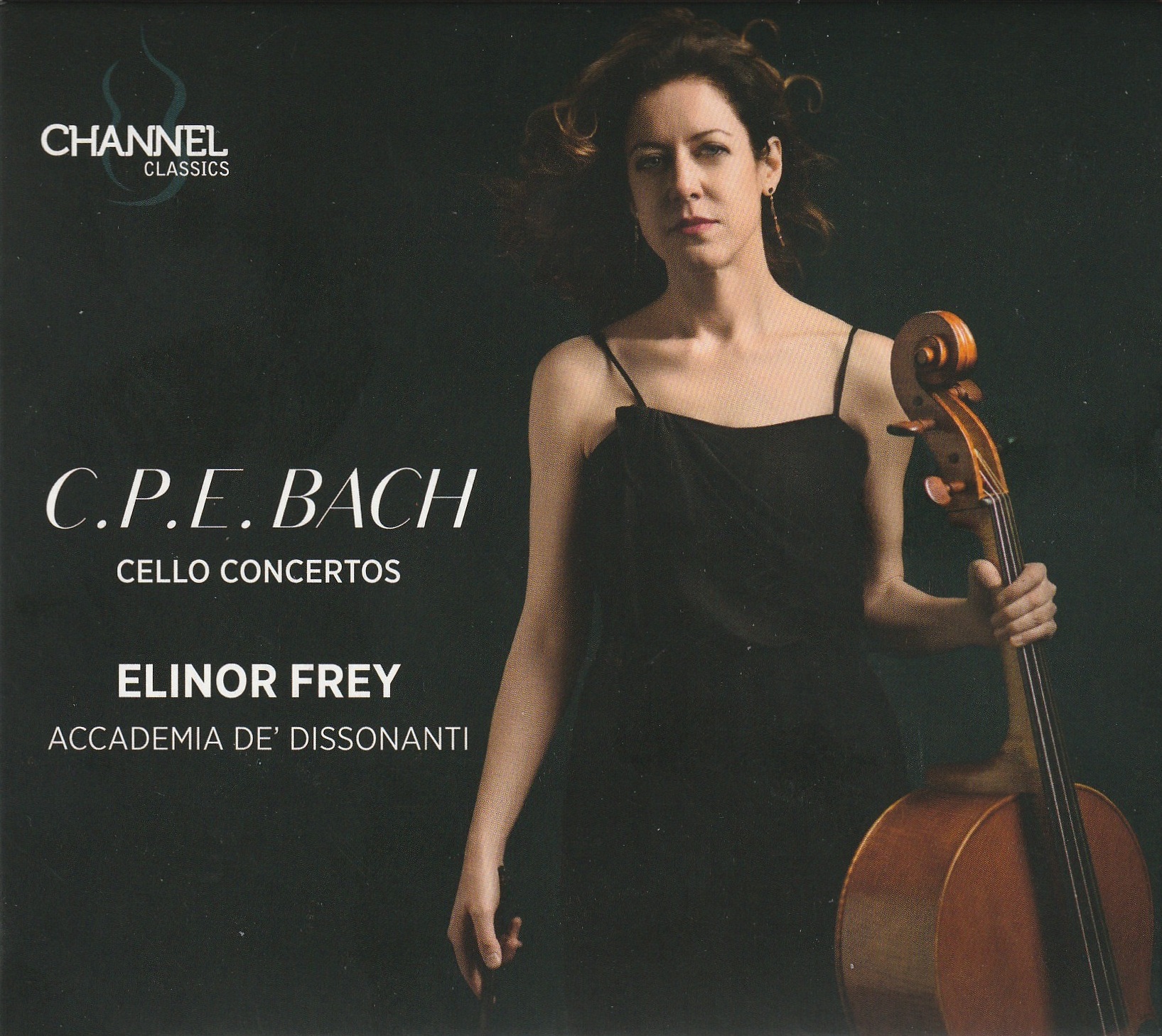 Founded by Elinor Frey in 2020, Accademia de’Dissonanti is an ensemble and artistic institution which presents concerts, publications, and educational academies centred on historical performance and creative research. A recent release on Channel Classics, CPE Bach – Cello Concertos (CCS 50426 outhere-music.com/en/albums/c-p-e-bach-cello-concertos) features Frey as soloist in stunning performances. accademiadedissonanti.com/en lists several dozen string players, a number of keyboard and continuo players, traverso and other historical winds and two composers (Michael Oesterle and Dalit Warshaw) affiliated with the project. This disc, which is obviously devoted to Bach, utilizes a smaller contingent of the musicians and although the booklet does not specify the participants a Facebook video of the Concerto in A Minor, Wq 170 shows Frey supported by nine string players and harpsichord, with violins, violas and bass all standing. The group achieves a surprisingly full sound that belies the size of the ensemble.
The three concerti presented were all composed between 1750 and 1753. Frey’s comprehensive booklet notes suggest that the first two, dating from Bach’s time in Berlin, were composed with accomplished amateurs in mind. The third however, written a couple of years later in Potsdam, shows a level of difficulty that would indicate a skilled professional as the intended soloist, likely Ignaz Mara, cellist of the royal Kammermusik.
Frey tells us that “In Bach’s time, performing and preparing a piece was done to suit the soloist’s strengths and to allow them to show off their own creative voice. […] For this recording I have used a vocabulary of ornamentation gleaned from the music of Bach, Benda, Quantz, and other nearby musicians, to enhance and intensify what is already on the page.” The result is a convincing and satisfying interpretation of works that deserve to be more widely known. Both the sound quality and the energy of the musicians are resplendent.
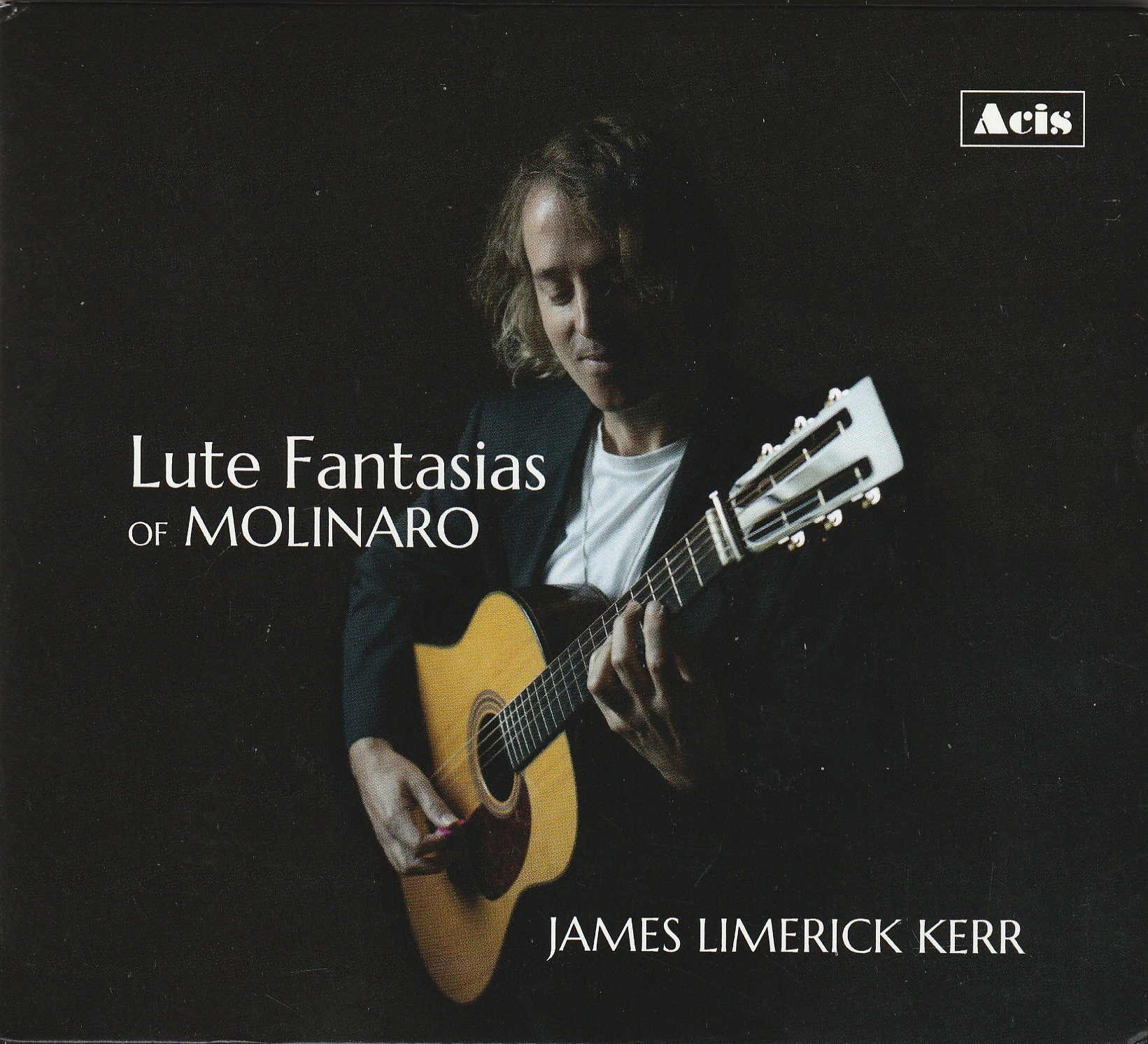 I’ll finish with a quick mention of a lovely, mostly contemplative album by American guitarist James Limerick Kerr. His approach to 17th century lute music is distinctly modern rather than historically informed, although he does show a healthy respect for the repertoire. In his notes to Lute Fantasies of Molinaro (Acis APL78376 acisproductions.com/lute-fantasias-of-molinaro-james-kerr-pressdpk-1) Kerr references Julian Bream, whose own approach to lute playing was controversial, as the first modern player to bring Molinaro’s music to contemporary attention. He also cites such respected “period” performers as Paul Beier and Paul O’Dette whose recordings sparked his interest in this composer, as well as Peter Poulos, whose comprehensive scholarship on the life and works of Molinaro was informative and inspirational.
Kerr performs the music of Simone Molinaro (1570-1636) in his own arrangements for “hybrid picking guitar.” This involves using both a plectrum (guitar pick) and finger style picking. The instrument he uses is a “slope shouldered ‘jumbo’ Brazilian rosewood and Adirondack spruce 12-fret steel-string guitar handmade by Circle Strings in Vermont.” The resulting reverberant sound is crystalline and clean with a minimum of left-hand finger-on-string noise. It’s a thoroughly joyful listening experience.