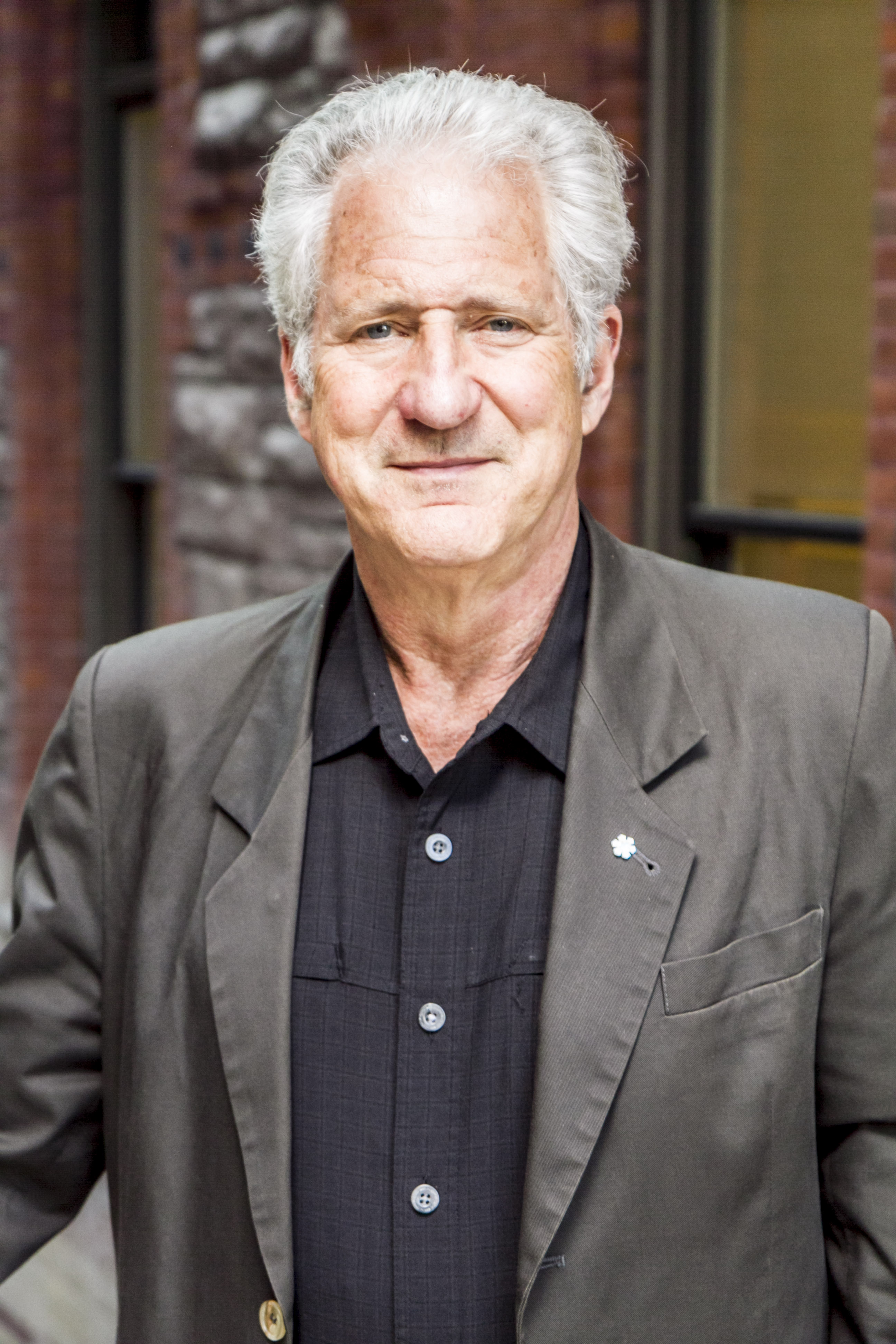
Elisa CitterioOn October 11, 2017 at 8pm (or shortly thereafter), on the stage of the hall named after her distinguished predecessor, Tafelmusik Baroque Orchestra’s new music director will take that sharply drawn-in breath characteristic of leading a period ensemble from the first violin. And with the downbeat that follows, as the first notes of Giuseppe Battista Fontana’s Sonata XIV for two violins, dulcian and continuo float out into Jeanne Lamon Hall, it will be safe to say that Brescia-born Elisa Citterio, only the second music director in Tafelmusik’s illustrious 33-year history, will be well and truly at home.

It won’t be Citterio’s first appearance with Tafelmusik. That took place, in the selfsame hall, from November 5 to November 8, 2015, in a program titled “Baroque Masters” and featuring works by Corelli, Fasch, J.S. Bach, Locatelli and Vivaldi (his Concerto for two violins and two oboes in F).

It won’t even be her first official appearance as the orchestra’s anointed music director. That will have taken place three weeks previously, from September 21 to 24 at Koerner Hall and September 26 at the George Weston Hall. But for Tafelmusik as an organization, October 11, 2017 will be the culmination of a five-year process that started in the orchestra room in the basement at Trinity-St. Paul’s in October 2012, when Jeanne Lamon  advised her orchestral colleagues of her intention to step down as music director. And for Citterio it will be a defining moment – her first opportunity to present herself to Tafelmusik’s audiences in all her musical capacities: who she is (virtuosic soloist, orchestral leader, team player and imaginative curator) and, both literally and metaphorically, where she is coming from.

In a blog post still available for reading on Tafelmusik’s website, violinist Jula Wedman wryly recalls Lamon’s October 2012 announcement of her intention to retire from the position she had held for 33 years: “For the first time ever in an orchestra meeting,” Wedman says, “the room was completely silent.” Tears and prosecco flowed. And then the search was on, with Wedman as one of two musicians on an 11-person search committee spearheaded by veteran arts headhunters Margaret Genovese and Dory Vanderhoof.

In her blog post, Wedman reflects on the positive aspects of the ensuing two-year process for the musicians themselves: “I saw how the orchestra grew and changed as we worked with each wonderful guest director,” she wrote. “I saw how our feelings of despair over the news of Jeanne’s retirement changed to acceptance and support for her new lifestyle and our new relationship with her. It was wonderful to have such a long process. We needed it. We became more flexible as a group, we became more open to new ideas, we became less reliant on Jeanne and more self-sufficient as a group.”

Remarkably, given the thoroughness of the process, Citterio only emerged as a contender in November 2015, and, even at that late date, as much a matter of luck as good management. “We had a concert in November 2015 with no director,” Wedman explains. “We also happened to have just hired a new violist from Italy, Stefano Marcocchi. I remember talking to him one day backstage before a performance at Koerner Hall, describing all of the things I thought Tafelmusik was looking for in a new music director. The name that came first and foremost to his mind was a name we hadn’t heard before – Elisa Citterio.” Wedman recalls being struck by Citterio’s virtuosity as a soloist, her “super-efficient rehearsal style, and her high level of attention to detail,” and “the way the music grew and changed every day, coming to life in different ways in each concert. ... The moment I will never forget that week was about three minutes into the first concert. The orchestra was feeling stressed (first-concert jitters) and I looked up at Elisa – she had a big beautiful smile on her face that said to me, ‘This is exactly the place I am supposed to be right now. I love this!’”

Tafelmusik on the steps of Trinity-St. Paul’s, 1981: Back Row (L-R): Marc Destrubé, Jeanne Lamon, Christina Mahler, Deborah Paul, Anthony St. Pierre, Jack Liivoja-Lorius. Front Row (L-R): Susan Graves (seated), Kenneth Solway, Ivars Taurins, Charlotte Nediger, Alison Mackay.Plans to have her back at Trinity-St. Paul’s in February 2016 for an all-Mozart program didn’t come to fruition, so it wasn’t until September 2016 in last season’s season-opening concert series at Koerner Hall that what turned out to be the decisive second date took place. “This time she and her partner Mirko brought their two-month-old daughter Olivia,” Wedman writes. “Elisa was playing the very first concerts after her first child was born! We were stunned that in the face of utter exhaustion, [she] still brought the same boundless energy and joy for the music with her. The rehearsals were organized and efficient, her ideas and cues were clear, creative and easy to follow, and I don’t think I heard one out-of-tune note from her during the entire rehearsal period and concerts! … Many of us remarked how fresh Handel’s Water Music (a piece we have played many times) felt under her direction.”

Sitting in the balcony for that September 22, 2016 season opener, and of course with benefit of hindsight, I can distinctly recall the feeling that what was happening between conductor and orchestra on the stage that night might be more than a one-night stand. In fact, if there was anything to criticize from an audience member’s point of view, it was that the musical conversation unfolding on the stage was all about them, rather than directed at us – like overhearing an intensely intimate conversation from the next booth over!

From that point on things moved quickly, as these things go. An offer was made by phone call to Italy, around the turn of the year.

“I was home, nursing Olivia, four months old by then, ” Citterio recalls, in a hastily arranged interview in The WholeNote offices back in May 2017. “Sometimes life-changing news comes at such normal moments. I remember thinking, just ten minutes ago I had a walk in the village, went to the supermarket! For me it was a feeling that this was taking on something huge at a time when things have just changed anyway. But maybe it’s a chance for things to be more busy but less crazy. I think the biggest change and really different is the responsibility for things not only on stage.”

How long did it actually take her to decide to come? “I waited one month to give news to my family,” she says with a smile. But clearly the opportunity to take on a role that will enable her to express and explore a fully rounded musicality beyond that of virtuoso and orchestral violinist had enormous appeal.

And so it is that October 11 to 14, audiences will have the first opportunity to witness Citterio’s multifaceted musicianship, close up and personal, in a program that is entirely of her choosing. “I didn’t plan the whole season,” she says, “because planning started before my appointment; mostly just some suggestions for the first program and the second one and the fourth.”

Of the three programs she mentions, this is clearly the one she is most invested in. “I want to give something of my background, so including Fontana and Marini, both from that background, is very natural. Landscapes around Brescia have changed over the years, but relatively not so much. There are lots of places with historical ruins that were already ruins in Marini and Fontana’s time. And we have caves with prehistoric art which could have been familiar to them… I can’t explain in words what I feel playing this music. It is somehow so familiar to me, and not because I have played it so often or heard it.”

And this sense of connection extends beyond the music itself. “My violin, for example,” she says. “It is a Marcello Villa instrument made in 2005; but it is inspired by Gio Paolo Maggini’s instruments – a 16th-century luthier from Brescia, and contemporary of Fontana. In fact, they even died in the same plague in 1630.  So when I play this music with this instrument I imagine I can create the same sound the composer heard. It is not logical but it is how I imagine it. I would like to give this to the Toronto audience.”

Looking beyond Citterio the curator/programmer to Citterio the orchestral leader and team player, it’s worth noting the care with which the October 11 program as designed brings individual focus to different players and sections within the ensemble: from bassoonist Dominic Teresi, whose passion for the Fontana dulcian sonatas predates Citterio’s arrival on the Tafelmusik scene; to the sharing out of the violin solos among the ensemble; to the Vivaldi C Major Concerto for two oboes which gives an opportunity for the ensemble’s oboists, John Abberger and Marco Cera, to shine.

And as violin soloist, Citterio’s own moment in the spotlight will be “Autumn” from Vivaldi’s Four Seasons (she will be playing “Summer” in the opening concert in September, and each of the other two movements at concerts in January and February 2018). It’s a deft touch, especially in a year when the complete box set of Tafelmusik’s recordings has been released, featuring Jeanne Lamon in the same work, making for fascinating comparisons as the season unfolds.

Deep emotional through-line of the October concert notwithstanding, it would be a mistake to see Citterio as a die-hard Baroque traditionalist wedded to a hundred years of repertoire no matter how obscure. “I am not planning this repertoire all the time – we are strings, two oboes, a bassoon and continuo so there are limits to the repertoire available; also our audiences expect the great works (and can enjoy new takes on great works as much as new works). Myself, I can’t pretend to play well all music from Monteverdi to contemporary but for an orchestra like Tafelmusik it is important to touch dfferent periods. We also have to educate the ear. Period playing can lead to illuminating performances of a much wider range of music –  Haydn, Schumann, Brahms, Verdi.”

“Nineteenth-century orchestral sound is so opulent and dense,” she continues. “Strip away the huge sound and you can listen for different things. With gut strings and period instruments there is a defined sound for each string and each instrument. In Italian we call this huge sound minestrone Wagneriana. How would you say that in English?” We settle on “Wagnerian pea soup” as a culinary alternative. “It does not have to be like that,” she says.

This October 11, almost exactly five years from the day Jeanne Lamon announced to her shaken orchestra that she was stepping down, her successor comes home to the hall that has been the company’s home base for its whole history. It would be folly in these fluid musical times to predict for any new music director a 33-year sojourn. But the stars do seem to be auspicious for Citterio’s stay here to be a fruitful new chapter for both her and Tafelmusik.

David Perlman can be reached at publisher@thewholenote.com.

keyboard instrument 436488 1920The pipe organ, labelled the “King of Instruments” by none other than Wolfgang Amadeus Mozart, is an instrument that flies under the radar of many classical music lovers. Despite its apparent obscurity, the organ has a devoted group of followers and aficionados who regularly present concerts highlighting some of Toronto’s best instruments.

One such presenter is Organix, run by Gordon Mansell, who is also organist and director of music at Our Lady of Sorrows Catholic Church in Toronto’s West End. A longtime supporter of the organ and its finest players, Organix will receive the National Award of Excellence from the Royal Canadian College of Organists at a special gala recital on September 22 at Timothy Eaton Memorial Church. This commemorative performance will feature Italian organist Mario Ciferri and will be followed by a masterclass the next morning, featuring three young players and a variety of repertoire.

In anticipation of these events, we asked Organix’s Gordon Mansell, TEMC principal organist Stephen Boda and director of music Elaine Choi for their thoughts on the organ, its status in Toronto’s contemporary musical topography and its possible role in the future of classical music.

Gordon Mansell, president and artistic director of Organix Concerts

Gordon MansellWN: Your concert on September 22 is a significant one, with Organix Concerts receiving the National Award of Excellence from the RCCO. Why this performer on this instrument for this occasion?

GM: Yes, it is quite an honour for me to be recognized by my colleagues and peers for having attempted to widen the general audience for organ music. I have placed a priority in producing concerts with a high entertainment factor.

The difference between the organ and many other instruments is that an organist must very quickly adapt to each concert venue, the instrument and the uniqueness of the acoustics. Pianists enjoy a standard of 88 keys and, for the most part, size of the instrument. There is predictability inherent to the piano and almost all other instruments, the personal instrument the performer owns and plays all the time. With the organ, there is a critical factor of matching the organist with the appropriate instrument, based on repertoire expected.

As for Mario Ciferri, I know him to perform grand Romantic music as well as Baroque, ideal for showcasing to the world the newly refurbished and expanded organ at Timothy Eaton Memorial Church. Happily, TEMC agreed to collaborate with me to help make this happen.

WN: The second day of events with Mario Ciferri features a masterclass with three students, each playing a range of repertoire. How does this fit with some people’s perception that the pipe organ is an instrument in rapid decline?

GM: I would say that the apparent decline may be somewhat localized to parts of our own continent. Here in Toronto we have many young students who are pursuing careers as organists and educators, and several have gone on to gain professional standing and significant church positions. Coupled with studies privately and at the university level, Organix is a vital part in ensuring the future as each becomes an alumnus of the festival and is an ambassador of it and of the industry itself. I expect that these same emerging artists will take on an important role as advocates for the promotion of the organ in many different ways, some of which we cannot fully appreciate at this time.

WN: Organix recently diversified, presenting weekly afternoon recitals in addition to your Festival series. Why do you see the organ as something worth investing in? And where do electronic organs fit into Organix’s future?

GM: It is important to invest in the organ, because there is such a significant catalogue of music written for it as a solo instrument and as a collaborator for ensembles and orchestras. With continued interest, particularly from young musicians and enthusiasts, there is a market that should be generously nurtured and supported.

Most of Toronto’s pipe organs are in the downtown core, and there is a large population beyond that has yet to hear a great concert of organ music. Digital organs become a viable alternative and the preferred instrument beyond downtown. The benefits of digital organs are many, but in particular, the repertoire for the instrument continues to live and thrive on the best digital examples. With this added exposure outside of the downtown core, Organix will continue to promote professional organists, organs and organ repertoire to many first-time concert goers. It is not an either/or situation between digital and pipe – it is a collaboration that will keep our industry alive.

Elaine Choi, director of music and Stephen Boda, principal organist at Timothy Eaton Memorial Church

Elaine ChoiWN: I notice that in addition to partnering with Organix TEMC has recently partnered with other churches “on-the-Hill” for various performances such as the Duruflé Requiem.

EC: TEMC’s music team enjoys collaborating with other ensembles and organizations. These collaborations enable us to broaden our repertoire and reach out to a bigger audience.

SB: We’re really looking forward to hosting Mario Ciferri this year as part of the Organix series. We have an organ-loving congregation and look for every opportunity to feature the instrument in concert. We are grateful to Gordon Mansell for organizing this event and also the masterclass, which features young organists from Toronto.

Stephen BodaWN: At a time when many see the pipe organ (and churches themselves) in rapid decline, what is the importance of fostering young talent and interest through events such as this masterclass?

SB: I think it’s very important to continue introducing young people to the organ; it is such a fascinating instrument and deserves to be shared and cherished. International artists such as Mario Ciferri coming to town give young artists new perspectives, and we are looking forward to it.

WN: A new antiphonal division was recently added to your already significantly sized pipe organ. With a music program already featuring a variety of instruments and ensembles, what role do you see the refurbished and enhanced organ taking in the future of your music program?

SB: The organ already has a fantastic sound and adding more pipes (we added 1000 new pipes, which brings us to a total of 7000) makes the instrument even more grand and musical. It also greatly widens the musical possibilities. Since the new pipes are located in the back of the church, it gives a surround-sound feel when the organ is played all together and the possibility to alternate or create solo/accompaniment textures from across the room. As a musician, it is incredible that we are able to add to our instrument and we are very thankful for the donations that made this possible!

EC: We are already seeing a change in our Sunday services. The antiphonal division certainly helps with supporting congregation and their hymn singing. We are finding more opportunities to explore and utilize the new division – the potential is endless!

Matthew Whitfield is a Toronto-based harpsichordist and organist.

Stage Fright BannerSix years ago, famed soprano Ambur Braid was lying on her back on the dressing room floor at Toronto’s Four Seasons Centre. She was already made up and attired in her regal black costume for her Canadian Opera Company public debut as the Queen of the Night in Mozart’s The Magic Flute. She was trying to ground herself on the hard surface, but was failing miserably. Her stomach was queasy, her heart was racing, and her mouth was bone dry. Worse than the physical symptoms was the terrifying thought that she’d forget her lines. “I can’t do this,” she told herself. “I’d rather get hit by a bus.”

Braid has no memory of how she survived that performance. But she knows it went well. “Thank goodness it always works out in the end,” she says.

Ambur Braid - photo by Jennifer TooleStage fright is nothing new for the Canadian singing sensation. She’s grappled with performance anxiety all her life. It’s worse prior to opening nights, and when her mentors are in the audience. “I get anxious because I don’t want to disappoint anyone – meeting their expectations matters a lot to me.” And even though her performances have earned rave reviews from critics, her fears have exacted a steep price. At times they’ve caused insomnia, weight loss, and even infections like bronchitis. “I get into a tizzy and that morphs into illness,” she says.

I spoke with three experts on stage fright about the subject: Toronto psychologist Kate Hays, who specializes in performance anxiety; Lisa Chisholm, preparation and performance coach at Master Performing; and Chase McMurren, MD, medical director and psychotherapist at the Al and Malka Green Artists’ Health Centre at the Toronto Western Hospital. If there’s one thing they all agree on, it’s that Braid is not alone.

Estimates of stage fright prevalence vary, says Hays, from 16% to 75%. Part of the difficulty of narrowing down these numbers comes from the fact that not everyone with stage fright chooses to speak up about it. According to Chisholm, artists are expected to be tough – which means that many people afflicted with stage fright suffer silently. “If you feel nervous you think you either haven’t practised enough or your character is weak,” says Hays.

The wide range could also stem from differences in definition. It’s normal for a musician to fear an audience’s judgment. The body’s fight-or-flight system gets ramped up in response to the anxiety, causing hearts to thump, irregular breathing, sweaty palms, and trembling. But while a bit of excitement can give an edge to a performance, an exaggerated response can be debilitating.

“It’s hard to play the cello with sweaty fingers or sing when you’re so tense you can’t breathe properly,” says Chisholm.

While anyone can get stage fright, perfectionists (people with unrealistically high standards) are especially prone to the condition, says McMurren. Many artists believe that self-criticism is beneficial. “They think they’ll get lazy if they’re kind to themselves.”

Braid herself identifies as a perfectionist. “I dwell on mistakes that last an eighth of a second,” she says. She feels this self-castigation is necessary to improve. “You need to never be satisfied – there’s always something more you have to know.”

But far from being helpful, this negative self-talk can be harmful, says McMurren. Many artists are so hard on themselves that they procrastinate, putting off practising indefinitely. Even if the piece is near-flawless, perfectionists berate themselves for a single error. In extreme cases, their unattainable expectations can lead to anxiety or depression.

Kira May - photo by Olga LipnitskyLuckily, there is help for those afflicted with stage fright. Pop vocalist Kira May, who sings in the project Kira May, has grappled with social anxiety (fearing judgments from others). Stage fright was one its manifestations. She began writing songs at age 12, but would only sing when she was alone in her bedroom. As she grew up, she continued singing on her own, turning to the technique of looping, (layering her own voice on top of itself) to avoid collaboration. Jamming with musicians would trigger her worst symptoms – a racing heart, restricted breathing, and shakiness. She worried about disappointing them. “What if I hit a wrong note and they never want to play with me again?” She was so afraid of failing that she put off getting gigs. But after meeting her partner, who thrived on playing publicly, she decided it was time to face her fears.

According to Chisholm, there are three broad areas underlying performance anxiety that can be targeted.  Some revved up performers need to reign in their runaway physiology so they can regain their focus. They also need to hone their craft to feel adequately prepared. Finally, mental preparation can help performers handle whatever happens.

For Chisholm’s clients, boosting self-confidence is an important aspect of combatting stage fright – for which techniques for things like efficient practice are crucial. Instead of playing an entire piece over and over for hours, drilling in the mistakes, Chisholm encourages musicians to try concentrating on the troublesome sections, figuring out where they mess up and why. “Am I sloppy? Are my two fingers going down at the same time at bar 3, making the A-sharp unclean?” Once you identify the problem, it’s easier to resolve it.

Varying the practice conditions also helps performers cope with the unknown, says McMurren. “The performance will likely be in a different context from the practice – if you don’t adapt you could be caught off guard,” he says. Rehearse on a new chair, perform standing up, or begin the score at a different place each time.

McMurren adds that it’s useful to rehearse performances mentally. “Imagine playing in front of an audience and them loving it,” he says. MRI scans have shown that practising positive guided imagery regularly boosts the growth of the hippocampus (an area associated with well-being). But musicians should visualize troubles as well as triumphs, says Hays. Imagine goofing up bar 156 and recovering from it at bar 157, she says. “It’s a way of handling the ‘what ifs’ that we all get into.”

First we have to dismantle the negative messages which weigh us down, McMurren explains. Cognitive behavior therapy, which debunks distorted thinking, can help replace punitive ideas with more compassionate ones. “Performers think if they’re not jerks to themselves they won’t make it,” he says. But in fact, a more accepting attitude towards oneself reduces anxiety. Recognizing that our worth extends beyond our art is also crucial, says McMurren. When artists find meaning in other areas of their lives, there’s less at stake during any given show.

Some musicians also take substances to cope with anxiety, McMurren continues. Alcohol can manage worry, while pot settles the nerves for some. But there are healthy alternatives. Deep breathing and progressive muscle relaxation calm the body. Beta-blockers, which slow down the heart, can also help, he says, but sometimes cause decreased libido and fatigue.

May benefitted from many of these techniques. She joined a cognitive behavior therapy (CBT)-based group at CAMH for clients with social anxiety. One of her assignments was to sing a cappella in front of the group. “It was horrifying,” she recalls. “I thought I did a terrible job.” But she was wrong. The group loved it. From this exercise May learned that her misgivings weren’t always correct. After completing the course, May began performing, but realized she still needed to lower her stress level. She became McMurren’s client.

May continued to challenge her dismal predictions with CBT. She planned coping strategies for disastrous situations. “It was comforting just to have a plan,” she says. She imagined crying in front of a producer, and realized that it wouldn’t be the end of the world. “I would just take a moment and recover.”

While May found these techniques effective, she felt frustrated at her slow progress. McMurren suggested an antidepressant to supplement the talk therapy. It changed her life. “Before it felt like I was walking around in the rain and every droplet felt like a bullet – now I have a raincoat on so the water bounces off me.”

Feeling more resilient, May was able to find meaning in other areas of life besides singing. “I had put so much weight on music that it was impossible not to fear failing,” she says. But McMurren pointed out that ‘Kira May the musician’ was only part of her identity. “He helped me see myself as a well-rounded person – I’m way more than just an artist,” she says. That realization lessened her dread of failure. Becoming whole had benefits beyond performance. “I’ve replaced a fear of people with a strong desire to connect with them,” she says. “I feel much happier overall.”

So does Braid. Over the years she has figured out how to manage her stage fright. A naturopath helped her eat the right foods, maintain an exercise routine, and get enough sleep. She’s also become less dependent on the opinions of others. “I used to get wrapped up in what other people thought – that was exhausting,” she says. Now she’s less fazed when she slips up. “I can laugh at things and not do them again.”

Today, Braid knows how to cope on performance days. She works off nervous energy with squats and push-ups and by dancing to the overture. “It gets my breath moving and puts me into a positive headspace,” she says. Her pooch, Walter, comes to her performances now and distracts her from worry. “Having to focus on something else is nice.”

But while her Queen of the Night role will always be nerve-wracking, most of her work these days is enjoyable. “The show I’m in right now is a riot,” she says. “It’s the most fun I’ve ever had onstage.”

Vivien Fellegi is a former family physician now working as a freelance medical journalist.

Mark Miller - Claude Ranger: Canadian Jazz LegendMark Miller
Claude Ranger: Canadian Jazz Legend
Toronto, self-published 2017.
ISBN: 978-1-77302-559-9
Available at indigo.ca
e-book: $ 6.99; paperback: $20.96;
hardcover: $36.50

Mark Miller has a well-earned reputation as Canada’s foremost writer on jazz, whether as the Globe & Mail’s critic for a quarter century before his retirement from journalism or for the ten books he’s previously published on the music, many of them specifically devoted to its Canadian dimension. With his biography of drummer Claude Ranger, however, he’s done something quite new, a full-length biography of a Canadian musician that gives us a more intimate glimpse into jazz in this country than has previously been revealed.

Ranger might seem like an unlikely choice: he certainly never achieved celebrity like Diana Krall or Oscar Peterson, or international status as a significant innovator like Paul Bley or Kenny Wheeler. However, while he largely laboured in the trenches, Ranger responded singularly to the allure of jazz.

Miller’s familiarity with each of Canada’s distinctive jazz centres (and several generations of their musicians) gives rare immediacy and authenticity to the westward path of Ranger’s career. Born in Montreal in 1941, he followed a trail from beating on pots and pans to playing in Montreal showbars, then on to the city’s jazz scene, then Toronto, eventually ending up in Vancouver where, in 2000, he disappeared. And not in the sense of retired from the scene, preferring sunny days on the beach or playing with the grandkids: No, Ranger literally disappeared: an RCMP investigation launched in 2001 is still open.

Photo by Mark Miller - taken at Basin St., Toronto, in 1938.Ranger was a romantic figure, a man devoted — both selflessly and selfishly, it would seem — to jazz as art and necessary self-expression. From the mid-60s on he was devoted to the fresh possibilities of a changing music, fuelled by the examples of John Coltrane and Miles Davis and their respective drummers, Elvin Jones and Tony Williams. Working whatever Montreal gigs that might come along, Ranger first cultivated associations with like-minded musicians, initially bassist Michel Donato and saxophonist Brian Barley, eventually becoming the mentor for some 25 years to younger musicians who felt the same irresistible pull toward jazz in its more liberating forms. Despite that, he stayed in the limiting world of Canadian jazz, held back by what Miller calls his “demons and dependencies,” as much his creative insecurity about being a white Canadian who finds himself in black American music as, say, alcohol. I only saw Ranger once when he was playing in the kind of company to which he might have aspired — with Sonny Rollins and Donato at a Toronto benefit in 1974 — and he was clearly a drummer of rare skill, energy, invention and intensity.

Part of the effectiveness of Miller’s chronicle comes out in his sense of the telling detail, whether it’s the semiotics of the perpetual smoking cigarette with hanging ash drooping from the left corner of Ranger’s mouth, or another kind of detail, the resume writer’s, recounting musicians’ memories of rigorous rehearsals and the scant and sparsely attended performances that followed. Those lists are lifeblood for many who play jazz in Canada: they make illuminating reading for anyone interested in the music, and a cautionary tale for anyone contemplating a career in it.

In Miller’s larger tale, Ranger hasn’t disappeared at all. He’s alive not just in the memories of the young musicians whose lives he touched, but in their music, whether it’s rooted in the rehearsals, the charts he laboured over, the lessons he gave for a pack of smokes and a sixpack, the exercises he wrote out, the drums he rebuilt, or, above all, that fierce, unbending loyalty to the music. As Miller notes, Ranger inspired and assisted Dylan van der Schyff and Nick Fraser, today the finest Canadian drummers of a generation that benefits from a far more internationalized scene.

2209 JaegerThe creation of original Canadian compositions, for use in its music programs, was at the core of the mandate of CBC Radio from its beginning. And while this content creation was intended for its CBC network broadcasts in Canada, it was also a way in which the CBC could share newly-created Canadian music with public broadcasters around the world.

In 1945, CBC’s International Service, The Voice of Canada, went on air via shortwave transmissions. Canadian music was included in the service, although the limitations the shortwave medium had for music transmission were well recognized. By 1947, though, the International Service began releasing Canadian music via a transcription service, on discs. These discs were made available to other public broadcasters, and those companies, the BBC in particular, returned the favour. A system of international program exchanges soon evolved. In a 1960 Dominion Day Voice of Canada broadcast, it was announced that over 500 Canadian compositions had been distributed in this way to broadcasters outside of the country. In 1970 the service was renamed Radio Canada International.

International program exchanges quickly became a regular means of acquiring low- or non-cost programming, with which public broadcasters could balance their offerings of domestic on-air content. The European Broadcasting Union (EBU) was established in 1950 to facilitate this process, and the CBC immediately became an associate member. Associate members had access to EBU program exchanges, but were not involved in the operation of the organization itself. The European broadcasters who were full members created an EBU Concert Season, a full season of classical music concerts produced by the respective member broadcasters, and distributed this to all full and associate members.

In 1954, four European public networks, Radio France, Frankfurt Radio, Belgian Radio and Television and Swiss Radio, together with the International Music Council, initiated the International Rostrum of Composers (IRC). The IRC describes itself as “an international forum of representatives of broadcasting organizations who come together for the purpose of exchanging and broadcasting contemporary art music.” By 1970 the scheme had grown to include the public broadcasting systems of 33 countries, including CBC Radio and Radio-Canada. The IRC had become an international program exchange with a very specific focus and purpose.

In 1970, CBC Radio submitted a work by the 23-year-old Steven Gellman to the IRC. Gellman’s Mythos II for flute and string quartet had been commissioned by the Stratford Music Festival in 1968, and was recorded for broadcast by CBC Radio Music on the series Music of Today, with host Norma Beecroft. The international delegates to the 1970 IRC, at UNESCO headquarters in Paris, were so impressed with Gellman’s composition that they voted the work the best composition by a composer under the age of 25. In fact, the IRC delegates felt obliged to create the “young composer” category, in order to vote for Gellman’s piece, as there was previously no such category. Gellman remembers it this way:

“It was 1970. I was travelling through Europe. When I arrived in Paris I was informed that I had won the award from the IRC. Unbeknownst to me, the CBC had submitted my piece Mythos II. This event positively helped to launch my career as a composer. When I got back to Canada I was warmly welcomed by John Roberts, the legendary head of CBC Radio Music. John, who was so instrumental in launching the careers of many of us composers at the time, commissioned me on the spot for an orchestral piece, Symphony in 2 Movements, and followed it up later with two more works, Symphony 2 and Chori, my first very large orchestral work. I am very grateful to John for giving me such great opportunities in my early career!”

Over the next three decades, the CBC would help Canada’s young and emerging composers make a significant mark at the IRC.

My own first visit to the IRC was in 1977, as the producer of Music of Today, but also as the person who was actively working on a proposal to CBC Radio Music for the creation of a new national network radio series devoted to contemporary music that would exceed the objectives of Music of Today. The CBC senior managers who had invited me to make the proposal for what would become Two New Hours the following year knew all too well that the new program would need plenty of fresh content. We would certainly produce Canadian repertoire with our modest production budget. But to keep the programming balanced, and to place Canadian composition in a worldwide context, we would also need international repertoire. The IRC was clearly the best source of high-quality productions of the latest contemporary works for the many participating countries. Fortunately, the exchange of these compositions was quid pro quo: we provided Canadian works and the other participating countries exchanged theirs for ours. All were available free of charge.

For that first visit as CBC Radio delegate to the IRC in May of 1977, I brought a work that I had commissioned the previous year through the Radio Music department’s commissioning program, the String Trio by the 35-year-old Brian Cherney. It remains one of the most remarkable works in Cherney’s canon, and it made a strong impression on the IRC delegates. However, 1977 was also the year that the delegates all returned home with a striking new Dutch submission, De Staat, by the 38-year-old Louis Andriessen, the work that was voted as the selected composition at that year’s IRC. This was the work that essentially proclaimed to the world that Louis Andriessen was to become the newest international star among living composers. It was history in the making, and with the national radio networks all sharing this work with their respective listeners, the news spread fast.

Two New Hours took to the airwaves as a regular weekly contemporary music series in January of 1978, on what was then called the CBC FM Network, and there was plenty of contemporary Canadian music. But there was also an appropriate amount of international repertoire, as well. Much of the international content that year came from the recordings I brought back with me from the IRC session in Paris. We made it a priority not to lose sight of where contemporary music was heading in as many parts of the world as possible.

I remained the CBC delegate to the IRC for 25 years, and in due course, Canadian submissions enjoyed great success. One of the most remarkable stories is that of Paul Steenhuisen, who recounts that his CBC commissioned composition, Wonder, for soprano, electronic sounds and orchestra, was “presented at the 1997 IRC, and was ranked third in the world amongst recommended works. It was subsequently broadcast in 23 countries. I lived for a year off the royalties. As a result of the IRC it was also performed by the ORF Austrian Radio Philharmonic, conducted by Arturo Tamayo, at the 1999 Musikprotokoll Festival in Graz, where I was a guest composer. They also commissioned a related piece, Bread, which was premiered by Klangforum Wien. Both pieces were also broadcast in a feature program they did about my music.”

Such was the potential impact of an appearance at the IRC, for a young composer.

Works by Canadians continued to win recognition at the IRC. Chris Paul Harman (1991), Brian Current (2002) and Abigail Richardson-Schulte (2004) were all selected as winners, much like Steven Gellman, years earlier, in the young composers’ category. Current’s work For the Time Being had a live performance at the Warsaw Autumn festival resulting from his selection, and Richardson-Schulte was offered a commission from Radio France after her trio ...dissolve... was selected.

Chris Paul Harman wrote that “in 1991 and 1994, I was fortunate to have had broadcasts of my works Iridescence and Concerto for Oboe and Strings in several European and Asian countries – my first international exposure – as a result of the CBC’s participation in the IRC. More pragmatically, at a time when I did not have a regular income, the royalties from these broadcasts largely defrayed the cost of living for several months.”

Naturally, these successful submissions made positive impressions with the IRC delegates, who began to see the CBC as a broadcaster committed to developing its country’s creative artists. In 2002, I was elected President of the Rostrum.

My colleague, Sandra Thacker, whose productions from the Winnipeg Symphony’s New Music Festival (NMF) had become a cornerstone of Two New Hours programming, became the CBC’s delegate. For her first session as delegate, Thacker presented one of her NMF productions, Inuit Games by T. Patrick Carrabré, a work that featured two katajjaq throat singers with the Winnipeg Symphony Orchestra. The IRC delegates were impressed, and voted to recommend Inuit Games to the top-ten list of works. Carrabré wrote, “When Inuit Games became a recommended work at the IRC, it opened up a whole new world of listeners, both for my music and for katajjaq singing.”

I served six years as IRC President. We held the 2008 session, my final, in Dublin, as guests of RTÉ, the public broadcasting service of the Irish Republic. It was the only time the Rostrum was held outside of Continental Europe. Sandra Thacker presented a CBC-commissioned work by Nicole Lizée, This Will Not Be Televised, another production from the NMF. Lizée’s work was voted to the top-ten list of works presented that year. “Being named to the 2008 IRC Top 10 List was definitely a pivotal moment in my career,” she told me. “Programmers from Europe and the U.S. were soon contacting me personally and recommending my work to other programmers and artistic directors, leading to major commissions and collaborations. I consider this event to have been instrumental in pushing my career forward.”

The IRC will celebrate its 65th anniversary next May in Budapest.

CBC Radio no longer participates.

David Jaeger is a composer, producer and broadcaster based in Toronto.
Back to top