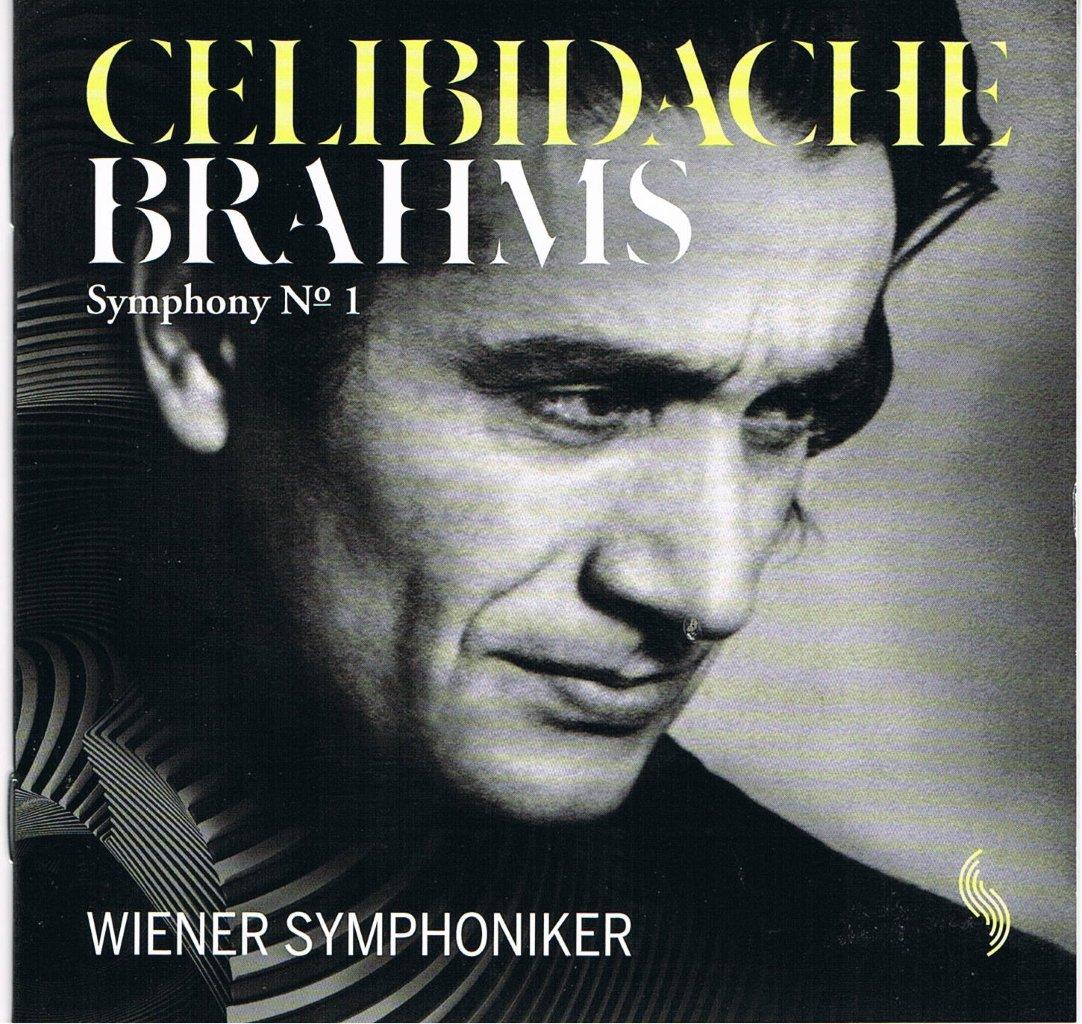
01 CelibidacheMany of us have attended or heard performances of the Brahms First Symphony that for the most part have slipped from memory. As important as it is, this symphony has fallen into the war-horse, crowd-pleaser category and a performance whether heard live or via recordings can appear to be just another work on the program, or a revelation! Granted any first hearing will be a unique experience but one would need to be quite familiar with a few different versions to recognize that a particular new performance is exceptional. Case in point is a new release of a concert performance by the Vienna Symphony Orchestra conducted by Sergiu Celibidache (Vienna Symphony CD, WS002 mono).

Celibidache refused to make commercial recordings, stating that such documents would only reveal how he conducted the work at that time of day, on that date, in that venue ... etc., etc. On the evening of October 30, 1952, in the Konzerthaus, this is how they played! It remains a truly memorable event. The playing is articulate, no slurring, clean winds and brass and no pregnant pauses. The music seems to drive itself. This is a passionate performance directed by a young firebrand and is no way akin to his later settled-in and comfortable versions — from the 1976 Stuttgart RSO (DG) and the 1987 Munich Philharmonic (EMI). This performance remains not a monument to Brahms but a celebration. The mono sound is full bodied and dynamic, typical of the best engineering of the day.

02 Fischer-DieskauAlthough there were others, for the second half of the 20th century and beyond, when one considered performances of Schubert lieder, the late Dietrich Fischer-Dieskau enjoyed his well-deserved prime reputation. Of course, he was also known for his Mozart, Beethoven, Schumann, Hugo Wolf, Mahler and Richard Strauss and others from Bach to Berg and Britten. And he loved to make recordings.

He recorded the three Schubert cycles many times, because, unlike instrumentalists and some conductors, he wanted a wide audience to know how he sang it that day with that accompanist. He talks about this in a charming interview/conversation dating from the 1985 Schubertiade, part of a DVD release from Arthaus Musik of Schubert (Arthaus 107523, 2 DVDs). Die Schöne Müllerin was recorded live in 1991 at the Montforthaus in Feldkirch with Andres Schiff including, as a bonus, the conversation with Franz Zoglauer. Winterreise was filmed a dozen years earlier in Siemens Villa, Berlin in 1979 and includes almost an hour of rehearsal for the recital with Alfred Brendel. So why would this singer require a rehearsal of what was his basic repertoire? As he says on the other disc, different accompanists can elicit different variations in his interpretation and together they work it out. Together, the two DVDs provide a most satisfying evening.
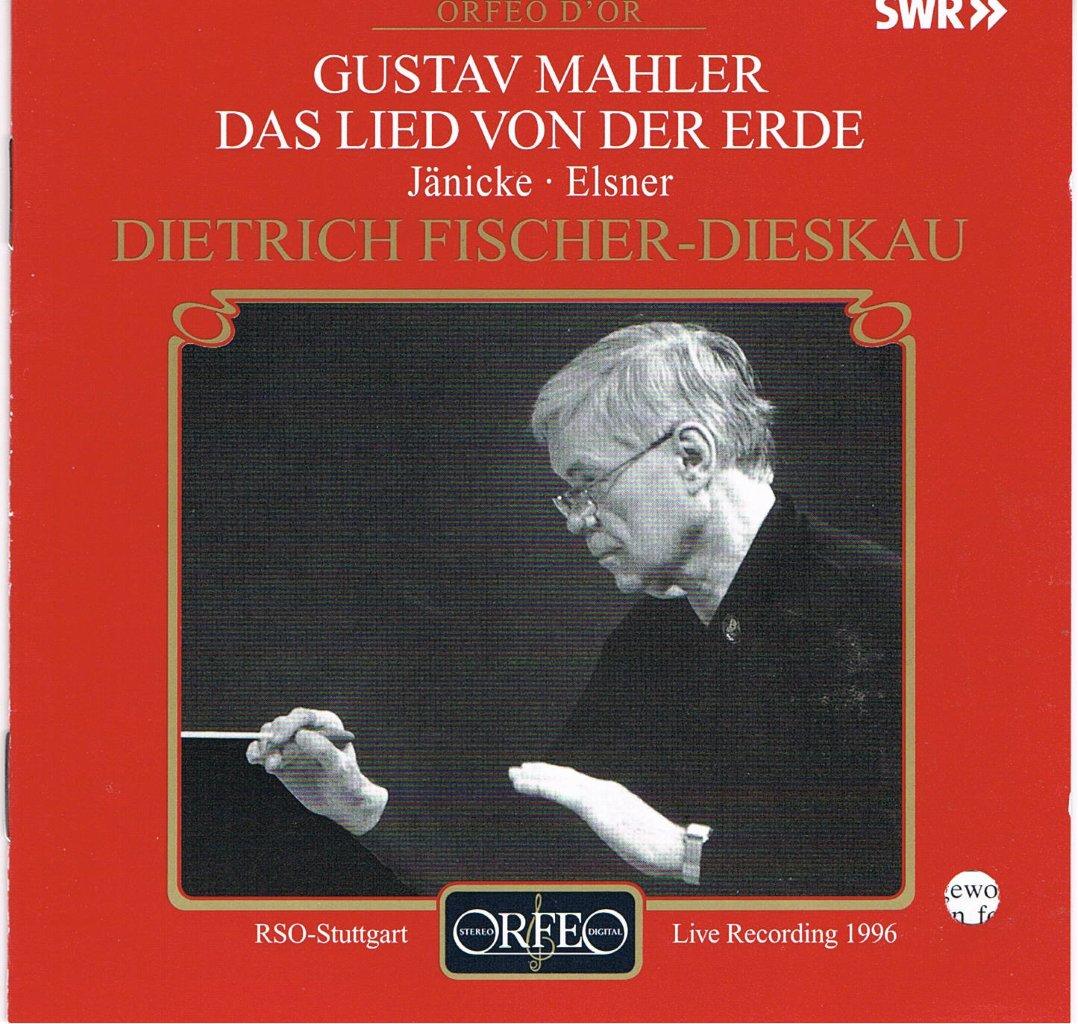
03 Das LiedI must remind readers of what I consider to be the most satisfying recording ever of Das Lied von der Erde: Fischer-Dieskau conducting the Stuttgart Radio Symphony Orchestra with alto, Yve Janicke and tenor Christian Elsner (Orfeo C494001 B). Not surprisingly, the orchestral playing is unusually expressive and much more sublimely lyrical than other versions particularly, but not only in the winds. The overwhelming loneliness and resignation of Der Abschied is heart-breaking. Recorded in concert on June 22 at the 1996 Schubertiade in the medieval town of Feldkirch, this would be one of my ten Desert Island discs.

Alfred Cortot was one of the most respected musicians and pianists of the early 1900s and into the 1950s. His recordings were once the cornerstones in the libraries of Chopin and Schumann aficionados around the world. Cortot was born in 1877 in the Suisse Romande and studied and was awarded in Paris. He was choral conductor in Bayreuth in 1901 and was responsible for the mounting of Götterdämmerung in Paris in 1902 which he also conducted. The Cortot, Casals and Jacques Thibaud Trio had a well-deserved reputation and was in part responsible for elevation of the trio form from the salon to the concert stage. Cortot was a sensitive accompanist for singers and string players alike. He also conducted notable recordings.

Today, perfect technique has become the norm and the prime concern of audiences who, to paraphrase Professor Higgins, don’t care about what instrumentalists play as long as they play all the right notes. Cortot was one of the last musicians from the times when personal and intuitive interpretations overrode minor concern for technical perfection.
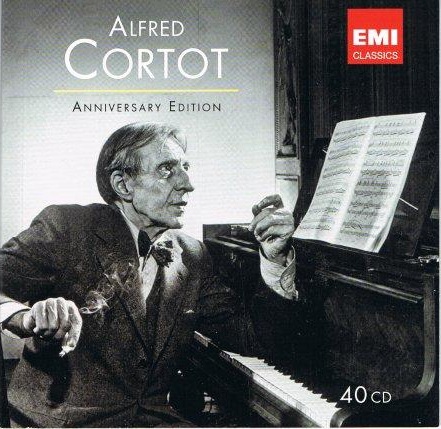

04 CortotThe motherlode of his recordings, Alfred Cortot An Anniversary Edition, contains every EMI recording from 1919 to 1959 including unreleased items (EMI 5099970490725 40 CDS). As of this writing, a complete list of the some 275 works can only be seen at Arkivmusic: arkivmusic.com/classical/album.jsp?album_id=817326.

Chatting about this totally new, all newly remastered set recently, I was asked “Did they leave in all the wrong notes?” Yes, they did.

05 Britten RostropovichICA Classics continues to release DVDs of concert performances featuring Benjamin Britten conducting the English Chamber Orchestra in The Maltings Concert Hall in Aldeburgh as they were recorded for broadcast by the BBC. From June 16, 1968 (ICAD 5025) Mstislav Rostropovich is the soloist in Tchaikovsky’s Rococo Variations Op 33 and the Pezzo capriccioso Op.62. The orchestra plays the Romeo and Juliet Fantasy Overture. Also on this DVD, the orchestra is joined by the Aldeburgh Festival Singers on June 5, 1970, from a performance of a suite from Britten’s Gloriana: The Tournament, The Lute Song (with Peter Pears) and Apotheosis. As this is the only recording of Britten conducting anything from Gloriana it will be of particular interest to collectors. 
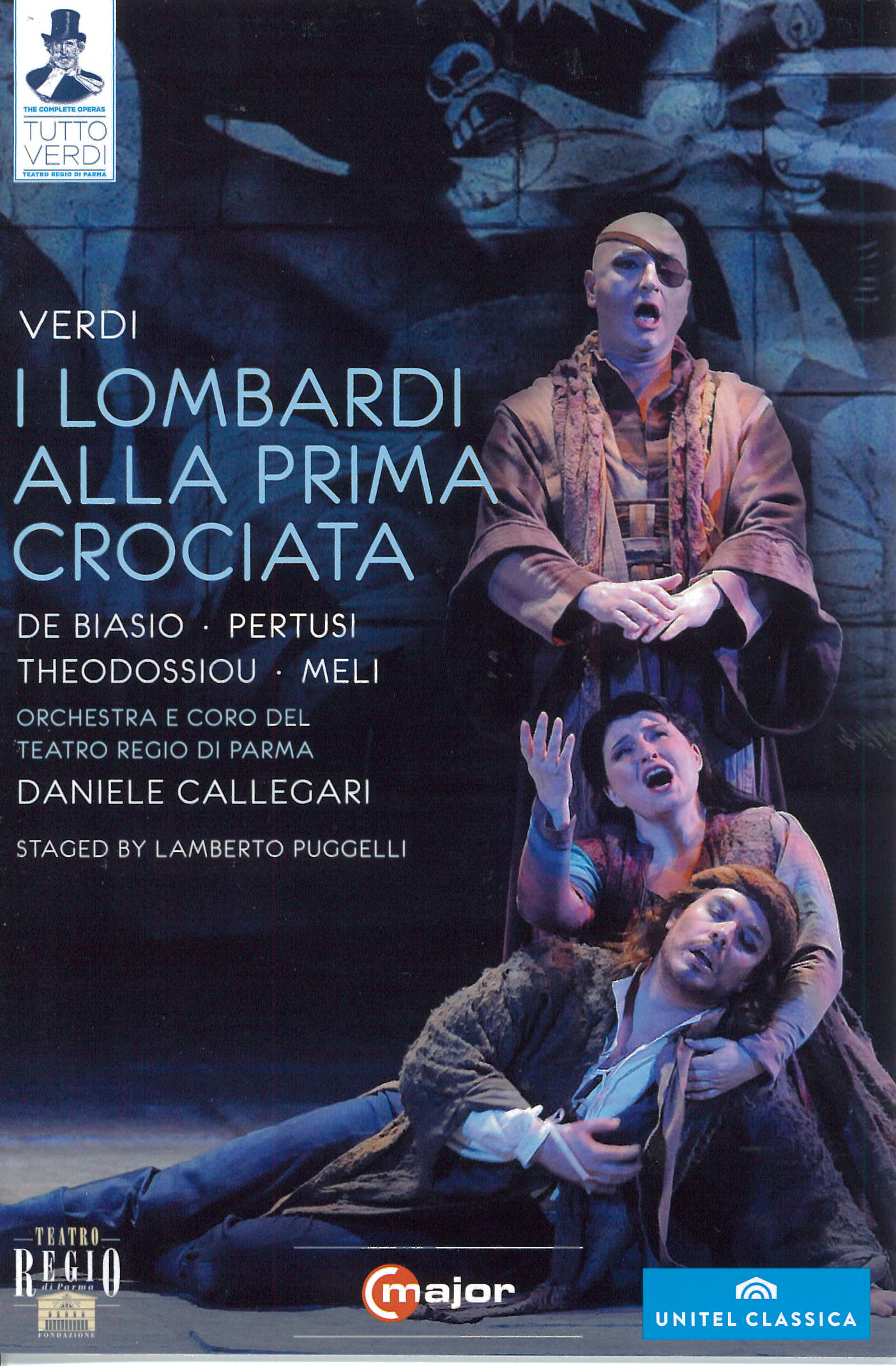
05 Verdi I LombardiVerdi – I Lombardi alla Prima Crociata
De Biasio; Pertusi; Theodossiou; Meli; Orchestra e Coro del Teatro Regio di Parma; Daniele Callegari
Cmajor 720608DVD

In glorious sunshine over the city of Jerusalem and in the background a row of devout Orthodox Jews praying at a Wailing Wall that extends full width across the stage, a rapt chorus in the foreground sings one of Verdi’s most inspired choral creations – Gerusalemme! Gerusalemme! Thus begins the third act of I Lombardi, young Verdi’s fourth opera for La Scala, from 1843.

The core of the story is the tragic love between a Moslem man and a Christian girl elevated by some of the most beautiful singing the not yet 30-year-old Verdi had written so far. The youth, the tenor, unfortunately only sings in two acts of the four, but the role is so rewarding that both Pavarottiand Domingoshone in it. Here, a young Italian, Francesco Meli provides some enchanting moments while the girl (daughter of the leader of the Crusade), Giselda, the dramatic-soprano lead, sung by the formidable Dimitra Theodossiou,soldiers magnificently through all four acts from breathtaking pianissimo solos to fortissimo outbreaks with shattering high notes as in the finale of the second act. To top it all she displays such vocal acrobatics in her fourth act cabaletta that even the brilliant conductor, Daniele Callegariseems visibly delighted.

Choruses feature heavily in this opera, more so than in Nabucco. To my mind Verdi impresses most by these early efforts at ensemble writing he later perfected in Macbeth, Rigoletto and La Traviata, etc. Most notable here is the supremely beautiful trio at the end of Act Three that gives me shivers of pleasure every time I hear it. The underpinning voice in the trio is the lead baritone, Michele Pertusi,the evil brother turned hermit (sung at the Met by Samuel Ramey) whose voice of stentorian power and great sensitivity is so magnificent that all I can say is: “Oh, brother, can he ever sing!!” Overall a memorable production, worthy of Verdi.


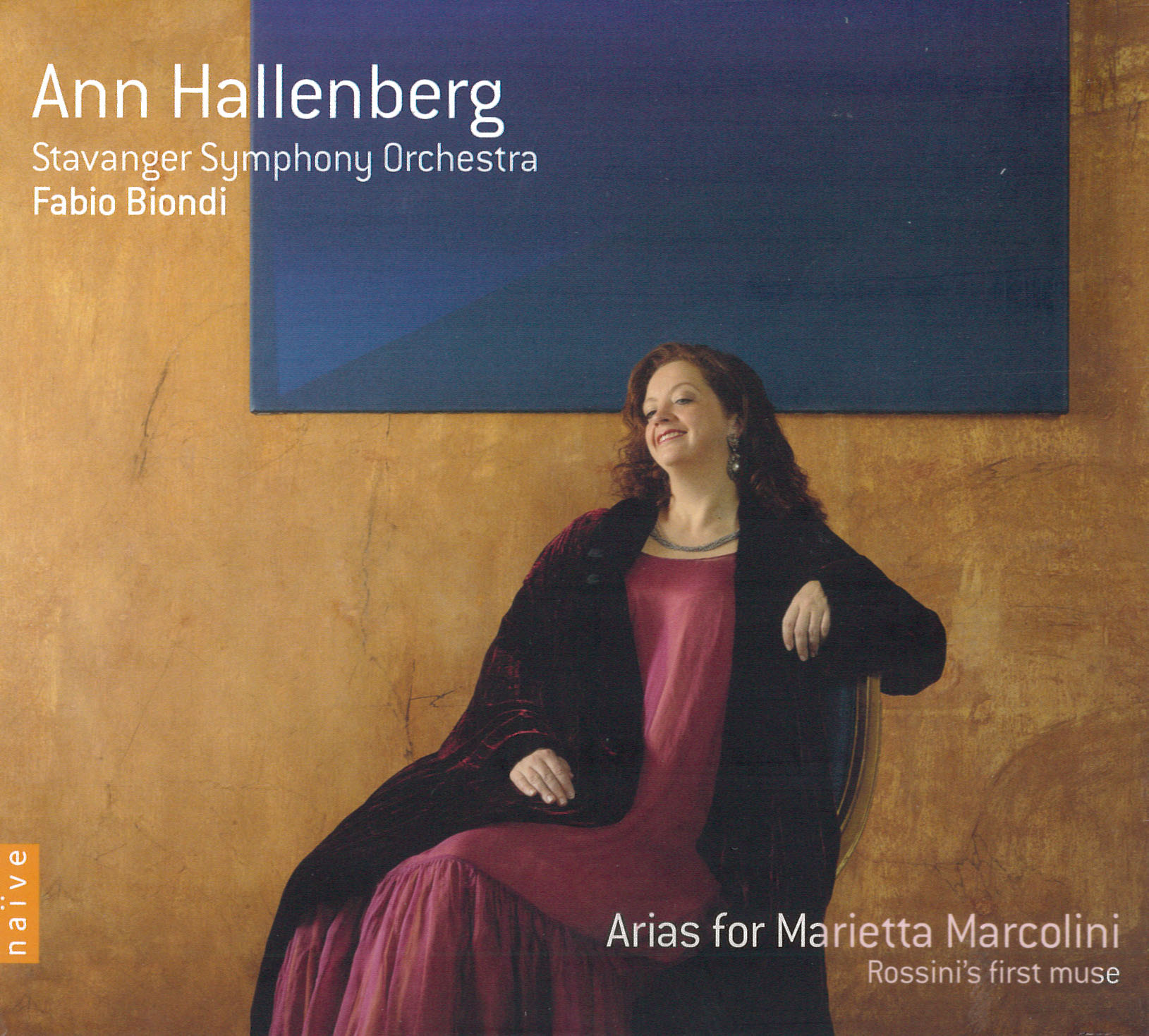
01 Ann HallenbergArias for Marietta Marcolini (Rossini's First Muse)
Ann Hallenberg; Stavanger Symphony Orchestra; Fabio Biondi
Naïve V5309

Noted Swedish mezzo soprano Ann Hallenberg’s new disc on the French naïve label is an interesting collection of arias written originally for a great diva who “set Verona ablaze” with her artistry in the 1810s and 20s, Maria Marcolini. By a fortunate coincidence she entered the life of the teenage Rossini who was just beginning his career and provided such an inspiration and forward momentum that the mezzo-soprano lead became the raison d’etre of his early operas, first and foremost L’Italiana in Algeri, the comic masterpiece from his Venetian period. Marcolini however was an already established singer and she sang in many of the works of Rossini’s contemporaries who in hindsight were never as good as the master himself. Nevertheless, in order to a give a fuller perspective of the period Hallenberg has included a few arias from those operas as well.

Such names as Mayr, Weigl, Paer, Mosca and Coccia are likely to be totally unknown for most listeners but the selections are not without merit and sung with dedication, perfect intonation and technical brilliance.

Generally the same is true for the Rossini arias. In one of my favourites, Per lui che adoro (“The Man I love” – Rossini version), the beautiful espressivo, the lyrical vocal line, the coquettish charm and sensuality, so important in Isabella’s character in L’Italiana, come out well and certainly there is no lack of brilliance in the devilishly difficult Rossinian fioraturas either. Her power, especially in the high registers is glorious. She receives stylish accompaniment from the Norwegian ensemble under Fabio Biondi’s direction.

2013 is rapidly approaching and with it the 200th birthday of Giuseppe Verdi. To celebrate, the C Major label and the Orchestra e Coro del Teatro Regio di Parma have put together a worthy birthday present, DVDs of all his 26 operas plus the Requiem performed to perfection on Italian stages, by Italian singers, conductors and designers. According to critics: “this is how Verdi should be played.” So far from what I’ve seen and heard I definitely agree.

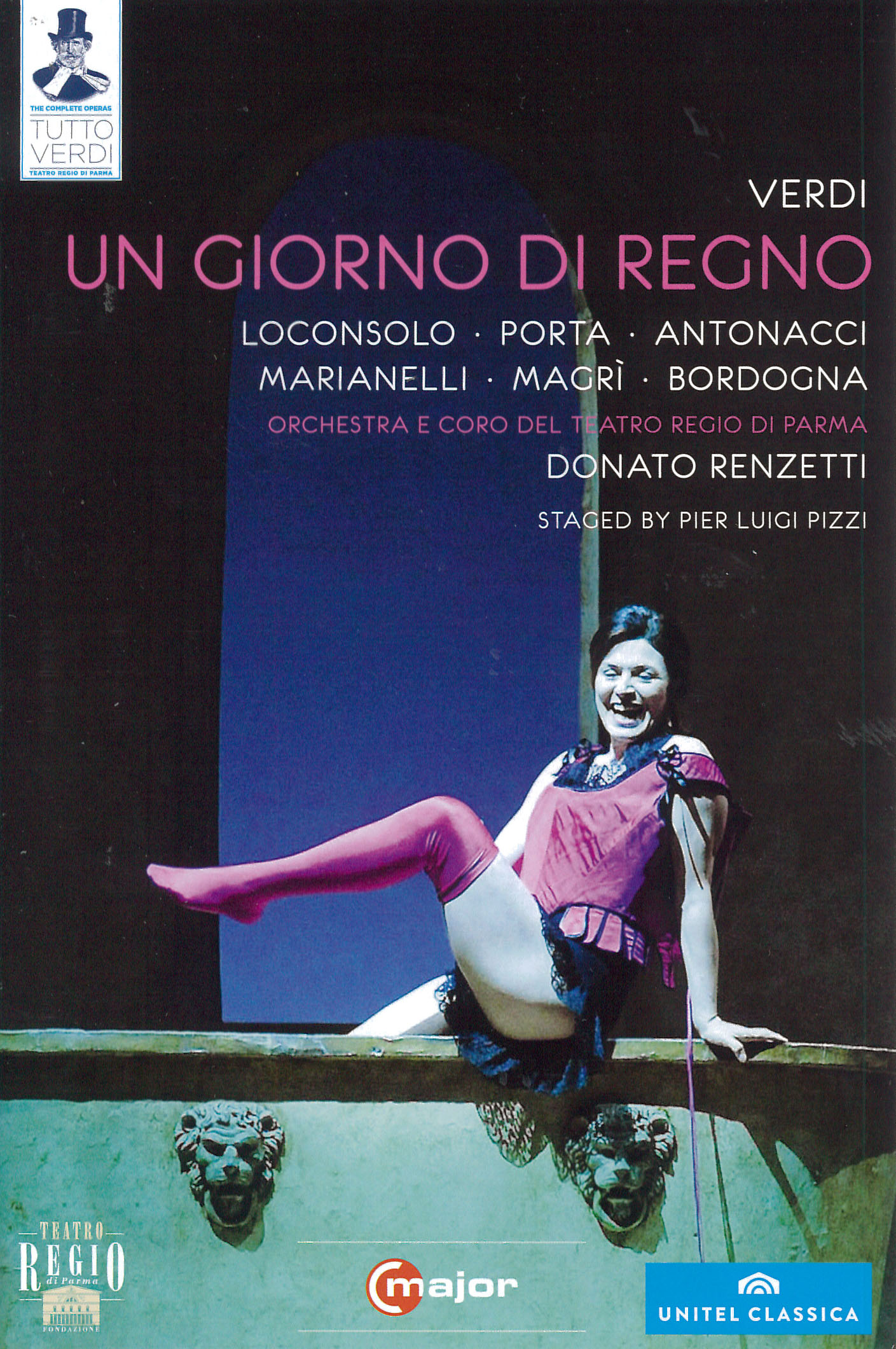
02a Verdi GiornoUn Giorno di Regno (C Major 720208) the 26-year-old Verdi’s second opera for La Scala was a total, unremitting failure. He not only failed miserably trying to write a comic opera, but at the same time lost his wife and two children and was near suicide. He decided never to compose again and the piece was almost ignored until recent years. Seeing this production from Teatro Regio di Parma, a regional theatre of architectural splendour, one is immediately taken by the wealth of catchy melodies, all original, no repeats, the irrepressible upbeat rhythms and hilarious comedy at its best. A connoisseur however would find the influences of Rossini and Donizetti, but at the same time hear premonitions of the master to come (e.g. echoes of the Su vendetta of Rigoletto). Conducted by Donato Renzetti, the production was designed by famous Italian Pier Luigi Pizzi with an elegant, symmetrical renaissance set with ingenious lighting changes following the progress of the day (giorno). Six major voices (four male, two female) mainly all young singers in top form carry the action that never for a moment stands still. It’s unfair to pick a favourite, but I was partial to the lead mezzo Anna Caterina Antonacciwhose vocal power in all registers, beautiful intonation, feeling for nuances and a comic talent could put any mezzo currently basking in glory to shame. The protagonist Guido Locansolois a radiant baritone,looks the part, elegant, regal but relaxed and charmant, a worthy foil for Antonacci.

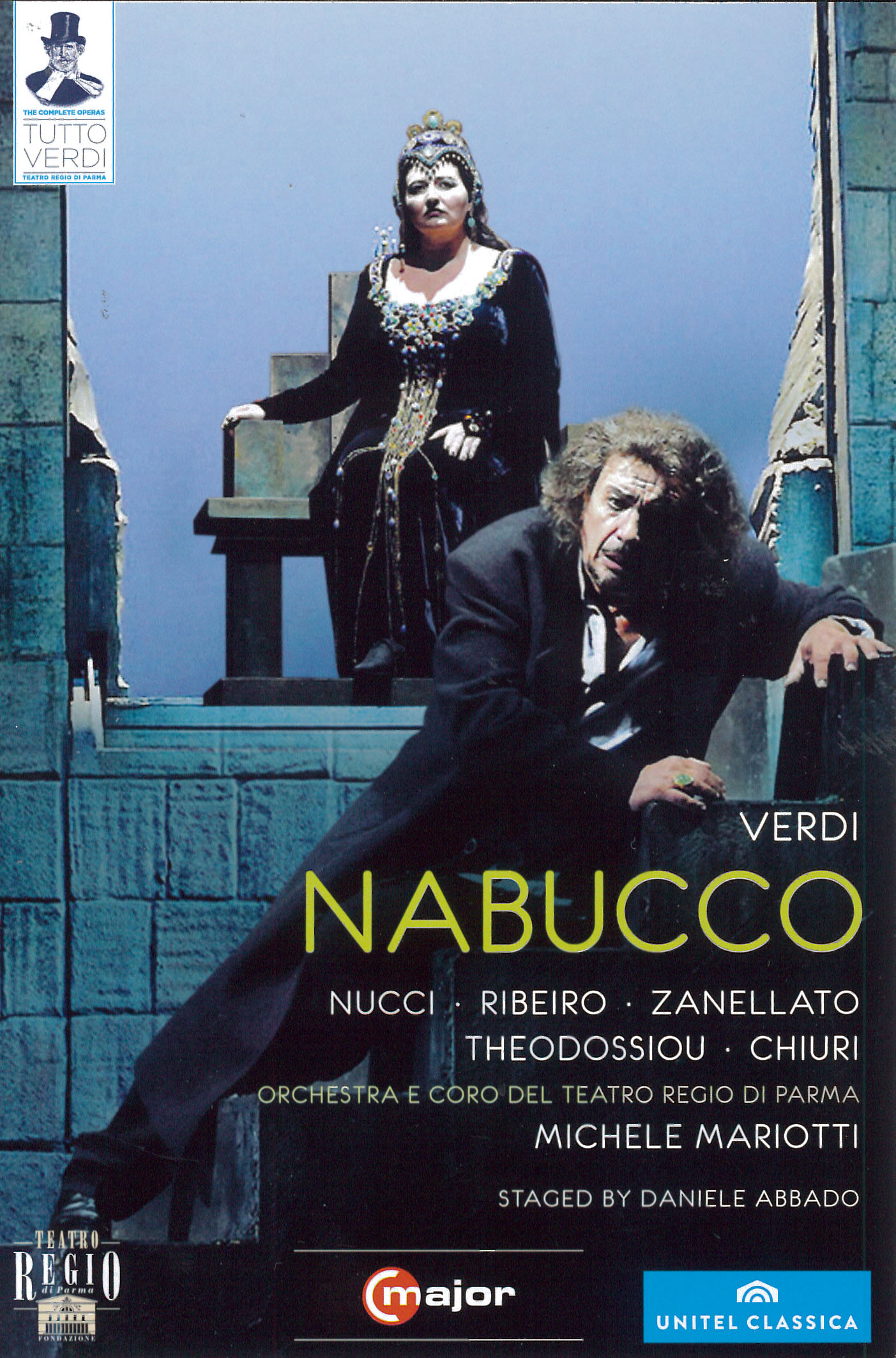
02b Verdi NabuccoThe legend goes that Verdi, driven to near suicide, found a new libretto smuggled into his furnished room but in desperation threw it on the floor. The new libretto, Solera’s masterwork, fell open with the words Va pensiero, sull’ali dorate” (Fly thought on golden wings) and the rest is history. His new opera Nabucco (C Major 720408) became a tremendous overnight success and firmly established his reputation. The opera is conducted with excitement and enthusiasm, beautifully pointed, with soaring melodies and upbeat tempi by a young Italian named Michele Mariottiand sung by youthful, strong voices so that even the lowliest chorister could be a soloist at any world stage. In addition there are two veterans in the principal roles. Leo Nucci as Nabucco is easily the world’s top Verdi baritone (succeeding the legendary Renato Bruson) who is larger than life, with a voice of immense power and touching lyricism. Dimitra Theodossiou takes one of the most murderous dramatic soprano roles in the entire opera repertoire, that of Abigaille, a role usually reserved for the Callases in the past, and simply astounds the audience to a thunderous ovation. A third principal, a stentorian basso with exceptional power even in the deepest registers, is Riccardo Zanellato as Zaccaria, the high priest of Israel. This is a production to cherish. It’s as good as can be and this bodes well for the rest of the series. I can hardly wait!

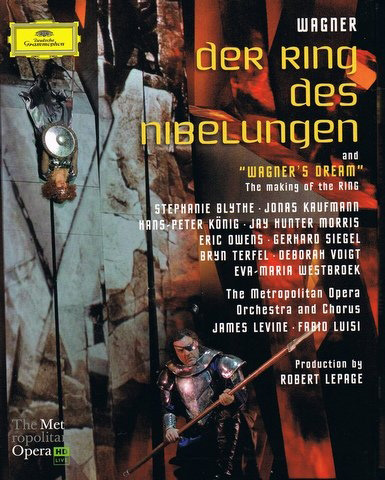
03 Lepage RingWagner – Der Ring Des Nibelungen; Wagner's Dream, a documentary
Robert Lepage; Metropolitan Opera
Deutsche Grammophon 073 4770 (8 DVD) 073 4771 (5 Blu-ray)

This set is derived from the Live from the Met broadcasts from the 2010/11/12 seasons and is the second Ring cycle from the Met for the home screen. The first was the Otto Schenk/Gunther Schneider-Siemssen cycle that was seen on PBS in the early 1990s. While watching these new discs I thought about this earlier set and had a peek. The peek turned into a marathon. Every aspect of that cycle pleases me; the mise-en-scène, the cast and Levine’s direction. It remains the perfect document exemplifying the traditional productions of the last 100 years (DG 073043-9, 7 DVDs).

Dutifully returning to the Lepage Ring, as it is now referred to, was an utterly different experience, drawing undue attention to and distracted by the stage-wide row of planks waving around and wondering what they will do next. Viewing these four music dramas in the theatre over three years, many were disappointed, perplexed and intolerant of such a radical departure from tradition.

Wagner’s Dream is an engrossing, informative documentary of the philosophy, concept and construction of “The Machine,” the brainchild of Robert Lepage. We are in on its fabrication in Quebec and the installation at the Met. Then the inevitable little hitches as stage people, the choreographer and the singers familiarize themselves with this 9,000 pound machine and its ability to produce the desired result. The Machine, it dawned on me, is simply an elaborate new form of scrim, adjustable in countless ways to also provide planes according to the needs of the scenes, while the projected images serve only to evoke the surroundings and not to furnish them. Once the penny dropped, it all seemed so obvious. I no longer lamented the absence of traditional three-dimensional sets but was well aware of the atmosphere and environment.

This was to be Levine’s Ring but due to his declining health he was able to conduct only Das Rheingold (October 9, 2010) and Die Walkure (May 14, 2011). The cycle was completed by Fabio Luisi who had assumed the post of principal conductor of the Metropolitan Opera on September 6, 2011: Siegfried (November 5, 2011) and finally Götterdämmerung (February 11, 2012).

Singers in the principal roles remain constant across the four dramas including Bryn Terfel as Wotan, Stephanie Blythe as Fricka, Hans-Peter König as Fafner and Hunding and Hagen while Gerhard Siegel is Mime and Eric Owens is Alberich. This is Deborah Voigt’s first Brunnhilde and Jay Hunter Morris’ first Met Siegfried but the viewer would never guess it, so “to the manner born” are their performances. I see and hear them as ideally cast. Morris was born and raised in Paris, Texas and in conversation has not lost his charming Texas drawl. The many interviews with each tell their stories.

Jonas Kaufmann appears only in Die Walkure where the attraction of his Siegmund to Eva-Maria Westbrook’s Sieglinde is exquisitely intense. Performances from Voigt, Morris, Terfel and König are outstanding but there are no lesser players. Conversations and interviews with the principals caught between acts in the original transmissions are included as separately tracked extras.

The Met orchestra has been honed to perfection over the years and their enthusiasm and sensitivity can be movingly gentle or strongly dramatic with enormous horsepower where called for.

This unique set will be irresistible for many Ring fans, and diehard traditionalists may be pleasantly surprised.


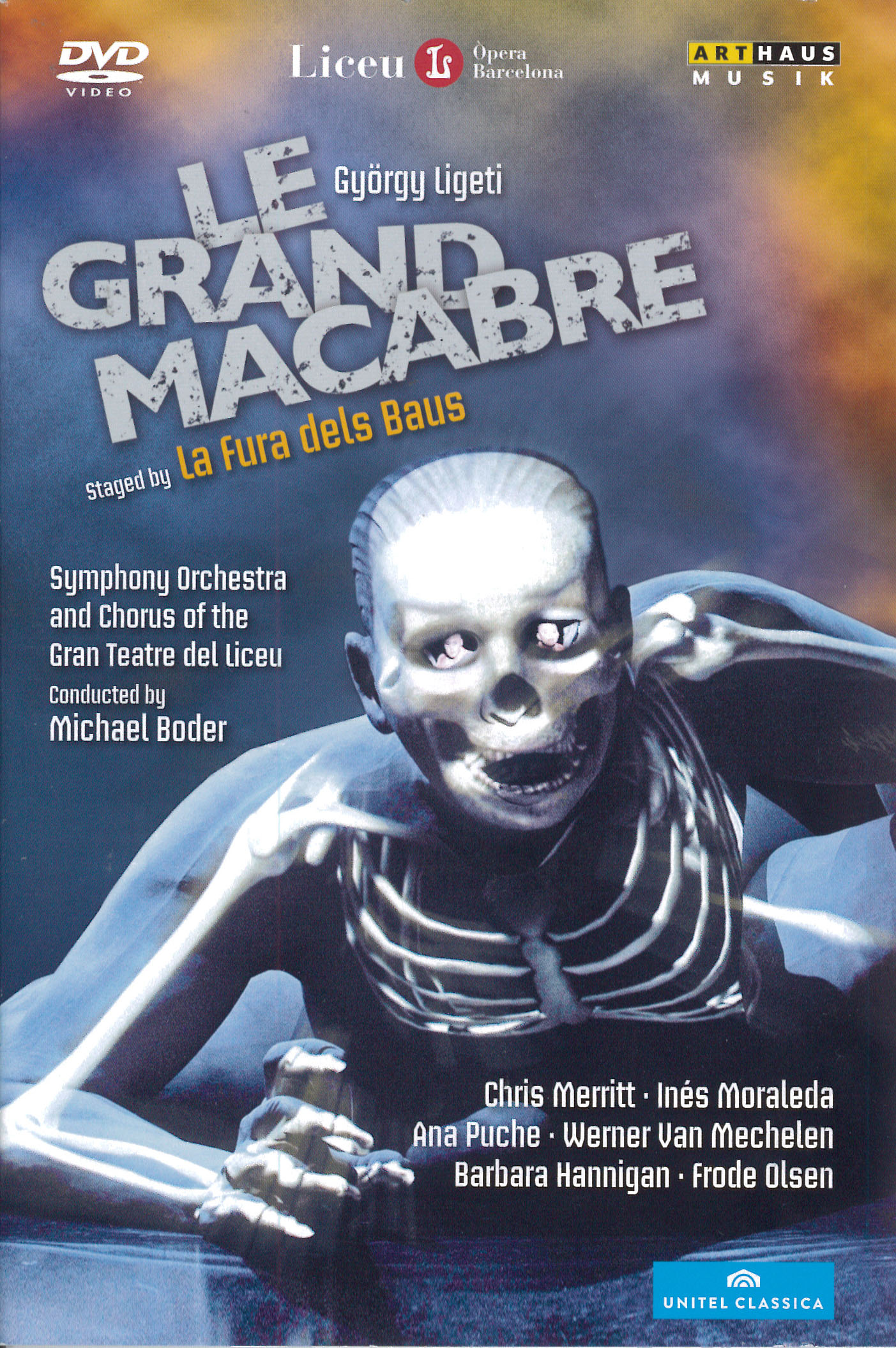
04 Grand MacabreLigeti – Le Grand Macabre
Chris Merritt; Ines Moraleda; Ana Puche; Werner Van Mechelen; Barbara Hannigan; Frode Olsen; Symphony Orchestra and Chorus of the Gran Teatre del Licau; Michael Boder
ArtHaus Musik
101 043

Ligeti owes some of the popularity of his music to futuristic images: the hypnotic passages in Stanley Kubrick’s 2001: A Space Odyssey were incredible background to Ligeti’s music. It is then little wonder that a combination of his difficult, relentless and entrancing music, with fascinating and at times shocking staging by La Fura dels Baus, results in such an explosive combination. The La Fura ensemble is Europe’s answer to the theatrical wizardry of Robert Lepage’s ExMachina. After a visually stunning production of Weill’s Mahagonny on the same label, Le Grand Macabre sets the bar even higher. The stage, dominated by a female shape, vaguely reminiscent of Picasso’s large-boned nudes, is transformed by tricks of light and projections into a phantasmagoria of nightmarish images, truly a “Grand Macabre.”

The tale of a false prophet of an impending apocalypse was written by Ligeti between 1974 and 1977, but he completely reworked it in 1996. Opera as a genre forces Ligeti to accommodate the most difficult of instruments, the human voice. Hence the presence of both melody and tonality in this intense work. The striking visuals will transfix even the most reluctant modern opera followers, but this is not to say that the singing is not amazing. Werner Van Mechelen inhabits the role of Nekrotzar, the prophet of doom, with ease and class, while Barbara Hannigan as Gepopo and Brian Asawa as Prince Go-Go shine in their respective roles.

This is certainly not a production that leaves the listener toe-tapping or humming a familiar aria. Instead, one will be forced to think, reflect and then put the DVD back on. Such is the power of Ligeti’s music and futuristic imagery.


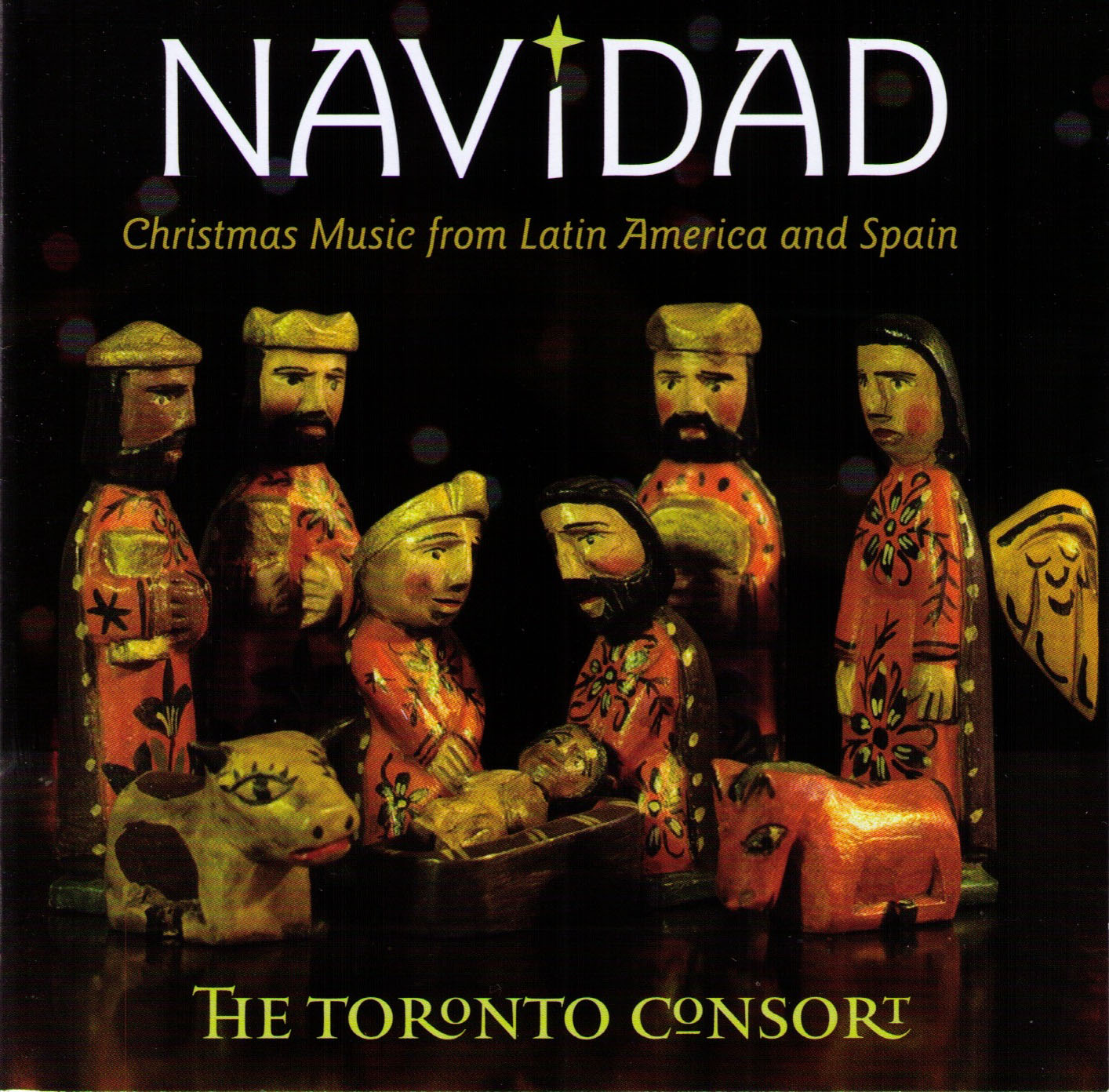
05 Navidad Toronto ConsortNavidad
Toronto Consort; David Fallis
Marquis MAR 81435

The Toronto Consort’s Christmas offering this year features villancicos and dances from 16th and 17th century Latin America and Spain. More earthy and fun than the more formal church music, the villancico traditionally mimicked ethnic speech patterns and was accompanied by folk instruments. So, true to form (and similar to the Toronto Consort’s treatment of early popular English music), some of the stresses and pronunciation you hear in selections such as Riu, riu, chiu may at first sound a little rough around the edges, but serve well to portray the joyful, lusty nature of the peasant class. In fact, as pointed out in David Fallis’ detailed liner notes, people actually got up in Church and often danced to these, “much to the consternation of church authorities.”

Other songs on this disc, such as the sweet and tender lullaby Xicochi and the mystic Ay, luna que reluzes provide a lovely contrast to soothe and inspire. The players have picked up some less familiar instruments suited to the repertoire, with Terry McKenna and Lucas Harris on vihuela (shaped like a guitar, tuned like a lute), Julia Seager-Scott on baroque harp and Dominic Teresi on bajón (an instrument similar to the bassoon). With lively notes as well as lovely voices and good-humoured too, this is an excellent recording to liven up the Christmas season.

The Toronto Consort performs Michael Praetorious’ Mass for Christmas Morningat Trinity-St. Paul’s Centre on December 14, 15 and 16.

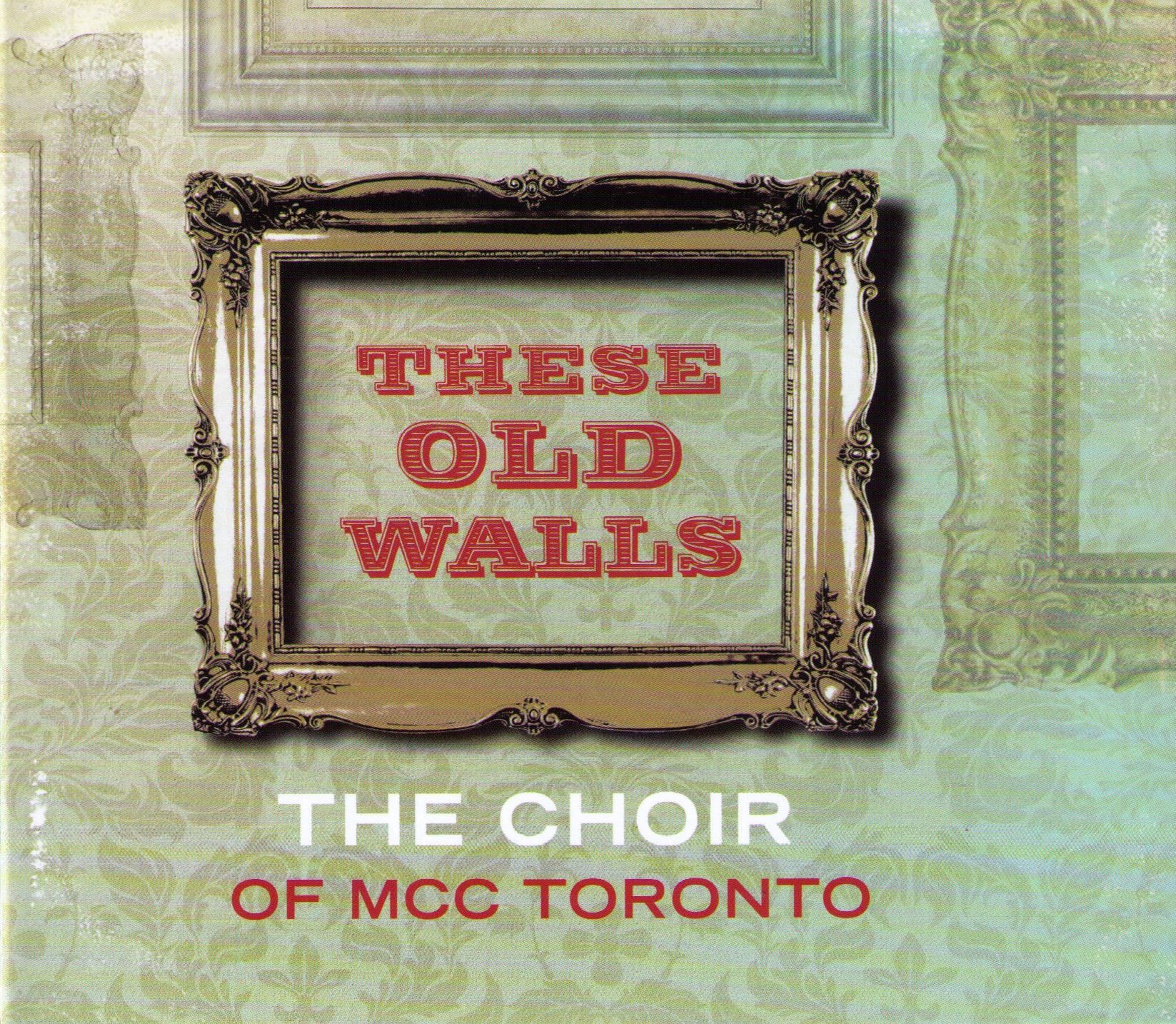
06 These Old Walls MCC ChoirThese Old Walls
The Choir of MCC Toronto
Independent (www.mcctorontochoir.com)

It is a joy to hear a group with so much heart, energy and enthusiasm as this 50-voice community choir based at the Metropolitan Community Church of Toronto and led by Diane Leah. This is the same choir who gave Jack Layton such a wonderful send-off last year at the public celebration of his life. In fact, listening to this recording, I was struck with an incredible feeling that love, hope, healing and reconciliation are truly at the heart of this community.

This choral collection of hymns, anthems, spirituals and popular songs is nicely complemented with the addition of soulful singer Stephanie Martin, cellist Amy Laing and bassist George Koller with Tom Jestadt and Paul Ormandy, drums/percussion, and Colleen Allen on sax/flute. Also adding to the musical interest are breakout groups from within the choir who’ve chosen some good numbers and great names: Pride & Joy singing the title track, Tet’atet with All through the Night and the A-Men performing Billy Joel’s Lullabye (Goodnight, my Angel). And it’s not often one gets to hear a Cuban folk song like Son de Camaguey in the same program as call & response song John the Revelator, a piece so rousing that one might very well have to mind These Old Walls lest they come tumbling down!

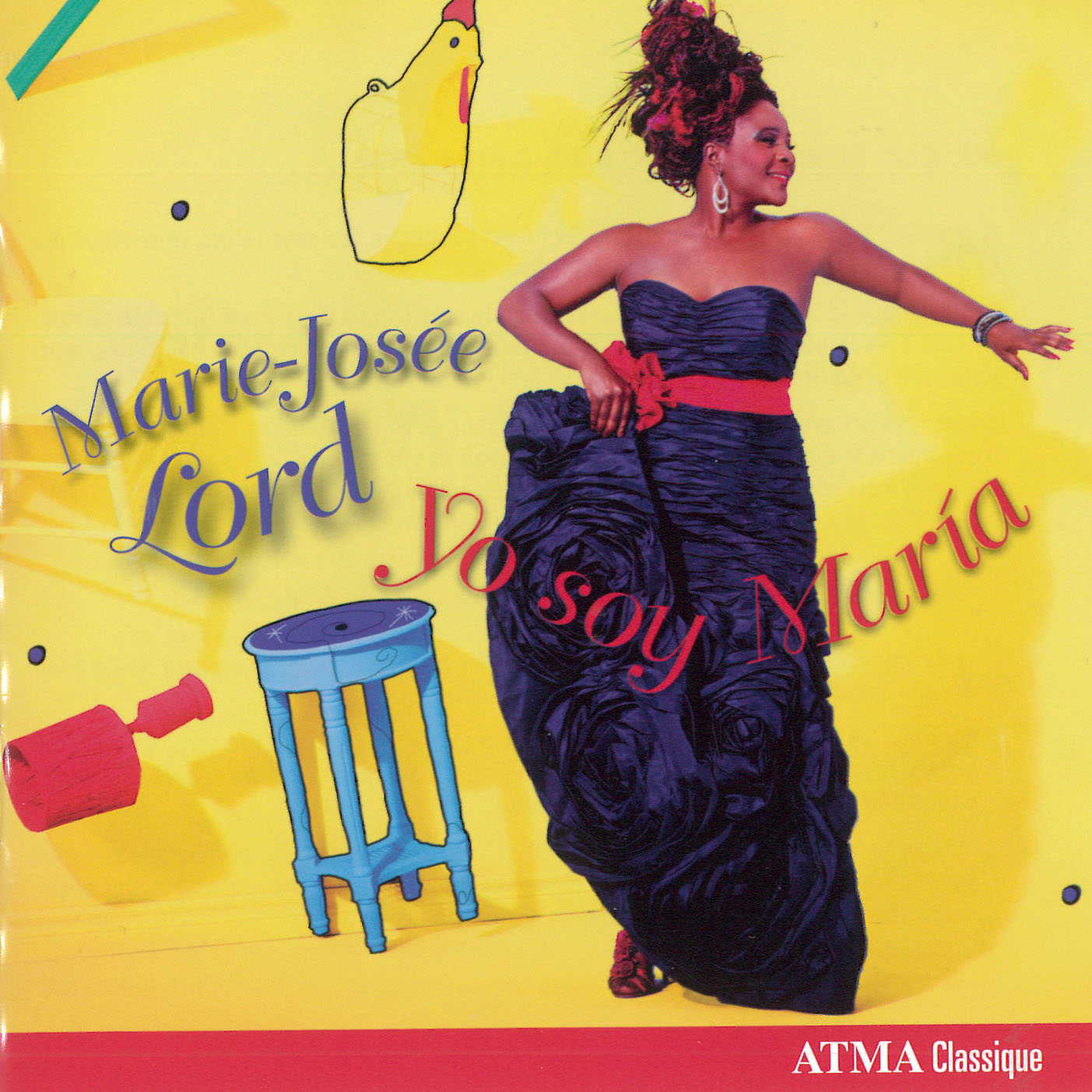
07 MJ LordYo soy Maria
Marie-Josée Lord
ATMA ACD2 2663

Yo soy Maria is the follow-up album to the JUNO-nominated, stunning debut, self-titled Marie-Josée Lord. As such, it may display just a touch of the sophomore slump. Lord is a popular artist. She makes that very clear at every appearance, including the recent, standing room only and filled with standing ovations, Toronto debut at Koerner Hall. She rejects the label of opera diva in her pre-concert intro and later interjections from the stage. Whatever her protestations (which the audience clearly loved), SHE IS A DIVA. That is mostly by virtue of her incredible voice, the sharp-as-a-blade, soft-as-velvet dramatic soprano that absolutely amazes not just with its power and range, but most of all, the precise control so apparent in the quiet moments. If you were to combine the voices of Jessye Norman and Renée Fleming, with a dash of Maureen Forrester, you just might create something akin to Lord’s apparatus, but it is very much an original voice, not imitating or emulating anyone else.

Lord embraces music of all provenance, from operatic arias to popular songs and renders it all her own. On her new album, the eyebrow-raising chestnuts such as Besame mucho sound interesting all of a sudden. Kyrie from Misa Criolla is a tour de force, but the Aria from Bachianas Brasileiras No.5 does not reach the sublime heights achieved by Bidu Sayao or Arleen Auger. Overall, I still get the impression that Lord is most comfortable in French, her native tongue. Despite that, in concert she was a credible Violetta and incredibly moving Rusalka. Something tells me a third album is afoot. It will, of course, be a bestseller, just like the other two. She is, after all, a popular artist with a fantastic voice.

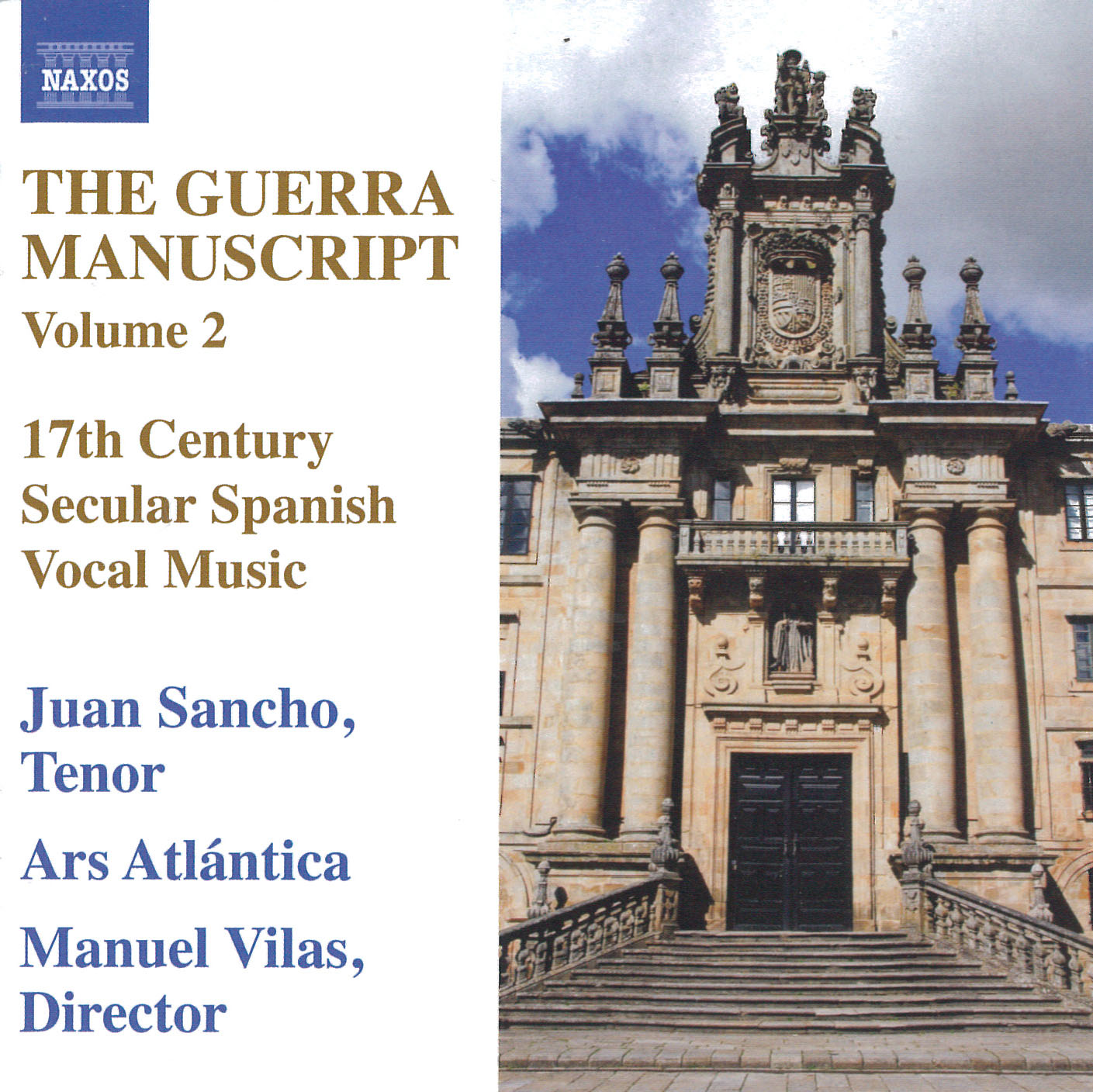
01 Guerra Manuscript 2The Guerra Manuscript Volume 2: 17th Century Secular Spanish Vocal Music
Juan Sancho; Ars Atlántica; Manuel Vilas
Naxos
8.572876

The University of Santiago de Compostella’s libraries are an indispensible source of information regarding Spanish music. Many tonos humanos (secular songs) were copied by José Miguel Guerra; his name is given to the Guerra manuscript. It is Ars Atlántica’s aim to record all 100 of these tonos humanos.

 In this recording the instruments accompanying tenor Juan Sancho comprise a two-course Spanish harp based on a 1704 original – a highly contemporary touch – and a four- and five-course pair of guitars based on originals even older than the manuscript!

 From the start Juan Sancho’s clear Spanish tenor voice brings the songs to life. Juan Hidalgo’s Ay de mi dolor, despite its sorrowful title, places varied demands on Sancho’s vocal range. This is comforted by what immediately follows, Dichoso yo que adoro, in turn benefiting from the guitar accompaniment. It was rare for instruments to be specified but harp and guitar are known to have been used frequently. As an example, Hidalgo exploited the range of both tenor and baroque harp in his La noche tenebrosa.

 Many of the songs on this particular recording are of anonymous composition. Frescos airecillos with its beautiful guitar embellishments is one such example; what a shame that we do not know who composed this beautiful and expressive piece.

 Among the composers who can be identified (sometimes by similar songs appearing in other manuscripts where they are attributed) are Hidalgo and José Marín. The latter exploited his talents as a tenor, composer and guitarist to write Amante, Ausente Y Triste, although the notes in this recording indicate he did not have too much time for composing, having been sentenced to exile and the galleys!

 All of the songs in the Guerra manuscript will be recorded in this series – they will form a joyful and informative contribution to our knowledge of the Spanish Baroque.


02 Messiah TafelmusikHandel – Messiah
Karina Gauvin; Robin Blaze; Rufus Müller; Brett Polegato; Tafelmusik Baroque Orchestra and Chamber Choir; Ivars Taurins
Tafelmusik TMK1016CD2

Handel's Messiah was first performed in Dublin in 1742 and in London on numerous occasions between 1743 and 1759. After Handel's death, performances grew larger in scale, culminating in the Crystal Palace performance of 1857 with its 2,500 musicians. Something of that big band effect can be heard in the performances conducted by Sir Malcolm Sargent. In his 1959 recording his tempi are ponderous with huge rallentandos at the end of movements. He also re-orchestrated a great deal of the work.

A major event in the recording history of Messiah was the performance conducted by Charles Mackerras in 1966. Mackerras used modern instruments but nevertheless communicated his understanding of baroque performance practice. Soloists were encouraged to decorate their parts, something heard to especially fine effect in Janet Baker's handling of the da capo in He was despised. Since then there have been many historically informed performances: my own preference is for the one conducted by William Christie. Just listen to the buoyancy of For unto us a Child is born or to the radiance which Barbara Schlick brings to I know that my Redeemer liveth.

The new Tafelmusik recording holds up well. The orchestra and choir are excellent. As for the soloists, tenor Rufus Müller is very good, baritone Brett Polegato is outstanding and soprano Karina Gauvin is out of this world. I am of two minds, however, about the countertenor: he is good in O thou that bringest good tidings, but He was despised drags and other arias need greater evenness than Robin Blaze brings to them.

Over the years Tafelmusik made a number of recordings for Sony. Many of these have been deleted but some of them have been brought back by Arkivmusic and now by Tafelmusik's own label. This recording is new, however, and it is also the first live recording of the orchestra. I hope that there will be many more. The achievements of Tafelmusik have been immense and further recordings should bring them to the attention of a wider audience.

Tafelmusik’s annual Messiah performances take place at Koerner Hall December 19 through 23.


03 Brandenburg ShostakovichBach - Brandenburg Concertos; Shostakovich – Preludes (arr. Maute)
Ensemble Caprice; Matthias Maute
Analekta AN 2 9996-7

The Montreal-based recorder/flute player, composer and conductor Matthias Maute has established himself as one of the country’s finest baroque musicians and his Ensemble Caprice maintains a busy annual touring and recording schedule. The oft-recorded Brandenburg Concertos are given lively performances by Maute and his excellent Montreal colleagues, with stellar work from violinist (and violist in the sixth concerto) Olivier Brault, oboist Matthew Jennejohn, trumpeter Josh Cohen and, perhaps especially, harpsichordist Erin Helyard, who handles the challenging solo part in the fifth concerto with elegance and style.

There is a certain hyper-energetic quality to the playing that is at first attractive, but can become exhausting. Maute’s approach, even in the slow movements, is aggressive and rustic, with extreme dynamic contrasts, accents and abrupt endings to phases and – sometimes – whole movements. This is certainly not easy listening, but it gives a fresh, honest and immediate feel to the music making, emphasizing the improvisatory nature of Bach’s music.

Maute’s liner notes are fanciful and entertaining, as he analyzes each concerto in terms of instrument hierarchy, trying to prove that Bach was making subversive political statements with these pieces.

Each concerto is preceded by a short work by Shostakovich, originally for piano, but orchestrated by Maute especially for the Bach forces. These preludes (and one fugue) were apparently inspired by Shostakovich’s adjudication of the 1950 International Bach Competition and his admiration of the Well-Tempered Clavier. The performances are tremendously successful and their inclusion lends a special flavour to the whole program.

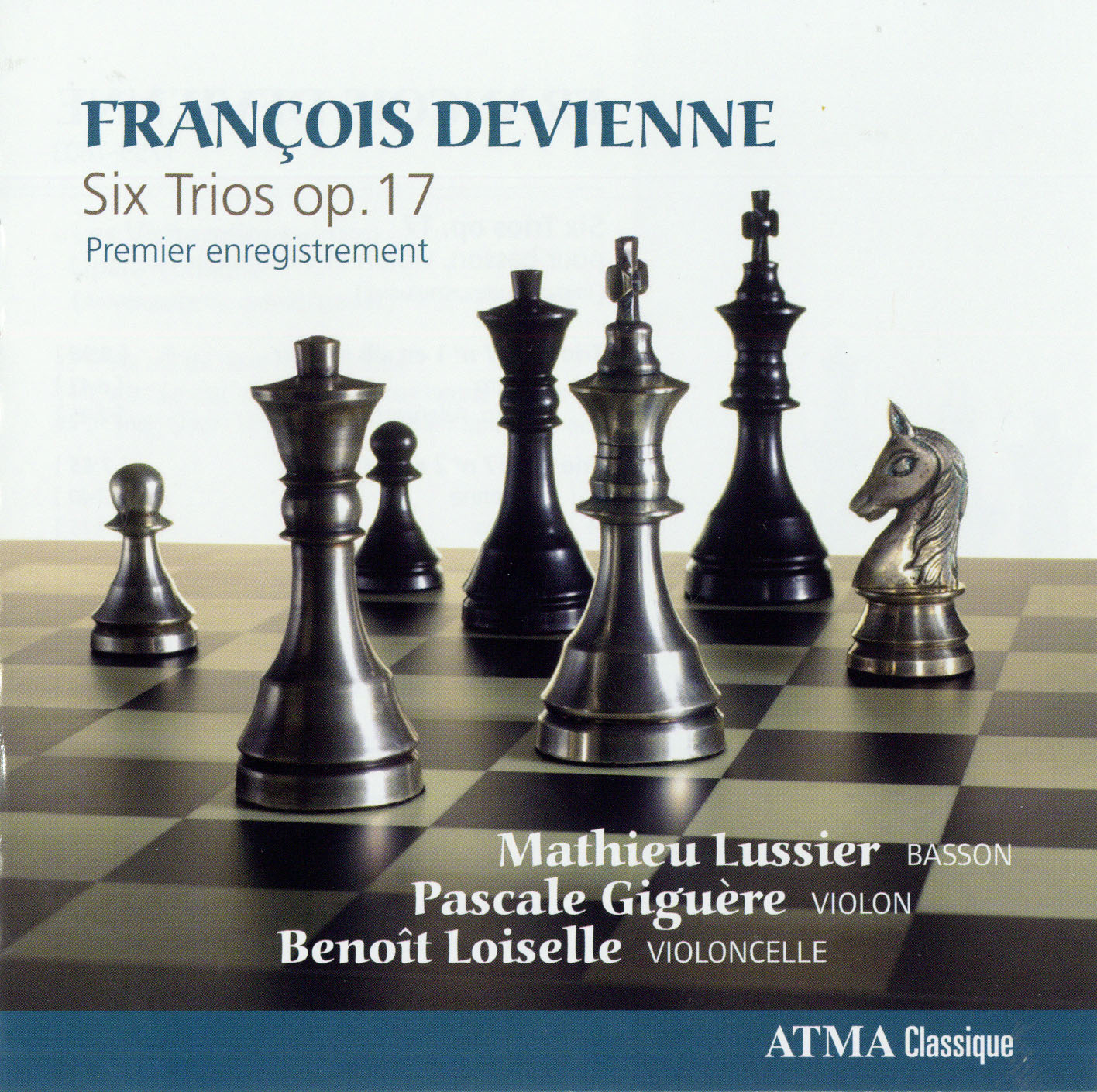
01 DevienneDevienne - Six Trios, Op.17
Mathieu Lussier; Pascale Giguère; Benoît Loiselle
ATMA ACD2 2583

Although François Devienne (1759-1803) was quite well known in France in the late 18th century, he has received little attention in recent times. Devienne was a very prominent bassoonist and flutist in the royal court of France prior to the French Revolution. For five years he was a member of Cardinal de Rohan’s household orchestra, a group popular with Queen Marie-Antoinette. During the period of the revolution, bands and orchestras changed names many times and Devienne seems to have spent that time in military bands only to emerge as a professor at what is now the Paris Conservatory.

This series of Six Trios Op.17, for bassoon, violin and cello, has never been recorded before. So we owe a debt of gratitude to Montreal bassoonist and conductor Mathieu Lussier for bringing these delightful works to our attention. At all times Mathieu Lussier’s bassoon playing is flawless. His articulation is crisp, clear and dazzling in the fast passages and his tone is full and rich with a lyrical quality rarely heard on bassoon.

While this CD definitely highlights the bassoon, Pascale Giguère on violin and Benoît Loiselle on cello certainly don’t take a back seat here. There is an almost seamless transition between the performers as each takes centre stage with the melody. It’s a unified ensemble. Throughout, the strings make limited use of vibrato as befits the genre. With eyes closed, one is easily transported back to the household of Cardinal de Rohan or the Queen before the violence of the revolution.

In addition to the six trios, the CD contains transcriptions of three airs from Devienne’s opéra comique Les Visitandines. For these selections, the trio is augmented with a viola in the capable hands of Jean-Louis Blouin. These provide a pleasant contrast, yet remain in the spirit of the musical times when they were written and performed.

As one who has, in the past, struggled with the diabolical fingering system of the bassoon, I have two very mixed reactions. Is the virtuosity displayed by Mathieu Lussier a challenge? Do I get my bassoon out of its case and practice diligently as I once did, or do I advertise a bassoon for sale? In the meantime, I will enjoy this CD of delightful happy music performed by true virtuoso musicians.

Christmas came early for me with the release of so many new Beethoven sonata CDs. Each pianist has done an exemplary job in recording their interpretation of the Beethoven masterpieces and I wish I could write more. All of these releases deserve detailed critiques. Some CDs resonated more with me than others but it is an entirely subjective reaction. All performances were impeccable musically and technically. However, we all respond differently to the individual voices and inflection of each performer’s unique phrasing and tempo. In fact we are listening to each pianist translate Beethoven’s musical speech. Music as a language has been a constant metaphor throughout the centuries before and after Beethoven. Greeks and Romans associated music with spoken rhetoric and musical execution may be compared with the delivery of an orator. By way of the spoken voice or musical gesture, performers hope to capture the hearts and attention of their listeners and arouse or quiet their passions by transporting them to a sublime musical experience. As pianos improved with more rapid decay of sound, quick and efficient damping and variation of timbre from one register to another, Beethoven began writing for the articulate brilliance of a “speaking music.” He also immersed himself in the treatises of authors such as Johan Mattheson and Emanuel Bach, discovered from reading ancient rhetoric by the Greek and Roman writers. Beethoven learned through the classical oratory to describe music as gestural art and cultivate the art of eloquent musical discourse and musical declamation. Here are the pianists who spoke to me in their Beethoven CDs.

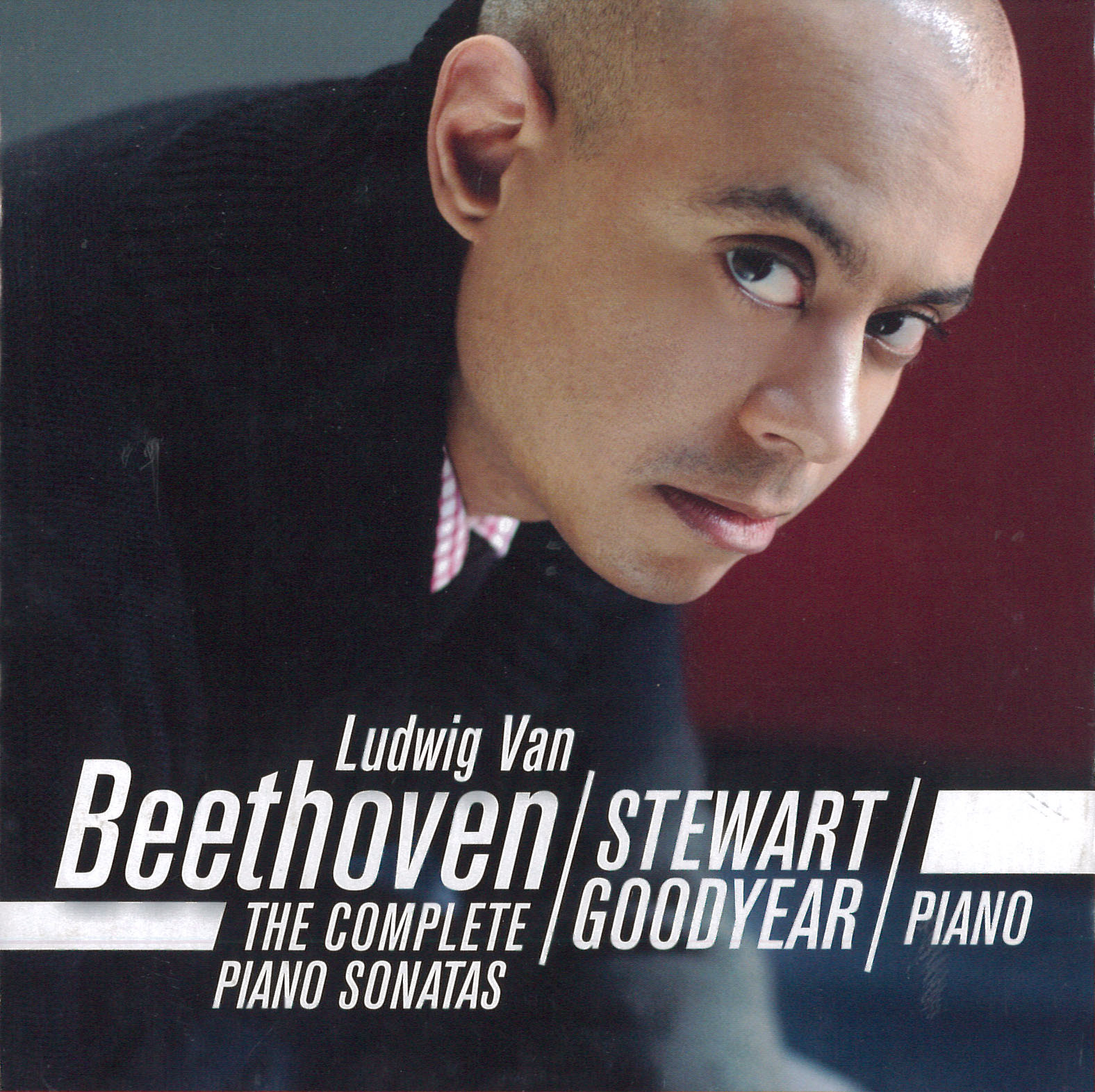
02a GoodyearStewart Goodyear: Beethoven – The Complete Piano Sonatas (Marquis MAR 513) I had the pleasure of hearing Stewart Goodyear perform the entire set of Beethoven Sonatas at a marathon in Koerner Hall last June. He is an amazing pianist with formidable technique, stamina and fortitude. His talent is promethean and his playing eloquent and polished throughout the set. Like an orator, Goodyear takes you on a dramatic operatic journey, embracing every nuance and detail. Beethoven had carried the declamatory style into the new century with articulative tools such as legato and slurs crossing bar lines to subsume points of arrival. Beethoven used speech-mimetic effects in his keyboard works in order to approximate speech articulation. According to Czerny, he adopted the methods of singers and recommended putting words to passages or listening to string or wind instruments. Goodyear has given much thought to the form and structure of each sonata. I might quibble here and there about certain tempi or tonal nuance but his level of artistry is truly exceptional. His command of the keyboard and depth of emotion, especially in the last five sonatas is moving and intense. Like a good book, once you start listening it is difficult to stop and that is a remarkable accomplishment for this young artist.

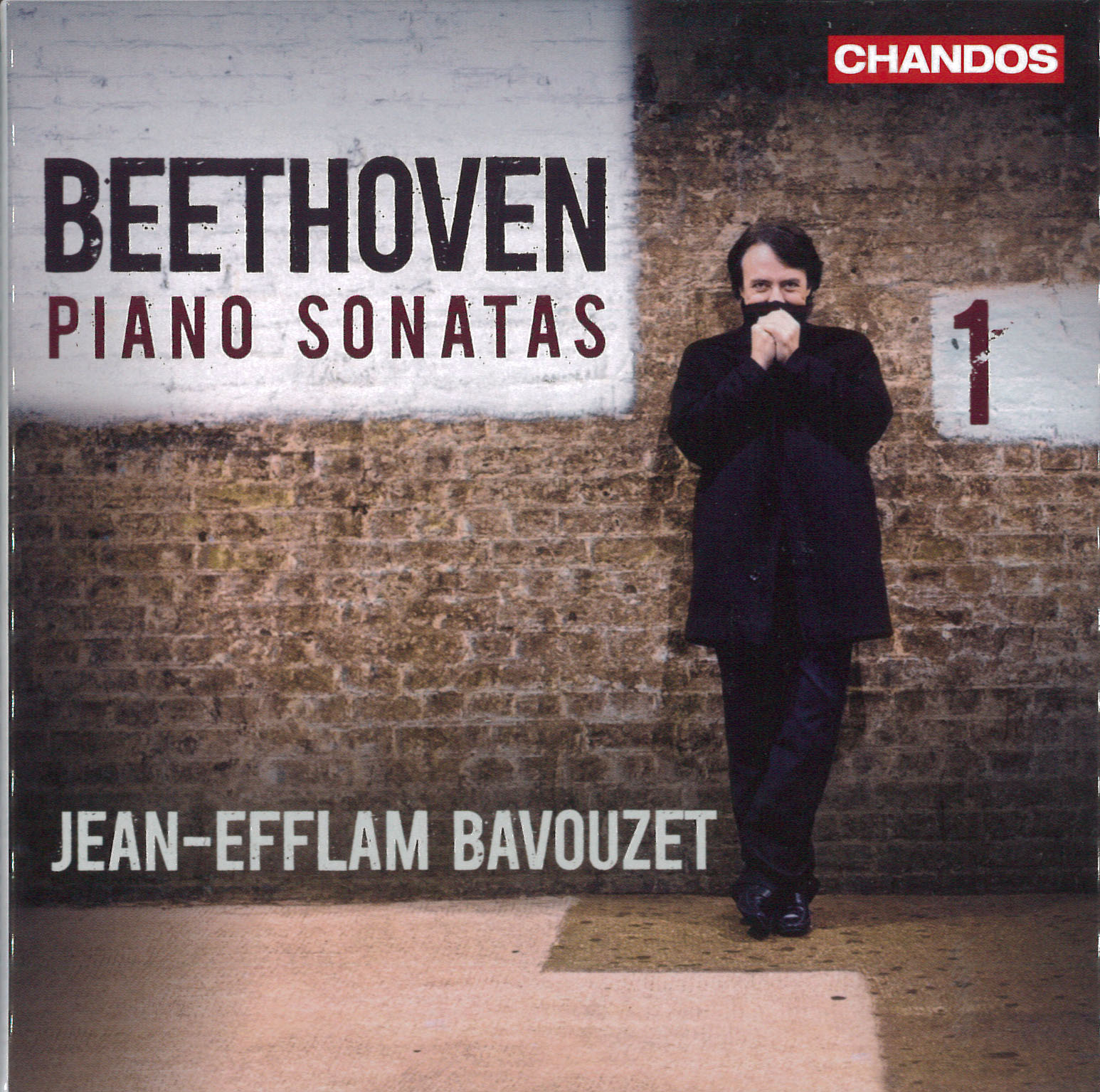
02b BavouzetJean-Efflam Bavouzet: Beethoven – Piano Sonatas Volume 1 (Chandos CHAN 10720) I love these three CDs. They spoke to me on so many levels. The warm, velvety sound Bavouzet achieves suggested an intimate conversation, almost whispered at times. More robust movements were lively but enveloped in honeyed tonal colours. I was mesmerized and hypnotized by the tenderness and sensitivity in his playing. Every phrase, every nuance and ornament was lovingly played. Bavouzet’s shaping of phrases was fluid and his articulation superb. The cantabile lines sang and the quiet, tranquil movements were introspective. The faster, more robust movements had great energy and pulsed with rhythmic inflection. The piano writing in the early sonatas embraced a multitude of textures, borrowing from the symphonic style, string quartet and other chamber music. Bavouzet emphasized this in his playing. In his program notes he is as articulate as in his performance. He asks the question: “Why record more Beethoven?” “And if Beethoven’s music is still alive within us and continues to inspire and inform us about how we relate with the world, is it not absolutely crucial that we should be alert to its enduring vitality and modernity? And why should music lovers be denied the opportunity to associate the new insights of living musicians with this immortal repertoire?” Excellent words and playing. Volume 1 includes sonatas from Opp.2, 7, 10, 13 and 14.

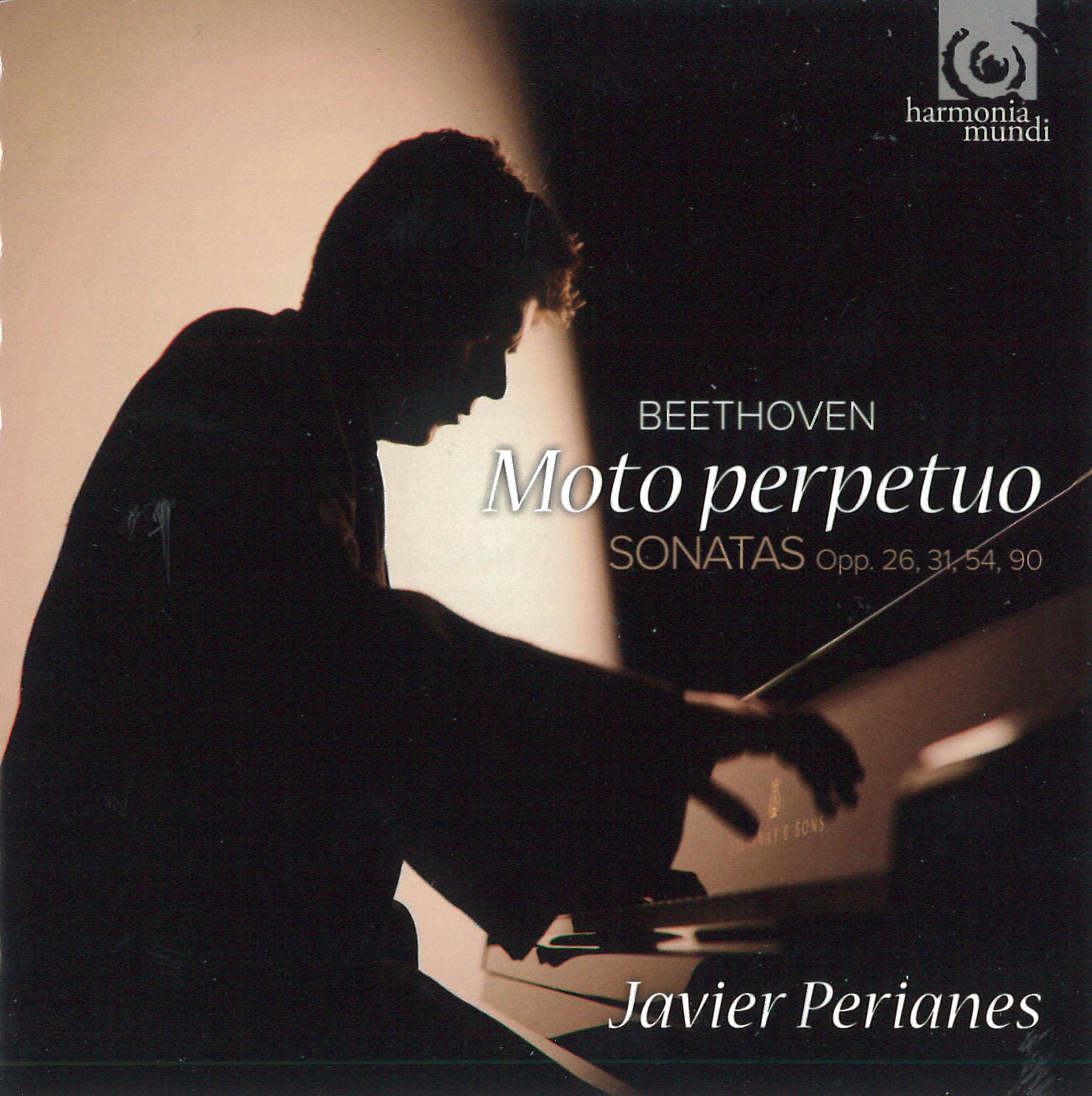
02c PerianesJavier Perianes: Beethoven – Moto perpetuo: Sonatas Opp.26, 31, 54, 90 (Harmonia Mundi HMC 902138) This recording couples four sonatas which end with “moto perpetuo,” a selection that deliberately underlines their similarity but also the diversity of the results Beethoven achieves using the same basic idea. Beethoven explored, like no one else, the possibilities of this compositional concept. The incessant repetition of the moto perpetuo has influenced keyboard composers and performers since before Bach. However, the development of the piano and its quicker action ensured the receptivity of this mode of writing. As to the tempo of these fast movements, Carl Maria von Weber speaks “of human pulse as a model of tempo as informed by an apprehension of periodicity in declamation. The beat, the tempo must not be a controlling tyrant nor a mechanical driving hammer, it should be to a piece of music what the pulse is to the life of man.” There also has to be a contrast in the music of speed. A presto needs tranquil moments to prevent the illusion of excessive speed. Javier Perianes performed the slow tranquil moments with tenderness and warmth. Beautifully shaped phrases were liquid and flowed effortlessly from one to another. I was very impressed with his musicality and the direct way he approached the music. The moto perpetuo movements did not use daredevil tempos but were articulate and exciting. I loved the care with which he pushed and pulled the musical phrases, slow or fast. Nothing was unnatural and accents were not harsh. His tone always retained warmth and was deep with rich colour. Here was another CD I couldn’t stop listening to and I look forward to more Beethoven from this excellent pianist.

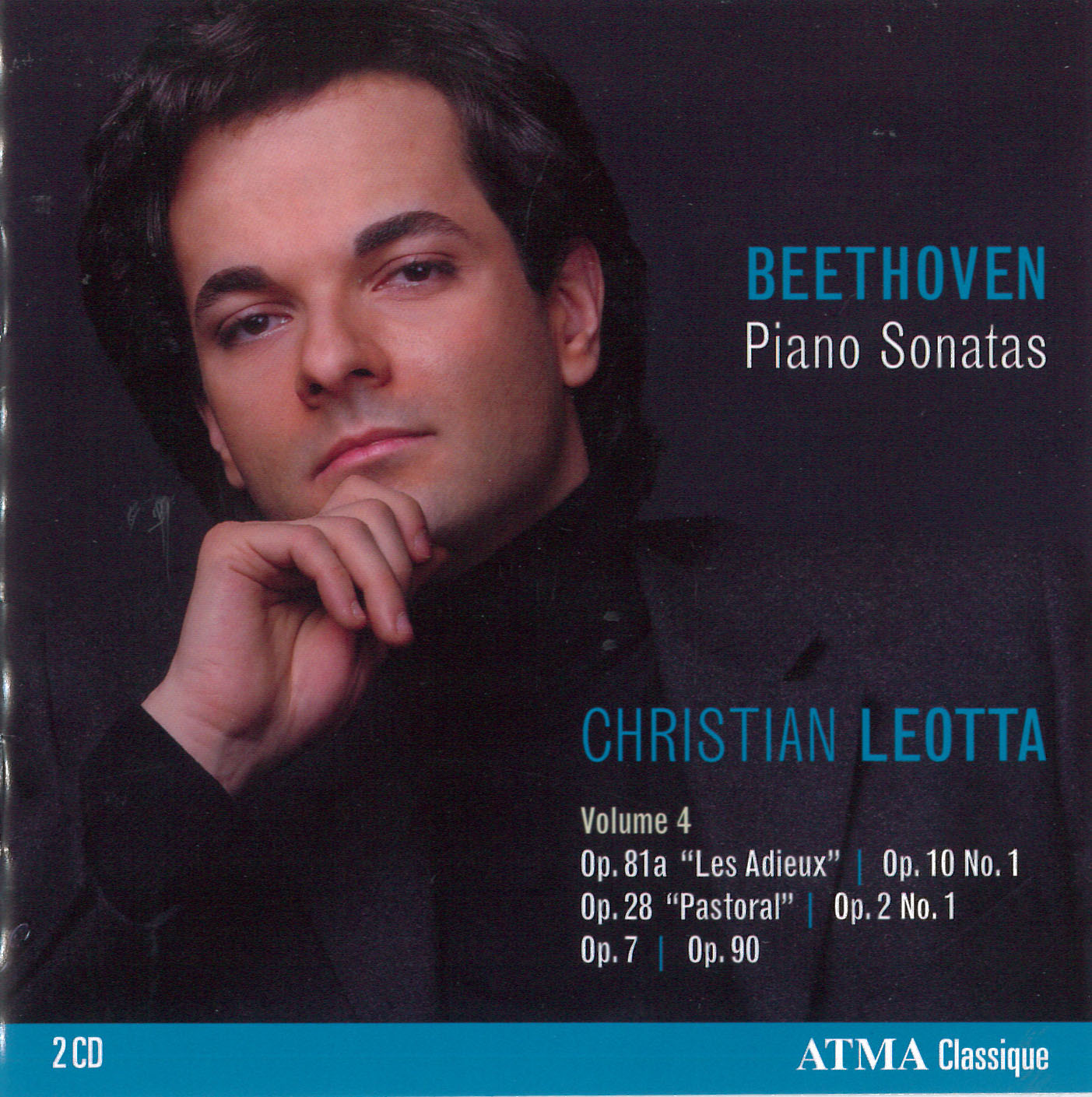
02d LeottaChristian Leotta: Beethoven – Piano Sonatas Volume 4 (ATMA ACD2 2489) Chords are in music what words are in language. A harmonic sentence or period consists of several chords that are connected. A succession of many sentences constitutes an entire speech and a composition consists of a succession of many periods. Christian Leotta chooses to speak not only in volumes but in unique ones. His inflections in musical speech might not be to everyone’s taste but his declamatory playing commands that you listen. According to Beethoven’s critical comments on Czerny’s playing, he wanted all the rhythmic accents stressed quite heavily. He did not want flat performances, even if they were eloquent. Christian Leotta obliges us with his personal interpretation of the sonatas. He has a prodigious technique and an innate musicality. I admire his attention to the form and structure of each movement and his exquisite detailing. Volume 4 includes sonatas from Opp.2, 7, 10, 28, 81a and 90 and in it Leotta has presented us with another extremely worthy CD that deserves many hearings.

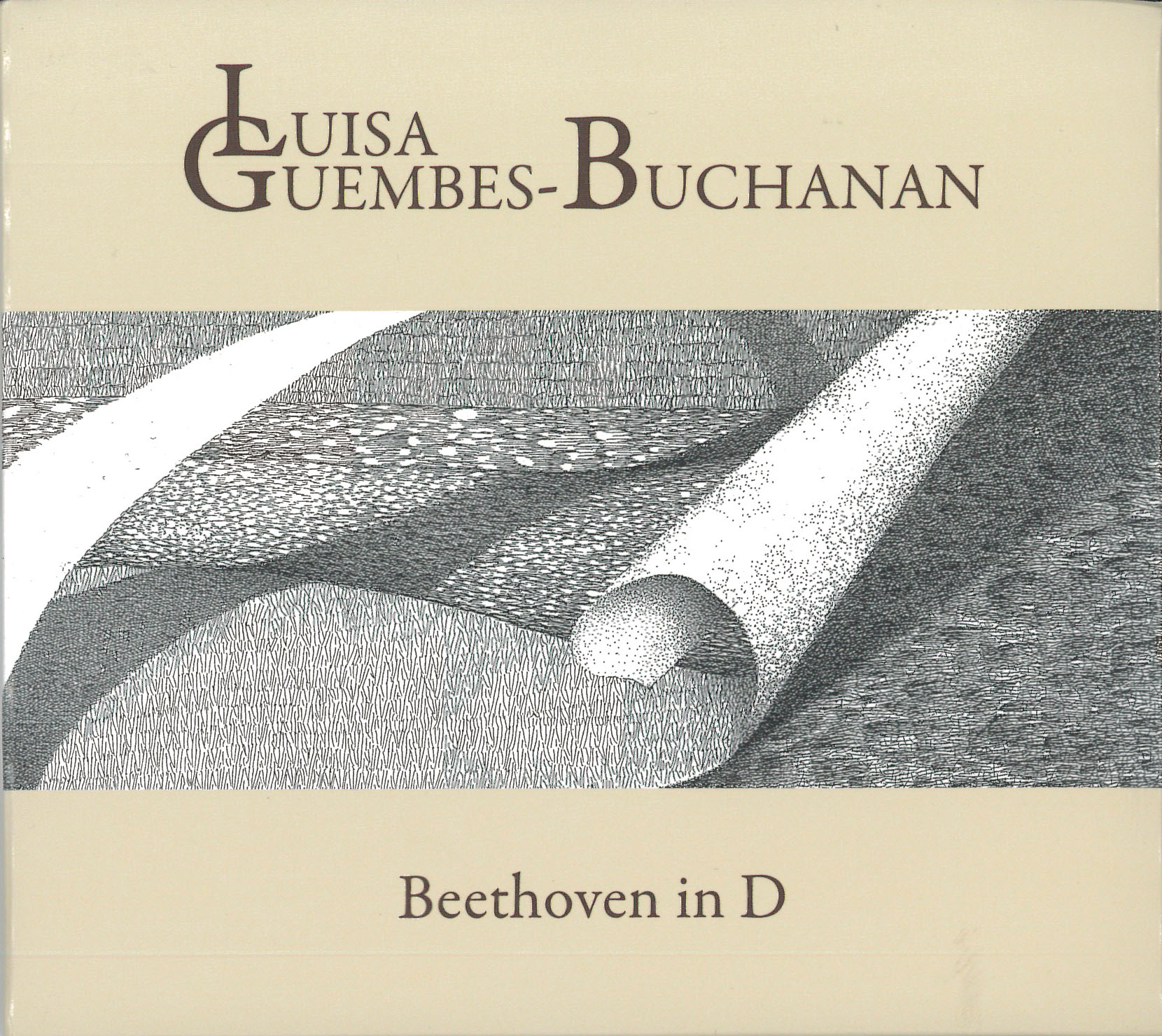
02e Guembes-BuchananLuisa Guembes-Buchanan: Beethoven in D (www.beethovenpianoworks.com) I liked the care with which the choices were made for this self-produced CD. The three sonatas presented share the tonality of D (two major and one minor) but are radically different from one another in character. I did enjoy her intense leading of the musical phrase. Her interpretations draw you in. In a few spots she neglected pushing through to the end of the phrase. Some of the accents were too harsh and she needs to vary the tonal quality of the accents. Like in speech it is the inflection that is powerful, not necessarily the shouting. Although some of the playing was rough I did enjoy the energy and the slow movements were played with deep emotion and feeling. I could feel the pain and longing of Beethoven.

03 Debussy PianoMusic HewittDebussy
Angela Hewitt
Hyperion CDA67898

Angela Hewitt first achieved international recognition for her interpretations of the music of Bach – was that really 27 years ago? Since then, the Ottawa-born pianist has proven to the world that her talents are truly eclectic, with a repertoire ranging from Handel to Messiaen. And how appropriate now that we’ve come to the end of 2012 – the 150th anniversary of the birth of Claude Debussy – that she should return once again to France for music by the musicien from Saint-Germaine-en-Laye.

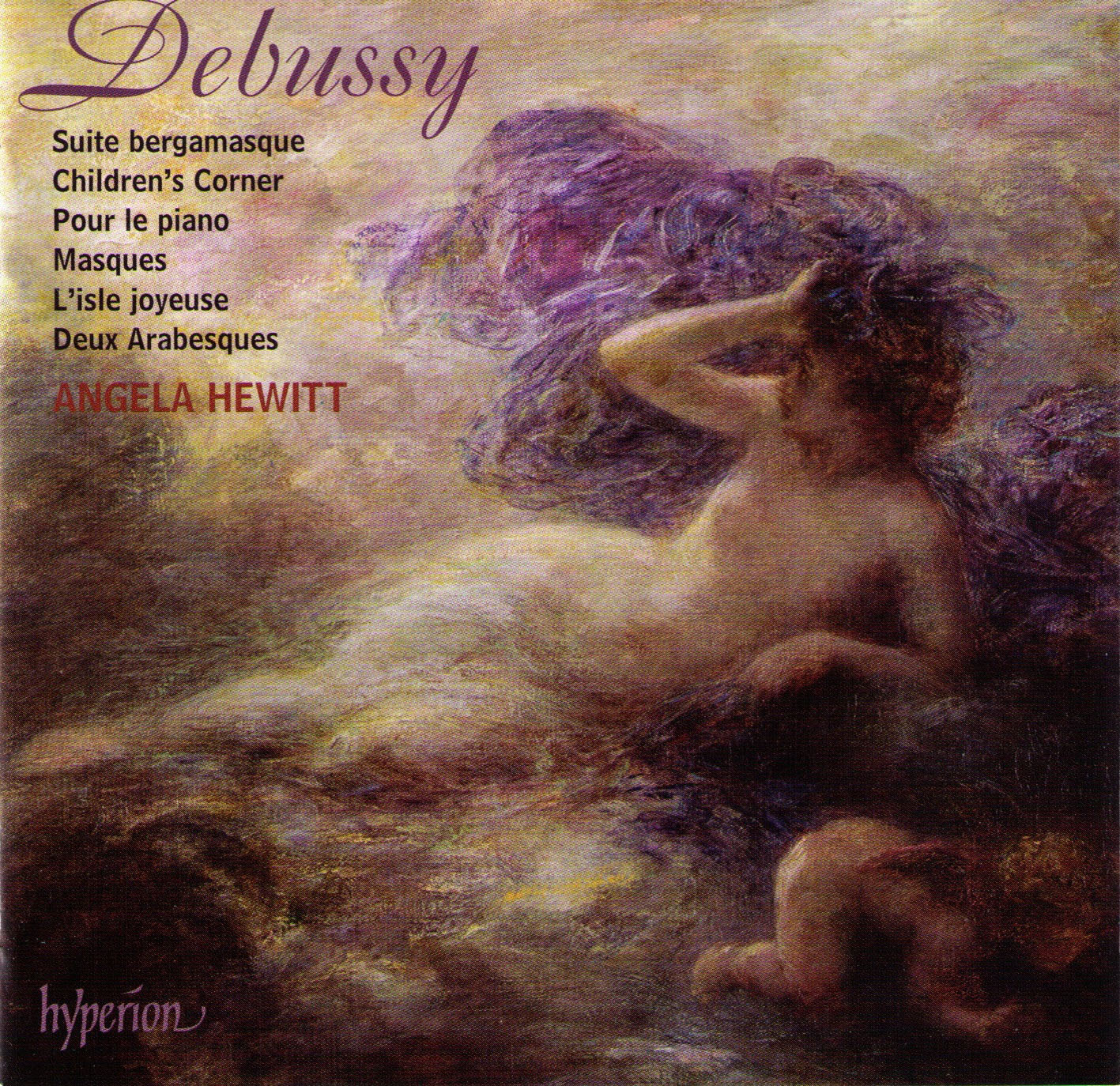
This latest CD on the Hyperion label comprises many of Debussy’s major piano works, including the Suite bergamasque, Children’s Corner, Pour le piano, Masques, L’isle joyeuse and Deux Arabesques. Nevertheless, in recording such well-known repertoire, Hewitt had a tall order to fill. What amateur pianist with some degree of proficiency hasn’t tried his or her hand at least a few of these chestnuts? The challenge was thus a question of breathing new life into these oft-performed pieces. Not surprisingly, she succeeds admirably. Opening with the familiar Children’s Corner suite from 1908, Hewitt brings a particular freshness and vitality to the music, from the tongue-in-cheek Doctor Gradus ad Parnassum to the good-humoured Golliwog’s Cake-walk. Similarly, with the Suite bergamasque, each miniature demonstrates a wonderful sense of tonal colour, particularly in the famous Clair de lune. In contrast is L’isle joyeuse, music of gregarious buoyancy, inspired in part by Watteau’s painting L’embarquement pour Cythère.

My only quibble – and it’s a minor one – are the tempos, at times slightly brisker than we’re accustomed to. Yet this is not always the case. La Plus que lente is all sensuousness, performed with just the right degree of hesitancy and tempo rubato, thus rounding out a fine recording of much-loved repertoire.

04a Mahler Sym3 FeltzIs there too much Mahler being performed these days? The venerable Dutch conductor Bernard Haitink believes so, contending that a “Mahler cult” has created a glut on the market which is distorting orchestral programming in favour of this formerly maligned composer and threatening to marginalize even the mighty Beethoven. There are even those, he claims, who never set foot in a concert hall unless Mahler is programmed. Hopefully, he concludes, Mahler mania will fade away in due time (like the collapse of the Dutch tulip mania of 1637 perchance?). It is a peculiar assertion coming from a man who has recorded the entire cycle of symphonies twice over and continues to churn out new performances with a global selection of orchestras; even so, Mahler himself predicted his symphonies would someday surpass Beethoven’s in popularity. Any conductor or ensemble worth their salt these days feels duty-bound to tackle them, regardless of their capability for or empathy with the complex and demanding works. It helps too that Mahler’s own conducting experience led him to virtually “idiot-proof” his scores with extremely detailed performance instructions throughout, and his obsessive retouching of his instrumentation after every performance has resulted in new editions continuing to appear to this day. Especially in the recent double centenary years this has led to many high-profile integral cycles springing forth bearing a uniform, streamlined quality all too often indistinguishable from each other.

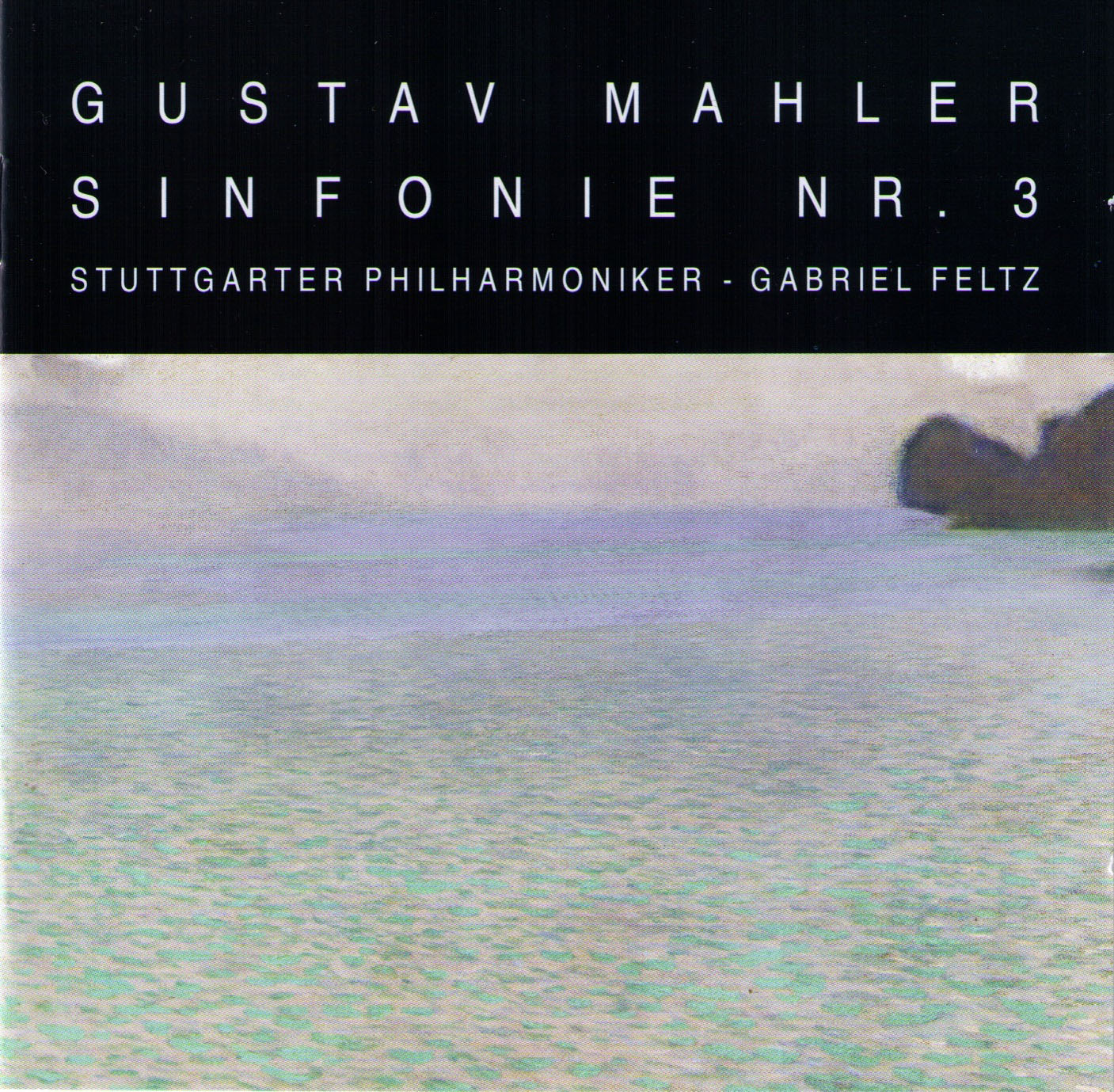
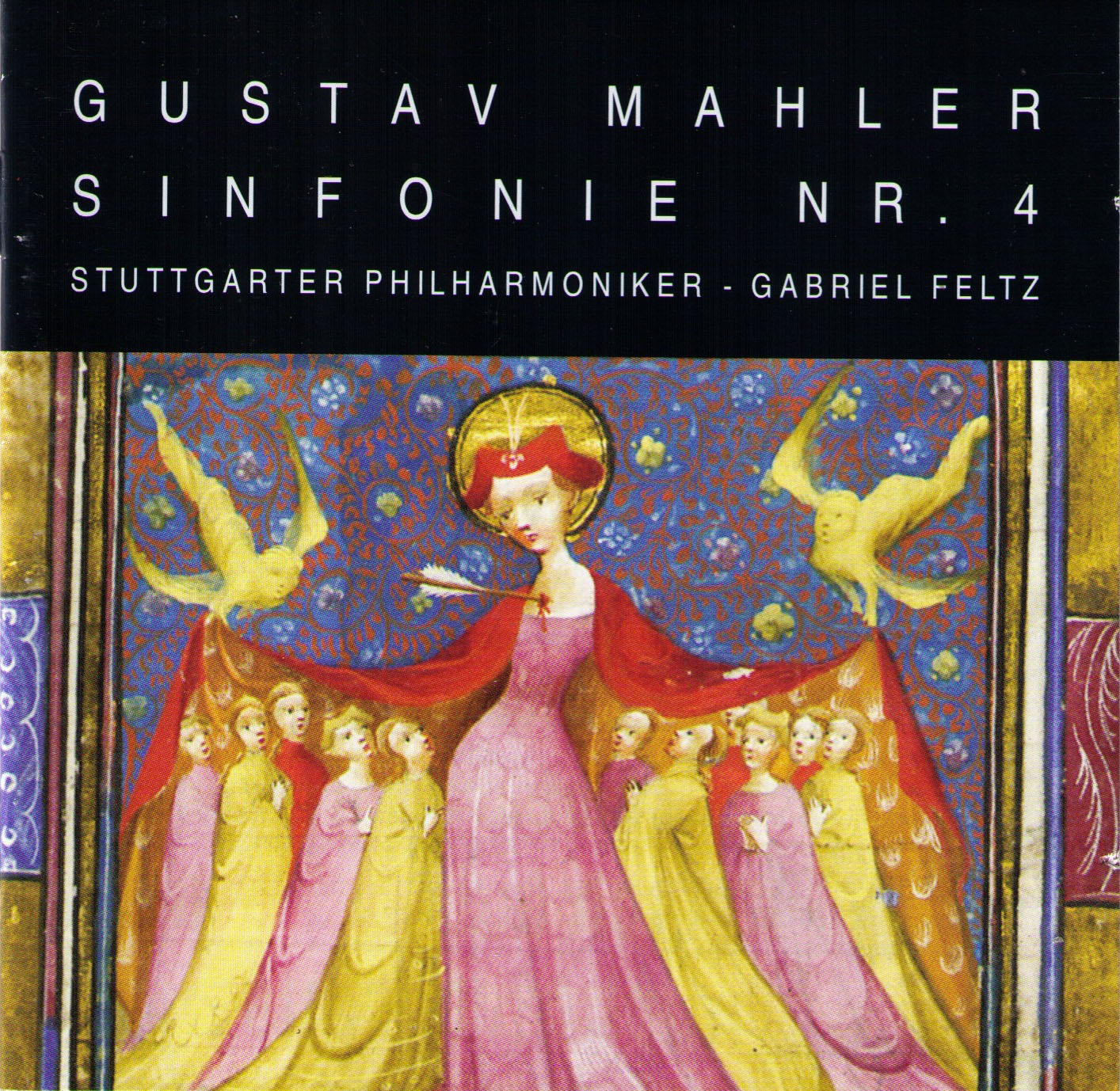
04b Mahler Sym4 FeltzIt is therefore refreshing to come across these very interesting and idiosyncratic performances from the Stuttgart Philharmonic, which began appearing without much fanfare once a year on the Dreyer Gaido label soon after the young (born 1971) Gabriel Feltz was appointed director of the Stuttgart ensemble in 2004. Feltz has yet to make his conducting debut on this continent and this orchestra’s recordings have only recently been added to the Naxos catalogue. A remarkable feature of these discs is the conductor’s own insightful program notes, replete with music examples (!) and cogent arguments for Feltz’s interpretations, which often contradict or re-interpret the printed scores. The most daring example is undoubtedly the startling up-tempo interpretation of the rabble-rousing march midway through the first movement of the
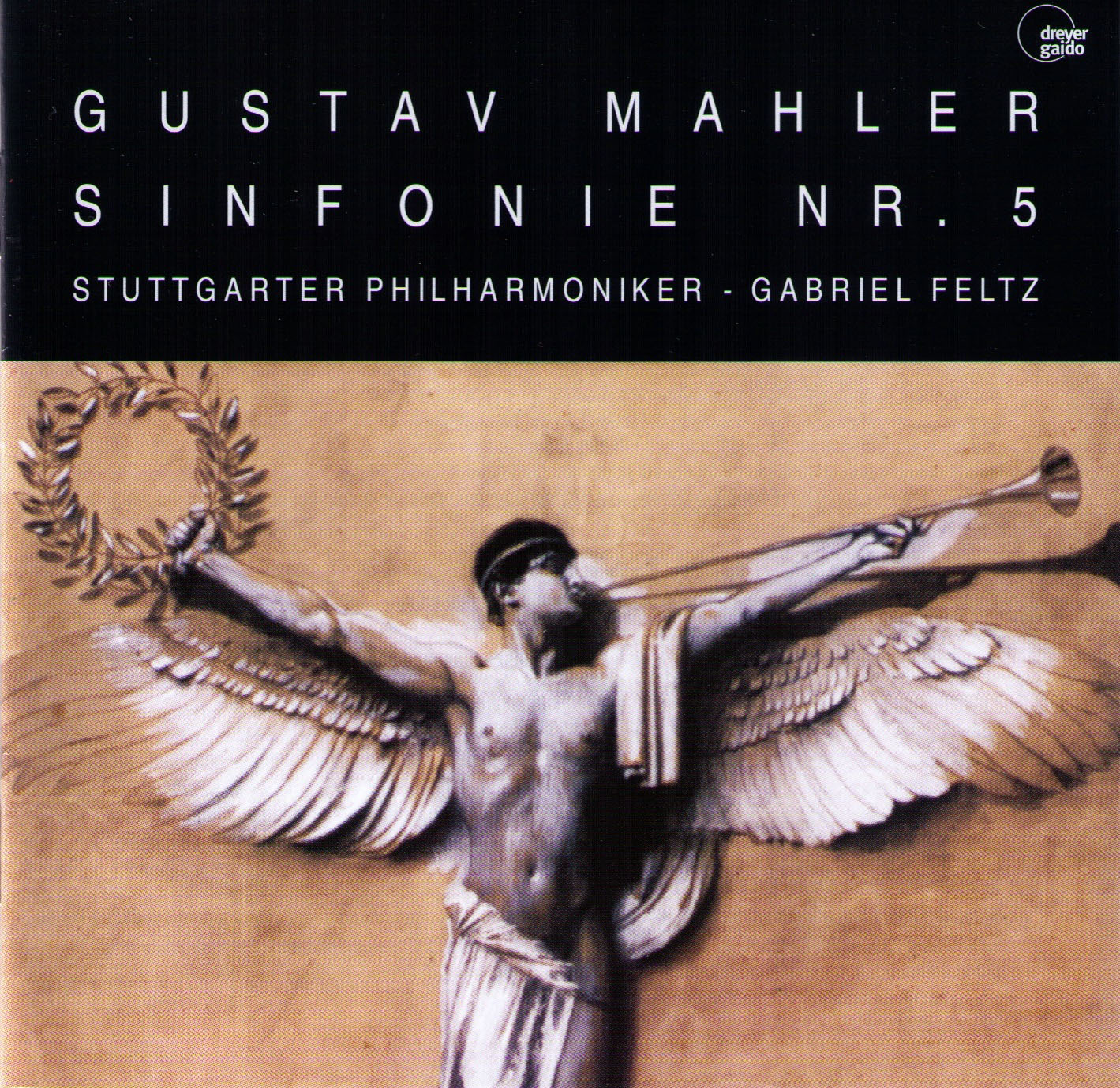
04c Mahler Sym5 FeltzThird Symphony (CD 21065), utterly contradicting Mahler’s call for a steady tempo throughout this section. Other examples are less radical yet still telling: the compulsive alternations of nimbleness and near panic of the

Fourth Symphony
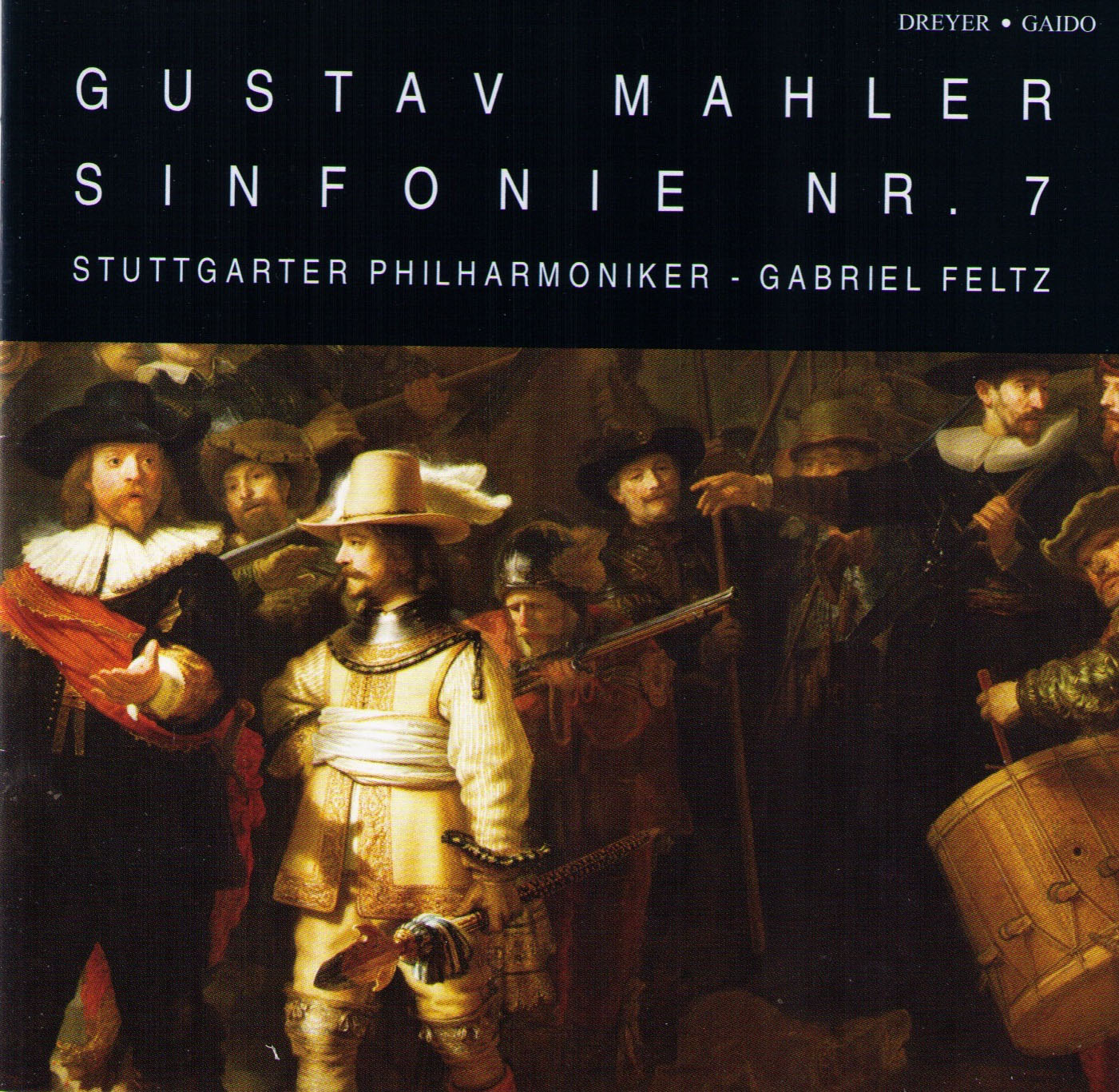
’s (CD 21072) ostensively charming opening movement; the utter serenity Feltz brings to the famous Adagietto of the Fifth Symphony (CD 21052), so often bathed in an excess of sentimentality; or the positively erotic atmosphere he conjures towards the end of the second “Nachtmusik” of the Seventh Symphony (CD 21041).

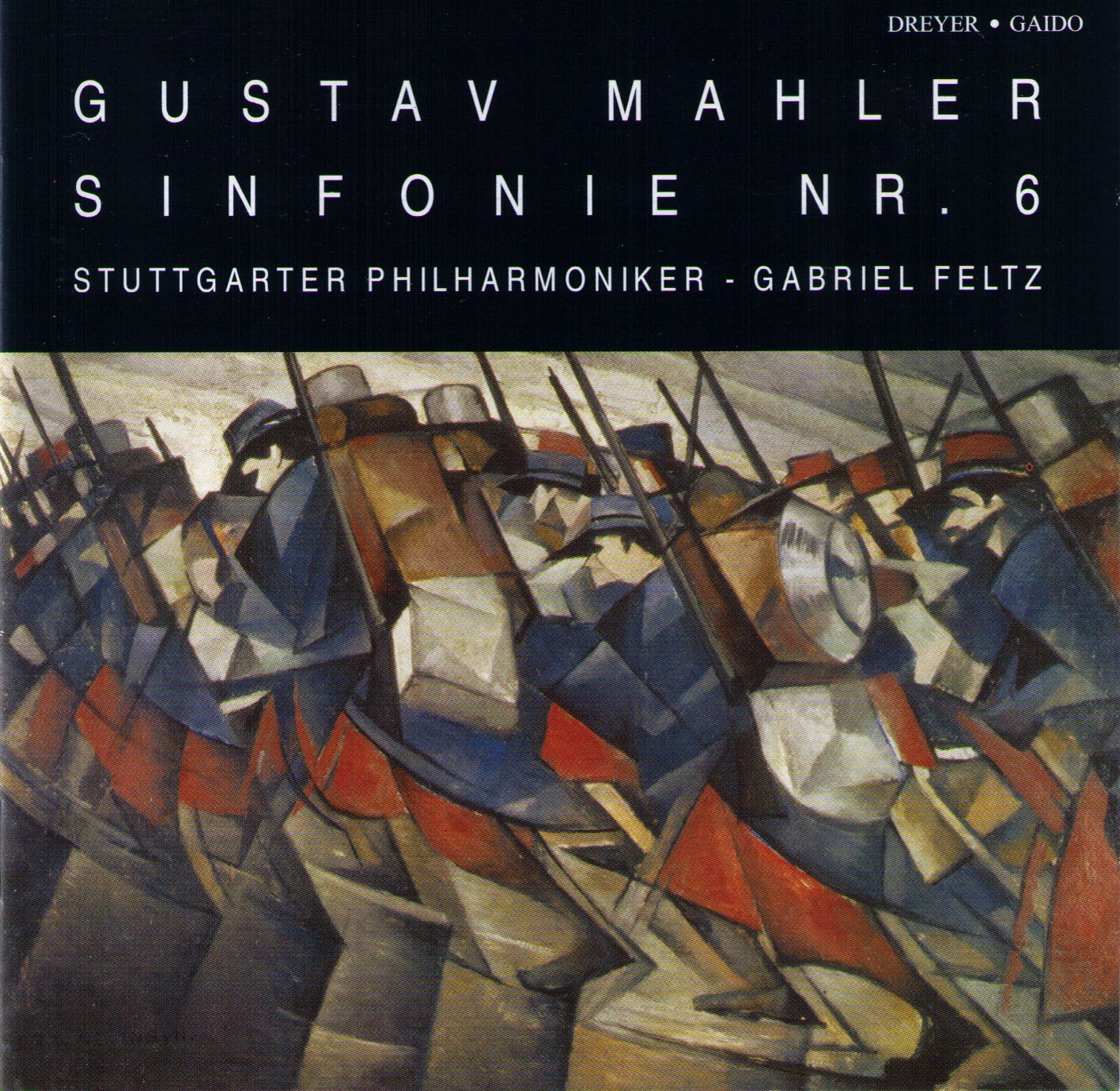
04d Mahler Sym6 FeltzI especially enjoyed reading his statistical argument for the placing of the Scherzo as the second movement of the Sixth Symphony (CD 21045), settling once and for all a specious argument that has gone on for decades amongst musicologists. His interpretation of the first movement of the Sixth is notable for its urgently martial clip, offset by a luxuriant pulling back of the tempo for the secondary theme in just the right proportion. Feltz’s solution to the potpourri finale of the Seventh at first seems counterintuitive; he emphasizes the disjointedness of the rondo form rather than smoothing it over, yet it somehow works quite successfully.

04e Mahler Sym7 FeltzOf all these performances perhaps the massive Third Symphony takes pride of place for the excellent unnamed trombone soloist in the first movement, the unmannered gracefulness of the middle movements and the very moving alto solo (Alexandra Petersamer) in the penultimate movement; only the finale seems to fall a bit short in sonic intensity. Perhaps the orchestra was a bit tuckered by this point however; these are all live performances including ofttimes thunderous applause at their conclusions from the otherwise respectfully taciturn audience.

The sound is clear and spacious, with no evident sonic trickery, though I did find the volume needed to be cranked a bit higher than normal to bring the string section into focus. Though there are unquestionably finer isolated performances of these works to be found in the ever-growing Mahler discography, very few contemporary cycles exhibit the integrity of vision Feltz brings to these works. I look forward to enjoying the remaining five symphonies in this cycle in the years to come; there’s never enough Mahler for me!


Back to top