12 Eren GumrukcuogluEren Gümrükçüoğlu – Pareidolia
Conrad Tao; JACK Quartet; Mivos Quartet; Ensemble Giallo; Deviant Septet
New Focus Recordings FCR343 (newfocusrecordings.com)

Two suppositions: music is only music to the extent that it elicits recognition and response, and not all music (not all art) is good for one. Consider these as you read why I recommend this disc. Think catharsis. Composer Eren Gümrükçüoğlu makes brilliant use of acoustic and electronic media, with strong collaborators including the excellent JACK Quartet. His ideas, once you settle into the terrain, make sense. There is pitch and sound contoured into melody, and there is rhythm, lots of it. 

The opening track is frankly scary. Pandemonium comes to us via Milton in Paradise Lost. Not a good place, to say the least. A demonic gathering place ain’t peaceful, it’s a harrowing funhouse!

 I found myself beating time to the title track, Pareidolia, even during the intervals where metre and rhythm seem absent; rather they are partially submerged in silences that allow only some of the contours to show. When “time” is introduced explicitly, at various points in the piece (at nearly 24 minutes, by far the longest single track), the material is taut and jazzy, the silences filled, the pulse revealed. Track four, Ordinary Things, pits a small wind band with bass and percussion against fragments from speeches made by Recep Erdoğan, composed as mimicry, a satiric chorus riffing alongside the autocrat’s overblown rhetoric, forming a kind of sonic haze around the vocals. Mesmerizing. 

Those step-dancing squirrels in your attic crawl space have spotted a canary, who calls out from various places as they scutter about chasing the hapless bird. That describes the spatial and rhythmic fun of the final track, Asansör Asìmptotu

Kudos to all the performers and especially to the composer.
Listen to 'Eren Gümrükçüoğlu – Pareidolia' Now in the Listening Room

13 Guy Barash KilldeerGuy Barash – Killdeer
Guy Barash; Nick Flynn
New Focus Recordings FCR355 (newfocusrecordings.com)

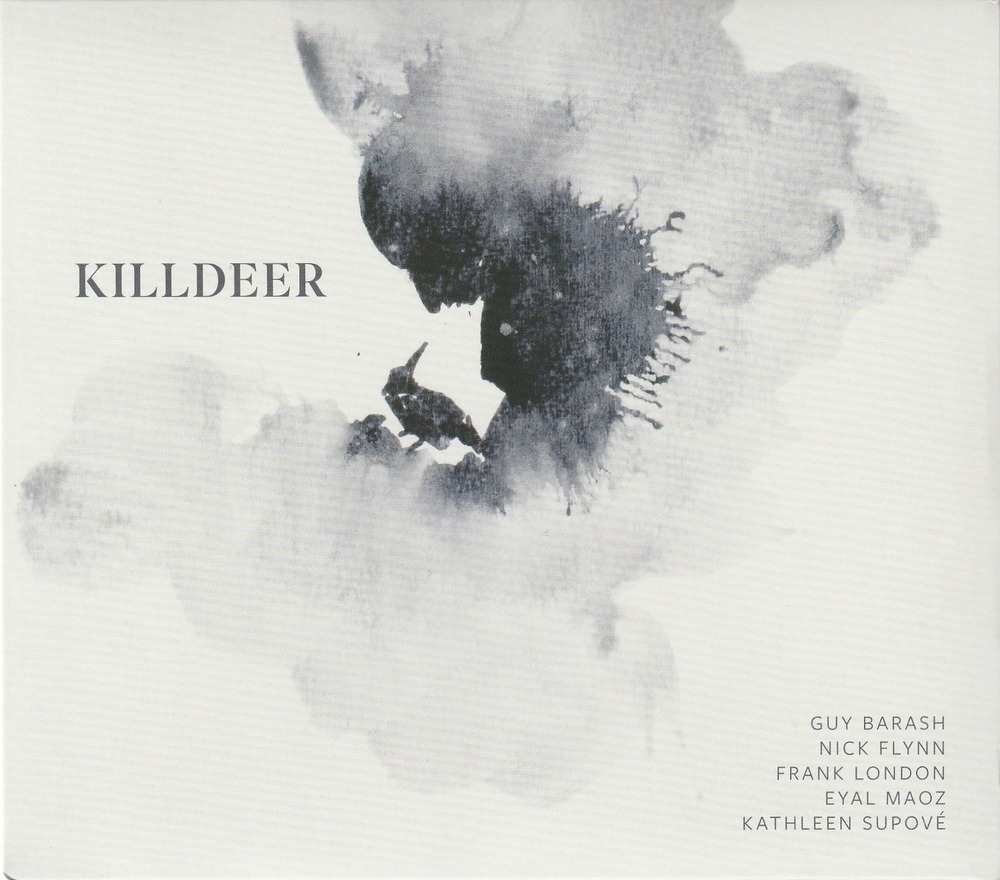
The marriage of text and music, like other pairings, can be problematic. This is especially true in the spoken word subgenre, as is featured on Killdeer. The poetry of Nick Flynn haunts its way through “structured improvisation” conceived by Guy Barash, with Kathleen Supové on piano, Frank London on a very threadbare trumpet and Eyal Maoz filling in on guitar. Barash handles the electronic manipulations, and the product winds its way into ever darker places. Flynn, let it be known, has seen the darkness stare back at him, and his text invites you to look into the same mirror. Clearly recited, prosaic, brooding, even angry, the text does not appear in the booklet aside from two brief excerpts. When you hear the thoughts uttered in track seven, Poem to be Whispered by the Bedside of a Sleeping Child, maybe you’ll be glad. I was.

This makes one grateful for the music. London’s insinuating whispers and cries match the mood, a pale shadow of the shadowy poetry, while Supové’s powerful sparks draw our ears away from the poet’s voice towards some kind of brightness.  

Still, this is essentially a textual work, fascinating and disturbing. I will listen again, because I know there’s redemption of a kind proffered by Flynn. The text takes most of my attention, and second listening might change that or might not. The text is why I hesitate, and yet recognize: these are powerful poems. Killdeer meditates on death, and on the demons that would have us wish it on someone else. The matter is dark, the music affecting.

Listen to 'Guy Barash – Killdeer' Now in the Listening Room

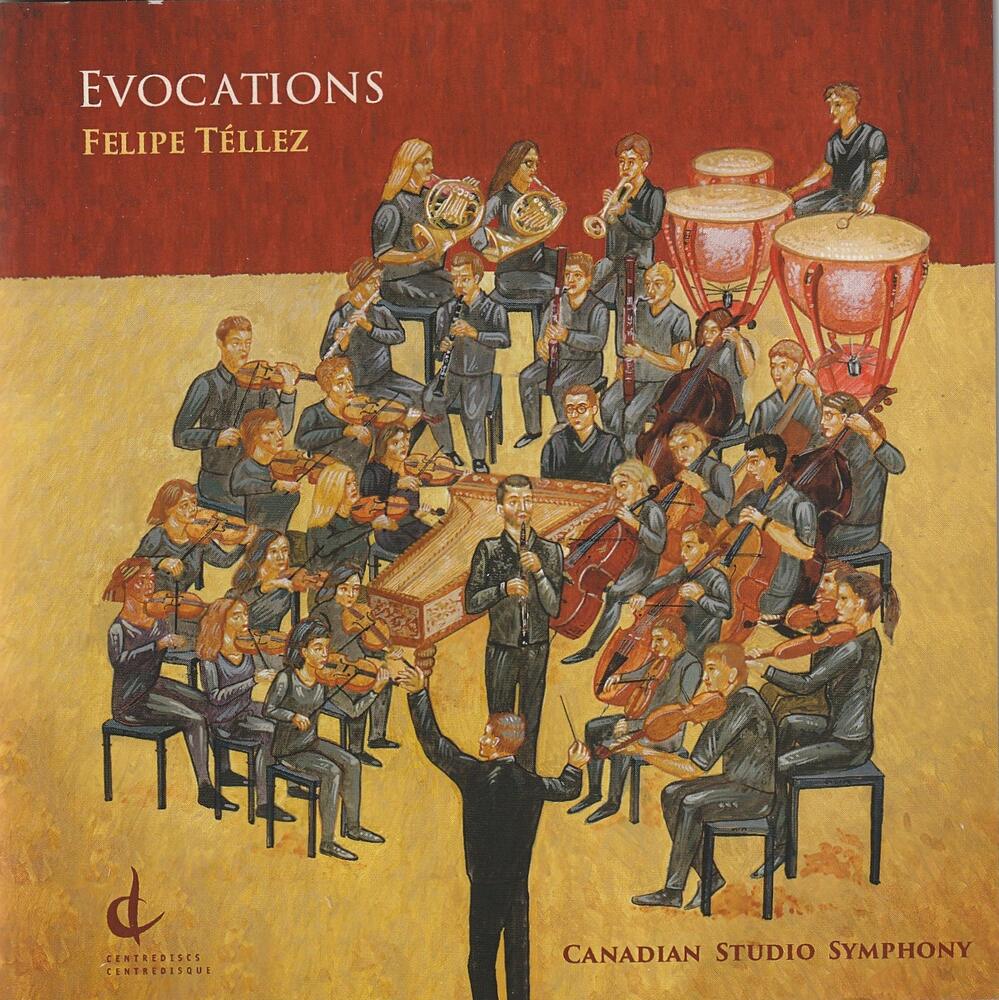
14 Filipe Tellez EvocationsFelipe Téllez – Evocations
Canadian Studio Symphony
Centrediscs CMCCD 30922 (centrediscs.ca)

Featuring the talents of Ron Cohen Mann on oboe d’amore, violinist Lynn Kuo and the Canadian Studio Symphony, the newly released album Evocations comprises new works by Colombian-Canadian composer, Felipe Téllez. Led by Lorenzo Guggenheim, the Canadian Studio Symphony was founded in 2022 for the sole purpose of performing new and engaging repertoire, making this a perfect pairing.

Originally written in 2014 and revised in 2022, the Suite Concertante for Oboe d’Amore is a five-movement suite of dances in Baroque style. In keeping with the period, Téllez uses harpsichord and oboe d’amore but mixes them with modern ideas like extensive key modulations and orchestral colours with clarinets and more prominent low brass. The technical capabilities and full range of tonal colours of the oboe d’amore are imaginatively explored, showcasing the warm tone and brilliant virtuosity of Cohen Mann. 

Lovers at the Altar and Impromptu are small pieces for string orchestra used to bridge the Baroque style of the first piece with the more Romantic writing of Corita and Romanza. Corita is an orchestration of a guitar piece composed by Téllez’s mentor and counterpoint teacher in Colombia, Manuel Cubides Greiffenstein. 

Romanza for solo violin and orchestra reveals Kuo’s beautiful, expansive phrasing and expressive musicality. With something for every musical taste, Evocations is sure to satisfy.

Listen to 'Felipe Téllez – Evocations' Now in the Listening Room

15 Valentin Silvestrov BermanValentin Silvestrov
Boris Berman
Le Palais des Degustateurs PDD030 (lepalaisdesdegustateurs-shop.com/boutique)

In March 2022, just days after Russia’s invasion, Ukraine’s pre-eminent composer, Valentin Silvestrov (b.1937) left his native Kyiv for Berlin. Three months later, Boris Berman, following in-person consultations with Silvestrov, recorded this two-CD set spanning 60 years of Silvestrov’s piano music.

Triade (1962) and Elegy (1967) reflect what the young Silvestrov called “lyrical dodecaphony,” to my ears Webern crossed with Debussy. Sonata 2 (1975) juxtaposes serialism, aleatorism and late-Romantic chromaticism, including extended passages of pensive lyricism. The five-movement Kitsch-Music (1977) contains allusions to Schumann, Chopin and Brahms, all to be played, wrote Silvestrov, “as if from afar.” It’s indeed slightly “kitschy” – precious with prettiness and sentimentality, lovely nonetheless. The three movements of Sonata 3 (1979) are slow, inward-looking and disturbingly beautiful, their unsettled tonality suggesting to me an aimless, solitary stroll through a dark, deserted cityscape.

Three 21st -century works were recorded with the piano lid closed, Silvestrov desiring a soft, distant sonority. Postludium (2005) is a slow, bittersweet processional. Five Pieces, Op.306 (2021) – three Pastorals, Serenade and Waltz – are all gentle and sweetly dreamy. Heartfelt simplicity imbues the Three Pieces (March 2022, Berlin), Silvestrov’s musical response to the invasion. The sorrowful Elegy is followed by Chaconne, described by Silvestrov as “accepting death with dignity.” The final Pastoral ends in a mood of serenity, perhaps even hope.

Doubtlessly, these performances by Berman (b. Moscow 1948), head of Yale University’s piano department, pleased Silvestrov. They certainly pleased me.

01 Eye MusicMontreux 1988
Eye Music
Independent (markduggan1.bandcamp.com/album/montreux-1988)

Toronto-based band Eye Music’s superb 2023 debut album is an actual throwback: it was recorded live in 1988 at the Montreux Jazz Festival, Switzerland. To my ears this 35-year-old novel take on folk-inflected jazz still sounds compellingly fresh today. 

Eye Music featured the late, great violinist Oliver Schroer, guitarist Don Ross, percussionist Mark Duggan and bassist David Woodhead, all gifted musicians at the brink of substantial careers. Their inspired music on Montreux 1988 is a snapshot of a made-in-Southern Ontario musical moment.

Booked on the strength of their Portastudio cassette demo, they were reportedly the only Canadian act to play Montreux that year. Impressive enough to land a spot sight-unseen at a major European festival, why haven’t we heard of Eye Music? Part of the answer is that the group was active only between 1987 and 1989.

We finally get a chance to hear what the excitement was about on this album, their Montreux concert artfully distilled into seven tracks digitalized from aging original analogue tapes. 

Five titles were composed by Ross – his use of alternate guitar tunings and unique “fingerstyle” was an essential part of the group’s sound – plus one each by Duggan and Schroer. Each tune has its own character and charm, the album filled with spiky rhythms, lush harmonies and a lighthearted feel, further enlivened by imaginative virtuoso solos. The cherry on top is the sensitive ensemble musicianship of all four members.

More good news: Eye Music is reforming with a new violinist and planning live performances for the 2023 summer festival season.

Listen to 'Montreux 1988' Now in the Listening Room

Back to top