What happens to the new when the weather heats up and the concert seasons have ended? Does the more casual atmosphere of the summer mean that presenters, performers and audiences are ready for something more out of the ordinary? From my discoveries of what lies in store for both the curious and the lover of experimental and innovative sounds, it seems that the boundary lines between musical genres and art forms become a bit more blurred. Musical concerts, outdoor installations, performance art and electronic and sound art are all happening within the traditional and not-so-traditional music, theatre and interdisciplinary festival environments. And often, the regular indoor concert hall has been tossed aside to make room for these sounds in outside spaces or to create a more participatory audience experience. The great thing is that many of these events are happening outside the Metro Toronto area, so be prepared. Your sonic summer listening will require some travelling around the province, but that’s what vacation time is for.
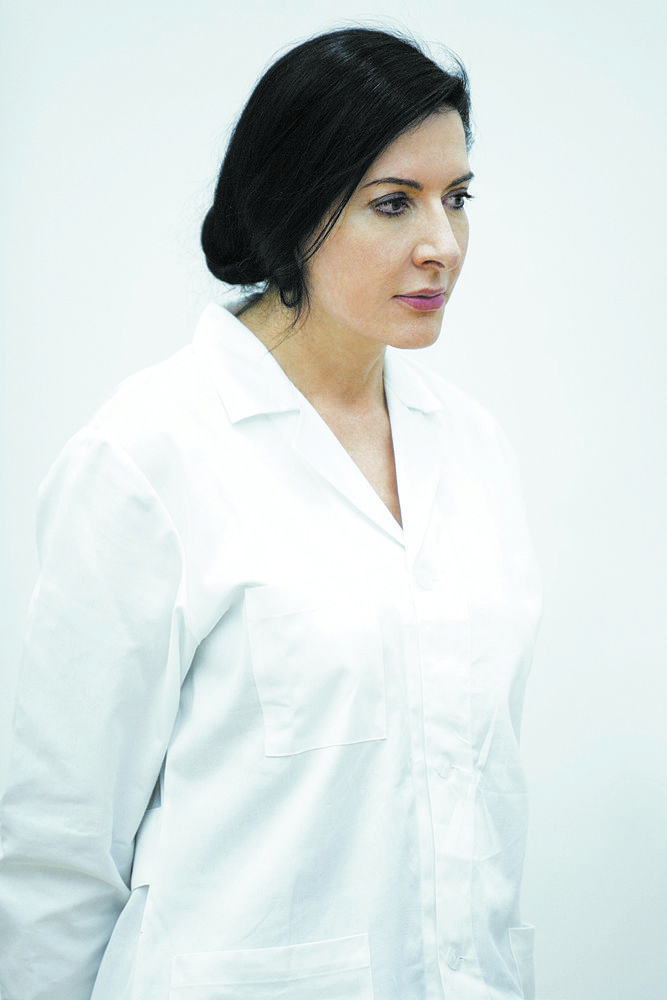
inwiththenew marina abramovic headshot 01 - photo by  laura ferrariStarting off in June, we are immediately plunged into a series of performances that are full of cross-pollinating and genre-crashing power. The big news is that Toronto’s multi-arts Luminato Festival is headlining Marina Abramović, a New York-based performance artist originally from Serbia who is considered to be the “grandmother” of the performance art genre. Her work explores the limits of the body and states of consciousness, while often putting herself through extreme physical pain or tests of endurance. In 2010 during a retrospective at the MoMA in New York, Abramović performed The Artist is Present during which she sat immobile and in silence all day for almost three months while spectators took turns sitting opposite her. People experienced religious-like transformations as they stared back into her penetrating presence.

You may ask — what does this have to do with music? The answer is, of course, that the story of her life, along with scenes from her performance works, has been made into an opera entitled The Life and Death of Marina Abramović. Premiered in 2011 at the Manchester International Festival and toured to sold-out audiences in several European cities, the opera will receive its North American premiere at Luminato, running June 14 to 17. Conceived and directed by the legendary Robert Wilson in collaboration with Abramović, she also performs as herself and her mother alongside Willem Dafoe as narrator and male counterpart. The music was co-composed by cult pop star Antony Hegarty and ambient minimalist William Basinski, and performed by Antony in his mesmerizing and hypnotic voice. It was his cathartic musical performances and emotional vulnerability that inspired Abramović to invite him to collaborate on this opera that she describes as “a series of births and funerals of the soul.”

Running in conjunction with the opera from June 14 to 23 will be her latest performance work/installation, MAI – Prototype. In seven interconnected pavilions in Trinity Bellwoods Park, four pre-booked participants will wear white lab coats and receive instructions on headphones as they walk through the installation for a period of two hours. Every 30 minutes a new group will begin the journey in which they will undergo the rigours of her performance practice. These encounters will be live-streamed to other locations throughout Toronto, including one at Pearson airport.

Also performing at Luminato will be the inimitable Laurie Anderson appearing as part of The Hub series of free outdoor concerts at David Pecaut Square on June 16. Anderson was one of the first performance artists to bring experimental and art-rock music to a large popular audience. Writing songs full of political edginess and performing with her invented instruments (a tape-bow violin and a computer controlled “talking stick”), she made the UK pop charts back in the early 80s.

The pop/experimental music crossover theme continues over at the Music Gallery, in the last concert of their season’s signature Pop Avant series. Curated by Tad Michalak, known for his programming of under-the-radar pop, noise, jazz and harsh electronic music, his “Burn Down the Capital Showcase” June 8 will feature three different artists. Guaranteed to set your soul on fire, the music will mix up instrumental, vocal and a wide range of electronic and ambient sounds using tape loops and synthesizers to create both an “unacceptable” and sensual evening.

Another major summer music festival happening in Toronto is the NXNE Festival that takes over the downtown streets and clubs. This year, it’s exciting to see their programmers venturing into the world of sound art and co-producing three events with NAISA (New Adventures In Sound Art). These include a sound sculpture performance at the AGO on June 6, an audiovisual machine installation that runs from June 11 to 22 at the Wychwood Barns with a live performance on June 10 and a sound walk through Trinity Square on June 13, where sounds of underwater life will be projected into the outdoor urban space. 

For July, it’s off to Stratford Summer Music. It just so happens that July 18 is R. Murray Schafer’s 80th birthday, and he is being honoured that night with a tribute concert featuring pieces from his Patria cycle of musical dramas. As part of the celebration, Schafer’s visually-based scores will be on display at the Stratford Public Library from July 17 to August 25.

Schafer’s vision has opened up our ears to the soundscape (a term he coined), and so it’s only natural that he would create pieces for specific outdoor environments. His Music for Wilderness Lake from 1979 will be performed at 7am on July 19, 20 and 21 along the shores of the Avon River. Imagine 12 trombones spread amongst the mists of the riverbank, combined with an aria from another sunrise work — Princess of the Stars. Definitely worth an early morning rising. And if you’re up for experiencing something quite out of the ordinary, you could sign up to participate in a workshop performance of Asterion— the latest in his Patria series. The piece is an outdoor labyrinth located near Peterborough that has a series of rooms and passages participants must navigate alone as they encounter both performers and the environment along the way. Designed to be an intense and transformative soul journey, I couldn’t help but connect the dots to the Abramović installation designed with a similar intention. Happening through June and July, go to patria.org if you are drawn to join in.
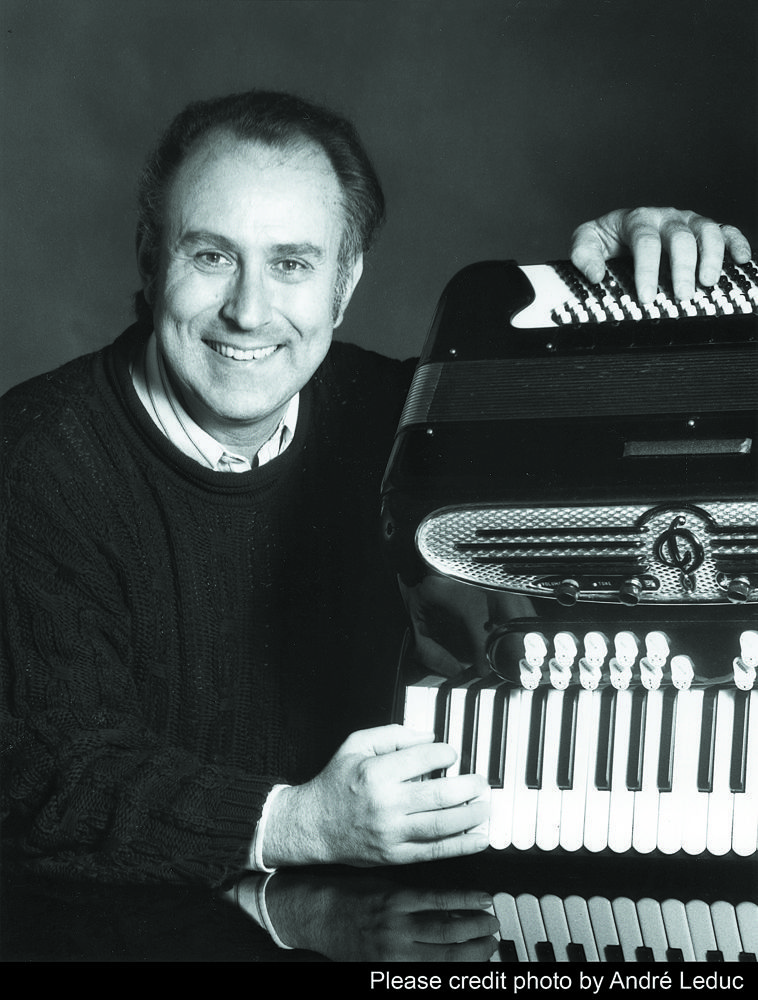
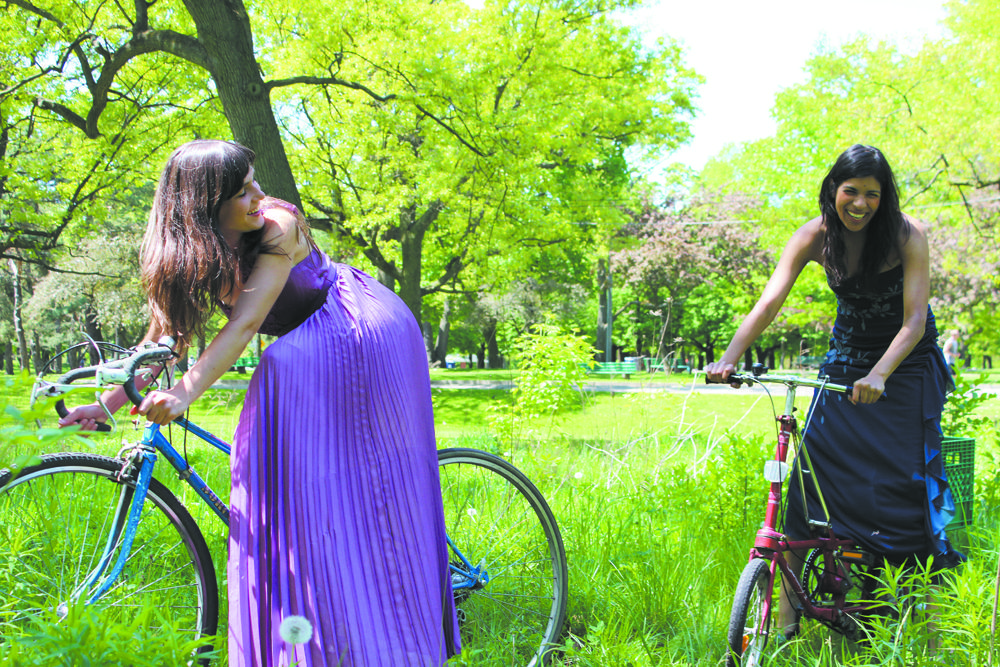
inwiththenew macerollo joeReturning to Stratford Summer Music, we find that the entire cast and crew for a concert of Canadian contemporary opera excerpts has arrived via bicycle. The Bicycle Opera Project began last summer, touring from town to city via pedal power. This year, not only will they be performing in Stratford, but also in Toronto (July 4 to 7), and on tour from July 11 to 25 in Hamilton, Guelph, Elora, Fergus, Kitchener, Waterloo, Bayfield and London, arriving in Stratford for performances from July 26 to 28. This year’s repertoire focuses on telling the stories of women, featuring works from six different Canadian composers. For further details of the tour, check out bicycleopera.ca. Also appearing at Stratford Summer Music will be the acclaimed accordionist and contemporary music champion Joseph Macerollo in six weekend concerts, starting July 20 to 21 and ending August 24 to 25.

Not far from Stratford is the town of Elora, host to a summer music festival of many different styles. Works by contemporary composers can be heard on July 13 with the New Zealand String Quartet (Jack Body) and on July 14 with the Manitoba Chamber Orchestra (Philip Glass). The Elora Festival Singers will celebrate the 100th anniversary of Benjamin Britten in their concert on July 28.

August takes us back to the leading edges of sound and electronics with two festivals of sound art alongside the well-loved Ottawa Chamberfest. For the last seven years in Meaford, Ontario, over the August long weekend, the award-winning composer Gordon Monahan has been directing the Electric Eclectics festival of experimental music and sound art. With camping on-site, this year’s festival runs from August 2 to 4 and includes an extensive lineup of performances and installations, including New Yorkers Shelley Hirsch (experimental vocals) and Keiko Uenishi (laptop electronics), a long-awaited return by former Musicworks editor Tina Pearson (Victoria), a sound/light performance by Music for Lamps (Montreal) and the Sunda Duo (Toronto) with Bill Parsons and The WholeNote’s Andrew Timar. 

Over in Ottawa, musical experimentation on the long weekend at the Ottawa Chamberfest begins on August 2 with the improvisation-based Element Choir. Led by Christine Duncan, who uses a series of hand cues to sculpt real-time compositions, singers from Toronto, Ottawa and Montreal will be joined by Jim Lewis (trumpet) and Jean Martin (drums) to create a wild and energetic musical ride. This year’s festival also offers the New Music Now series with six concerts offered throughout the daytime hours on August 5 and 6. Performers and composers presented include pianist and multimedia artist Megumi Masaki, the Gryphon Trio (Lutoslawski, Ohana), Ensemble Transmission (Sokolović), the JACK quartet (Zorn, Lachenmann, Butterfield), choral works (Whittall, Kurtág, Berio) and a concert of works by Xenakis. In addition to this series, the festival is offering “snapshot” performances to ticket holders of the evening’s Siskind Concerts, including performances by Lori Freedman and the JACK quartet and presentations on the works of John Weinzweig and Xenakis. And if you are a fan of American composer Eric Whitacre, the Elora Festival Singers will perform three of his works in their concert on August 7, including Sleep — his online virtual choir hit.

Mid-month, from August 14 to 17, it’s the Toronto Electroacoustic Symposium with multiple performances and presentations. Featured this year are two giants of Canadian electroacoustic music: Francis Dhomont (also the keynote speaker) and Barry Truax. Co-produced with NAISA, all concerts will be diffused using a multi-speaker spatialization system. And as the summer days slowly become shorter, the Summer Music in the Garden series presented at Harbourfront’s outdoor Music Garden will feature the sounds of the TorQ Percussion Quartet on August 29. Performing compositions by Steve Reich, John Luther Adams, Richard Burrows and Daniel Morphy and an improvisation on clay instruments by the ensemble, the focus is on the natural elements of earth, water, air and fire. Overall, it’s a great summer lineup for discovering what’s cooking in the experimental sonic stew.

In addition: June 20 at Gallery 345, Kathryn Ladano on bass clarinet has two sets of improvised music including electronics and special guests.

July 19 at 7pm, Soundstreams Salon 21 presents “Summer Sound Walk,” a free tour through the different acoustic spaces of the Gardiner Museum and surrounding area. The event will feature vocalist, cellist and practitioner of Deep Listening, Anne Bourne, who will lead participants in guided listening exercises and invite them to listen to the sounds of the evening mingled with improvised live music. Definitely an event not to miss!  

Wendalyn Bartley is a Toronto-based composer and electro-vocal sound artist. Contact her at sounddreaming@gmail.com.
June in toronto used to signal the beginning of a slow hot musical slide into picnic season. With concert activity winding down, many performers and audiences alike left town to relax at rural lakeside cottages. Not so these days. Now a plethora of curated festivals and single musical events fills the summer urban days and evenings for those who stay in the city. I have space to explore just a few. Therefore please excuse me if your favourite artist or musical genre is not mentioned.

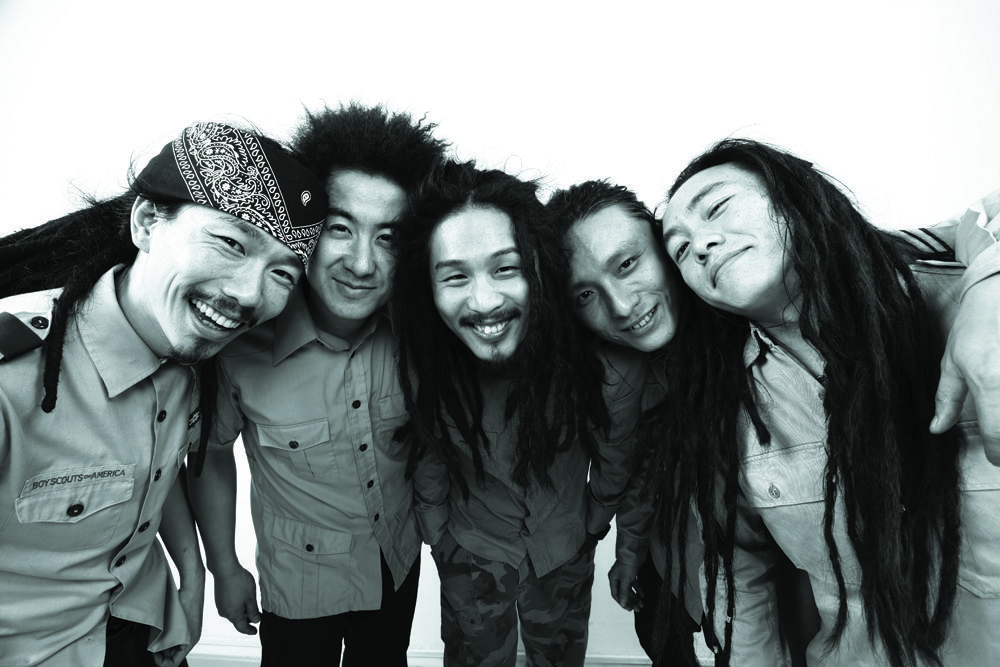
worldview long shen dao  3 Luminato Festival: Luminato is perhaps the signature festival opening the door to the open-air concert season. Luminato’s ten-day “festival of creativity” runs from June 14 to 23. Its music components’ buzzwords are “diversity,” “collaboration” and the notion of seduction that goes on between artistic disciplines, programming principles articulated by festival artistic director Jorn Weisbrodt at the unveiling event in April.

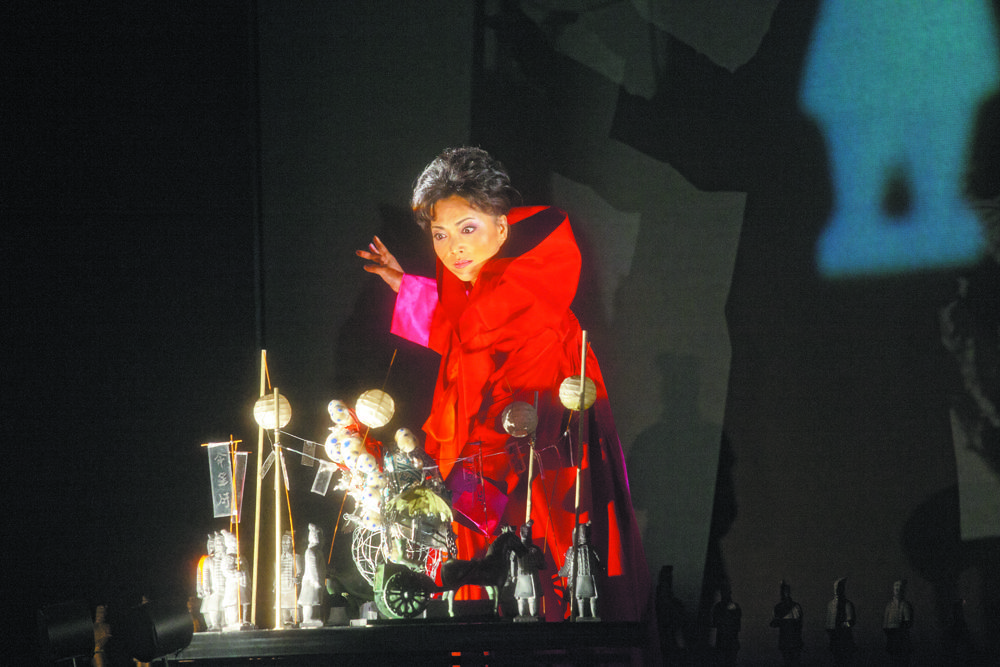
Perhaps no other Luminato feature more enthusiastically embraces such a broad artistic mandate of collaboration — in this case imbued with a distinctively international music palette — as the chamber opera Feng Yi Ting. Running June 20, 21 and 22 at U of T’s MacMillan Theatre, it was created by the respected Chinese contemporary composer Guo Wenjing. His 2004 score expertly blends Chinese and Western musical vocabulary, instrumentation and textural and harmonic worlds. The composer furthermore draws on two contrasting regional Chinese operatic styles of personal interest: Beijing opera, with its contained and polished singing, and the exuberant and highly ornamented vocalism of Sichuan opera. These disparate musical elements are effectively superimposed and fluidly recombined in Feng Yi Ting.

Adding measurably to the opera’s allure was the production directed by the celebrated Toronto film and theatre director Atom Egoyan [also directing the Luminato performances] whose contribution “proved a significant part of its attraction, not least because, like the score, it offers a ... blend of ancient Chinese and modern Western theatre technologies.” This fascinating production can be viewed through multiple facets of cultural globalization: as an explorative presentation of elitist art cross-pollination and mash-up; and also as the transition of traditions. I’ll be there in the audience to experience it firsthand.

In addition to Feng Yi Ting, I count some 11 other acts handpicked by veteran curator Derek Andrews that fill out Luminato’s world music offerings. While each is worthy of our attention I only have room for a few picks. It’s also worth noting that as in previous years many performances are free. Please check the Luminato website, print media and of course The WholeNote listings for pertinent details.

The Festival Hub at the David Pecaut Square is Luminato’s outdoor stage, welcoming audiences with a sharp focus on world music. On Saturday, June 15 the “Reggae Around the World” concert includes the six-member pioneering Beijing group Long Shen Dao making their North American debut. Their name — a clumsy English translation is “The Way [Tao] of the Dragon God” — reflects the group’s statement that while they are “not Rastafarians, reggae music, like a warm breeze, is accessible to people no matter where in the world they come from.” Musically, the band combines rock, ska, reggae, hip hop and other popular music genres along with Chinese instruments like the zheng (plucked zither). “One World,” indeed.

The next day, June 16, two outstanding performers energize the Hub stage. The Tuareg guitarist Omara “Bombino” Moctar of Niger has garnered international acclaim for performances of his songs, whose lyrics often carry a message dedicated to peaceful coexistence in his war-torn homeland. Musically, Bombino marries rock — he’s a big Hendrix fan — and the tende music of the Nigerian nomads. Amadou and Mariam follow on stage. The couple’s infectious blend of Malian songs has since the 1990s added intercultural instrumentation to create a style dubbed “Afro-blues.”

That same evening the stage will be set for DakhaBrakha. Meaning “give and take” in old Ukrainian, the Kyiv-based quartet has invented a surprising genre of world music. While perhaps only indirectly linked to the Toronto-Ukrainian urban folk revivalist scene I explored in my May 2013 column, it certainly shares the same spirit. Founded in 2004 by avant-garde theatre director Vladyslav Troitskyi, DakhaBrakha began singing old Ukrainian village music but then added Russian, African, Indian, Arabic and Australian instrumentation to the mix. Calling the result “ethno-chaos,” their exciting transnational sound makes its North American debut at Luminato. In a bit of inspired programming, since the two have so many interesting points of intersection as well as divergence, DakhaBrakha opens for the “queen of performance art music” Laurie Anderson. I have a personal sweet spot for Anderson’s work: in the mid-70s I was hired to play bassoon in her band at the Art Gallery of Ontario.

June 20, the a cappella quintet H’Sao entertains the Hub audience. Originally from Chad, the five-voice group moved to Montreal in 2001. From that home base they continue to develop and internationally tour their taut, richly textured and rhythmically vibrant choral sound.

June 23 at 2pm, Luminato-goers are in for a rare treat: garifuna music indigenous to the tiny Central American nation of Belize performed by the eight members of the Garifuna Collective. Ivan Duran leads his group singing and playing a style of vivid drum, shaker and guitar-based Afro-Amerindian dance music making its Canadian debut at the festival. The Kitchener native singer-songwriter Danny Michel joins the Garifuna Collective in the next set. Together they perform songs from his 11-album career.

Harbourfront Centre Festivals: Long before Luminato lit up outdoor Toronto venues, the Harbourfront Centre’s summer music-centric festivals animated the waterfront. Under the banner “The World in One Place,” each summer audiences by the thousands witness emerging as well as leading world music acts with a different ethnic or national theme each weekend. Harbourfront Centre’s world music programming is divided among two locations: the main 10-acre multiple-venue site and the Toronto Music Garden further to the west along Queens Quay.

Toronto Music Garden: The Music Garden presents a series of free concerts most Thursdays and Sundays all summer long called Summer Music in the Garden. My first pick, on July 21, is titled “Send Me a Rose,” featuring music from China, the Middle East and Europe performed by the Lute Legends Ensemble. Three international representatives of the lute comprise the ensemble: lutenist Lucas Harris, Wen Zhao on pipa and oud master Bassam Bishara.

July 25, make a date for “Evening Ragas by the Water.” Sarangi maestra Aruna Narayan is joined by Vineet Viyas on tabla and Akshay Kalle, tanpura. The sarangi, a North Indian bowed many-string instrument, is renowned for its ability to represent the nuances of the human singing voice. In Narayan’s masterful hands we will hear it sing with emotional depth and virtuosity.

August 8 visit “A Taiko Tale of Two Cities” performed by the Nagata Shachu ensemble, one of Toronto’s favourite Japanese drumming and flute groups. Montreal’s Constantinople Ensemble performs music with a transcontinental scope — from the African Mandingo kingdom to the Persian court — on strings and voices August 11. And deep in the heart of August (on the 18th), Swamperella, Toronto’s preeminent Franco-American hybrid Cajun music tribute band turns the Music Garden into “Cajun in the Cattails.”

Harbourfront Centre: There’s a themed Harbourfront festival every summer weekend. I only have space for a few selected picks, so again best refer to the listings.

July 1, the summer at the always-crowded (in a good way) Harbourfront Centre kicks off with the “Canada Day Weekend Celebrations.” As usual, world music is represented. This year the multiple award-winning Cuban-Canadian singer-songwriter Alex Cuba, with his fusion of funk, jazz and Latin pop, is among the WestJet Stage headliners.

July 5, the Lula All Stars presents a concert of salsa, followed by Chico Trujillo with his trademark cumbia punk music. July 6, the hot Latin Grammy award-winning Mexican group 3Ball MTY performs songs in musical genres variously labelled Latin house, tribal-guarachero and electronic cumbia.

July 19, 20 and 21, the three-day Tirgan Festival celebrates Toronto’s increasing connection to the visual arts, food, crafts, dance and music of Iran. The recently formed London, England-based group Ajam is the weekend’s featured musical ensemble, describing its style as “Iranian Roots Music.”

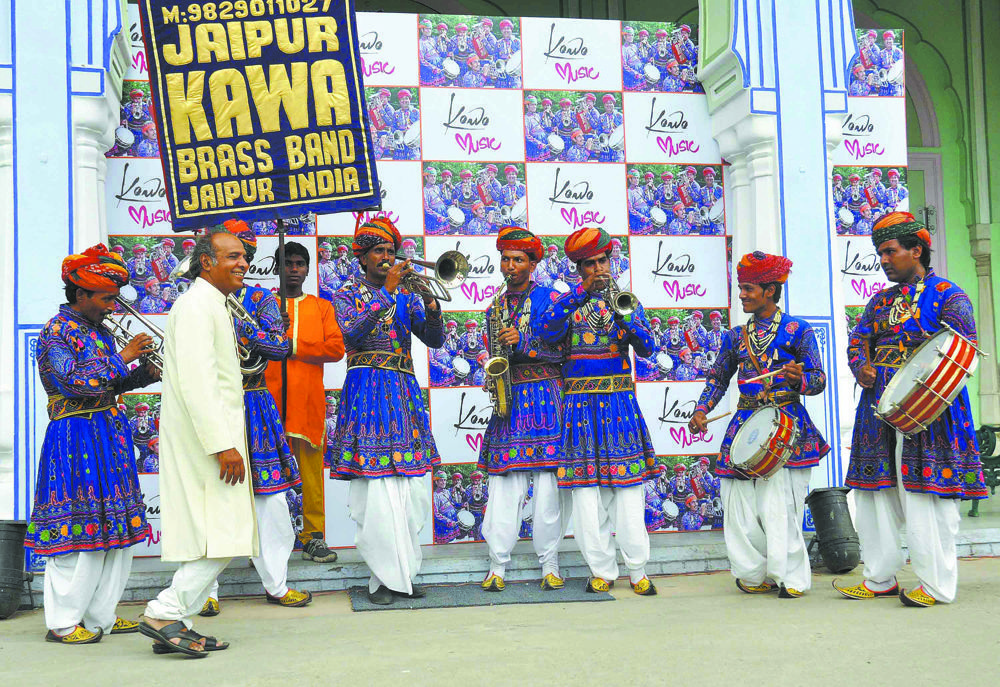
worldview jaipur-kawa-brass-bandJuly 26 and 27, the auspicious sounds of the Jaipur Kawa Brass Band from Rajasthan, performing music from Bollywood and regional folk traditions, will resound at the WestJet Stage.

A must-have at regional weddings, they’re a must-see for Harbourfront visitors.

Afrofest at 25: Afrofest, Toronto’s biggest African festival, is celebrating a significant anniversary: its 25th. On June 12 the festival launches at the Gladstone Hotel ballroom co-presented by Music Africa and NXNE. Outstanding bands including Njacko Backo (Cameroon), Madagascar Slim (Madagascar), Tich Maredza Band (Zimbabwe), Foly Asiko (Nigeria) and Midnight Trinity (Botswana) will perform. Then on July 6 and 7 various music and dance groups and their respective African communities will be out in force in the green surroundings of Woodbine Park. There the real outdoor musical magic takes place in its appropriate milieu, among the food and craft stalls and the arts of Africa.

City Hall Square Concert Series:
Some Quick Picks

The City of Toronto presents a concert series Thursdays during July and August at Nathan Phillips Square starting at 12:30pm. Called “Tasty Thursdays,” in homage to the international dishes for sale, the series delivers on its motto “celebrating the world in Toronto” by presenting concerts with a global musical flavour.

July 11, the NYC band Matuto steps onto the stage with its startling mix of Brazilian forró and Appalachian bluegrass. Montreal’s Bombolessé merges Portuguese, French and Spanish lyrics with an equally syncretic selection of musical genres into a festive dance-forward performance on July 25. On paper the group reads much like urban Canada sounds these days.

August 15, the Ghanaian-Canadian urban folk, pop, rap and soul maestro Kae Sun will touch the assembled with his poetic observations of the human condition. Finally, on August 22, the Lemon Bucket Orkestra, Toronto’s often zany tribute to Ukrainian, Balkan, gypsy party and klezmer music, rocks the City Hall square.

Signing off for the summer, I wish all readers a relaxing and re-energizing summer full of music. Thanks for reading and listening. 

Andrew Timar is a Toronto musician and music writer.
He can be contacted at worldmusic@thewholenote.com.

Ahhh, summer’s here, finally. Time to hit the road, get outta town, escape the city, right? Maybe not. There is so much going on in Toronto that you might want to consider a musical “staycation” this summer, for part of it, at least.

From Music Mondays to Sunday Serenades, you can catch a local, free (or at most $5–$10), indoor or outdoor summer concert series performance pretty well every day of the week, from June right up to the end of August and into September. Befitting summer’s easy pace, enjoy a leisurely perusal of the daily offerings below.

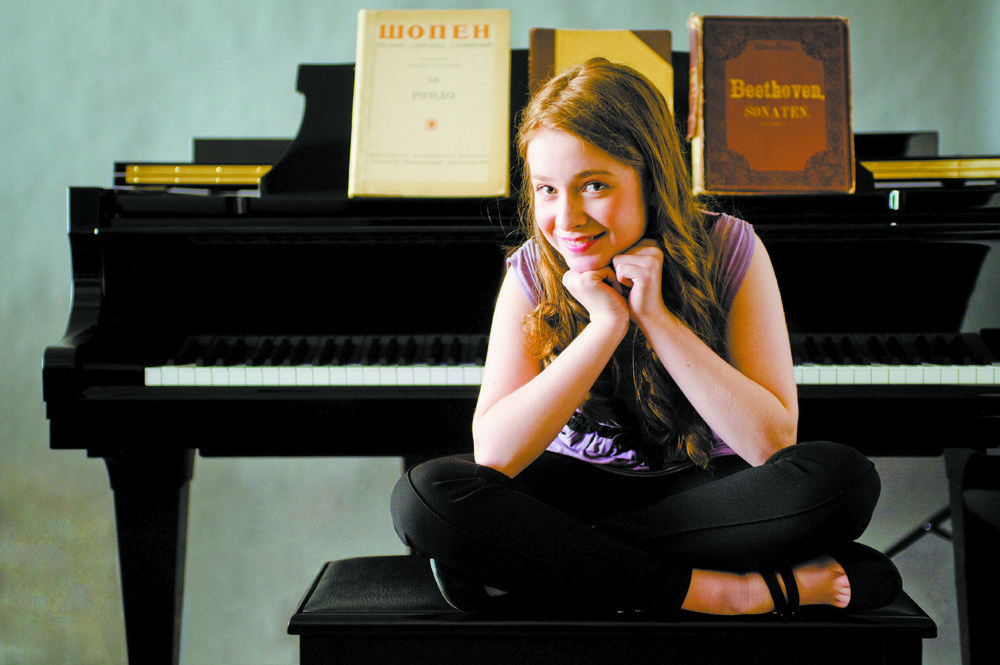
classical anastasia-rizikovMonday: For the past 21 years, every Monday throughout the summer, locals and visitors alike have “taken a load off” at around noon, entered the inviting, downtown sanctuary of the Church of the Holy Trinity and experienced a wonderful, restorative, musical performance, presented by Music Mondays. What is different this year is that it is artistic director Eitan Cornfield’s first full season at the helm of this much-loved series.

Last year, Cornfield shared some of his thoughts with us at the end of the 2012 season. This year, the veteran former CBC radio producer offers a few more thoughts on his approach to the series, at the front end of the summer and from the vantage point of a year’s worth of hindsight.

Interestingly, in his search for “organizing principles” for Music Mondays,” Cornfield’s language is more reflective of environmentalism than show business or the arts: he speaks of “an ecological image of Toronto’s musical life,” and what it takes to “survive and thrive in such an environment ... the effects of climate, nurture, location.”

“I began to answer these questions by considering the ecological niches that are underserved” he says. “What comfort, solace and sanctuary is there for weary shoppers, tourists, finance and IT workers in the high rise beehives of downtown Toronto, what opportunities for reflection, to recharge our artistic and spiritual batteries? ... We’re surrounded by pop and light entertainment, the short burst of song, the guitar riff, the advertising jungle, all fuel for ADD. And so we’ve redefined the mission of Music Mondays as providing food for thought ... not just the traditional Western music of dead white guys, but the classical and art musics of all cultures ... [and] a new branch of the Music Mondays organism devoted to showcasing young composers.”

“In a nutshell: we know where we fit into the environment: we provide a distinct ecological niche for both music lovers and performers, we promote diversity and accessibility, we nurture the young and the talented and we marry their music with ideas.”

Food for thought, indeed! The delectable series runs June 3 to September 30.

classical bob-neighbourTuesday: “Be inspired by the power and overwhelming beauty of a great cathedral organ” says the Cathedral Church of St. James website, under “Recitals and Concerts,” inviting you to find inspiration at two weekly, downtown, organ recital series. Music at Midday is the one on Tuesdays at 1pm. (I’ll get to Sunday’s Twilight Recitals later.)

Composer and St. James Cathedral’s interim associate organist, Andrew Ager, holds court for the majority of these concerts, with current artist-in-residence David Briggs performing at four of the recitals over the summer. Music coaxed from the 5,000+ pipes of the cathedral’s Casavant organ can be heard on Tuesdays from June 4 to July 30, and again on August 13 and 27, when Briggs performs music with a “French Flair” (works by Langlais, Bach, Franck, Saint-Saëns and Briggs) followed by “Music to Rouse the Spirit” (works by Bach, Briggs, Tchaikovsky, Elgar and Widor).

Wednesday: With three very distinct concert series falling on Wednesdays, say “so long” to the mid-week slump. St. Stephen in-the-Fields Anglican Church, in Kensington Market, starts things off in June with its weekly Concerts at Midday (12:35pm), featuring a variety of instrumentalists including pianist Richard Herriott (June 5), organists Eric Osborne (June 12) and Andrew Adair (June 19), and clarinetist Nicolai Tarasov (June 26). The series winds up August 28 with Bruce Nasmith performing double duty on guitar and organ.

Come July, two other outdoor Wednesday series swing into action. From July 10 to August 28 the City of Toronto hosts the free 12:30pm “Fresh Wednesdays as part of its annual Summer Squares Concert Series. Munch on produce purchased from the Nathan Phillips Square Farmers’ Market while listening to a featured Canadian singer-songwriter of the week — a perfect pairing. And if you feel like an evening away from the bustle of downtown, the Artists’ Garden Cooperative obliges with its truly eclectic Plein Air Salon Garden Concerts. Taking place throughout July and August, at 7:30, these lovely garden concerts offer everything from folk/roots music and jazz to country blues and Bossa Nova. Attend the AGC’s free launch party on June 25 at 4:30 for a sampling.

Thursday: Thursdays will pose an even greater challenge to your concert-going plans, with four series to contemplate, in June at least. Nine Sparrows Arts Foundation wraps up its regular Lunchtime Chamber Music recital series at Christ Church Deer Park, with four June concerts. NSAF has been running the weekly noon hour recital series since the fall of 2009, presenting local musicians — often graduate performance majors from U of T’s Faculty of Music — in “a unique chamber music program designed to provide showcase opportunities for rising talent.” You can catch some of this young talent at 12:10 on June 6, 13, 20 and 27; mind you, that last recital happens to include some “seasoned” talent: The WholeNote’s own Allan Pulker on flute.

The pairing of music and food has always been a winning combination, especially when the former is free and the latter cheap. Once again, the City of Toronto has married the two for “Tasty Thursdays” at Nathan Phillips Square, inviting you to relish “international dishes (for $7 or less) served up by a variety of Toronto restaurants, while enjoying free live music from the stage, including roots, blues, reggae and Latin sounds.” The series runs Thursdays, from 11am to 2pm, with concerts at 12:30, July 11 to August 29. Yum!

As it’s done for the past 13 summers, Harbourfront Centre continues to gift us with Summer Music in the Garden, a glorious outdoor series in the entrancing Toronto Music Garden. Every Thursday from July 4 to September 12 (except September 5), people wend their way to the Garden, to set out blankets and chairs, or claim space on the terraced seating area, in anticipation of the evening’s live performance at 7pm. In her curatorial statement, Tamara Bernstein refers to the season’s “joyous eclecticism,” an apt and inspired description of what Bernstein has programmed: “music from 17th-century Europe; string quartets by Haydn, Mozart, Beethoven and more; South Asian ragas; thundering taiko drums; music for African kora, viola da gamba and Persian instruments; fiddling from Cajun, Celtic, French-Canadian and Norwegian traditions; several world premieres — and of course the garden’s ‘patron saint,’ J. S. Bach!” Irresistible, yes? The magic of the Garden awaits you ... as it does on several Sundays at 4pm, throughout the summer, as well.

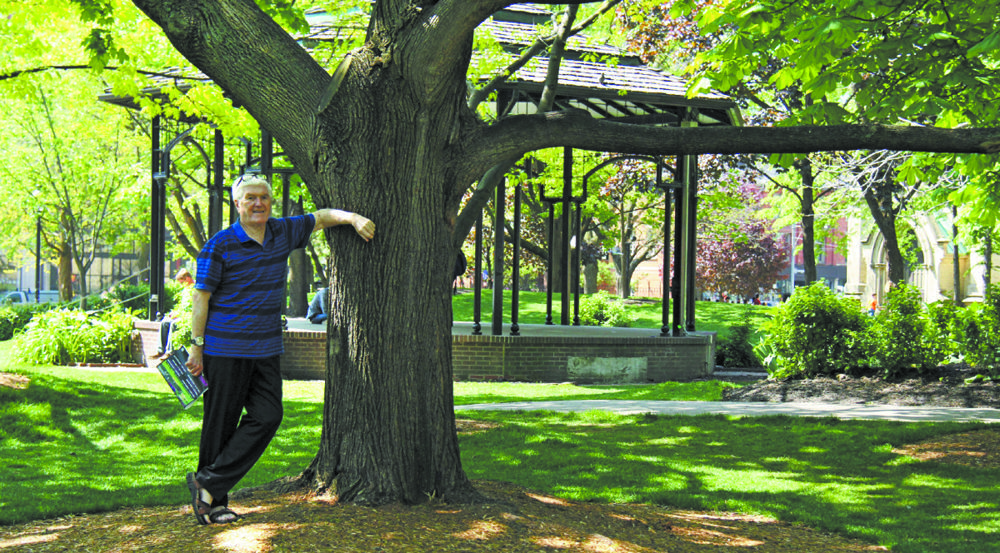
The final Thursday series I want to mention here is the newest kid on the block, or rather, in the park, St. James Park, former home of the Occupy Toronto camp. Hosted by the St. Lawrence Market Neighbourhood BIA, Music in St. James Park was conceived and coordinated by local writer and music lover, Bob Neighbour, a spry (by all accounts) 87-year-old who, while in agreement with the Occupy message, wanted to revive his neighbourhood park, have it known and frequented for its loveliness rather than its political past. As Nancy Miller, Neighbour’s wife, wrote in an article for the online publication Good News Toronto, August 2012, Neighbour “just wanted to sit, on a warm evening, and listen to beautiful music.”

Armed with the old adage “they can only say no” — something my wise, Jewish mother taught me — Neighbour approached his neighbourhood BIA about supporting a free music series in the park, and they liked the idea. Musicians were lined-up, local businesses came on board and “occupy the gazebo” translated into beautiful music emanating from the park’s gazebo, which hadn’t been used in decades. In its inaugural year there were six concerts; this year there are eight at 7pm, ranging from those classical music boundary pushers, the Annex Quartet, on June 20, to the spirited Boxcar Boys performing their unique mix of wild gypsy, Dixieland jazz, klezmer and folk music, on August 8. Last year I attended the second concert. Two greats, Jane Bunnett and Hilario Durán, graced the gazebo with incredibly exhilarating, sexy Cuban music. It was a perfect evening. Here’s to eight more.

Friday and Saturday: It seems that there’s a dearth, generally, of Friday and Saturday summer concert series. Perhaps presenters figure the city empties out on weekends with its citizens making a beeline for “the cottage.” For those of us who remain in the city (by choice or otherwise), local pianist Gordon Murray kindly fills the void with his two, one-man “mini-series.” On Fridays (June 7, 14, 21, 28 and August 23 and 30) it’s Piano Potpourri, 1:10pm at Trinity-St. Paul’s United Church, featuring an assortment of selections from classics, opera, operetta, musicals, ragtime, pop, international and other genres; you’re encouraged to bring your lunch. The three Piano Soirée concerts (June 29, July 27, August 24), at 8pm on Saturdays, also at Trinity-St. Paul’s, offer up more formally programmed recitals with works ranging from Kalman’s Dream Once Again to Liszt’s Un Sospiro. Check the listings for details.

Sunday: In contrast to the scarcity of Friday and Saturday concerts,Sunday’s abundance includes afternoon concerts in gardens, twilight church recitals and evening serenades in the square. You already know about two of them: Cathedral Church of St. James’ Twilight Recitals at 4pm (June 2, 9, 16, 23) and Harbourfront’s Summer Music in the Garden, also at 4pm (June 30; July 21, 28; August 11, 18, 25; and September 8, 15). And there’s yet another of the City of Toronto’s Summer Squares Concert Series. This time it’s “Summer Serenades” at Mel Lastman Square, featuring swing, jazz and big band music, at 7:30pm, on seven consecutive Sunday evenings from July 7 to August 18. Last in our survey of Sunday, City of Toronto Historic Sites presents Music in the Orchard. These popular outdoor performances in June at the Spadina Museum, begin at 1:30pm and feature jazz and improvised music (June 2); works by Mozart and beyond for wind octet (June 9) and classical to modern works for flute, clarinet and bassoon (June 16). As its press release suggests, “Bring a blanket. Bring a picnic. Bring the whole family. Pay what you wish.” Instructions for a perfectly pleasant Sunday afternoon.

Tuesday, Wednesday, Thursday, Friday and Saturday: And last but certainly not least is Toronto Summer Music Festival. Originally conceived as a summer series, with concerts every other day or so over a four-week period, TSMF now commands mid-July to the beginning of August with an astonishing array of local and imported talent gracing its three stages, five days a week. For those whose idea of a “staycation” includes total musical immersion, TSMF is, more than any other, the in-town festival for which to stick around or come home.

Convinced to stay put for a bit? Good. Enjoy the music and summer on! 

Sharna Searle trained as a musician and lawyer, practised a lot more piano than law and is listings editor at The WholeNote. She can be contacted at classicalbeyond@thewholenote.com.

choral torontomasschoirIn my last column I promised to address the reluctance of audiences to attend performances of new music, even to the point of vetting concerts over the phone to make sure nothing on the program is too modern.

One reader wrote in to observe that time often sifts through and discards the inferior music of past eras, leaving a core of proven masterworks that form the basis of performers’ standard repertoire; with a finite amount of time and resources for concert-going, it is reasonable to concentrate on works that have some guarantee of quality and durability.

I wrote back and pointed out that time was actually an unreliable source and judge of quality. Many composers whose work was neglected to various degrees after their deaths were revived by later musicians, found an audience, and now are considered important. Into this category fall Bach, Mahler, Vivaldi, Monteverdi, as well as composers popular with early music audiences such as Dowland, Gesualdo and Biber.

Hearing well-known works repeatedly can be both pleasurable and a way to a deeper understanding of these compositions. But there is great fun, satisfaction and real excitement in feeling that you are singing (or listening to) something new and unusual.

The reader and I agreed in a pleasant email exchange that an active, engaged audience was needed, to be receptive to musicians who champion both new and neglected works. Only with these kind of listeners can time and successive audiences find which composers speak to them most deeply.

For those interested in being part of a vanguard of new, varied and interesting choral projects, there are fascinating opportunities this July and August at Stratford Summer Music.

The festival, somewhat overshadowed in the past by the town’s renowned Shakespeare festival season, has in recent years emerged as a hub of innovative summer programming. This year, their focus is on choral music.

This year Stratford Summer Music is inviting interested choral singers of all ages, abilities and experience to participate in a series of events titled “We Sing the World – a Choral Symposium,” over the course of four days, July 18 to 21. The musicians leading rehearsals, panel discussions, concerts, workshops and lectures are a mixture of Canadian and international choral music experts. The festival’s two themes are the environment and world culture; the workshops and discussions will address how world culture and environmental concerns are influencing and shaping choral music in the new century.

Participants will form a chorus that will rehearse during the symposium and perform a concert at the end of the weekend. Registration information can be found at stratfordsummermusic.ca.

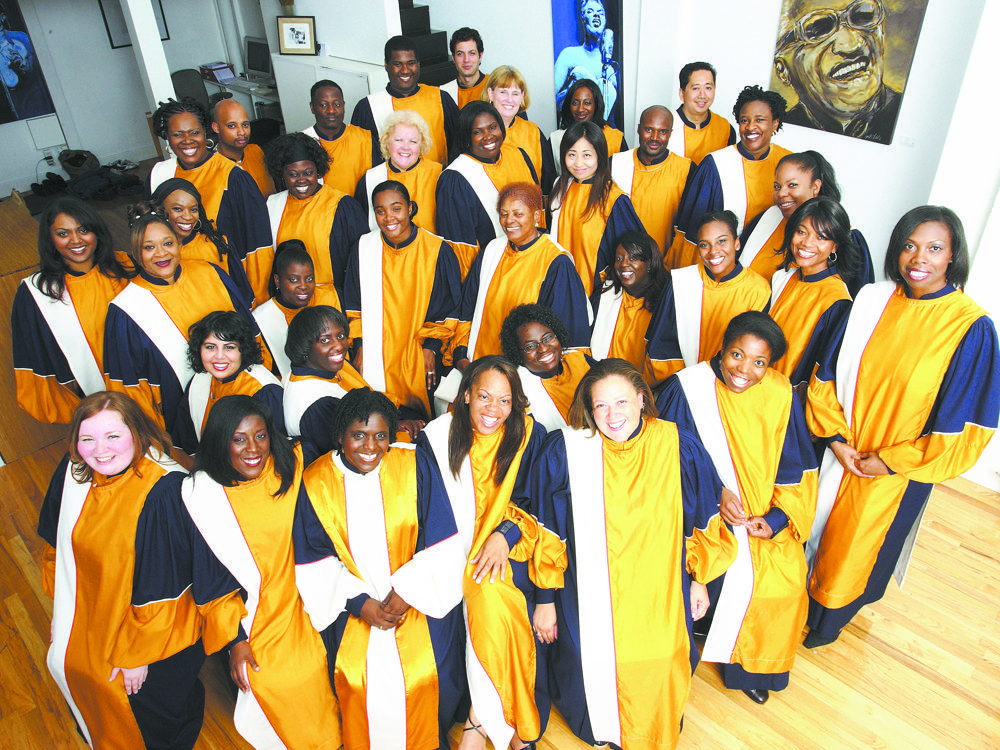
The festival’s programming is stylistically diverse, situating classical choral singing within the larger context of world music and modern vocal techniques. Concerts will include appearances by the famous Vienna Boys’ Choir (July 26 to 28); Johannesburg’s Mzansi Youth Choir (August 22 to 24); Anúna, the Irish national choir (as part of the choral symposium); and an August 4 concert by the Toronto Mass Choir, one of the city’s best gospel music ensembles.

The festival is also devoting a substantial part of the summer to an exploration of the work of legendary Canadian composer R. Murray Schafer, perhaps the most internationally renowned Canadian composer alive. On July 18, the opening day of the choral symposium, Schafer celebrates his 80th birthday.

Schafer has been an iconoclast from the beginning, rebelling against the stultifying conventions of the classical concert paradigm from the 1960s onward, setting his music dramas in lakes and woodland locales. Schafer’s innovations seem prescient now, as young classical musicians are venturing away from the concert hall with increasing frequency and looking to bars, clubs and other non-traditional spaces to try to connect with audiences. (His Music for Wilderness Lake will be performed along the Avon River at 7am from July 19 to 21).

At the same time, there are strongly traditional elements in Schafer’s work that connect him to European Romantic strains in myth, opera and literature. His work often depicts metaphysical struggles between good and evil, light and dark. Sexuality, particularly female sexuality, is sometimes presented as a destabilizing, threatening force.

Activities focusing on Schafer’s work include an 80th birthday dinner July 18, an exhibition of hand-drawn scores opening July 17 (Schafer’s scores are notable for their unusual artistry and draftsmanship, incorporating visual imagery as well as traditional music notation), lectures, symposia and concerts.

Other concerts and festivals of note:

At the Elora Festival, there are many opportunities to see the Elora Festival Chorus, which is appearing in at least eight separate shows. Notable concerts with an anniversary theme are “Coronation: Crowning Glory” on July 20, which is a celebration of Queen Elizabeth’s 1953 coronation, and a centenary celebration of the birth of Benjamin Britten on July 28.

The Tafelmusik choir and orchestra take part in a very intriguing blend of dance and music on June 21 and 22, as part of the Luminato Festival. The ensembles accompany choreographer Mark Morris’ interpretation of Handel’s L’Allegro, il Penseroso ed il Moderato.

Handel’s setting combines John Milton’s two poems, L’Allegro and Il Penseroso, in a metaphysical dialogue. L’Allegro (roughly, the lively one) is happy, active — something of a party animal, actually — and Il Penseroso (the introspective one) is pensive, ruminative, even a bit gloomy. The two poems are companion pieces that explore opposite approaches to life, spirituality and sensation.

Handel and his librettist interspersed the two poems, creating a dramatic tension between the classic Eros and Thanatos principles. Recognizing that whichever text came last would get the final word on the argument, they added new text and a third character, il Moderato, that attempts to mediate and find a middle path between the two extremes.

Whether this succeeds as a dialectical synthesis is a matter of opinion. The new text comes down rather on the side of il Penseroso, and l’Allegro — whose approach strikes me as more fun — is treated as a bit of an unruly teenager in need of curbing. But this was very much in harmony with the aesthetic of the time, which was ultimately about balance, grace and proportion in all things. Handel’s music mines the text and finds many opportunities for word painting and expressiveness. The show also incorporates the images of poet/draftsman/painter William Blake and has been a hit since its premiere in 1988.

The Kokoro Singers, based in the southern Ontario region, perform “Earth, Air, Fire, Water” on June 9 in Guelph and on June 15 in Dundas. The concerts feature works by Hatfield, Whitacre, Ticheli and Thompson.

On June 15 the Cabbagetown Classical Youth Choir performs its annual spring concert, which features excerpts from Mozart operas and other works. The choir’s mandate is to give singing opportunities to children of families in difficult economic circumstances, and they are soliciting funding to help with this worthy goal. The concert is the finale of an operatic workshop for youth, and features a special appearance by legendary Canadian bass-baritone Gary Relyea.

From England, the Bradfield College Tour Choir is visiting Canada. This youth choir has performed all over Europe, and in the US as well. Their musical director, Anne Wright, is originally from Toronto. They are singing in Niagara Falls on July 4, and in Toronto on July 3 and 6. The July 3 concert takes place at Casa Loma.

Hamilton’s Arcady Singers sing several concerts as part of the Brott Music Festival, which takes place in venues in Burlington, Hamilton and Ancaster. On June 20 they will be featured in a performance of Beethoven’s Ninth Symphony; on August 1 they take part in a concert performance of Verdi’s Aida; and on August 15 the festival’s grand finale is Mahler’s Symphony of A Thousand, which is really an oratorio for choir and soloists.

On July 28 the Hart House Singers perform “The REAL Glee: Songs made famous by Yale, Harvard and Hart House Glee Clubs.” Glees — part songs for small ensembles — have been around for centuries. The modern high school glee club is a mixture of standard choir and show choir, a kind of choreographed choir/music theatre hybrid. But up to the middle of the 20th century, glee club music was a collegiate phenomenon with a particular aesthetic and style. It combined folk songs, school songs, 19th century parlour music and archaic sounding Latin lyrics in a manner that has almost disappeared. This concert — which will also feature modern songs that might be more familiar to the Glee television audience — is a chance to revisit and enjoy this charming repertoire.

The Elmer Iseler Singers appear in Parry Sound at the Festival of the Sound on July 18, in a mixed concert of popular Canadian music that includes Srul Irving Glick’s The Hour Has Come. This tuneful and accessible piece, premiered by the Toronto Mendelssohn Choir in 1985, has become something of a Canadian choral standard. The Toronto Mendelssohn Choir also appears at the festival on August 11, singing Orff’s Carmina Burana.

Speaking of unconventional locations, the Westben Festival (various dates between June 8 and August 4) takes place in Campbellford, which is in the mid-Ontario region of Northumberland County. All the concerts take place at the Westben Barn. Westben Youth and Teen Choruses will be taking part in a version of Bizet’s Carmen July 4 to 7, a concert of selections from Broadway musicals June 9 and a performance of Beethoven’s Choral Fantasy June 29.

That’s all, folks. Enjoy the music and have a great summer! 

Ben Stein is a Toronto tenor and theorbist. He can be contacted at choralscene@thewholenote.com. Visit his website at benjaminstein.ca.

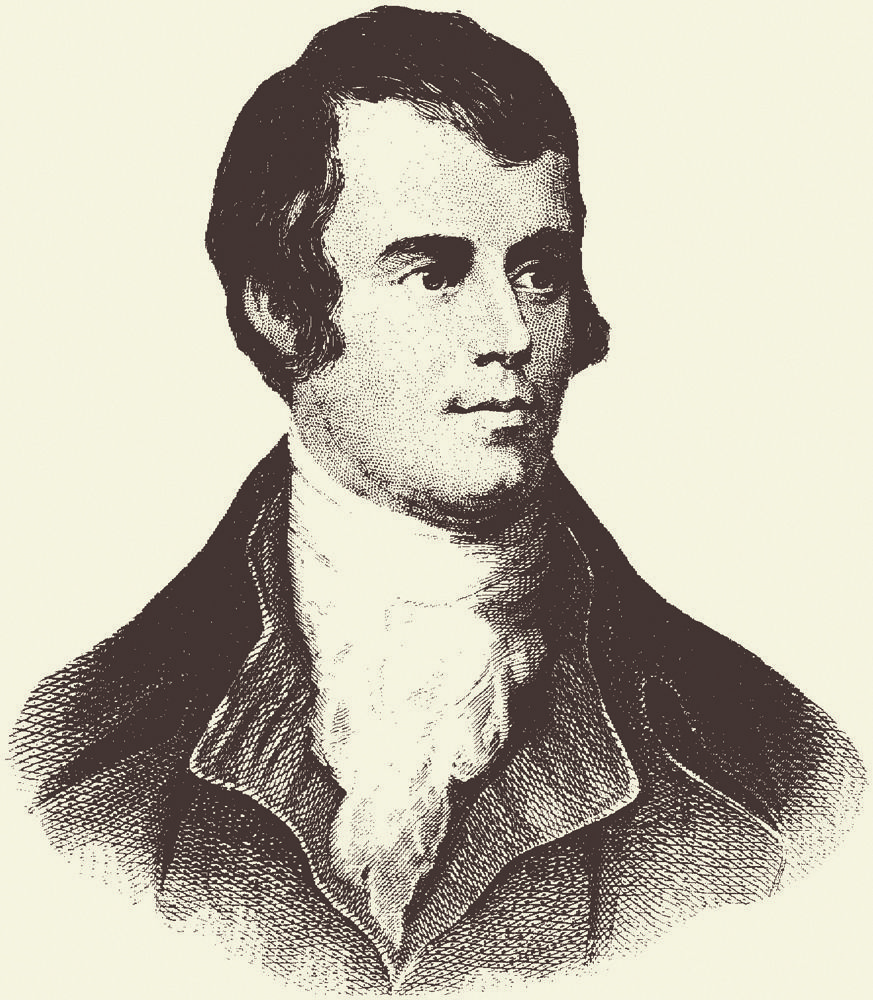
artofsong robbie burnsRobert Burns was not a musician but he liked music; he was especially fond of traditional Scottish airs. He wrote several times that his main goal in writing texts for them was to preserve the music. After Burns’ death, that process was reversed by composers like Schumann and Loewe, who wrote new settings for Burns’ texts. More recently, Benjamin Britten did so in A Birthday Hansel, a song cycle beautifully performed at the Royal Conservatory on April 14 by soprano Lucy Fitz Gibbon and harpist Ingrid Bauer.

The relation between text and music in Burns is actually more complicated than his own statements would suggest. O My Love is Like a Red Red Rose was first published by Pietro Urbani, an Italian musician active in Scotland. Burns gave him the words of the song and essentially told him to use them as he saw fit. Urbani then came up with his own composition, an elaborate setting featuring two violins, viola and harpsichord, with an instrumental introduction and with the notation “Largo con Molta Espressione.” James Johnson republished the song in 1797 and used the tune that Burns had himself suggested, Major Graham. Then in 1821, long after Burns’ death, Robert Archibald Smith proposed an alternative tune, Low Down in the Broom. It is that tune that is now generally used. The case of Auld Lang Syne is different but also complicated. Burns wrote, in a letter, that he “took it down,” that is to say he took the words down, from an old man’s performance. Johnson published it in 1796 to an old tune, but two years earlier Burns had already written to another publisher, George Thomson, that he did not like that tune; he added that there was another, which “you may hear as a Scottish country dance.” It is that other tune that everyone now knows. It is clear then that in some cases Burns wrote, or wrote down, the texts first and then looked for a traditional melody that he liked and that fit metrically.

art of song virginia hatfieldSeveral Toronto musicians sing Scottish songs. Lorna Macdonald has done so in a number of her recitals, Allyson McHardy included a set in a recent concert and there is a fine performance of a Burns song on an ATMA CD by Meredith Hall with Ensemble La Nef. There will be another chance to hear songs by Burns in a concert entitled “The Star of Robbie Burns,” with Virginia Hatfield, soprano, and Benjamin Covey, baritone at the Church of the Redeemer, June 7. R.H. Thomson will narrate Burns’s life, while the second half of the concert will feature songs from the musical Brigadoon. The pianist is Melody McShane. And just in case that is not enough, the ticket price includes tea and shortbread. The concert will be repeated at the Festival of the Sound at the Charles W. Stockey Centre for the Performing Arts, Parry Sound, but with a different soprano, Charlotte Corwin. A different Burns/Brigadoon concert will be given at the Westben Festival in Campbellford with Donna Bennett, soprano, Colin Ainsworth, tenor, and Brian Finley, piano, July 13. You will also be able to hear Burns’ songs Ae Fond Kiss and Auld Lang Syne in a concert titled “A Celtic High Tea” at St. John’s Church, Ancaster, August 11.

Read more: The Songs of Robert Burns

onopera feng yi ting  5  photo by julia lynnThis summer there is not quite as much opera on offer in town as there has been in past seasons. Out of town, however, there is a burgeoning of opera productions and opera-related concerts.

June: In Toronto Luminato (luminatofestival.com) has included opera in each of its past six seasons. This year the focus is on the Canadian premiere of Feng Yi Ting by Chinese composer Guo Wenjing. The opera had its world premiere at the Spoleto Festival in May 2012 and is notable because the three organizations that commissioned the opera (Spoleto, the Lincoln Center Festival and the Chinese organization Currents Art & Music) chose Toronto’s own Atom Egoyan as the stage director.

The opera, only 55 minutes long, explores the tale told in the 14th-century novel Romance of the Three Kingdoms of Diao Chan, one of the fabled Four Beauties of ancient China, whose seductive charms ignite an empire-threatening rivalry between a ruthless warlord and her lover, the brave general Lu Bu. It focuses on the pivotal moment when Diao (Shen Tiemei) and her lover (countertenor Jiang Qihu) meet in the Feng Yi Ting (“Phoenix Pavilion”), where she urges him to eliminate his nemesis. One of China’s most respected contemporary composers, Guo fuses Chinese and Western classical styles to create a score that sounds at once both ancient and modern. The opera is sung in Mandarin with English and Mandarin surtitles and runs for only three performances from June 20 to 22. For ticket holders Egoyan leads a pre-performance talk about the creation of Feng Yi Ting each evening at 7:10pm at the MacMillan Theatre.

The only other large-scale opera-related production in Toronto this summer is the latest opera/theatre hybrid created by Austrian playwright Michael Sturminger called The Giacomo Variations. Torontonians may recall that Luminato presented Sturminger’s Infernal Comedy: Confessions of a Serial Killer in 2010 starring John Malkovich as the killer whose victims, rather than speak, sang selected arias from Baroque operas. The Giacomo Variations also stars Malkovich, this time as the famous adventurer Giacomo Casanova (1725–98), whose memoirs, Histoires de ma vie, were so scandalous they were not published in full until 1960. In Sturminger’s piece the dying Casanova looks back on his life where his conquests and opponents are characterized by selected arias from the Mozart/Da Ponte operas accompanied by Orchester Wiener Akademie and conducted by Martin Haselböck. This time Show One, not Luminato, presents the work which runs June 7 to 9 at the Elgin Theatre.

For operas in concert in June, one must look to the Toronto Summer Opera Workshop productions led by vocal coach Luke Housner (lukehousner.com). Concert performances with surtitles are the culmination of intensive 10- to 14-day workshops whose purpose is to expose young singers to the rigours of learning roles. The TSOW performs Mozart’s Don Giovanni from June 4 to 6 and Humperdinck’s Hänsel und Gretel from June 12 to 14, both held at St. Simon-the-Apostle Anglican Church.

July-August: For staged operas with piano accompaniment in Toronto in July and August, Summer Opera Lyric Theatre is always reliable. This year SOLT (solt.ca) is presenting Handel’s Alcina (1735) in Italian on July 26, 28, 31 and August 3. Running with it in repertory is Bellini’s I Capuleti e i Montecchi (1830), also in Italian, on July 27, 31, August 2 and 4 and Puccini’s familiar La Bohème sung in English on July 27, 30, August 1 and 3. All performances take place at the intimate Robert Gill Theatre on the University of Toronto campus.

For opera outside Toronto, one need only look at the increasing number of summer music festivals. The operatic highlight of the 26th annual Brott Music Festival in Hamilton (brottmusic.com) is a concert performance with the National Academy Orchestra of Verdi’s Aida on August 1 at Mohawk College’s McIntyre Performing Arts Centre. Sharon Azrieli Perez sings the title role with David Pomeroy as Radames and Emilia Boteva as Amneris. Other opera-related concerts include “Last Night at the Proms Meets Gilbert & Sullivan” on July 27 with David Curry singing all the comic male roles and Brian Jackson conducting the NAO.

This year the Elora Festival (elorafestival.com) also includes opera in concert. On July 27 it presents Handel’s Acis and Galatea with the Elora Festival Singers and musicians of the Toronto Masque Theatre conducted by Noel Edison. On August 3 it presents Gilbert and Sullivan’s The Mikado with Jim White as Ko-Ko, Allison Angelo as Yum-Yum, Thomas Goerz as Pooh Bah, Jean Stilwell as Katisha, David Curry as Nanki-Poo and Michael Cressman as the Mikado. Edison conducts the Elora Festival Orchestra and Singers. Opera-lovers should also note that to celebrate Verdi’s bicentenary, the Elora Festival opens on July 12 with Verdi’s Requiem with COC favourites Yannick-Muriel Noah, Anita Krause, David Pomeroy and Robert Pomakov as the soloists.

A bit farther from Toronto is the Highlands Opera Studio in Haliburton (highlandsoperastudio.com) where Richard Margison is the artistic director. On August 6, 8 and 16 it offers a program of “Operatic Highlights.” On August 11 there is a concert “Richard Margison & Friends” where the famed tenor and some of his closest friends come together to raise funds to support the HOS. The summer culminates in fully staged performances of Verdi’s La Traviata on August 23, 25, 27 and 29. Ambur Braid and Luiza Zhuleva will trade off in the roles of Violetta and Annina, Adam Luther sings Alfredo and Geoffrey Sirett sings Germont. Valerie Kuinka directs and Miloš Replický conducts.

on opera bicycle-operaTo the west, the ever-expanding Stratford Summer Music (stratfordsummermusic.ca) is presenting the unusual group known as The Bicycle Opera Project, July 26 to 28. The group (bicycleopera.ca) was formed to bring Canadian music to people who might otherwise have little opportunity to hear it and to work to close the distance between audiences and opera singers through performances in intimate spaces. It focuses on operatic repertoire that deals with contemporary issues. At Stratford’s Revel Caffè it will perform two programs. The first will include scenes from the operas Rosa by James Rolfe, Slip by Juliet Palmer and Cake by Monica Pearce. The second program features excerpts from Little Miss All Canadian by Lemit Beecher, The Enslavement and Liberation of Oksana G. by Aaron Gervais and Trahisons liquides (in French) by Stacey Brown. The performers are soprano Larissa Koniuk, mezzo Michelle Simmons, baritone Geoffrey Sirett and tenor Will Reid with music director Wesley Shen at the piano, Katherine Watson on flute and Leslie Ting on violin. Michael Mori is the stage director. Outside Stratford, The Bicycle Opera Project will make stops in Toronto, Hamilton, Elora, Fergus, Kitchener, Waterloo, Bayfield and London.

To the northeast of Toronto the Westben Arts Festival (westben.ca) in Campbellford is mounting a fully staged production of Bizet’s Carmen on July 5, 6 and 7. The UBC Opera Ensemble is directed by Nancy Hermiston, and Leslie Dala conducts the Westben Festival Orchestra. On July 21 Richard Margison and John Fanning, with accompanist Brian Finley, offer “Sunday Afternoon at the Opera,” a celebration of Wagner and Verdi in honour of the composers’ bicentenaries. On July 25, 26, 27 and 28 well-known singers Virginia Hatfield, Brett Polegato and James Levesque take a break from opera to explore musicals from The Wizard of Oz to Les Misérables.

If you’re looking for major rarities and would rather stay in Canada, simply head to Quebec. The Montreal Baroque Festival (montrealbaroque.com) runs June 21 to 24. In concordance with this year’s theme “Nouveaux Mondes,” on June 21 Ensemble Caprice and Atelier Lyrique de l’Opéra de Montréal present the Canadian premiere of Vivaldi’s opera Motezuma [sic] from 1733. The opera focuses on the last hours of the Aztec king Moctezuma II (died 1520) as he languishes in captivity under the Spanish conquistador Hernán Cortés. This being an opera, librettist Girolamo Alvise Giusti had no trouble in inventing a love story involving Fernando’s (i.e. Hernán’s) brother Ramiro and Mo(c)tezuma’s daughter Teutile. The score, thought lost, was discovered in 2002 in Berlin, though part of Act 1 and most of Act 3 are missing. Various baroque music experts have created reconstructions of the missing portions, the first concert performance since the 18th century occurring in 2005 in a version by Federico Maria Sardelli. For the MBF, Ensemble Caprice’s conductor Matthias Maute has created his own reconstruction.

Besides this, La Compagnie Baroque Mont-Royal will present a concert called “L’Opéra de Frédérick II” on June 24 which will explore the type of opera that the Prussian king encouraged to flower at court after his ascension in 1740. Fans of ballet should also note that Les Jardins Chorégraphiques and Les Boréades de Montréal have teamed up to present a famous ballet more often recorded than seen — Les Élémens of 1737 by Jean-Féry Rebel (1666–1747), which depicts no less than the creation of the world out of chaos. The performance takes place June 24.

Not far from Montreal is the site of the Festival de Lanaudière (lanaudiere.org). The highlight of the festival is a concert performance of Wagner’s Lohengrin (1850) on August 11 with Yannick Nézet-Séguin conducting the Orchestre Métropolitain and Choeur de l’Orchestre Métropolitain de Montreal. Brandon Jovanovich sings the title role, Heidi Melton is Elsa, Andrew Foster-Williams is Telramund and renowned soprano Deborah Voigt makes her role debut as Ortrud.

Since 2013 is also the 200th anniversary of the birth of Verdi, the festival is offering a starry “Gala Verdi” on August 3 with Jean-Marie Zeitouni conducting the Orchestre du Festival et du Choeur St-Laurent. Soprano Marjorie Owens, mezzo Jamie Barton, tenor Russell Thomas and baritone Quinn Kelsey are the soloists. The concert will feature arias, duets, ensembles, choruses and overtures from 13 of Verdi’s operas from Nabucco to Falstaff.

Enjoy the summer! 

Christopher Hoile is a Toronto-based writer on opera and theatre. He can be contacted at opera@thewholenote.com.

“Everything old is new again,” wrote Peter Allen, the Australian songwriter and performer, in one of his memorable hits of the 1980s. As if to prove the point still holds, a spate of high-profile musicals sweeps the GTA and beyond this summer, all but one more than 30 years old. Already attracting crowds at the Shaw Festival Theatre in Niagara-on-the-Lake, Guys and Dolls, “a musical fable of Broadway” based on stories and characters created by Damon Runyon during the 30s, originated as a 1950 adaptation by Jo Swerling and Abe Burrows, with music and lyrics by Frank Loesser. The most-produced American musical in history, the show has won nearly every possible award and still scores accolades. Given its strong production at the Shaw, “odds are that [it] will become the biggest box-office hit in the Festival’s history,” writes J. Kelly Nestruck in The Globe and Mail. It’s a safe bet that the Festival indubitably is banking upon.

music theatre piazza promotional imageBy now, the plot of Guys and Dolls is well known — at least, to the demographic that appreciates the stylized depiction of Depression-era Broadway that Runyon creates for his motley collection of gangsters, gamblers, chorines and molls. Sky Masterson, a high-roller (played by Kyle Blair in the current production) makes a bet with Nathan Detroit (Shawn Wright), a shady entrepreneur who’s organizing a craps game for his cronies, that he can woo a pious missionary from the Salvation Army — Sarah Brown (played by Elodie Gillett) — and fly her off to Havana. While the sinner and saintly flirt, fight and fall in love, Nathan and his frustrated fiancée of 14 years, Adelaide (Jenny L Wright), a performer at the Hot Box burlesque, conduct a parallel romance that leads to the same destination — the altar, a common site for happy endings in frivolities like this. To chronicle their progress from craps to the church, Loesser provides one of the greatest scores ever written for a popular entertainment — a roster of songs that defines the term “classic” and sets the standard for American musical comedy.

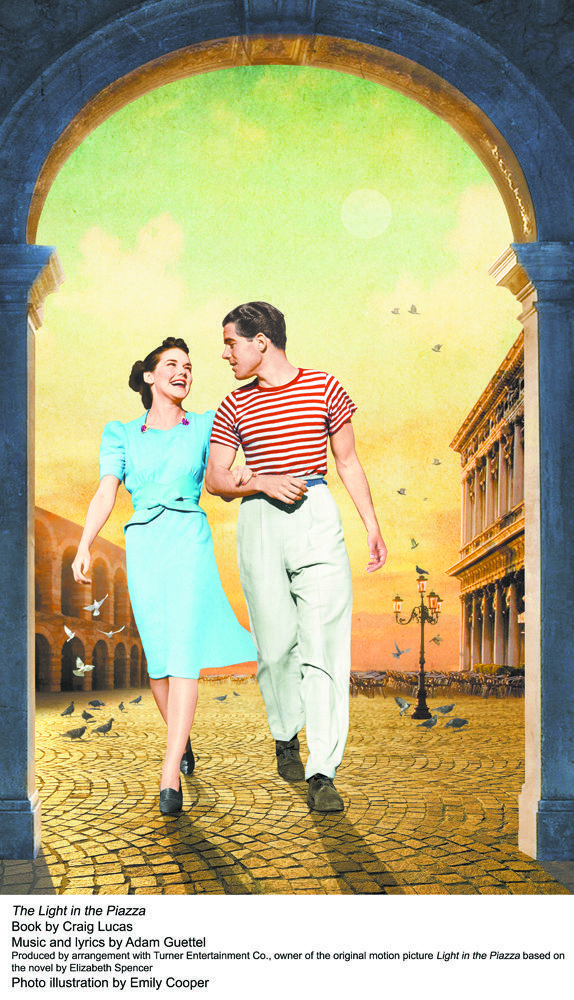
A riskier gamble is the Shaw Festival’s other musical offering this season — The Light in the Piazza, book by Craig Lucas, score and lyrics by Adam Guettel, which opens in late July. One of the few musicals written in the 21st century to receive a major Canadian production this summer, Piazza also evolves from a literary source—a short story set in the 1950s when anxieties about romance and repression ran rampant, a circumstance not incidental to the show’s subject.

Originally a short story written by Elizabeth Spencer in 1960, The Light in the Piazza follows Margaret Johnson, a wealthy matron from the southern U.S. (played by Patti Jamison) as she chaperones her daughter Clara (Jacqueline Thair) on a summer trip to Florence. There, a love affair between Clara and Fabrizio, a young Italian man (Jeff Irving), forces Margaret to face the fact that her future is overshadowed by the past. While still a small girl, Clara suffered a concussion that stunted her mental and emotional growth. Now a beautiful young woman, she retains the innocence of a child, which becomes more than usually troubling after she announces her intention to marry her Italian paramour. Watching Clara’s love blossom, Margaret grapples with her responsibility to her daughter and the girl’s fiancé. Should she acquiesce to love and celebrate the young couple’s marriage, or should she intervene to stop it?

music theatre paul sportelliWriting about The Light in the Piazza, Jackie Maxwell, artistic director of the Shaw Festival, suggests that “actors and singers adore being in an Adam Guettel musical as they have to push themselves to the limit musically and emotionally.” I asked Paul Sportelli, musical director of the show, if he agreed. “Actors do love singing Guettel,” he replied. “He knows how to write for the voice and his compositions are tremendously powerful, so singing actors like to be a part of bringing that kind of composition to life.” Sportelli also suggests that “as much as one can analyze and admire [Guettel’s] composition, there is something in it that is powerful and emotional and transcendent ... that can’t be fully explained ... ” One reviewer of the original Broadway production (2005) made a similar point, observing that “the songs complicate rather than simplify the characters,” which led him to reflect that “the musical is conventionally thought of as the lightest and most disposable of theatrical genres, but The Light in the Piazza is on every level more profound than [many dramas].”

Piazza is one of the few bilingual Broadway musicals to succeed with an audience, many of its characters being fluent only in Italian. The bilingual book and lyrics make the piece more difficult to rehearse than other musicals, Sportelli notes, adding that “the dialect requirements (English with an Italian accent, English with a North Carolina accent), along with the complexity of the score” require extra rehearsal time. Mounting the production in the close confines of the Festival’s Court House Theatre also presents challenges. Using an orchestration that Guettel wrote for piano, harp, double bass, cello and violin rather than a full orchestra, Sportelli and the play’s director, Jay Turvey, hope to turn the liabilities of the space to their advantage. “It’s the orchestration I used when I did Piazza at the Arena Stage in Washington DC in 2010,” Sportelli explains, “and it is very effective: lush while achieving a more intimate ‘chamber’ feel. The five players will be on stage at the back and will be visible.”

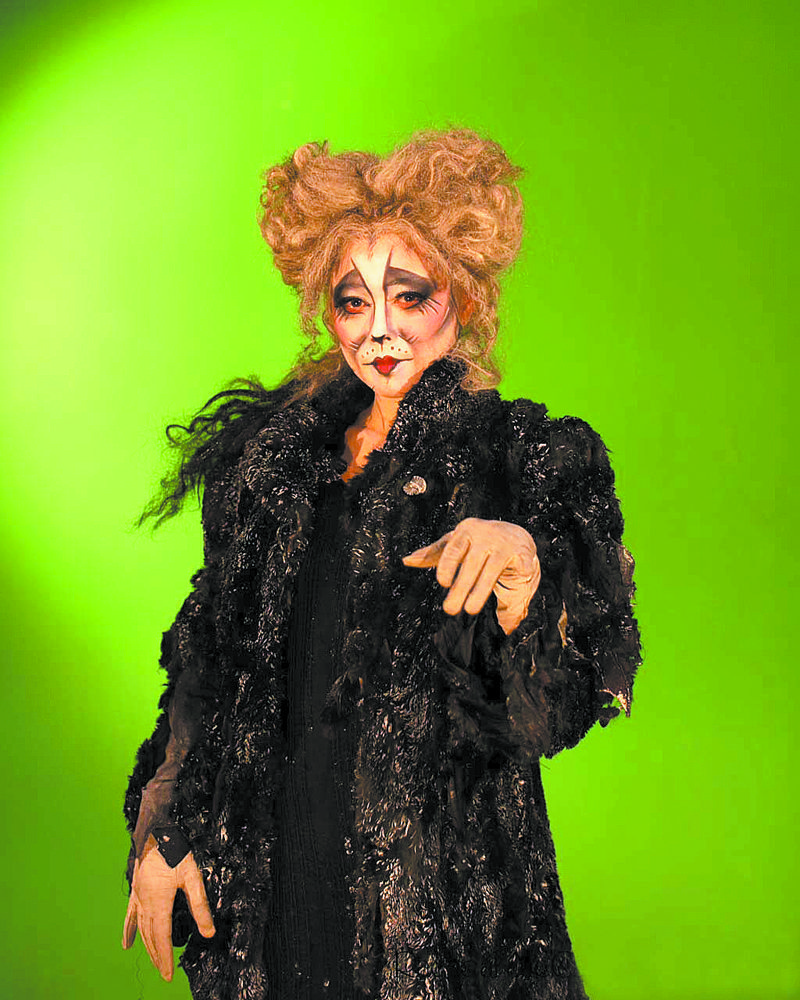
music theatre catsAnother show that uses reduced orchestration to meet the demands of a smaller house opens in early June for a two-month run at Toronto’s Panasonic Theatre. Like Guys and Dolls and The Light in the Piazza, it also stems from a literary source, but one less time-specific. Written in the late 1970s, Cats qualifies as both a cultural phenomenon and a large-scale musical, a fact that often overshadows its considerable artistic achievements. Based on T.S. Eliot’s Old Possum’s Book of Practical Cats (1939), the show premiered in London in 1981 as a high-concept suite for dancers, with music composed by Andrew Lloyd Weber and Trevor Nunn (its director) and choreography by Gillian Lynne. The following year, the same creative team opened Cats on Broadway under the guidance of Cameron MacIntosh, its producer, where, as in the West End, the show garnered instant acclaim and set attendance records. Besides running for 21 years in London and 18 years on Broadway, Cats has since been translated into 22 languages and played around the world. The seven Tony Awards it won in 1983 represent only a few of the many honours it has accumulated during its travels.

The first of the so-called mega-musicals, Cats cost five million dollars to produce on Broadway in 1983, a figure that established a new benchmark for large-scale musical theatre. Given its unusual subject and eclectic score, this cost is remarkable. Much has been written about the initial production, primarily because the cast rehearsed without a book, plot or structure — a situation that regularly led to confusion. Inasmuch as the performers all play cats, they were required to learn a complex physical vocabulary to execute Lynne’s stylized choreography which, while much copied, has never been surpassed. Although the show is sung-through, the music intermittently accompanies spoken text, though never dialogue. Musical forms include an overture that incorporates a fugue for three voices, power ballads, rock solos and chorale recitative as well as novelty numbers that highlight the attributes of the various cats that gather for the Jellicle Ball — an annual event in this feline fantasy that provides the show’s inciting premise. Meeting in a junkyard (the musical’s only set), the phalanx of 22 cats waits for the moment when Old Deuteronomy, a revered elder, will choose the most deserving celebrant to ascend with him to heaven. Defying expectations, he eventually names Grizabella, a shabby old cat shunned by the others, whose signature song “Memory,” introduced at the end of Act One, provides the musical motif that repeats throughout the show to lend it a melancholic tone as indelible as the song’s soaring melody.

The small stage of the Panasonic Theatre is a far cry from the wide proscenium and lofty fly gallery of the Elgin Theatre where Cats received its all-Canadian premiere in 1985. The brain-child of Marlene Smith who, along with Tina Vanderheyden, raised over three million dollars to finance the show (unheard of at that time), Cats gave Toronto’s commercial theatre a long overdue kick-start. The production ran for two years before touring the country and returning for a second sold-out run at Massey Hall in 1987. Responsible, in large measure, for the restoration and refurbishment of the Elgin Theatre, its success had even more important consequences. As Mel Atkey writes in his book Broadway North, the production proved “that there was an audience for musicals in Toronto, the talent to perform (if not yet to write and direct) them and money to be made. When the suggestion of bringing in Les Misérables and Phantom of the Opera cropped up, it was feeding time at the zoo.”

Marlene Smith acknowledges that she enlisted a number of investors from her initial team for the new production of Cats that she undertook at the suggestion of her son Geoffrey, with whom she has formed a new company, Nu Musical Theatricals. To direct, she turned to Dave Campbell, who has mounted the show elsewhere in Canada. Interestingly, she sourced her choreographer and musical director from the original Canadian production: Gino Berti, a member of the initial Canadian cast, is charged with recreating Lynne’s West End choreography, and Lona Davis, another member of the original cast, serves as musical director. It was Davis who explained the show’s orchestration to me, noting that “due to space limitations we have a reduced eight-piece orchestra. The arrangements are based on an existing ten-piece version [for which] Mark Camilleri has created new programming for the three keyboards that updates some of the original sounds.” She adds that “the orchestra performs on a scaffold upstage behind the set” and that “all the performers are miked.”

A new Cats for a new generation? Perhaps, given that the set employs the designs of Rose and Thistle, a Toronto-based company whose digital technology attempts to add depth to the Panasonic’s shallow stage by projecting layers of holographic imagery. While such effects are welcome, even without them the old becomes new again as fresh faces enliven a show that has passed the test of time. The same can be said of a number of other productions that grace our stages this summer — too many, in fact, to allow more than a mention here. Tommy, the acclaimed “rock opera” that began as a record album by The Who in 1969, receives a new production at the Stratford Festival under the direction of Des MacAnuff, one of its originators and continues until mid-October. Another all-Canadian production of an oldie but goodie that promises high-tech staging, the show is sure to attract a new generation of theatregoers interested in experiencing a milestone in the history of musical theatre.

Reaching back even further, Anything Goes, in a touring production by New York’s Roundabout Theatre that won the Tony Award for Best Revival in 2011, also arrives in July for a one-month run at the Princess of Wales Theatre. Written in 1934 by the inimitable Cole Porter, this frothy confection is perfect summer fare — and the second most-produced musical in the American theatre canon, right behind Guys and Dolls. If you haven’t seen it before, you’re in for a treat. And if you have, well, as with all the other musicals available to you this summer, it’s worth seeing again — especially in this rousing production that revels in the joy of staging the past. Who knows, you might even want to sing along. I’m sure you’ll know the songs. 

Based in Toronto, Robert Wallace writes about theatre and performance. He can be contacted at musictheatre@thewholenote.com.


In last month’s issue I referred to a number of concerts by small ensembles. Since then I had the pleasure of attending a very different program by small ensembles. In the most recent of their intimate offerings, the Naval Club of Toronto hosted a return of members of the band of HMCS York. This band, one of several reserve force bands in Toronto, has amassed quite a talented group of musicians. Time was when the membership of such reserve bands constituted a mix of skilled amateur members along with one or two school music teachers. Today this band can boast that close to 75 percent of their members hold degrees in music, including some doctorates.

The program opened with a duet for alto trombone and harpsichord by an early composer that I had not heard of, a predecessor of Leopold Mozart and Michael Haydn. The trombonist, Leading Seaman James Chilton, holds a Ph.D. from the University of British Columbia and is one of a few who are introducing this instrument to their audiences. Three hundred years ago the alto trombone, and its larger brother the tenor trombone, enjoyed significant status as solo instruments. However, the use of trombones as solo instruments declined for almost 200 years. Beethoven didn’t use trombones in his symphonies until his Fifth, where they appear in the final movement.

In the 20th century the tenor re-emerged as a solo instrument, but with a few exceptions, the alto has languished to this day. It was great to hear of its return. (On my return home after that performance, I rushed to play a CD of concertos for alto trombone and orchestra by Leopold Mozart and Michael Haydn.)

The rest of the program consisted mostly of performances by various combinations of brass instruments. A trombone quartet chose lesser known works by 20th century composers including American Arthur Fracenpol and Briton Malcolm Arnold. A quintet brought us back to the present with their version of When I’m 64.

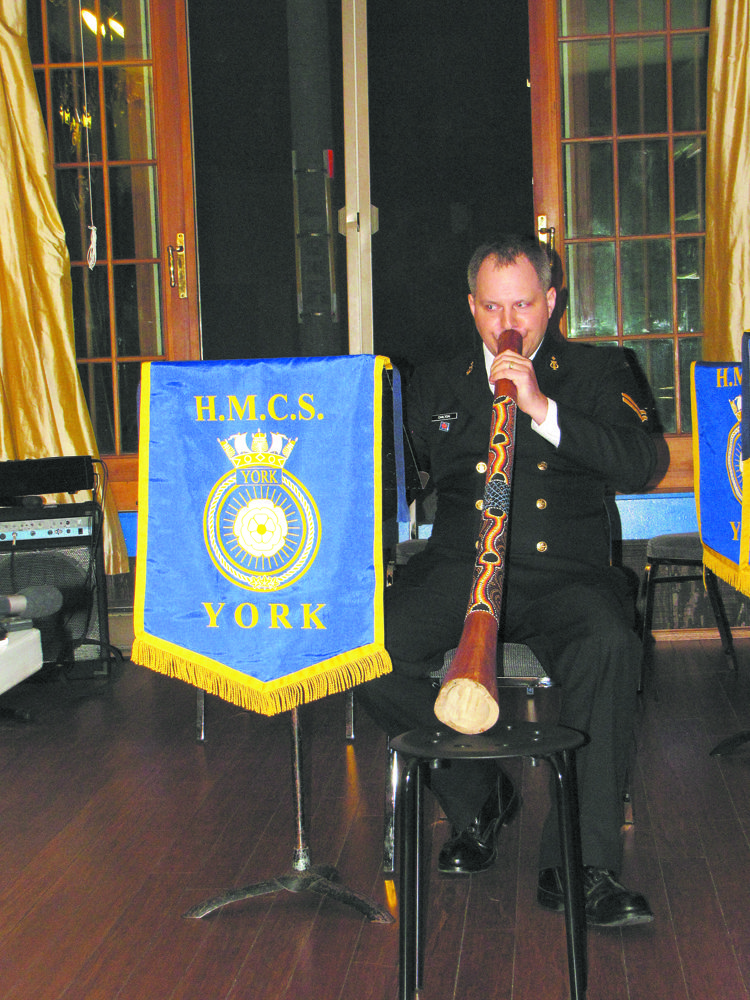
bandstand didgeridooOther than one oboe solo, it was almost all brass. I said “almost” because L.S. Chilton suddenly digressed from his various sizes of trombones to introduce an original composition, his Opus 1 for Solo Didgeridoo. The possibility of a naval musician in full uniform performing on such an instrument in public was beyond my wildest illusions, but there he was. For those not familiar with the construction or origins of the didgeridoo, it is a traditional instrument made by Aboriginal craftsmen in Arnhem Land in Northern Australia. While this was a factory-made instrument, the original native Australian instruments are made from the trunks of eucalyptus trees, the cores of which have been hollowed out by termites. He hopes to get one of those “termite crafted originals” in the future. While I once had the opportunity to make sounds on a didgeridoo, I can’t say that I ever came close to playing anything resembling music on it.

Traditionally, in concerts, naval bands always play their official “regimental march” Heart of Oak. This time, as a bit of a spoof, all of the participating musicians treated us to a vocal rendition of that in four-part harmony.

Since the concert at the Naval Club had such a significant trombone component, this might be a good time to recount a story of a special trombone in my life. Many years ago, having played a tenor trombone for most of my life, I suddenly had the urge to try a bass trombone. So I visited a dealer to inquire about such an instrument. The price of the new Vincent Bach instrument that I tried was beyond my budget at the time and I left empty-handed. That same evening, during a rehearsal, a total stranger who had been sitting behind the trombone section leaned over and whispered in my ear, “Do you know anyone who would like to buy a bass trombone?” I almost jumped out of my skin. When I asked for details, the gentleman handed me a piece of paper with his name “Tommy” and suggested that I phone him.

The next day I visited him. There it was; a genuine New York Bach bass trombone. For those not familiar with the Bach instruments, Vincent Bach was an Austrian trumpeter who moved to New York shortly after the First World War and set up shop to make trumpets and trombones. In later years he moved to Mount Vernon and subsequently sold the business, whereupon the operation was moved to Elkart, Indiana. Those early New York and Mount Vernon instruments are coveted by brass musicians for their craftsmanship and tone quality. The asking price was surprisingly low. Tommy explained that he had suffered a stroke and could no longer play. He just wanted the horn to have a good home. (Some time later he confessed that he had an ulterior motive. Another individual in the same trombone section, who we’ll call Joe, had been hounding Tommy to buy the trombone. Tommy couldn’t stand Joe and wanted the instrument to be played beside him where Joe could eat his heart out.)

Over the years I have wondered about the history of the instrument. There is still the name Harry Stevenson — bass trombonist for the Toronto Symphony for many years — marked on the inside of the case. A few weeks ago I had the opportunity to learn a bit more about my treasure. Tedd Waggoner, the Bach instrument specialist from Elkart, was giving a presentation on the evolution of the early Bach instruments at Long and McQuade in Toronto. I took my instrument to show to him. In this presentation he pointed out how Vincent Bach had maintained meticulous records of every instrument produced with all specifications, dates and names of customers. Waggoner had been able to convince the current management to retain these individual record cards on all of the early instruments. Shortly after his return to his office I received a copy of the card with all of the details. It was completed on April 22, 1941, and sold on January 16, 1945, to a Colin Campbell in New York. How and when did it get from New York to Harry Stevenson? Were there other owners? I feel like a genealogist trying to trace the ancestry of my treasure. Are there any readers who might shed some light? For the benefit of those who might wish to own such a horn, I already have a list of trombonists hoping to be mentioned in my will. Finally on the topic of trombones, the Sheraton Cadwell orchestras are looking for one or two experienced trombone players to join them. For details visit their website at sheratoncadwell.com.

So much for some of the musical events in my life these past few weeks. What is on the horizon for the summer months? Since there will not be another issue of TheWholeNote until September, I set out to determine what would be happening in the community music world over the next three months. With a few exceptions, the community bands in this part of the world served up a deafening silence as far as news of their activities was concerned. With a dearth of information at hand, I turned to band websites to see what they were reporting. In one case, the band in question greeted me with the news of their next great performance in October 2012. Another gave all sorts of detail about their forthcoming trip in September 2010. A third gave a list of every performance in the past three years, but nothing about the future. Come on folks, tell us what you are doing.

Here’s some of what we do know. Steffan Brunette and the summertime-only Uxbridge Community Concert Band will be performing their usual two concerts plus a ceremony with the local branch of the Royal Canadian Legion. The Festival Wind Orchestra will feature all movie music in their spring concert on June 22 at 2pm, at Crescent School. The Newmarket Citizens’ Band has a busy schedule, including the Veterans Day Ceremony at the Newmarket Cemetery (June 9 at 1:30pm), the Aurora Canada Day Parade (July 1 at 10am), the Newmarket Canada Day Fireworks Concert (Richardson Park, July 1 at 7pm), the Orillia Aqua Theatre (August 4 at 6:30pm) and a Clarington Older Adult Association concert (September 22 at 12 noon). The Concert Band of Cobourg is offering a Coronation Concert Celebration series with performances in Toronto June 2, in Kingston June 9 and in Cobourg June 15. As in previous years there will be a series of regular concerts by several bands at the Orillia Aqua Theatre in Couchiching Beach Park and on the Unionville Millenium Bandstand.

While it is definitely not a community band, there is a new small ensemble in Toronto that warrants some attention. Conductor Simon Capet is back in town with a new chamber orchestra with the very musical name Euphonia. There will be two main differences in their performances. They will be performing in small, non-traditional venues and will not be wearing any kind of formal attire.

Rather than viewing these small venue performances as an innovation, the members of Euphonia consider it a return to the past. As Capet points out, public concerts in the days when these composers presented their works were not in large austere concert halls. They were lively social gatherings in the taverns of their day, where the musicians were surrounded by their audiences as they enjoyed refreshments and conversations along with the music. As in those early days, the musicians will be in the centre of the room, not up some distant stage remote from their audience. Tentatively, these concerts will be on the second Monday of every month, with their next concert, consisting of music of Mozart, C.P.E. Bach and Haydn, at the Lula Lounge June 10 at 8pm.

Turning to happenings in September, it seems appropriate to return to naval matters. On the weekend of September 14 the Concert Band of Cobourg, in their role as the Band of Her Majesty’s Royal Marines Association (Ontario), will be travelling to Plattsburgh, New York. For several years now the band, and a considerable group of friends, have made an annual trek to participate in ceremonies commemorating the Battle of Plattsburgh on Lake Champlain. Yes, there was a naval battle on Lake Champlain with no fewer than 30 ships involved. It took place on September 11, 1814, just before the signing of the Treaty of Ghent, and was the final battle of the War of 1812. I might just make the trip there myself this year.

Definition Department

This month’s lesser known musical term is Antiphonal: referring to the prohibition of cell phones in the concert hall. 

Jack MacQuarrie plays several brass instruments and has performed in many community ensembles. He can be contacted at bandstand@thewholenote.com.

jazznotes al-gallodoroFirst of all, just in case you read last month’s column and are wondering how my adventure in Vienna ended, I am out of the woods, so to speak, and back home safe and relatively sound. The last leg — no pun intended — was a direct flight from Vienna to Toronto bringing to a close a trip to remember.

I was allowed out of the infirmary a good deal less infirm than when I went in but had to wait a few days before I could get the flight home and so I spent the night before I left at Jazzland where I enjoyed a lovely evening listening to guitarist Mundell Lowe.

Lowe is not a household name in jazz but he is one of the truly important names in the world of jazz guitarists.

There are guitar players who have relatively high profiles throughout their careers — Barney Kessell, Bucky Pizzarelli, Charlie Christian, Ed Bickert, Eddie Lang, Herb Ellis, Jim Hall, Joe Pass, John McLaughlin, John Scofield, Kenny Burrell, Pat Martino and Pat Metheny are a few of those who attained that recognition.

Read more: ‘Those Lazy Hazy Crazy Days of Summer’

in the clubs brownman - photo by nils blondonSummer solstice renamed: the Toronto Jazz Festival is calling Friday June 21 Free-For-All Friday, as participating venues all over the city will charge no cover. Tough choices that night: David Buchbinder’s lush tones at Lula Lounge; the swinging hi-hat of NYC veteran Victor Lewis at The Rex; the sparkling voice of Molly Johnson enchanting a packed house at the Jazz Bistro ... she will be back the following evening, by the way, with tickets priced at $35.60.

On Free-For-All Friday, trumpet player Brownman will be playing at the Mây Cafe on Dundas West, but if you miss that gig, sweat ye not: he plays a gig every single day of the festival, culminating in a two-night CD release event for his Brownman Electryc Trio CD featuring NYC bassist Damian Erskine.

“It’s actually 13 gigs in nine days,” the Trinidad-born, New York-schooled, Toronto-based Brownman tells me. “Two private gigs don’t appear on the schedule ... It’s pretty crazy. One’s gotta stay organized.My book literally has an hour by hour breakdown of what I’ll be doing over those nine days. There’s so much going on behind the scenes! Like all the logistics of flying in the mighty Damian Erskine, who appears on the new Electryc Trio CD and who will be the featured bassist during the two-night CD release extravaganza on June 28 and 29. Dealing with his airport pickups, hotel accommodations, trying to set up a bass masterclass for him that I’ll host, and a hundred other details means essentially every hour of each day has to be carefully planned out. And, of course, the entire week leading up to the fest is stacked with rehearsals. For every one of those gigs, there’s a corresponding rehearsal. The one that makes me the most nervous is the big Freddie Hubbard Tribute to launch the fest. We’re doing two sets of Freddie’s material — his acoustic material in the first set, and a set of his electric stuff — and only have a single rehearsal to mount all those tunes. That’ll be a nail-biter for sure. But the cats are some of the best in the city, so I’m not that worried. I’ll definitely need to be taking my vitamins that week.”

A leader of no fewer than seven groups, Brownman dabbles in many varieties of jazz, from Latin to electric, and is also actively connected to the urban music scene.

“You’ll notice I’m at Mây for a lot of the Jazz Festival dates. I did a hip hop show there in winter and ended up hanging out with the owners until 4am that night. That led them to ask me if I’d be interested in booking and curating their whole Jazz Festival program. It’s a great space with huge potential for live music and they were happy to give me artistic licence to book as I pleased, so that led to the exhausting work of putting that program together. It’s a strong cross-section of some of the city’s finest multi-faceted jazz artists and will hopefully provide the city with another venue with strong jazz programming during the TD Fest.”

Speaking of strong programming, it is tough to choose just one quick pick for every day of the festival, but here goes:

Thursday June 20, 8pm: country music legend Willie Nelson with an opening set by Canada’s “sweetheart of swing,” Alex Pangman. Massey Hall. $59.50-$125.

Friday June 21, 7pm and 9:30pm: homegrown talent too rarely heard: Mary Margaret O’Hara with Yvette Tollar. Musideum. Free-For-All Friday!

Saturday June 22, 8pm: gospel and soul queen Mavis Staples and the pride of New Orleans, Dr. John. Nathan Phillips Square. $56.50

Sunday June 23, 10pm: blues legend James Cotton at the Horseshoe Tavern. $37.85.

Monday June 24, 7pm: solo jazz piano master, Fred Hersch. Enwave Theatre, Harbourfront. $28.39.

Tuesday June 25, 7:30pm: 19-year-old sensation Nikki Yanofsky at Koerner Hall. $48-$70.50.

Wednesday June 26, 8:30pm: octogenarian treasure Don Francks & Friends at Dominion on Queen. $TBA.

Thursday June 27, 7:30pm: Canadian Jazz Quartet: Gary Benson, guitar; Frank Wright, vibes; Duncan Hopkins, bass; Don Vickery, drums; with NYC’s Randy Sandke, trumpet. Home Smith Bar at the Old Mill Inn, $40.

Friday June 28, 8pm and 10:30pm: arguably Italy’s greatest jazz export of all time, the exceptionally polished vocalist Roberta Gambarini at Jazz Bistro. $40.10.

Saturday June 29, 7:30pm: Gord Sheard’s Brazilian Experience: Brian O’Kane, trumpet; Colleen Allen and Andy Ballantyne, reeds; Alastair Kay, trombone; Rick Shadrach Lazar, percussion; Aline Morales, percussion and vocals; Rob Gusevs, keyboards; Collin Barrett, bass; Max Senitt, drums; Gord Sheard, piano and accordion. $25.45.

A toast to jams: Between the Festival’s mainstage acts and the club series one will find far more than swing and bop: blues, country, roots, soul, folk, hip hop, avant garde and electronica. There’s really only one thing this reporter wishes there was more of: jam sessions. Jazz by its very nature is about improvisation and nowhere does this become more quintessential than when fate unites players from across continents to collaborate on the likes of “It Could Happen to You.” On the bright side, when the festival is over you can enjoy some jazz jams all year long in Toronto.

Chalkers Pub is the home of Lisa Particelli’s Wednesday night 8pm to 12am session, GNOJAZZ, which stands for Girls’ Night Out Jazz (where gentlemen are welcome too). Now in its eighth year and still going strong, the vocalist-friendly evening is a cherished place for singers of all levels to hone their performance chops, form musical connections and become inspired by their peers. By providing a safe musical environment that includes the rock solid rhythm section of Peter Hill on piano and Ross MacIntyre on bass, Particelli has given countless individuals a place to make music comfortably, thereby strengthening this community immeasurably. Most importantly, it is not a competitive diva-fest but rather a friendly place for singers and listeners to gather, share, learn and grow. Hundreds of singers have attended over the years, including vocal teachers and students, professionals and amateurs alike.

“The singers have been wonderful, of course, but it’s the loyal listeners that keep it going,” says Particelli. “These are people who simply appreciate the talent of others and make a special point to come out and support them. Without the support of listeners, the jam session would not be able to survive, so we are truly grateful for our regulars.”

Over the years Particelli has instilled education into the jam in various ways: celebrating Jazz Appreciation Month, organizing workshops by guest artists and for the past three years by fundraising for a vocal jazz scholarship at Humber College. The money is raised by special concerts billed as “GNOJAZZ All-Star Vocal Showcases” and the next one takes place as part of the Toronto Jazz Festival on Sunday, June 30 from 7pm to 10pm at Chalkers Pub. Congratulations to the 2013 recipient of the scholarship, Daniella Garcia!

Gathering inspiration from Lisa Particelli, some of the singers who have been coming out to GNOJAZZ have started jam sessions of their own, including Pat Murray who is starting up her “Jazz Jam-Gria” at 417 Restaurant & Lounge on the Danforth, Tuesday nights. This is particularly good news considering that The Rex Hotel, home of the Classic Rex Jazz Jam, has recently taken the jam out of their programming. At Jam-Gria, instrumentalists are encouraged to bring their axes, with vocalists also welcome:

“Jam-Gria is an east end jazz jam that encourages all levels of musicians to sit in with a house band of mentors or colleagues,” says Murray. “It draws Toronto’s A-level players as well as those musicians taking their first leap of faith into the world of improvisation. The new digs at 417 are exquisite! Very chic decor and cuisine to die for!”

Also on the east side of town, Laura Marks started a Monday night session called Bohemian Monday earlier this year at Rakia Bar.

“Last New Year’s Eve I dropped in to the Rakia Bar New Year’s Eve party,” recalls Marks. “The owner said that they’d like to set up a regular program of music there and asked me if I would work with him on a jam that is mostly jazz but open to other genres. We started in February and have gradually been building it ever since. Up until last Monday it was held every two weeks. Now it will happen every Monday.”

Marks has chosen to invite different musicians each week. Among those who have made up the house band are Mark Kieswetter, Ross MacIntyre, Brendan Davis, Reg Schwager, Lee Wallace, Peter Hill, Shawn Nyquist, Adrean Farrugia and Chris Gale. New to Bohemian Monday in June will be Amanda Tossoff with Brendan Davis on the 10th and Bernie Senensky and Duncan Hopkins on the 17th.

“All the musicians who have played with us remark on the great atmosphere, food, drink and hospitality,” adds Marks. “We’d like to encourage anyone who plays an instrument to come and play.”

Just got word that also on Monday nights, but on the other side of town at Runnymede and Annette, saxophonist Nick Morgan has started up a jam session at Annette Studios. There is a Fender Rhodes on location for piano players, an amp for guitar players, a microphone for vocalists and a new Gretsch jazz kit for drummers.

Here’s a toast to all these jams! May they all thrive in bringing new ears to this music. Hosting a jam session is not an easy job, so please remember to tip generously. Happy listening! 

Ori Dagan is a Toronto-based jazz musician, writer and educator who can be reached at oridagan.com.

Two toronto theatre companies, neither known for musical production, break new ground this month by presenting on their main stages original musicals written and composed by Canadian artists. The first show, by Soulpepper theatre, opens on May 9, and while its title may lack originality, the production certainly doesn’t. An update of a “comedy with songs” that Theatre Columbus created in 1996, The Barber of Seville reunites its creators — Michael O’Brien (writer), John Millard (composer) and Leah Cherniak (director) — for a fresh look at the runaway hit that won DORA awards for outstanding musical production, score, and female performance. Needless to say, the show arrives with buzz.

1808-musictheatre“But original?” you ask. “What about Rossini’s opera?” As if to answer such a question, Michael O’Brien points out that Gioachino Rossini based The Barber of Seville on a comedy that French playwright Pierre Beaumarchais wrote in 1775, the first of his “Figaro trilogy.” Well before Rossini’s opera buffa premiered in 1816, Beaumarchais’ play (itself an opéra comique — a mixture of spoken words and music) inspired other writers and composers (most notably Mozart) to pen variations. This type of borrowing, far from exceptional in the theatre, is common, with writers and composers using a variety of sources to create work whose originality often relies on form more than content. Certainly, this is the case with the two musicals I preview here.

As O’Brien sees it, Soulpepper’s take on The Barber of Seville “combines the best elements of Beaumarchais’ play with highlights of the Rossini opera and a few twists of our own, creating an all-new contemporary version ...” Using a highly theatrical representation of 18th-century Spain as his touchstone, the Toronto playwright heightens the play’s comic elements at every turn. “Dialogue and lyrics are a colourful mish-mash of classic romance and modern irreverence. Plot and characters are faithful in spirit to both Beaumarchais and Rossini, though I’ve thrown in a few big surprises that I hope will delight those who know the source material well.”

Discussing the music he composed for the play, John Millard addresses the similarities and differences between O’Brien’s script and those of his predecessors. “Michael used the dramaturgical structure of the [Beaumarchais] play and placed the musical moments where they belonged inside it. All the recitative is gone. The songs function the way they do in most theatrical situations, in that very little action takes place inside them. Mostly they reveal states of emotion: current, past or future. Many of the recognizable themes are there [but] it’s not the opera. It’s an entertainment of our own devising, based on [the work of] Rossini and Beaumarchais.” Ultimately, Millard regards the score as a “high end folk music version” of Rossini’s creation, noting that it includes “patter songs, cavatina and arias. There is also a Scottish folk song, a couple of things of my own invention and quotes from many different sources.”

Arguably, it is the quotes and references that most distinguish the show as contemporary — a mash-up typical of late 20th-century performance that is clever, tuneful and fun. In many shows from this period, style uses content as a pretext for coups des théâtre that foreground the paradox of combining live performers with technological wizardry. Barber is no exception although, rather than treat its sources with reverence, it lampoons them with a playful vigour that is as physical as it is stylized. In the press release for the 1996 production of the show, Theatre Columbus celebrated the act of “freely plundering from Rossini’s opera” even as it reduced its summary of the plot to a cryptic sentence: “A lovesick nobleman seeks the woman of his dreams but to win her, he must enlist the help of the mercurial Figaro.” More telling of the company’s theatrical goals and achievements with the prodution was its contention that the play leads the audience “into a madcap spiral of deceit, disguise, trickery and mayhem.”

In productions such as this, style is tantamount to sensibility. In this particular Barber, the sensibility is simultaneously base and sophisticated — an appropriate combination given the show’s debt to bouffon and commedia dell’arte — theatrical styles that elevate mime and exaggerate gesture with a precision akin to dance. The style was noteworthy in the Theatre Columbus production, of which Kate Taylor noted in her review for the Globe and Mail:“From the slightest gesture to the smallest prop, every opportunity for a laugh is exploited in a hugely detailed production. It takes a great deal of control to create the appearance of reigning confusion on stage; Theatre Columbus has plenty.”

The onstage band that John Millard has assembled to accompany the Soulpepper cast promises to further extend the stylish originality that the play achieved in its first production. Millard’s use of banjo, violin, accordion, bass, guitar and flute is unconventional to musicals, let alone opera, yet “true to the spirit of Rossini,” he suggests, though he quickly adds “but it’s quite a different creature.” He explains that “In some of the pieces I’ve attempted to replicate [Rossini’s] score. In other arrangements, we’ve approached it in the form of a lead sheet. In others, a re-envisioning. It’s a broad approach.” The cast, he notes, which mixes new faces and seasoned veterans like Stratford stalwart Dan Chameroy who plays Figaro, is “discreetly miked,” a tip of his hat to current fashion.

There’s nothing discreet about our second original either: Of A Monstrous Child is a new musical that recalls Weimar cabaret in its coupling of queer provocation and steamy style in the service of a political aesthetic. Created by Ecce Homo for Buddies in Bad Times Theatre, which co-produces the piece on its main stage starting May 15, the show’s subtitle, “A Gaga Musical,” offers a key to the production’s theme that Alistair Newton, its writer and director, is happy to elucidate in an interview. “I think that Lady Gaga is a kind of climax — or perhaps denouement — of post-modernism. Gaga is the ideal cipher to explore and explode our current cultural moment, ruled as it is by hipster ersatz-irony and obsession with authenticity. […] Gaga is obsessed with persona and fantasy and self-aware self-expression, and that’s really what theatre is all about.”

Ecce Homo, like Newton (the company’s artistic director), is preoccupied with theatre in extremis — or, more precisely, “total theatre” as it was theorized by artistic visionaries like Meyerhold and Antonin Artaud in the early 20th century. For them, “self-aware self-expression” was tantamount to theatre as theatre, not as a representation of life. Ecce Homo, founded in 2005 by Newton, Matt Jackson, a production designer, and Austrian installation artist Edith Artner, defines its goal as “stylized theatrical works with strong socio-political content which synthesize text, music, dance and design to yield a total theatrical experience. Ecce Homo strives to equally balance politics and entertainment, to challenge audiences visually, intellectually and emotionally; to produce work on big themes for troubled times.”

While Lady Gaga might seem a strange choice on which to focus a musical with such lofty pursuits, Newton says otherwise. “I think Gaga is actually a deadly earnest figure in a pop-cultural landscape that prizes detachment above all. I think her project is to elicit intimacy through artifice, and my work attempts to do the same.” Besides, as he points out, Of A Monstrous Child is not about Gaga per se but, rather, one of her fans who loses his way en route to a Lady Gaga concert and encounters the ghost of Leigh Bowery, a performance artist who died in 1994.

Described by Boy George as “modern art on legs,” Bowery has become more famous in death than in life, an irony that Newton exploits by making him emcee of the evening’s shenanigans that proceed in cabaret fashion. Introducing a who’s who of artists, academics and celebrities whose work Lady Gaga has used in her rise to fame, Bowery gives “the monstrous child” (and the audience) a crash course in queer performance. Simultaneously he constructs a dialectic in which originality and fame square off. As Newton puts it: “Leigh sought the kind of fame Gaga has achieved but he wasn’t willing to compromise, even slightly [to get it]. A part of Gaga’s genius is her ability to sell downtown aesthetics to a midtown audience. I’m not sure what Leigh would have thought of her.”

For Newton, Bowery is “the rarest of pop cultural figures: a total original.” To play him, the director has cast Bruce Dow, a masterful singer and actor as well as a consummate comic whose latest incarnation as King Herod in the Stratford production of Jesus Christ Superstar landed him on Broadway. At his side, celebrated comedian and impersonator Gavin Crawford plays a host of famous artists and intellectuals that includes Bjork, Marina Abramović and Andy Warhol. To bring Lady Gaga onstage, Newton employs the talents of Kimberly Persona whose uncanny resemblance to the pop star extends the musical’s interrogation of authenticity. With her voice, movement and style Persona mimics the pop star so expertly that she calls into question the idea of personal authenticity in much the same way that the show interrogates the notion of originality.

This latter theme is best illustrated by the score of the piece which, ironically, is not credited to a composer. “I view Lady Gaga as an appropriation artist, in the tradition of painters like Jasper Johns and musicians like Girl Talk,” Newton explains. “It only seems appropriate to create a score that deconstructs and reconstructs and mashes up bits and pieces of existing pop music to create something ‘new.’” To achieve this end, Newton, along with his musical director, Dan Rutzen, and sound designer, Lyon Smith, devised a process by which Newton would suggest “how certain pieces of songs might fit together — related by a similar key, or a hook that seems to fit” at any given moment. Rutzen’s task was to translate Newton’s instincts into vocal arrangements and the basic outline of the instrumentation, which he then would give to Smith to create the final backing tracks. “Both Dan and Lyon are taking on several roles in this project — producer, session musician, vocal coach etc. — and they’ve combined their talents to create a unique musical experience.”

Unique equals original? Hardly, in that all the music in the show has been heard before, although not in the way it is presented here. Onstage: a cello, piano and live, amplified voices; offstage: recorded sound. “You’ll hear many recognizable pieces of songs throughout the show,” Newton comments, “though no part of my artistic practice is ever entirely straight ...”

A rock-show with choral singing and acoustic moments: something like a Lady Gaga concert by way of Yoko Ono and a Gregorian choir? Rossini, via banjo, accordion and flute?

See both, and then you decide on the effect ... and the label. If you must. 

Based in Toronto, Robert Wallace writes about theatre and performance. He can be contacted at musictheatre@thewholenote.com.

Back to top