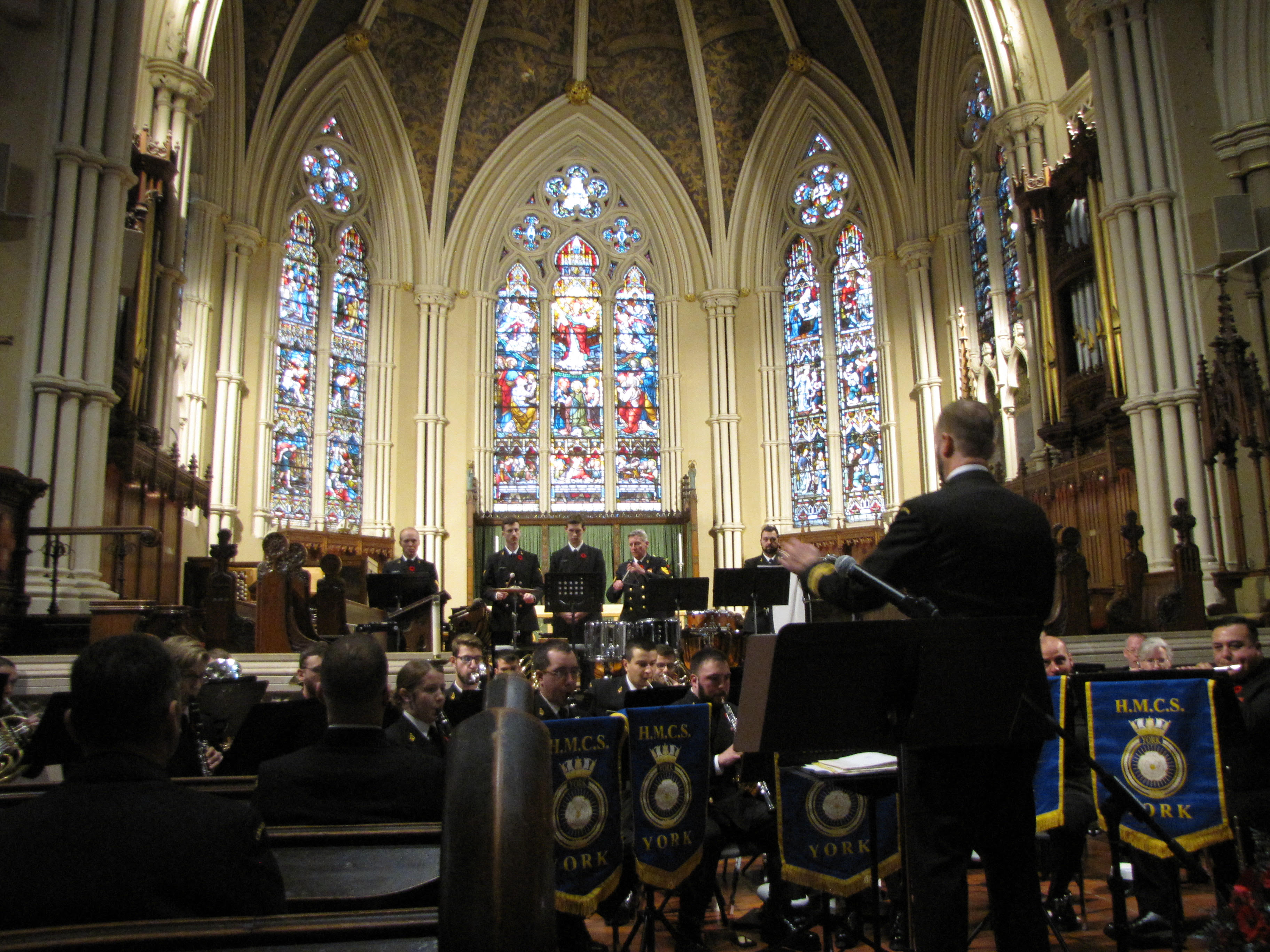
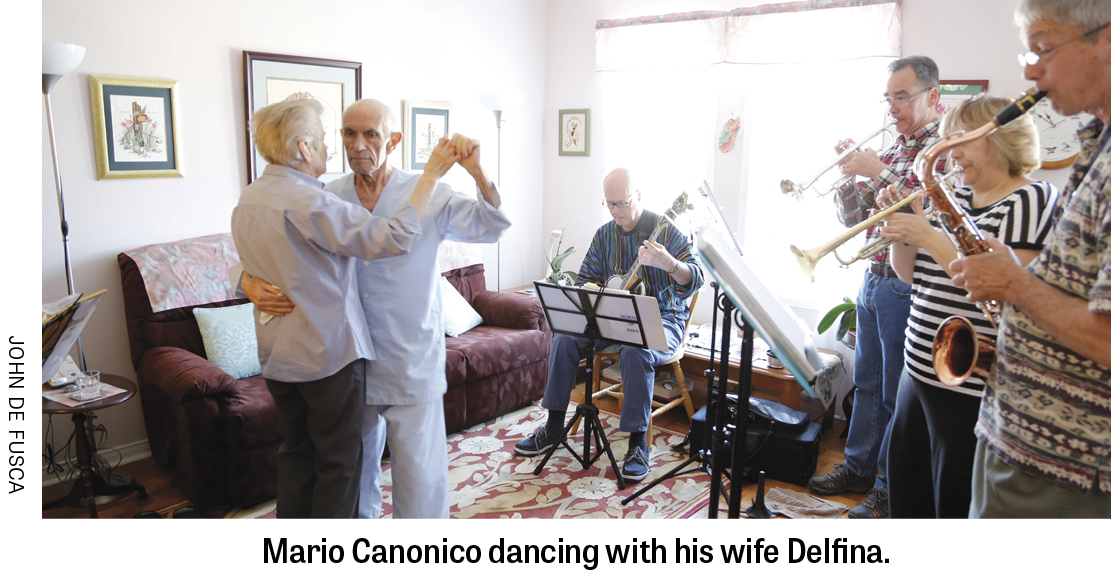
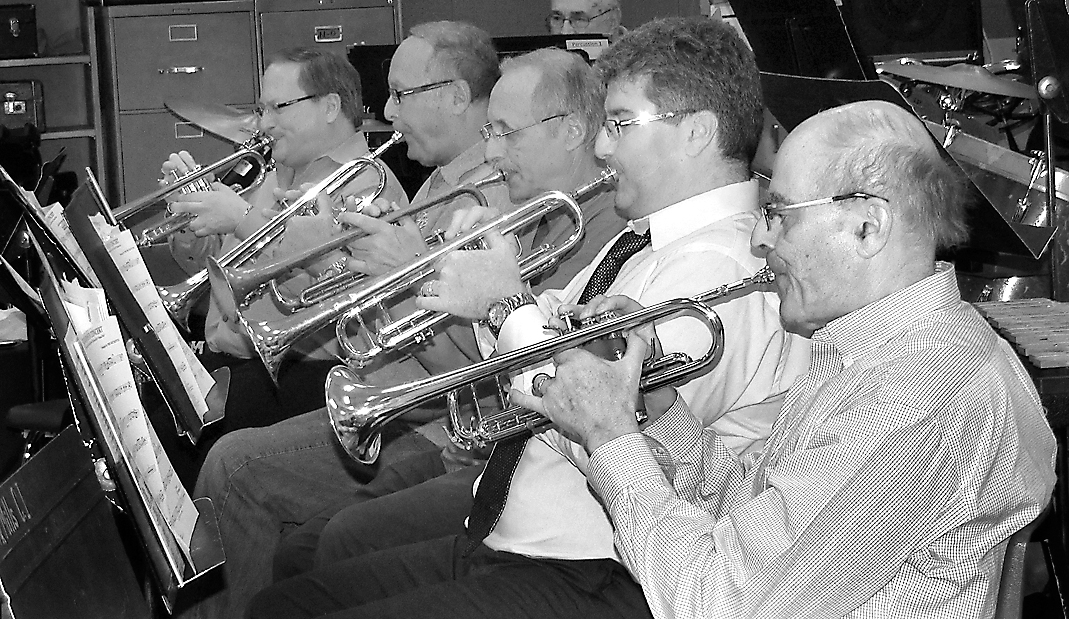
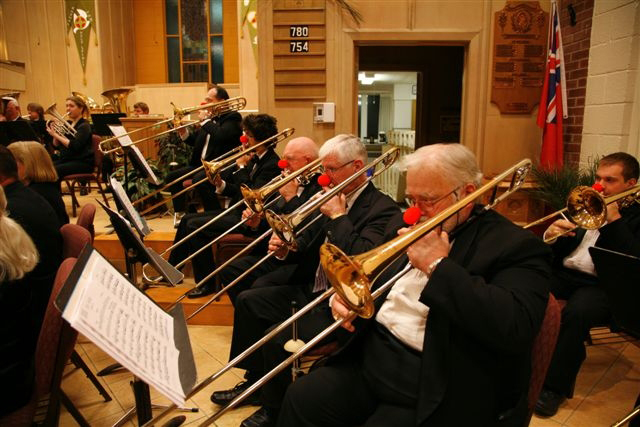
The combined bands of the naval reserve divisions of HMCS York (Toronto) and HMCS Star (Hamilton) in the Cathedral Church of St. James, Toronto. Photo Jack MacQuarrieThroughout the year 2017 the programming focus for community musical groups was Canada’s sesquicentennial year, with concert repertoire focused on almost any music which might have some connection to the development of Canada during the previous 150 years. By the end of that year, most bands had pretty well exhausted their library assets for music sesquicentennial connections. Then came 2018 with no similar focus in the first part of the year, except the perennial question about repertoire for concert bands: “Who are we trying to please, the audiences, band members, the conductor etc.?”

There were the usual budding composers waiting to be heard and, always, old-time favourites which might attract the largest audiences to help swell the band’s precarious coffers.

The 11th day

Towards the end of 2018, though, many groups turned their attention to another significant anniversary in the year: November 11 of this year, commemorating the 100th anniversary of the signing of the Armistice to end the First World War.

Having spent some time in the Navy, it was only natural for me to gravitate towards a November 10 Navy band concert commemorating that occasion: the combined bands of the naval reserve divisions of HMCS York from Toronto and HMCS Star from Hamilton performing “A Festival of Remembrance” in the Cathedral Church of St. James in Toronto.

The program for this concert was one of the most appropriate that I have ever experienced. Every number was either music that might have been performed during that wartime period or was written to commemorate a significant event of the war. Since the WWI battle most commemorated by Canadians is the Battle of Vimy Ridge, it was fitting that the opening number was Thomas Bidgood’s march Vimy Ridge. Much of the program was divided between such works as Songs From the Great War, Boys of the Old Brigade and Abide With Me and major orchestral pieces by composers who were at their prime during the period of WWI. These included three composers who were British-born: Ralph Vaughan Williams, Edward Elgar and Gustav Holst.

There were also some other top-quality marches, which rarely get their due these days. Although community bands, in general, had their origins in town bands – which traditionally played in parades – many community bands nowadays have never played in a parade. In fact, with some bands, marches are considered somewhat beneath their dignity, and are never included in programs. Fortunately, in this concert, such was not the case. The marches included here, other than Vimy Ridge, were all composed by Kenneth Alford (1881-1945), often referred to as “Britain’s March King.” Each was chosen because it was written to commemorate a particular event in WWI. The Middy and On the Quarterdeck were both written to commemorate the Battle of Jutland in 1916. The Vanished Army was dedicated to the first 100,000 British soldiers lost in WWI, and Voice of the Guns was to honour the regiments of the Royal Artillery in the British army.

Alford and Dunn

The name Kenneth Alford was actually a pseudonym for Major Fredrick Joseph Ricketts, bandmaster of a Royal Marine Band. This was common practice because, in those days, members of the British Armed Forces were not permitted to earn any income other that their regular military pay. Some years after Ricketts left the Royal Marines his position was filled by Major F. Vivian Dunn, bandmaster of the Royal Marines Portsmouth Division.

When the Canadian National Exhibition first opened after WWII, the featured band on the main bandshell was that Royal Marine Band from Portsmouth with Major Dunn conducting. As a student with a very rewarding summer job, I was in charge of operating the sound system on the Main Bandshell. When I first introduced myself to Major Dunn, his first question was “Can you read music?” When I answered in the affirmative, before each of the two daily concerts Dunn would spend a few minutes with me, going over the scores to ensure that there would be proper microphone pickup. Shortly after, Dunn became Lt. Col. Sir Vivian Dunn KCVO OBE FRSA, principal director of music Royal Marines. After he left the Royal Marines, Dunn became conductor of a number of top orchestras in Britain.

A few days after that November 10 Navy Festival of Remembrance concert, I still had an ear-worm: I couldn’t get the melodies of Vimy Ridge out of my head. The cure was to play a recording of it. Having written a review for The WholeNote a couple of years ago of a CD containing Vimy Ridge, the remedy was at hand so I played it, only to find that the very next number on that CD just happened to have been written by none other than Major F. Vivian Dunn: The Captain General, written in 1949 shortly after his stint at the CNE.

(The honorific “Captain General,” by the way, is the title bestowed on the ceremonial head of the British Royal Marines. This particular march was written to mark the occasion in 1949 when then Captain General, none other than His Majesty King George VI dined with Royal Marine officers at the Savoy Hotel in London. Since then the appointment has been held by HRH The Duke of Edinburgh and, since May 14, 2018, Prince Harry.

Bugler’s Holidays

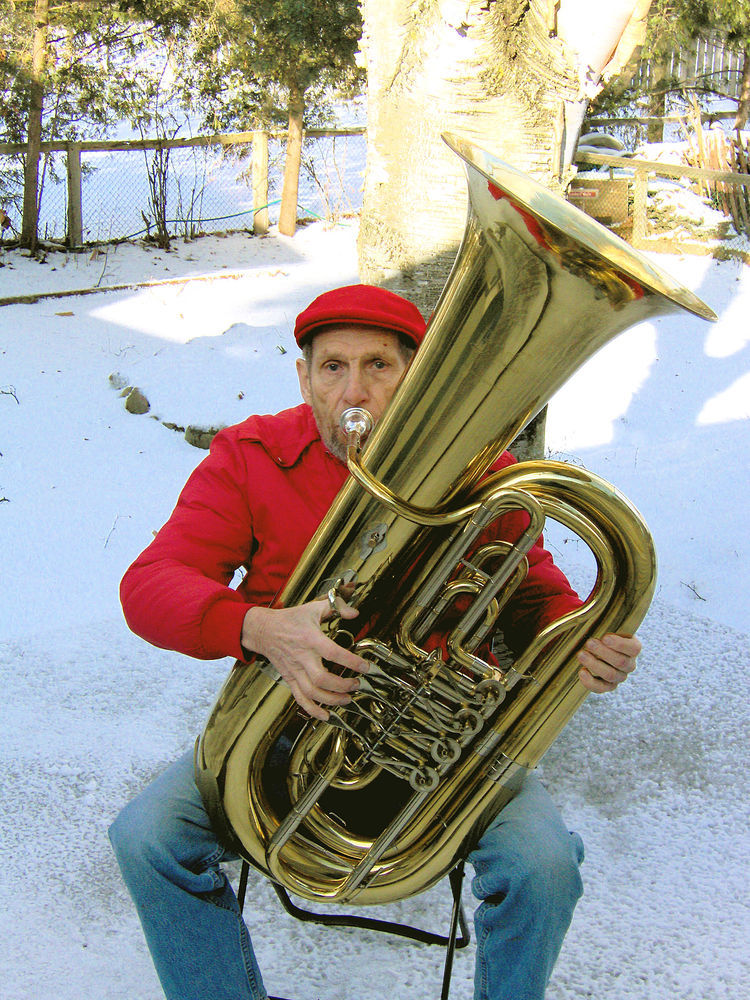
The evening before writing this column I attended a concert in London by the Plumbing Factory Brass Band under Henry Meredith, very curious to hear the three tubas performing Leroy Anderson’s famous Bugler’s Holiday. My reactions were mixed. As for technique, the performance by the three tubists of the band was excellent. As for personal enjoyment, I would still prefer to hear the staccato components of this music with the crisp attack of a trumpet rather than the broad tonal base of a tuba. It was also, as usual, a great example of the theatrical imagination that “Doctor Hank” Meredith brings to his programming.

One selection on the program tied in well with my comments earlier about marches: Le pére la victoire (Father of Victory), written by French composer Louis-Gaston Ganne (1862-1923) during the Napoleonic Wars. Ganne was a leading composer and conductor at that time. His Marche Lorraine written in 1892 for national gymnastic games became a battle song for the Free French during WWII.

Still on the topic of bugles, though, the recent Armistice ceremonies have triggered one of my occasional grumbles, namely the butchering of bugle calls. In the week prior to, and on Armistice Day itself, I heard many “bugle calls,” but none played on a bugle. They were all played on trumpets. A trumpet has the same pitch as a bugle, but certainly does not sound like a bugle. A proper bugle has a unique mellow tone which cannot be simulated by a trumpet. This may sound a bit strange to some people, but to me it does not work. To me, using a trumpet to substitute for a bugle is akin to using a motorcycle to substitute for a horse in a dressage ceremony. Proper bugles are not that expensive. Why can’t each military unit (and similar organization) obtain just one bugle to be used on such occasions?

Shifting into Christmas mode

Now that Armistice ceremonies are over for another 11 months, most bands are shifting into Christmas mode, a shift that brings them into close alignment (and in many cases joint concerts) with some of our top community choirs. There is a natural continuum between bands and choirs: from the pure pleasure of the process to the thrill of performing to high levels of professionalism.

There will be several such joint concerts in the coming weeks. Look for them in the listings and in the Band Quick Picks below.

BANDSTAND QUICK PICKS

DEC 2, 3PM: The York University Wind Symphony directed by Bill Thomas present a concert of various classical works at Tribute Communities Recital Hall, York University.

DEC 3, 7:30PM: Resa’s Pieces, all three ensembles in “Holiday Concert” at York Mills Collegiate.

DEC 7, 8PM: Etobicoke Community Concert Band “Classic Christmas” with Jean Augustine, reader; Andrew Scott, guest MC. Etobicoke Collegiate Auditorium.

DEC 8, 7:30PM: University of Toronto Wind Symphony in concert. Fucik’s Florentiner March; Weinzweig’s Deep Blues from Out of the Blues, Glazunov’s Concerto for Alto Saxophone in E-flat Op.109, Tull’s Sketches on a Tudor Psalm, Ticheli’s Postcard, and other works. MacMillan Theatre.

DEC 8, 4PM: Weston Silver Band’s annual “Yule Sing!” Sing along with Timothy Eaton Memorial Church’s Choir School and Sanctuary Choir. Timothy Eaton Memorial Church.

DEC 8, 7:30PM: The Barrie Concert Band A Christmas Fantasy”. Do They Know It’s Christmas?, Huron Carol and film music from How the Grinch Stole Christmas, Polar Express, and Nightmare Before Christmas; Collier Street United Church (Barrie).

DEC 11, 7:30PM: Silverthorn Symphonic Winds “Christmas Soiree”. A one-hour program of favourite Christmas delights. Free refreshments and conversation with the musicians after the concert. Wilmar Heights Event Centre Concert Hall.

DEC 11, 7:30PM: Hannaford Street Silver Band’s “Christmas Cheer” with host and tenor soloist Ben Heppner and the Elmer Iseler Singers. Metropolitan United Church.

DEC 15, 7PM: The Salvation Army North York Temple Band, joined by the Amadeus Choir, present their “Christmas Spectacular”. Works by Willcocks, Rutter, Venables, Graham, Balantine. Tyndale Chapel.

DEC 16, at 2PM: The Borealis Big Band will stage “A Big Band Family Christmas Concert”. Seasonal favorites along with jazz charts by Brubeck, Lopez, Toombs, Stevie Wonder and others. Gord Shephard, conductor. Newmarket Old Town Hall (Newmarket).

DEC 16, 2PM: The Festival Wind Orchestra. “A Fireside Christmas”. Big Band Showcase, Mary Poppins Medley, Argentum, Gypsy Dance from Carmen. Also seasonal favourites and a Christmas carol sing-a-long. Isabel Bader Theatre.

DEC 22, 4:30PM: Christ Church Deer Park & North York Temple Salvation Army Band present “Joy to the World: A Community Carol-Sing”. Christ Church Deer Park.

Jack MacQuarrie plays several brass instruments and has performed in many community ensembles. He can be contacted at bandstand@thewholenote.com.
My long personal involvement with community musical ensembles has prompted me, in this issue, to ponder some of the non-musical elements essential for the health of such groups. I sat down to list what they might be, and was a bit dumbfounded to find that my list contained no fewer than 20 potential activities that might arise and require someone’s attention. Where to start? Obviously with number one on the list – an executive. Then they can deal with the other 19, so the rest of us, who just want to make music, can get on with it.

In one organization of which I am a member, due to unforeseen circumstances there had not been an election of an executive for an unusually long time. It was time for an election. When the president called for nominations, there were none. OK, let’s ask for volunteers. None! Similarly for all positions except vice-president and treasurer. The incumbents agreed to stay for another term. Elections were deferred to an unspecified date in the future. As one member stated, “It’s hard to find a sucker who is willing to take on a leadership role.” Another who was asked, pointed out that he had been president twice in the past and preferred his present position as “member.”

After all, there’s no great financial incentive to take on the task. Most amateur musical organizations pay an honorarium to their conductor, a lesser amount to an assistant conductor, and, if they’re really enlightened, to their librarian. But the many other duties are handled by conscripted volunteers who tend to experience so-called “burnout” after years of unrecognized dedication to their groups. Most of these people are in the “baby boomer” or older age groups. For many of the younger members, rehearsal night is an escape from work and family responsibilities. More paper work has no appeal.

Let’s look more closely at just one of those non-musical jobs. In most groups, next to the conductor and assistant, by far the most important and demanding non-musical job is that of the librarian. Aside from library cataloguing and filling folders, that person even sometimes has an influence in music selection (even if only by getting to assert that certain pieces are unavailable!). Would you like to have a say in the music you perform, or are you happy to just play the music that you find in your folder when you arrive at the rehearsal? If you are a regular member of an ensemble, are you ever consulted about repertoire? How should the repertoire be decided? Is that the sole prerogative of the conductor or done in consultation with the librarian? (Having played in many groups for more years than I care to count, I can recall only one type of situation where I had any say in the music selection, namely in those situations where it just so happened that I was the leader. And many are the times I have suffered through a rehearsal of music that I thoroughly disliked, consoling myself with the rationalization that it was good reading practice. No better spot from which to change what I suspect is a widespread phenomenon, than the “non-musical” job of band librarian.)

Let’s leave the matter of essential non-musical jobs for another month. In the meantime, please drop us a line with your comments on any of the many such tasks required for the successful operation of a community ensemble. I am sure there are others to add to the 20 on my list.

Turning to the subject of repertoire, how can a group determine what would appeal to their audiences? For many years I acted as MC for a summer music festival in Toronto. It was often possible to conduct ad hoc surveys of audience opinion during intermission or after a performance. The one constant? It was always a mixed reaction. For concert band performances, the one comment which surprised most conductors was the desire on the part of audience members to hear more marches. For most conductors, the perception was that their “concert band” had risen above the level of a parade band. By contrast, most audience members came to hear a band, and considered that marches should be an integral part of such a programme. They were referring to the kind of marches that a good military band might perform on parade, not concert marches.

30_bandstand_plumbingfactorybrassband3_-_low_res_for_referenceOne band that has mastered the art of wrapping diverse repertoire in an appealing unifying theme is London’s Plumbing Factory Brass Band under Henry Meredith. It has come up with a very appealing theme for two identical concerts this month in London and St. Thomas. The St. Thomas concert on April 20 will be performed in the Canada Southern Railway Station which was used for many years by trains of the Michigan Central Railroad en route between Detroit and Buffalo. The program is titled Explorations – Movements, Moods and Myths Abound; Sights, and Sites Described in Sound, and features some familiar band compositions as well as several rarely heard works.

A fast moving gallop, The Ideal Railway, will be dedicated at both concerts to the Michigan Central Railroad Employees Band (founded in 1919). In fact, the PFBB’s music is typical of what such a company band would have played in its heyday (1920s and 1930s). The St. Thomas concert also salutes the ongoing restoration of the train station and heralds the opening of a special exhibit on the history of the MCR Employees Band, all sponsored by the station’s owners, the North America Railway Hall of Fame.

The tubas just won’t go away. After so much tuba talk in last month’s issue, there was going to be little mention of these musical brutes in this issue. However, they are not going away quietly.
First we received an email message from local tuba player Hugh Wallis telling us of a few tuba concerti we hadn’t mentioned, as well as a work for tuba and piano. We then learned that the Hannaford Street Silver Band’s “Festival of Brass: Rising Stars Concert” on Friday, April 15 will feature, as guests, the University of Toronto Tuba Ensemble directed by Sal Fratia. Not yet satisfied, the HSSB’s Sunday concert, April 17, features yet another tuba soloist, Patrick Sheridan.

Definition Department

This month’s groaner is frugalhorn: a sensible and inexpensive brass instrument.

We invite submissions from readers.

Coming Events

Please see the listings section for full details.

• Saturday, April 2, 7:00pm: Milton Concert Band presents its spring “Milton Pops” at Bishop Reding Catholic High School. The show will feature an eclectic mix of light classics, world music and movie tunes, with a few surprises along the way!

• Wednesday, April 13, 7:30pm: Plumbing Factory Brass Band, Henry Meredith, conductor presents Explorations at Byron United Church, 420 Boler Road, London.

• Weekend of April 15, 16 and 17: Hannaford Street Silver Band  (HSSB) presents its eighth annual Festival of Brass:

Friday, April 15: HSSB’s Rising Stars annual Young Artist Solo Competition, in which the finalists will compete for the honour of  performing with the HSSB on Sunday.

• Saturday, April 16 12 noon to 5:15pm: In “Community Showcase,” the HSSB welcomes community bands from across Ontario and beyond. Some ensembles will compete for the honour to receive The Hannaford Cup, the HSSB’s annual award for excellence.

Saturday, April 16, 8:00pm: HSSB welcomes to Toronto the Lexington Brass Band from Kentucky with trumpet virtuoso Vincent DiMartino.

• Sunday, April 17, 3:00pm: HSSB presents: Low Blows with tuba soloist Patrick Sheridan. n


You can write to us at bandstand@thewholenote.com.

bandstand - condolezza riceSome months ago there was quite a fuss in the news over a decision by the Toronto District School Board to do away with the itinerant music teachers, as a cost-cutting measure. These itinerant teachers normally teach only music and travel between an assigned number of schools. The effect would have been to eliminate most music education at the elementary school level. Proponents of this action expressed the opinion that music education was a frill which could readily be eliminated in a time of budget constraint. Those on the pro-music side argued that music was an integral part of our lives, and that early music education had a positive role to play in the development of many skills in later life. After considerable debate, the board arrived at a compromise, and the itinerant teachers are back in their classrooms this year. Whether this decision is merely a stay of execution or a more permanent solution remains to be seen.

Personally I attended an excellent secondary school with very high academic standards, but with absolutely no formal music program. On the other hand, in my formative years I had the good fortune to have lived in a home filled with music. There were regular rehearsals in our living room and the radio always delivered symphony concerts and opera. I have lived a life filled with music. So this current debate on the merits of music education called out to me to try to get some factual information.

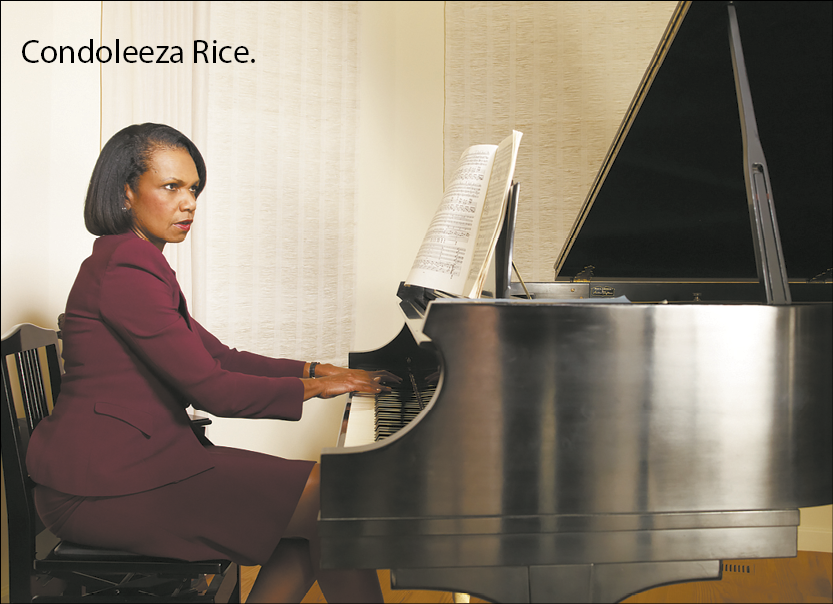
As luck would have it there was a recent article — “Is Music the Key to Success?” — by Joanne Lipman, which I read in the October 12, 2013 New York Times. In this article Lipman cites many prominent figures in diverse fields who were high achievers in music. Examples: Condoleezza Rice trained to be a concert pianist. Alan Greenspan, former chairman of the U.S. Federal Reserve, was a professional clarinet and saxophone player. The hedge fund billionaire Bruce Kovner is a pianist who took classes at Juilliard.

Lipman asked the question: “What is it about serious music training that seems to correlate with outsize success in other fields?” It has been generally accepted in academic circles for some time that mathematical skills are considerably enhanced by proficiency in music. Parini goes further, however, stating that the music/success correlation extends beyond the math-music connection. Many high achievers told her that music opened up many pathways to creative thinking: qualities such as collaboration, the ability to listen, ways of thinking that weave together disparate ideas, and the power to focus on the present and the future simultaneously. Advertising executive Steve Hayden credits his background as a cellist for his famous work in producing commercials for Apple computers, stating that his cello performance background helps him work collaboratively and that ensemble playing trains you, quite literally, to play well with others, to know when to solo and when to follow.

These studies got me thinking of famous musicians who also made their mark in other fields. That took me back to my days in the navy when I appeared before my Officer Selection Board. The first question that I was asked by the officer in charge of the board: “You say that one of your major interests is music.” “Yes sir.” “Name a famous composer who was also a naval officer.” My immediate reply: “Nikolai Rimsky-Korsakov.” I passed; Rimsky-Korsakov had been an officer in the Imperial Russian Navy. Then there was the famous pianist Ignacy Jan Paderewski, the first prime minister of Poland. Another Russian composer, Alexander Borodin, was a physician and professor of chemistry. Former British prime minister Edward Heath maintained an interest in orchestral music as an organist and conductor. Heath directed the London Symphony Orchestra, notably at a gala concert at the Royal Festival Hall in 1971. He also conducted the Royal Liverpool Philharmonic and the English Chamber Orchestra, as well as orchestras in Germany and the United States. He also wrote a book called The Joy of Christmas: A Collection of Carols, published in 1978 by Oxford University Press.

When I first started collecting LP records, some of my favourite recordings were by the Orchestre de la Suisse Romande under the direction of its founding director Ernest Ansermet. Originally he was a mathematics professor, teaching at the University of Lausanne, but music took over most of his life. Ansermet was one of the first in the field of classical music to take jazz seriously, and in 1919 he wrote an article praising jazz saxophonist Sidney Bechet.

Closer to home, former Canadian Governor General Ray Hnatyshyn was an accomplished bass clarinetist. Internationally renowned Canadian soprano Isabel Bayrakdarian, noted as much for her stage presence as for her musicality, just happens to have an honours degree in Biomedical Engineering.

There certainly is considerable anecdotal evidence to support the belief that proficiency in music plays a role in the development of many other cognitive skills, but the evidence goes way beyond the anecdotal. I know of at least three ongoing university research efforts closely related to this subject. One researcher at McMaster University has been investigating a broad spectrum of society to investigate the role music plays in people’s lives. Another research project at Ryerson University is examining differences in people with musical expertise when it comes to auditory versus visual selective attention. The third, at the Rotman Research Institute at Baycrest Health Sciences is the most interesting to me in terms of making a case for the value of early musical training. Stefanie Hutka, a PhD student at the Rotman Institute (and a violinist) provided this information.

“Our NeuroEducation Across the Lifespan laboratory is directly targeting an increase in awareness and accessibility of music training. On the awareness side, we are heavily involved in public outreach such as the Brain Power conference, which presents accessible information about neuroscience findings on music to scientists, educators, and parents. On the accessibility side, we have studies supporting the benefits of music, including via short-term training on software, which have been published in top scientific journals. In one 2011 study, school-aged children used music training software called Smarter Kids, developed by our lead scientist, Dr. Sylvain Moreno. After only 20 days of training, improvements on measures of verbal intelligence were observed. We are currently extending this theme of accessibility, creating software using music to train the aging brain, with very positive preliminary data.”

Her summary of the project’s findings to date?: “Everyone can benefit from music training. A wealth of empirical, neuroscientific evidence supports the positive influence of music training on numerous non-musical brain functions, such as language, reading and attention. Such benefits are seen in children, and continue across the lifespan into older adulthood. Despite this evidence, music education is still often seen as a supplemental and expensive subject in schools, and often is the target of budget cuts. Increasing awareness of the real-world benefits associated with learning music, as well as making music training more accessible, are critical steps towards supporting the inclusion of this important subject in curricula.”

As formal Liberal Leader Bob Rae (who has himself been known to lead a rousing sing-song from the piano) is reported to have stated some months ago in a debate on financing culture: “Culture is not a luxury.” Couldn’t have said it better myself!

DEFINITION DEPARTMENT

This month’s lesser known musical term is basso continuo: When musicians are still fishing long after the legal season has ended.

We invite submissions from readers. Let’s hear your daffynitions. 

Jack MacQuarrie plays several brass instruments and has performed in many community ensembles. He can be contacted at bandstand@thewholenote.com.
As we sit in anticipation of small white crystals on our lawns, rather than those colourful bright leaves, we have to realize that our community music is going to be very different this year than the rehearsals and concerts we have been accustomed to. While the social aspects of community music have almost entirely disappeared, along with the leaves, with so many advances in digital technology we are seeing amazing adaptations across the musical spectrum.

Tech Talk

In last month’s issue of this column I mentioned that New Horizons Band of Toronto, in collaboration with Resa’s Pieces, would be working with Long and McQuade Music for a “Tech Talk Workshop.” Other than the fact that the venture was to consist of a few online Zoom sessions of advice from specialists at L & M, details were rather sketchy at the time. Since I was not able to participate in the first of these in order to find out more for myself, I asked Randy Kligerman from New Horizons what sparked the idea and how the first session worked out.

Read more: Music for Life

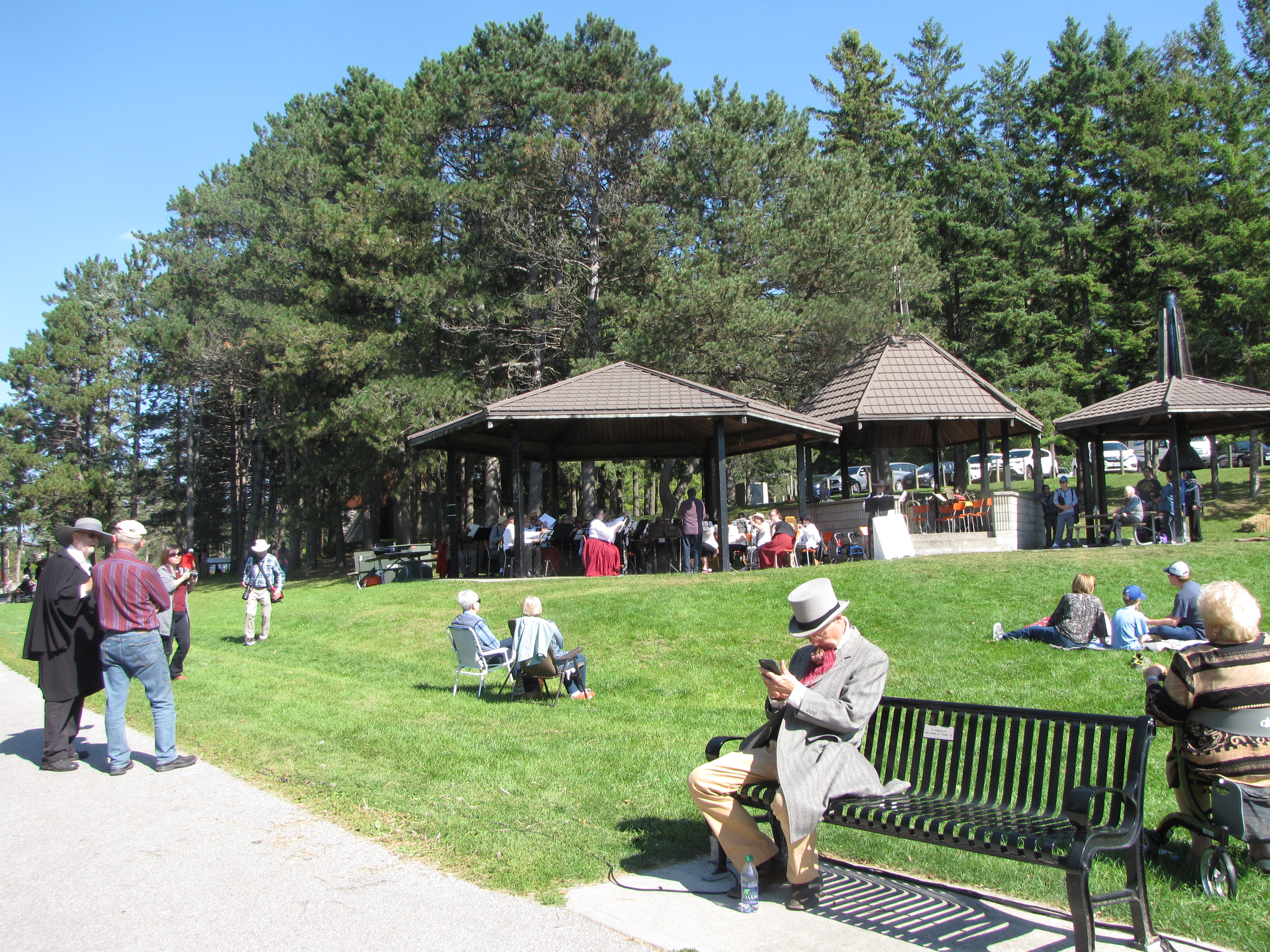
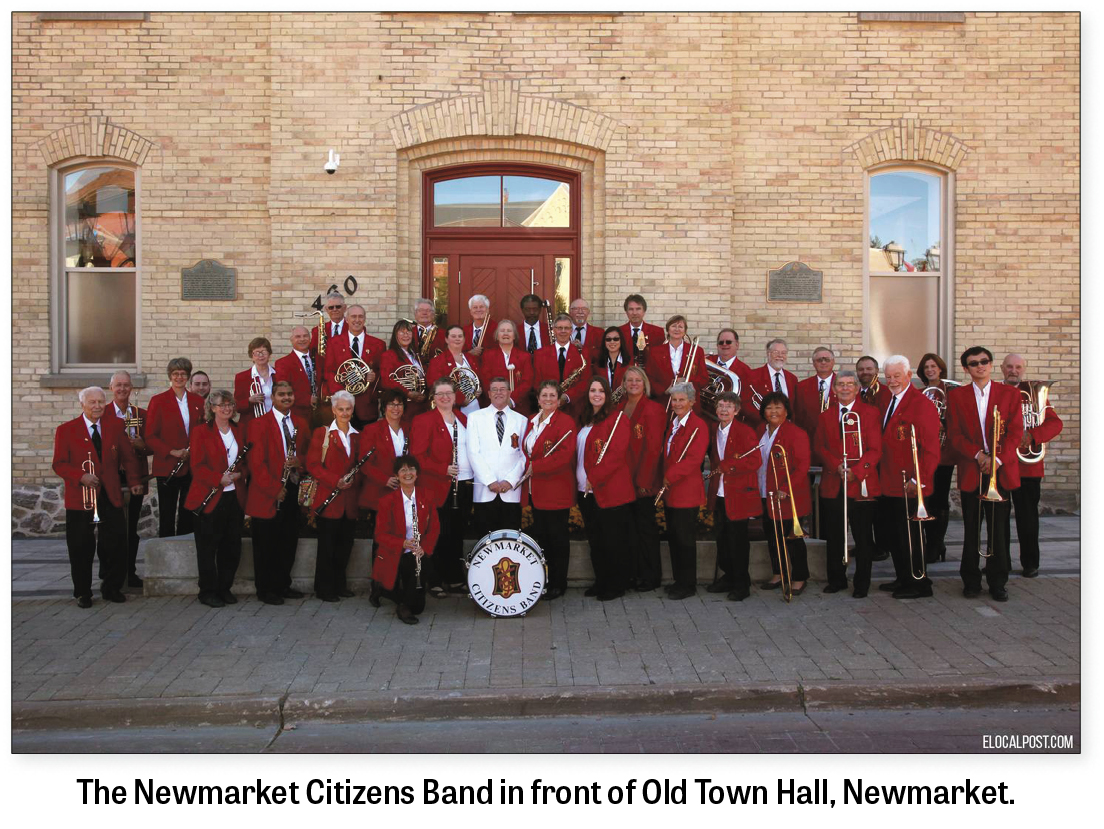
In last month’s column I made reference to the upcoming Rebel Heartland celebration at Fairy Lake Park in Newmarket. Ergo: now we can report on what took place. As a starter, the weather could not have been better with a moderate temperature and a bright blue sky. Fairy Lake Park’s three gazebos (one large with two smaller ones immediately adjacent) provided an ideal location for musical performances. On the large gazebo we had the current Newmarket Citizens Band, somewhat scaled down to fit within their venue. On the smaller gazebos, three different ensembles made up of members of the main band performed. One was a brass ensemble roughly representative of the early 1800s. The other two were a flute ensemble and a clarinet group, including alto and bass clarinets.

Unless the organizers had been prepared to spend enormous amounts of money to ensure absolute accuracy and authenticity of all costumes and displays, this event inevitably was going to have some items that could not qualify as characteristic of the period. There were interesting anomalies, some more apparent than others. First was the makeup of the band: well-dressed in a wide range of period costumes, almost half of the band members were women, something town bands in the 1830s would not have permitted. In general, women were not allowed to play in such bands until the mid-1940s. I remember well when the first girl was permitted to play in the University of Toronto Band in 1947. It was some years after that when the first female player appeared in a military reserve band in this country.

Other anomalies: some distance from the band there was an encampment of tents with all the occupants in period costumes. Immediately adjacent were all of their late model automobiles, with nary an 1837 model in sight! Also, whereas at such a concert in the park any time in the 1800s people would be sitting close enough to the band to hear well, that was not necessary here. A powerful sound system with speakers located throughout the park made it possible for the audience members to select a listening location of their choice.

Perhaps the most interesting anomaly for me was a gentleman dressed from head to toe in the greatest of sartorial splendour including an elegant top hat, an elegant impression that was a bit shattered when I noticed that he was speaking to someone on a 2018-model cell phone and had a modern plastic water bottle close at hand.

Anomalies or not, it was an excellent day to be reminded of some very important times in our history.

“Perhaps the most interesting anomaly for me was a gentleman dressed from head to toe in the greatest of sartorial splendour including an elegant top hat, an elegant impression that was a bit shattered when I noticed that he was speaking to someone on a 2018-model cell phone and had a modern plastic water bottle close at hand.” Old Instrument Donations Enrich Young Lives

In recent months I have been hearing of a number of varied programs to provide musical instruments for children in various parts of the world, including Canada. In a number of cases I am still waiting for responses to my requests for information, but here’s an interesting one.

Local bass clarinet and saxophone player Michael Holdsworth grew up in suburban London (England) in the austere 1950s, attending a secondary school with an extremely limited music program and a budget to match, and no band. In his words, when the music teacher proposed starting a small brass group, there was only enough money for one trumpet and one trombone.  As luck would have it, there was another high school nearby, which was not under the same monetary restraints, that was replacing all their old pre-war instruments, and were happy to give them to Mike’s school.

Their senior shop teacher took on the repair challenge and soon the euphonium, baritone and tuba were ready to play. Mike took the baritone. “It was the start of a lifetime of musical adventures,” he says. “The door had been opened, and I learned firsthand that those with the tenacity and desire to help others and share their love of music can indeed make a difference.”

After a move to Canada, and a 20-year hiatus from music, his musical interest was rekindled and he now plays in several musical organizations in the GTA, from concert bands to symphony orchestras and musical theatre. In his words: “Making music has been the most rewarding pastime I have had in my life, and all this started with a secondhand old B-flat baritone horn.”

Over the past few years, Mike has been able to spend a few weeks each winter in his favourite Mexican destination, Puerto Vallarta. A few years ago, he decided to take his clarinet with him. Somewhere, he reasoned, there would be a group of musicians who would welcome a stranger into their midst. In the centre of Puerto Vallarta is a small square with the rather grand name Plaza de Armas (Parade Ground). In the centre of that square there is a bandstand where the Municipal Band of Puerto Vallarta entertains the public two nights a week.

One evening, while listening to a concert, Mike noticed that there was a man in the band who looked like he was a bit of an outsider, not the least because he was not dressed in the all-white uniform everyone else was wearing. When Mike spoke with him, he discovered that this man, Bob, was from Ontario! Bob introduced Mike to the band leader Raul, and, just like that, Mike was invited to play with them. He soon discovered what an incredibly talented group they were; all are professional musicians and music school graduates. From them he also learned of the importance of music to the community. “The City of Puerto Vallarta, and, as far as I can gather, Mexico generally, is committed to encouraging all young people to take part and to put public money into these efforts.”

Next thing that caught Mike’s eye was a March 8, 2018 article by writer John Warren in the Vallarta Tribune, an English-language newspaper, about an upcoming performance of the Puerto Vallarta Orchestra School (OEPV), in which Warren wrote “Now in its fifth year, the OEPV has transformed the lives of many children in Puerto Vallarta. The aim of the cultural project is to reduce social problems, crime and addiction by providing free musical education and social development to children who would otherwise be unable to afford it.” The results have been impressive. “The International Friendship Club (IFC) has supported the OEPV since 2014 as part of the club’s emphasis on helping Mexican children reach their potential. Altogether, the OEPV is teaching almost 300 children the joy, teamwork, discipline, concentration and co-operation that come from learning music and, at the same time becoming good citizens.”

One of the major challenges facing the Puerto Vallarta Orchestral School is obtaining musical instruments, and this is where things came full circle for Mike. “The cost of labour in Mexico makes repairing things far more viable than in, say, Toronto” he says. “Many instruments that we might discard because of the cost of repair here in Canada can be repaired and reused in places like Mexico.”

Mike’s primary focus so far has been aimed at the more affluent schools in the Greater Toronto Area, and thanks to a generous donation of instruments by Upper Canada College, the process has begun. “Anyone with old instruments in the attic or garage that they know will never realize any real cash might wish to consider donating them to the children and young members of OEPV.” 

To this point Mike has received instrument donations including nine clarinets, six flutes, two bassoons, one alto sax, one tenor sax and one French horn (from Upper Canada College). An additional two flutes were received from individuals not associated with the school. Beyond donations of instruments, though, shipping costs are also a significant challenge. The total cost of shipping this first batch was $900 which was donated by a friend who also spends time in Puerto Vallarta in the winter. The initial shipment went directly using UPS and was $600. It arrived in three days. The other two shipments went using Chitchats Shipping and in total cost $300. It took four weeks but arrived intact.

For Mike it’s simple. “You can help improve a life through music!” he says. If you have any questions, comments, or, in particular, appropriate contacts in GTA schools, you may contact Mike at instrumentsforoepv6@gmail.com. For information regarding the OEPV, check their Facebook page – facebook.com/oepuertovallarta/ or website – oepv.org/web.

As mentioned earlier, I am still waiting for responses to my requests for information from a number organizations with similar projects. I know someone who is working on a similar project for South Africa, and have heard of another person collecting old instruments for children in Cuba. Stay tuned.

Prize for playful programming

November 21, 7:30pm. Henry Meredith of The Plumbing Factory Brass Band, sent the following: “In their 23 years of entertaining Southern Ontario audiences, the Plumbing Factory Brass Band has been noted for performing eclectic repertoire that exemplifies all kinds of brass music, ranging from A to Z,” he writes. “However, this concert will focus on a single letter of the alphabet – the letter B! That is ‘B is for BRASS.’” As an example of their diversity the band’s Basses, also known as the Tuba Mirum Trio, will be featured playing Leroy Anderson’s Bugler’s Holiday. I certainly don’t want to miss hearing three tubas perform that trumpet number. ... BEautiful, BEguiling and BEdazzling Music to BE presented by London’s Plumbing Factory Brass Band at Byron United Church , 420 Boler Road (@ Baseline), London.

BANDSTAND QUICK PICKS

NOV 4, 3PM: The Hannaford Street Silver Band presents “Cascades” with guest Carol Jantsch, tuba; Jean-Michel Malouf, conductor. Jane Mallett Theatre, St. Lawrence Centre for the Arts,

NOV 5, 7PM: The Toronto Artillery Foundation presents “Lest We Forget.” Toronto Artillery Foundation Band; John McDermott, tenor. Yorkminster Park Baptist Church.

NOV 24, 7:30PM: Silverthorn Symphonic Winds open their season with “Out of This World.” Their musical journey will include Astronaut’s Playlist, Superman and Moonscape. This takes place at Wilmar Heights Event Centre – Concert Hall, 963 Pharmacy Ave, Toronto.

NOV 25, 3:30PM: The Wychwood Clarinet Choir will celebrate their tenth season with “Clarinet Bells Ring.” Highlights will include Schubert’s Shepherd on the Rock featuring Michele Jacot as clarinet soloist, Appalachian Folk Carol with guest soprano Christina Haldane and Holst’s St. Paul’s Suite.

NOV 30, 7:30PM: The Newmarket Citizens’ Band will combine with the York Harmony Chorus for the finale of their “Comfort and Joy” concert.” The theme for the evening will be “Christmas on Broadway.” Old Town Hall, Newmarket.

DEC 7, 8PM: The Etobicoke Community Concert Band presents “A Classic Christmas.” Etobicoke Collegiate Auditorium.

Jack MacQuarrie plays several brass instruments and has performed in many community ensembles. He can be contacted at bandstand@thewholenote.com.
As I write this, on return from a Sunday evening concert at the Orillia Aquatheatre, I'm reminded of the impending end of the summer concert season. Our concert began at 6:30pm rather than the usual seven o'clock, because the days are getting shorter. September is only two weeks away, and the fall season is on the horizon. For most community ensembles this marks a beginning of sorts. Whether they have been playing all summer, with rehearsals and concerts, or have taken a complete break, most will be in transition in some way or other. Almost without exception, there will be some reflection on the past year and discussion of what changes might be in order.

P30Almost every year in Southern Ontario, September heralds the establishment of one or more new community instrumental groups with varying aspirations. So, for our inauguration of a new season of The Wholenote, it seemed to be a fitting time to visit a few new startups and some relative newcomers that have now completed one or two seasons. For our very limited and informal study of recently formed groups, I've selected the Milton Concert Band, the Scarborough Society of Musicians, the Kindred Spirits Orchestra and the Newmarket Stepping Stone Band.

The oldest of this group, the Milton Concert Band began taking shape early in 2007, when recently arrived residents and long-time friends Angela Rozario and Cheryl Ciccarelli, having recognized the growing artistic community in Milton, decided to see if there were any other area amateur musicians interested in performing together. Their hopes were immediately met, and the pair were soon scrambling to accommodate over 30 musicians and having to put others on a waiting list. Working with the town of Milton, the group was able to move to its new permanent home at Memorial Arena in September 2007. By now, the band will have concluded their regular series of summer concerts and performances at town festivals, and will be preparing for their fall on Saturday mornings, at Dr. Norman Bethune C. I. In Scarborough.

About one year later, in February 2008, the Scarborough Society of Musicians had its beginnings. It began with the discussion among a group of graduating high school students who had developed and shared a passion for musical performance and didn’t want to abandon that love after graduation. The band is a non-profit organization aimed at providing post-secondary school students who are not pursuing professional studies in music an environment to continue developing and exploring their talents. Since its inception, the band has been rehearsing on Saturday mornings, in the music room at Dr. Norman Bethune C. I. In Scarborough. I’m informed that they’ll be organizing their future activities in January, but they have already performed a concert, in July 2010. Try visiting their website: continuingmusic.ca.

The next in our recent arrivals on the community music scene is the Kindred Spirits Orchestra. Founder and musical director Maestro Kristian Alexander felt that the time was ripe for an audition-based community orchestra in Markham. The orchestra’s official incorporation was on March 16, 2009. Their inaugural concert took place on November 3, 2009, at the CBC's Glenn Gould Studio in downtown Toronto. The programme included Wagner's Siegfried Idyll and Mozart's Gran Partita.

The orchestra is still relatively small (38 musicians), which has enabled it to concentrate on developing a refined ensemble sound. For the future they hope to increase the size of their string section and, in their words, “to grow and attract more musicians, more friends, more kindred spirits."

With a relatively small string section, to date they have focused almost exclusively on baroque and classical compositions. They are very eager to broaden their repertoire and approach romantic and more contemporary works. The first such foray into works requiring significantly larger resources took place in June of this year. At that time, I had the opportunity to join the brass section in a performance of Beethoven’s Fifth Symphony.

For the immediate future, their growth will certainly be limited until they can move to a larger rehearsal hall. Perhaps the new Markham recreational complex will supply the answer. In the meantime, they are forging ahead with an ambitious season that will include a four concert subscription series at the Glenn Gould Studio. Concerts will include guest violinist Jacques Israelievitch performing the Beethoven Violin Concerto, and performances of Beethoven’s Sixth, Seventh and Eighth symphonies.

In addition to performances, the Kindred Spirits Orchestra has an education and community outreach programme with professional development opportunities for local music teachers and young conductors. And to promote Canadian composers and music, they have Gary Kulesha and Larysa Kuzmenko on board as resident composers for the coming season.

About one year ago, a new band for beginners and intermediate level players was established in Newmarket. Informally called the Stepping Stone Band, their message was simple: “If you took band music in high school, and years later find you have time and interest in making music, this is perfect way to get back into it. Why play at home alone? The best way to learn to read music is to play in a group or ensemble.” The group stopped rehearsing for the summer, but that wasn’t the end of playing. Several members, who had upgraded their skills during this first season, are now rehearsing regularly with the Newmarket Citizens’ Band and have been performing in concerts over the summer. As for the remaining members, they will form the core for the coming season. As of this writing, this beginner band has 12 members who want to proceed with rehearsals in September. They are hoping for at least eight additional members to proceed with the programme. If you have considered the idea of taking up an instrument again or know of someone who has, pass this message on.

The band will meet Monday nights from 7pm to 9pm at a location in Aurora, near the Aurora Public Library. Members must bring their your own instruments and music stands. Music is provided. The program will be coordinated by Joe Mariconda. For more information, please email Joe at joemariconda@gmail.com or call him at 905-836-4039.

On the new initiative front, we have four very disparate endeavours, two of which specifically target seniors. The first of these, is yet another project of Joe Mariconda. The concept is to establish a concert band programme for the seniors of York Region, based in Newmarket. The Seniors’ Centre in Newmarket has a membership of 2,000 from which to draw. If the programme sparks the interest of sufficient members, there could well be more than one band to cater to various skill levels. The band (or bands) would rehearse on weekdays for two hours once a week. Instructing and conducting duties would be shared by a team of volunteer retired music teachers. With such a team approach, there would be less of a burden on any one individual conductor, and the participants would have the benefit of coaching by conductors with skills on a range of different instruments. Contact Joe Mariconda at 905-836-4039 or by email joemariconda@gmail.com.


Another new band programme for seniors will appeal to those who live close to the heart of Toronto. Long & McQuade Musical Instruments have announced their Play-in-a-Band Programme, to begin in September. Designed for adults from 50 to 90 (and older), it's for those who always wanted to play an instrument and former players who want to play again. Whether you're learning to play “from scratch” or dusting off that old horn from the back of the closet, you'll will be welcome. The programme will be directed by Dan Kapp, an instrumentalist and conductor with over 30 years' experience. An information meeting is scheduled for Wednesday, September 15 at 9:30am, with the first rehearsal one week later. For information go to www.newhorizonsbloor.ca or phone 416-588-7886.

This announcement sparked my curiosity and prompted a bit of digging, since there was a Canadian Federal Government sponsored “New Horizons” program in Canada over 25 years ago. The New Horizons program, established in 1991, was the brain child of Dr. Roy Ernst at the Eastman School of Music in Rochester, New York. While the first New Horizons program in 1991 was for bands, the intent was to also start other kinds of New Horizons programs. New Horizons orchestras started a few years later. Initially, a minimum age of 50 was arbitrarily set as a guideline. Over the years that has changed. Now, for most groups, “If you consider yourself to be an adult, you’re eligible.” In my digging, I discovered that there were already no fewer than ten such groups in Ontario as members of the New Horizons International Music Association. I even learned that two of these were conducted by personal friends of mine.

Just North of Toronto a group of dedicated amateur musicians have decided that it's time to formally organize a concert band for the town of Richmond Hill. The Richmond Hill Concert Band is intended for adults with high school instrumental musical ability who may not have played for several years but are looking to regain the enjoyment of playing in a band. The origins of this group are quite creative. The Thornhill Community Band, which has been operating successfully for some years, realized that 30 percent of its members were residents of nearby Richmond Hill. It was also becoming apparent that the Thornhill band's numbers had grown to the point where they could no longer accept new members for some instruments.

The solution was to assist in the forming of a new band. This had a number of benefits. By rehearsing on a complementary night to its own rehearsals, the Thornhill Band could help mentor a new Richmond Hill band without detracting from its own organization and membership. A core group from the Thornhill band, willing to rehearse two nights a week, will ensure a balanced instrumentation at the beginning. Initially they will share the music library, and long-time experienced conductor Denny Ringler will be at the helm of both ensembles. Since a group must have charitable status to apply for an Ontario Trillium grant, and since the Thornhill Community Band is a registered charitable organization, it was eligible to apply for a grant for its progeny. They are awaiting the outcome.

To assist in its establishment, the band was awarded a grant of $2,500 for startup funding by the Richmond Hill Mayor’s Endowment Fund.  The band will rehearse Thursday evenings from 7:30 to 10pm starting September 16, 2010, in the music room at Roselawn Public School, 422 Carrville Rd, Richmond Hill. For information, please call 905-737-7265, 416-223-7152, or send an email to info@rhcb.ca.

The fourth of our new startup groups is Resa’s Pieces Strings. In previous issues we have referred to the very successful beginners' band know as Resa’s Pieces Concert Band. Established some years ago by Resa Kochberg, this band was created with the philosophy that “everyone grows musically together, with each "piece" completing the whole. Now, Resa has decided that former and/or new string players deserve the same opportunity to develop their skills. As a result, Resa's Pieces Strings or the RPS will be launched in September 2010. This new beginners' string ensemble will be under the directorship of Ric Giorgi.

The RPS will follow the same philosophy that Resa Kochberg established when she founded Resa's Pieces Concert Band some years ago. It is "to provide an opportunity for people to return to playing instruments that they had not touched for years.” If I thought that I could handle a string instrument, I would be there in a flash with a viola in hand. For information visit their website, http://www.resaspieces.org, or email strings@resaspieces.org.

With all of those opportunities available, if you have thought about getting back to music, there is no better time than now. Listen to the advice from Resa. “Recall those sounds, reawaken that talent, rediscover playing music!”

On a sombre note, it is with deep regret that we report the passing of a stalwart of the military reserve band scene in Toronto. Captain Frank Merlo, CD, OSJ, Director of Music for the Governor General’s Horse Guards Regimental Band, passed away in Toronto on July 6, 2010. Frank’s association with the regiment and the band began in 1979, and for over three decades he literally dedicated his life to both. I first met Frank when he, as a young French horn player, first became involved in the local band scene. In part his obituary stated: “As the current Senior Director of Music in 32 Brigade, his knowledge and advice was highly sought after, and the support he gave to each Commanding Officer ensured that the Regimental Band could always be counted on to provide the right ceremonial touch to any occasion. In his role as a vocal music teacher with Toronto District Catholic School Board, he influenced the musical lives of countless students. He will be missed.

Definition Department

This month’s lesser known musical term is FERMANTRA: "A note held over and over and over . . ." We invite submissions from readers.

Coming Events: Please see the listings section for full details.

Jack MacQuarrie plays several brass instruments, and has performed in many community ensembles. He can be contacted at: bandstand@thewholenote.com.

Well, the holiday season, with all of its almost overlapping rehearsals and concerts, is past history. Then, like mother nature (with the exception of her one or two nasty outbursts), the community ensemble scene lapsed into a tranquil, semi comatose state of inactivity. We have not heard of a single event scheduled for January or early February. Then, well after Groundhog Day and Family Day have past into history, we see the awakenings of a new season.

The first musical events for the season brought to our attention are not concerts, but are still events of considerable interest to members of community ensembles. Long and McQuade will be presenting no fewer than five free clinics on successive Saturday afternoons starting February 4. If you play clarinet, saxophone, trumpet or trombone, check for details at bloorband@long-mcquade.com. The two which particularly caught my attention were sax and trumpet. If you have never seen or heard contrabass, sopranino or soprillo saxophones, here’s your chance. The AllSax4tet will be performing on eight different sizes of saxes. As for the trumpet session, it will feature none other than the incomparable Doc Severinsen, leader of the Tonight Show Band for 30 years. Yes, he’s still actively performing.

The other noteworthy event is “International Horn Day 2012” presented by the York University Department of Music on February 10 at 7:30pm. This will feature Jacquelyn Adams with Clifton Hyde, guitar and Jeff Butterfield, drums, plus horn ensembles of all levels from across southern Ontario, including the Toronto Symphony horn section, Tafelmusik horns and more. See the listing section for details.

Two concert offerings which have come to our attention break with tradition in quite different ways. The first of these will be The City of Brampton Concert Band’s “Heroes and Villains” on Saturday, February 25. The concert will focus on the theme of heroes and villains in the broad sense of its many manifestations in life, history, nature, literature and art. Director Darryl Eaton has assembled a fantastic range of guest artists to help explore these concepts in musical terms. Perhaps the quirkiest will be William Snodgrass performing a whimsical version of The Flight of the Bumblebee as a percussion solo. For more details check their website at www.bramptonconcertband.com.

The second of these concerts with a different approach will be that of the Markham Concert Band. In a departure from more traditional programming, conductor Doug Manning decided to focus on works composed and/or arranged by Canadians. As an added feature, no fewer than four of these composers and arrangers will be in attendance. In the audience, to hear their compositions performed, will be renowned trumpeter Johnny Cowell and saxophonist Eddie Graf. As for the other two composers, they are band members Sean Breen and Vern Kennedy.

A long time member of the Toronto Symphony, Cowell also made his mark as a composer in the popular field. In fact, in the early 1960s Cowell had more compositions on the Hit Parade than anyone else. Two of his compositions were number one on the charts world wide. Walk Hand in Hand, now a wedding standard, and Our Winter Love are still popular today, almost 50 years later.

Graf was a band leader in Canadian Army shows in England and Europe during World War II. On his return to Canada, he led his own big band and was responsible for writing, arranging and conducting for many CBC shows. Now in his 90s, Graf is still playing and turning out fine compositions and arrangements.

Kennedy, composer and singer, had a long history with such CBC shows as the Juliette Show, Wayne and Shuster and the Tommy Hunter Show. In addition to playing trumpet in the band, Kennedy is a founding member of the Canadian Singers who will also be appearing in this concert. Originally an octet and now a vocal quartet, this group was established in 1994 with the goal of singing music by Canadian composers. They will sing works by both Cowell and Kennedy in this concert.

The fourth of the composers featured, and the youngest, is Breen. Still in his early 20s, Breen has been composing since his early days in high school. He plays baritone saxophone in the band, and will conduct his own Symphonic Overture for Winds.

29Featured soloist for this concert will be trumpet showman John Edward Liddle. An honours graduate of the acclaimed Humber College music programme, for the past 30 years Liddle has pursued a varied musical career. From principal trumpet and soloist with many orchestras and concert bands in the GTA to smaller chamber groups as well as latin, jazz and dance bands, he has explored all facets of the trumpet repertoire. In his spare time Liddle conducts the Etobicoke Community Concert Band, the North York Concert Band and the Encore Symphonic Concert Band.

Among other works, Liddle will perform Graf’s three movement Trumpet Rhapsody and Cowell’s arrangement of La Virgin de la Macarena by legendary trumpeter Raphael Menez. In Cowell’s original composition Roller Coaster, a work for trumpet trio, he will be joined by band members Kennedy and Gord Neill.

We usually don’t receive much news about the concerts or other activities of the reserve military bands in Toronto, but one event has come to my attention that warrants mention. It’s a special “Veterans Appreciation Concert” by the naval reserve band of HMCS York. My career in the navy, which spanned a good many years in a variety of roles at sea and ashore, had its origins in music. It so happens that, while still in high school, I was enticed into a naval reserve band with the exalted rank of “Probationary Boy Bandsman.” While my time in the navy after high school did not involve music, I have always had a soft spot for naval and marine bands. This concert by the HMCS York Band will take place on Saturday, March 3 in Ajax.

Finally, I would be remiss if I didn’t give an update on New Horizons Band activities. Locally, the Long and McQuade bands have now grown to four. Starting with one beginners group in September 2010, they have grown to two daytime and two evening groups for beginners and intermediate players now numbering 100 members. Now, under the umbrella of the University of Western Ontario New Horizons Band, a New Horizons Band Camp is scheduled for July at Brock University in St. Catharines. The intent is to bring together musicians from Canada and the U.S. as a way of celebrating the 200th anniversary of the War of 1812. I’m sure that we’ll have more details in future issues, or visit
www.newhorizonsmusic.org.

On a more serious note, it is with great sadness that we note the passing of Bette Eubank, a long time member of the Northdale Concert Band. In addition to playing as a regular member of the band’s flute section, Bette was always there when someone was needed to perform the many thankless non-musical jobs in the band. Bette also devoted much of her time to entertaining in seniors’ homes where she developed a special rapport with the residents. She departed much too early.

Definition Department

For the past couple of years we have featured a variety of wacky musical terms in this spot. For a change, this month’s is one that I encountered recently during a rehearsal. It is: Passissimo. I got no help from Grove’s Dictionary of Music and Musicians, the Oxford Companion to Music or such websites as www.MusicTheory.org.uk or www.thefreedictionary.com. Can anyone help?

Jack MacQuarrie plays several brass instruments and has performed in many community ensembles. He can be contacted at bandstand@thewholenote.com.
With Canada’s sesquicentennial year only one month away, municipalities and organizations all over the country are searching their archives for records of significant events over the past 150 years which could stimulate community interest in this year of reflection and celebration. Unfortunately, in the band world, there are few bands whose history goes back even half that 150-year time span. One band which does have some good material in their archives is the Newmarket Citizens’ Band. In a recent exploration of the band’s archives, they found a photograph of the band taken in the year 1883. With the sesquicentennial year approaching, what better time to show off this picture, to show the citizens of the community that their band has been there to provide music for town events for all but five years of Confederation.

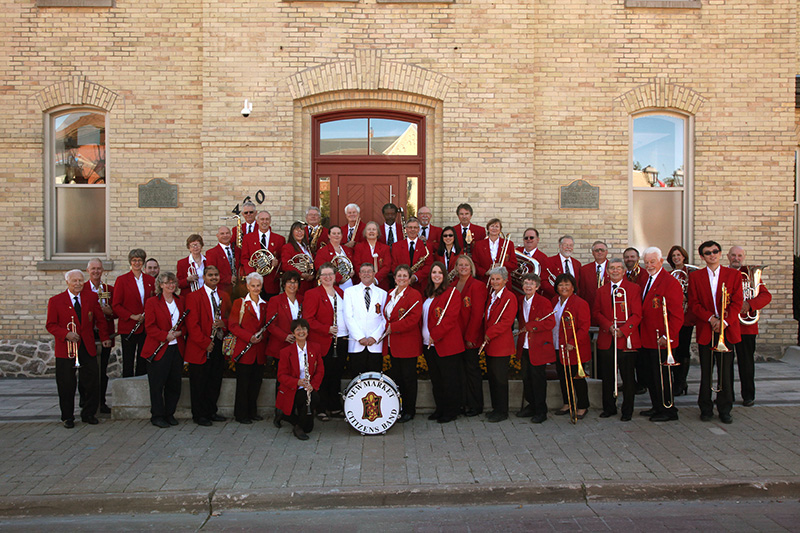
2204 Bandstand 1At an evening meeting of council, several members of the band, wearing their red blazers, arrived for the presentation. In the announcement of their deputation to council, the band pointed out that “Since 1872, the Newmarket Citizens’ Band has been an integral part of the cultural and social landscape of the town of Newmarket.” To commemorate the opening of the newly restored Old Town Hall they presented a large framed photograph of the town band taken in August 1883 just a few weeks after the original opening of the Old Town Hall on July 1, 1883.

The photo of the band was taken during the Firemen’s Excursion to Niagara Falls on the Civic Holiday, August 8, 1883. An article about the event, including this photo, was published in the Newmarket Era of the day. Approximately 250 residents travelled by train and then steamship to Niagara Falls and the band went along to provide entertainment. It is a prime example of the band’s long involvement in the social and cultural life of the town. The write-up of the trip mentioned that the band, reinforced by two gentlemen from Sharon and Bolton, “enlivened the trip by music on the fore deck; good music is never so pleasing as on the water.”

A formal public unveiling of the photo was scheduled to take place at the band’s “Simple Gifts” Concert at the Old Town Hall on Botsford Street, Friday, December 2, 2016. (On a personal note, some 35 years ago, I played there for a few years in monthly concerts of The Newmarket Jazz Appreciation Society, and our small Dixieland group was known as “The Botsford Street Ramblers.”)

Since it is rare to find this much information about a band’s activities almost 150 years ago, it is worth including here some of the historical information about the band recently presented to the Newmarket mayor and council. “The band formed in 1872 with roots going back to as early as 1843. Walter W. Roe, son of the town’s postmaster and fur trader, William Roe, circulated a petition among the local business community to raise funds. The 12 band members contributed $5 each and along with 69 other contributors raised the sum $319 to purchase instruments.”

To quote the petition: “Whereas we, the undersigned, think it a disgrace to the inhabitants of Newmarket that they should have, on all festive occasions, to send to the small villages of Aurora and Sharon for a band, we have determined, with the consent and assistance of our fellow-townsmen, to form one of our own.”

The timing of the recent presentation could not have been better from a number of perspectives. For one, the band delegation met with the mayor and council within a few days of the reopening of the beautifully restored Old Town Hall, which is now destined to be a prime performance venue. For another, it has only been a few weeks since the band was informed that they would now have an excellent permanent rehearsal home complete with storage in a large town recreation centre. Wandering from place to place for rehearsals has been the norm since their former rehearsal space was destroyed by arsonists many years ago. Last but not least, it just also happened a few days after the band paraded, as it has for years, in the town’s annual Santa Claus parade.

"... Under the big elm in 1883." (Artist: Lynda Baird) Photo Credit: Jack MacQuarrieJust outside of the council chambers, in the lobby of the town hall, there is a large imposing mural depicting “The Newmarket Citizens’ Band gathered under the big elm in 1883.”

New Horizons. By now it should not be a surprise, but I just received a note about yet another New Horizons group that we had not previously heard from. Lynda Shewchuk, music director of Lakeshore New Horizons Bands in Bowmanville, tells us that the band is now in its sixth year. She says that the thriving group is “not very large” with only 60 members! They have a senior band, intermediate band and a beginners class. They also have a small jazz band. She states that “our members are very active and enthusiastic, with many playing in two or even three bands. Quite a few of our members play two different instruments, one in each concert band.”

Recent Events: In early November the Milton Concert Band lost one of its long time members, Rev. Christopher Snow. On November 6 “A Memorial Concert for Chris Snow” was presented to proclaim “A life celebrated through music.”

On November 20 the Wychwood Clarinet Choir concert continued to amaze with their unique arrangements of works for orchestra and concert band. This time it was the Holst Second Suite in F for concert band. In the early 1920s the leaders of Britain’s Royal Military School of Music at Kneller Hall lamented the lack of larger serious works for concert band. Until then, if bands wanted to play longer multi-movement works they had to rely on transcriptions of orchestral works. They commissioned Gustav Holst to write two suites for concert band. Since then these suites have been part of the concert band repertoire. This transcription maintained all of the highlights and nuances contained in the original. Local composer Fen Watkin also contributed a fine version of Villanesca, Spanish Dance No.4 by Granados. In a conversation after the concert, Watkin mentioned that, for sesquicentennial year 2017, he might like to write some arrangements of Canadian works. I did not mention it then, but I would like to suggest Calixa Lavallée’s La rose nuptiale.

Initiatives. Every once in a while, we hear of initiatives taken by bands to either help with their finances or otherwise enhance their relationship with their communities. In November, the Aurora Band held its annual holiday market where shoppers could find one-of-a-kind gifts from 38 unique local vendors. For their Canada 150 festivities, the band has commissioned a composition from professor Bill Thomas of York University. The band will give the premiere performance of this number at its concert on Canada Day, 2017.

On the fundraising front, the Strings Attached Orchestra has become a registered charity to provide some financial incentive for donors so that they may continue to bring music into the community.

Coming Events

Dec 5: Resa’s Pieces will present “A Tribute to the Beatles and Beach Boys,” 7:30pm at York Mills Collegiate.

Dec 6: Silverthorn Symphonic Winds present the next concert in their series, 59 Minute Soiree. These mini-concerts feature a variety of lighter music, perfect for unwinding after a day at work. At 7:30, Wilmar Heights Event Centre – Concert Hall.

Dec 9: The Aurora Community Band will present holiday entertainment like no other – its “Heroes and Monsters: A Holiday Concert” –  at 7:30, Trinity Anglican Church, 79 Victoria St., Aurora.

Dec 10: For their annual holiday concert, “The Bells of Christmas,” the Milton Concert Band will not only include the traditional musical favourites but will feature, as guests, Eden Bells A-Peel, a long-established handbell choir from Eden United Church in Mississauga. In Victorian times, it was very fashionable to go carol singing with small handbells to play the tune of the carol. Sometimes there would be no singing, just the music of the handbells. Handbell ringing is still popular today and if you have never heard a handbell choir, then this is a concert well worth a visit: 8pm Milton Centre for the Arts, 1010 Main St. East, Milton.

Dec 11: The Clarington Concert Band presents their “Most Wonderful Time Of The Year” featuring singers Father Paul, Kelly Robertson and Lisa Heitzner, 2pm at St. Joseph’s Catholic Church, 127 Liberty St. South, Bowmanville.

Dec 11: The Strings Attached Orchestra presents their third annual “Friends and Family Holiday Concert,” 2pm at Congregation Ban’s Torah, 465 Patrician Ave., Toronto.

Jack MacQuarrie plays several brass instruments and has performed in many community ensembles. He can be contacted at bandstand@thewholenote.com.
My calendar says that fall has begun, but the weatherman tells me that he has declared a “weather alert.” Whichever it is doesn’t make much difference for the community band scene. The summer events have passed and the events scheduled for this time of year will go ahead as planned unless our weather deteriorates to the kind we have seen in the Caribbean recently.

The Summer Scene

The Shimoda Family Consort - In the left hand of the performer at far right is a recorder even smaller than a piccolo.In some ways, from my perspective, the local community music scene has been a bit benign, with most groups emphasizing Canada 150 and the works of Canadian composers. Over the official summer period I heard many of the same works many times over with only minor variations. The one musical event which stood out for me was not by a community band, but by an excellent Baroque recorder consort. In the June issue I mentioned that I was looking forward to hearing the Shimoda Family Consort at the Foster Memorial. Well, on August 25 I was not disappointed. This is truly a family ensemble. Mother, father and two sons all move around playing an amazing array of recorders, from one somewhat smaller than a piccolo to the largest, which is taller than a contrabassoon. In this concert, in addition to playing a couple of different recorders, the mother also accompanied the others on harpsichord and played one harpsichord solo.

While I used the term “Baroque” to describe this group, most of their repertoire was from a period earlier than that usually referred to as Baroque. From such well-known names as Bach, Vivaldi and Telemann backward in time to such unknowns as Ludwig Senfl (1486-1543) and Gregorio Allegri (1582-1652), the music was all very enjoyable. Newest works on the program were two pieces from Mozart’s The Magic Flute. Such music on a beautiful summer evening in this architecturally stunning venue has left its mark in my memory.

Coming soon

The most notable event on the community band horizon this fall – that we are aware of – is a “50th Anniversary Concert” and banquet for the Northdale Concert Band. Having played in this band for some years in the late 1970s and early 1980s, under the direction of conductors Carl Hammond and James McKay, this event is of particular personal interest.

The Northdale Concert Band had its beginnings in 1967, with a group of students who had originally met and first played instrumental music together at Willowdale Junior High School and later played together at Northview Heights Secondary School in Toronto. There, along with other interested music students, they formed the band. The name Northdale came from the names of these two schools. Music teachers Ted Graham and Wayne Moss took on the band, held rehearsals once a week, and gave concerts open to the public. As time passed, the band became an adult group.  None of its original members remain in the band today. However, the band has its roots in the community, and has developed into a skilled group of dedicated amateurs and many music professionals, with a number of the members having been with the group for several decades. Many members play and teach music professionally; others teach music in the elementary and secondary schools; and others are students in the music faculties of York University or the University of Toronto. Other members are in varied careers, but all turn out reliably to rehearse and perform in various community venues.

Through the years, there have been many fine Northdale conductors, too numerous to mention here. Stephen Chenette, professor emeritus, Faculty of Music, University of Toronto, was the conductor from 1996 until 2010 when the present conductor, Joseph Resendes, took over the baton. Born in Toronto, Resendes has extensive professional credits as an active conductor, composer, performer and educator, and is currently in the process of completing his PhD in the field of musicology, ethnomusicology focusing on wind studies, conducting and the development of community music in Canada. As well as being the musical director and conductor of the Northdale Concert Band, he also currently holds positions as the music director of East York Concert Band, St. Mary’s Church Choir, VL Sax Quartet and as assistant music director of Ecos of Portugal.

A feature of this anniversary concert will be the world premiere of a newly commissioned piece, Dance Suite, by renowned Canadian composer Gary Kulesha, composer advisor to the Toronto Symphony Orchestra since 1995. Although principally a composer, Kulesha is active as both a pianist and conductor, and as a teacher. In 1986, he represented Canada at the International Rostrum of Composers in Paris, and has twice been nominated for JUNO awards, for his Third Chamber Concerto (in 1990) and again in 2000 for The Book of Mirrors.

Another feature of this Northdale anniversary program will be guest soloist Vanessa Fralick, associate principal trombone of the Toronto Symphony Orchestra. Prior to joining the TSO, she played three seasons as acting associate principal trombone of the St. Louis Symphony, after winning her first orchestral position with the San Antonio Symphony in 2009 while pursuing her master’s degree at The Juilliard School with Joseph Alessi of the New York Philharmonic. She completed her undergraduate degree at the University of Toronto, and is an alumna of the Toronto Symphony Youth Orchestra, National Youth Orchestra and the National Academy Orchestra of Canada. She occasionally plays alongside her brass-playing parents in the Niagara Symphony Orchestra in her hometown of St. Catharines, Ontario.

The concert and banquet take place on Saturday, November 4 at 3pm, at the Salvation Army Citadel, Lawrence and Warden Ave. (2021 Lawrence Ave. E.) in Toronto.

A unique aspect of Northdale Concert Band is their music publishing venture known as Northdale Music Press Limited. The project of issuing new works by Canadian composers for concert band began with Ontario Arts Council funding in 1985, when six new works were commissioned by Northdale Concert Band. The band travelled to Expo 86 in Vancouver and performed the world premiere of these compositions at the Canada and Ontario Pavilions. The scope of publication has increased, and today, Northdale Music Press publishes compositions for other ensembles, including brass band, stage band, and wind octet.

CBA Community Band Weekend

As if they didn’t have enough to plan for with their anniversary concert and banquet, the Northdale Concert Band is hosting the Canadian Band Association’s Fall Community Band Weekend, Friday October 13 to Sunday October 15 at the Church of St. Jude’s Wexford, 10 Howarth Avenue in Toronto. Visit either Northdale or CBA websites for details.

New Horizons Bands

As in past years the news from New Horizons Bands is great. The Toronto group’s annual “Instrument Exploration Night” was a huge success, with 22 participants and six instrument coaches honking, tooting and banging on all the instruments. Many signed up for beginner classes. With 45 new members this year, total membership now stands at well over 260, spread out over eight bands and two jazz groups. And it’s still not too late to join for this year.

Their annual Remembrance Day concert, “A Night to Remember,” is scheduled for November 10 at 7:30pm at Church of the Holy Trinity, 85 Livingston Rd., Scarborough; their annual band festival is set for January 27, 2018.

With this kind of growth it was decided that the organizational structure should be updated. So, New Horizons Toronto incorporated last year to facilitate adding stability to the group should Dan Kapp and his wife Lisa decide to move on to new challenges. The board is working to figure out how to cover all of the activities that need to be done to run such a large group.

Meanwhile, the York Region New Horizons group, which just started last year, held an event which they called “Test Drive a Band Instrument,” and will have started classes by now at Cosmo Music in Richmond Hill. Their classes are all on Mondays with morning, afternoon and evening sessions. For information contact Doug Robertson at 416-457-6316 or nhbyrdirector@gmail.com.

Hannaford Street Silver Band

As they enter their 34th season, the Hannaford Street Silver Band is adding even more colour and variety to their annual concert programming. Over the years they have gradually added other musical artists to broaden the taste and colour from the traditional all brass band repertoire. This year it is even broader. Every concert will have a unique flavour. Their opening concert “Tango!” will feature, as guests, the Payadora Tango Ensemble. This quartet of violin, accordion, piano and double bass with their traditional Argentine Tango music will certainly be a departure from what we have come to expect at an all brass band concert. That’s Sunday, October 22 at 3pm in the Jane Mallett Theatre.


Here we are midway through the last third of the year, and most community bands are busy rehearsing, for a variety of programs from formal concerts to Santa Claus Parades; the last thing that any band needs at this time of year is any disruption of rehearsals. Many community groups rehearse in schools, so for many bands in this part of the world there was near panic that these schools might be closed due to a possible labour dispute. Fortunately, at the very last minute the matter was settled. I, myself, received notices a few days later that all rehearsals would proceed as scheduled.

It was, however, a sobering reminder of a topic I have been known to occasionally rant about: the dilemma facing many community musical groups regarding rehearsal space. Most groups are tenants of schools, churches or community centres. Few have any real means of avoiding such matters. School music rooms are ideal rehearsal spaces, complete with music stands, and much of the heavier percussion equipment. However, most music teachers and many principals have concern for the safety of this equipment. I have known of a number of situations where a new music teacher, or principal, arrived at a school and expressed concern for equipment safety. All of a sudden, a band which might have rehearsed there for years, found themselves homeless. Even if they manage to obtain another kind of rehearsal space, where do they keep larger percussion instruments, stands and maybe music library?

Read more: Occasional Rants and Fanfarones

How does one get started in banding? Nowadays, the most common way is through school music programs. Almost every secondary school in this part of the world has a music program, and many elementary schools do as well. It hasn’t always been that way though. When I went to school in Windsor, Ontario, we had no formal music program, nor did any other school in the city. The school had an excellent fully equipped auditorium with a balcony. It was the best auditorium in the city. When world renowned groups like the Russian Don Cossack Chorus came to town, that is where they performed. It was also home to many amateur productions like the Gilbert and Sullivan operettas where my parents first met.

1806 BandstandThings have changed. Most secondary schools have bands as well as choirs, and many have large string ensembles as well. As for my old school, it is now the major school for the performing arts in the region. How did young people get introduced to music performance back then? For boys there were a few boys’ bands, and girls were more or less left out. A recent short excerpt on CBC Radio triggered my thoughts on this subject. In the program B is for Brass Dave Pell, bass trombonist with the Hannaford Street Silver Band, related how he started. As a boy, Pell’s introduction began when he was given a euphonium in the Salvation Army band. He was soon in love with the instrument and its sound. However, it’s only used in bands. So when it was time to buy his own instrument, he wanted an instrument which would be found in a broader spectrum of ensembles. He chose the trombone.

My own case was very similar. My two best friends, Keith and Jimmy, played in a boys’ band sponsored by a local service club. I decided to try to join the band with them. I thought that I would like to play drums. There were no “openings” for drummers, so I was handed a euphonium and shown how to made a semi-musical sound. When that band ceased to operate, I was without an instrument. I liked the euphonium, but realized that there were many kinds of musical groups where the euphonium was not used. I wanted the option of being able to play in dance orchestras or symphony orchestras. Would it be trumpet with the same fingering or trombone with the same mouthpiece? Like Pell, I chose trombone. Also like Pell, I have retained my love affair with the sound of the euphonium and the counter melodies often written for it. When I meet young people who have embraced their particular instruments, a frequent question which I ask is: “Did you choose the instrument or did the instrument choose you”? In Dave Pell’s case and mine the euphonium chose us, then we chose the trombone.

Bands, their repertoire, their audiences and their performance venues have certainly evolved over the years. From the works bands of Britain and Europe to the early town bands in North America, much of the programming was military music or transcriptions of classical works. Prior to and throughout WWII the major events for bands were tattoos, with most groups parading before a reviewing stand. On the platform would be one featured band playing such works as concert overtures between various parts of the marching groups. But gradually, over the years the perception of bands and band music has evolved. The concert band has finally gained the respectability of performing in concert halls. The concert band that also participates in parades is a rarity today.

Not so splendid isolation: Before looking at what the bands in this area are offering this spring and summer, there is another evolving trend in the band world which is receiving mixed reactions in the banding community. I’m referring to the use of mp3 files for learning new works. Many bands are now posting recordings of their current repertoire on their bands’ websites or asking their members to sign on to their internet groups, to listen to a recording and follow it on their printed music. In some cases it is suggested that the members should play along with this at home. Is this a good idea?

Proponents are all in favour of using any means to achieve a better performance. But the first flaw is the assumption that all band members have ready access to a high speed internet connection with suitable sound reproduction capabilities. It also assumes that members are comfortable using all of this technology. Even if this unlikely situation were possible, and that there were no distractions in the home, is this the best way to learn a new work? There certainly would be no interaction with other band members. Those opposed to the idea consider it to be the community band equivalent of “paint by numbers” games for children. There is an output. But is it art? What will happen to the all important sight reading skills which are so valued? We would love to hear from readers on this subject. Have you tried it? Did it work for you and/or your band, or was it more of a distraction? Are there other aspects of modern technology having an influence in your band experience?

Upcoming: As for programming, so far we have heard from two bands with details of what they will be performing in the coming months. In both cases, in keeping with a popular trend, they are “theme” programs. The first is that of Henry Meredith’s Plumbing Factory Brass Band in London, Ontario, which always has imaginative programs. Titled “Our Home and Native Land – A Celebration of Canada,” the April 17 program will open and close with two different marches both called Bravura, a word which conjures up our national spirit of energy, pride and glory. Included will be Handel’s Coronation Anthem “Zadok the Priest” which was performed 60 years ago at our Queen’s coronation in 1953. The band will then take the audience on a musical tour of Canada with such numbers as Howard Cable’s The Banks of Newfoundland, an arrangement of several folk songs from our oldest, yet newest, province. Canada’s waterways will be portrayed by Herbert L. Clarke’s cornet solo The Maid of the Mist, named for the famous Niagara Falls tour boat.

The Uxbridge Community Concert Band has taken a different approach to its theme programming. Last year band members were asked to vote on a single number from previous years that they would like to perform again. Their choice of previously performed music was a suite from The Firebird. From that evolved the theme of “The Elements” for an upcoming concert. It will all be music about earth, wind, air and fire. From the fast-moving Dancing in the Wind, the power of the sacred volcano Mazama and the gospel stylings of Wade in the Water, through the tumultuous Ritual Fire Dance to the grand finale of The Firebird, it should be quite a musical journey.

Down the road: The University of Toronto, Scarborough (UTSC) and the Ontario Band Association (OBA), are inviting interested groups to participate in the 2013 UTSC & OBA Chamber Music Festival. This is a three-day music festival that will take place from April 16 to 18, 2013, at the UTSC campus. Further information will soon be available at onband.ca/cmf.

We have not heard any more on the York University band workshop in May, mentioned in last month’s column, but expect to have more details well before the date. 

Jack MacQuarrie plays several brass instruments and has performed in many community ensembles. He can be contacted at bandstand@thewholenote.com.
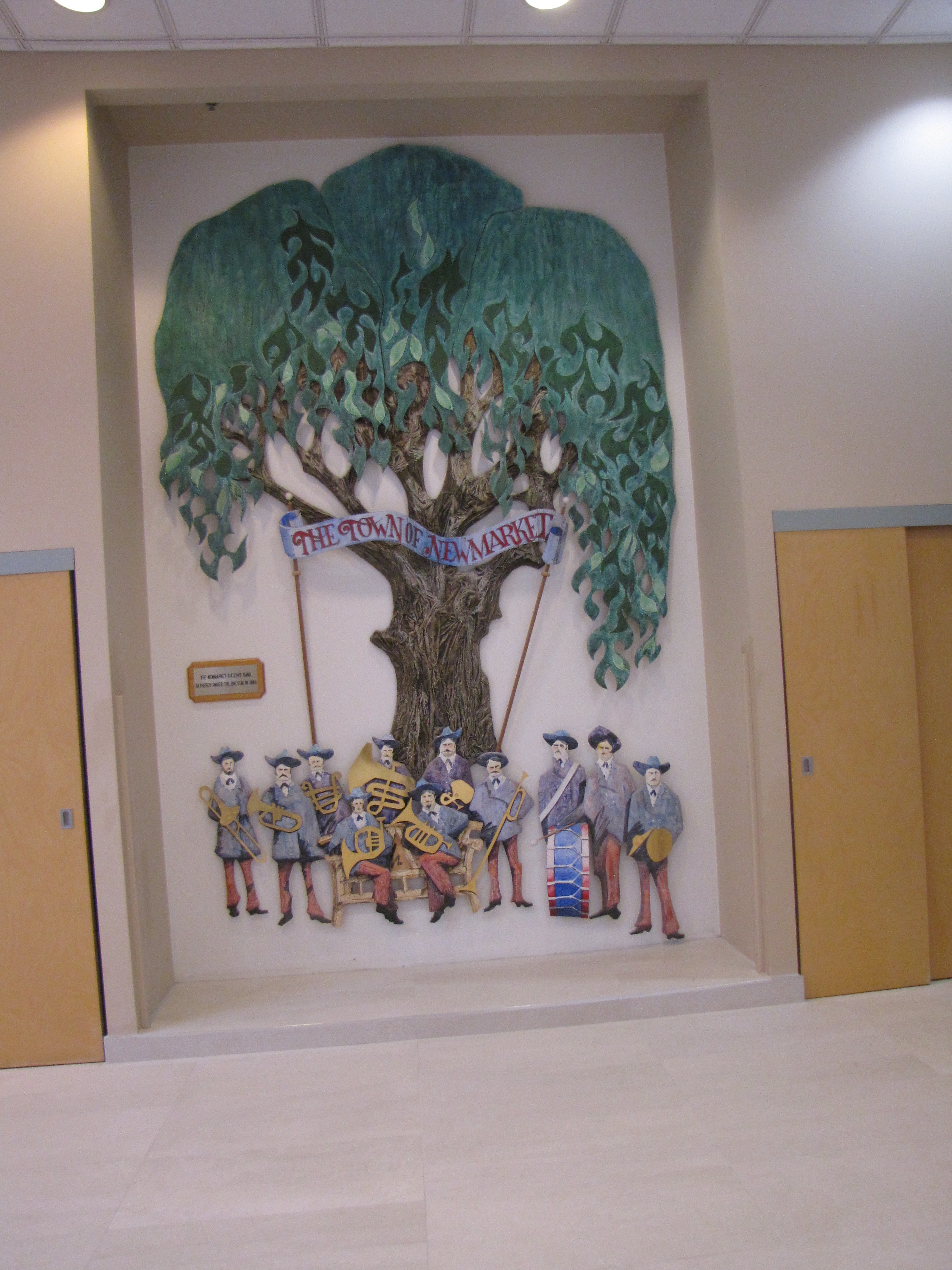
Retraction: In the March 2010 issue of this publication I referred to a collection of early wax cylinder recordings in my possession (picked up at a sale in a barn in Prince Edward County, by the way). Amongst them, I said, there was, to the best of my recollection, a conversation reputed to be between Thomas Edison and Johannes Brahms. Challenged repeatedly by a reader to substantiate my claim or retract it (since there is no evidence that Brahms and Edison ever met), I have stalled on doing so, in the hope that I’d get round to rummaging through more than half a century of “stuff.” Since, three years later,
I seem to be no closer to getting around to doing so, I hereby retract any claims made in this column as to the existence of such a cylinder.

I have often claimed that procrastination was one of my hobbies, As I sit down to write this February column, though, I can honestly say that Mother Nature offers me no pleasant alternatives to sitting down at the keyboard. Today, with snow, ice and nasty cold temperatures, getting down to writing is by far the most pleasant of tasks. Welcome to real winter.

Looking back

In contrast to the weather, January was a very mild musical start to 2019, with no significant musical events on my agenda other than some rehearsals. Looking a little further back, however, in December I had the privilege of attending several entertaining seasonal concerts which were too late to report on in the December issue of The WholeNote.

The first of these was the annual Christmas Soiree of the Silverthorn Symphonic Winds. It was a short but very entertaining program of their favourite Christmas delights. The Wilmar Heights Event Centre is a small but very warm and inviting venue, particularly for that event, where audience members mingled with band members during intermission to overindulge in the many taste treats offered.

As for the Wychwood Clarinet Choir, now in is tenth season, their repertoire spanned a few centuries from Rossini’s L’Italiana in Algeri and Tchaikovsky’ Dance of the Sugar Plum Fairy to Leroy Anderson’s Sleigh Ride. One of the highlights of the program was Schubert’s Shepherd on the Rock featuring soprano soloist Christina Haldane and clarinetist Michele Jacot. Roy Greaves and Richard Moore deserve special credit for their excellent arrangements of these works for clarinet choir.

Covey of partridges

Highlights of several of the festive season concerts which I attended were performances of the Twelve Days of Christmas (the festive days starting on the evening of Christmas Day on December 25 through Epiphany on January 6). In each case audience members were asked to pick a number corresponding to their birth month. Those born in January were identified with one, February two and so forth. In one case, audience members were then asked to stand up while the verse for their day/month was performed. In another case, audience members were asked to take any keys from their purses or pockets, hold them up and jingle them when their number was called.

The Resa’s Pieces Gala, in which members of the combined band and string orchestra played on the floor with the choir onstage, had the most imaginative approach. Audience members stood for their month, but at each appropriate moment, 12 members in the front row of the choir, facing the audience, raised large red cards, with pictures representing the words for each of the days.

As to the origin of the song, it’s generally agreed that it arose in England, perhaps as a coded catechism song from the era when Catholicism was outlawed there (1558-1829), and that each line symbolizes a tenet of the Catholic faith. Setting aside the dozens of learned line-by-line interpretations, the truest meaning of this cheerful song for me is the opportunity it provides for audience involvement in music making.

Back to Bugles

My grumble in the December issue about bugle calls not being played on bugles, but on trumpets got quite a response, for and against my comments.

In my life I have heard many bugle calls, but never played on a bugle myself. My first association with the instrument was in high school where, one day a week, almost every boy in the school, dressed in the full kilted highland uniform of our cadet corps, was part of the bugle band (bagpipes being too expensive and too difficult to maintain). Since I was already a trombone player in a boy’s band, not associated with the school, however, I missed out on this glorious opportunity. Some years later, I served aboard HMS Sheffield, the Admiral’s Flagship of the American and West Indies Squadron. We had a Royal Marine Band aboard as well as a few buglers. All orders over the ship’s sound system were preceded by the appropriate bugle call.

HMS SheffieldThe most interesting of the comments I received came from reader Robert Frankling. In his opening salvo he states in part: “The question you raised of the too-seldom use of bugles in military units has nothing whatsoever to do with the expense, but everything to do with an unjustified anti-bugle snobbery and laziness of trumpet players to practise on the bugle, a tough instrument to master.” In his message he mentions that he has played the trumpet since age 13 and the bugle since late middle age. Now, at 67, he tells me that he has done “a fair bit of bugling in the last 30 years mostly for military events and funerals.”

“Ultimately, the reason more trumpet players do not play on the bugle,” he says, “is because they can’t, and they can’t because they won’t practise on the bugle enough to master this tricky instrument. They just pick up a bugle, try it once and say it sounds terrible, but that is because of the performer, not the fault of the instrument. Due to their ignorance of the bugle’s history and their unjustified snobbery, [they] consider the bugle to be beneath their dignity ... something that only an unsophisticated rube would use!”

(Taking Mr. Frankling’s comments about the bugle being harder to play than the trumpet, into account, the title of Leroy Anderson’s Bugler’s Holiday takes on a new meaning. Could it have been that buglers, tired of playing their more challenging instruments, were being offered a welcome day off?

Bugle from the Royal Montreal Regiment MuseumAs for the instrument’s venerable history, the modern bugle can trace its origins to the Roman bugle around the fourth century A.D. as early musical and communication instruments made from animal horns with a narrow opening cut at the tip. (The word bugle itself comes from buculus, the Latin for bullock, a castrated bull.) Just as in today’s instruments, the tone was produced by pursing the player’s lips against this narrow opening and producing a buzzing sound, with the horn acting as resonator of the sound, and the pitch dependent on the length of the air column in the horn. At some stage, someone decided to make a horn out of metal. A late Roman metal bugle, found in 1904 at Mont Ventoux in France, and now in the British Museum, is bent completely around upon itself to form a coil between the mouthpiece and the bell end. (In the case of this British Museum specimen, the bell end was broken off some time in the long and distant past).

The use of these instruments as signaling devices, particularly in military operations, goes back to its earliest days. The ancient Roman army used an instrument called the buccina. Centuries later, the purpose of the bugle was laid out in Niccoló Machiavelli’s 1521 treatise Libro dell’ arte della guerra (The Art of War), in which he wrote that the commanding officer should issue orders by means of trumpets because their piercing tone and great volume enabled them to be heard above the pandemonium of combat. The first verifiable formal use of a brass bugle as a military signal device was the Halbmondblaser, or half-moon bugle, used in Hanover in 1758. It first spread to England in 1764 where it was gradually accepted widely in foot regiments.

Bugles, and various types of trumpets or horns, without valves or keys, produce only limited notes (usually five) with the pitch of the lowest note being the resonant frequency of the horn, based on its length, and the other notes being harmonics of that.

Historically, the bugle was used in the army to relay instructions from officers to soldiers during battle. They were used to assemble the leaders and to give marching orders to the troops. During peace time the bugle call was used to indicate the daily routines of camp. When I served in HMS Sheffield, we had several Marine buglers, as well as a full Royal Marine Band, as befitting the Admiral’s Flagship. All routine orders throughout the day were by the specific bugle call for such times as “sunrise, hands to supper, lights out, sunset” etc.

Post Horn from the Grinnell College Musical Instruments CollectionOne of the most significant early peacetime uses of the instrument was the post horn, to signal the arrival in town of the postman with the mail. The original post horn had no taper until right at the bell and the tubing was straight and narrow. Its sound is so significantly different and appealing that many composers have written works for the post horn either as a featured solo instrument or to add an unusual voice in their composition.

Mozart composed his “Posthorn” Serenade in 1779. Another example of post horn use in modern classical music is the off-stage solo in Mahler’s Third Symphony. In the world of band music the Post Horn Gallop, written in 1844 by the German cornet player Hermann Koenig as a solo for post horn with orchestral accompaniment, is a favourite, if a post horn and player are available. Due to the scarcity of post horns (and competent players), music written for it is frequently played on a trumpet, cornet or flugelhorn. Which of course, brings us back to my original bugler’s lament in December, which got this thread going.

Over the years, the British Army has retained the bugle for ceremonial and symbolic purposes. In the Canadian forces, there was still the rank of “Bugler” until 1945, when the regimental trade of bugler was discontinued in the Canadian Army. Hence, bugle calls are now played on trumpets because the bugles went when the buglers went.

By the way, to see the most amazing array of bugles, horns, trumpets and their valved and unvalved relatives, developed over the ages, one would have to be lucky enough to be able to visit that portion of Henry Meredith’s vast collection in London, Ontario. Hopefully that collection will find a suitable museum as home in the near future.

New Horizons

So far we haven’t heard anything about the activities of the numerous Toronto New Horizons groups, but have received a fine update from Doug Robertson for the York Region groups. In an invitation for new members, he has suggestions for potential new members with references to Your New Year’s Resolution and Your Bucket List. He summarizes some of the many benefits, particularly for retirees, of learning to play an instrument in a group. He reminds people that it’s never too late, and it has the many advantages of remaining active, having fun with other adults, making new friends, and improving memory. Their group classes are on Monday evenings at Cosmo Music in Richmond Hill. For information, contact Doug Robertson,
nhbyrdirector@gmail.com or at 416-457-6316.

BANDSTAND QUICK PICKS

Phillip Smith. Photo by Chris LeeFEB 10, 3PM: The Hannaford Street Silver Band presents “From Russia with Brass” including The Festive Overture, The Procession of the Nobles, Polovtsian Dances and others. Philip Smith, conductor and trumpet soloist. Jane Mallett Theatre, St. Lawrence Centre for the Arts.

FEB 24, 3PM: The Weston Silver Band presents “Heart and Soul. R and B and Soul with a big brass spin.” Dan McLean Jr. and Some Honey. Glenn Gould Studio, 250 Front St. W.

MAR 2, 7:30PM: The King Edward Choir will join the Barrie Concert Band in their “Last Night of the Proms” with Elgar’s Pomp and Circumstance March No.1; Gilbert & Sullivan: Medley; Arne’s Rule Britannia; Handel’s Zadok the Priest, and Hallelujah. Oliver Balaburski, conductor. Collier Street United Church, 112 Collier St., Barrie.

MAR 3, 2PM: The Markham Concert Band presents “Let’s Dance! Ballet, Waltzes and Swing,” including Big Band Polka, El Bimbo, Flunky Jim, Waltzes from Der Rosenkavalier and other tunes. Flato Markham Theatre, 171 Town Centre Blvd., Markham.

MAR 3, 3:30PM: The Wychwood Clarinet Choir will have “WCC at the Oscars.” Selections range from Gershwin’s An American in Paris to Mozart’s Adagio from Gran Partita; Bernstein’s Tonight from West Side Story; Arlen’s Somewhere Over the Rainbow; and Loewe’s I Could Have Danced All Night. Michele Jacot, conductor. Church of St. Michael and All Angels, 611 St. Clair Ave. W.

Jack MacQuarrie plays several brass instruments and has performed in many community ensembles. He can be contacted at bandstand@thewholenote.com.
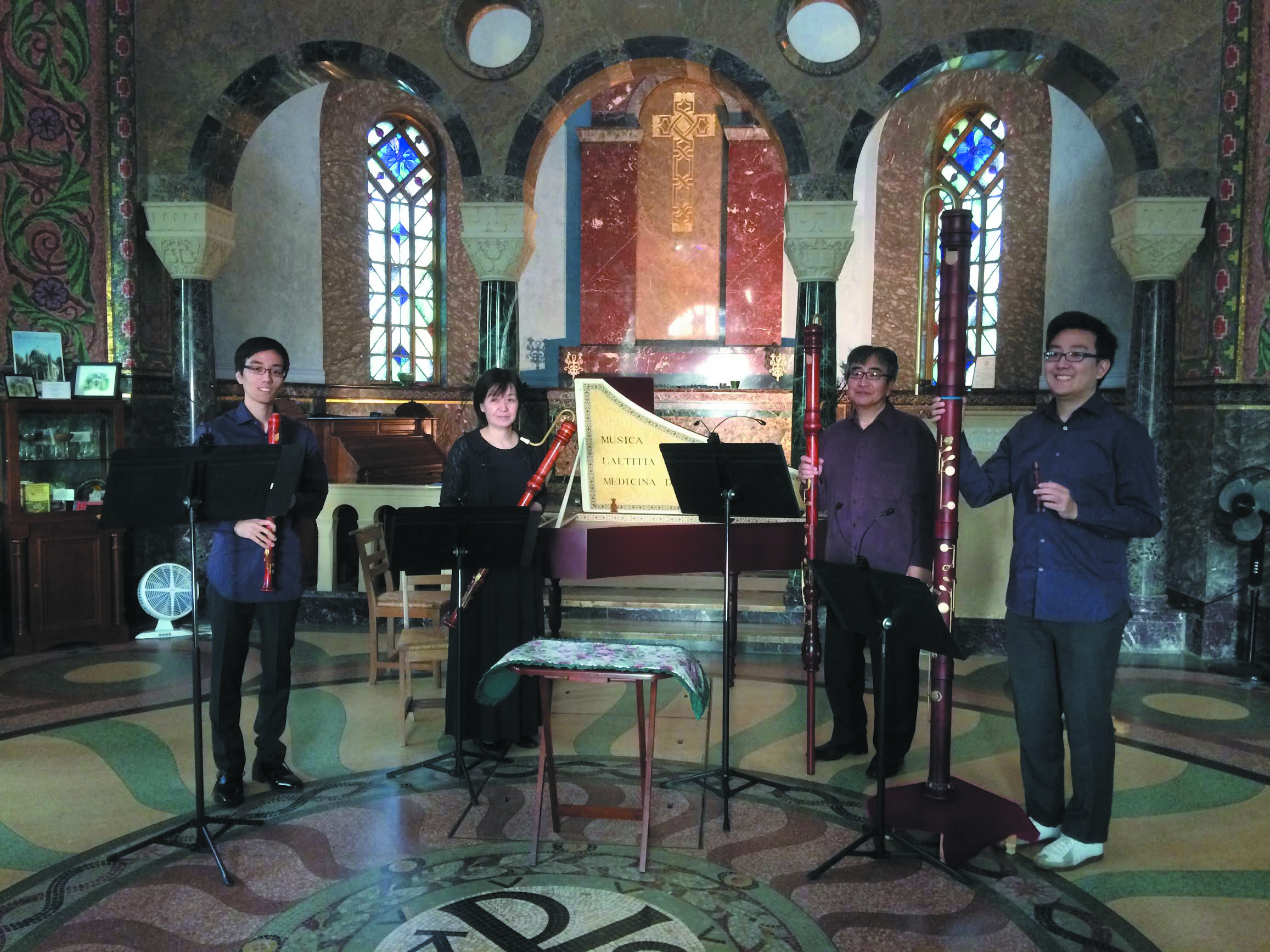
Two disparate recent events prompt these ruminations. The first is the massive downturn of the global economy with its inevitable adverse effect on disposable income. The second was the receipt in the mail of an excellent biography. The book, In The Firing Line by Toronto author Wallace L. Court, is a biography with a difference. It chronicles the life of noted Salvation Army composer, Colonel Bramwell Coles.


Recession woes led us to wondering what effect this financial situation might have on the health of community musical groups. In the tough times projected for the foreseeable future, will band and orchestra members curtail their participation to save money, or will they turn more to this form of recreation.

Read more: On the state of Community music groups

Here we are, it’s December already, but with many community ensembles still more focused on sesquicentennial projects as the year draws to a close than on events that could be described as special for the Christmas season. Let’s start with two band projects we have recently learned of that warrant mention, both of which have significant historical aspects.

Cobourg: The first of these is the announcement of a CD by the Cobourg Concert Band. Although this CD, Pride of Performance, was officially released on Canada Day at the band’s concert in the Cobourg Victoria Park Bandshell, it did not come to our attention until a few days ago. There are a number of ways in which this CD is special. Not only is it a sesquicentennial project, but it marks the 175th year that there has been a town band in Cobourg. That’s 25 years longer than Canada has been a country. Whether that sets a record for the establishment of a town band in Canada will be left for this Cobourg band to dispute with the Newmarket Citizens’ Band and any others that might claim such a title. Every track on this recording is either a new arrangement of an established work or a completely new composition. All are by local musicians, including some band members. Even the cover artwork was created by contest winners from the local St. Mary’s High School. I hope to see a review of this CD in a future issue of The WholeNote.

(A side note: this band also bears the title The Band of Her Majesty’s Royal Marines Association – Ontario, and is allowed, by royal assent, to wear the uniform of the Royal Marines. How could this be, you might ask. Some years ago a man named Roland White moved from England and took up residence in Cobourg. He just happened to have been an assistant bandmaster in the Royal Marines working under the renowned conductor Sir Vivian Dunn, and had studied conducting under Sir John Barbirolli. When the town band needed a new conductor, there was White to take over, get that royal assent and change the image of the town band to its present pride of Cobourg.)

London: Where else might we look for a sesquicentennial band project? The first place that comes to mind, of course, is Henry Meredith’s Plumbing Factory Brass Band in London. On Wednesday, December 13, 7:30pm at Byron United Church – 420 Boler Rd., London, Ontario – the PFBB will celebrate Canada’s 150th birthday with “The Golden Age of Brass,” featuring music from the 1800s on period instruments. Since Confederation-era music will be highlighted, von Suppé’s exuberant Jolly Robbers Overture, written exactly 150 years ago in 1867, will open the program. Then, band music by big name composers will include Beethoven’s Marsch des Yorck’schen Korps and Mendelssohn’s War March of the Priests. The centrepiece of the program will be the challenging Raymond Overture by Ambroise Thomas.

Last month I mentioned the importance of musicianship for ensembles to really tell their story. Well, in this program, Dr. Hank has selected a set of four up-tempo compositions to test the skill of his band’s musicians. One highly regarded composer of the 1800s, famed for his toe-tapping pieces based on popular dance forms of the mid-19th century, was Claudio Grafulla. To demonstrate their skills, the band will play a set of four of his works: Cape May Polka, Freischutz Quick Step, Skyrocket March, and Hurrah Storm Galop. Another seasonal favourite, Johann Strauss Sr.’s famous Radetzky March from 1848, will bring the concert to a rousing close. I’m sure that many instruments from Dr. Hank’s vast collection will be front and centre at this concert.

(Another sidenote: While brass bands have many loyal followers, particularly in England and much of North America, that has not always been the case. With the origin of the brass band movement coming largely from company “works bands” in England, there were often considerable derisive comments about them. Sir Thomas Beecham was famous (or infamous) for two of these comments. “The British Brass Band has its place – outdoors, and several miles away” is perhaps his most often quoted. But the one that drew the most ire was  when he referred to the brass band as “that superannuated, obsolete, beastly, disgusting, horrid method of making music.” However, attitudes gradually changed, and in 1947 Beecham even guest-conducted a mass band concert at Belle Vue.)

Ukraine: Speaking of brass bands, recent Salvation Army news caught my attention. The Salvation Army is represented and active in 127 countries around the world. In many of these countries, Salvation Army groups have brass bands. Ukraine, in particular, is a country where there is a will but not the required leadership to develop the brass band movement. Several attempts have been made over the last 25 years to stimulate interest. While some attempts have been successful, with the political unrest of recent years, these have been difficult to sustain.

Enter Bob Gray, a Toronto high school music teacher, trumpet player and conductor with whom I play regularly, who has been active in the Salvation Army for many years. About six years ago, at the Salvation Army’s music camp at Jackson’s Point, he met two young men from Kiev, a cornet player and a euphonium player. After they had returned to Kiev, Bob decided to look into the SA band situation in Ukraine. After the revolution of 2014, Salvation Army churches throughout Ukraine closed, and now there are only two remaining in Kiev. Having learned of the demise of that Salvation Army movement, Gray decided to try to do something to rectify the situation. Item one on his agenda was language study. For over a year he actively studied in preparation for visits to Ukraine for Salvation Army activities. He went to Kiev for the first time in June 2016, then in May 2017, and again in October 2017. Gray, along with the people he met at Jackson’s Point years ago, are trying to resurrect the brass band movement in the Ukraine and, in particular, Kiev. A survey showed that there were 25 instruments in working order and a few players who were willing to commit time and effort to form what would be a divisional band base in Kiev.

The Salvation Army will be celebrating their 25th anniversary of operations in Ukraine this coming June. It is hoped that the divisional band in Kiev will have its debut during that weekend of activities. The Winton Citadel Band from Bournemouth in the United Kingdom will be the featured band for the festivities. The city of Kiev hosted the Eastern block countries Eurovision Song Festival this past June. During the event many groups entertained in local parks and squares. The Salvation Army provided a musical presentation in Victory Park. Bob Gray was a featured cornet soloist as part of these outreach concerts.

A trip to Belgium: A couple of months ago I heard from longtime friend Colin Rowe that he would be travelling to Belgium. I first met Colin some time around 1984 when we were both playing in a swing band at the Newmarket Jazz Appreciation Society. After that, he played trombone in the Governor General’s Horse Guards Band and subsequently became their drum major. Having moved East some years ago, Colin now has the same duties with the Cobourg Concert Band.

Drum major Colin Rowe with the Cobourg Concert Band in Plattsburgh NY, 2013 - Photo by Jack MacQuarrieTo commemorate the 100th anniversary of the battle of Passchendaele, Veterans Affairs Canada decided to mount a very different form of memorial. Specifically they identified nine recipients of the Victoria Cross from that era and the nine regiments in which they served. Then they selected a living representative of each regiment to go to Belgium, but that person could not be a currently serving member of the regiment. One of those VC recipients was Private Tommy Holmes VC from the 48th Canadian Mounted Rifles. At some time after WWI that unit’s name was changed to the Governor General’s Horse Guards. As the representative from the GGHG, Veterans Affairs selected Colin Rowe. All of regimental representatives, along with the band of the Royal 22nd Regiment, embarked on an RCAF transport for their trip to Belgium on November 5.

Another formerly local musician was Kevin Fleming, who was originally introduced to the GGHG by Colin as a trombone player. Later, like Colin, he continued to play trombone, but became Drum Major of the GGHG. Some time later Fleming transferred to the Regular Force, and a while ago to the Royal 22nd Regiment, nicknamed the Van Doos. Their band was selected as the lead band because Passchendaele was one of that regiment’s battle honours. While there were many ceremonies, the highlight for Fleming was at Passchendaele, with a torchlight parade from the WW1 monument to the town square followed by a concert.

Those who went on that trip commented that it had been meticulously organized by Veterans Affairs, and that on the flight over, they were presented with a six-page detailed itinerary for their ten-day visit to memorials and cemeteries, informing them of the time and place of their every move.

(Aside, again: speaking of Belgium, one significant recent event I attended was a concert by Toronto’s Wychwood Clarinet Choir on November 19. While most of the works performed at their concerts are special arrangements, the opening work, Claribel, was written by Belgian composer Guido Six specifically for his Claribel Clarinet Choir in Ostend. This was a wonderful rousing opening. The arranging talent of choir member Roy Greaves was certainly on display as the choir’s moods traversed from the Irish folk song The Lark in the Clear Air and a Mozart Serenade to three tangos by Astor Piazzolla. Harmonically the choir sounded better than I had ever heard it. Their harmonies were so well blended that one might think that their sounds were coming from a single source.)

Greenbank, Ontario: From the tiny Ontario hamlet of Greenbank, conductor and composer Stuart Beaudoin brought his Orpheus Symphonietta to the small town of Uxbridge for another memorable recent event – a concert featuring his new composition Elegy II: Lament and Tchaikovsky’s Symphony No.5. This was the first performance of his composition which conveys, in musical terms, some of the spectrum of the composer’s emotions arising from world events during his lifetime. It’s an interesting work which bears more listening. This same man will be back two weeks later with his Greenbank Cantorei sine Nomine choir and the same orchestra for a three-hour performance of Bach’s Christmas Oratorio in English.

Flute Street: That other local same-instrument-family group, Flute Street, unfortunately had their most recent concert on the same date as the aforementioned Wychwood Clarinet Choir. Their featured soloist was Christine Beard playing alto flute and piccolo. Those types of same-instrument ensembles would seem to be competing for the same audiences, and it is unfortunate that there is not a central registry to avoid such overlaps. Flute Street’s Nancy Nourse had hoped to have her new contra alto flute, but it wasn’t available on time. She says that it will be the first of its kind in Canada. She intends to unveil it in time for their next concert, possibly in March. It’s an unusual instrument made in Holland. She may even travel there to get it and bring it home.

Jack MacQuarrie plays several brass instruments and has performed in many community ensembles. He can be contacted at bandstand@thewholenote.com.
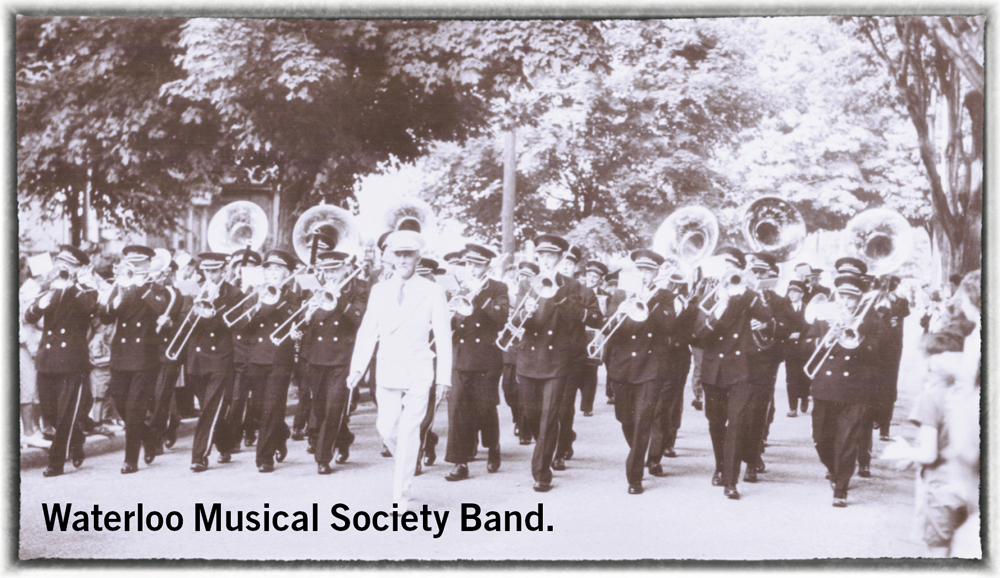
Plumbing Factory Brass BandAt this time of year the majority of bands we hear from are preparing for fall concerts, and only a few already have their sights set on Christmas. After attending the rehearsals of two different bands in mid-October, two weeks before Halloween, with nothing but Christmas music in their rehearsal folders, I was beginning to wonder if fall was going to be bypassed this year. Then we heard from the Wellington Wind Symphony. In their program November 1, “On the Road Again,” conductor Daniel Warren takes the audience on a trip, with a broad selection of works by Grainger, Reed, Hazo, Mahler and Koetsier. In a similar vein, Silverthorn Symphonic Winds’ November 28 concert, “Music that Tells a Story,” is built around music from such shows as Anne of Green Gables. So chalk a couple up for fall fare. One day later, though, the Markham Concert Band tilts the balance slightly the other way with a concert titled “A Seasonal Celebration” including Christmas and Hanukkah favourites. (Although, to be fair, it also includes music from all eight Harry Potter films.)

Plumbing the Depths: If as some suggest the pun is the lowest form of wit, then hats off once again to “Professor Hank,” Henry Meredith, for once again plumbing the depths of imaginative programming. For the London-based Plumbing Factory Brass Band’s December 2 concert, Meredith has pulled out all of the thematic stops and put them to practical effect. Many bands will frequently feature a small ensemble of band members for one selection, but this time every section of the band gets to display the talents of its members. Rather than attempt to paraphrase, here is a lengthy excerpt from the December 2 program announcement.

“The ‘agenda’ for the Semiannual Convention of The Plumbers Union includes small ensemble music by its offshoot subcommittees and delegations of like-instruments, as well as music for the entire membership.

1. The conference begins with two pieces heralding the bonds of comradeship typically found at such a conclave – ‘Emblem of Unity’ March by J.J. Richards and Overture ‘Fraternal’ by M. M. Snyder.

2. Following these opening ceremonies, the first delegation on the agenda, the Slush Pumps trombone ensemble, enters, sounding a ‘Royal Procession’ dedicated to their union boss.

3. Then the trombone section proceeds to discuss its regional interests in shipping with two familiar Newfoundland folk songs, ‘Jack was Every Inch a Sailor’ and ‘I’se the B’y that Builds the Boat.’ The entire ‘caulk us caucus’ responds with its rendition of a medley of several additional folk songs describing life on the ocean.

4. The Siphon Sirens are next to take the podium, playing two Austrian hunting tunes on valveless Parforce Horns. Their haunting Nocturne from Mendelssohn’s Midsummer Night’s Dream, follows, performed on traditional alto horns.

5. The names of each committee evoke plumbing terminology, so the Rusty Pipes cornet ensemble continues the serenade with the elegant aria ‘Leise, Leise’ from Weber’s Der Freischütz, followed by their Flanges and Flugelhorns contingent.

6. Subsequently, the Saucy Faucets of the cornet section become Hipster Hosers when they play Jimmie Lunceford’s ‘Count Me Out.’ After these detours ... the convention recesses for an intermission card game featuring ‘King of Diamonds,’ the seldom heard Overture by Calixa Lavallée, composer of O Canada.

7. The semiannual conference adjourns for the holidays with two versions by Georges Bizet of the familiar medieval Christmas carol, “March of the Kings,” both as a “Prelude” with variations, and also as a ‘Farandole’ folk dance.”

Other sectionals: While this program of the Plumbing Factory Band features separate performances by just about every section of the band, it is quite common for bands to include one or two numbers in a concert by a small ensemble of band members. In their concert this fall, the Wellington Wind Symphony will feature a section by their Slide by Slide Trombone Quartet.

Another smaller outgrowth of a concert band is the After Hours Big Band which consists almost exclusively of members of the Newmarket Citizens’ Band. Unlike other groups formed from within a concert band, this groups has never performed in a concert with the mother band. On the other hand, they do perform regularly quite independently from the concert band. For many years the Newmarket Citizens’ Band rehearsed in the local Lions Club hall. There the band had its own section for music storage and a refrigerator to store refreshments. It was common practice, after the regular rehearsal was over, for a few members to remain on “after hours” and play big band music. In time this group became more formalized and adopted the name The After Hours Big Band. In time they started playing engagements independent of the activities of the concert band.

Several years ago the Lions’ Club hall was destroyed by arsonists. Over the years the Citizen’s Band has moved from one temporary location to another. On the other hand, the After Hours Big Band has been able to settle into a regular rehearsal location which would not be suitable for the full concert band. While I don’t have any information on their future performances, I do know that they quite regularly entertain at retirement residences and long-term care facilities.

Instrumental Choirs: In past issues we have mentioned a few of the choirs, or ensembles, of like instruments including Flute Street and the Wychwood Clarinet Choir. We have just learned of another such group, the Flute Flight Community Flute Choir. Their concert on November 15, ”A Whole Lot of Treble,” will include works for flute ensembles of various sizes from trios to full flute choir. This will all take place at the Cosmopolitan Hall of Cosmo Music in Richmond Hill on November 15.

Handbells: Speaking of small ensembles, for several years I have thought about researching and writing about some of the lesser-known groups. In particular, I was interested in learning more about Handbell Ensembles. Then suddenly without any planning on my part I found myself listening to two different Handbell groups within one week. The first of these was at the 12th Annual Sandford Music Gala at Sandford United Church. For those not familiar with the geography, Sandford is a small hamlet north of Uxbridge. The last time I had been to one of these events was a couple of years ago when I was playing in a brass quintet. This year, not being a part of the show, I was attracted when I read that one of the groups performing would be a handbell ensemble known as Rhythm A’Peal.

Marilyn Meikle: Less than a week later I heard another handbell group, The Embellished Handbell Ensemble. However, this latter event was very different. The handbell ensemble was playing at a memorial service for one of its members, Marilyn Meikle. Marilyn was not only a member of this handbell group. She, along with her husband Tim, were long time members of the Newmarket Citizens’ Band. Her passing has significantly impacted our household. For years I have been sitting beside Tim in the tuba section and, when she was able to attend, my partner Joan sat beside Marilyn in the flute section. Less than two weeks before Marilyn’s passing, I was chatting with her at a rehearsal. She told me how much she had enjoyed their cruise around the British Isles just a few weeks earlier. She certainly will be missed. 

Jack MacQuarrie plays several brass instruments and has performed in many community ensembles. He can be contacted at bandstand@thewholenote.com.

What a way to kick off the fall music season. Although I had often heard of Quartetto Gelato since they first hit the Toronto music scene 25 years ago, I had never had the opportunity to hear them in person. Now, here they were almost on my doorstep, at the classic Uxbridge Music Hall, 15 minutes from home. If you have not heard of Quartetto Gelato, you have been missing out on first-rate entertainment provided by a very skilled, classically trained ensemble with the most unusual instrumentation of violin, oboe, accordion and cello. The group has had numerous personnel changes since 1992 with violinist and tenor singer Peter De Sotto being the only original member still in the group. Alexander Sevastian, who joined in 2002, was the winner of the renowned Coupe Mondiale International Accordion Competition in Washington in 2007. In 2009 they were joined by Colin Maier on a wide range of instruments including oboe, clarinet, violin, five-string banjo, electric/acoustic bass, flute, guitar and musical saw. In that year Elizabeth McLellan also joined the group on cello.

With the unique sounds of this instrumentation, and their years of classical training, the ensemble boasts an eclectic repertoire that ranges from Brahms, Bach and Weber to Argentinian tangos, gypsy music and much more. Initially, from my vantage point in the balcony, I assumed that the accordion was the fairly well-known large piano accordion. After watching the dazzling movement of the fingers of Sevastian’s right hand, I realized that this was not the instrument that I had assumed. It is a rare Bayan accordion where the right hand has an amazing array of buttons. (For those who might be curious about the Bayan accordion there is a 30-minute lecture on YouTube detailing its complexities.)

There was not a scrap of music in sight the entire evening. All of the shows musical and choreographic intricacies were performed by memory, with De Sotto switching routinely from violin to his fine tenor voice. Other than the cellist, who remained on her private podium, the others were often in movement. At one point, with De Sotto playing his violin while kneeling on centre stage, Maier put down his oboe, removed his shoes and socks and began a gymnastic routine flip-flopping back and forth over the violinist. It turns out that he is also a dancer and acrobat who spent a time in his career with Cirque du Soleil.

How does this musical group get away with such histrionic showmanship, and what does this all have to do with this column? The answer: first and foremost, is that, for community bands there is a lesson to be learned here. Quartetto Gelato displays outstanding musicianship. With the music under complete control, then a musical group can afford to indulge in showmanship. Unfortunately, in many community bands, either showmanship takes precedence or remains completely hidden. Either way, the end result can be a lacklustre show.

Musicianship

What’s the best way for a community band or orchestra to achieve their musicianship goals? I’m sure there are many ways, but we just heard of an interesting procedure used by Ric Giorgi, conductor of the Strings Attached Orchestra. Here’s the kind of email message he sends to members of his group after a rehearsal: “1. Keep working to make a difference in the sound of notes according to the staccatos, tenutos, caps or accents etc they have over or under them. The rhythm was starting to sound pretty classy once you started playing these. Check your accidentals and see how far into the section after letter E you can get. 2. After letter E the arranger throws the melody around in bits to different sections, so write in (in pencil) the beat numbers and sub-beat ‘and’s with vertical lines over them so it’s clear how much you have to rest between notes as well as how you play when you have notes. Remember that an accidental affects every note in a bar after the accidental and any note that’s tied into the next bar.”

This may all sound very elementary, but it certainly doesn’t hurt to honour the basics.

While on the subject of Strings Attached, we just received word of their Young Composers Initiative (YCI). In November they will be performing Cassiopeia with the 2016 YCI winner in Orangeville. Last year’s second-place winner (now 12 years old) has said that he’s determined to outdo his previous effort. More power to him.

A trip to London

Next recent musical journey for me was a trip to London, Ontario. The first part of this trip was to sit in as an observer of a class reunion of music graduates from Western University. While I did not attend this university, it was interesting to observe class mates of years gone by. Having not seen each other for years, they soon coalesced into a band and a choir in the morning and performed on stage in the afternoon. Again: musicianship at play.

Henry Meredith with part of his collection.The other part of my journey took me to the home of Professor Henry Meredith, also known as Dr. Hank, the conductor of the noted Plumbing Factory Brass Band. Having donated some of my older instruments to his collection of old brass instruments, I was expecting to see a large array of instruments including some obscure vintage items rarely seen in public these days. Astounding would be a better to describe what I saw. On the ground floor of his house there were a few instruments. Then, in the basement I saw rows of trumpets, cornets and bugles hanging six deep on pegs in one section, with larger instruments in nearby nooks. Then it was off to the two-car garage. There were two cars in the driveway, but no room for them in the garage. Hanging all over were framed pictures of town and military bands from years gone by. How many forms of tubas, sousaphones, ophicleides and other bass instruments could there be? Then we went up to the loft over the garage. More varieties of instruments, row on row, greeted us.

More about all this later, but, in short: I’d say all that Dr. Hank wants for Christmas is a museum to display his collection of 6.000-plus musical instruments.

Eddie Graf

It is with great sorrow that I report on the passing of Eddie Graf. Edwin John Graf was a composer, arranger, musician and bandleader. During WWII Eddie was a band leader in an army entertainment troop in Europe. It was there that he met his wife-to-be Bernice (Bunny), who was at his bedside when he passed away 73 years later. I first met Eddie in the late 1960s when I was acting as MC for many concerts in Toronto parks. Over the past few years Eddie had been gradually declining, but continued playing and writing music. He played in and wrote music for the Encore Band and his son Lenny’s band. He last played his clarinet at a band concert just a few days before his passing.

On my return from London I headed straight to a service to celebrate Eddie’s life. Such services are frequently very sombre memories of a person’s life, but not this time. This was truly a celebration of Eddie by hundreds of fellow musicians and family members. Son Lenny spoke and showed a video which he had compiled about his father. This was followed by music from a small band of friends. I personally met up with many people with whom I had played as long as 50 years ago. Before we knew it, people were dancing to the band’s music. Why, I even had a dance with Resa Kochberg the founder and director of Resa’s Pieces Band. (By the way, Monday, December 4 at 7:30, Resa’s Pieces, which over the years has grown to four distinct ensembles, presents “Music from your Favourite Films” at York Mills Collegiate, 490 York Mills Rd.)

Missed

Too late to attend, we learned of an interesting evening in Richmond Hill called “Notes and Quotes” on October 22. There was a lecture and concert on the music history of York Region by professor Robin Elliott, Chalmers Chair, University of Toronto. This was a partnership with the Richmond Hill Historical Society and Richmond Hill Heritage. The Richmond Hill Concert Band performed a newly commissioned piece by Bobby Herriot.

A different kind of missed concert for me, will be the Northdale Concert band’s 50th anniversary concert which will take place on Saturday, November 4, 3pm, at the Salvation Army Citadel on Lawrence Ave. E., at Warden. Having been a member of the band for several years, I had hoped to be able to attend their special concert but a long-term prior commitment has to be given precedence. On a visit to one of their recent rehearsals, however, I did manage to hear Gary Kulesha’s new Dance Suite for Concert Band and guest trombone soloist Vanessa Fralick’s stunning performance of Arthur Pryor’s Thoughts of Love.

Upcoming

Nov 2 and Dec 7 at 12pm: The Encore Symphonic Concert Band presents their “Monthly Concert” of big band, swing, jazz and film scores. John Liddle, conductor. Wilmar Heights Centre, 963 Pharmacy Ave., Scarborough.

Nov 3 at 8pm: Etobicoke Community Concert Band presents “Movie Magic” featuring current and past motion picture box office hits; Hollywood blockbusters, Disney at the movies, Queen’s Bohemian Rhapsody and more. Etobicoke Collegiate Auditorium, 86 Montgomery Rd., Etobicoke.

Nov 19 at 3:30pm: The Wychwood Clarinet Choir presents “Harvest Song” featuring Claribel by Roland Cardon, The Lark in the Clear Air (arr. Roy Greaves), and many others too numerous to mention; conductor and clarinet soloist, Michele Jacot. Church of St. Michael and All Angels, 611 St. Clair Ave, W.

Nov 25 at 7:30pm: Silverthorn Symphonic Winds open their 2017/2018 season with “Fall Festival” at the Wilmar Heights Event Centre Concert Hall, 963 Pharmacy Ave, Toronto (just north of Eglinton).

Jack MacQuarrie plays several brass instruments and has performed in many community ensembles. He can be contacted at bandstand@thewholenote.com.
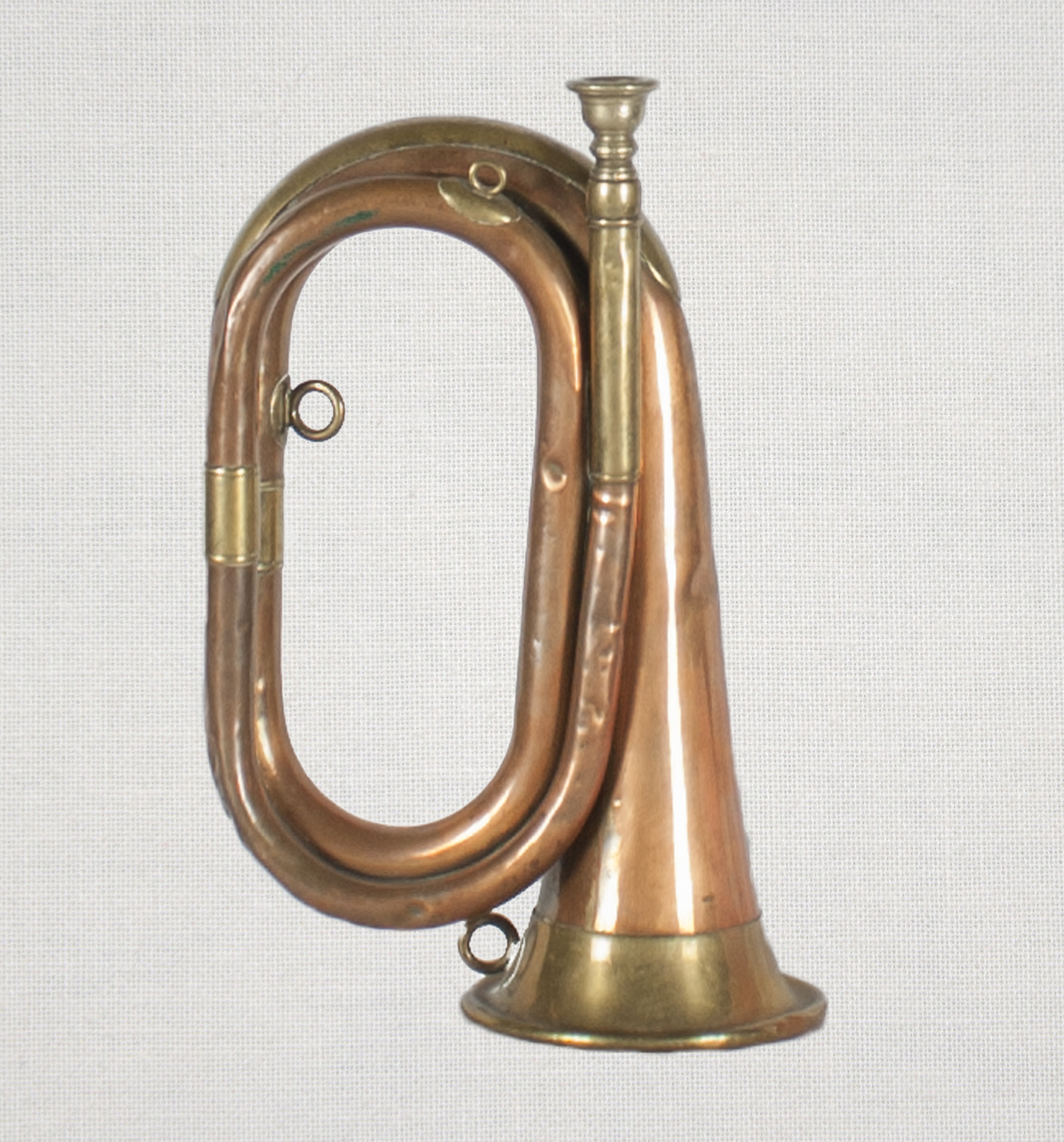
bannerJack as a child (circa 1930) in Walkerville, now part of Windsor ON.During a very brief period of palliative care and shortly after celebrating his 95th birthday, Jack passed away this past January, at Markham Stouffville Hospital. His Bandstand column occupied this very spot in The WholeNote, right before the listings, for more than 14 years, and readers who regularly made their way here to find him, will feel the loss, as will I. Two days before his passing he asked me to make sure to tell WholeNote colleagues and you, his readers, how much you meant to him.

Right up until COVID-19 restrictions put paid to live community music making,  Jack was still playing regularly (tuba, trombone and bass trombone) as a 25+ year member in The Newmarket Citizen’s Band, Resa’s Pieces Concert Band and Swing Machine, a Toronto based big band. “Not bad for someone with COPD” he once told me, regaling me with a tale of how his doctor had said it was impossible, so he should keep it up.

Similarly, he stuck to his WholeNote duties to the last. His final completed column for The WholeNote (December/January) was an uncharacteristically “deep dive” into reminiscing about his early years in Windsor. To the last, we were chatting almost daily about the column that would have been in this spot, on the subject of circus bands. He shared with me each nugget of information he had gleaned from sources as divergent as his own unruly archives and “Mr. Google.”

His wife of 35 years, Joan Andrews, told me last week that the plan is to have “a celebration of his life at a future date, when it is possible to gather together and create live music once again.” And what a life it was.

Jack with his trombone. Photo by Joan AndrewsIn a 2014 interview in The WholeNote, MJBuell asked Jack if there had always been music in his home: “Always” was the reply. “Lots of radio music from Detroit stations.  My parents met in a Gilbert and Sullivan production. It was in the auditorium of the place I eventually went to high school. My mother, Nan, was a semi-professional singer, church soloist, and for a time, a member of the Detroit Light Opera Company. My father, Archie, was a dedicated opera fan, and the Metropolitan Opera was on our radio every Saturday afternoon. My mother organized a vocal quartet which practiced regularly in our living room for some years. Probably my earliest musical memory would be my mother singing the role of Buttercup from HMS Pinafore as she worked around the house.” 

Jack was bitten by the band bug in grade 11 when he joined The High Twelve Club Boys Band (sponsored by a service club), and then the local Kiwanis Boys Band. The Boys Band was “borrowed” by the commanding officer of the local naval training unit who’d been asked to recruit a reserve band. Boys as young as 12 through 17, whose parents gave permission, found themselves Probationary Boy Bandsman with a uniform and rehearsal pay – for Navy parades, concerts in the park and Navy events. 

It was the start of a lifelong Navy association, going on active service after high school; as he wryly described it in the April 2014 interview article, “learning some new instruments – radio and radar.” When WWII ended he completed his undergraduate degree at U of T where he played in the Varsity Band, the Conservatory Concert Band and the U of T Symphony. One memorable university summer, he recalled in that interview, he played trombone six nights a week in a dance band at the popular Erie Beach Pavilion – six days a week, from nine until midnight. And then Sundays they’d go to Detroit and hear all the touring big bands – Ellington, Kenton, Burnett, Herman, Dorsey.

Jack (centre) and some young Navy buddies, fresh out of high school  “We were high school friends with a common interest in jazz and big band music – the boy on the right played piano quite well.”Jack MacQuarrie returned to sea during the Korean War as a Navy Lieutenant Commander and diving officer, laying aside music during those seven years, but never since. With music fuelling his lungs, mind and spirit, he returned to university, acquired an MBA and then did four years of graduate studies in engineering – investigating human performance in hostile (underwater) environments. He received a Massey Fellowship under Robertson Davies. He worked for some time at marketing in the airborne electronics business. He was a past president of the Skywide Amateur Radio Club, was the first instructor for the Hart House Underwater Club and to the last remained active in the Naval Club of Toronto. In January 2013 MacQuarrie was awarded the Queen’s Diamond Jubilee Medal for contributions to Canada. 

In one episode he wrote about in The WholeNote, in 2014, he and Joan Andrews enrolled as volunteers in research on brain function and aging, comparing musicians with non-musicians, at the Baycrest Centre. It was one memorable story among hundreds over the years as he regaled readers with great anecdotes and dreadful puns – above all else spreading the word about all the people he was in touch with who were keeping community band music making alive. Readers so inclined can find his most recent column on our website and then scroll back in time, column after column, as I’ve been doing this last while. 

Curious as to what might have changed or not over the course of this pandemic year, I went to look at the February 2020 column (wondering for a moment if just reprinting it would serve here to give readers a taste of the man). It didn’t disappoint: from Groundhog Day to the Newmarket Citizens Band’s bright idea of building their Christmas party around an open rehearsal: “How often do tuba players chat with clarinet players, after all?”; and from Henry “Dr. Hank” Meredith’s collection of 300 bugles, to Jack’s latest musings (something he was passionate about) on what bands should and shouldn’t take into consideration when selecting repertoire. 

There’s one more snippet from that column that is a fitting place to end this – an exchange with a reader: “He [the reader, Bernie Lynch] recounted a bit about his personal band involvement, from Orono around 1946, to Weston in 1950, and Chinguacousy in 2012. ‘Never a very good performer but always a good participant,’ is how he describes himself. [Well] we need more good participants. Let us hear from more of you out in the community music world!”  

A fitting place to end except for one thing. Jack always tried to throw in something at the end – a quip, a “daffy definition,” a pun – that would get a smile.

So here’s mine: the part of his February 2020 column that he got the biggest charge out of researching and writing, was of all things, a piece of music called “The Impeachment Polka”. Jack would have liked that. 

David Perlman, with files from MJ Buell

It is with deep sadness that I have to report on the loss of another giant from our musical world. On January 22, just 11 days after his 92nd birthday, we lost Johnny Cowell, one of Canada’s most outstanding trumpet soloists. Rather than write some form of formal obituary, I would prefer to just recall a few situations over the years where our paths crossed. As is so often the case in the world of music, I cannot state with any certainty when or where I first heard the name Johnny Cowell or when I first met him. As I have mentioned in previous columns, there was a time when band tattoos were a significant part of summer festivities in many towns in southwestern Ontario. I know that his first band experience was with the Tillsonburg Citizens’ Band. At that time, I was a regular member of the Kiwanis Boys’ Band in Windsor. In a conversation with Johnny a few years ago I learned that we had both played in many of same tattoos. I know that he had played trumpet solos in some of these events. I may well have heard his solos then. However, the only young star trumpet player from those days that I remember was Ellis McClintock, later with the Toronto Symphony for many years.

Johnny CowellFast forward 20 or more years, and there I was playing in the same band as Johnny, with Ellis as the leader. It was a band, now long forgotten, for the Toronto Argonaut football club. Yes, even though the Argonaut head office appears to have no record of this band, from 1957 to 1967 the Argos had a 48-piece professional marching band which performed fancy routines on the field at all home games. Why would musicians of Johnny’s stature play in a football club band. Well, if you like football, why not get well paid union fees to watch a game? Since I was playing trombone in the front row and Johnny was playing trumpet in the back, we certainly had no contact with each other during rehearsals or performances. However, that is where we first met.

During the times between rehearsals and performances there were usually small groups chatting. Frequently, the topic would turn to Johnny’s many compositions, particularly those on the hit parade. His 1956 ballad Walk Hand in Hand, which was just one of his many hits, could be heard on every radio station in those days. Actually, it was reported that at one time Johnny had more numbers on the US hit list than any other writer of popular music. However, his writing wasn’t limited to that genre. He was equally at home writing for trumpet and brass ensembles. I frequently play selections from the Johnny Cowell CDs in my collection. I am amazed at the gamut his trumpet works run. At one end of the spectrum there is his dazzling Roller Coaster and on the other end, his Concerto in E Minor for Trumpet and Symphony Orchestra.

My contact with Johnny was limited over the years, but there are a few meetings that come back to me regularly. Shortly after I began writing this column, I arranged to meet Johnny to get an update on his musical activities. Our meeting was anything but formal. It wasn’t at his home or at The WholeNote office. It was on a park bench in the town of Stouffville, not far from my home and close to the home of a family member of his. A few years after that it was a chance meeting during a break in one of the Hannaford Silver Band’s weekend events. Along with Jack Long of Long & McQuade, we discussed a somewhat less-than-serious subject, i.e. whether or not the names that we were using were the names on our birth certificates. The name “Johnny” was, in fact, the name on his birth certificate. For the other two of us, “Jack” was not our given name.

Then there was the time two years ago when I had the privilege of attending Johnny’s 90th birthday party. During that event, for a short while, I was flanked by two great figures in the Canadian music scene, Johnny and Eddie Graf. Now we have lost them both. At times one wonders how things might have been if Johnny had not turned down attractive offers which might have brought him fame by writing for stage productions or getting involved in the Nashville scene. While the trumpet was his all-abiding first musical love, that for his wife Joan and their family always had precedence.

By the time this issue is released, the Encore Symphonic Concert Band will be presenting a “Tribute to Johnny Cowell” in their regular noon hour concert, playing many of Johnny’s arrangements, on Thursday March 1. I’m sure that similar tributes will be presented by many other bands in the area over the coming months. Tell me about them and I’ll pass the word along.

A public memorial/celebration of life for Johnny will be held on Monday, March 12 at 7:30pm. It will take place at Scarborough Bluffs United Church, 3739 Kingston Rd, near the intersection of Kingston Rd. and Scarborough Golf Club Rd.

Junior Bands

Speaking of junior bands, it has just come to our attention that the 2018 National Youth Band will be hosted this year in Montreal by the Quebec Band Association. The guest conductor will be Wendy McCallum from Brandon University. We understand that this will be taking place in May, but don’t yet have confirmation on precise dates or location. The Yamaha Guest Soloist, on clarinet, will be Simon Aldrich from McGill University.

Changes

Over the years new bands spring up, old ones disappear and some undergo a significant transition. One group undergoing a major transition is the several New Horizons Bands in the Toronto area. Since their beginning close to ten years ago, the man at the helm has been Dan Kapp. However, not only is Dan relinquishing his leadership on the Toronto New Horizons scene, he is moving to Wolfville, Nova Scotia, soon after his wife Lisa retires from her teaching post this coming June. Rather than have a single person at the helm, now with quite a number of New Horizons bands in the Toronto area, there is scheduled to be a governing committee made up from the membership of the various NH bands. I hope to have more details on New Horizons activities soon.

It is always refreshing to learn of new groups arising from scratch. We just learned of a new swing band which is starting to make its mark. A frequent dilemma is how to give a new band a distinct name for people to associate with them. So, last summer a group forming up in Aurora decided that they should have a name that was unique, but easily recognized as having an affiliation with the name Aurora. Their name: the Borealis Big Band. The band is under the musical direction of Gord Shephard, a longtime resident of Aurora. He is the music director of the Aurora Community Band, as well as an instructor and conductor at York University where he is a PhD Candidate studying community music.

I was invited to attend one of this band’s rehearsals on January 31 and was almost blown away by a group that had just had its first rehearsal in September 2017. I heard a real powerhouse with a repertoire unlike that of any group that I have known. I asked a couple of members to describe this, and I received a variety of answers. The answer from Shephard was: “The Borealis Big Band was set up to provide an opportunity for members to play a wide variety of big band jazz styles including swing, funk, smooth and Latin/Cuban, and to play it to the highest quality possible with lots of room for improvisation for all interested members.” Unlike most such groups, when the band was formed they had designated leaders for each section. Their Debut Concert” went amazingly well. In the words of bassist Carl Finkle: “It was so much fun playing to a sold-out house for our first ever gig.” Their next scheduled performance will be on Friday June 22 at 8pm at the Old Town Hall, Newmarket, 460 Botsford St. We’ll have more on that in a later column.

Coming

On Sunday, March 4 at 3:30pm, the Wychwood Clarinet Choir will present their “Midwinter Sweets” program featuring an assortment of selections arranged by Roy Greaves, Alan Witkin, Richard Moore, Maarten Jense and Frank J. Halferty. Featured will be Five Bagatelles, Op.23 by Gerald Finzi, with artistic director Michele Jacot as clarinet soloist. Steve MacDonald, as tenor saxophone soloist, will perform Hoagy Carmichael’s Georgia on my Mind. Also on the program will be Minuet from “A Downland Suiteby John Ireland, Rikudim, Four Israeli Folk Dances by Jan Van der Roost and Henry Mancini’s Baby Elephant Walk. This concert will be held at The Church of Saint Michael and all Angels, 611 St. Clair Ave. W.

While it is a bit in the future, we might as well look ahead a bit to spring. The Clarington Concert Band’s annual spring concert will take place at 7:30pm on Saturday April 21 at Hope Fellowship Church in Courtice. As always, the program has something for everyone, with music from the band Chicago, to jazz and Broadway standards sung by their popular vocalist, Liza Heitzner. Clarinetist Katherine Carleton will perform Gordon Jenkins’ Blue Prelude and alto saxophonist Liz Jamischek will pay tribute to longtime Ellington soloist Johnny Hodges, with her rendition of Harlem Nocturne. The band’s regular conductor will be away and the band will be under the direction of Shawn Hills. Now retired after decades of heading the music program at Bowmanville High School, she is excited to direct her inaugural post-retirement concert with the Clarington Concert Band.

Jack MacQuarrie plays several brass instruments and has performed in many community ensembles. He can be contacted at bandstand@thewholenote.com.
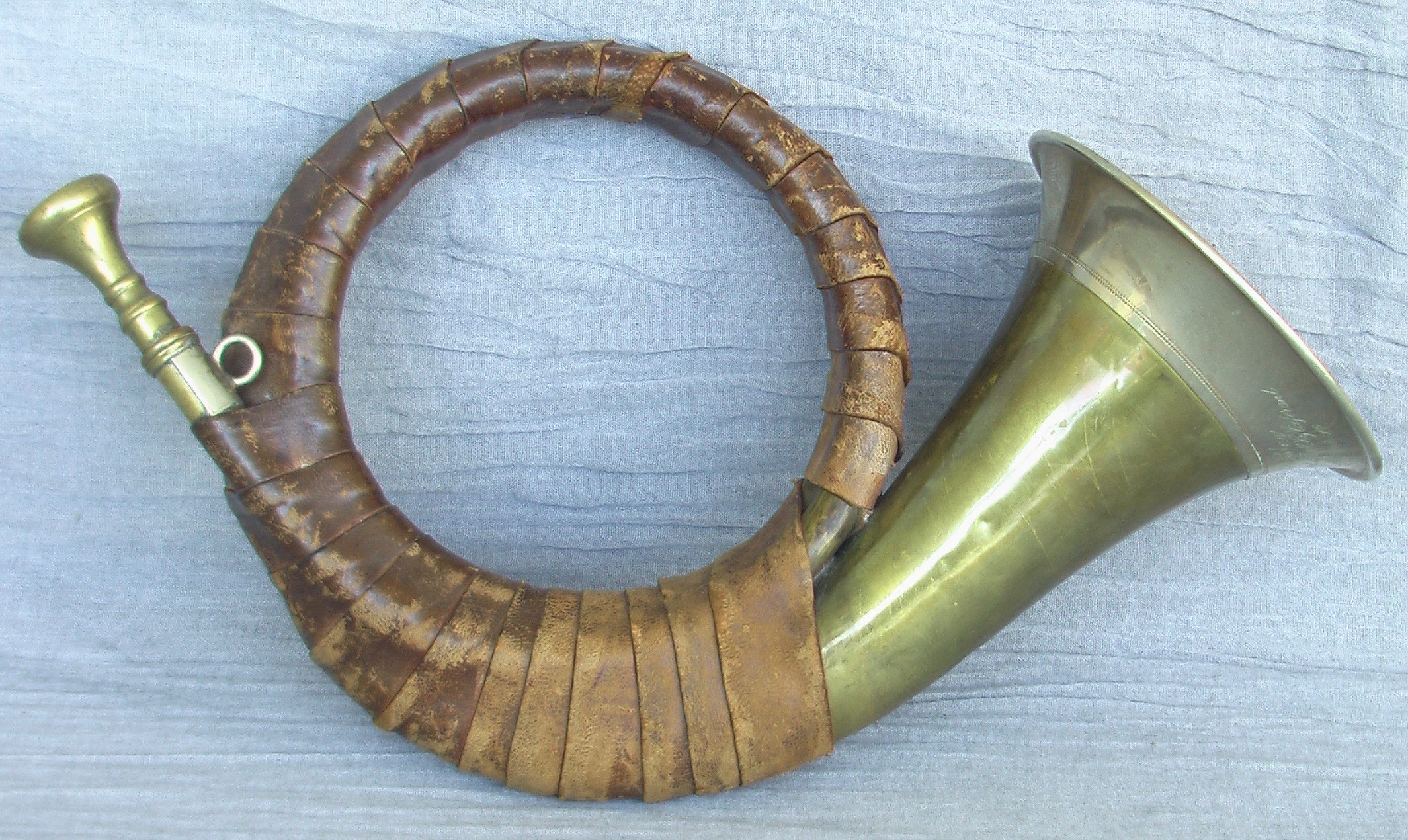
It’s that time of year again. As of this writing there has only been one light dusting of snow, but the merchants have been promoting their super special Christmas offerings since sunrise on the day after Halloween. Unlike some other times of the year, when we are on a quest for community ensemble news, our mail bag is filled to the brim with information on Christmas concerts and other initiatives. By the time this issue is off the presses, alas, some of these will have already passed into the history books. Having said that, whether over or just ahead, several of these offerings represent a pronounced shift in the “same old” repertoire selected for the Christmas season, and are therefore worthy of comment.

bandstand daniel warrenThe Repertoire Bandwagon: While there are still some Christmas carols and more modern fare like Rudolf and Frosty the Snowman in these programs, there is much more depth in many, including transcriptions from the baroque and classical periods. There are also featured soloists on less likely instruments. Here are three early examples of this trend, one just over, two just ahead: thePlumbing Factory Brass Band (PFBB) from London (November 28), the Markham Concert Band (December 2)and theWellington Winds from Waterloo (also December 2). If their offerings are any indication of things to come in the community band world, they are most welcome. Bring on the seasonal concerts.

The feature number of the Markham Band’s December 2 concert is a modern concert band arrangement of The Nutcracker, complete with Kate Kunkel as guest harpist. If you are in a band looking for new repertoire, this arrangement is worthwhile, but not for the faint of heart. If the band doesn’t have at least one competent bassoonist, don’t consider this. The Markham Band also has the brass quintet from the Navy’s HMCS York Band as guests.

Rather than produce a Christmas concert per se, The Plumbing Factory’s director, Dr. Henry Meredith, has continued with his approach of thematic programming with “Dances of Many Times and Places.” Like one of his previous offerings of marches through the ages, this November 28 program featured a broad spectrum of dances. On the fast-paced side it included Smetana’s Dance of the Comedians and Manuel de Falla’s pyrotechnical Ritual Fire Dance, along with Rossini’s tarantella, La Danza, Chopin’s “Minute” Waltz, and Bizet’s Farandole from L’Arlesienne Suite #2. For a totally different perspective on “the dance,” The Plumbers also premiered two Victorian era Canadian dances with Ontario connections: The Burlington Polka and the Cayuga Two Step, published as solo piano editions in 1851 and 1906 respectively, and heard for the first time in over 100 years as arrangements for brass band by PFBB tuba player, Dave Pearson. One of their soloists was euphonium player, Terry Neudorf who brought his well-travelled vogelJoy ensemble to accompany his variations on My Grandfather’s Clock.

For their program on December 2 at 3pm, Wellington Winds have decided on a significant component of baroque music, but have chosen selections that are still seasonal. These include the Alfred Reed arrangement of Bach’s Wachet Auf, Phillip Gordon’s version of a Corelli Concerto Grosso, a Vivaldi Concerto in D major for Guitar and a Scott Amort transcription of Weber’s Concerto in F minor for Clarinet. More contemporary seasonal works include Holst’s Christmas Day (original for brass), the Robert Smith arrangements of Holst’s In the Bleak Midwinter and Vaughan Williams’ Fantasia on Greensleeves, and James Curnow’s Christmas Fancies.

More than a concert: Although we are looking forward to a concert of excellent music, the Wellington Winds afternoon will be much more than a concert. It will be the launch of a major initiative; the first of its kind that we have heard of anywhere in Canada. The band will be previewing their DVD/YouTube channel/online teaching guide project. Ultimately they hope to have as many as 100 Canadian band works on the site, some as full video, but most as sound only clips. The intent and hope is that this project will be a resource for all band people in Canada. They hope that the whole project will be as useful as possible for high school band teachers to engage their students in the conversation about making music performance a permanent part of their lives.

This project was achieved with the aid of significant public funding from the Ontario Trillium Foundation. Hopefully, in the not too distant future, the foundation will see that not just the Wellington Winds, but all of our community bands, deserve similar funding from the foundation.

Our hats are off to the Wellington Winds for this remarkable initiative. I am looking forward to producing a comprehensive review of this project in the next issue of The WholeNote, after I have seen the presentation at the concert, watched the DVD, seen some of the YouTube content and browsed the teaching guide. In the meantime, ask Mr. Google to take you to the Wellington Winds home page, watch an interview with Howard Cable and sample some of the content already there.

Of the other concerts planned for the holiday season, that of the Festival Wind Orchestra in Toronto offers another departure from what we normally expect. Keith Reid, their conductor tells us that the theme is “Russian Christmas Music.” Again we have Tchaikovsky’s Nutcracker Suite. Their solo feature will be Rimsky-Korsakov’s Variations on a Theme of Glinka with Katrina Liddell as oboe soloist.

Rather than break with tradition, the oldest of the bands that we heard from, the Newmarket Citizens Band, is carrying on with a long-standing tradition that most “town bands” have abandoned. They are performing in no fewer than four Santa Claus parades and are also playing three concerts for residents of retirement or long term care facilities. Their commitment to these parades is strong enough that the band owns a complete set of well-insulated winter uniform jackets.

In the new year: After a recent recital by flutist Christopher Lee, I had a fascinating conversation with his accompanist, Simon Capet. In the months ahead this talented accompanist and conductor will be a globetrotting ambassador of music, conducting such groups as the Orchestra of Light and Hope in Cairo where all of the musicians are blind women, or the Calcutta Chamber Orchestra where all members are men from a single orphanage. While this certainly does not qualify as community banding per se, it definitely qualifies in the category of bringing communities and music together. Rather than attempt to do justice to this amazing venture in bringing peoples around the world together through music, I suggest a visit to Simon’s website: kicksimon.com. Learn about his plans for this year in Ghana, Egypt and Sri Lanka.

We rarely see tangible recognition of the many ways in which a local band may serve its community. I was fortunate enough recently to see tangible recognition of such service in a form one does not usually expect. At their annual Remembrance Day dinner, the Uxbridge branch of The Royal Canadian Legion did just that by inviting Steffan Brunette, conductor of the Uxbridge Community Concert Band as their guest speaker.

Back on the repertoire front again, I would like to report on my discovery of a daunting work for trumpet soloist. During a visit to America in the late 1800s, Jacques Offenbach wrote his American Eagle Waltz. Although originally written for trumpet and orchestra, there are now arrangements on the market for band as well. I wonder if Herbert L. Clarke might have performed this one. If your band is looking to shake up your trumpet section, this number should do it.

bandstand scarborough society of musiciansOther bands: The Brampton Concert Band will perform their concert “Christmas at The Rose” December 8. The Milton Concert Band will present their concert, “Home for the Holidays,” at the Mattamy Theatre in Milton on December 8 at 8pm (not in the listings) with a special performance of Twas the Night Before Christmas. They have also announced that their conductor Joseph Resendes is taking a leave while he assumes new duties at McMaster University for the coming year. During that period, the band’s assistant conductor, Sheena Nykolaiszyn will take over the baton.

Among the newer bands to appear on the scene in recent years, Resa’s Pieces is certainly prospering with over fifty regular members. However, Resa tells me that they could use another trombone and euphonium as well as some extra percussion including timpani.

Having not heard from them in a long time, it was good to hear that the Scarborough Society of Musicians have embarked on their fifth season. Formed by a small group of high school graduates who “wanted to stay involved in music and ensure an opportunity exists for new grads to continue exploring their talents,” they expect to play a number of retirement home concerts in the coming months. If interested, visit their website at www.continuingmusic.ca. Unfortunately, some of the press releases and posters sent to us by these groups were damaged and unreadable. Check the listings section for more details.

Argos: As I am writing this column, the 100th Grey Cup game and its festivities are dominating the news in Toronto. The Argonauts are in the game, but there is no official Argonaut band for the pregame or halftime shows. Few Argo fans are aware that the team did have its own official 48-piece professional band from 1957 to 1967. In fact, when I telephoned the Argonaut office not long ago, nobody could find any record of such a band in the team’s archives. The band played for all home games and some parades, but never got to play for a Grey Cup. How am I so sure? I played in that band for all ten years of its existence.

Clarification: On another front, my memory has recently been challenged. In the March 2010 issue of this publication I referred to an early wax cylinder recording of a conversation reputed to be between Thomas Edison and Johannes Brahms. Recently I have been taken to task by a reader who questions the existence of such a recording with the comment: “There is no evidence, apparently, that Edison and Brahms ever met.” He has thrown down the gauntlet and asked that I now substantiate my statement in that 2010 column with proof. He states: ”A statement that does not stand up to inspection must not remain unchallenged.” Since all of my old cylinder recordings fell under my son’s jurisdiction a few years ago, they are not right at hand for me to check. If such a recording might be as rare and valuable as the reader suggests, I had better get after my son to track down all of those old cylinders. They could be worth a princely sum.  

Jack MacQuarrie plays several brass instruments and has performed in many community ensembles. He can be contacted at bandstand@thewholenote.com.
BandstandBefore tackling the challenge of writing this April column, I would normally look out the window in anticipation of signs of spring and then settle down to report on spring concerts and festivals on the sunny horizon. However, even though my calendar says that spring is now due, mother nature disagrees and has decided to hide any indications that spring might be in the offing. Everything is covered with a white blanket. Unfortunately, several bands that we usually hear from are keeping their spring events hidden under a blanket of silence. In short, there is a dearth of news from the community band world.

Let’s have a look at what we have heard to date. For details of locations, times and ticket prices see the listings section. The first event on our band calendar is the Hannaford Street Silver Band’s annual Festival of Brass on the weekend of April 5, 6 and 7 at the Jane Mallett Theatre. The festival begins, as in previous years, with “Rising Stars.” This will feature finalists in HSSB’s annual Young Artists Solo Competition at the Church of the Redeemer on Bloor St. in Toronto. The winners of this competition then have the honour of performing their selected solos with the Hannaford Street Silver Band in the final concert of the festival on Sunday afternoon.

Rumour has it that Jacob Plachta, winner last year and the year before, may well be on the scene again this year. Last year Plachta not only won the competition, but did so performing his own composition Sonata for Trombone and Brass. Although we have no details in time for publication, I have heard that a number of members of the Hannaford Youth Band have now been bitten by the composing bug and have several compositions in the works. Plachta has apparently written a new work this year but we don’t have any details yet.

On Saturday, after masterclasses in the morning, it’s the “Community Showcase” where brass ensembles from the GTA and beyond compete for the annual Hannaford Cup. In past years there have been participating groups from as far away as upstate New York and Ottawa. On Sunday it will be guest conductor Alain Trudel on the podium for the grand finale of the weekend featuring winners of HSSB’s annual Young Artists Solo Competition and Festival Slow Melody contest performing with the HSSB. The show will conclude when the Hannaford Youth Band joins in for a massed band finale.

Of particular interest will be the North American premiere of Breath of Souls by the young British composer Paul Lovatt-Cooper. Having not heard of this composer before, it was time for a little research with the aid of such authorities as Google and associates. Coming from a Salvation Army family, he studied music at the University of Salford. After a stint as a percussionist with the renowned Fairey Band he is now “composer in association” of the Black Dyke Band. In recent years several of his compositions have been recorded by leading brass bands in Europe and the UK. His composition The Dark Side of the Moon was selected as the test piece for the third section of the National Brass Band Championships of Great Britain 2008 regional contests. The same piece was selected as the test piece for the third section of the 2008 Dutch National Brass Band Championships at Groningen. Breath of Souls was selected as the test piece for the Championship Section of the 2011 National Brass Band Championships of Great Britain held at the Royal Albert Hall, London, in October. The following is a quote from a respected British source: “Ever since a young composer called Paul Lovatt-Cooper came to prominence following the world premiere of Earth’s Fury at Symphony Hall in 2004, the banding world has increasingly taken notice of his unique blend of fresh, inventive and downright enjoyable music making.”

On April 14 Wellington Winds, under the baton of Daniel Warren, will present “Jokes and Riddles,” a program of works by Strauss, Elgar, Ives, Rossini, Bach, Rauber and even P.D.Q. Bach. Guests will be the WW Brass Quintet. This will be at Knox Presbyterian Church in Waterloo. The program will be repeated April 21 in Kitchener.

On April 17 at Byron United Church, London’s own Plumbing Factory Brass Band will present “Celebrating Canada — Our Home and Native Land.” The program will open and close with two different marches both titled Bravura — a word which conjures up our national spirit of energy, pride and glory. Conductor Henry Meredith’s own salute to the Queen’s jubilee celebrations is his fanfare version of God Save the Queen, based on a 19th century harmonization with words describing “Our Native Land, Fair Canada.” Handel’s Coronation Anthem Zadok the Priest follows — it was performed 60 years ago at our Queen’s coronation in 1953. Howard Cable’s The Banks of Newfoundland is an arrangement of several folk songs from our oldest, yet newest, province, and the flora and fauna of Canada is depicted by Laurendeau’s Land of the Maple and Grumble’s popular Chanticleer Rag. Canada’s waterways are then portrayed by Clarke’s cornet solo The Maid of the Mist (named for the famous Niagara Falls tour boat) plus a world premiere performance of a composition commissioned by the Plumbing Factory Brass Band. Called On the Thames, the work by PFBB cornetist Kyle Hutchinson reflects the river Thames in London, Ontario, and its namesake in London, England. In April, Canada’s cold winter should be just a memory, so the band will be thinking of warm breezes when it plays Bach’sAir from Suite No. 3, and looking forward to such summer activities as weddings, jazz festivals and circuses. Representing those summertime events are the rarely heard Sousa waltz song, I’ve Made My Plans for the Summer, Mozart’s Marriage of Figaro overture, an arrangement of Dave Brubeck’s multimetric Blue Rondo a la Turk, in memory of the great jazz pianist who passed away last December, and Duble’s circus music, our second Bravura march for the evening.

In its program titled “Fiesta,” the Milton Concert Band will be exploring the many exciting facets of Latin culture brought to life in classical and contemporary music, on April 20 in the Milton Centre for the Arts.

On April 21 at the Richmond Hill Centre for the Performing Arts, it will be “Silk, Spice and the New World” for the Silverthorn Symphonic Winds, with conductor Andrew Chung, as they explore music from the ancient Silk Road route. This program will celebrate the music of Asia, Europe and the Mediterranean. Camille Watts on flute and piccolo will be their guest artist. Richmond Hill Centre for the Performing Arts,

Unlike most of the other community bands we have heard from, the Pickering Community Concert Band’s April 21 spring concert in Ajax will not be a “themed concert.” Conductor Doug Manning has selected quite a spectrum of works from Toronto arranger Eddie Graf’s arrangement of Clarinet a la Mode to the great British classic Mannin Veen. Paul Schwarz will be their guest vocalist. One week later at the Flato Markham Theatre on April 28, Doug Manning will be at the helm of the Markham Concert Band with a themed concert. “The Best of Broadway” will include selections from The Sound of Music, Mamma Mia, Jersey Boys and others.

More on the trend to themed concerts: In a recent issue I made reference to a trend to program what I referred to as themed concerts. Proponents of the concept argue that a theme is a way to attract an audience. Opponents argue that a “slavish” adherence to a theme can place significant restrictions on suitable repertoire. Personally, I have mixed reactions. Some of the best concerts I have heard in recent times have been skillfully crafted on themes. On the other hand, some of the worst have resorted to second rate selections to adhere to the theme. When I discussed the matter with one conductor, he admitted that he had found himself restricted by programming to a theme and then stated: “You end up servicing a concert with an arbitrary motif.” We would like to hear from readers, particularly band members. What are your thoughts?

More on changing technologies: In the past, much of the information we received on band activities arrived by email. It was almost always in the form of a straightforward press release from which it was a simple matter to extract much of the information. Recently, we have seen a significant change. Several of the submissions that we have received lately have been difficult, if not impossible, to deal with. We now frequently receive PDF files of posters. It is not possible to extract information from these. We could print them and then type in what we read, but this can be very time consuming. Even worse is a simple email message suggesting that we visit one or more websites to hunt for information. One recent submission had suggestions to visit no fewer than ten different websites. There was really nothing to indicate what we might find if we did so.

A different perspective: For someone like myself, steeped in the more traditional forms of music, it is interesting to hear the very different roles assigned to different instruments in the more popular genres of the day. In a recent CBC Radio One program reviewing the latest “Music Industry” awards, the reviewer, commenting on the performance of one “contemporary” group, stated: “They even had a trumpet. It was a nice little touch to have a trumpet.” How would that go over in the band world? 

Jack MacQuarrie plays several brass instruments and has performed in many community ensembles. He can be contacted at bandstand@thewholenote.com.

In last month’s column I decided to get retrospective. Now it’s time to shift gears and look at the year ahead. For most community musical groups, their year begins sometime in September when most vacations are over and the kids are back in school rather than at the beginning of the calendar year in January. For many groups, in addition to planning the musical content for the coming concert season, the fall may also mean electing a new executive, recruiting volunteers (conscripts) for the various non-musical chores and selecting music to add to and/or delete from the rehearsal folders. And for most groups it is also the time to welcome new members.

Take the plunge

What about you, dear reader? Are you actively involved in one or more ensembles, or are you a faithful concert attendee who has often wondered what it might be like to play regularly in a musical group? Perhaps you are a would be band member, but haven’t yet mustered up the courage to tackle a new challenge such as learning to play an instrument. Did a particular instrument attract your attention in a school band, or did you attend, as I did, a school with no music program? If you already play an instrument, perhaps you might like to try a different one.

If you have never played an instrument, now is the time to start. Both the New Horizons programs and groups like Resa’s Pieces are geared to such returnees and absolute beginners. Recent medical research studies have demonstrated some very clear benefits to playing a musical instrument. Interpreting all of those strange musical symbols on a piece of paper and manipulating the intricacies of your chosen instrument, in the company of like minded friends, keeps the brain functioning at its highest level.

Food for thought

Many years ago the York Regional Symphony, conducted by the late Clifford Poole, performed a series of “Wine and Cheese Concerts” in smaller communities throughout York Region. These provided an excellent means for people to learn more about orchestral music in an entertaining non-threatening way in their home community. The format was unlike any other concert series I have ever known. Audience members sat at large round tables which could accommodate ten people. Admission included wine of your choice with cheese and crackers on each table.

Two chairs at each table remained vacant while the orchestra performed. Rather than having a single intermission, these concerts had two or three breaks during which orchestra members would circulate and join audience members at their tables. During such breaks an audience member might meet with a bassoonist and a cellist, learn a bit about the instruments and then be more aware of their part in the music after each break. I enjoyed playing in those concerts and meeting the many people whose curiosity was aroused by them. I know of no such concerts now, but if you are involved in a band it’s a format worth considering.

Best laid plans

My personal gear-shifting resolution for this season was the same as in past years. I vowed to take on fewer concert band performances at outdoor venues on tuba or euphonium. To take up the “slack” in my musical activity I planned to get reacquainted with my trombone and the music of the big swing bands. Traditionally, these groups take an annual summer break. In both the concert band format and the smaller groups the shift would mean the opportunity to renew long standing friendships and perhaps meet a few new like minded souls.

Those were my plans, and I will still pursue them. However, a new venture suddenly loomed on my horizon. A re-enactment of a long past musical event suddenly took over and I found myself a hundred years in the past. The little hamlet of Goodwood, where I reside, is located in the Township of Uxbridge where there is an amazingly active and diverse arts community. Now, this year’s three week long annual “Celebration of the Arts” added one new musical component. It just so happens that the Uxbridge Music Hall is celebrating its 110th anniversary. What better way to celebrate such an event than to recreate as closely as possible the program performed on stage there in 1901? Local publisher, editor and sometime impresario, Conrad Boyce, dug through the archives of the local museum and obtained a copy of the program for that event. My gear shifting was put on hold!

The musical part of the program deviated only slightly from the original in that there was a band and choir, whereas the 1901 performance included an orchestra, band and choir. It included such chestnuts as Rossini’s Overture to Tancredi, Mascagni’s Intermezzo from Cavalleria Rusticana and The Anvil Chorus from Verdi’s Il Trovatore. (For this number, local choral conductor Joan Andrews performed as guest anvilist.)

Costa and Bucalossi?

The interesting numbers in the Uxbridge program, for me, were works by Costa and Bucalossi, two composers that I had never heard of. The Oxford Companion to Music was little help, but Groves Dictionary of Music and Musicians and the MacMillan Encyclopedia of Music shed some light on them. Michaele Agniello Costa, son of a Spanish church composer, was born in Italy and settled for life in England. He wrote numerous operatic and ballet works and was much in demand as a conductor. He conducted the London Philharmonic, the orchestra at Covent Garden and, from 1848 to 1882, the Birmingham Festival. His second oratorio Naaman was written for the Birmingham Festival in 1864; With Sheathed Swords from Naaman was performed. He was knighted in 1869 and in 1871 “Sir Michael” was appointed “director of the music, composer and conductor” at Her Majesty’s Opera.

The life of Ernesto Bucalossi is not as well documented. The only information I could obtain about him was that he was an Italian composer who also settled in England until his death in 1933. He was, for a time, conductor of the famous D’Oyly Carte Opera Company. He is described as a “writer of popular dance and descriptive orchestral music such as La Gitana Waltz and Hunting Scene.” It was in that latter composition where we had the most fun. After a slow, somewhat sombre introduction, followed by a few call and answer trumpet sounds, members of the band and chorus join voices to sing “A hunting we will go, A hunting we will go,” etc. Then after several bars of a frantic gallop, the music has two bars rest with the note Bark: Arf Arf.”

At the final rehearsal, producer Boyce was accompanied by his almost constant canine companion, Lacey. It was suggested that Lacey could provide much more realistic barks than the band members. With suitable prompting she did in fact deliver beautiful sonorous barks. However, it was decided that if she were on stage in performance she might be excited and bark at inappropriate times. We were left to provide the barks ourselves.

Remembering Roland G. White

bandstand_roland_whiteIt is with a heavy heart that I report the passing of Roland G. (Roly) White, former Director of Music of the Concert Band of Cobourg. Roly served for many years in the Royal Marines Band Service in Britain, first as a musician and later as a conductor. On leaving the Marines in the late 1960s he moved to Canada and settled in Cobourg. He soon learned that, for many years, there had been a town band in Cobourg. Latterly known as the Cobourg Kiltie Band, the group had disbanded for lack of interest shortly before Roly’s arrival in town.

Roly soon took the initiative, and under his direction the band was revived in 1970 under the name the Concert Band of Cobourg. Drawing on his extensive experience he began moulding the band in the style of Royal Marines bands. In 1975, the band accepted the invitation to represent the Royal Marines Association of Ontario and donned the distinctive white pith helmets and red tunics of the Royal Marines for parades and tattoos. With the approval of the Town of Cobourg and the Royal Marines School of Music in the U.K., the band was honoured to add the distinction of The Band of Her Majesty’s Royal Marines Association, Ontario, to its name. Roland G. White retired in 2000 with the title director of music emeritus, after 30 years of dedicated service.

Of my many chats with him over the years, one story remains fresh in my memory. Roly conducted with his left hand. While working under Sir Vivian Dunn, then the senior band officer in the Royal Marines, he was chastised by Dunn and advised to switch to conducting right handed. Roly complied. Shortly after, when enrolled in his bandmaster’s course, his professor commented on his awkward conducting style. Roly explained that he was really left handed. His professor, Sir John Barbirolli, said I conduct left handed.” Roly switched. On his return from this course, Dunn immediately noticed and commented on his change back to his left hand. Roly’s reply: Sir John conducts left handed”. End of discussion; he never conducted right handed again.

A memorial service was held, Saturday, September 3, in Cobourg.

A Special Event

Too late to make it into the listings section, here’s an event worth noting: The Oshawa United Services Remembrance Committee will be presenting a Festival of Remembrance on Friday 28 October at 7pm at the Regent Theatre, 50 King Street East in Oshawa. The programme will feature the Oshawa Civic Band, the band of HMCS York, the Pipes and Drums of Branch 43 Royal Canadian Legion, the Durham Girls’ Choir and guest soloists. Honourary Colonel (Retd.) Dave Duvall C.D. (formerly CTV weather man) will act as master of ceremonies. Tickets are available from the theatre ticket office 905-721-3399 Ex. 2. All proceeds are destined for the “Poppy Appeal Fund”.

Definition Department

This month’s lesser known musical term is Schmalzando: a sudden burst of music from the Guy Lombardo Band. We invite submissions from readers.

Coming Events

• October 23 2:00pm: Markham Concert Band kicks off its theatre concert season with “October Pops,” an introduction to the world of light concert band music. Markham Theatre, 171 Town Centre Blvd., in Markham.

Please see the listings section for other concerts.

Jack MacQuarrie plays several brass instruments and has performed in many community ensembles. He can be contacted at bandstand@thewholenote.com.
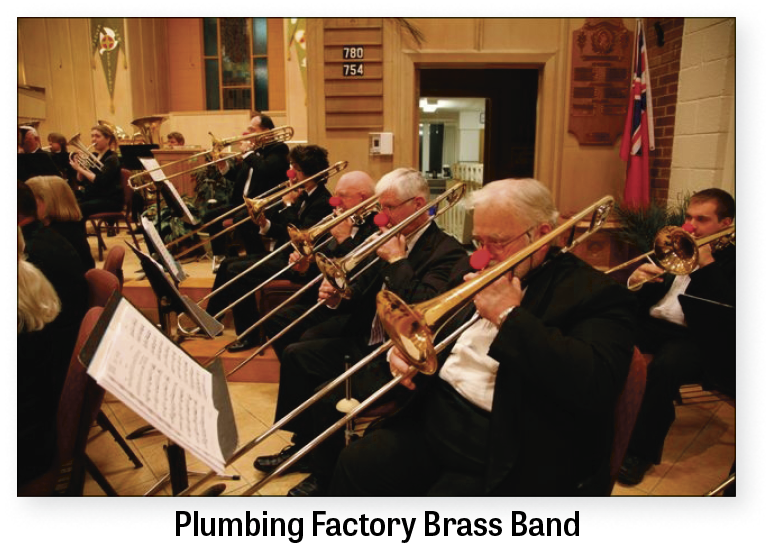
When contemplating this month’s column I had intended to dive right into reporting on the gathering storm of performances by community musical groups for the coming fall and winter season. However, four random recent events, each with some form of musical connection, have conspired to remind me just how pervasive musical influences are in my life, and to derail me from my appointed task.

The first of these was a paper recently published in the Journal of The American Psychological Association which compared the performance of a variety of tasks by musicians and non-musicians. Having been a volunteer subject over the past few years for this study at the Rotman Research Institute of the Baycrest Centre and the Department of Psychology, University of Toronto, I waded through the academic jargon. One phrase stood out:Despite the scant data on aging and musicianship, the picture emerging is that lifelong musicianship mitigates age-related decline in cognitive tasks …” In short, making music is good for you.

I could have told them that: One year ago, I wrote about how the New Horizons Band established at Long and McQuade had grown to 24 members by its third week. It’s now a daytime group and an evening group with total memberships of 42, and a new beginners’ daytime group of 22 is under way with another slated to begin in January.

In these startup groups the social rewards of playing in some form of musical ensemble have quickly come to the fore. As we see from the academic studies, making music with friends has many rewards beyond the pleasure of creating music. If you are not musically involved now, get on the bandwagon; it’s never too late.

Second sidetrack, the ultimate in serendipity, happened a couple of weeks ago on my way home from a rehearsal. Like so many Toronto streets at this time of year, my route was undergoing major repairs. To cut a long story somewhat shorter, as I stepped out of the car to locate the source of the clanking, a gentleman walking a dog called out “it’s your tailpipe.” Soon, in his driveway around the corner, he had supplied wire and tools and had my tailpipe secured for my trip home. At some point during his mission of mercy he spotted my instrument case and said “do you play trombone?” I asked how he had recognized the case, he informed me that he played guitar and cello, and naturally the conversation shifted to music. He is from Gore Bay on Manitoulin Island, where he also sings and his wife directs a local choir. When I pulled out my wallet to buy a CD of his wife’s choir singing some of her original compositions, we had another jolt. On seeing the name Jack MacQuarrie, my name, he asked “How do you know him?” It just so happens that another Jack MacQuarrie (a distant relative whom I met many years ago) is a friend and publisher of the local Gore Bay newspaper. The beginnings of another musical friendship?

Third distraction along the way this month was hearing about a musical study by two meteorologists at Oxford and Reading Universities who traced prevailing weather phenomena in different parts of the world over the years and concluded that the content and style of many works of the classical repertoire could be directly linked to the prevailing weather in the region where the composers lived. With the help of my research assistant Mr. Google, I located not only that study, but an extensive, if less scholarly, article titled Weather in Classical Music by Richard Nilsen in the Arizona Republic. It is an extensive compendium of compositions catalogued by composer and title according to the seasons and various weather phenomena. Gives a whole new spin to the excuse of “being under the weather.”

Fourth and final digression? I was presented with an unusual opportunity to make music — the grand opening of a new municipal parking lot in a community north of Toronto. My musical zenith had arrived, I thought, and I would wait to tell you about it. I arrived in the area only to find an array of “Do Not Enter” and “No Parking” signs. You guessed it — there was no place to park. I arrived too late to play for this great event.

So, what is happening in the local music scene?

27_bandstand_christophergongosFor starters, Silverthorn Symphonic Winds (SSW) kicks off their 2011/2012 season with a free public music clinic, presented in conjunction with the Westmount Music Department and Arts Westmount Music. Led by 2010/2011 artist-in-residence Peter Stoll, clarinetist, “From Practice Room to Concert Hall” will provide tips on how to practise effectively and how to improve your ensemble playing. Not just for clarinetists, the clinic is geared toward high school instrumentalists and adult amateur musicians. For details, see this month’s Etcetera listings under “lectures.”(For the coming season, SSW has announced that its 2011/2012 artist-in-residence will be one of Canada’s most respected horn players, Christopher Gongos. In 1998, Gongos joined the Toronto Symphony Orchestra, where he holds the position of associate principal horn.)

To start their season this year, the Hannaford Street Silver Band once again joins forces with the Amadeus Choir under the baton of Lydia Adams for a performance of The Armed Man: A Mass for Peace by the Welsh composer Karl Jenkins. The work is a reflection on war and peace in a multi-cultural, global society. It draws its text from classical poets, biblical verses and traditional mass, as well as from Muslim, Hindu and Japanese sources. In the other portion of the programme on November 12, the band will be under the direction of Gillian MacKay. The HSSB will perform Kevin Lau’s Great North Overture and Barbara Croall’s remarkable Gi-Giiwe Na?, an allegory for brass and percussion inspired by Native soldiers. The men of the Amadeus Choir will join the HSSB to perform Harry Somers’ A Thousand Ages and Stephen Chatman’s hauntingly beautiful Reconciliation.

Definition Department

This month’s lesser known musical term is Articulosis: a chronic disability leading to fuzzy attempts at staccato playing.

We invite submissions from readers. Let’s hear your daffynitions.

Coming Events

Please see the listings for full details.

Jack MacQuarrie plays several brass instruments and has performed in many community ensembles. He can be contacted at bandstand@thewholenote.com.
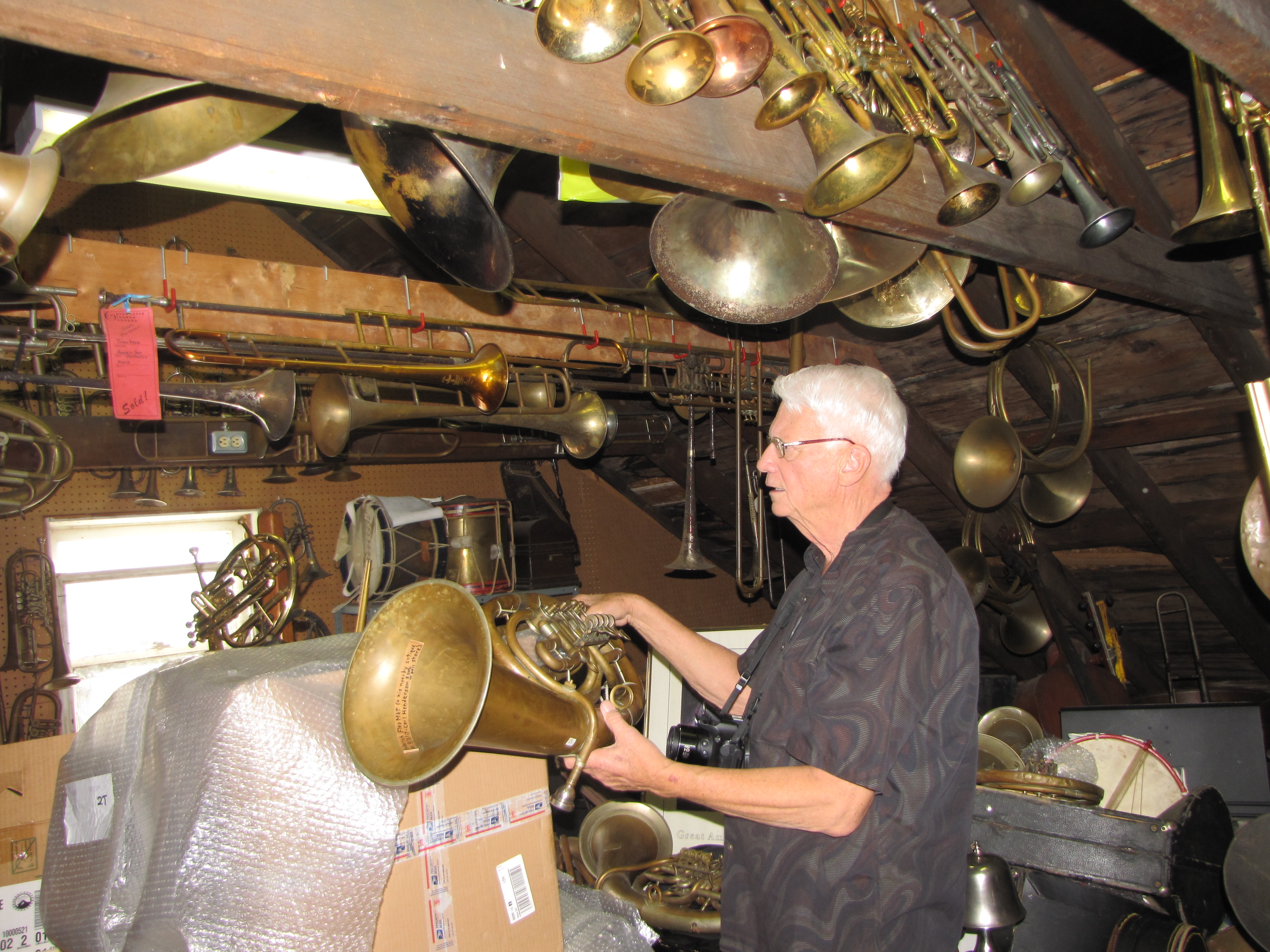
Last night, as I drove home after a rehearsal, I heard on the radio to expect a once-in-a-lifetime event at precisely 11:15pm – the most spectacular meteor shower in over 30 years. As I looked out of the window, though, I was barely able to see the road in front of me, through the dense fog. Now, sitting at the computer, staring at the screen, I am dealing with a dearth of information, unusual at this time of year, about happenings in the band world. Usually at this time of year, I would expect to receive quite a quantity of information on Christmas concerts, festive-season events or holiday shows. A temporary blip perhaps, or maybe just a sign of the busy times we live in. Since I can’t write about what I haven’t been sent, though, it gives me permission to write about what I like.

HMCS York Band (2019)Speaking of signs of the times

At a recent concert of the combined bands of HMCS York from Toronto and HMCS Star from Hamiton, I was stunned to see Lieutenant Commander Jack t’Mannetje sitting in the audience rather than on stage conducting. I then learned that Jack, who has been the Director of the York Band for many years, has been promoted. He is now executive officer of HMCS York, Navy lingo for second-in-command. It’s rare to see a military band conductor promoted to a position of command. Congratulations, Jack. As for the duties of band director, that falls to longtime band member, chief petty officer Maggie Birtch. Again, congratulations to Maggie.

Read more: Sound the Bugle!

(from left to right) Members of the Orono Cornet Band playing rotary valve trombone, bass saxhorn, ophicleide and helicon.Well summer, what there was of it this year, is almost over. What a difference from last summer in my musical life. Last summer we (Joan and I) drove  to Halifax for the very first North American Brass Band summer school, which included playing in all performances of the Royal Nova Scotia International Tattoo. Even though that was a very rewarding experience, this year we decided to stay closer to home and explore some local musical offerings. This included playing in a few concerts, but the variety came from a few quite unexpected sources most of which wouldn’t really qualify as band events.

The first of these took place in early July when we were invited to attend a concert by students of the Durham Music Camp. This was not a band concert. Rather it was an end of year performance of children as young as six performing on violins and cellos. To see six year olds take up centre stage and perform, from memory, with all of the aplomb of someone four times their age certainly reassured us that we will have a good supply of musicians in years to come.

Two weeks later we were treated, by the older generation of musicians, to an unusual big band jazz event. Organized by French horn player James MacDonald, a former member of the very first Boss Brass, we attended a concert by “Amis du Jazz - Encore,” as they styled themselves that day. The 20 member Rex Hotel Orchestra, led by John MacLeod, performed on the back deck of James MacDonald’s house in Port Perry as members of the audience relaxed under the trees in the back yard. There were a few members of the group (clarinetist Bob DeAngelis and trombonist Alastair Kay in particular)  whom I remembered from the days, more than thirty years ago, when they were star performers in high school band festivals.

Adding a bit of variety to the summer’s offerings, we also took in an amazing amateur performance of the musical A Chorus Line, followed a few days later with a block “Birthday Bash” for a neighbour celebrating a milestone. Although not exactly to my taste, there was lots of folksong playing by the guest of honour and friends.

(As you will see, it was a chance encounter at the second of these summer musical forays that led to the main story in this month’s column. But first a roundup of other band news.)

New bands: I am in the fortunate position of being able to announce the establishment of two new bands in the Toronto area. The first is a new concert band which is forming for seniors in Oakville. As yet we haven’t heard of a name for this band, but they say that they are looking for beginner/intermediate musicians who have played in their youth or new musicians who need a concert band setting to hone their craft. They meet every Monday evening(except holiday Mondays) year round. Unlike some other bands, they will not be going on break during the summer. For information contact Russ Abbott at 905-465-3352

The other new group is an all brass band called The York Brass Ensemble. They are scheduled to start rehearsals in September on Wednesdays from 7:00 to 9:00 pm at the Alexander Muir Residence in Newmarket. For details contact Peter Hussey at pnhussey@rogers.com.

Open Rehearsal: About to begin their second full season, The Toronto Concert Band is inviting  adult musicians from across Toronto to sit in with them as they kick off rehearsals for their second concert season. Amateur community players, post-secondary students and professionals who want to play in the community are all welcome. Under the musical direction of Ken Hazlett and Les Dobbin, the Toronto Concert Band has local roots in Etobicoke but far-reaching musical goals. Anyone interested is asked to pre-register by phoning 647-479-2941 or visiting their website: www.torontoconcertband.com, The first rehearsal is September 22 from 7:00 to 9:00 pm at Lambton Kingsway Junior Middle School, 525 Prince Edward Drive.

Returns: The summertime only group, the Uxbridge Community Concert Band wound up this season with another of their theme concerts on August 29. This year’s theme was Music of the Night with selections ranging from Mozart’s “Queen of the Night” aria and selections from Andrew Lloyd Webber’s Phantom of the Opera.

The Toronto New Horizons group will be establishing yet another new band termed Beginner Level II for people joining who want a more challenging level. Anyone interested is invited to attend their Instrument Explorations night on Friday, September 25 from 7 to 9pm at the Long and McQuade main store 925 Bloor St. W in Toronto. For anyone who has thought about playing in a band, here’s a chance to check out any instruments that have interested you and decide which would be the one for you. All classes beginning the week of September 14. Scheduled dates and times are on their website: newhorizonsbandtoronto.ca and classes will be held at the Salvation Army Hall, 789 Dovercourt Rd., until further notice.

Herb Poole, artistic director of the band; “I love to play an instrument I can wear,” says Herb.The Orono Cornet Band: While I was at the aforementioned Amis du Jazz concert in Port Perry I bumped into two friends that I hadn’t seen for some time. I first met Dave Climenhage about twenty years ago in the Clarington Concert Band. I first met Herb Poole over thirty years ago while playing in the Metropolitan Silver Band. They invited me to a concert by the Orono Cornet Band in the town of Orono, where Dave Climenhage had organized the Great Canadian Town Band Festival (GCTBF) in Orono from the year 2000 to the year 2005.

For six consecutive years this festival brought together some of the finest brass and woodwind ensembles in Canada and the U.S. such as The Boss Brass, The Hannaford Street Silver Band, The True North Brass, The Spitfire Band and The Central Band of the Canadian Armed Forces. It also hosted guest artists like conductor and trombone virtuoso Alain Trudel.

After the annual festival was discontinued, the Great Canadian Town Band Festival still existed as an entity in name. Dave  was looking for a project that would bring alive Canada’s musical heritage and further the objectives of the GCTBF. He still had the charter for the GCTBF and the desire to continue in some fashion. He was a long time collector of brass and woodwind instruments and eventually linked up with fellow collector Herb Poole, bass trombonist with the Canadian Opera Company.

Together they began to work on the idea of a Heritage Brass band that would recreate the 19th century Brass Band movement in Canada. From the early 1850s on, the saxhorn band concept (12 brass instruments) had spread to almost every town and village in Canada. This movement began in France and England in the 1840s and quickly spread all over Europe and North America. These newly developed valved brass instruments were relatively easy to learn to play and could play any notes on the chromatic scale. They became the mainstay of musical performance in Canada, which did not have a classical orchestral tradition at the time. These bands performed at local dances, in parades and at all civic events including July 1 which later became Canada Day. In short it was the music that was most accessible to Canadians from 1850 to the end of the century.

Herb and Dave decided that they would hire professional brass players from the GTA who were interested in taking up the challenge of performing on 150-year-old instruments and who were willing to work with them as they  tried to establish an audience for the brass music of  19th century Canada. Herb recruited musicians from the Canadian Opera Company Orchestra and a number of top level freelance brass players from other GTA ensembles.

The aim of the Orono Cornet Band is to recreate a 12 piece brass band of the Confederation period in Canada to perform on period instruments and to play music composed in Canada or known to be regularly performed in Canada. Gathering Canadian  music of the period took time. As they looked at brass band music collections from the period, it was clear that most of the music they performed came from American publishing companies. They worked hard to glean from these sources important works by Canadian composers such as Calixa Lavallee (Marche Indienne). They have also found music originating outside Canada but performed regularly here, such as popular marching songs like The Girl I Left Behind Me.

Herb Poole is the band’s artistic director and has sourced music with very distinct Canadian period content. The instruments the band performs on come from Herb’s and Dave’s collections and were built in the period 1850 to 1870. Many of these were restored by Herb. They are both constantly researching historic events for important music. The Battle of Ridgeway in 1866 is one such event, for example. It resulted in the composition of The Maple Leaf Forever and the words to the Canadian Militia Fenian Marching Song. They hope to perform these at a re-enactment of the Battle of Ridgeway in June next year.

The band has been performing now for over five years. They have performed at heritage events each of those five years, including the V-Brass festival at Toronto’s Harbourfront, Clarington’s Heritage Festival and the RCMP Musical Ride. For the RCMP Musical Ride they performed music of the Band of the Royal Northwest Mounted Police at Fort MacLeod, Alberta, first performed in 1876.

They are currently working on getting people to know about the Orono Cornet Band and have completed their first recording. They also have a new website at oronocornetband.com with videos and soundtracks. It’s worth checking out that website.

Definition Department

This month’s lesser known musical term is stringendo: An unpleasant effect produced by the violin section when it doesn’t use vibrato. We invite submissions from readers. Let’s hear your daffynitions. 

Jack MacQuarrie plays several brass instruments and has performed in many community ensembles. He can be contacted at bandstand@thewholenote.com

For most Canadians, the event of the year so far has been the Winter Olympic Games in Vancouver. By an unanticipated quirk, the massive media coverage of the games spawned the overnight evolution of our national anthem into an international pop song of sorts. Canadians were joined in the spontaneous rendition of O Canada in the spectator seats at the events and in the streets by visitors from around the world. It even made its way on to more than one late night American TV show.

For me, this sudden unprecedented attention to the national anthem, and the not-infrequent controversies surrounding some performances, put my curiosity into overdrive and spawned a series of questions. What were the origins of national anthems in general, and Canada’s in particular? What should be the criteria for a good national anthem? How and where should the national anthem be performed? Should all those present at an event sing or should it be left to a soloist? Should a soloist be permitted to improvise on the melody? How should our citizens behave during its performance? Who wrote the music? Who wrote the words? Are the words appropriate, or should they be changed to placate the wishes of various interest groups? And so it goes.

According to most authorities, national anthems had begun to appear in a number of European countries by the beginning of the 18th century. However, the practice of having a government designate a particular patriotic song as the country’s official anthem didn’t become widespread until late in the 19th century. As for criteria for a good national anthem, the general consensus is that it should have a good melody, meaningful words, be easy to remember and easy for the average individual to sing.

As for Canada’s national anthem, like the country’s progress to nationhood, the process was evolutionary rather than revolutionary. As early as 1836 we had a list of acceptable patriotic songs. Over the years, O Canada, The Maple Leaf Forever and God Save the Queen came to the fore as leading contenders. It wasn’t until 1964 that Prime Minister Lester Pearson proposed some government action to proclaim an “official” national anthem. By 1967 a parliamentary committee unanimously recommended that O Canada be so designated. It wasn’t until June 27, 1980, three days after the one hundredth anniversary of its first performance, that parliament passed the bill making it official. It was actually signed into law on July 1, 1980 as part of that year’s Dominion Day celebrations (Now changed to Canada Day).

The song O Canada was originally commissioned by the Lieutenant-Governor of Quebec, the Honourable Théodore Robitaille, for the 1880 Saint-Jean-Baptiste Day ceremony. Calixa Lavallée wrote the music, which was a setting of a patriotic poem composed by the poet and judge Sir Adolphe-Basile Routhier.

Calixa Lavallée was born in Verchères Quebec in 1842, studied for a while in Paris and eventually settled in Boston. He was well regarded in his day as a performer, composer and conductor, and performed regularly throughout North and South America.

The original lyrics were in French, and it wasn’t until 1906 that they were translated into English. While the original French words have remained unchanged and spared from tampering over the years, the same can’t be said for English words. Two years after the original literal translation appeared, Robert Stanley Weir wrote another English version, one that is not a literal translation of the French. In October 1969 the government accepted the offer of publishers Gordon V. Thompson to sell to the Crown, for the sum of one dollar, the copyright to the Weir words for O Canada. Weir’s lyrics have been “officially” revised by parliament at least twice. On a number of occasions, the 1980 version has been under attack by special interest groups.

With Olympic fervour running high, Prime Minister, Stephen Harper suggested that he might legislate the words “all our sons command” out, in favour of more “gender neutral” wording. It didn’t take long for the Prime Minister to beat a hasty retreat from that front when the responses from many quarters came thundering in. Some of the most interesting came from Ottawa correspondents for news organizations. One such response was the suggestion that the idea had been hatched by a group from the Prime Minister’s office while hung over after celebrating the victory of the Canadian men’s hockey team.

Canada’s only woman Prime Minister, Kim Campbell, also stepped into the fray. She did not just want the words “all our sons command” changed to something “gender neutral”. On a national radio interview she objected to “our home and native land,” and suggested that be changed to “our home on native land.” That did not sit well with all people born here, whose ancestors arrived a few centuries ago before Canada was a nation. In any case, for now at least, the storm on words has subsided. When it might return is anyone’s guess.

The criterion of being easy for the average individual to sing is certainly not a characteristic found in the US Star Spangled Banner. This may be the reason why it has become the norm at major sporting and cultural events in the US to have a soloist sing the national anthem. Perhaps the original intent was to have the audience join in with the soloist providing a solid base. Unfortunately, that is rarely the case. Which brings up a pet peeve of mine, that of a soloist improvising on the melody. In some cases this might better be described as butchering the melody.

One reader of a small town community newspaper summed up his reactions to the rendition at the official opening of the Olympics as follows: “Is it just me or is there anyone else tired of hearing our national anthem twisted into some artistic ego trip? There should be a level of respect required by the artists selected to represent us on the international stage. A performer or an event organizer has no right to re-work the song. It is not open to interpretation.”

He then goes on: “The publicity of the moment should be enough of a thrill and a boost to a performer’s career without the need to hijack a country’s national anthem. If they wish to put their own spin on the song, they can do so on their own album and take their chances on whether the consumers appreciate it.” I concur. Any organization engaging the services of a vocalist to perform the national anthem should write into the contract that the “official” melody is not to be changed in any manner.

At some stage somewhere around 1900 it had become the accepted custom to have a “national song” performed prior to every concert, theatrical production and other similar public event. In fact, the city of Toronto for many years had by-law requiring such a performance. That by-law was not abolished until 1967. For most community bands the national anthem is an integral part of most programmes. On the other hand, I can’t recall ever hearing it at any community orchestra performance. Why the different standard?

Next month we’ll be back to the community music scene after the huge Hannaford Brass Band Binge. We also hope to have a better look at the Johnny Cowell tribute concert next month.

Definition Department

This month’s lesser known musical term is APPROXIMENTO: “A musical entrance that is somewhere in the vicinity of the correct pitch.” We invite submissions from readers.

Coming Events: See the listings section for full details.

Weekend of April 9, 10 and 11: The Hannaford Street Silver Band presents its seventh annual Festival of Brass at the St. Lawrence Centre. See listings for details.

Wednesday, April 14 7:30: The Plumbing Factory Brass Band, Henry Meredith, conductor, presents “Heros – ordinary and extraordinary.” Byron United Church, 420 Boler Rd., London, Ontario.

May 7 8:00 pm: The Etobicoke Community Concert Band, John Liddle, conductor, presents “Glorous and Free,” a programme of brilliant marches, grand anthems and beautiful songs – a stirring musical tribute to our Canadian military featuring Kathy Thompson, guest vocalist. Silverthorn Collegiate Auditorium, 291 Mill Rd.

Down the Road

Saturday, May 15 2:00 pm: The Northdale Concert Band, with conductor Stephen Chenette, pays tribute to legendary Canadian composer and trumpet player Johnny Cowell. The concert will feature some of Cowell’s most famous solos as performed by well-known trumpet player John Edward Liddle, plus a special guest appearance by Johnny Cowell himself. Scarborough Civic Centre, 150 Borough Dr.

Jack MacQuarrie plays several brass instruments, and has performed in many community ensembles. He can be contacted at: bandstand@thewholenote.com.

As I return to the keyboard after my summer hiatus it was suggested that the WholeNote columnists focus on the significant new developments which were anticipated for their beats in the coming weeks. In my case that meant what interesting musical happenings were on the horizon for September and perhaps into October. After a brief and very unscientific survey of the community bands and orchestras I came up cold. Not a single communiqué reached my mailbox to tell of an exciting musical event to herald the advent of the fall season. Similarly, telephone queries drew blanks.

27 bandstandThis doesn’t mean that our community groups are languishing in some sort of apathetic stupor. On the contrary, almost without exception they are busy planning for a new season. However, for most, that season does not include any significant performances until well into the autumn, when leaves on the trees have started to change colour. It’s the start of a new rehearsal season. That is the big event.

By now, most ensembles will have established their schedule of regular concerts and may have come up with a basic framework of the sort of repertoire. In the coming months they’ll undoubtedly add extra performances as they are invited to perform for a variety of functions. What is the process of selecting the repertoire? Does the music director perform that function in isolation or is it a committee decision? Are all members invited in on the process, or are they in the dark until the music appears in the concert folders? In music selection how does one strike a balance between appeal to audiences and appeal to band or orchestra members? We know of one community group where those decisions rest almost solely with the librarian. Who should decide? Why not establish a repertoire and programme committee for your group?

Yes concert performances are important, but for most members, rehearsals fulfill an important social function. Rehearsal night is an evening out to make music with like-minded friends. This brings up the matter of difficulty level. What difficulty level is appropriate for the majority of group members? Should a rehearsal be simply an entertaining evening out to make music with friends or a challenge to the musical abilities of the members?

Should every concert have a distinctive theme, or just consist of a balanced, pleasing musical experience? While I have participated in some “themed” concerts, many, in my estimation, have fallen flat with a jungle of disjointed works that don’t provide the audience with the sense of a pleasant integration.

Are guest performers desired? Certainly they are, if they enhance the quality and variety of the experience for both the audience and the band or orchestra members. To not have soloists would remove from concert programmes a vast array of wonderful music featuring instrumental and vocal soloists. On the other hand, what about visiting ensembles? It’s not uncommon for community ensembles to invite other groups to perform as guests. If this enhances the musical experience, that is fine. However, I know of more than one such occasion where the principal motive was to fill more seats with the families and friends of the visiting group. Musical merit was secondary.

On the subject of rehearsals, my personal preference is for rehearsals that provide both a performance challenge and some pleasant melodies to remain in my head as I wend my way home. I have some anecdotal memories of rehearsals in which I was involved covering the spectrum from excellent to appalling. Let’s start with two in the appalling category.

The first occurred many years ago in a community symphony orchestra. I arrived well in advance of the scheduled 8:00pm start time, set my music on the stand, warmed up and awaited the downbeat. The conductor, a string player, started by working with the string sections on some sections where they were having difficulty. I listened with my trombone on my lap as the string players were coached on bowing techniques etc. I played my very first note at 9:30pm. I never returned.

In another community symphony, I arrived well in advance of the scheduled downbeat only to find that the librarian had forgotten all of the low brass music at home. Rather that offer to rush home to retrieve the music, it  was suggested that I “come back next week.” I didn’t.

On the excellent side, I had the pleasure, for many years, of playing under the guidance of the late Clifford Poole. From Gilbert and Sullivan pit orchestras to the York Regional Symphony, Cliff was always considerate and sympathetic to the concerns of all of his orchestra members. Rehearsals began with sections requiring all orchestra members and ended with those components requiring only the strings. In that way every member played until there were no more notes for them to play. Rather than sit around listening to other sections labouring over difficult parts, these members were free to leave when they had nothing more to do.

Also on the excellent side is the young conductor Steffan Brunette and his Uxbridge Community Concert Band (UCCB). Unlike the vast majority of community groups we discuss here, this is a summertime-only ensemble. After their final concert on August 30, members folded their respective tents and went back to their regular fall and winter groups until next May. This conductor is the most organized of any I’ve had the pleasure to work with. At the first rehearsal of the season every member is given his or her music folder for the season. In addition to the music, the folder contains a sheet with the complete rehearsal and performance schedule, detailing which selections will be rehearsed each night. Also included is a sheet covering all information from rehearsal expectations, contact phone numbers to concert information and membership fees.

Earlier, mention was made of concert programmes with a theme. The UCCB has an interesting theme this year. “The Classical Connection” features works by Bach, Beethoven, Fauré and Mozart. In contrast, we have works by contemporary composers which, if not directly inspired by these, took some inspiration from the form. The Bach Toccata in D Minor is paired with Frank Erickson’s popular Toccata for Band, The Fauré Pavane is contrasted with Morton Gould’s Pavane, and other masters are similarly paired. It works well for both the performers and the audiences.

Please write to us: bandstand@thewholenote.com

Wow – what a week! If this were a concert review column, it would be overflowing with superlatives for two very diverse concerts I attended in the past week. The week began with the Hannaford Street Silver Band’s first concert of the season with euphonium soloist David Childs. Promotional material billed this concert as “Child’s Play.” What Childs did with his instrument was anything but child’s play. The feature work was a concerto for euphonium and band by contemporary Welsh composer Karl Jenkins. Playing with no music, this young virtuoso dazzled his audience not only with his technical skills, but also with amazing musical sounds never before heard from this instrument.

If that wasn’t enough, at the end of the week, we were treated to an even more amazing performance by the Interpreti Veneziani at the Royal Conservatory’s Koerner Hall. The performance of this nine-member string ensemble from Venice prompted one very experienced and knowledgeable friend to proclaim it the best concert they had ever heard. They received no argument from me. From our vantage point in the best seats in the house, we not only heard their remarkable music, we saw them communicate with each other by knowing glances and a host of subtle gestures in the creation of their masterpieces.

Using no music throughout the first half, or during his dazzling solo rendition of a fiendishly challenging Paganini work, the cellist, Davide Amadio, was free to be in constant eye contact with the other members of the group and with those of us in his audience. He told us all in no uncertain terms that he was loving every minute of it. In short, all members of this ensemble were inside each others’ heads, and they were sharing with us in the audience their joy of performance.

This was the pinnacle of musicianship and showmanship. So why is this mini review of two professional concerts in a column devoted to community ensembles? What better way for those of us who play in community ensembles to improve our skills, and enjoy ourselves at the same time, than to immerse ourselves in the total experience of absorbing all aspects of a quality live performance. We have no illusions that we might someday perform to that standard, but it does provide both inspiration and a measuring stick should we tend to become complacent or smug about our abilities.

Many years ago, when serving in a naval air squadron, I was frequently treated to the philosophy of a friend who was one of the finest pilots to ever fly in the Canadian forces. His challenge to the junior pilots under his jurisdiction was simple and direct: “We must constantly strive for perfection, and perhaps we’ll achieve mediocrity.” A little harsh perhaps – but why not aim for the best we can achieve in music?

Having suggested that we set our sights high, how are the beginner and other startup groups faring? From Resa’s Pieces Strings, conductor Ric Giorgi tells us that they now have 22 players enrolled and inquiries coming in weekly from players interested in joining. He states: “More interestingly however is the wonderful performance this group has managed thus far. They have come together as an ensemble remarkably quickly and show every indication that despite the huge differences in skill levels, everyone seems pleased with the challenges and rewards of the repertoire and the satisfaction of making good music together as an ensemble.” Ric also reminded me of the old adage among groups seeking to recruit string players – that the audition piece for string players is “Check For Breath.” By the way, they would still welcome more violas.

p29The other beginner group that I have mentioned before seems to be coming along equally well. Dan Kapp conductor of the New Horizons Band at Long & McQuade tells us that, in mid December, less than three months since their inaugural information meeting, the band will be performing for the folks at a Toronto retirement residence. This group rehearses on weekday mornings so membership is limited to retirees and others who don’t have daytime commitments. In response to many requests, an affiliated band for beginners and those reconnecting with music will begin evening rehearsals in January. For information give Dan a call at Long & McQuade.

A couple of years ago I mentioned the formation of the Scarborough Society of Musicians, a band to provide the opportunity to continue to perform in a musical group after leaving high school. After a brief hiatus, the band’s directors have been busy over the past few months working on a new season to begin in January 2011, with rehearsals continuing into June 2011. As with previous years, they will be rehearsing twice a month on Saturday mornings at Dr. Norman Bethune C.I. For this year’s rehearsal schedule, membership fees and rehearsal dates visit their website (www.continuingmusic.ca). They have also created a survey to gauge the interest in music beyond high school within the community. Your response would be appreciated.

Last year at this time we reported on the joint ventures of instrumental and choral groups. Again this year, the Hannaford Band will be teaming up with the Amadeus Choir for two performances in Toronto and one in Niagara Falls (December 4, 13 and 14). A new venture this year has two Markham groups joining forces. The Kindred Spirits Orchestra and the Village Voices Choir will present two performances of the Vivaldi Gloria (December 11 and 17).

Since I am ex-navy, and a member of the Naval Club of Toronto, I would be remiss if I didn’t mention regular small combo performances two Sunday afternoons per month at the club’s new location, 1910 Gerrard Street East. Treat yourself to an afternoon of relaxing music by the Downtown Jazz Band, and enjoy an optional light hot meal. See us there December 12, January 9 and 23 at 2pm.

On the personal front, I have both happy news and sad news to report. On the happy side, members of the Newmarket Citizens Band attended the recent wedding of two band members. Ron Spencer of the euphonium section and Linda Heath of the flute section tied the knot. The band now has several couples active in the band. With a few more, they could have an all-couples band, with a few children added.

On a sad note, members of the Toronto band community are mourning the loss of Gary Cameron, a former music teacher at Danforth Technical School and Northern Secondary School. In recent years Gary was most active with the Band of the Royal Regiment of Canada, the Encore Symphonic Concert Band and a number of swing bands. We will miss him and his great welcoming personality.

Jack MacQuarrie plays several brass instruments, and has performed in many community ensembles. He can be contacted at bandstand@thewholenote.com.
The 2010–2011 season is now over for most community bands and orchestras. It would seem to be a good time to reflect on the past year and take a look into the proverbial crystal ball. While, as an audience member, I enjoyed several amazing performances, for me, the highlights of the past season were in following the developments of a couple of startup ensembles. It was not just the musical achievements of these groups, which were considerable. It was also so encouraging to see groups of total strangers coalesce into close knit social groups through the common bond of making music.

page_26_resas_piecesIn last month’s column I reported on the achievements of the combined New Horizons bands from Long and McQuade and their concert at the Glenn Gould Studio. Shortly after that issue came off the presses I was equally impressed at a concert by Resa’s Pieces Strings at their Debut Gala Performance on June 5. Did their debut programme suggest that they were timid? How about a Bach Brandenburg Concerto, the ubiquitous Pachelbel Canon, Elgar’s Land of Hope and Glory and Leroy Anderson’s challenging pizzicato Plink, Plank, Plunk for a beginners group?

As for plans for the future, the L&M New Horizons groups will be intermediate groups in the fall and two new beginners groups are planned. Resa’s Pieces Strings are seeking out new repertoire, and would welcome more violas with open arms. A few days after that concert, during a break in one of my own rehearsals, I mentioned the concerts of these groups to a friend that I have know for years. Surprise! He is the conductor and one of the founders of Grand River New Horizons Music, located in Waterloo. Founded in the fall of 2008, they started with 26 members, whose musical experience ranges from new (never played an instrument before) to symphony level.

They now have a busy performance schedule, as I learned from their very professional web site: www.grandriver-newhorizonsmusic.org.

Now for the summer season

What are my own plans? From the 1960s through the 1980s, my summers were dominated by outdoor concerts. For 15 of those years I acted as MC for the City of Toronto Parks and Recreation summer music program. In addition to that, I played in numerous concerts. Once the CNE began, it was a busy schedule of two or more concerts almost every day at either the Main Bandshell or the North Bandstand. When not playing, I would be listening to famous international bands such as those of The Royal Marines, The Grenadier Guards, The President’s Own U.S. Marine Band or the National Band of New Zealand. That all changed several years ago. Band concerts are no longer a part of the CNE programme. Outdoor band concerts are now rare in Toronto. We are now in the era of megaproductions, like those in Dundas Square, with elaborate staging, blazing lighting and systems where sound operators appear to hold sway as the stars.

With the advent of warmer weather, the major shift for most bands is to outdoor concerts and street festivals too numerous to mention. Unlike the town bands of old, few community bands participate in parades. Among the few exceptions that do parade, they are, almost without exception, the older bands which were formed in an era when bands were expected to participate in most parades in their towns. The few bands in this part of the country, which fall into that category and still parade are such as the Newmarket Citizens’ Band, the Ayr Paris Band and the Perth Citizens’ Band. The concerts listed below in Coming Events represent a small sampling of community music in our area. There is much more, but alas, those are the only ones to cross The WholeNote desk by press time.

Personally, so far I know that I will be playing at Black Creek Pioneer Village, the Orillia Aqua Theatre, Palmer Park in Port Perry, Fairy Lake in Newmarket, in at least two cenotaph ceremonies, numerous street festivals in communities surrounding Toronto and, yes, one solitary indoor concert in the dying days of August.

What can we look forward to in the fall?

This year the Markham Concert Band has set a new high bar for other bands. Last year they acquired and outfitted a first class enclosed cargo trailer emblazoned with their logo on the sides. With the hard work of a volunteer crew, they transport timpani, other heavy instruments, music library chairs and stands from band room to performance location. They are not dependent on the vagaries of venues with questionable facilities. With the exception of lighting, they became more or less self sufficient. That left only one potential variable to affect the quality of their outdoor performances; the questionable outdoor acoustics. The simple solution: bring your own bandshell! And that’s exactly what they have done. It has not yet made its public debut, but The Markham Concert Band now has its own portable, inflatable bandshell. Funded through a grant from the Ontario Trillium Foundation, this bandshell will be given its debut during the band’s summer music festival. Look for it in and around Markham. (There’s also another great innovation made possible through that grant, but that will have to wait for the next issue.)

Now for another somewhat radical departure. This summer, The Markham Concert Band is hosting a new concert band series in Markham featuring not just their own music, but performances of other community bands, as well. On seven Sunday afternoons in July and August, five other bands, as well as the Markham Band, will participate in “Concerts, Cakes and Coffee.” The bands provide the entertainment and local family restaurants will be there to sell refreshments. These concerts have been made possible through a grant from the Celebrate Markham Grant Committee (a Town of Markham committee). See the listings below.

Definition Department

This month’s lesser known musical term is: ground hog: Someone who takes control of the repeated bass line and won’t let anyone else play it. We invite submissions from readers.

Coming Events, by Venue

Heydenshore Pavilion, 589 Water St., Whitby. 905-666-2049.
July 7 7:30: Whitby Brass Band. In Concert. Free. Bring lawn chairs or blankets; concert will be held indoors in case of inclement weather.

Markham Road and Robinson Street in old Markham (Look for the big band shell): July 10, 2:00: Markham Concert Band; July 17 2:00 North York Concert Band; July 24 2:00: Thornhill Community Band; August 7 2:00: Pickering Community Concert Band; August 14 2:00: Newmarket Citizens Band; August 21 2:00: Northdale Concert Band; August 28 2:00: Markham Concert Band.

Memorial Park (corner of John St. and Simcoe St. in Oshawa).

Oshawa Civic Band. July 13 7:30: A Gordon Langford Salute; July 27 7:30: Marching Down Broadway; August 10 7:30: Around The World With The Oshawa Civic Band; August 24 7:30: A Brass Celebration. Barrie Hodgins, director.

Jack MacQuarrie plays several brass instruments and has performed in many community ensembles. He can be contacted at bandstand@thewholenote.com.

bandstand_jack_macquarrie_with_tuba_winter_2_1In last month’s column I speculated that many bands in our area would have a wide variety of events for the summer months. Nothing like the way it was,of course, when I started playing in a band many years ago, shortly after the dinosaurs had departed from the local scene. For us back then it was all about band tattoos in towns throughout Southwestern Ontario. There were the boys bands and the company bands (both now almost extinct) and the town bands. I remember well the Pressey Transport Company band, the Chatham Kiltie band and, most impressive of all, the White Rose Oil Company band from Petrolia, Ontario, in their elegant white uniforms. At the end of the summer it was, more often than not, the long bus trip to the Canadian National Exhibition to compete with other bands on the old North Bandstand. Local town band tattoos are now very rare, and the CNE no longer hosts such band events, but I had an inkling it would be a summer of relative plenty. So I sent a brief survey questionnaire to a number of bands located within an hour’s drive of Toronto. Are they travelling far afield for special events or are they hosting concerts on home territory?

Initially there was little response. So little, in fact that I started a “Plan B” column about a couple of events in which I was involved since last month’s column was written. The first of these was the York University Concert Band Festival. A series of individual workshops in the morning was followed by band workshops with coaching from a York University professor. This was followed by a reception where keynote speaker Bobby Herriot regaled the participants in his inimitable style. His very appropriate topic: Benefits of Being Involved in a Community Band. During the evening each of the participating bands performed short concerts with members of the other bands in the audience. The entire event was organized by York University music graduate students. Let’s hope that this will be the first of many such events.

The second event was a concert entitled “The Beat Goes On and on …” by the Toronto New Horizons Bands. Started in September 2010 with one daytime band, the local New Horizons program now has grown to two daytime and two evening bands. For their end of season event they returned to the CBC’s Glenn Gould Studio. In the formative stages I watched many people checking out various instruments to determine which should become their musical soul mate. Now, with over 80 members in the four groups, the spectrum of required instrumentation is well covered. Yes, they even have oboe, bassoon and bass clarinet, but alas the tuba has been neglected. So, you guessed it, yours truly was invited to participate as a guest. What an experience to play with each of the four groups individually, and then with all 80-plus members on stage. I didn’t see an empty seat in the hall. There were a lot of very proud family members in the audience that night.

So, what do our community bands do during the summer months?

Just as I was about to give up, the flood gates opened. From a new band less than a year old to one celebrating 140 continuous years of serving its community, they responded. Rather than risk any suggestion of favouritism, here is a synopsis in alphabetical order.

The Aurora Community Band, still in its first year of operation, has performances slated for the Aurora Farmer’s Market and a more formal concert at Trinity Church, Aurora.

The Brampton Concert Band and their companion Jazz Mechanics group have a host of special events in and around Brampton in addition to their regular Thursday Night Concert Series in Gage Park. As well as the regular concert series, the Jazz Mechanics Big Band will be playing at The Rex in Toronto and at the 24th annual Beaches International Jazz Festival. The Brampton Concert Band will also be hosting the Rocky Mountain Concert Band from Calgary. One of their last concerts will be entitled “O Canada: A Memoir” featuring the Pipes and Drums of the Lorne Scots.

The Clarington Concert Band has announced appearances in Port Hope, Orono and Bowmanville, so far.

The Columbus Centre Concert Band, now completing its second year, will be at Vaughan City Hall for Heritage Month on June 2, and then off to the Waupoos Winery in Prince Edward County for a wine and cheese celebration the following day. In July they will present a series of outdoor concerts at Villa Colombo in Toronto.

The Festival Wind Orchestra will present the final concert of its 15th anniversary season on Sunday, June 17, at the Betty Oliphant Theatre, 404 Jarvis St., Toronto. We have not heard of any other events for the balance of the summer. The program, titled “Then to Now: Celebrating 15 Years of Music,” is a trip back and forth through time, featuring music that was relevant from 1997 and 1998, the orchestra’s first full season, up to the present day.

Grand River New Horizons Music is another New Horizons group serving Kitchener-Waterloo and the surrounding area. They have far too many events to list here, but a few highlights deserve special mention. Saturday, June 23 is the Teddy Bear Parade in Listowel where they will play at the park as the teddy bears are marched up the street toward the park. Everyone is invited to join the parade with their teddy bears. Canada Day sees them at Doon Heritage Village dressed as an 1914 costume band with players wearing straw boater hats. Men will be in long sleeved blue and white striped shirts and baggy trousers. Women will be wearing white middy tops with blue trim and long blue skirts. The band will also be in 1914 costume in Palmerston for that town’s 100th anniversary of its Pedestrian Bridge.

The Markham Concert Band will be going to the Orillia Aqua Theatre once again this summer and also will be traveling to Fenelon Falls for the Queen’s Diamond Jubilee Fest. Last year, this band introduced a series of afternoon concerts on Markham’s Main Street with duties shared by several visiting community bands. This year there will be a similar series but they will shifted from the inflatable bandshell on Markham’s Main Street to the Unionville Millennium Bandstand.

The Milton Concert Band is gearing up for a busy June and July with several performances planned for both the concert band and their swing ensemble; Then the band will take a rest for the month of August. In addition to their free summer concert series at Victoria Park Gazebo in Milton, they will be appearing in the Burlington Sound of Music Festival at the Burlington Art Centre. On July 5, they play host to the Rocky Mountain Concert Band of Calgary, Alberta.

The Toronto New Horizons Band, after its successful concert at the Glenn Gould Studio will be gearing down somewhat. After one concert at Ryerson University, and a band party, there will be a few sporadic performances at retirement residences with ad hoc rehearsals as required. The band is already receiving calls from potential members wanting to know when the next new band will be starting. The beat does go on.

The Newmarket Citizens’ Band started this season off early with a parade for the opening of the local baseball season. As in past years, it will be participating in a variety parades and festivals and will make their appearance again at the Orillia Aqua Theatre. Early in June the band will be leading a “Stroll” down Newmarket’s Main Street to the town museum to herald the opening of an exhibit featuring the Band’s 140 years in the town. More anniversary events have yet to be finalized. In the meantime, if you are near Newmarket, drop around and have a look at the band’s 140 year history at the Elman W. Campbell Museum located at 134 Main St. S., Newmarket; hours are Tuesday to Saturday, 10am to noon and 1pm to 4pm and admission is free; call 905-953-5314 for more information.

The Northdale Concert Band reports only two major out of town commitments, so far, for the summer: an evening performance at the Orillia Aqua Theatre and a Sunday afternoon concert at the Stratford Outdoor Theatre.

The Pickering Community Concert Band, with many members away for most of the summer, has chosen to close down for the summer with no performances after July 8.

The Richmond Hill Concert Band will be at a Canada Day celebration for Richmond Hill at Richmond Green Park, and at the Markham Summer Concert Series at Unionville Bandstand.

The Scarborough Concert Band has told us of performances at the Scarborough Civic Centre and at a festival in Port Union.

The Thornhill Community Band will be performing at The Taste of Asia Festival, in the Markham Summer Concert Series at Unionville Bandstand and at Mel Lastman Square.

The Uxbridge Community Concert Band, now in its 21st season, is a summertime only band and they have just had their first rehearsal. As in past years their first performance will on Decoration Day at Uxbridge Cemetery with subsequent concerts at Palmer Park in Port Perry and at Trinity United Church in Uxbridge.

Definition Department

This month’s lesser known musical term is Tempo Tantrum: what an elementary school band is having when it’s not following the conductor. We invite submissions from readers. Let’s hear your daffynitions.

Jack MacQuarrie plays several brass instruments and has performed in many community ensembles. He can be contacted at bandstand@thewholenote.com.
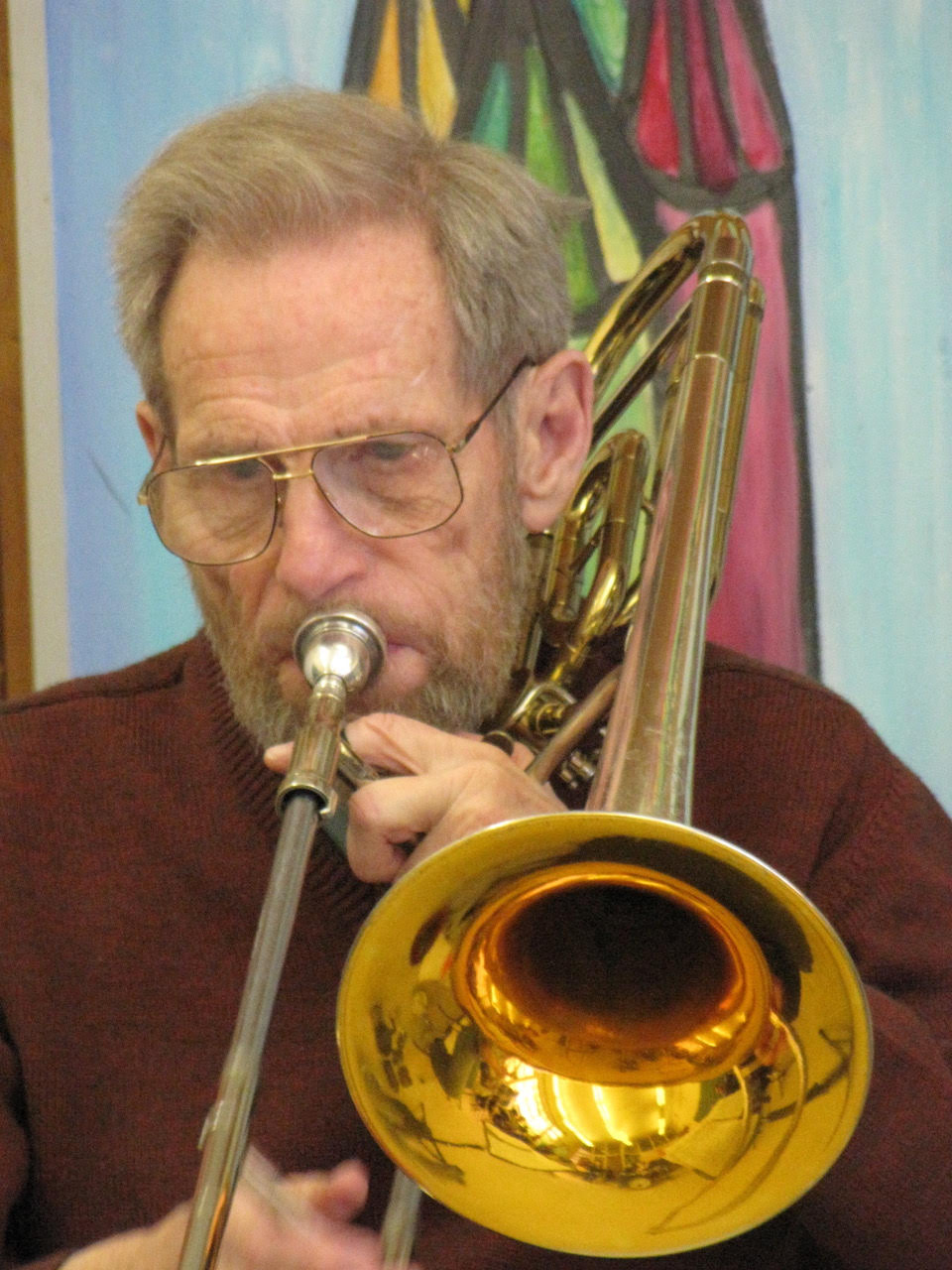
 

As I sit down to produce this final column before The Wholenote’s summer break, I’m in the throes of recovery from the weekend of June 12-13. It started with a dress rehearsal on Saturday afternoon followed by a performance of Beethoven’s Fifth Symphony in the evening with the Kindred Spirits Orchestra. Sunday started with “The World’s Biggest Brass Event” for the International Women’s Brass Conference (IWBC). Then it was off to an end-of-season garden party for another musical group. Before long I had to leave the party early for another orchestral rehearsal of Grieg’s Piano Concerto and Sibelius’s Violin Concerto.

P25I switched from bass trombone in the Beethoven to an antique Soviet Army rotary valve baritone horn in the Colonel Bogey march at the IWBC. I also went from a tuxedo on Saturday to a T-shirt on Sunday, and from The Glenn Gould Studio Saturday to a grassy slope at the Humber College Lakeshore Campus for the IWBC. It certainly was a weekend of variety!

Now let’s take a very unscientific look at what community musical groups have planned for the summer months.

There may be the odd performance in a summer festival, but, with few exceptions, most community orchestras and choirs take a break during the summer months. Not so for community bands. A century ago, before radio and television, the “town band” was a principal source of musical entertainment for most communities in our part of the world. From its construction in 1936, for the next 40 or so years, the Main Bandshell at Toronto’s CNE featured twice-daily concerts by famous bands from around the world. In between those there were concerts by local bands, there and on the North Bandstand. I remember well the Bands of the Royal Marines and the National Band of New Zealand. All summer long there were weekly band concerts in Toronto at Kew Gardens, High Park, Allen Gardens and St. James Park. Similar concerts on a smaller scale took place in most smaller communities.

How have community bands changed? How do today’s bands perceive their roles? While some community bands do close down for a while, many simply switch to an annual summer agenda, with more emphasis on outdoor performances. So I’ve decided to look at the four modern community bands of my acquaintance, to see how each has evolved with the changing times.

The oldest of these bands is the Newmarket Citizens Band. Having operated continuously for over 100 years, it’s not surprising that this band’s activities most closely resemble those of the town band when they were first formed. They play regular outdoor concerts in a variety of venues and play for many parades for which they frequently receive honoraria. The proceeds of these have been sufficient for the band to purchase, at no expense to the members, a complete set of new blazers with embroidered crests. In appearance, this band most closely adheres to its traditional roots.

The Concert Band of Cobourg is an excellent anomaly among community bands, both in appearance and activities. A good many years ago the town band in Cobourg was struggling. Then a new resident with a solid band background moved to town. Roland White (“Roly,” as he is known), had for many years served in bands of the Royal Marines, and studied conducting under Sir John Barbirolli. Having brought many of the traditions of the Royal Marines with him, the band was adopted as the official band of Her Majesty’s Royal Marines Association, Ontario, and subsequently obtained Royal permission to wear a uniform closely resembling that of the Royal Marines. Some years ago, ill health forced White to retire and hand the reins over to Paul Storms, who carries on the tradition admirably.

Every year the band travels to Plattsburgh NY in September for the Battle of Plattsburgh Commemorative Weekend. As part of that celebration, they will be performing September 11 in a parade, beat retreat ceremony and evening concert. Once again this summer, from July 6 through to August 31, they will perform their summer-evening concert-series in the Victoria Park Bandshell in Cobourg. As with the Newmarket Band, this group participates regularly in parades and other ceremonial events.

The Markham Concert Band was organized 32 years ago by a group of local residents who had a common desire to make music. A few charter members are still active in the band. Unlike traditional town bands, this group has never participated in parades. They do, however, take part in a wide range of community activities. As of this writing, they already have commitments for 12 events this summer, ranging from a Main Street Festival to a concert at the Orillia Aquatheatre. As for uniforms, they are much less formal. In winter it’s a dark green sweater with an embroidered logo, and in summer it is a golf shirt with the same logo.

The Uxbridge Community Concert Band had its origins 19 years ago and bears little resemblance to the town bands of yesteryear. It is a summer-only band, operating only during the months of June, July and August. Founded initially to provide an opportunity for high school students to continue playing during the summer, it has evolved over the years to include a core group of adult players who return each summer. In addition, many of the original students return each year when they are home on vacation from university. As for uniform, each member receives a T shirt with a new musical motif each year on payment of their dues. They do not parade, but do play for one Decoration Day ceremony for the local branch of the Royal Canadian Legion. To encourage the development of the talents of the younger members, there is within the band a smaller wind ensemble which rehearses one special challenging selection each summer. This band is a welcome addition to the summer life of the community – but it’s quite unlike the town band of old.

Enjoy your summer of music, whatever your taste in bands!

Definition Department

This month’s lesser known musical term is: DILL PICCOLINI, “an exceedingly small wind instrument that plays only sour notes.” We invite submissions from readers.

Coming Events

July 18-August 21: National Band of the Naval Reserve will be performing a series of concerts in various locations throughout Southern Ontario as part of the celebrations commemorating the 100th anniversary of the establishment of the Royal Canadian Navy.

August 8 7:00: Northdale Concert Band with conductor Graziano Brescacin presents a concert at the Upper Queen’s Park Bandshell, Stratford, Ontario. Free admission.

August 15 12:30pm: Northdale Concert Band with conductor Graziano Brescacins present a matinee concert at the Events Pavilion, Black Creek Pioneer Village, 1000 Murray Ross Parkway, Toronto. Concert is free with park admission.

August 15 6:30: Markham Concert Band with conductor Doug Manning performs at the Aquatheatre, Couchiching Beach Park, Orillia

August 22 6:30: Newmarket Citizens Band with conductor Les Saville perform at the Aquatheatre, Couchiching Beach Park, Orillia

August 29 12:30: Newmarket Citizens Band with conductor Les Saville presents a matinee concert at the Events Pavilion, Black Creek Pioneer Village, 1000 Murray Ross Parkway, Toronto. Concert is free with park admission.

September 5: Northdale Concert Band with conductor Graziano Brescacin performs at the Aquatheatre, Couchiching Beach Park, Orillia.

Jack MacQuarrie plays several brass instruments, and has performed in many community ensembles. He can be contacted at: bandstand@thewholenote.com.


As I sit down to put pen to paper (sit down to the keyboard; this is 2017!), and muse on where to start for this September issue, after our two-month hiatus, one question seems to be: What was significant in the summer in the band world? The answer which keeps coming up is just another question: What day was summer on this year? What with cancelled concerts and rained-out festivals I’m going to have to dig back all the way to June for some of my highlights.

Three of the Best

In the June column I mentioned that I was looking forward to attending the final concert of the season of the Wychwood Clarinet Choir. I certainly was not disappointed. In particular, the arrangement of Calixa Lavallée’s Bridal Rose Overture by Richard Moore and Roy Greaves surpassed my expectations. In a previous column I had also mentioned that I hoped to meet Wynne Krangle, the clarinet player from Whitehorse who rehearses with the choir over the internet. There she was in the choir, and we managed to have a brief chat after the concert.

Another concert I mentioned in the June issue as one I hoped to attend was that of the Strings Attached Orchestra. Here again the concert exceeded my expectations. The orchestra has developed their Young Composers Initiative (YCI) where they “hope to encourage the writing of contemporary works for strings by composers 16 years of age and younger.” In this concert they performed Viaggio delle Farfalle by Damiano Perrella, a 16-year-old Grade 11 student from Port Credit Secondary School. In simple terms, one might say that it describes the evolution of a caterpillar to a butterfly. The title, translated from the Italian, means “the voyage of flight of the butterflies.” The composer states that he was inspired to write this during a stroll where he came across a butterfly flying away, and was immediately curious as to how he could translate this grace into music. In his words: “I wanted to convey the emotions related with flight starting from a caterpillar.” As Franz Liszt once said: “The musician who is inspired by nature exhales in tones nature’s most tender secrets without copying it. He thinks, he feels, he speaks through nature.” This young composer did just that.

Dan and Lisa Kapp (with Alphorn)The third musical event of the summer which stands out in my memory was by the Resa’s Pieces Concert Band. Not only were they joined for some numbers by Resa’s choir and strings, but they had a featured alphorn solo by none other than Dan Kapp of New Horizons fame. This was Dan’s arrangement for band of Ballad for Alphorn and Frustrated Percussionist by composer Dennis Armitage. He was aided by his wife Lisa who, as the frustrated percussionist, displayed her virtuosity on the triangle, cow bell, small and large cymbal, slide whistle, police whistle, bird call etc. Having never heard of this composer, I checked and learned that he was born in England, but lived most of his life in Switzerland. Hence the interest in the alphorn. We have learned that Dan and Lisa will be performing this work in Lindsay on October 28 with piano and organ accompaniment. Hopefully, we’ll have details of that event in time for the October issue.

Other

For those concerts which were not cancelled because of weather conditions, the common theme was the Canada 150/sesquicentennial. For most that meant a major component of the programs had to be Canadian content. In most of the programs this Canadian content was largely by lesser-known contemporary Canadians. As a form of memorial, almost every concert that I was aware of featured something by Howard Cable. Unfortunately I saw little, if any, 19th-century or early 20th-century Canadian works. Although there are several fine concert band arrangements of his work, the only work by Calixa Lavallée in any concert program which came to my attention was O Canada (other than, as mentioned, Calixa Lavallée’s Bridal Rose Overture at Wychwood).

Trivia

To lighten things up for the coming musical season it might be time for a bit of trivia. In the spring I had the pleasure of attending a fun-raising trivia night for the Amadeus Choir. Based on the popular Trivial Pursuit, attendees formed teams around tables and provided team answers to questions posed. Each team had to choose a team name. There were prizes for correct answers, but there was also a prize for the best team name. The name which struck the chord with me was “La Triviata.”

Anyone who plays a musical instrument knows only too well that one of the perils on the learning curve is learning the meaning of the multitude of stylistic markings which lie beneath the notes on any score telling us how that bit should be played. During a recent rehearsal, while sight reading a new work, I realized that I had never seen a warning of an impending awkward, difficult or tricky passage. Ergo, it is time to add to the lexicon. How about jp or justo pretendo as a recognized warning for such situations?

Hail (and Farewell?)

On a recent TV news broadcast there was a brief showing of US President Trump arriving at some ceremonial function. He was greeted by a military band in full dress regalia with ceremonial trumpeters at the fore. After suitable trumpet flourishes and fanfare, the president stepped down to the tune of the traditional Hail to the Chief. Having heard of a controversy about this particular music, I dug into some notes which I had made some years ago. The first question might be why this music, written by an Englishman? Based on a Scottish Gaelic melody, it was written around 1812 by James Sanderson who added words from Sir Walter Scott’s Lady of the Lake. It seems that Chester Arthur, US President in the late 1880s questioned why important ceremonial occasions would require music by anyone but an American composer. Based on this, a call went out for an American composition. While there may have been other submissions, John Philip Sousa submitted his new Presidential Polonaise. It never caught on, and Hail to the Chief is still the choice. But with his emphasis on buy American, will the current president reconsider? Several renditions of Presidential Polonaise are available on YouTube.

Coming

The Toronto New Horizons bands will be starting back soon with their annual Instrument Exploration Workshop to be held Friday, September 8 at 7:30pm at the Long and McQuade store on Bloor Street. As in the past, this will be an excellent opportunity for anyone, considering taking up music or getting back after an absence, to consider which instrument might appeal to them. Just a few years ago the first New Horizons band was formed in Toronto with modest hopes. This year there will be a second beginner band bringing the total number of NH bands in Toronto to ten. Classes begin September 11.

On Tuesday, October 10, Silverthorn Symphonic Winds presents the first concert of their season in the series, 59 Minute Soiree. Wilmar Heights Event Centre – Concert Hall, 963 Pharmacy Ave, Toronto (just north of Eglinton). These informal musical entertainments feature a variety of lighter music.

The Hannaford Youth Band is preparing for an interesting season including a concert with the West Humber Steel Band in their “Rising Stars Brass and Steel” concert in the new year. For anyone interested in joining this great band, auditions are Saturday, September 16. Applications may be submitted online.

The York Regional Brass are preparing for another season of brass band music. They are looking for new members and would welcome inquiries. They rehearse in Aurora on Wednesday evenings. If interested, contact Peter Hussey at pnhussey@rogers.com.

Jack MacQuarrie plays several brass instruments and has performed in many community ensembles. He can be contacted at bandstand@thewholenote.com.
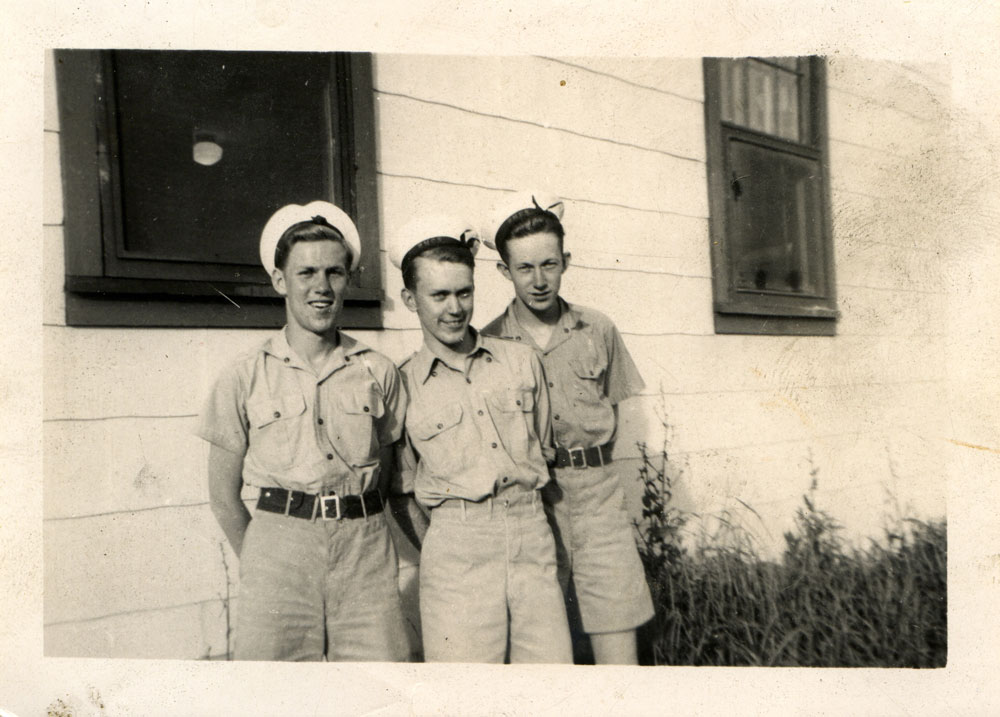
Beware the Ides of March! Thus spoke the soothsayer as he, correctly, warned Julius Caesar of his impending doom. While “impending doom” is probably not the cause, we haven’t heard much of anything from our current band world about any activities planned for the month of March of this year, at least not in time to report on here. On the bright side, while waiting for information on coming band activities, I had time to check on the meaning of the Ides of March. While the term originally referred to the full moon, in ancient Rome it was the time for several religious observances and was also a deadline for settling debts. It is the word “deadline”, particularly, that caught my eye. In fairness to bands in our part of the world, it may be that the month of March may be one of preparation, but not performance. In a few cases, notices we receive, about concerts that have been in the works for months, arrive only a few days before the event. For us to mention an event we must receive any notice no later than the 15th of the month prior to the event. Be aware of the Ides of March (Sunday March 15) is therefore my message this month. Send me your April concert listings by then and I will be sure to make mention of them here.

Newmarket Citizens BandBehind the Scenes
As many of you know full well, keeping a concert band going requires a few activities other than concert preparation and performances. These include library updating, financial matters and executive elections among others. As I think about such non-performance activities, a few stand out. Obviously a well-organized and well-catalogued library tops the list. There isn’t space here to detail the many possible formats, but with most bands having access to computers, a spreadsheet where searches may be easily done based on title, composer, library catalogue number, style etc. is easy to create and maintain! A few bands I know have a numbering system for all selections in their libraries, but others just stick to names. I’m a big proponent of a numbering system. When the conductor calls out a number to rehearse, everyone knows what to get. If the conductor should call for a selection such as Pop and Rock Legends: Elton John, and filing is alphabetical, one might look for Pop, Rock or Elton John. Numbering all of the charts would eliminate any confusion. Years ago I played with someone who filed any chart with a name starting with The under the letter T.

Read more: Tenth Anniversary: NHB’s Expanded Horizons

As I sit down to write this, summer has past, Halloween is almost here and I have already heard bands rehearsing Christmas music. So what has been happening in recent weeks? For me the major event was the Community Band Weekend.

In recent years the Canadian Band Association (Ontario) has held these events in a number of communities in Ontario. This fall’s Community Band Weekend, billed as “A Musical Celebration of Community Bands,” was hosted by the Newmarket Citizens’ Band. After a meet-and-greet event at a local pub on Friday evening, it was all music Saturday and Sunday.

Throughout the day, Saturday, the massed band rehearsed under the direction of nine conductors from across the province. After a small practice session on Sunday morning the assembled musicians and conductors performed a varied concert to an appreciative audience in the excellent Newmarket Theatre. The program lists no fewer than 79 participants from 25 bands. There were even some from Potsdam, New York. As for local support, there were almost 40 members of the Newmarket Band participating. How often are you going to hear a concert band with four bassoons?

Repertoire ranged from works by Czech composer Julius Fučík (circa 1890) to contemporary Canadian composers including Bill Thomas and Howard Cable. Of special note was Soliloquy for Band Op. 40a conducted by the composer Louie Madrid Calleja. Calleja, who came to Canada from the Philippines, holds a master’s degree from York University. His works have been performed by such artists as singer Measha Brueggergosman and the Volga Band in Saratov, Russia.

 Normally, in a column such as this, the paper program would warrant little or no attention. The program for this event was a notable exception. The full-colour front cover, with the title “Under the Trading Tree” depicts the Newmarket Citizens’ Band assembled under a large elm tree in 1883. It is an artist’s rendition of an actual sculpture in the main entrance of the Newmarket town offices. The tree was referred to as the “trading tree.” It is believed that the original inhabitants of the area, the Huron Wapiti, used the location of the tree to conduct commerce with the European settlers.

beat - bandstand

Flute Street: Over the past few years there has been quite a spread in the range of musical activities and offerings of community instrumental groups. In September I had the pleasure of attending a concert by an all-flute ensemble called Flute Street. This 15-member group performed on just about all of the members of the flute family including one that I had never seen before. I had seen alto flutes and bass flutes before, but it was my first chance to see and hear Nancy Nourse perform on her contrabass flute. This instrument, which stands on the floor, was just slightly taller than the performer. I believe that it is the only such instrument in Toronto. The featured performer of the evening, from France, was Jean-Louis Beaumadier. Billed as “The Paganini of the Piccolo,” this man, with his pianist Jordi Torrent, dazzled the audience in their duets and in works with the Flute Street ensemble.

Clarington: In a totally different departure from concert band normality, October 25 saw the Clarington Concert Band present an evening of violin and flute music. The music of Beethoven and César Franck was performed by American violin virtuoso, Andrew Sords, and Canadian piano accompanist, Cheryl Duvall. Delaware native Sords is a concert violinist who has already appeared as soloist with more than 100 orchestras and has performed on noted recital series across the U.S. and internationally. Canadian-born Duvall was raised in Durham, is active as a soloist, as a collaborative pianist in the Kitchener-Waterloo Chamber Music Society concert series and is the accompanist for the Oakville Children’s Choir. Also performing on the program were the Wildwind Flute Choir under the direction of local performer and educator, Lynda Shewchuk. In other words it was a musical evening that we normally would not expect from a community band.

Strike up the band! Last month I mentioned that a new community band was expected to begin rehearsals soon in Toronto’s west end. It has happened, and has surpassed all of the organizers’ optimistic expectations. The inaugural rehearsal of the new Toronto Concert Band was a resounding success. On September 9 nearly 50 adult musicians gathered in the music room at John G. Althouse Middle School to become founding members of this new ensemble. Musical directors Ken Hazlett and Les Dobbin were thrilled not only with the turnout at the first rehearsal, but also with the initial sounds emanating from this fledgling group. Over the years Hazlett and Dobbin have earned top reputations and long tenures leading the Etobicoke Youth Band. Many of those attracted to the new Toronto Concert Band are youth band alumni. In addition, an impressive range of community musicians of all ages have been attracted by the ensemble’s stated mission, “to create a positive and supportive environment in which to cultivate musicianship.” Their repertoire promises to be varied and of top-notch quality, as evidenced by the initial rehearsal material. While one might not be surprised to encounter a Beatles medley, some Simon and Garfunkel music or Scarborough Fair, throwing in the Vaughan Williams’ Folk Song Suite and Eric Whitacre’s Lux Aurumque for the first rehearsal might be a bit of a challenge. Now a few weeks old, the Toronto Concert Band boasts a 60-member roster. New members are most welcome, especially bassoon and trombone players. For more information, visit torontoconcertband.com.

Ahead from Wychwood: The Wychwood Clarinet Choir begins its new season with a program entitled “Wind Song,” featuring special guest conductor Howard Cable. In addition to two original pieces by Cable, written for the choir, the program will include an arrangement of Elgar’s Nimrod, Mozart’s The Marriage of Figaro Overture, and Gounod’s Funeral March of a Marionette arranged by choir member Roy Greaves. This all happens, with artistic director and clarinet soloist Michele Jacot, Sunday, November 16 at 3:30pm, at the Church of St. Michael and All Angels.

Silverthorn: Too late for the listings, on Saturday, November 22, at 7:30pm Silverthorn Symphonic Winds begin their season with “Autumn Rhapsody,” a program of wind ensemble repertoire celebrating the many colours of fall. Highlights include pieces by two legendary bandsman, Alfred Reed’s Alleluia! Laudamus Te and, again, from the pen of Toronto’s own acclaimed composer, arranger and director, Howard Cable, Scottish Rhapsody . For something completely different, the ensemble sings and plays Jay Chattaway’s energetic and exciting Mazama. The concert takes place at Yorkminster Citadel, 1 Lord Seaton Rd., Toronto.

Plumbing Factory: The first concert of the season by London’s Plumbing Factory Brass Band, Henry Meredith, conductor, is set for November 19 at 7:30pm in Byron United Church, London. Titled “Historic Russian Concert Favourites,” the program will include Glinka’s brilliant and boisterous Overture to Russlan and Ludmilla, the hauntingly exquisite Vocalise by Rachmaninoff and the mysterious Marche Polovtsiennefrom Borodin’sPrince Igor. The centerpiece of the evening will be the powerful and enigmatic Finale from Dmitri Shostakovich’s Symphony No. 5. For Christmas holiday music they will include movements from Tchaikovsky’s Nutcracker Suite, including the popular Miniature Overture and Valse des Fleurs.

A special feature of the evening will be a cornet trio, featuring director Meredith and solo cornetists Ern Sullivan and Skip Phoenix. They will perform Walter Smith’s Three Kings. While you might think that this has to do with the well-known work dealing with kings from the Orient, not so. The “Kings” in this case refer to a specific make of cornet designed and manufactured by H. N. White in Cleveland, As the owner of two King trombones, I am well aware of the King instrument reputation. The composer intended that his famous “monarchs” of the cornet world would perform the piece on three King Model cornets.

Continuing in the winter festive mode, the band will play Meredith’s Holiday Schottische Medley & Quodlibet. Several years ago I attended a presentation at a Masonic lodge titled “Mozart was a Mason.” That evening highlighted many famous musicians who were members of the Masonic Order. This arrangement by Meredith features melodies associated with well-known Masons as well as many other popular airs often played at the same time. The final number on the program will be Meredith’s arrangement of Prokofiev’s three-horse open sleigh piece Troika, written as part of his film music for Lieutenant Kijé in 1933. Being a stalwart fan of Henry Meredith’s programming, you can be assured that I will try to make the trip to London for that concert.

Cable: In case you haven’t noticed, the name of one composer/conductor is repeated here in the programming of several bands. That person is Howard Cable. It’s time we all learned more about Howard and his enormous contributions to Canadian music. Look for that here soon.

A passing: The band scene in the Toronto area has lost another member with the passing at age 66 of percussionist Jay Alter in mid-October. Jay, a former mathematics teacher, leaves his wife, a son and a daughter.

Definition Department

This month’s lesser known musical term is: l’istesso tempo: An indication to play listlessly; e.g., as if you don’t care

We invite submissions from readers. Let’s hear your daffynitions.

Jack MacQuarrie plays several brass instruments and has performed in many community ensembles. He can be contacted at bandstand@thewholenote.com.
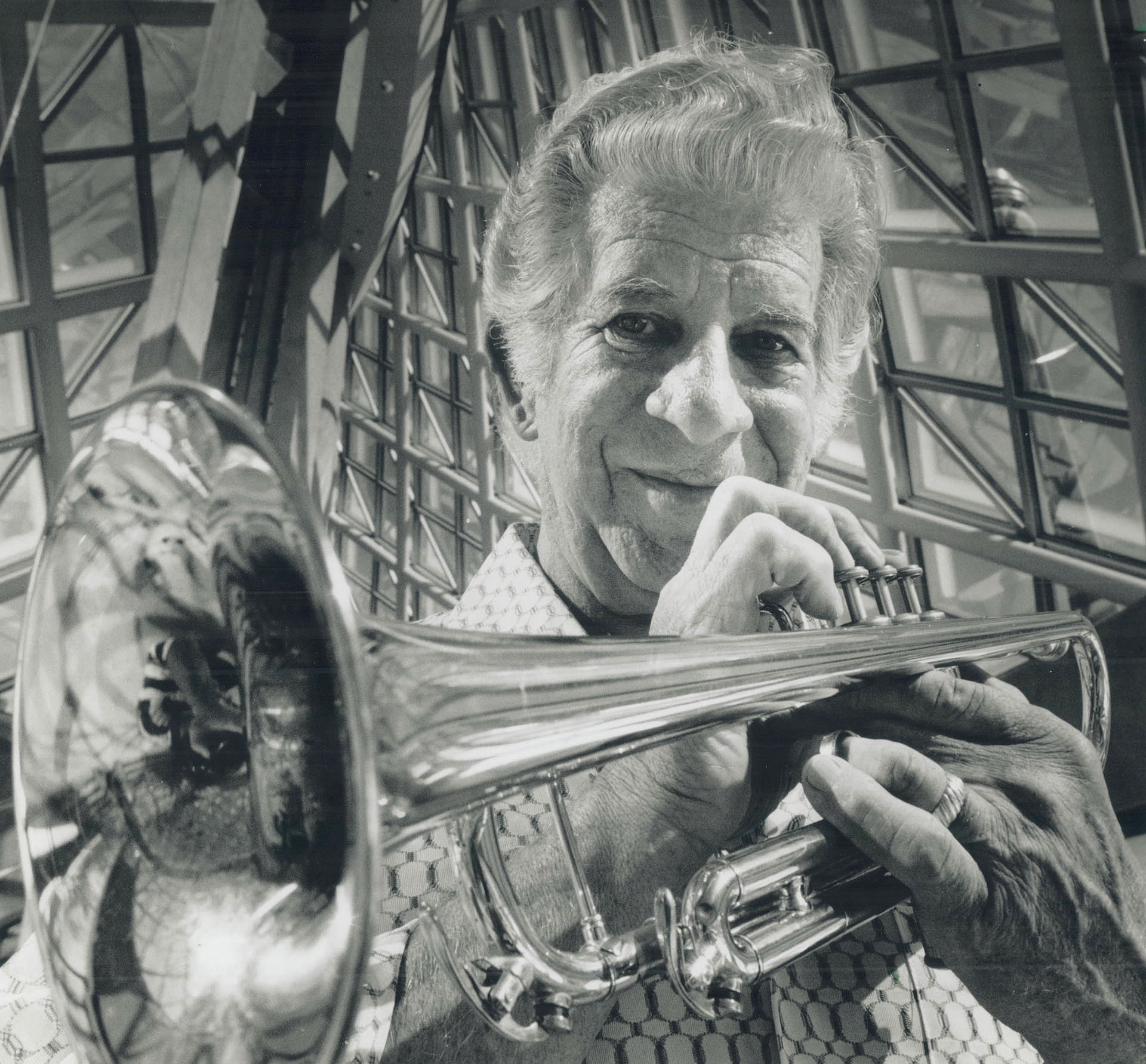
A few months ago I mentioned a trip to Ukraine by Bob Gray, a local band conductor, teacher and trumpet player. What he learned on that trip inspired him to pay another visit, with two primary goals in mind. The first was to investigate the feasibility of start-up brass bands in Ukraine during his eight-week stay in Kiev. The second was to be there for the celebration of the 25th anniversary of the Salvation Army’s ministry in Ukraine. In a recent email from Kiev, Bob reported on how things are going there, and unfortunately his first goal is not working out as easily as he had hoped. The idea was to investigate the feasibility of establishing new brass bands there. However, at present, there are no Salvation Army bands in Ukraine to use as models. Since there is no tradition upon which to build, there are no qualified leaders or instructors already active within the Salvation Army organization, making it difficult for some of the congregations to sustain and support the start and development of any band. Other setbacks: he has also learned that their music for worship in Salvation Army services differs greatly from the rest of the Salvation Army world. There are no brass band arrangements of the songs used there. Even for Christmas, the carols used in many places elsewhere differ from those familiar and popular in Ukrainian culture.

His second purpose for his extended trip will likely have a happier outcome. He will be there for the celebration of the 25th anniversary of The Salvation Army’s ministry in Ukraine. This event will take place on the weekend of June 8 to 10 in Victory Park and Hotel Bratislava. For this occasion, the Salvation Army band from Winton Corps, in Bournemouth, England will be participating. Bob has been asked to sit in with that band, as one of their cornet players is unable to make the journey to Kiev. It is the hope that the activities of this well-established band will stir some interest in resurrecting the brass band movement within the ranks of the Salvation Army in Ukraine. We wish him every success, and hope to hear of the establishment of new bands there in the near future.

Strings Attached

From messages about all-brass music thousands of miles away, we move to news about all-strings music right here in town. We have just heard from Ric Giorgi about the next concert of the Strings Attached Orchestra, their final concert for this year on June 3, again at the Isabel Bader Theatre. As usual, the program was designed to span a wide spectrum of music from such classics as Handel’s Arrival of the Queen of Sheba and Bach’s Brandenburg Concerto No.6 to Ashokan Farewell and the Best of ABBA.

The Plumbing Factory

Speaking of all-brass bands, we also just had a message from Henry Meredith of the Plumbing Factory Brass Band where he referred to the “devastating and relentless winter” we’ve all just been through. Rather than paraphrase what he said, here is his musical response to Mother Nature, verbatim: “Because of the ice storms only a week before our ‘spring’ concert, and the snowstorm on the night of our dress rehearsal, the PFBB has now decided to expand our concert season into the late spring and early summer. It is hoped that this will make it easier on both us and our audience, not to have to battle the weather to prepare and enjoy our brass band music. So we have decided to keep rehearsing, and to develop a brand new concert for you, to be performed on June 27.”

In typical Henry Meredith style, he outlines the program in one of his poems.

This little rhyme will explain the reason
Why we established a new summer season
It also provides a few hints about
The music which you will enjoy, without doubt.

The concert, “Summertime Musical Adventures” (June 27, 7:30pm at Byron United Church, 420 Boler Rd., London), will include such band favourites as Ringling Bros. Grand Entry, Barnum and Bailey’s Favorite, Bernstein’s Candide and The Whistler and his Dog by Arthur Pryor.

A Musical Movie

Something entirely new appeared on my radar screen recently: a Russian-Canadian film production company that is in the process of making a documentary about Benny Goodman’s historic tour of the USSR in 1962. Now, over 55 years later, this story is still alive in the minds of people who remember those concerts of the jazz orchestra of Benny Goodman, those “strange” but incredibly attractive American musicians. They remember the joy of buying scarce tickets and enjoying music, and screaming “encore” up to ten times. The whole world as we knew it was struck by the headline at the time. “The King of Swing Benny Goodman Plays Yankee Doodle Dandy on Red Square.” Certainly Russians had never seen anything like that before.

This full-length feature film, Trojan Jazz, will retell the events of the exchange of talented musicians between the US and the Soviet Union. The anticipated appeal is to jazz enthusiasts in both English- and Russian-speaking cultures. The concept of Trojan Jazz likens the Benny Goodman Orchestra to members of a Trojan horse that brought Western jazz culture into an isolated Eastern jazz culture. The impact was unpredictable. Jazz musicians of both cultures exchanged written ideas, which began a collaboration second to none.

Julian Miklis (at left)Local concert clarinetist Julian Milkis, son of former TSO concertmaster Yasha Milkis, is cast as Benny Goodman. Milkis actually studied with Goodman while attending the Juilliard School of Music in New York City. He can be seen in a variety of ensembles recreating some of Goodman’s hit songs.

To illustrate the Goodman legacy of playing big band music continuing to this day in community groups around the world, the producers wanted to show such a group in rehearsal So, all of a sudden, one evening a few weeks ago, I and my bandmates found ourselves being bombarded by bright studio lighting and surrounded by at least a half-dozen cameras. The Toronto-based rehearsal band Swing Machine, of which I have been a member for many years, was chosen and filmed to exemplify this ongoing tradition. There we were many years later, still enjoying the performance of big band music. We haven’t heard anything of when or where this movie might be seen, but I am told a visit to https://firstjazztourinussr.com will provide more in-depth information as the project develops.

Mikhail Sherman

A few weeks ago, at a regular rehearsal of the Swing Machine Big Band, I looked across at the saxophone section. The usually very reliable baritone saxophone player, Mikhail Sherman, was missing. We later learned that he had decided to have a nap before leaving for the rehearsal, but never woke up.

Born in the USSR, Mikhail grew up with a love of music in a country famed for great classical musicians. After serving time in the army and playing in a military band, he went on to become the principal clarinet and saxophone player for the famed Moscow State Circus, City of Lviv, for seven years.

In 1979 he left and came to Toronto to pursue more opportunities. He started his life here as a refugee with nothing. He washed dishes and became a cook at the Windfields Restaurant. His love for music led him in another direction. It was here that he met Frank Fermosi and Rocco Nufrio, the owners of the then-successful Saxophone Shop. They quickly spotted Mikhail’s love for music. He, in turn, showed a keen ability to learn the trade of repairing instruments. They offered him a job and training, in which he quickly excelled!

In 1986, when the Sax Shop closed, Mikhail decided to would open his own shop in North Toronto. Still with little in his pocket, he started Mikhail Sherman Music Service, which was to become one of the most successful woodwind repair shops in Canada, servicing the educational system and many top professional musicians. Mikhail passed away peacefully and suddenly in his sleep on April 26, 2018. Many of the great musicians and music educators in the GTA will miss his quick response and expertise. A true rags-to-riches story.

Uxbridge Community Concert Band

After a year’s absence from the local band scene and some questions about the band’s rebirth, the Uxbridge Community Concert Band, with Steffan Brunette at the helm, has now had its first rehearsal. Steffan took a year off to study composition and to do some travelling. Rather than assume all of the many duties required to operate a band successfully, Steffan now has an executive team to help with the many details, but it is, once again, a superbly organized band. After their first rehearsal it became evident that a few more trumpets would be welcome. The band is a summertime-only group that rehearses in Uxbridge on Wednesday evenings. For information, email uccb@powergate.ca.

Toronto Summer Music Festival

On Sunday, July 29 at 2pm, the 2018 Toronto Summer Music Festival will commemorate the 100th anniversary of the end of WWI with a concert titled “Reflections on Wartime” at The Bentway. This will include a full afternoon of events with a feature performance by theCanadian National Brass Project.” For those not familiar with it, The Canadian National Brass Project brings together many of the best brass players from professional symphony orchestras throughout North America, and each summer this all-star ensemble, led by conductor James Sommerville, joins forces and performs across the country. The program will include Tchaikovsky’s 1812 Overture, Mussorgsky’s Pictures at an Exhibition, and Mars from Gustav Holst’s The Planets. Concertgoers can also take in the sights and sounds of the Fort York Guard, enjoy a demonstration of artillery firepower, and hear military music by the Fort York Drums. There will also be a “Musical Petting Zoo” for children to test out a variety of musical instruments. For those not familiar with it, The Bentway, 250 Fort York Boulevard adjacent to Old Fort York, is being described as Toronto’s most exciting new outdoor concert venue.

A few days later, on Thursday, August 2 at 7:30pm in Koerner Hall, TSM will present “A Big Band Celebration,” which will focus on music of World War II. During the darkest days of the war the big band music of Benny Goodman, Count Basie, Glenn Miller and others was a major source of entertainment for life on the home front. As the presenters suggest, these familiar tunes became a metaphor for the way of life soldiers were fighting to preserve. This promises to be a stimulating evening of the best of the big band era as interpreted by music director Gordon Foote and featuring JUNO Award-winning jazz singer Ranee Lee.

Ranee LeeComing Events

By the time this issue is available in print, some of the events mentioned below will have taken place, but for the record and for online users, they are included here. Now that summer is close at hand, Resa Kochberg’s three musical groups have announced their current concert plans:

On Sunday, May 27 at 7:30pm, Resa’s Pieces Concert Band will perform at the Flato Markham Theatre, 171 Town Centre Blvd., Markham.

On Sunday, June 3 at 7:30pm, Resa’s Pieces Strings Ensemble will be at St. Basil College School, 20 Starview Ln., North York.

On Monday, June 4 at 7:30pm, Resa’s Band will present another concert at Mel Lastman Square in Toronto.

On Monday, June 11 at 8pm, Resa’s Singers Ensemble will perform at Beth Emeth Bais Yehuda Synagogue, 100 Elder St., North York.

Jack MacQuarrie plays several brass instruments and has performed in many community ensembles. He can be contacted at bandstand@thewholenote.com.
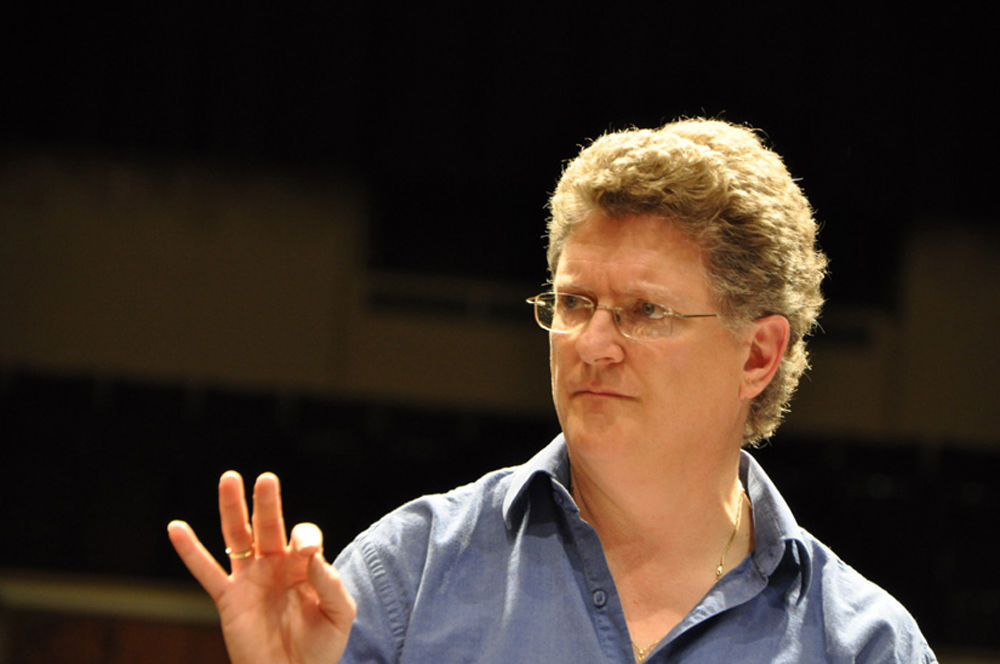
New Horizons. For the past several years this column, in the October issue, has reported on the progress of established New Horizons bands and the establishment of new beginners’ bands. This year the news is even better. As mentioned here some months ago, a documentary on the establishment and growth of New Horizons bands in Toronto was featured on TVO. At the time we all wondered how this might stimulate interest in prospective members; then came the annual Instrument Exploration Workshop.

I was unable to attend the event this year, but I hear it was a bigger success than ever. In the words of director Dan Kapp: “As for the past week, a whirlwind of happy ‘kids,’ it was busy, exciting and full of happy reunions as folks came back to band class.” It wasn’t just a reunion for past members though. New Horizons Toronto now has 90 new members. Of those, 80 are beginners in two classes. This year there were three couples who joined together, two siblings of existing members and a few friends of other members who joined.

Being a low brass player myself, I have often lamented the lesser interest in the lower instruments. For many starting out on a new instrument there seems to be a certain snobbery in that they consider that the instruments which usually get the melody are in some way superior. My standard response is to suggest that they look at all of the great cathedrals in Europe and show me one where the construction began with the steeple. None! None would exist if they did not have a firm solid foundation. In any band the tuba is that foundation. Without the tuba the structure would be flimsy and incomplete.

So I am happy to report that, finally, after seven years, there is to be a new tuba player in the Toronto New Horizons bands! A woman who attended the instrument exploration evening was concerned about her carpal tunnel syndrome. She asked for a suggestion and at the same time asked what the group needed. Kapp suggested the tuba. Once she gave it a try, she fell for it and immediately took the mouthpiece home to practice.

Beginning this year there are a few new membership policies. The most innovative is “One fee, play in as many bands as you wish.” Also, they now have had a few members at the advanced and intermediate level sign up for beginner classes on a second instrument. Another change is that, for the first time in their short history, they have had to cap classes for the remainder of the year for all woodwind, and high brass. They still have spots open for French horn, trombone, euphonium, and of course, tuba.

Finally, in previous years the band has produced a very special Remembrance Day program with a narrative based on letters from a soldier who was killed during World War II. They will be performing this concert, “A Time To Remember, “ in Lindsay this year. The show is being billed as “A moment to reflect on war and its costs through word, music and images.” More on the date and time when we have details.

2202-Bandstand.jpg

Time for tubas. Having been involved with low brass instruments most of my life, my ears perked up recently when I heard the unfamiliar term “Tubatorium” on the radio while driving. (I have no recollection of the actual program I was listening to, but I was determined to find out about the Tubatorium. With the help of Mr. Google and other friends I began my exploration. Was this a dealer who sold tubas or a place to learn to play the instrument? No! This is a tunnel under some railway lines in Nashville Tennessee. A man named Joe Hunter, who plays electric bass in a couple of local Nashville groups, had routinely been frustrated while stuck in long traffic jams while driving through this tunnel at rush hours. One of the websites I visited shows Hunter, a young man with shoulder length blond hair, playing a sousaphone beside all of the cars inside the crowded tunnel. With his right hand playing the instrument and the left one holding a container for donations from motorists stuck in the traffic of the tunnel, Hunter plays selections from his repertoire. It’s not unusual to find buskers in unusual locations, but this was a new one. For many Nashville motorists the Thompson Lane Tunnel has been renamed the Tubatorium. If you’re interested in seeing this on the internet, the words “sousaphone in tunnel” yield several results.

Low brass. Quite by accident, while looking for Tubatorium information, I stumbled upon a fascinating website dedicated to low brass instruments. Hosted by Sean Chisham, this website, chisham.com, contains a wealth of information for any brass instrument player, not just for those interested in the tuba. Right off, after you look at the options on the opening TubeNet page, one of the first sections that you will see is a set of complete fingering charts for B-flat, E-flat, C and F tubas.

For many years when anyone spoke of symphony tuba players, the pre-eminent name was Arnold Jacobs of the Chicago Symphony. This website contains an immense amount of information from Jacobs who was considered the master of instruction for low brass instruments. Such topics as “Warming up,” “Play by sound not feel” and “Imitate others” are there complete with the sounds of Jacobs demonstrating. The most impressive component of this site is that of a complete 1973 masterclass conducted by Jacobs. Also on the site is extensive information on many famous musicians and their recordings

One final gem on the subject of tubas is the recent release in January of a new Concerto in B-flat Major by American composer Daniel Simpson. I have not had a chance to hear this work yet, but I have been told that the Finale: Tango movement is particularly impressive. Hopefully there will be more to report in a future issue.

CBA-Ontario Community Band Weekend. It’s that time of year again when the Canadian Band Association, Ontario Chapter, will be holding another of their Community Band Weekends. This one will be hosted by the East York Concert Band from Saturday, October 22, at 8am until Sunday, October 23, at 5pm. With a Social Meet and Greet scheduled for Friday October 21 starting at 7:30, this event accords an excellent opportunity to experience a weekend of music making with like-minded individuals who share a passion for wind band music. It all takes place at the Royal Canadian Legion, Brigadier O. M. Martin Branch 345, 81 Peard Rd., Toronto. If you are a band member, this is a chance to meet with members of other bands and share ideas as well as rehearse and perform new music with guest conductors from across the province.

Aurora Community Band. In the last issue of this column I challenged band members to send us information on their bands and their activities. Fortunately one band member responded immediately to tell us about her band. Here’s what Connie Learn, one of the band’s directors, had to say: “The Aurora Community Band is now entering its sixth season of ‘creating beautiful concert band music with and for the citizens of Aurora.’ With musical director Gord Shephard at the helm, the band’s membership continues to increase and we’re looking forward with enthusiasm to this year’s activities. The band rehearses in Brevik Hall at the Aurora Cultural Centre, 22 Church St., Aurora, on Sunday evenings from 7pm to 9pm. We would like to invite you to attend one of the band’s rehearsals and experience the exuberance of this lively group of musicians. Brevik Hall is on the second floor of the Cultural Centre but there is an elevator for assistance, especially if you choose to bring your tuba!” For Canada 150 festivities, the band has commissioned a composition from professor Bill Thomas of York University. The band will have the premiere performance of this number at its concert on Canada Day 2017. We’ll have more on this band’s activities in coming issues.

The Originals Band. We recently had a request from Ian Miles, a member of the Royal Canadian Legion Concert Band, Branch 344, for any information on the history of that band. Many years ago, when Legion Branch 344 was located on Elm Street in downtown Toronto there was an active band. After the branch’s move to their present location on Lakeshore Blvd., many of us lost contact with that band. In its early years the band was known as The Originals. In his message Ian states: “The RCLCB has rebuilt itself over the last year, and is doing quite well, but only two long-serving members (ten-plus years) are still with us, and what is missing is a historical perspective of the band.” I personally remember well attending a farewell party for the conductor, Scotty Wilson, who was leaving to move back to Scotland. If any readers have any information on the history of this band, please contact us.

Band happenings. As reported on previous occasions the Newmarket Citizens Band spent years hoping for a new home after theirs was destroyed by fire. Over those years they had hoped to find a new home upon completion of the restoration of the old town hall. However, the restoration process took much longer than expected and finally about a month ago the band moved into its new home elsewhere. The irony of the situation is that, barely a few weeks after moving into this new home, they were invited to play at the opening ceremonies of the now-restored town hall.

Oct 11: Silverthorn Symphonic Winds will present their “59 Minute Soiree” at Wilmar Heights Centre, Scarborough. Refreshments, conversation with the musicians and open rehearsal to follow.

Oct 16: Markham Concert Band will present “Road Trip!” In honour of their recent journey to Markham’s sister city Cary, North Carolina, they will present a tribute to great Canadian and American music: Broadway, jazz, marches and more. The concert will feature vocalists Solveig Barber and Bill Mighton.

Oct 18: The Barrie Concert Band will present “Veterans Salute,” a musical tribute to the veterans and service men and women in the Canadian Forces. The concert, at the Army Navy and Air Force Club, will include military-related themes and will feature the Base Borden Brass and Reed Band as guests.

Oct 23: Wellington Winds present “Moving Masterpieces for Winds”: Four Last SongsAllerseelenDer Rosenkavalier and other works by Richard Strauss; Amy E.W. Prince, soprano; Daniel Warren, conductor. At Knox Presbyterian Church, Waterloo. The concert will be repeated Oct 30 at Grandview Baptist Church, Kitchener.

Oct 28: The Etobicoke Community Concert Band will present “Aaarrr Matey,” music of sailors, pirates and adventurers at Etobicoke Collegiate Auditorium.

Oct 29: The “Festival of Remembrance Concert” commemorating the 150th anniversary of the Ontario Regiment begins at 2pm.at The Embassy Church, 416 Taunton Road, Oshawa. Bands will include the Pipes and Drums of Branch 43 Royal Canadian Legion, the Oshawa Civic Band, and the Band of HMCS York.

Jack MacQuarrie plays several brass instruments and has performed in many community ensembles. He can be contacted at bandstand@thewholenote.com.
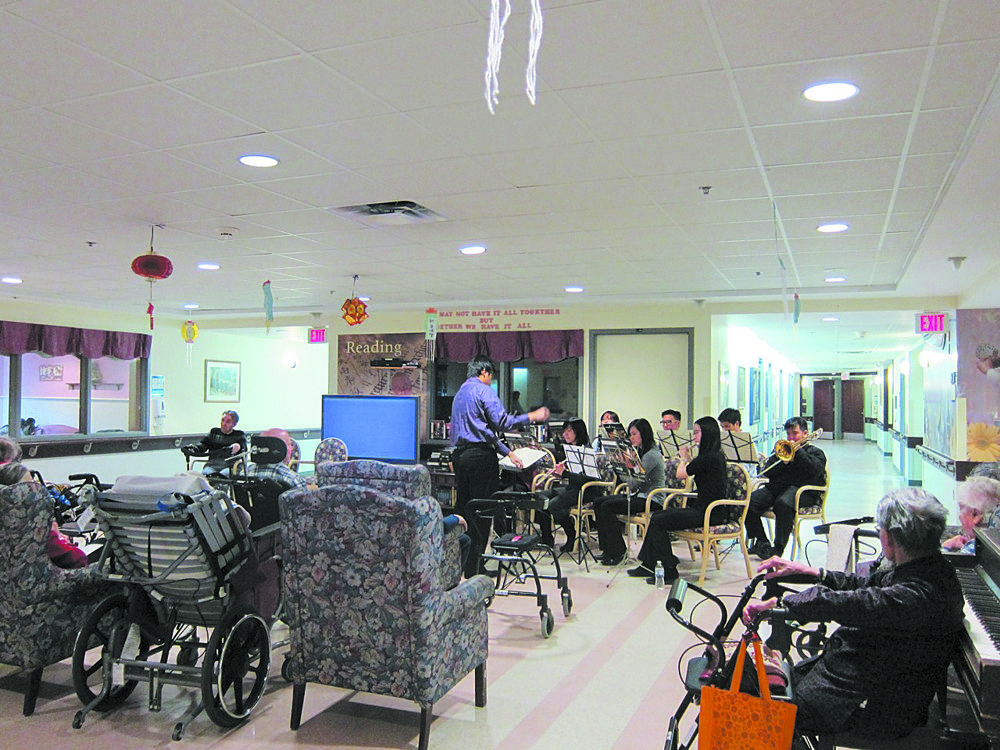
As I sit down to write this September column (the beginning of my 14th year), it’s the usual dilemma. Should I start with the events of the summer about to end, or the fall just over the horizon? And what about summers past? I think I’ll start there.

In case you haven’t been around to notice, outdoor concerts have changed. Having worked for many years as master of ceremonies at a variety of summer band concerts, I remember well concerts every Sunday, sponsored by Toronto’s Parks and Recreation Department at the Beaches Bandstand and in High Park, with concerts during the week at Allan Gardens and St. James Park.

My own summers usually ended, back then, operating the “world’s first” outdoor stereo sound system on the main bandshell at the CNE. My first season there was working with the late Sir Vivian Dunn and the Band of the Royal Marines, Plymouth Division. On another occasion, the National Band on New Zealand was featured. During the times when the featured band was not performing on the main bandshell, there were concerts on the CNE’s north bandstand by various bands from local Army and Navy Reserve units.

It has probably been some years since there have been such events with major feature bands at any outdoor facility in the Toronto area. However, community bands all over the province have been performing at a wide range of performance venues ranging from such large dedicated facilities as the Millennium Bandstand in Unionville (built in 2000) or the Rotary Aqua Theatre in Orillia’s Couchiching Park (built in 1958), to grassy areas in public parks. In the cases of the more formal bandstands, most usually have some limited seating and lots of space for audience members to bring their own seats.

Lest I start to sound too nostalgic, I should point out that while the more informal concerts on grassy lawns may be pleasant for audience members, they are not necessarily so for band members. Other than bad weather, problems can include uneven terrain for members to place chairs and music stands, bright sun in their eyes, winds to blow the music off their stands and the logistics of getting large instruments to and from the parking area to the performance site.

Just as there is much less formality in the venues, so too there is now a wide range of the delivery of the music, the dress of band members and conductors, and the means of announcing the music and soloists. During this past summer I have seen attire ranging from bands with everyone wearing rather formal uniforms with shirt, tie and band blazer to groups with shorts and a wide variety of tops.

As for audiences, times have also changed. Cell phones scattered throughout the audience are common as is the eating of treats. The photograph with this column is a case in point: the Encore Symphonic Concert Band at the Millennium Bandstand in Unionville, in garb that does not really match their prestigious name. And at least one audience member trying hard to let the music distract him from his ice cream.

The Encore Symphonic Concert Band at the Millennium Bandstand in Unionville. Photo by Jack MacQuarrieSummer repertoire has evolved as well. Years ago, bands always played at least one march by Alford or Sousa. Of all of the concerts this summer, where I either played or listened, there was not a single march. All of which brings up a favourite topic of mine: repertoire. Should it be purely based on the preferences of the conductor, the skills and interests of band members, or what they hope will appeal to their audiences on a given day? Two recent concerts were a case in point: as is popular these days one was thematic, with the title: “Music of the Cinema, Popcorn Not Included.” The other concert did not have a specific title, but was made up either of Beethoven music or music inspired by Beethoven. After the latter of these concerts, I asked a man how he liked the program. His reply: “Why would a band play Beethoven at an outdoor concert?” When asked what he would prefer, he stated that it should be obvious: “A band outdoors should be playing Sousa marches.” All of which brings up that recurring theme: “You can please some of the people some of the time, but you will never please all of the people all of the time.”

Buried Treasure

At some time every summer, I morph into my occasional household alter ego, Johann Cluttermeister, and start digging through many boxes of “sometime I must get around to it” stuff. I uncovered a few musical gems. The first was an advertisement from the Stratford Festival of a few years back, for a performance of H.M.S. Pinafore. There he was, a sailor in the uniform of the United States Navy, embracing a sweet young lady. What, pray tell, was an American sailor doing in a story aboard a Royal Navy ship?

Then it was music for a lesser-known bugle call, The First Post. Most people are familiar with The Last Post, but how many have ever heard of The First Post? Having served many years ago in a large Royal Navy ship, which was the Admiral’s Flagship, I became acquainted with many bugle calls. We had a full Royal Marine Band with many buglers aboard. We heard a multitude of bugle calls every day to announce certain routines. The First Post was one of these. And there it was, the music for this little-known bugle call! Off to Google I went. I typed in “bugle call The First Post.” Almost immediately, I heard this call played in its entirety as I followed it with the sheet of music in front of me, after which to my surprise and pleasure, I was treated to a succession of many British bugle calls.

Into another box, and out came a true gem: a well-worn small book of music, titled the Universal Band Primer. “The indispensable and VERY FIRST BOOK for all Young Bands” it proclaimed. Published by Hawkes & Son in 1912. Price: one shilling and sixpence. The first page covered the “Rudiments of Music” and consisted of a stave with the comparative value of notes and rests: wholenotes, half notes, quarter notes, etcetera, except that here they are called, respectively: semibreve, minims, crotchets and so on, down into quavers, semiquavers and demisemiquavers. As for the instrumentation: there are books available for saxhorns, G bass trombones and bombardons. It seems that there have been some changes in the band world over the past century.

Band activities

Usually, around this time of year, I received considerable information on band activities over the summer months. This year, not so, but with one notable exception. Joan Sax of the Richmond Hill Concert Band wrote to inform us of a concert series at a new venue: during the months of July and August, the Richmond Hill Concert Band presented “The Lake Wilcox Summer Concert Series” Sunday afternoons at 1pm on the Oak Ridges Community Centre terrace. These featured the five concert bands of York Region: the Aurora Community Band, the Thornhill Community Band, the Richmond Hill Concert Band, the Markham Concert Band and the Newmarket Citizens Band. Playing in one of these concerts gave me an opportunity to tour this new community centre adjacent to Lake Wilcox. It is an excellent and much-needed new facility with too many features to describe here. If I ever needed a reminder of how things have changed over the years, though, this was it! Some years ago, as a young boy living in Windsor, Ontario, with a population then of 100,000, I occasionally visited the little village of Richmond Hill. On my way to this community centre, we passed a sign welcoming us to the City of Richmond Hill, population 208,000.

Also by this time in past years, I would start to get notices of future band activities. This year I have not received a single notice of any coming events yet! If you, as a reader, are a member of a band, we would love to be informed of any coming events. For me to make mention of them in this column, we generally need them no later than the fifteenth of the preceding month.

Other happenings

Earlier this year, we attended a ceremony at Toronto’s Nathan Phillips Square, where members of HMCS York, Toronto’s Reserve Naval Division, were commemorating the annual Battle of Atlantic Sunday. We were astounded to see six or eight members of the band in formal army uniforms. How could this be? It turns out it was that time of year where many communities were experiencing serious flooding and needed people to fill and position sandbags, and several band regular band members were away on extra emergency duties doing so. Members of one or more reserve army bands had therefore the HMCS York band’s ranks to form an unusual Red and Blue ensemble.

Warning! Groaners ahead

Question: What’s musical and handy in a supermarket?
Answer: A Chopin Lizst.

Question: How do you get a million dollars playing jazz?
Answer: Start off with two million.

Jack MacQuarrie plays several brass instruments and has performed in many community ensembles. He can be contacted at bandstand@thewholenote.com.
September 1, 2020 is fast approaching, and that date has quite some significance for The WholeNote. It was 25 years ago on September 1, 1995 that the very first edition of The WholeNote was introduced to Ontario’s music lovers. As for my association with this magazine, it was 14 years ago, on September 1, 2006 that my first Bandstand column appeared. I asked myself: “What has changed?” The answer: “What hasn’t?”

In that very first column I started by mentioning: “The Canadian National Exhibition has just opened for another season.” It won’t be open this year. I also stated: “For most of us that event is the harbinger of changes soon to come; shorter days, cooler weather, vacations over, back to school, and for many, back to band rehearsals after a summer recess.” No band rehearsals any time soon. Then I stated: “For others in the band community, it heralds the end of a busy round of park concerts.” No park concerts this year. 

So that leaves us with two questions. What were our community bands able to do this summer? Where does it leave our bands for the months to come?

Read more: The more it changes, the more it changes!

2209 BBB BandstandIn last month’s column, while talking about the characteristics of various performance venues, I mentioned the Foster Memorial. You might ask: where and what is the Foster Memorial, and why should it be of interest to music lovers?

This architectural gem, little known to most people in the GTA, is less than an hour’s drive from Toronto and if you are not familiar with “The Foster,” this summer could be the ideal time. In their Ontario’s Choice Awards in November 2016, Attractions Ontario named the Thomas Foster Memorial as the Top Small Performing Arts Attraction in Ontario. In the words of Troy Young, CEO of Attractions Ontario, “These awards are unique because they were chosen exclusively by the consumers that visit these sites.”

So what exactly is the Foster Memorial? Located four kilometres north of the town of Uxbridge, it is actually a mausoleum built by Thomas Foster as a memorial to his wife. Thomas Foster was born and raised in Scott Township just north of Uxbridge where his father ran the Leaskdale Hotel. He became a butcher in Cabbagetown in Toronto, was elected as an MP, and served as mayor of Toronto from 1925 to 1927. He also made a large fortune from real estate.

In his late seventies, while on a visit to India, Foster was inspired by the Taj Mahal. On his return, he built this family memorial in the rolling countryside of Uxbridge Township. While the architecture was originally inspired by Foster’s trip, its design is greatly influenced by the architecture of the early Byzantine churches. Entering through the heavy bronze doors, one is struck by the beauty of the marble and terrazzo interior, flooded by the soft light coming through the stained glass windows. The Foster Memorial is truly a unique structure. Completed in 1936, it contains three crypts: for Mr. Foster, his wife and his daughter.

In recent years this “Diamond of the Durham Region” has been the venue for a wide spectrum of events, from weddings to concerts. As for musical performances, it’s “Fridays at The Foster” at 7:30pm all summer from the beginning of May until the end of September. For soloists and small groups, the acoustics are excellent, but the layout and acoustics do not work for large groups. As for repertoire, it ranges from Irish music, traditional folk ballads, bluegrass and Broadway hits to Diana Davis performing using quartz crystal singing bowls and flute. One group which really impressed me when they performed at The Foster a few years ago was the Shimoda Family recorder ensemble. I certainly intend to be in the audience when they return on August 25 with their rarely heard authentic Baroque music.

Another Uxbridge gem: While on the subject of lesser-known performance venues, the town of Uxbridge has another gem. Since its grand opening in December 1901, the Uxbridge Music Hall, with its excellent acoustics, has been blessed with a wide range of concerts and stage productions. In 2011, for its 110th anniversary, there was a reenactment of the hall’s very first concert. On that occasion I had the privilege of performing in the recreated “Town Orchestra” for that reenactment. I even had the honour of supplying the anvil and hammer for our rendition of the Anvil Chorus from Verdi’s opera Il Trovatore. (As for coming events, the only one that I am aware of at the moment in this significantly under-utilized venue is that of the small ensemble Quartetto Gelato, who will be performing there on September 30.)


Recent Events

Wellington Winds: When one looks at the scores of most works for concert bands, one finds that they frequently call for instruments that rarely get any consideration for even minuscule solos. One such instrument is the E-flat alto clarinet. If the band has an alto clarinet, it is rarely heard on its own. More often, it spends its time hidden and doubling the parts of other instruments. More often than not this instrument is the butt of uncomplimentary jokes. Rarely, if ever, is it the first choice for young players or their teachers. Now, enter Stephen Fox. A distinguished Canadian clarinetist and instrument historian, as well as a world-class clarinet builder, Fox has recently attracted attention for his new model of alto clarinet which has been receiving accolades for its warm compelling tone. Apparently, up till now, there was no known work for solo alto clarinet and wind ensemble. Enter Michael Purves-Smith: “Such a wonderful instrument deserves a significant solo voice,” he says and rose to the challenge. His concerto for alto clarinet and wind ensemble needed a name. When he asked his wife, Shannon, for a suggestion, possibly influenced by the common prejudices against the instrument she immediately responded, “Why not call it the Seven Deadly Sins”? The Seven Deadly Sins received its first performance by Stephen Fox, as soloist, and the Wellington Wind Symphony under the direction of Daniel Warren, April 30 in Kitchener and the following week in Waterloo.

New Horizons: The last time we heard from the New Horizons Band of York Region was some months ago. On a visit to one of their rehearsals in Richmond Hill there were fewer than 15 members. As with all New Horizons bands, this group is for active adults who want to learn music in a friendly, supportive atmosphere with other active adults. Now, with almost 30 members near the end of their first year of learning together, they had their first concert ever on May 25. If you have considered taking up a musical instrument, director Doug Robertson would love to hear from you. He can be reached at nhbyrdirector@gmail.com.

Silverthorn Symphonic Winds concluded their 2016/17 season on May 27 at the Wilmar Heights Event Centre with “Spring Celebration,” honouring Canada’s 150th. The repertoire featured works by Canadian composers and arrangers, including Morley Calvert, John Herberman and Howard Cable.

Wychwood: Finally, as I write this, I am looking forward to attending the final concert of the season of the Wychwood Clarinet Choir on May 28, so by the time this issue is on the streets the concert will be past history. At time of writing, I am looking forward to two matters. I hope to meet Wynne, the clarinet player from Whitehorse who rehearses with the choir over the Internet. I am also looking forward to hearing The Bridal Rose Overture by Calixa Lavallée, as arranged by Richard Moore and Roy Greaves.

Coming Events

Luminato: Fresh from their recent stunning victory at the Brass Band competition in the US, the Weston Silver Band is now taking on a very different role. This time they are onstage as part of a major musical event in this year’s Luminato Festival in Toronto. A hit of the 2015 Edinburgh International Festival, En avant, marche! is a genre-defying tragicomedy from acclaimed Belgium choreographer Alain Platel. It’s the story of a trombone player, no longer able to play his instrument due to illness, who is demoted to playing the cymbals. Throughout band practice, the larger-than-life protagonist terrorizes fellow band members, confides in the audience, sings arias and dances an unlikely ballet duet, all with exuberance and a riotous slapstick edge. Four actors and seven musicians are joined onstage by Toronto’s Weston Silver Band, playing marching band classics along with 19th- and 20th-century pieces ranging from Verdi to Beethoven and Schubert to Mahler. If there ever was a true, and truly unforgettable, celebration of the power of making music together, this sounds like it. Performances are from June 21 to 24 at the Bluma Appel Theatre.

Looking Ahead

One band which has been on the local concert scene for years will not be there this coming year. After 25 years, the Uxbridge Community Concert Band (UCCB) will be absent. Music director Steffan Brunette is taking a year off from the band and from his school, teaching and studying composition. In September he will take on new duties as Head of Music at a new high school in Markham. Hopefully, the UCCB will be back next year.

Saturday, June 3, at 2pm, the Festival Wind Orchestra will present their 2017 summer concert at North Toronto Collegiate (17 Broadway Ave., Toronto). Founded in 1996, the Festival Wind Orchestra is an adult community wind orchestra, which rehearses weekly under the direction of Keith Reid at Riverdale Collegiate in Toronto. Their concert will feature music by Canadian composers, including: Overture: St. John’s, 1828 by Ben Bolden; Sodbuster by Elizabeth Raum; Genesi by Vince Gassi; and Canadian Folk Song Fantasy by William McCauley. Also featured will be Jason Dallas performing Joseph Horovitz’s Euphonium Concerto. Since I am a dedicated euphonium aficionado, and having never heard of this composer, I decided to check for information on him. As professor of composition at the Royal College of Music since 1961, he is someone that we should have heard of before.

Sunday, June 4, at 7pm, Strings Attached Orchestra, under the direction of Ricardo Giorgi, will present their final concert of the season at the Isabel Bader Theatre. In the words of director Ric, “We have new, old and middle-aged music for you,” from Ravel’s Bolero and the last movement of the Brandenburg Concerto No. 4, to the rarely performed Concerto for 2 Recorders in B-flat by Telemann and a musical hoax by Samuel Dushkin. They will also give the first ever performance of the winning composition of Ric’s second annual Young Composers Initiative, called Viaggio delle Farfalle by Damiano Perrella.

Tuesday, June 6, at 8pm, Resa’s Pieces Concert Band will present their 18th annual gala at the Toronto Centre for the Arts.

Tuesday, June 13, at 7:30pm, Silverthorn Symphonic Winds will present their final concert in their series of 59 Minute Soirees. These informal musical entertainments feature a variety of lighter music. Guests are invited to enjoy refreshments and conversation with the musicians after the concert. Wilmar Heights Event Centre – Concert Hall, 963 Pharmacy Ave., Toronto (just north of Eglinton).

Saturday, November 4, the Northdale Concert Band will present their 50th anniversary concert with the title “The Big 5-0h!” The program will include a newly commissioned work by Gary Kulesha. The concert will feature as trombone soloist Vanessa Fralick, associate principal trombone of the TSO.

Finally, in last month’s column I mentioned my belated introduction to the longtime Hart House Symphonic Band. The concert dates for their next academic year are: December 3, 2017 and April 8, 2018.

Jack MacQuarrie plays several brass instruments and has performed in many community ensembles. He can be contacted at bandstand@thewholenote.com.
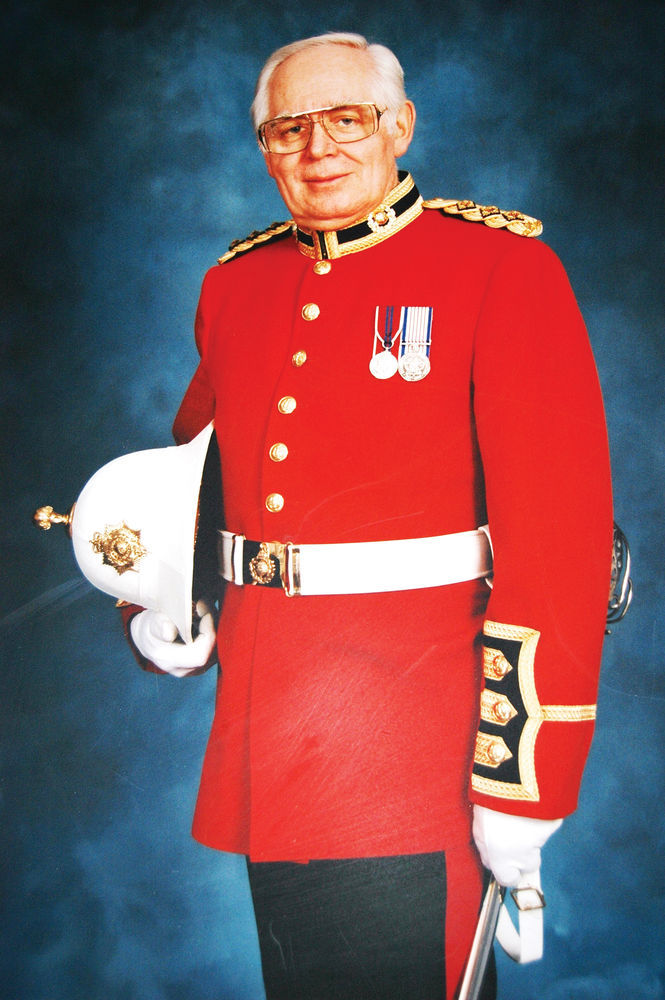
It would appear that, after a few false starts, summer may have arrived. As we view the news of band activities for the next few months, there are all manner of concerts planned by bands throughout Southern Ontario, but they are almost without exception by individual bands.

This is in stark contrast to when I first started in boys’ bands. Our summer was filled with parades and many local multiple-band tattoos in surrounding communities. Outdoor band festivals are now few and far between in this part of the world. The most recent such event that I can recall in this part of the country was the Great Canadian Town Band Festival which was held for a number of years, ten years ago or more, in the small town of Orono. Throughout its existence, I was active in this festival. Its demise was not due to lack of interest on the part of participants or audiences. Rather, after a few years the organization and operation became too much for the small cadre of volunteers. Although there was consideration given to moving the festival to another larger community, this never materialized. Whether they are called band tattoos or band festivals, these kinds of outdoor events involving a number of community bands haven’t even been relegated to history books. They just seem to have passed into oblivion.

Not only were there tattoos in former days, but there was a wide variety of other outdoor band events, both amateur and professional. I can still remember the fascination of a circus band with a diverse array of performers parading down a city’s main street. In fact, for a time, one of my boyhood ambitions was to play in a circus band. It seems that the only large outdoor events with bands to be seen now are those overwhelming halftime shows of American football games with all of the extra non-musical hoopla.

NABBSS: You may recall that at this time last year our household was gearing up for a trip to Halifax and participation in the very first North American Brass Band Summer School (NABBSS). As part of this summer school we were also participants in the 35th Royal Nova Scotia International Tattoo. With many hundreds of professional-level participants from Canada, the United States and several European countries performing for ten days in a packed arena, this event is a far cry from the local amateur tattoos referred to earlier. Even these large-scale events are increasingly few and far between. I have not heard of single such event in Ontario for some years. While we are not able to participate in this year’s NABBSS, I am sure that it will be as rewarding as last year’s was. The school will run from June 26 to July 8. When I last checked, there were still openings. Inquiries should be addressed to bandsummerschool@gmail.com.

Further Reminiscences: For years a major attraction at the CNE was the featured guest band at the main bandshell. For a few summers I had the pleasure of operating the sound system on that main bandshell. In particular, I had the privilege of working for two weeks with Major F. Vivian Dunn, later Sir Vivian Dunn. Prior to every concert of the Band of the Royal Marines Plymouth Division, he would discuss all of the music to be performed and just which instruments were to be given proper microphone pickup.

By a somewhat strangely routed train of thought (but bear with me), this reminds me of a famous but rarely seen ceremony, called Beat the Retreat, the origins of which date back to the reign of James II of England (James VII of Scotland) in the late 1600s, a time when drums were a major means of communicating with troops. It was a time when wars were mostly carried out in daylight hours, and the beating of drums was the signal to retreat at the end of a day’s fighting. Over time, beating the retreat became a more elaborate ceremony, where the Captain of the Main Guard would have his drummers beat the signal which would then be repeated by drummers of each regiment. Many years later, of course, armies obtained more sophisticated means of communicating, but by then Beating the Retreat had been established as an important ceremonial event.

The Royal Marines in particular have retained the ceremony, along with saluting their ceremonial head who is bestowed with the title of Captain General. Most recently that has been His Royal Highness Prince Phillip, Duke of Edinburgh. Every three years the Massed Bands of Her Majesty’s Royal Marines, with some 200 musicians on parade, perform their Beat the Retreat ceremony at London’s Horse Guards Parade in celebration of the birthday of their Captain General.

That is where Major Dunn comes in again! The year after he and his band performed at the CNE bandshell, he wrote The Captain General march to honour then Captain General, His Majesty King George VI. Three years ago I had the pleasure of reviewing Saeculum Aureum, a 2CD set, performed by The Band of The Royal Regiment of Canada. The Captain General, a stirring march with amazing counter-melodies, was one of the finest selections on that recording.

Bandstand-Mario.jpgMario Canonico: The community band world has lost another of its most dedicated members. Mario Canonico, a longtime member of the Newmarket Citizens Band, passed away May 16. Born in the Aosta Valley in the northwestern part of Italy, Mario started his musical adventure on violin at the age of nine. He began playing saxophone in his early 20s and soon added the clarinet. From Italy the family moved to Ecuador for a few years before coming to Canada in 1967. Settling in Montreal, he worked as a barber during the week and spent his weekends as a jobbing musician playing a wide variety of events including weddings and bar mitzvahs. Moving to Newmarket in 2000, he soon had a regular spot in the clarinet section of the Newmarket band. Until about three months ago he was playing regularly in three other musical groups besides the Newmarket band, including a small ensemble called North of Dixie. In addition to music and family he had a passion for cycling, averaging 50km per day. His last bicycle ride was on a warm sunny day last October at age 82. Just a few weeks ago the members of North of Dixie went to his house to entertain him. Although gravely ill, Mario danced up a storm with his wife, Delfina, and with his daughter and granddaughter. This photograph was taken on that day by John De Fusco.

Coming Concerts:

June 4 at noon the Encore Symphonic Concert Band will present “In Concert: Classics and Jazz” at the Wilmar Heights Centre, 963 Pharmacy Ave., Scarborough.

June 6 at 7:30 the Barrie Concert Band will present “Let’s Celebrate Barrie!” a multimedia concert celebrating Barrie’s history at Hi-Way Pentecostal Church, 50 Anne St. N., Barrie.

June 12: A few months ago I had the pleasure of attending the premiere concert of the Toronto Concert Band. To wind up their inaugural season they will be returning to the excellent performance venue of the Glenn Gould Studio on Friday, June 12, at 7:30pm. Since their very first rehearsal less than nine months ago, founding conductors Ken Hazlett and Les Dobbin have set a high standard. This season-ending concert will feature an eclectic mix, from Camille Saint-Saëns’ Carnival of the Animals to Warren Barker’s Selections from Les Miserables with many challenging numbers filling out the program. The band’s tag line “We Love to Play!” should be spelled out musically at this concert.

June 14 at 7pm the Strings Attached Orchestra will be presenting their year-end concert at the George Ignatieff Theatre, 15 Devonshire Place (just southwest of Koerner Hall). Among other things, they will be performing the orchestral premiere of Montreal a short work by former OECD head and Pierre Trudeau-era cabinet minister Donald Johnston. Also on the program will be Vivaldi’s Concerto Grosso Op. 3 No.11 with soloists from within the group.

These are a few community ensemble events where we received some program details. There are too many more than can be mentioned here. Please see the listings section for the times and locations of these many other events.

Definition Department

This month’s lesser known musical term is: rubato: a cross between a rhubarb and a tomato. We invite submissions from readers. Let’s hear your daffynitions. 

Jack MacQuarrie plays several brass instruments and has performed in many community ensembles. He can be contacted at bandstand@thewholenote.com.
In recent columns we have been following the progress of a few startup community ensembles in this part of the world. In particular, we have been reporting on the progress of a few beginners groups. Without exception, the ones we have visited are flourishing, and at least two new such groups are in the planning stages. But what of the startups we reported on a few years ago? We arbitrarily chose three years as a reasonable time for a new group to either coalesce or cease operations. The Milton Concert Band and the Silverthorn Symphonic Winds fell into that category.

The brainchild of two members of the Etobicoke band who had moved to Milton, The Milton Concert Band is prospering with an experienced permanent conductor, a regular rehearsal home and an impressive performance schedule for a band that was just an idea in the minds of two members three years previously. The thorough step by step process followed by Cheryl Ciccarelli and Angela Rozario in their planning could well act as a textbook model for anyone contemplating the organization of a new musical ensemble in their community.

23_resendesmiltonOnce settled into Milton, a rapidly growing town with an active arts community, they decided to put a call out to see if there were any other amateur musicians in the area interested in performing together. First they did their research. They talked to people with other bands and looked at the Constitutions and By-Laws of several other groups. They lined up a potential conductor in the person of Joseph M. Resendes, an experienced instrumentalist, conductor and Ph.D. candidate in music at York University. Finally they contacted the Mayor, local councillors and anyone else they could think of to enlist their help and support. These included local music teachers, Arts Milton, and other community groups. When they felt that they were ready, they contacted the local paper and managed to get an article printed. Soon they had 20 musicians willing to join and they were scrambling for a place to rehearse.

Their first rehearsal took place in February 2007, squeezed into a small meeting room at a local hockey arena. By June 2007 four performances had been lined up. Fittingly, the first performance was for Milton’s 150th Anniversary Street Party. This was quickly followed by performances at the local hospital’s Strawberry Fair and a meeting of Arts Milton. By July 2007, they had hosted their first free concert in the park before taking a break for the summer. September 2007 marked the start of the band’s first full season. Interest in the band continued to grow and they moved to a new permanent home at the Lion’s Club Hall in Milton Memorial Arena, with plenty of space to accommodate more musicians. It was a season of firsts.

Since then the group has grown to 45 members and now hosts 8 to 10 public performances a year. Under the tutelage of Music Director Resendes, in the short span of three years the band has grown artistically and is now a vital arts organization in the community. Equally importantly, the members have become a family who support each other and have the confidence to tackle new musical challenges. They are very excited about the possibility of making use of the new Milton Art Centre next season and the opportunities that may provide.

In January of this year the band played the first of a proposed series of concerts for Deaf/Blind Ontario at the Bob Rumble Centre in Milton. This innovative performance was designed to allow people with varying degrees of hearing and/or vision loss to experience music in an “up close and personal” setting. The centre’s clients will hold balloons to amplify the vibrations of the instruments and will be invited to interpret the experience through an art project. Both the band and the clients are very excited about this opportunity. We look forward to hearing more about this initiative.

24_silverthorn_1443The Silverthorn Symphonic Winds (SSW) was established in September 2006 by a group of local musicians who wanted an opportunity to perform more challenging music. Composed of advanced amateurs and semi-professional musicians, the group is conducted by Andrew Chung, a graduate of the University of Toronto as well as universities in Hong Kong and Freiburg Germany. Andrew also serves as Music Director of The Brass Conspiracy and the Chinese Canadian Choir of Toronto.

Thanks to a three year grant from The Ontario Trillium Foundation, the SSW have embarked on an Artist in Residence program and are expanding their activities in York Region. The Artist in Residence for the 2010/2011 season will be clarinetist Peter Stoll, a member of the Talisker Players, principal clarinet of the Toronto Philharmonia Orchestra and a member of the Faculty of Music, University of Toronto. As artist in residence he will be the featured soloist and host at two concerts in the Richmond Hill Centre. In addition to their concerts, the SSW will feature free public master classes for both adult and high school aged clarinetists. Throughout the season Stoll will assist in six SSW rehearsals where he will coach the woodwinds and offer advice to the ensemble as a whole.

IN RECENT YEARS I have developed an interest in how musicians that I meet settled on their chosen instruments. When I meet a musician, amateur or professional, for the first time, I ask “did you choose the tuba (or whatever instrument they play) or did the tuba choose you?” Such answers as “it was all that was left when I started music in grade nine” or “the teacher gave it to me as the best for me” are common. However, among tuba players, a more common answer is “I always wanted to play tuba” or “we were made for each other.”

I have had the pleasure of following the development of three young tuba players who fall into that “made for each other” category. Some years ago, as a grade ten student, Courtney Lambert arrived at the Newmarket band with the determination to be a professional tubist. Now, some years later, with a masters degree in music, she is busy performing professionally and teaching. At the other end of the time spectrum, Caitlin Jodoin was determined to play tuba in grade eight. Now in grade eleven and headed for France for a stint as an exchange student, she’s not taking her tuba with her. She’s renting one while there. In the centre of that triumvirate I first met Eric Probst as a grade eleven student. He is now in his final year in the Faculty of Music at the University of Toronto and has won the
U of T Wind Ensemble Concerto Competition. He will be performing the Gregson Tuba Concerto with the U of T Wind Symphony on February 11 at 7:30pm in the MacMillan Theatre. I certainly intend to be in the audience.

I think it is no accident that all three of these young musicians honed their skills under the tutelage of Anita McAllister and the Hannaford Youth Band organization.

Definition Department

This month’s lesser known musical term is: Fiddler Crabs: Grumpy string players. We invite submissions from readers. Let’s hear your daffynitions

And this just in: It has become common practice for community bands to program a concert around a particular theme. Now, The City of Brampton Concert Band goes one better. Their concluding concert for this season is titled “The Good, The Bad and the Ugly: A Tribute to the Music of the West.” The program will highlight familiar music from the movies such as “The Magnificent Seven” and “Hang ‘em High,”compositions that reflect on the majestic and varied natural beauty of the region including “The Yellowstone Suite,” and other music inspired by native lullabies, dances and culture. The innovative twist is a throughline narrative, with local actor Scott Lale telling tales of the many personalities that gave the wild west its iconic imagery, and with local dancers as well as performers on such instruments as banjo, guitar and harmonica woven in. It all happens at 8pm on Saturday February 26, 2011 at the Rose Theatre in Brampton.

Please write to us: bandstand@thewholenote.com.

With summer approaching, most community musical groups will have finished the last of their regular concerts. Some will close down for the summer, while others will embark on a mixture of park concerts, summer festival performances and various other less formal musical events. This slowdown in more structured activities could accord band and orchestra members opportunities for revitalization and musical exploration. In chats with our editor, a variety of pathways to explore came to mind. What about trying our hands at a different instrument, a different method of studying our instrument or exploring a different musical genre?

Read more: Time for other paths

Here we are at December, with all of the closures and quarantines having pretty well confined most musical groups to such measures as Zoom sessions. We even hear that Christmas will be delayed until some time in January, so Santa can quarantine for two weeks. So, with time on my hands, and since December happens to be my birth month, I decided to do a bit of reminiscing instead. 

Early band days

My plan was to start by referring to a band photograph I’ve been looking at from time to time for the past many months. Of course when I actually went to get it to refer to it, Murphy’s Law prevailed. It has disappeared and is not likely to reappear until this column has arrived at the printer. Ergo, rely on memory.

My band days began in Windsor when two school pals told me about the band that they played in. Jimmy Rees (cornet) and Keith Finney (tuba) took me to a rehearsal and introduced me to Mr. Arthur Laley, bandmaster of the High Twelve Boys Band, an all-brass band in the British tradition. As the name implies, the band was sponsored by the local High Twelve Club – High Twelve being an organization of Master Masons placing a special emphasis on youth support, and so-named because, long ago, noon was known as “high twelve” and the time to call off from labour for lunch. 

The band owned all its the instruments, so there would be no significant financial problems for me. Having been given a small toy drum some years earlier, I mentioned that I would like to play drums. Mr. Laley diplomatically informed me that the band did not have an opening for a drummer at that time. He suggested that he could both provide a baritone horn and that he could teach me how to play it. Thus began a lifelong interest in brass instruments.

Most young bands at that time were “Boys Bands”. However, at High Twelve there was a difference. Two of Mr. Laley’s three children were girls. One was the lead cornet, the other was the lead trombone and the son was the lead euphonium. In addition to the weekly band rehearsals, there were sectional rehearsals in Mr. Laley’s basement on other nights. Our summer months were busy too  –. with parades, small tattoos and competitions in various towns in Southern Ontario, to which we were usually fortunate to have a sufficient number of interested parents to drive us. 

Read more: Time to Reminisce

It’s transition time. Our one month break from publication is over, and it’s time both to reflect on the past few weeks and see what’s ahead for the month of September. It has been an interesting few weeks since I last put “pen to paper.” On the personal side there have been many performances, mostly outdoors, and a few cancellations. I have also had a few more visits to the Baycrest Centre where I am participating in their studies on the influences of musical activity on cognitive function. More about that in another issue.

39 bandstand photo by jack macquarrieConcert band reflectionsOne of the most noteworthy developments on the community band scene has been the evolution of the Sunday evening concert series organized by the Markham Community Band and an organization called Unionville Presents. Initiated last year using the MCB’s inflatable bandshell in a parking lot in Markham, this year the series was expanded in scope and moved to the excellent Unionville Millenium Bandstand. With the exception of one concert, the rain held off; when I arrived to hear the North York Concert Band, the audience out front was limited to one solitary listener under a large yellow umbrella, but on stage there were two dozen or so listeners comfortably seated on each side of the band under the extended wings of the roof. As the concert progressed the rain departed, and by the end of the concert a good-sized audience was seated in front of the band. The crowd the following week was almost the same for the Richmond Hill Concert Band, with a dozen or so listeners also standing on a porch of a house across the road. For all the following weeks, with superb weather, the bands played to a full house of adults, children, dogs and even a trained cockatoo who added his gymnastics to the entertainment of those nearby.

Culture Days: Now for an update on Culture Days. This is a national event, now in its third year, which has obtained much less publicity than it deserves. Cultural Days is a coast-to-coast-to-coast federal government initiative to get artists and arts organizations out in the community and get the public aware of and involved with them. Thousands of activity organizers self-mobilize at the grassroots level to present and coordinate free public activities that take place throughout the country over the last weekend of September each year, this year September 28, 29 and 30. One Culture Days event of interest to community band members, that we are aware of, is an invitation to local brass players by members of the Hannaford Street Silver Band to sit in and join them for an afternoon of music making. Many members of the Hannaford audience are active brass players themselves, and so the Hannaford folks thought that it would be great to get together with them and make some music. The band will be in the sanctuary of the Metropolitan United Church in downtown Toronto on Sunday, September 30 from 2pm to 4pm to play music, enjoy some refreshments, and welcome any and all brass players of any age or ability level to play with them. (For those who might like a practising edge, check back at the Hannaford website www.hssb.ca for updates on this event. They expect to have parts available for download from their website. See also listings section D, “The ETCeteras,” for other Culture Days events.

Happy 140th anniversary to you! A few years ago we made some comments in this column referring to “Canada’s oldest community band.” That sparked quite a response from a number of bands, each of which claimed to be “Canada’s oldest band” or “Canada’s oldest continuously operating band.” Rather than re-ignite that discussion, it is more appropriate to offer congratulations to the Newmarket Citizens Band as they prepare to celebrate the 140th anniversary of the band being recognized as the “Official Town Band of Newmarket.” While a band had been playing in the community prior to then, it was in 1872 that the band was officially recognized as the town band. At that time a petition was circulated amongst the local business community by three sons of the fur trader William Roe. One of the sponsors was Robert Simpson of the Simpson department store chain. The grand sum of $319 was raised to purchase instruments.

To celebrate their 140 years of continuous service in the community, the Newmarket Citizens Band are inviting everyone to a special free concert complete with balloons and birthday cake. They will present a musical journey through time at the Riverwalk Commons, 200 Doug Duncan Dr., in Newmarket, on September 30. Festivities will get underway at 2pm. Bravo to one of the few bands that still participate in parades including, a half dozen or so Santa Claus parades every year.

Something for next month: With the approach of fall, many bands indulge in a bit of retrospection and then plan for concerts, other functions and repertoire for the coming season. An excellent stimulus for that is to meet with members of other bands at the CBA Community Band Weekend. Every October the Canadian Band Association (Ontario) conducts such an event. This is an opportunity for community musicians to meet like-minded individuals, play a broad selection of music under the direction of leading Ontario conductors and perform in a joint concert on the Sunday afternoon with the host band and a composite band. This year’s weekend, hosted by the Silverthorn Symphonic Winds, will take place on October 13 and 14, in Richmond Hill. Check for further details next month.

Endings:Unfortunately, we must report on the passing of two long-time band community members.

John Evans was the drummer for the GTA Swing Band up until last year. Brother John, as he was referred to, also played with the Swansea Community Concert Band led by his brother Frank Evans. John was 90. There will be a memorial service held in the fall.

As an undergraduate at University of Toronto, Ed Nixon was a regular on tuba in the Varsity Band. Years later, when the U of T Alumni Band was formed, Ed was a charter member. I have fond recollections of an incident with Ed while we were both in the Varsity Band. It was back in the days when university football fans travelled to out of town games by chartered train. After a night of celebrating a victory over the Queen’s University team, Ed and I missed our train back to Toronto. The solution was simple: let’s hitchhike home. Wearing our blue and white uniforms and carrying our instruments, we headed out to the highway and raised our thumbs. However, there was one problem: Ed was carrying a sousaphone. We did get a ride in the open rumble seat of an old car. Two carefree happy students, one trombone and one sousaphone made it back from Kingston with just a bit of gawking by passing motorists. Wish I had a photo. Ed was 84.

DEFINITION DEPARTMENT

This month’s lesser known musical term is Vesuvioso: an indication to build up to a fiery conclusion. We invite submissions from readers. Let’s hear your daffynitions.  

Jack MacQuarrie plays several brass instruments and has performed in many community ensembles. He can be contacted at bandstand@thewholenote.com.
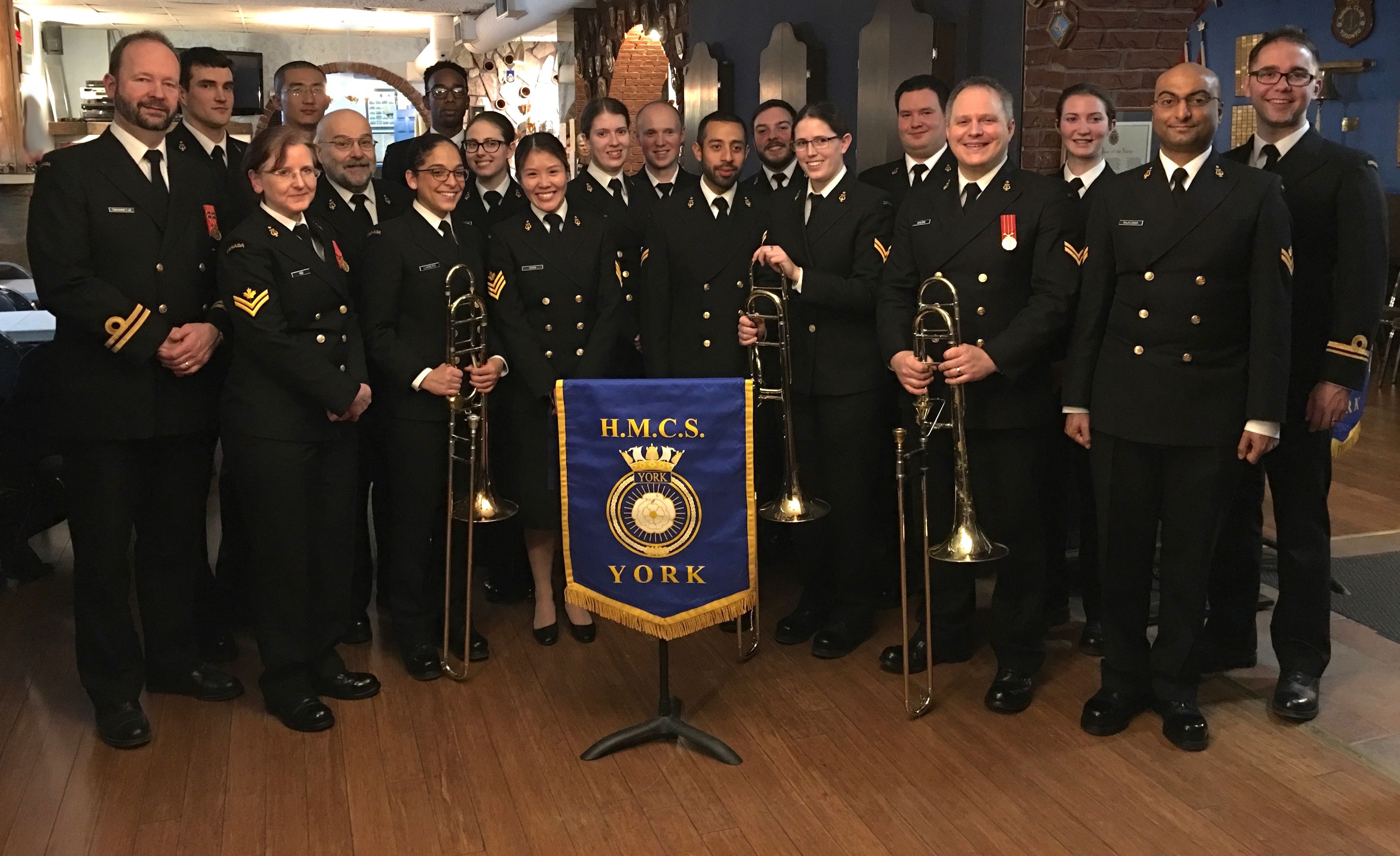
20_millsJust after the completion of last month’s column, we learned of the sudden untimely death in September of internationally renowned trumpet player W. Fred Mills. Renowned for his work over the years with the Canadian Brass, Mills died following a single-car crash while driving to his home in Athens, Georgia, from the Atlanta airport after his return from an engagement in Italy. He was 74. Most recently, he was a professor of trumpet and brass chamber music in University of Georgia’s Hugh Hodgson School of Music.

To learn more about this remarkable musician and his career, we spoke to a fellow musician who knew him well and worked with him for many years. As a founding, and still active, member of the Canadian Brass, tubist Charles Daellenbach came to know Mills very well during the 24 years that he played with that group.

Born in Guelph, Ontario, Fred Mills acquired his first instrument, a cornet, from a traveling salesman. Soon after, he had his introduction to the musical world in the Guelph Police Boys Band. While attending a youth music camp in upstate New York, he learned of the Juilliard School and set his sights on a career in music. While still at Juilliard, he was invited to audition for the renowned conductor Leopold Stokowski in that conductor’s New York apartment. Soon thereafter he was engaged as principal trumpet of the Houston Symphony. In the ensuing years he became a regular in orchestras in the New York area, and a regular at the Casals Festival in San Juan Puerto Rico.

Some time in the late 1960s, although very successful in the USA and internationally, he expressed a desire to return to Canada and was soon engaged as principal trumpet for the National Ballet of Canada. In 1967 he was lured away from that post to become principal trumpet of the newly formed National Arts Centre Orchestra. At about he same time he took up teaching duties at the University of Ottawa.

Meanwhile, Daellenbach, who was teaching in the Faculty of Music at the University of Toronto, teamed up with trombonist Eugene Watts to establish the Canadian Brass in 1970. With the inevitable turnover that such groups must face, by 1972 they were looking for two new trumpets, and invited Mills to join the group. Mills agreed, but with a condition: he recommended trumpeter Ronald Romm, a friend from his days at Juilliard. Soon it was a fait accompli, and the rest is history. The Canadian Brass put the brass quintet soundly on the world stage in the forefront of small ensembles. For the next 24 years, as the group toured the world, Mills’ dazzling trumpet work was featured in concerts and on dozens of records. During his tenure with the Canadian Brass, he arranged more than 60 pieces for Canadian Brass, many of which have since become standards in the brass repertoire.

After years of enduring the rigours of touring, Mills returned to academia and joined the brass faculty at the University of Georgia in September 1996. He was the first recipient of the William F. and Pamela P. Prokasy Professorship in the Arts, an endowed professorship that recognizes a faculty member in the Franklin College of Arts and Sciences who has an outstanding national reputation. There he remained active in faculty and student brass chamber ensembles at as a performer, arranger and coach until his death. At about the same time as Mills’ departure from the Canadian Brass, Romm followed suit and took up a teaching post at the University of Illinois.

21_canadian_brassMills recorded more than 40 albums with the Canadian Brass and was nominated for a Grammy award in 1992. The Canadian Brass website calls him a “Canadian treasure who changed the world’s musical perspective.” It goes on to say that he “spent over 50 years helping establish the trumpet as a beautiful, lyrical voice amongst solo orchestral instruments.”

The Hannaford Street Silver Band will dedicate their first concert of the season to the memory of Fred Mills, whom they describe as “their colleague.” The HSSB will pay tribute to him performing Canzon Trigesmaquinta by T. Massaino; Before thy Throne, I Now Appear by Bach (arr. Irvine); and a rousing version of Harry James’ Trumpet Blues and Cantabile. In recalling his association with Mills, the Hannaford Band’s executive director, Ray Tizzard, stated: “Twenty-six years ago Fred conducted the very first officially organized rehearsal of the HSSB, as well as the HSSB’s earliest public performances in parks around the City of Toronto.”

In Daellenbach’s opinion, one of Mills’ greatest contributions to Canadian music was his work as a coach with the National Youth Orchestra. He will be missed.

Closer to Home

Closer to home, we regret to have to report the passing of trombonist John Williams at the age of 87. Williams had been a personal friend for more years than I can count, and over the years, I had the pleasure of playing beside him in many ensembles. Until recently he played regularly in the Encore Concert Band and the Markham Concert Band. He was the last WWII veteran to play in the Band of the Royal Regiment of Canada.

On the home front, most community musical groups are now in full swing preparing for the fall concert season and many will already have at least one concert under their belts. On looking over the programmes one trend caught our attention: a number of bands are now programming original compositions by band members. Last year the Uxbridge Community Concert Band performed Eternal Flame, a work for band and soprano composed by their director Steffan Brunette. In a recent recording, the Band of the Royal Regiment of Canada included Promenade by conductor Lt. William Mighton. In their October concert, the Markham Concert Band featured two works by band members. Longtime member of the trumpet section Vern Kennedy’s latest offering is a number entitled Marmalade, while Sean Breen’s latest opus is The Woodworker. Is your group scheduling the performances of works by band members? Tell us about them!

In recent weeks we have received interesting information from Resa’s Pieces Concert Band and the Markham Concert Band regarding their activities. We hope to cover those in the next issue.

Coming Events: (Please see the listings section for full details)

November 1, 3:00: Wellington Winds, First United Church, in Waterloo. One week later they repeat the programme at Grandview Baptist Church, in Kitchener.

November 8, 3:00: The Hannaford Street Silver Band welcomes The Nathaniel Dett Chorale in the Jane Mallett Theatre. St. Lawrence Centre for the Arts.

November 18, 7:30: The Plumbing Factory Brass Band presents Musica Britannica at at Byron United, in London.

presents A Tribute to Johnny CowellDecember 4, 8:00: Etobicoke Community Concert Band presents Christmas Pops, at Silverthorn Collegiate Auditorium December 6, 3:00: The Markham Concert Band welcomes the Chinguacousy Concert Band for A Seasonal Celebration at the Markham Theatre.

Jack MacQuarrie plays several brass instruments, and has performed in many community ensembles. He can be contacted at: bandstand@thewholenote.com

27_bandstandIn last month’s issue I mentioned an upcoming concert by the University of Toronto Wind Symphony. I had the pleasure of attending that concert, and can report on a superb performance of all works on the programme. My principal reason for attending was to hear the solo performance of the Gregson Tuba Concerto by a young man whose development I have been following over the past few years. Now in his final year in the Faculty of Music at the University of Toronto, Eric Probst was this year’s recipient of the U of T Wind Ensemble Concerto Competition. In 2008 Eric was the winner of  the Hannaford Youth Band Solo Competition.

I have heard this concerto a number of times in the past, and this performance ranks with the best that I have heard. At some performances, I have had the impression that I was hearing a sort of fight to the finish, with the performer attacking the concerto as an adversary to be subdued. That was not the case in this performance. Throughout the performance Eric gave the impression that he was embracing the work as his friend. They were cooperating with each other to share their mutual admiration with the audience. Even in the technically demanding cadenzas there was no hint of a struggle; by his body language and facial expressions the performer told us that he was enjoying himself at all times.

The only really well known work on the program was the Symphonic Dance Music from Leonard Bernstein’s West Side Story. Here the large woodwind section displayed a combination of precision, blend and depth of tone not often heard in a concert band.

The other student highlighted in the programme was Meaghan Danielson a graduate student conductor. She displayed her considerable conducting talent and stage presence in Contre Qui, Rose by American composer Morten Lauridsen, best known for his choral compositions. Originally written as a choral work, under Miss Danielson’s sensitive baton this transcription for wind ensemble by H. Robert Reynolds retained the feeling of a choir of wind instruments expressing the poetry which inspired the work.

The second half of the evening was devoted to Testament: Music for a Time of Trial and Give Us This Day: Short Symphony for Wind Ensemble, two contrasting works by contemporary American composer David Maslanka. Dr. Maslanka left active teaching some years ago and retired to a small town in Montana to devote most of his time to composition. He was spending several days in Toronto as the Wilma and Clifford Smith Visitor in Music at the Faculty of Music. During an interval in the programme he spoke of his inspirations for the two works featured and on his philosophy of composition. It was an inspiring talk, but too fleeting to summarize here.

This “Visitorship” was established in 1986 by the Steven and Jane Smith family to honour their parents. Since renowned singer John Vickers was named as first visitor, the students have benefited from the counsel of many distinguished musicians. During his stay Dr. Maslanka conducted master classes, sat in on rehearsals and conducted a forum with composition students.

My visit to this concert introduced me to a series of concerts at Faculty of Music that are well worth more attention than they usually receive. They provide top quality performances by talented young musicians at very affordable prices and are at an excellent venue just a few steps from two subway stations. They are worth investigating.

Now, back to the tuba. Since the tuba is generally not looked upon as a solo instrument, there is very little solo repertoire written specifically for that instrument. Personally, I knew of only two concertos for tuba; the one heard in this concert written by British composer Edward Gregson in 1976 and a somewhat earlier one by Ralph Vaughan Williams. I had a question. Since the tuba usually remains well hidden in all but small ensembles and is not generally considered a solo instrument, what prompted these composers and few lesser known ones to write concertos? So, like any good modern researcher, after consulting the Oxford Companion to Music and Grove’s Dictionary of Music and Musicians, I turned to the internet. Lo and behold, what did I find? I found a forum on the Gramophone Magazine website with the title “Why write a Tuba concerto”? (This was apparently specifically targeting the Vaughan Williams work.)Various submissions to this forum over a few months last year provide both entertainment and insight. I encourage you to read them!

(On a personal note, one of my all time favourite records is a set of duets for tuba and guitar by renowned tubist Sam Pilafian and guitarist Frank Vignola. In particular, their renditions of works by renowned French guitarist Django Reinhart show those works in a whole new melodic light.)

On the subject of compositions: Late in 2010, as a way to thank the city for all its support over the years, the members of the Pickering Community Concert Band were looking for a project to help the City of Pickering commemorate its bicentennial year. By happy coincidence 2010 also happened to be the 20th anniversary of the band. The decision was made to sponsor a competition open to amateur composers across Ontario. Entries were solicited for two distinct types of composition to be performed at ceremonies marking the two anniversaries.

After rigorous judging in accordance with well defined criteria, the winners for each of the two categories have been selected. “Elliott Overture,” by young Markham composer Sean Breen, will be performed by the Pickering Community Concert Band at the City of Pickering’s March 4 celebratory event in the Pickering Recreation Complex. “Inchworm/Lazy Afternoon,” by veteran trumpeter and singer Vern Kennedy, will be featured at the band’s 20th anniversary celebration to take place April 16. The winning composers will be introduced and awarded their prizes at each event.

And finally, a clarification: In last month’s Bandstand column we talked about the new Artist in Residence Program offered by Silverthorn Symphonic Winds. Subsequent to publication of that issue we have received some clarification on the status of this program. Raymond James Ltd., the Canadian subsidiary of Raymond James Financial, Inc. will be the official corporate sponsor of the inaugural Artist in Residence Program offered by Silverthorn Symphonic Winds during the 2010/2011 season, rather than, as we thought the Ontario Trillium Foundation. While the band is in receipt of a Trillium grant these funds will be allocated for other community activities, not the Artist in Residence Program. (The Artist in Residence Program brings an established, professional musician as a collaborator with the band for a one-year term. The artist provides coaching to ensemble members, performs at two public concerts, and offers a free public master class.

Please write to us: bandstand@thewholenote.com.
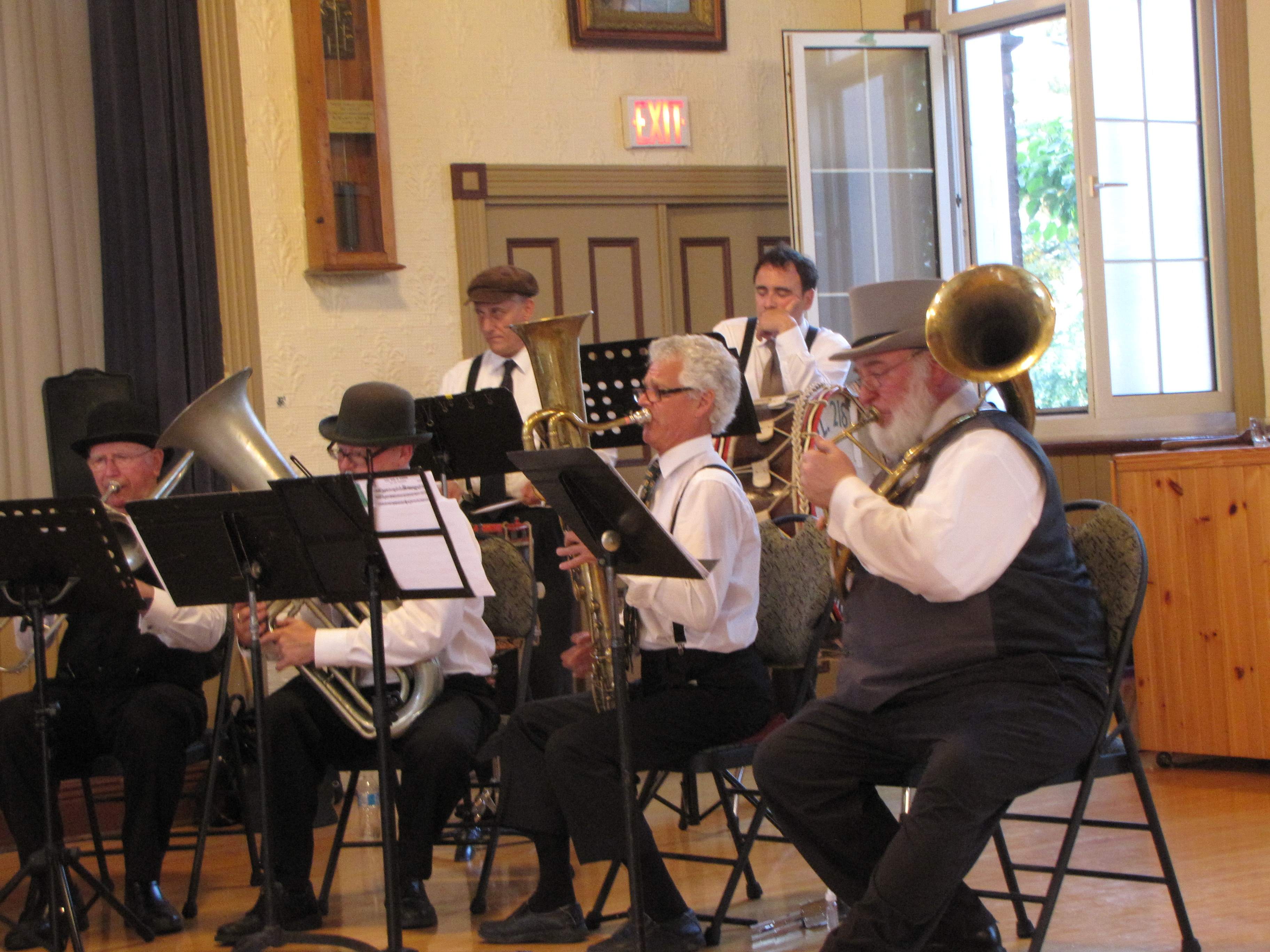
Definition Department

This month’s lesser known musical term is flute flies: “those tiny mosquitoes that bother musicians on outdoor gigs.”

We invite submissions from readers.

In last month’s Bandstand column I focused on a few new ensembles which had graced the local scene over the past two or three years, and mentioned some new ones scheduled to begin this fall. It seemed appropriate then to see how some of these proposed new startups were doing. Two in particular, with very different aims, attracted my attention. Resa’s Pieces Strings was billed as a beginners string orchestra. The New Horizons Seniors Band sponsored by Long and McQuade was to be a beginners band for people 50-plus who wanted to take up music for the first time or get back to it after a prolonged absence. How better to have my questions answered than to attend their inaugural sessions?

p29bFirst up was the rehearsal of the string group Resa’s Pieces Strings (RPS). This is the brain child of Resa Kochberg, founder and conductor of the very successful Resa’s Pieces Band. The strings group included a wide spectrum of ages from high-school students to white-haired seniors. All had enough experience to know how to hold their instruments and play basic scales. For those neophytes in the group who were less than familiar with some of the adjustments required by their instruments, a technician from George Heinl Co. was on hand to assist.

After a few opening remarks outlining the aims and objectives for the months ahead, and getting the instruments tuned, director Ric Giorgi started the group right off playing simple melodies interspersed with exercises on such matters as bowing techniques. By the time the break came along, this new ensemble was playing simple melodies in harmony with better tuning that might nave been expected. At the break, this new group was invited across the hall, where Resa’s Pieces Band had been practising. There they were welcomed into the fold with the cutting and sharing of a cake for their “birthday.”

The RPS will be following the same philosophy that Resa Kochberg has established from day one in leading Resa’s Pieces Concert Band. It is “to provide an opportunity for people to return to playing instruments that they have not touched for years.” Doing your best, but also having fun is what is expected, and everyone grows musically together with each “piece” completing the whole! As of that evening, 24 people had signed up and about 18 got to the first rehearsal.

Were there any shortcomings noted? Yes. As I anticipated, viola players are in short supply. In fact, one acquaintance of mine has been suggesting to me that I might be an ideal candidate to fill a coveted spot in the viola section. Here’s your chance, wannabe string players: get a viola and join the fun on Monday evenings. Even if your leanings are towards some other string instrument, check it out at their website www.resaspieces.org, or email strings@resaspieces.org.

Two days later, at 9:30am, I joined a group attending a get acquainted session at Long and McQuade’s downtown Toronto store to learn about their New Horizons Seniors Band. After a brief introduction by director Dan Kapp, the goals of this group were outlined. This is a band for retirees who either have not played for years, or have sung or played other instruments and would now like to play in an organized group. The majority of these people did not own instruments, and were curious about which instrument might be right for them. Over the next two hours most tried one or more instruments and decided. One woman initially considered trombone, learned how to hold it, blew a few notes and then decided to try an oboe. Her first attempt startled us. It was not the sound of a wounded duck that emanated. Rather, it was quite a pleasant musical tone. I immediately suggested that she and the oboe were meant for each other. Whether she will stick with oboe or sample other instruments before her final decision remains to be seen.

As with the string orchestra, there are initial shortages. Low brass wannabes were in short supply. It seems that, amongst grandmothers and grandfathers, flutes, clarinets or trumpets have more appeal that tubas and euphoniums.

The goal for this group has already been established, and it’s ambitious. The CBC’s Glenn Gould Studio has already been booked for their spring concert. If you are available Wednesday mornings and would like to try your hand at making this kind of music, experience is not necessary. Group instruction is part of the package. Contact them at www.newhorizonsbloor.ca or call 416-588-7886.

Both groups stressed that playing in such ensembles was also very much a social activity. Members were encouraged to get to know their fellow members and consider forming trios and quartets to practise together outside of regular rehearsal times and hone their skills with the challenges of playing these more intimate forms.

As for other new groups for more experienced players, we have just received word that the new Richmond Hill Concert Band had its first rehearsal as this goes to press. They reported about 30 interested members already with a good distribution of instruments. Their rehearsals are on Thursdays at 7:30pm at Roselawn Public School, 422 Carrville Rd., Richmond Hill.

The Canadian Band Association (Ontario) is celebrating its 9th Annual Community Band Weekend from October 15 through 17. These annual weekends provide an opportunity for musicians from bands across Ontario to join together for music-making with friends, both old and new, under the leadership of expert conductors. As part of their 15th anniversary celebration, Etobicoke Community Concert Band will be acting as hosts this year. Check-in starts at 7:30pm Friday and is followed by a social gathering. Saturday will be devoted to rehearsals under the batons of no fewer than six conductors.

The massed band will perform the concert on Sunday afternoon. The rehearsal and concert take place at Etobicoke Collegiate Institute, 86 Montgomery Rd., Etobicoke. The nearest major intersection is Dundas and Islington, and the school is a manageable walk from both Royal York and Islington subway stations. For full details contact Bill Harris, Acting President, Canadian Band Association (Ontario) at president@cba-ontario.ca, or 416-693-3980.


Definition Department

This month’s lesser known musical term is fermoota: a note of dubious value held for indefinite length. We invite submissions from readers. Let’s hear your daffynitions.


Coming Events

• October 17, 8:00pm: The Cathedral Bluffs Symphony Orchestra.
Norman Reintamm and Friends Recital. St. Timothy’s Anglican          Church, 4125 Sheppard Ave. E.

• October 18, 7:30pm: Orillia Wind Ensemble. Joint Effort. Orillia               Opera House, 20 Mississaga St. W., Orillia.

• October 23, 8:00pm: Greater Toronto Philharmonic Orchestra.
Autumn Classics. Calvin Presbyterian Church, 26 Delisle Ave.

• October 23, 8:00pm: City of Brampton Concert Band. Rose Theatre             in Brampton.

Down the Road

• November 13, 8:00pm: Cathedral Bluffs Symphony Orchestra.
Subscription Concert No.1. P.C. Ho Theatre, 5183 Sheppard Ave. E.


Jack MacQuarrie plays several brass instruments, and has performed in many community ensembles. He can be contacted at: bandstand@thewholenote.com.
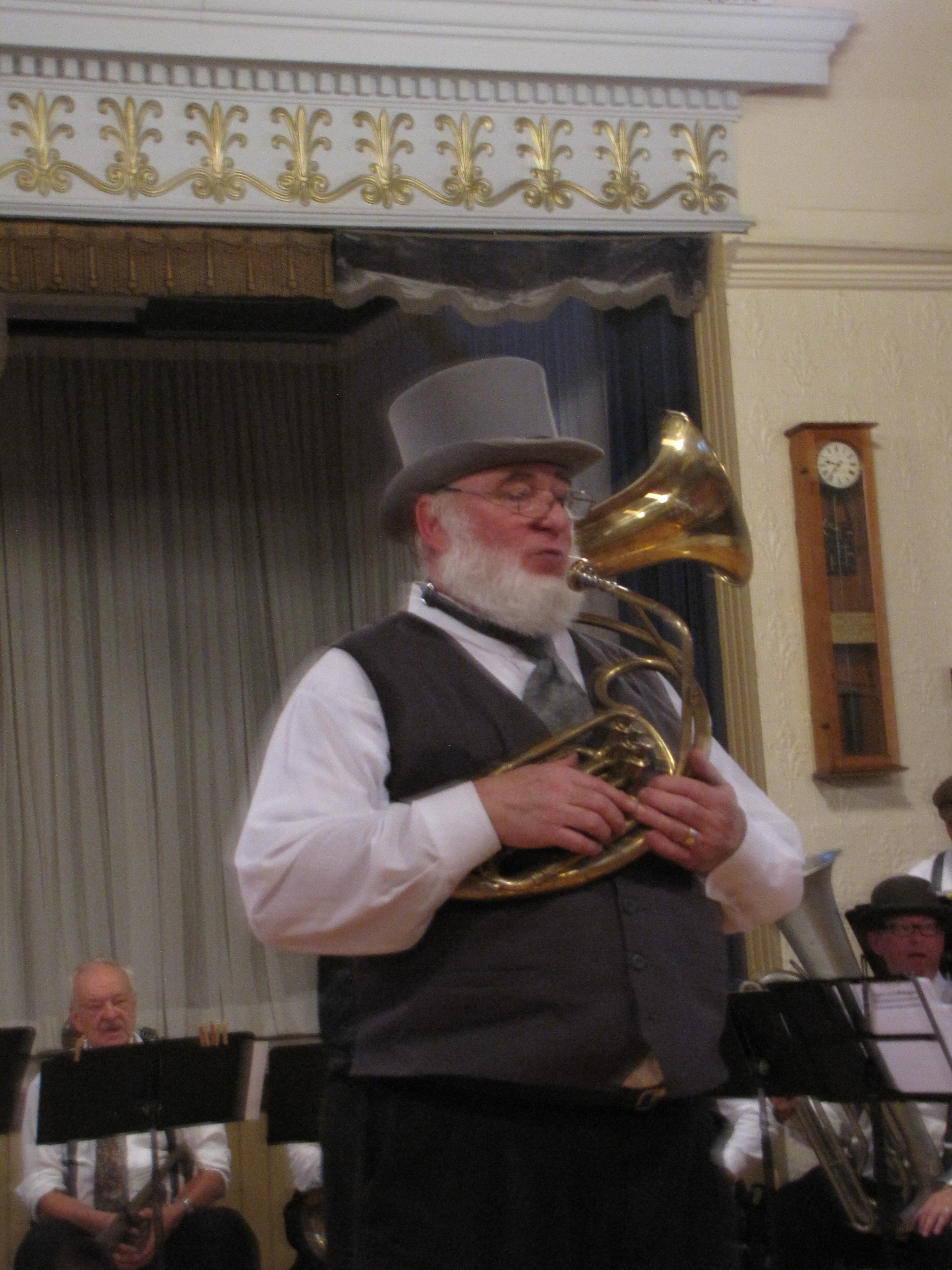
As I sit down to produce this column I realize that we are dealing with the autumnal equinox. That means the official end to summer, or beginning of autumn. To be more precise, right at the time this issue is going to the printer, the official equinox will be occurring, at 4:02pm on Sunday, September 22. (Musicians aren’t always the only ones working on weekends.) In other words, even though there has been some beautiful weather, fall is here and it’s time for much new music making. That being said, while we have some information on what lies ahead in our musical world, so far my notes are still a bit of this and a bit of that, so I think that I’ll just consider this month’s column as Variations on a Non Existent Theme and dive right in.

Square Dealing

Happenings in my own personal musical world might be a place to start. Some days ago I came across a bulletin mentioning an open house at a local Masonic Lodge for local citizens to learn about how Freemasons have been part of our communities for centuries. One component of the emblem of Freemasonry is the square, one of the earliest working tools of craftsmen. It was, and still is, used to confirm the accuracy of right angles. Hence “Acting upon the Square” is a familiar metaphor for square and honest dealings with others.

So what does all of this have to do with music? As I looked at this emblem, I remembered hearing that there was a march titled On The Square based on some ceremonies of Freemasonry. Where to get information on this march? Where else but to Google! There it was, played by a number of different bands. I chose to listen to the version by a Band of the Royal Marines. For a few days after that I could not get that music out of my head. I had a chronic earworm. Then, a few nights later at a band rehearsal, what was the very first number that the director chose to rehearse? On The Square. Now that earworm was firmly implanted in my head, so it was time to confirm just what an earworm really is. Off to Wikipedia I went. There were a number of other terms, but the definition I liked there was “involuntary musical imagery,” where a catchy piece of music continuously repeats through a person’s mind after it is no longer playing.

Read more: Variations on a Nonexistent Theme
Back to top