





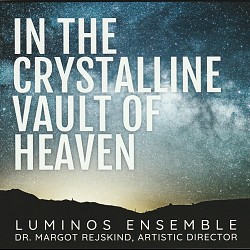



In the Crystalline Vault of Heaven - Luminos Ensemble; Dr. Margot Rejskind
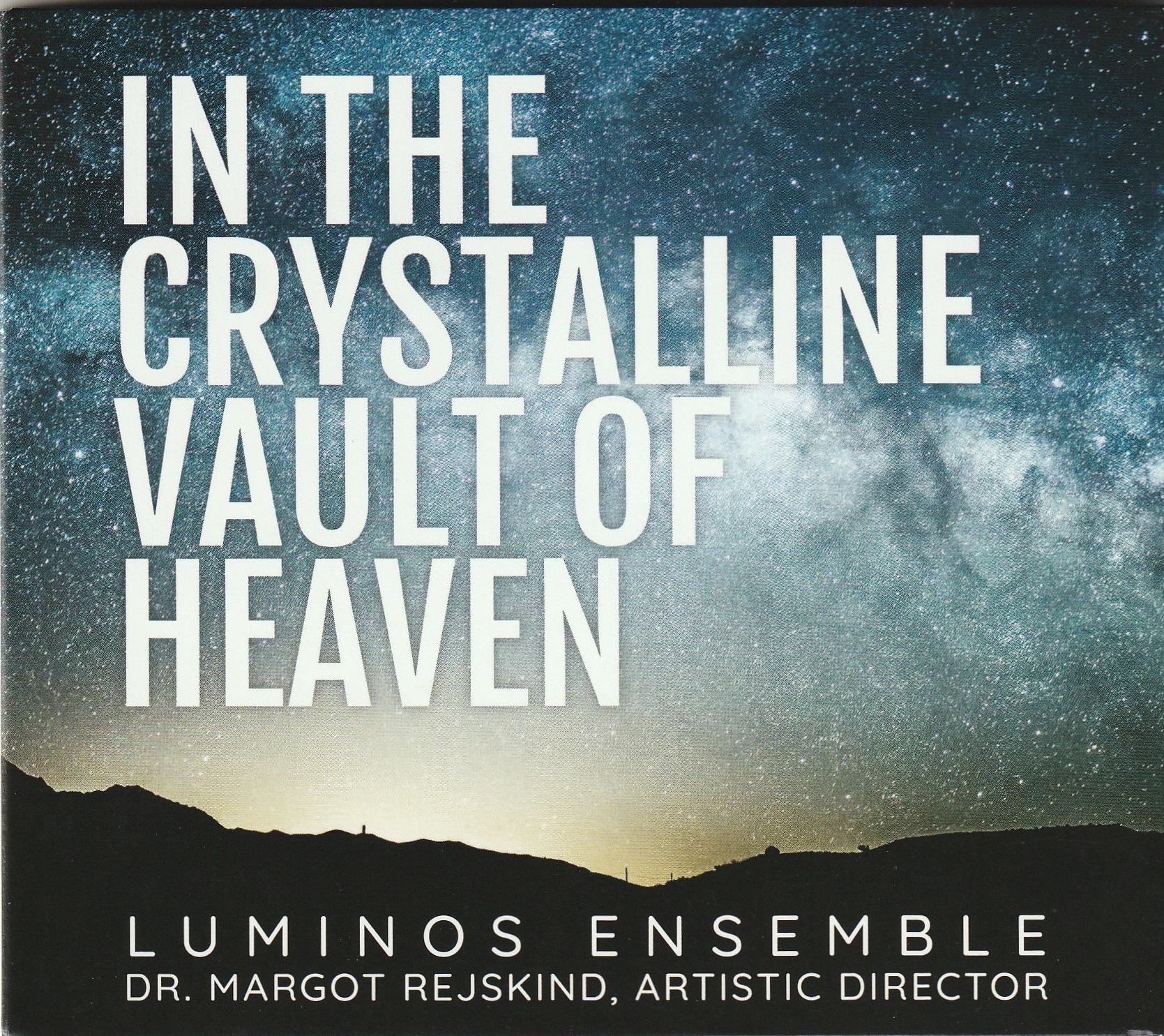 In the Crystalline Vault of Heaven
Luminos Ensemble; Dr. Margot Rejskind
Leaf Music LM290 (luminosensemble.com)
Read the Review
Writing about second-wave feminism in 1970, Carol Hanisch either created or popularized the phrase “the personal is political.” Since that time, the aphorism has expanded in both meaning and application to point out the shared synergies and interactions that exist between political and personal issues. In many ways, the arts, such as music, have become a lightning rod for these kinds of conversations. Music makers in 2024, whether they like it or not, are making choices often read as political simply by the repertoire they choose, venues at which they perform and the ensemble company they keep.
The Luminos Ensemble, a terrific Charlottetown-based choir of 16 East Coast voices that was formed in 2017 by artistic Director Dr. Margot Rejskind, seems acutely aware of this fact. In fact, articulated on their website is a mission statement and an expansion of values that suggests that a kind of Canadian East Coast social justice (albeit one that is married to beautiful choral voices) is their very raison d’être. Living the stated value that PEI voices “deserve to be promoted and supported,” the ensemble has released a fine new recording, In the Crystalline Vault of Heaven that features several tremendous Atlantic Canadian compositional talents deserving of wider recognition. While the title track by Nova Scotia composer Derek Charke is moving indeed, the work of Prince Edward Island composers David Buley and EKR Hammell, who contribute meaningfully to this recommended recording, was particularly captivating.